


Retail marketing teams manage dozens of events simultaneously — product launches, seasonal campaigns, influencer activations, and store openings — each requiring coordination across multiple departments and locations. When teams rely on scattered spreadsheets, email chains, and disconnected platforms, even well-planned events can miss deadlines, exceed budgets, or fail to deliver expected results. T
he challenge isn’t just logistics; it’s maintaining visibility and control while scaling operations across regions and seasons.
Effective event planning software addresses this complexity by unifying coordination, resource management, and performance tracking in one platform. Rather than juggling separate systems for registration, vendor management, and team communication, retail marketing leaders need comprehensive solutions that connect event planning to broader marketing operations.
In this post, we’ll unpack what actually works for retail marketing teams when it comes to event planning software, highlight the capabilities that deliver real results, and reveal how a unified work management platform can turn chaotic planning into smooth execution. Let’s begin.
Key takeaways
Event planning software has evolved from simple scheduling applications into comprehensive platforms that orchestrate complex marketing operations. For retail marketing leaders managing multiple events across locations, the right platform transforms scattered coordination into unified execution.
These are the key points to takeaway from this article:
- Replace fragmented event coordination with unified visibility: connect all events, campaigns, and teams in one workspace so nothing falls through the cracks during busy retail seasons.
- Automate repetitive coordination tasks to reclaim strategic time: set up workflows that handle vendor reminders, status updates, and stakeholder notifications automatically instead of managing everything manually.
- Transform event planning with monday.com’s integrated approach: use customizable boards, resource management, and real-time dashboards to coordinate multi-location events while connecting to broader marketing goals.
- Standardize processes without losing flexibility: create reusable templates for common event types that ensure consistent execution while adapting to unique requirements across different locations and campaigns.
- Connect event performance to business outcomes: track ROI through dashboards that link individual events to marketing KPIs, making it easy to demonstrate impact to executives and optimize future investments.
What software do marketing managers use for event planning?
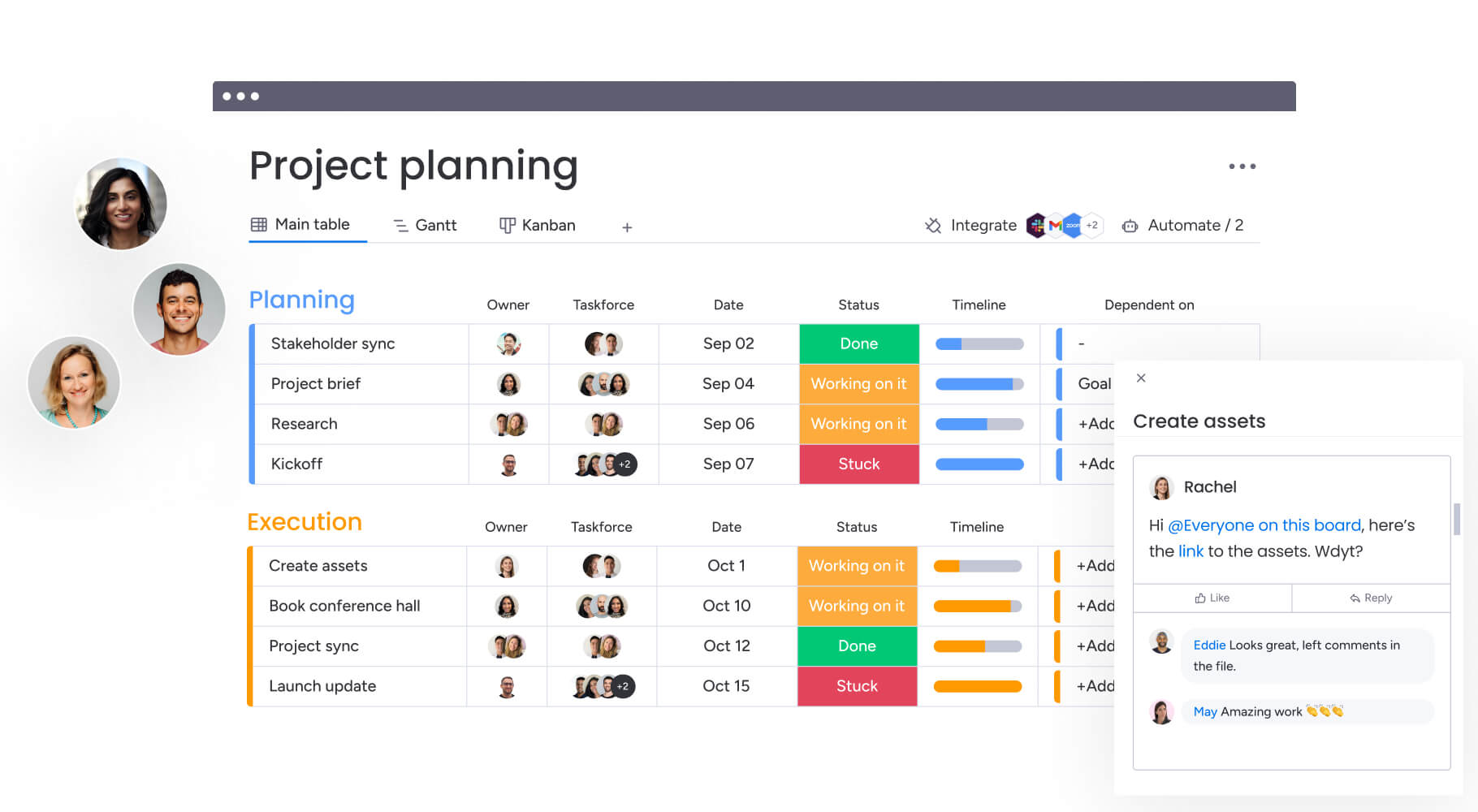
Marketing managers are ditching standalone event tools for unified work management platforms. Why? They’re tired of treating events as isolated logistics exercises when they’re actually core components of integrated marketing operations.
Traditional event software focuses on narrow capabilities that create operational silos. Registration systems handle attendee data, venue management tools track locations, and ticketing platforms process payments. While these serve specific functions, they create data silos that prevent marketing leaders from seeing the complete picture of event performance and team capacity.
Modern marketing departments need platforms that connect event planning to broader workflows.
When campaign managers coordinate product launches, they’re managing creative briefs, vendor relationships, budget tracking, and performance metrics simultaneously. A registration tool alone can’t provide the cross-functional visibility required to execute at scale.
The most successful retail marketing teams use platforms that unify three essential components:
- Workflow orchestration: connecting event tasks to campaigns, content calendars, and resource planning.
- Team collaboration: centralizing communication, approvals, and feedback across departments.
- Performance visibility: linking event metrics to marketing KPIs and business objectives.
This integrated approach explains why platforms like monday.com have become the foundation for enterprise event planning. Rather than adding another specialized tool, marketing leaders gain a system that manages events alongside campaigns, content, and strategic initiatives — all in one connected workspace.
What makes heads of marketing choose monday.com for event planning in retail?
Heads of marketing in retail face unique pressures that specialized, single-function event applications can’t address. Seasonal peaks demand flawless execution, product launches require cross-department coordination, and influencer events need ROI tracking that connects to pipeline metrics. Every decision impacts both brand perception and bottom-line results.
Connected solutions like monday.com transform these complex requirements into manageable workflows: addressing the specific challenges retail marketing leaders encounter when scaling event operations across multiple locations and campaigns.
The platform provides three essential capabilities that retail marketing leaders need:
- Unified visibility across all events and teams: live dashboards surface risks before they escalate. Resource views prevent team burnout. Progress tracking happens automatically, not through manual status meetings.
- Standardization without rigidity. the platform’s event planning template ensures consistent processes while allowing customization for each event type. Teams follow proven workflows without losing the flexibility to adapt when priorities shift.
- Connection to strategic outcomes. by linking event workflows to OKRs and marketing goals, leaders demonstrate clear ROI to executives. Every activation ties back to measurable impact on brand awareness, customer acquisition, or revenue growth.
The 5 P's of event marketing
Understanding the five P’s framework helps marketing leaders evaluate whether their event planning software addresses all critical dimensions of successful events. This comprehensive approach ensures platforms support every aspect of event execution, from initial planning through post-event analysis.
Each “P” represents an essential component that platforms must support:
Person (audience and team)
This encompasses both your target attendees and the team executing the event. Effective platforms help you understand audience segments, track team capacity, and match skills to tasks.
Within monday.com, resource management features show exactly who’s available, what they’re working on, and where you need additional support. The platform’s workload views prevent the common problem of key contributors being double-booked during critical event periods.
Place (venue and platform)
Whether physical locations or virtual platforms, the “place” requires careful coordination. Modern event software must handle venue logistics, technical requirements, and hybrid experiences seamlessly.
Retail teams use customizable boards to track venue contracts, technical specifications, and location-specific requirements. Automated notifications ensure nothing falls through the cracks when managing multiple locations simultaneously.
Product (event content and experience)
The event itself — from agenda to activities — represents your product. This includes speaker coordination, content development, and experience design.
Creative request workflows in monday.com streamline content production. Teams track everything from initial briefs through final approvals, with clear ownership at every stage. Integration with creative tools means assets flow directly into event workflows without manual transfers.
Price (budget and resources)
Budget management extends beyond venue costs to encompass staffing, marketing, technology, and contingencies. Visibility into spending patterns helps optimize future investments.
Financial tracking features provide real-time budget visibility. Marketing leaders see exactly where money goes, compare actual versus planned spending, and identify opportunities to reallocate resources for maximum impact.
Promotion (marketing and communications)
Event promotion requires coordinated campaigns across channels. Email sequences, social media, partner communications, and internal alignment all need orchestration.
Campaign management capabilities ensure promotional activities align with event timelines. Automated workflows trigger communications at the right moments, while integration with marketing platforms maintains consistent messaging across touchpoints.
monday.com features for event planning in retail
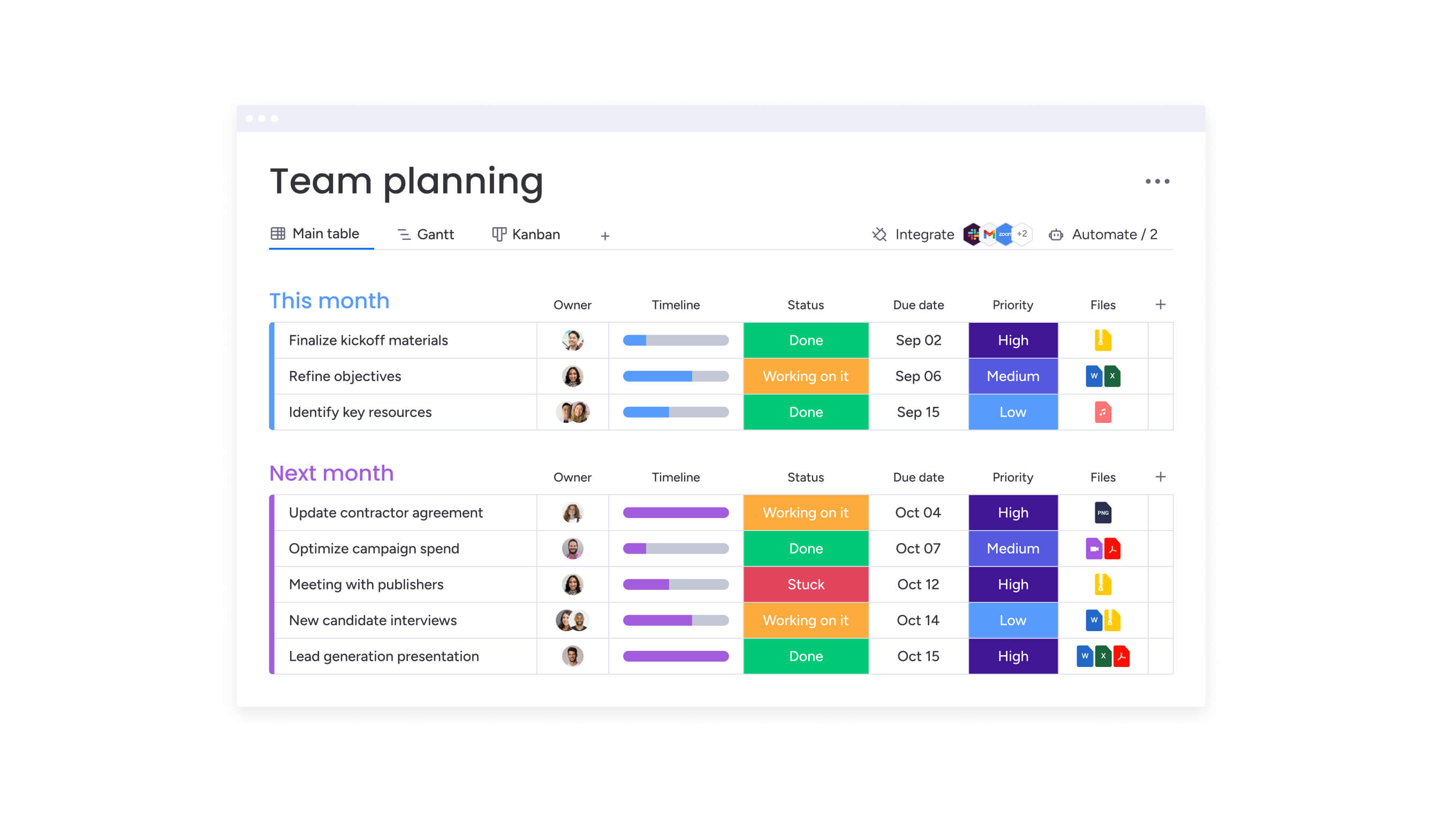
monday.com provides comprehensive capabilities specifically designed for retail marketing teams managing complex event portfolios. These features address the unique challenges of coordinating events across multiple locations while maintaining brand consistency and operational efficiency.
Consolidate your work by bringing every process into a single platform. Your team can handle everything — from initial brainstorming to final ROI analysis — in one unified workspace.
Event management workflows
Event management in monday.com goes beyond basic task lists. The platform provides comprehensive capabilities that centralize planning, execution, and analysis for both in-person and virtual retail events.
Customizable boards adapt to any event type or scale. Marketing teams track timelines, manage vendor relationships, coordinate with store operations, and monitor budgets within one workspace. Visual workflow boards provide instant ownership clarity and dependency tracking.
For retail marketing leaders, this eliminates the chaos of managing multiple events across locations using disconnected tools. Automated notifications and deadline tracking keep teams aligned without constant meetings.
The platform’s flexibility also means you can manage intimate VIP experiences and massive seasonal campaigns using the same foundational system.
Campaign management and content calendars
The platform’s campaign management capabilities enable retail marketing leaders to plan, launch, and optimize integrated campaigns with comprehensive visibility. Master content calendars house key dates and milestones across the business, connecting event activations to broader marketing initiatives.
This addresses the critical pain point of fragmented visibility that plagues retail marketing teams. Instead of wondering where campaigns stand, heads of marketing gain real-time insight into progress, capacity, and potential bottlenecks. Events align seamlessly with digital marketing, merchandising, and store operations.
Teams coordinate across departments using shared calendars that show dependencies and conflicts. When priorities shift — as they often do in retail — the ripple effects become immediately visible, allowing quick adjustments without disrupting other initiatives.
Resource management and capacity planning
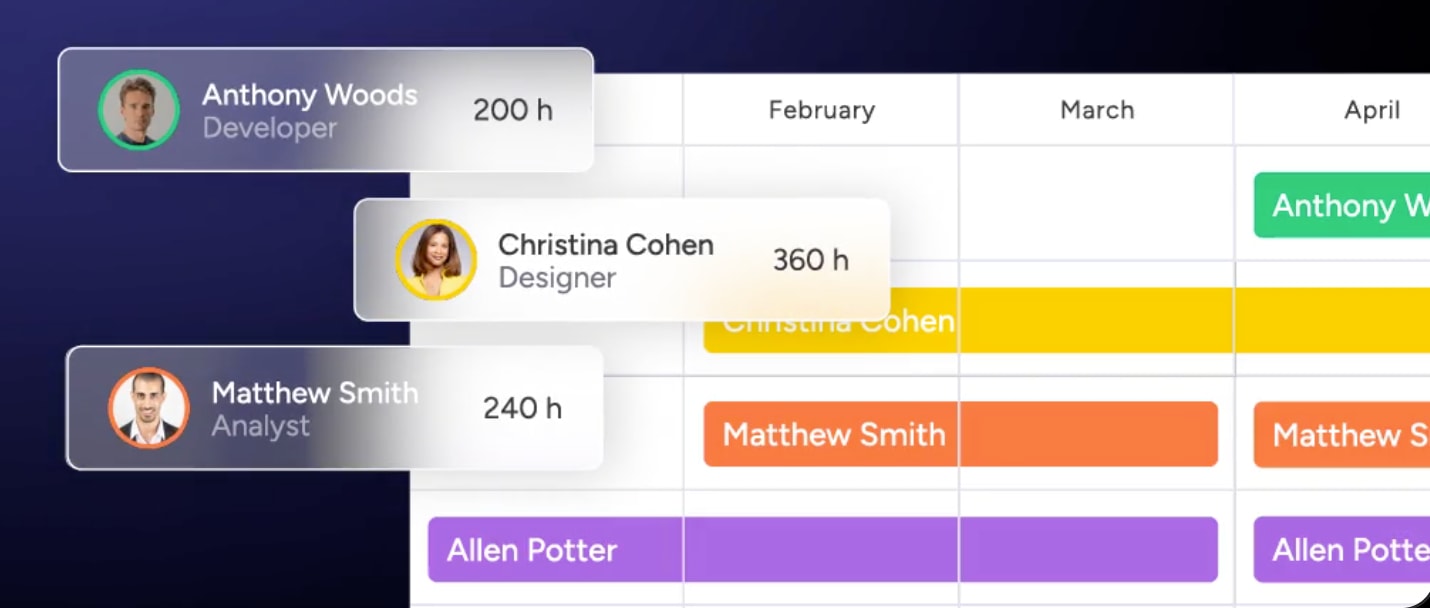
Built-in resource management lets marketing leaders plan, assign, and adjust resources at the project level without guesswork. Real-time visibility into bandwidth, skills, and workload enables strategic allocation that keeps teams focused on high-impact delivery.
For retail marketing leaders managing large teams across multiple functions, this capability solves the critical challenge of resource optimization. During peak retail seasons, visualizing team workload and redistributing resources strategically becomes essential for maintaining quality execution.
The platform’s capacity planning features help prevent the common scenario where some team members burn out while others have bandwidth to spare. Leaders can balance workloads proactively, ensuring adequate coverage for all initiatives without overwhelming staff.
Automations and workflow standardization
Automation capabilities reduce manual work and scale workflows through templates and integrations. Marketing leaders create standardized event planning templates that ensure consistent processes across regions while automations handle routine coordination.
This solves the classic problem of teams starting from scratch with every event. You’ll automate the boring stuff and standardize what works, while still keeping the flexibility to adapt when needed.
Common automations include:
- Vendor coordination: sending reminders automatically and tracking contract status.
- Status updates: updating event statuses when milestones are reached.
- Stakeholder notifications: alerting relevant teams to changes or approvals needed.
- Budget alerts: notifying managers when spending approaches limits.
These small time savings compound across multiple events throughout the year, freeing teams to focus on strategic work rather than administrative tasks.
Dashboards and real-time reporting
Customizable dashboards connect data from multiple projects, enabling marketing leaders to uncover insights that keep teams aligned and goals on track. Pre-built and custom dashboards show event performance, budget tracking, team productivity, and campaign ROI.
For leaders constantly asked to prove event ROI, this level of visibility is essential. Executive-ready dashboards connect events to business goals, highlight top-performing campaigns, and show exactly where resources are going. Forget manual report building. You’ll get instant, executive-ready dashboards that connect events to business goals, highlight your top-performing campaigns, and show exactly where your resources are going.
Visual reporting makes it easy to spot trends, identify successful event formats, and make data-driven decisions about future investments. Automated reporting saves hours of manual work while ensuring stakeholders stay informed.
Integration ecosystem
The intelligent platform integrates with 200+ marketing tools and provides an open API for custom connections. Critical integrations include CRM systems, communication platforms, creative tools, analytics platforms, and retail-specific systems.
For retail marketing leaders managing complex tech stacks, this integration capability eliminates silos. Event registrations sync automatically to your CRM. Campaign updates post to team channels. Performance data feeds into analytics dashboards. Teams work more efficiently when data flows seamlessly between systems without manual entry.
How heads of marketing benefit from monday.com
Retail marketing teams using monday.com achieve measurable improvements across multiple dimensions. These benefits compound over time, creating significant operational advantages that directly impact business outcomes.
Here’s what you’ll actually get from the platform, both right away and down the road:
- Time savings through automation: teams reclaim thousands of hours monthly by automating event coordination, eliminating manual updates, and standardizing workflows. Time previously spent on administrative work redirects toward strategic initiatives and creative development.
- Cost efficiency via centralization: consolidating event planning into one platform eliminates redundant tools and reduces subscription costs. More importantly, optimized resource allocation prevents costly overstaffing during slow periods and understaffing during peaks.
- Enhanced compliance and accuracy: standardized templates and automated workflows ensure consistent execution across locations. With spreadsheets replaced by connected workflows, version control issues disappear and reporting accuracy improves dramatically.
- Productivity gains from collaboration: cross-team collaboration improvements and efficiency increases become standard. Teams execute more events with existing resources by eliminating bottlenecks and streamlining approvals.
- Quality improvements at scale: faster delivery and increased creative output result from removing friction in the planning process. Real-time progress visibility ensures higher-quality execution with fewer last-minute scrambles.
- Unprecedented visibility: real-time dashboards provide instant insight into event performance, team capacity, and marketing ROI. Leaders make confident decisions based on data, not assumptions.
6 steps to plan and execute retail marketing events
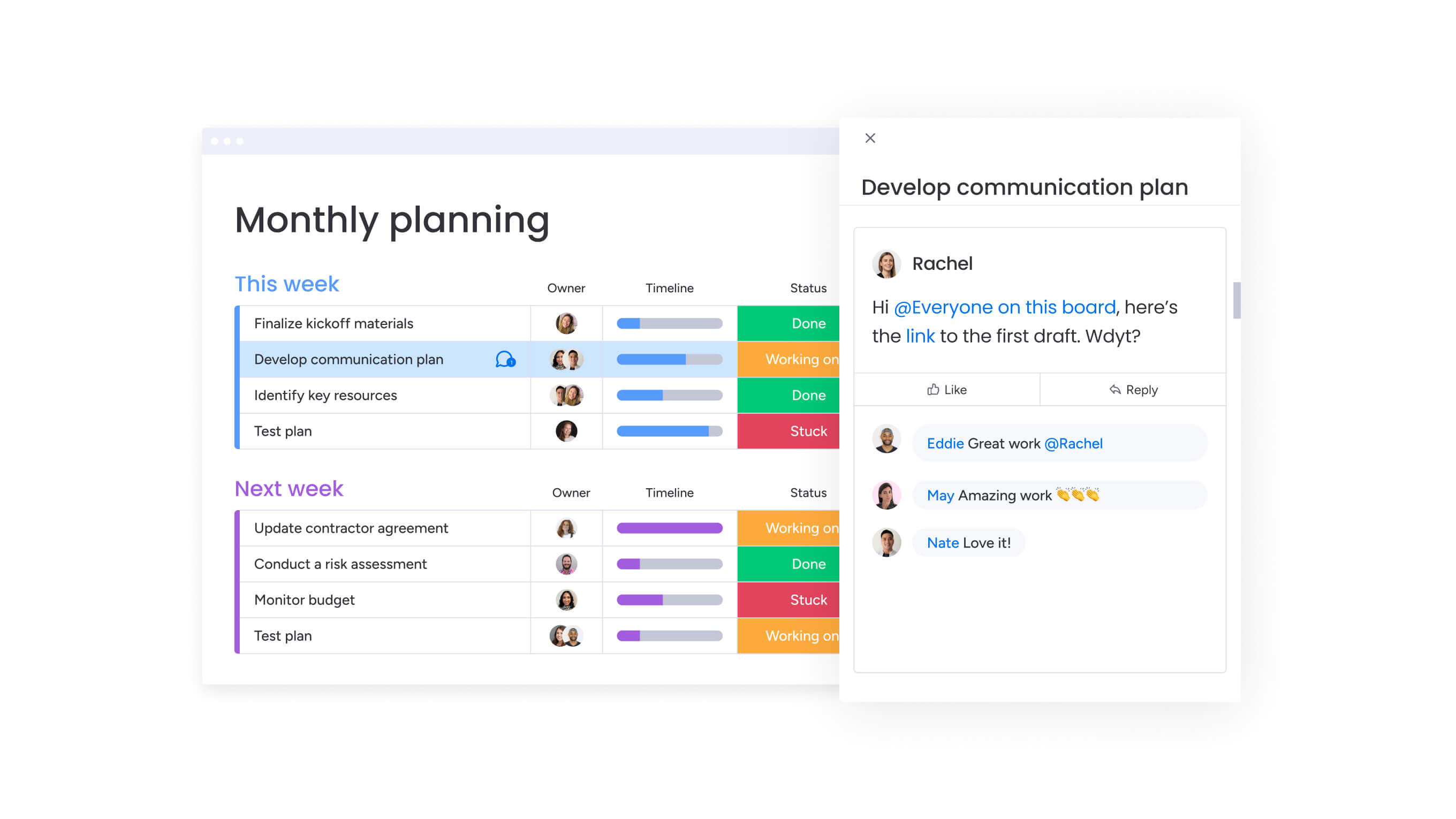
Successful event execution requires more than good intentions. These six steps create a repeatable framework for planning and delivering retail marketing events at scale, ensuring consistent quality while maintaining the flexibility to adapt to changing priorities.
Step 1: centralize your event calendar
Create a master calendar consolidating all retail marketing events, seasonal campaigns, product launches, and store activations in one view. Use customizable boards to capture dates, locations, budgets, target audiences, and success metrics.
Set up automated notifications to keep stakeholders informed of upcoming events and deadlines. This foundation provides the visibility needed to identify conflicts, optimize resource allocation, and ensure strategic alignment across initiatives.
Step 2: standardize workflows with templates
Build reusable templates for common event types. Include standard phases like planning, vendor coordination, creative development, execution, and post-event analysis. Customize templates to reflect your organization’s specific requirements while maintaining consistency.
Templates eliminate the inefficiency of teams reinventing processes for each event. They ensure best practices are followed while allowing flexibility for unique requirements. Start with your most frequent event type and expand from there.
Step 3: automate coordination tasks
Configure automations to handle routine coordination. Send reminders to vendors automatically. Notify teams when approvals are needed. Update event statuses based on milestone completion. Alert stakeholders to budget changes.
Set up integrations with your CRM, email marketing platform, and communication tools. Automation reduces administrative burden and ensures nothing falls through the cracks during complex multi-location events.
Step 4: implement resource management
Use Workload views to visualize team capacity across concurrent events and campaigns. Assign resources based on skills, availability, and strategic priorities. Create resource allocation dashboards showing which team members are overloaded and where capacity exists.
This strategic approach to resource management ensures consistent event quality while preventing team burnout. Balance workloads proactively rather than reacting to crises.
Step 5: connect events to business goals
Link individual events to broader marketing campaigns and company OKRs. Use dashboards to track how events contribute to key metrics like foot traffic, conversion rates, and customer acquisition costs.
Create executive reports showing event ROI in real time. This connection between tactical execution and strategic goals helps justify investments and optimize future strategies.
Step 6: establish continuous improvement
After each event, conduct structured retrospectives using dedicated boards. Capture what worked, what didn’t, and lessons learned. Track performance metrics against goals and compare results across similar events.
Use insights to refine templates, update processes, and improve future execution. This continuous improvement cycle ensures your retail marketing events become more effective over time.
Comparison: monday.com vs traditional event platforms
When debating which planning software to implement, retail marketing teams must consider how platforms address their comprehensive needs beyond basic logistics. The comparison below highlights key differences between comprehensive work management platforms and specialized event tools.
This analysis helps marketing leaders understand which capabilities matter most for their specific requirements:
| Feature | monday work management | Cvent | Eventbrite |
|---|---|---|---|
| Multi-location coordination | Centralized boards with location views | Venue sourcing focus | Limited multi-location |
| Resource management | Built-in workload planning | Requires third-party tools | Not available |
| Campaign integration | Native marketing workflows | Event-specific campaigns | Standalone ticketing |
| Customizable workflows | Fully customizable no-code | Template-based | Fixed workflows |
| Real-time dashboards | Customizable with integrations | Event reporting | Basic analytics |
| Automation capabilities | Extensive across workflows | Event automations | Limited to ticketing |
| CRM integration | Native Salesforce, HubSpot | Salesforce integration | Limited connectivity |
| Team collaboration | Cross-functional features | Event team focused | Limited collaboration |
If you need more than just another event tool, monday.com is your answer. Cvent might handle conferences well and Eventbrite’s great for tickets, but monday.com actually connects your events to everything else your marketing team does.
How FARFETCH transformed retail marketing operations
FARFETCH, the global luxury fashion platform, faced significant challenges managing marketing campaigns and events across 400 people from 40 different teams. The marketing planning team coordinated brand activations, customer experiences, and promotional events requiring support from retention, acquisition, product, and analytics teams.
Their transformation demonstrates how unified work management platforms solve real operational challenges at enterprise scale. The results showcase the tangible benefits of moving from fragmented tools to integrated workflows.
The challenge
Teams managed everything through scattered Google Docs and Sheets, spending hours chasing updates. Event coordination used separate spreadsheet tabs for different components, making coordination manual and time-consuming. Without centralized visibility, the team lacked insight into campaign status, event timelines, and resource allocation.
The solution
FARFETCH implemented monday.com starting with their master content calendar — housing all key dates and milestones for events and campaigns. They designed workflows with dependencies, automations, and integrations that brought each team’s work together effortlessly.
The content calendar connected commercial, fashion, and editorial teams in one place. For events, boards connected to the master calendar, so changes automatically reflected across all related work and notified relevant teams immediately.
The results
The transformation delivered impressive results that demonstrate the platform’s impact on operational efficiency:
- 6x ROI through operational efficiency improvements.
- $118,000 monthly savings by eliminating manual processes.
- 3,500 hours saved monthly across marketing operations.
- Complete elimination of spreadsheets from campaign and event management.
- 25% reduction in email exchanges through centralized communication.
Manage every retail event with full visibility and confidence
Marketing leaders are under constant pressure to deliver more events with bigger results — often without adding headcount. When your team is drowning in spreadsheets and disconnected tools, scaling up becomes a nightmare that blocks growth and burns out your best people.
Intuitive and easy-to-use solutions like monday.com eliminate the chaos of managing multiple events across locations, seasonal campaigns, and product launches. With centralized visibility, automated workflows, and real-time insights, marketing teams connect event strategy to execution while demonstrating clear ROI to leadership.
The platform also transforms scattered event planning into unified marketing operations. Teams gain the structure they need to scale while maintaining the flexibility to adapt when priorities shift.
Most importantly, leaders gain confidence that every event contributes to measurable business outcomes.
Ready to streamline your retail event marketing operations and achieve the results that industry leaders like FARFETCH and Officeworks have experienced? Transform your scattered coordination into unified execution with a platform designed for enterprise marketing teams.
The content in this article is provided for informational purposes only and, to the best of monday.com‘s knowledge, the information provided in this article is accurate and up-to-date at the time of publication. That said, monday.com encourages readers to verify all information directly.
Frequently asked questions
How does monday.com handle multi-location event coordination for retail?
monday.com enables retail marketing teams to coordinate events across multiple store locations through centralized boards with location-specific views and filters. The platform creates master calendars showing all locations simultaneously, then allows drilling down into specific regions for local details. Automated notifications keep regional teams informed while standardized templates ensure consistent execution across locations.
Can the platform integrate with retail-specific systems like POS and inventory management?
Yes, monday.com integrates with retail systems through its open API and 200+ pre-built integrations. While direct POS integrations may require custom development, the platform connects seamlessly with CRM systems, marketing automation platforms, and analytics tools that interface with retail systems. Many organizations use middleware platforms to sync event data with inventory systems and loyalty programs.
How quickly can large retail marketing teams implement monday.com?
Implementation typically takes two to four weeks for initial deployment, with full adoption over two to three months. Teams start using basic features immediately while building complex workflows progressively. The intuitive interface accelerates adoption, with most teams seeing efficiency gains within their first month.
What ROI timeline should retail marketing teams expect?
Retail marketing teams typically see measurable ROI within three to four months of implementation. Initial time savings come from eliminating manual coordination and spreadsheet management. Longer-term ROI accrues from improved resource utilization, enhanced event performance, and increased team productivity.
How does monday.com support both in-person and virtual retail events?
The platform provides unified event management for in-person, virtual, and hybrid formats. Event-specific boards capture unique requirements for each format — venue coordination for physical events, platform selection for virtual events, or combined workflows for hybrid experiences. Integration with video conferencing platforms supports virtual events while managing vendor relationships for physical activations.
Can the platform track event ROI and demonstrate marketing impact to executives?
monday.com provides comprehensive analytics for tracking event ROI and impact. Custom dashboards track metrics like attendance, engagement, lead generation, and conversion rates, connecting these to broader business metrics. Automated reporting gives executives real-time insights without manual compilation, making it easy to present event impact and justify investments.

 Get started