


Marketing teams at enterprise organizations manage dozens of concurrent campaigns across multiple channels, stakeholders, and timelines. When you’re coordinating work for 50-100+ team members, scattered spreadsheets and email threads create bottlenecks that delay launches and frustrate teams.
The challenge isn’t just managing individual campaigns but orchestrating them at scale. Success requires maintaining visibility into resource allocation, timeline dependencies, and strategic alignment.
The best campaign management software addresses these operational complexities by centralizing campaign planning, automating approval workflows, and providing real-time visibility into team capacity and campaign performance. These platforms enable marketing leaders to prevent resource conflicts, standardize processes across global teams, and demonstrate measurable impact to executive leadership through unified reporting and strategic goal tracking.
Let’s dive into what actually separates powerful campaign management platforms, and marketing planning software, from basic project management solutions you’ve outgrown. We’ll examine key features like resource optimization, cross-functional collaboration, automation workflows, and integration ecosystems that enable marketing teams to scale execution while maintaining quality.
Key takeaways
- Centralize campaign visibility across your entire marketing organization: replace scattered spreadsheets and email threads with unified dashboards that show real-time progress, resource allocation, and bottlenecks across all campaigns.
- Prevent team burnout through strategic resource management: use capacity planning and workload monitoring to distribute work evenly, identify over-allocated team members, and maintain consistent delivery without overwhelming your team.
- Connect marketing campaigns directly to business objectives: track how individual campaigns contribute to company-level OKRs and demonstrate measurable marketing impact to executive leadership with automated portfolio reporting.
- Transform approval workflows from chaotic to streamlined: monday work management’s automated creative request management and multi-level approval processes eliminate email bottlenecks and provide clear visibility into review timelines and version control.
- Scale operations without adding coordination overhead: implement standardized templates and automation recipes that replicate successful campaign structures instantly while maintaining flexibility for different market demands and campaign types.
What makes heads of marketing choose monday work management for campaign management?
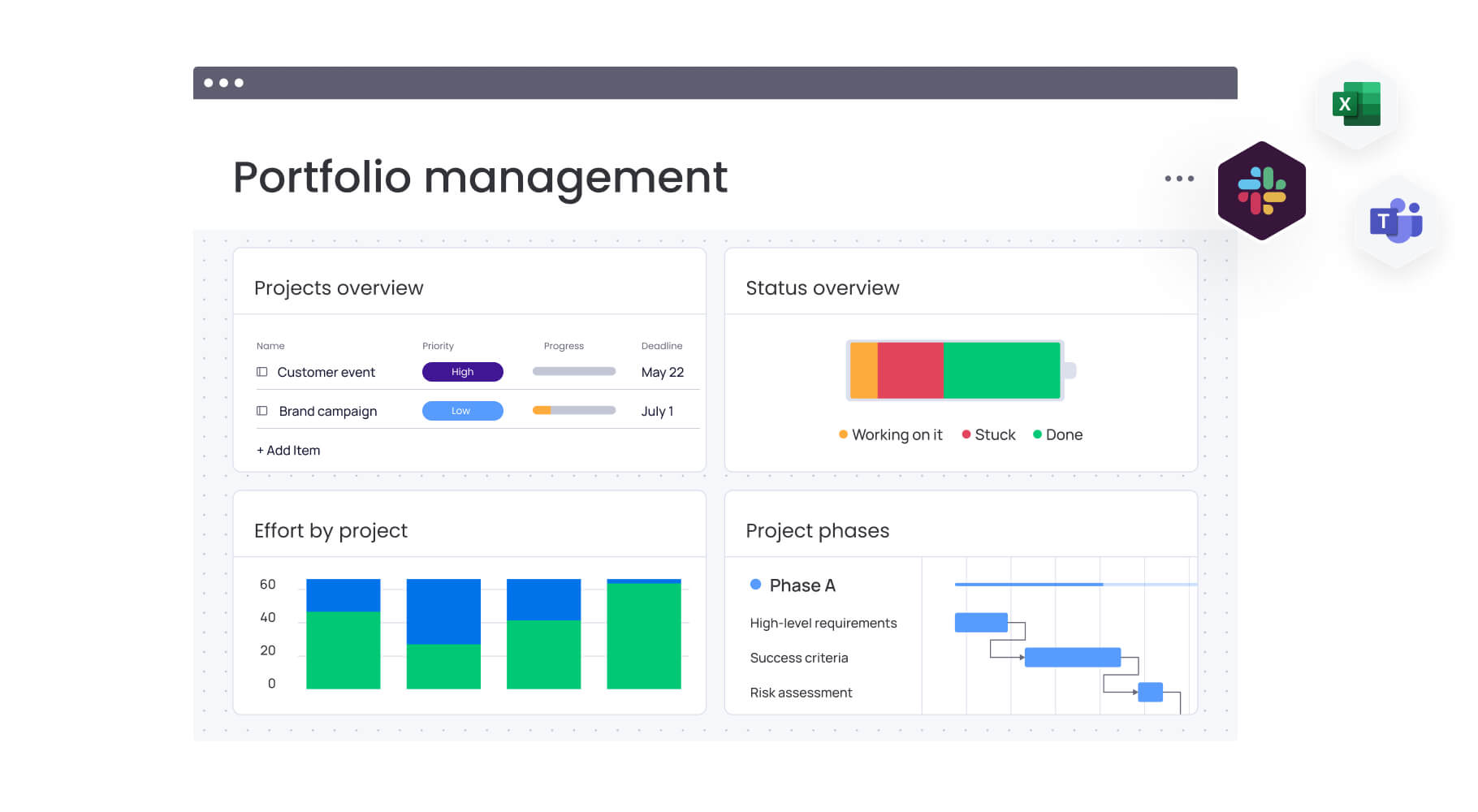
Enterprise marketing leaders face an array of challenges when managing large, distributed teams across multiple campaigns and channels. Advanced solutions like monday work management address these complexities by delivering centralized visibility and cross-functional coordination that transforms how marketing organizations operate at scale.
As a leader in the 2024 Gartner® Magic Quadrant™ for Marketing Work Management, the platform connects campaign planning, execution, and performance tracking in one workspace. For marketing leaders managing 50-100+ team members across content, creative, acquisition, events, and operations, the platform solves the critical challenge of siloed teams working with duplicative processes and unclear ownership.
Key benefits for marketing leadership:
- Real-time visibility: track campaign progress, team capacity, and ROI across all initiatives.
- Resource optimization: prevent burnout through strategic capacity planning and workload management.
- Strategic alignment: connect marketing campaigns to company-level OKRs and business objectives.
- Operational efficiency: standardize workflows through automation and templates.
With proven results like VML’s 7,000 hours saved per account monthly and Canva’s 3x increase in creative output, monday work management transforms how enterprise marketing teams deliver initiatives on time with seamless collaboration.
monday work management top features for campaign management
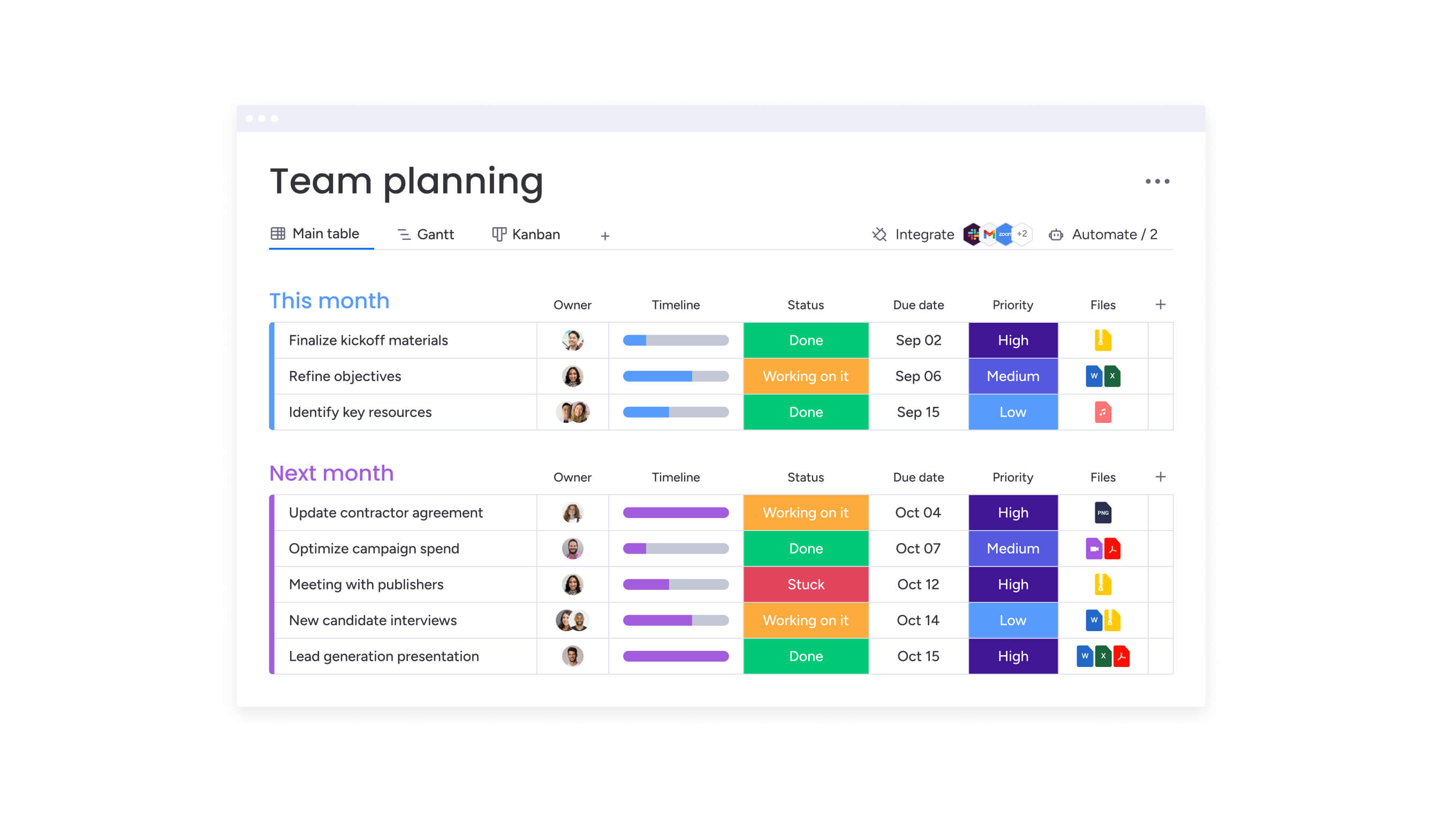
The following capabilities address the most critical needs of enterprise marketing teams, from campaign orchestration to cross-functional collaboration. Each feature is designed to scale with your organization while maintaining the flexibility needed for diverse campaign types and market demands.
Campaign management
With clever campaign management features with the platform, you’ll finally stop wondering which campaigns are on track. Every timeline, calendar, and performance metric lives in one place your entire team can access. You gain a unified view of all marketing programs, campaigns, and activations across your team, giving leadership a high-level snapshot while allowing campaign managers to drill down into specific channel activations.
Core capabilities:
- Unified campaign view: centralize all marketing programs and activations in one workspace.
- Timeline tracking: monitor campaign progress with target dates and actual timeframes.
- Bottleneck identification: use timeline views and dashboards to spot delays before they impact launch dates.
- Cross-channel visibility: track activations managed jointly by campaign managers and channel owners.
For teams managing 24+ concurrent global campaigns, this eliminates the chaos of scattered spreadsheets and email threads while maintaining visibility into complex, multi-stakeholder initiatives.
Resource management and workload planning
Stop discovering your designers are double-booked two days before launch. Real-time workload views show you exactly who’s maxed out and who can take on that urgent campaign request. The platform’s resource directory centralizes talent data across your organization — including department, job roles, and expertise — while the capacity manager provides live views of resource availability across projects.
Key features:
- Resource directory: centralize talent data including departments, roles, and expertise.
- Capacity manager: view real-time resource availability across all projects.
- Workload monitoring: flag when teams are over capacity and prioritize work accordingly.
- Burnout prevention: ensure consistent delivery without overworking resources.
This directly addresses the pain point of resource burnout and misalignment that marketing leaders face when managing large teams across multiple time zones and campaign deadlines.
Dashboards and real-time reporting
Customizable dashboards connect data from multiple projects and campaigns, providing pre-built or custom views that deliver real-time insights. Filter data to uncover insights in seconds, track campaign ROI, monitor team productivity and resource utilization, and demonstrate marketing impact to executive leadership with portfolio-level reports.
Reporting capabilities:
- Real-time insights: filter and analyze campaign data instantly.
- Executive reporting: generate portfolio-level reports for C-suite presentations.
- Performance tracking: monitor campaign ROI, budget adherence, and time-to-launch metrics.
- Team productivity: track resource utilization and stakeholder satisfaction.
For marketing leaders responsible for reporting impact to the C-suite, these dashboards transform how you communicate marketing value by providing instant visibility into all the KPIs that matter for proving marketing’s contribution to business goals.
Marketing automation and templates
The platform reduces manual work and scales workflows with templates, automations, and integrations. Managed templates standardize processes across global teams while maintaining flexibility for different campaign types.
Automation features:
- Standardized templates: replicate successful campaign structures instantly.
- No-code automation: create recipes for notifications, task movements, and cross-board updates.
- Approval workflows: set automated approvals and reminders for stakeholder sign-offs.
- Real-time connections: connect teams to the right information automatically.
This capability solves the inefficient processes and lack of standardization that force teams to constantly reinvent workflows, eliminating the manual coordination that consumes valuable time while ensuring consistency across changing market demands.
Creative request management and approval workflows
Intelligent solutions such as monday work management accelerate creative workflows by scaling your business with automated request processes. The platform streamlines the complex digital and creative process with forms and automation recipes, formalizing campaign brief submission and approval processes while providing visibility into request queues and turnaround times.
Workflow benefits:
- Transparent processes: transform chaotic email-based workflows into trackable systems.
- Queue visibility: show campaign managers where requests stand and realistic timelines.
- Stakeholder alignment: set appropriate expectations across multiple approval levels.
- Version control: maintain oversight throughout the review and revision process.
For marketing leaders managing creative production across multiple stakeholders, this feature eliminates the bottlenecks that typically slow campaign launches and creative deliverables.
Cross-functional collaboration tools
The platform drives cross-team collaboration by aligning teams around shared goals with collaborative briefs, connected workflows, and centralized planning. Improve cross-functional collaboration with one workspace that brings teams and departments together — from marketing to legal, product, and finance — to achieve shared goals without the silos that scatter marketing impact.
Collaboration features:
- Unified workspace: bring marketing, legal, product, and finance teams together.
- Centralized communication: eliminate endless email threads and chat messages.
- Cross-project dependencies: ensure alignment between teams and initiatives.
- Integration ecosystem: connect your entire marketing stack for seamless data flow.
By providing transparency into who’s working on what, you eliminate the coordination overhead that makes cross-functional work overwhelming while maintaining alignment across complex, multi-stakeholder campaigns.
Marketing strategy and OKR tracking
monday work management translates strategic marketing plans into execution with OKRs, dashboards, and roadmaps that drive measurable results. Set and track company-level goals and objectives, ensuring that campaigns and projects contribute to their success while maintaining alignment between marketing strategy and business goals throughout execution.
Strategic alignment capabilities:
- Goal tracking: connect individual campaigns to broader strategic objectives.
- Progress monitoring: track advancement toward quarterly and annual goals.
- Impact demonstration: show how marketing initiatives drive growth through multi-channel strategies.
- Executive visibility: provide leadership with clear connections between marketing activities and business outcomes.
For marketing leaders responsible for aligning marketing strategy with company OKRs, this feature provides the strategic alignment and visibility needed to prove marketing’s impact on business outcomes.
Integration ecosystem
Your unified marketing ecosystem connects through native integrations to 200+ apps including Salesforce, HubSpot, Slack, Microsoft Teams, Google Drive, and all the tools your marketing team depends on. This eliminates the need to switch between platforms and ensures data flows seamlessly across your technology stack.
Integration benefits:
- Native connections: access 200+ pre-built integrations with popular marketing tools.
- Custom integrations: use the open API for proprietary systems and niche tools.
- Seamless data flow: ensure information moves automatically across your tech stack.
- Process adaptation: let monday work management adapt to your existing workflows.
The platform’s flexibility ensures you can maintain your current marketing technology investments while gaining the operational benefits of unified campaign management.
AI-powered risk identification
The platform’s AI doesn’t just collect data — it spots the campaign that’s about to derail before you do, flagging exactly which resources are overallocated and which deadlines are at risk. AI-powered risk insights scan updates to surface risks with urgency, owners, and mitigation options, while the AI-powered portfolio report instantly generates executive-level summaries with trends, risks, and charts.
AI capabilities:
- Early risk detection: receive proactive alerts about resource conflicts and timeline risks.
- Mitigation guidance: get specific recommendations for addressing potential bottlenecks.
- Executive summaries: generate instant portfolio reports with trends and risk analysis.
- Predictive insights: identify problems before they impact campaign delivery.
For marketing leaders managing multiple concurrent campaigns with aggressive launch schedules, this provides the early warning system needed to maintain on-time delivery and take corrective action while there’s still time to ensure campaign success.
How a head of marketing benefits from monday work management
When marketing leaders bring monday work management into their workflow, they don’t just save time — they deliver campaigns faster, keep their teams from burning out, and finally have the data to prove marketing’s impact to the C-suite. These benefits directly address the operational challenges that prevent marketing organizations from scaling effectively.
Operational efficiency gains:
- Time savings: marketing teams save thousands of hours monthly by eliminating manual coordination and automating repetitive campaign management tasks.
- Cost efficiency: organizations achieve significant cost savings through improved resource utilization and operational efficiency.
- Productivity improvements: teams deliver 2x faster with standardized workflows and clear ownership.
Quality and visibility improvements:
- Output quality improvements: centralized collaboration and approval workflows result in improved assets and approvals, with reduced errors and higher-quality campaign deliverables.
- Visibility and tracking improvements: real-time dashboards and portfolio views provide instant visibility into campaign progress, team capacity, and performance metrics.
- Compliance and accuracy: standardized templates and automated workflows ensure consistent data collection across teams, improving forecast accuracy and enabling reliable reporting.
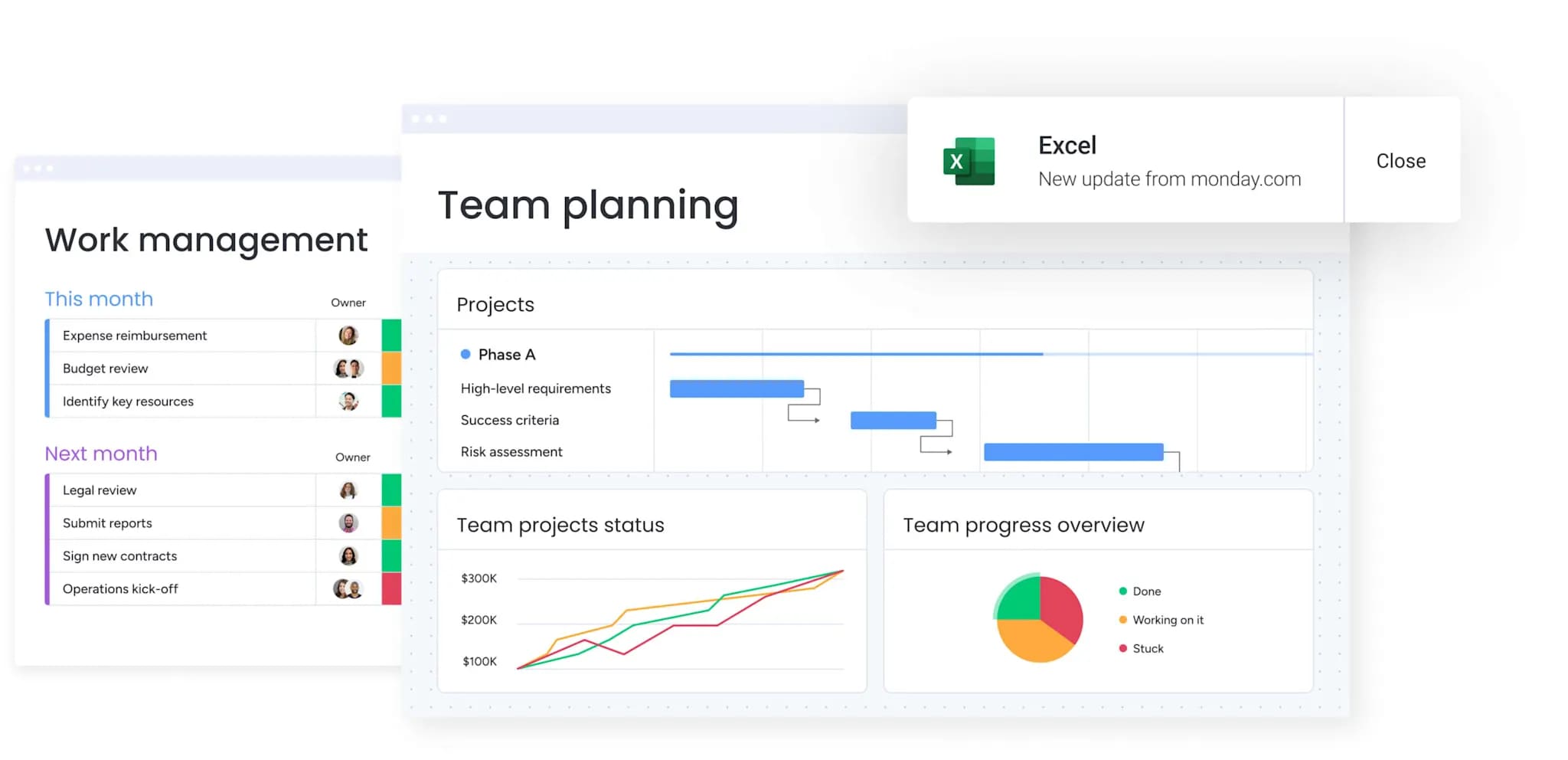
How to manage enterprise marketing campaigns with monday work management
Ready to transform your campaign operations? Start with these six steps that balance quick wins with building for scale. The following steps provide a proven framework for transforming your marketing operations while maintaining momentum on current campaigns.
Step 1: centralize campaign planning with strategic alignment
Begin by connecting your marketing campaigns to company-level OKRs and strategic objectives within monday work management. Create a master campaign calendar that houses all key dates, milestones, and dependencies across your marketing programs.
Implementation actions:
- Map existing campaigns to company-level OKRs and strategic objectives.
- Build a master campaign calendar with key dates, milestones, and dependencies.
- Establish visibility layers for leadership overview and campaign manager detail.
- Configure automated reporting for executive stakeholders.
This ensures every campaign contributes to broader business goals while providing leadership with high-level visibility into marketing efforts and resource allocation.
Step 2: structure workflows for cross-functional collaboration
Build workflow boards that outline the end-to-end activation process for each marketing channel. Use subitems to show the hierarchy of programs, campaigns, and activations.
Setup requirements:
- Design workflow boards for each marketing channel (content, creative, acquisition, events).
- Create subitems showing program, campaign, and activation hierarchies.
- Configure automated notifications for cross-functional team contributions.
- Establish clear ownership and accountability at each workflow stage.
Configure automated notifications so team members across content, creative, acquisition, events, and operations receive alerts when it’s their turn to contribute, eliminating coordination delays.
Step 3: implement resource allocation and capacity planning
Deploy the Workload feature to gain visibility into each team member’s capacity and current assignments. Set up resource allocation views that show bandwidth across your 50-100+ person team.
Capacity planning steps:
- Set up the Workload feature for all team members and projects.
- Create resource allocation views showing bandwidth across the entire team.
- Configure alerts for when specific teams are over capacity.
- Establish protocols for proactive work prioritization.
The resource directory centralizes all talent data while the capacity manager prevents burnout by ensuring consistent delivery without overworking resources.
Step 4: automate approval workflows and creative requests
Create forms for campaign brief submissions and creative requests that automatically generate workflow items and notify relevant stakeholders. Set up multi-level approval processes for campaigns requiring sign-off from legal, product, finance, or executive teams.
Workflow automation setup:
- Build forms for campaign briefs and creative requests.
- Configure multi-level approval processes for different campaign types.
- Set up automation recipes for task movement and notifications.
- Establish version control throughout the review process.
Use automation recipes to move tasks through stages, trigger notifications, and maintain version control throughout the review process, eliminating the manual coordination that typically slows campaign launches.
Step 5: connect your marketing technology stack
Integrate monday work management with your existing martech tools including Salesforce, HubSpot, Slack, Microsoft Teams, Google Drive, and analytics platforms. Configure two-way syncing where appropriate to ensure campaign data flows seamlessly across systems.
Integration priorities:
- Connect CRM and marketing automation platforms (Salesforce, HubSpot).
- Integrate communication tools (Slack, Microsoft Teams).
- Link file storage and analytics platforms (Google Drive, analytics tools).
- Configure custom integrations for proprietary tools using the open API.
Use the open API for custom integrations with proprietary tools specific to your needs, ensuring monday work management adapts to your unique marketing technology ecosystem.
Step 6: establish real-time reporting and optimization
Build custom dashboards that track campaign ROI, CAC, MQL-to-customer rates, budget adherence, team productivity, time-to-launch, and stakeholder satisfaction metrics. Configure AI-powered alerts to flag risks early and enable quick responses.
Reporting implementation:
- Build dashboards tracking key marketing metrics (ROI, CAC, MQL conversion rates).
- Configure AI-powered risk alerts for proactive issue identification.
- Schedule automated portfolio reports for executive leadership.
- Establish optimization protocols based on real-time performance data.
Schedule automated portfolio reports for executive leadership that demonstrate marketing’s impact on business goals, allowing you to optimize campaigns in real-time based on performance data.
Comparison table: monday work management vs. competing platforms
When researching the best management platforms for enterprise marketing teams, it’s essential to compare capabilities across critical dimensions. The following comparison highlights how monday work management stacks up against other popular solutions, focusing on features that matter most to marketing leaders managing large, cross-functional teams.
| Feature | monday work management | HubSpot Marketing Hub | Asana | Wrike |
|---|---|---|---|---|
| Campaign-specific workflows | ✓ Native campaign management | ✓ Marketing automation focus | ✗ Generic project management | ✓ Marketing templates |
| Resource/workload management | ✓ Built-in Workload feature | ✗ Requires additional tools | ✗ Limited capacity planning | ✓ Resource management tools |
| Real-time dashboards | ✓ Customizable with AI insights | ✓ Marketing-specific dashboards | ✓ Basic reporting | ✓ Visual dashboards |
| Cross-functional collaboration | ✓ Unified workspace for all teams | ✓ Sales/marketing alignment | ✓ Task collaboration | ✓ Cross-team coordination |
| Marketing automation | ✓ 200+ automation recipes | ✓ Extensive marketing automation | ✓ Workflow automation | ✓ 400+ automation options |
| OKR and goal tracking | ✓ Native goals & OKRs | ✗ Requires custom setup | ✓ Goal tracking | ✗ Limited goal features |
| Enterprise security | ✓ SSO, BYOK, tenant encryption | ✓ Enterprise security | ✓ Enterprise features | ✓ Enterprise security |
| Implementation time | < 4 months | 2-3 months typical | 2 weeks - 1 month | 1-2 months typical |
| G2 rating | 4.7/5 (12K+ reviews) | 4.4/5 | 4.3/5 | 4.2/5 |
How Genpact's global marketing team transformed their campaign operations
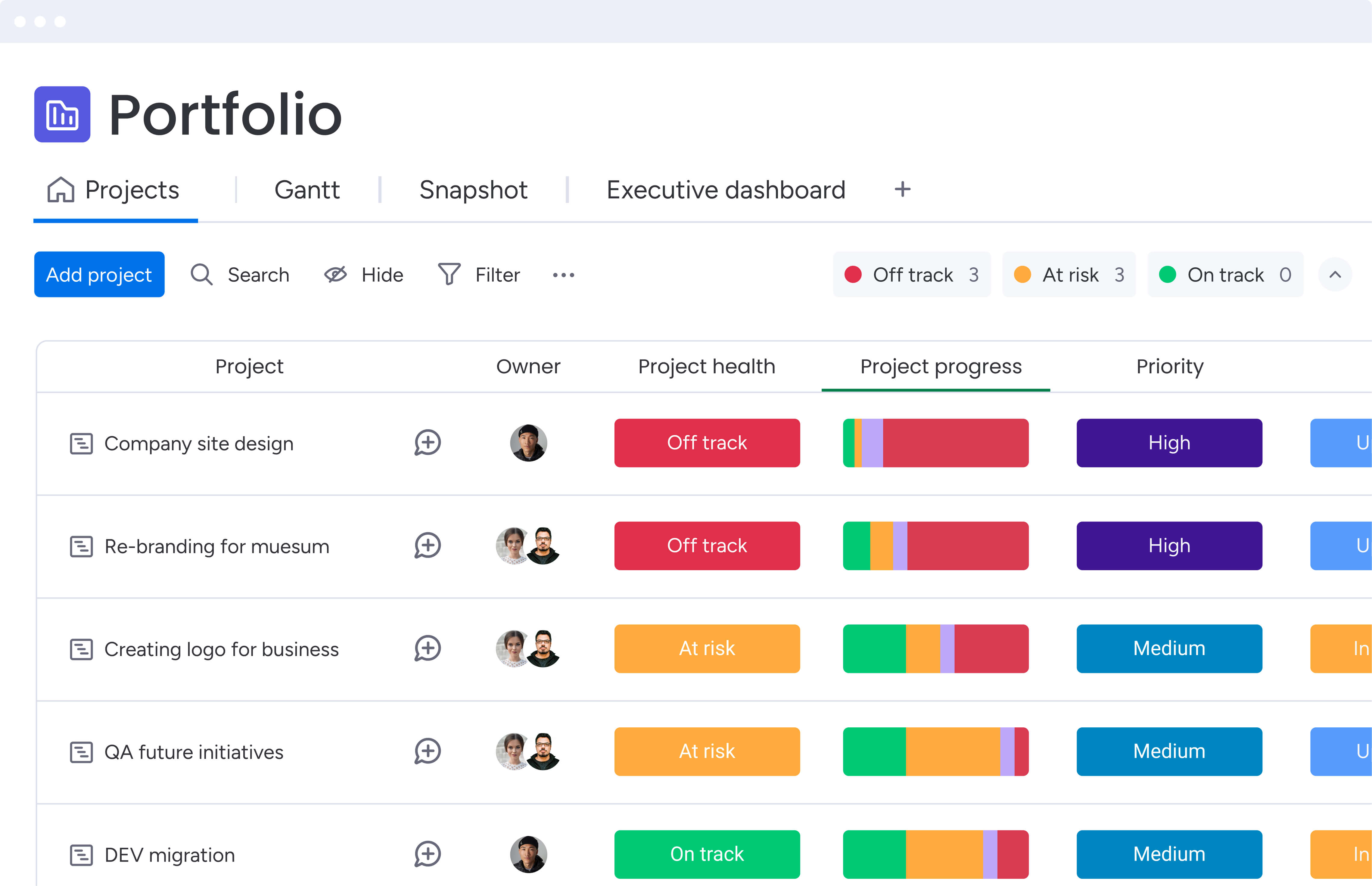
This real-world case study demonstrates how a global marketing organization successfully implemented monday work management to solve complex campaign coordination challenges. Genpact’s experience provides a blueprint for other enterprise marketing teams facing similar operational hurdles.
The challenge
Genpact’s globally distributed marketing department runs 24 ongoing large-scale marketing campaigns at any given time, each with several cross-channel activations jointly managed by campaign managers and channel owners.
Team members saved spreadsheets across personal desktops, emails, and Microsoft SharePoint folders to manage Go-To-Market planning processes, creating a heavy reliance on fragmented information.
Key operational challenges:
- Version control issues: multiple stakeholders entering information at different times with no single source of truth.
- Visibility gaps: no clear tracking of campaign status, progression, and key information.
- Coordination overhead: excessive time spent on manual updates and status communications.
- Resource misalignment: difficulty tracking who was working on what across global teams.
With multiple stakeholders entering information at different times, no one knew who had the latest version or where to find it, creating significant inefficiencies in campaign execution.
The solution
Genpact implemented monday work management to create a unified platform for end-to-end campaign planning and execution. The team built workflow apps outlining the entire activation process for each channel, with columns tracking target dates versus actual timeframes to identify trends and bottlenecks.
Implementation approach:
- Workflow standardization: built apps outlining activation processes for each marketing channel.
- Timeline tracking: created columns comparing target dates versus actual timeframes.
- Dashboard visibility: utilized Timeline views and dashboards for outstanding campaign aspects.
- Request formalization: implemented forms for campaign brief submission and approval processes.
- Calendar integration: created high-level GTM calendar with program, campaign, and activation hierarchies.
They utilized Timeline views and dashboards to see outstanding campaign aspects and drill down into critical items for each week or month, while formalizing campaign brief submission and approval processes using forms with automated notifications.
The results
The implementation delivered significant improvements across multiple areas that directly impact marketing effectiveness and team productivity:
Collaboration and efficiency gains:
- 40% improvement in cross-team collaboration for successful end-to-end campaign planning and execution.
- 100% removal of spreadsheets from campaign management processes.
- 25% decrease in email exchanges across the marketing department.
Operational improvements:
- Complete visibility into campaign timelines, enabling accurate turnaround time estimates.
- Rapid adaptation to changing priorities, such as pivoting event strategies during the pandemic.
- Standardized processes that scale across global teams and diverse campaign types.
These results demonstrate how the right platform can transform marketing operations while maintaining the flexibility needed for dynamic market conditions.
Take control of your marketing operations today
Let’s be honest: coordinating campaigns across 50+ team members in different time zones is chaos without the right system. The traditional approach of scattered platforms, manual coordination, and reactive management no longer scales with the demands of today’s marketing operations.
Intuitive solutions like monday work management gives you what spreadsheets and email threads never could: complete visibility into every campaign, clear ownership of every task, and the data to show exactly how marketing drives revenue.
As a Leader in the 2024 Gartner® Magic Quadrant™ for Marketing Work Management, the platform delivers the operational efficiency, strategic alignment, and real-time insights that marketing leaders need to manage 50-100+ person teams across multiple concurrent campaigns.
With proven results including 7,000 hours saved monthly, 3x creative output increases, and 40% improvements in cross-team collaboration, monday work management transforms how enterprise marketing organizations plan, execute, and optimize campaigns.
Join 6,500+ marketing teams today who trust the platform to centralize campaign visibility, prevent team burnout, and deliver the strategic alignment that executive leadership expects.
The content in this article is provided for informational purposes only and, to the best of monday.com‘s knowledge, the information provided in this article is accurate and up-to-date at the time of publication. That said, monday.com encourages readers to verify all information directly.
Frequently asked questions
How long does it take to implement monday work management for a 100+ person marketing team?
Most enterprise teams are up and running in two to four months, but you'll start seeing results within weeks of your first workflows. The Total Economic Impact™ Forrester study reports less than four-month payback period, with many organizations seeing value within weeks. The key to fast adoption is starting with high-impact workflows like campaign calendars, then expanding to additional workflows as teams see value.
Can monday work management integrate with both Salesforce and HubSpot simultaneously?
Yes, monday work management integrates with 200+ apps including both Salesforce and HubSpot, allowing you to maintain connections to multiple CRM and marketing automation platforms simultaneously. The platform offers native integrations as well as an open API for custom connections, ensuring campaign data, lead information, and performance metrics flow seamlessly across your martech stack.
What's the difference between a campaign management platform and a marketing project management platform?
Campaign management software specifically focuses on planning, executing, and tracking marketing campaigns across multiple channels with features like campaign calendars, creative request workflows, and marketing-specific automation. Marketing project management software takes a broader view, encompassing campaign management plus resource planning, portfolio management, OKR tracking, and cross-functional collaboration with non-marketing teams.
How do I calculate ROI for campaign management software implementation?
Calculate ROI by measuring time savings from reduced manual coordination, cost savings from improved resource utilization, and revenue impact from faster time-to-market and increased campaign volume. Factor in hard costs like eliminated spreadsheet management time, reduced meeting time, and decreased email volume. Also measure soft benefits like improved team satisfaction, reduced burnout, and stakeholder alignment.
Which campaign management tools offer the best mobile apps for remote teams?
monday work management provides native mobile apps for iOS and Android that enable real-time campaign management from anywhere. The mobile app allows team members to update campaign status, respond to approval requests, view dashboards, and access critical campaign information on the go. The mobile experience maintains the same intuitive interface as the desktop version, ensuring team members can stay productive regardless of location or time zone.
Do I need separate tools for campaign planning and campaign execution?
No, monday work management provides end-to-end capabilities for both campaign planning and execution within a single platform. You can plan campaigns with strategic calendars and timelines, execute through automated workflows and task assignments, track progress with real-time dashboards, and optimize based on performance insights — all without switching tools. This unified approach eliminates the data silos and coordination overhead that come from using separate planning and execution systems.

 Get started