


Marketing teams at enterprise services companies manage a high volume of activity, often running 24+ concurrent campaigns while coordinating over 50 people. As campaigns scale across channels and regions, maintaining visibility and alignment becomes a key strategic priority. Centralizing these operations allows teams to proactively manage deadlines, align efforts, and provide leadership with definitive answers about marketing ROI.
The best campaign management software addresses these operational challenges by centralizing planning, execution, and performance tracking in one unified platform. Rather than juggling disconnected systems, marketing leaders gain real-time visibility into campaign progress, team workloads, and budget allocation while maintaining the flexibility needed for different campaign types and regional requirements.
Let’s dive into what truly sets powerful campaign management platforms apart from basic trackers, the specific features that move the needle for large marketing teams, and the real transformation stories from Genpact and VML — who’ve achieved 40% improved collaboration and doubled their delivery speed. We’ll cover evaluation criteria, implementation approaches, and real-world examples that demonstrate how the right platform eliminates silos and accelerates campaign execution at enterprise scale.
Key takeaways
- Centralize all campaign operations in one platform: unify planning, execution, and performance tracking across content, creative, and channel teams to eliminate scattered spreadsheets and email chaos.
- Gain real-time visibility into team capacity and campaign performance: see who has bandwidth, track ROI metrics, and identify bottlenecks before they derail deadlines across your 50-100+ person marketing organization.
- Transform efficiency with monday work management’s automation and AI: automate approval workflows, eliminate manual status updates, and let AI flag risks early — teams like VML save 7,000 hours monthly with 2x faster delivery.
- Standardize workflows while maintaining campaign flexibility: create templates for product launches, events, and demand generation that ensure consistency without limiting creativity or regional customization needs.
- Connect marketing strategy to executive goals with custom dashboards: report campaign ROI, budget adherence, and team productivity to leadership automatically, demonstrating marketing’s strategic impact on business outcomes.
What makes heads of marketing choose monday work management for campaign management?
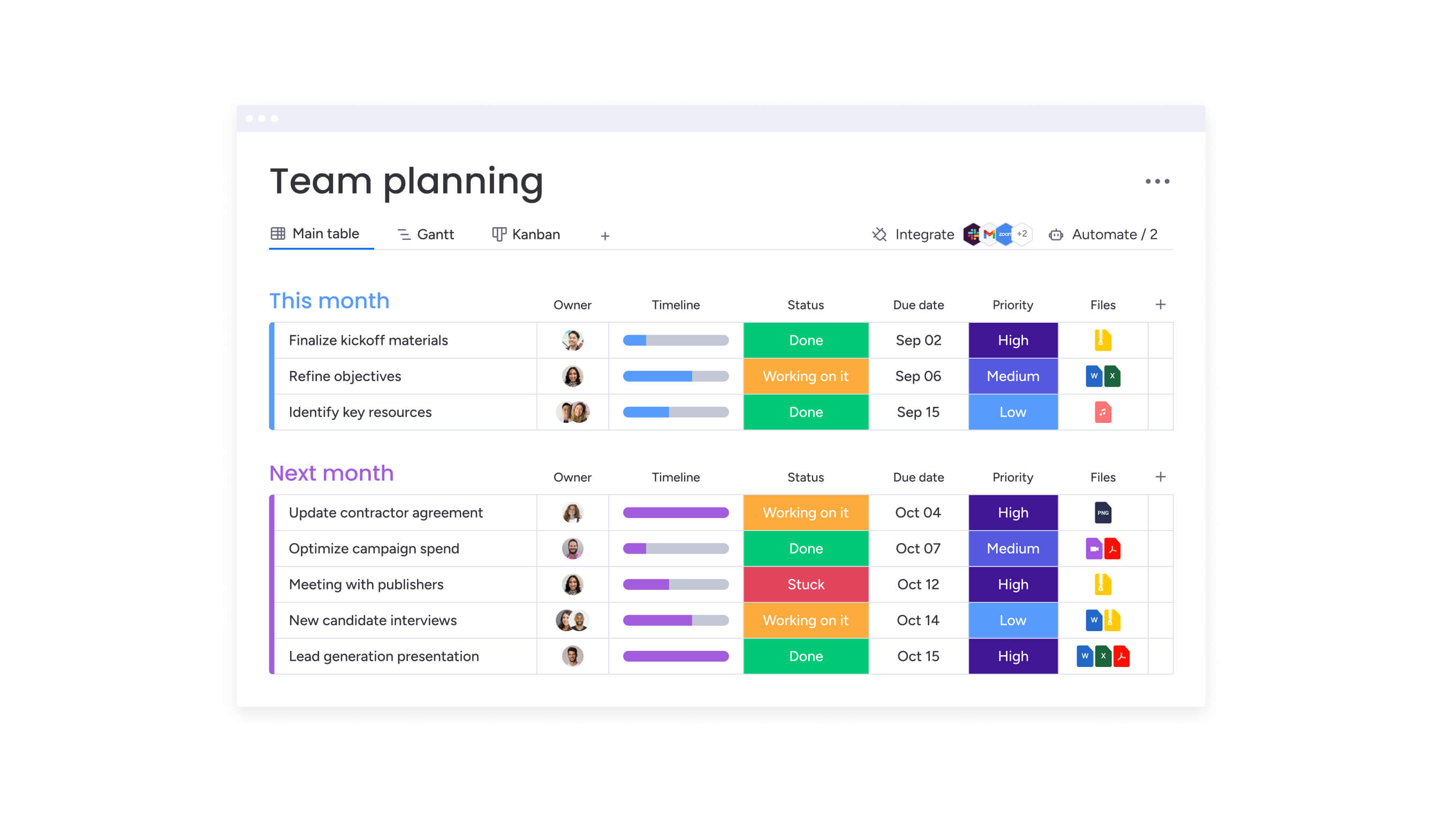 Enterprise marketing leaders face unique challenges when orchestrating complex operations across large, distributed teams. Advanced solutions like monday work management tackle these challenges by providing the centralized visibility and operational efficiency needed to drive measurable results.
Core operational challenges solved:
- Unified Execution: teams constantly reinvent workflows, leading to inefficient processes.
- Poor resource utilization: causes burnout and missed deadlines across 50-100+ person teams.
- Lack of real-time visibility: creates blind spots in tracking progress, capacity, and ROI.
Strategic advantages delivered:
- Unified campaign visibility: centralized view of all campaigns, performance metrics, and team workloads.
- Standardized yet flexible workflows: templates and automation maintain consistency while allowing customization for different campaign types.
- Executive alignment: connect marketing strategy with company goals through OKRs and customizable dashboards.
For marketing leaders managing teams across content, creative, acquisition, events, and operations, monday work management provides the operational efficiency needed to execute campaigns faster without sacrificing quality or strategic alignment.
The platform empowers heads of marketing to leverage marketing planning software and drive maximum results from their teams.
monday work management top features for campaign management
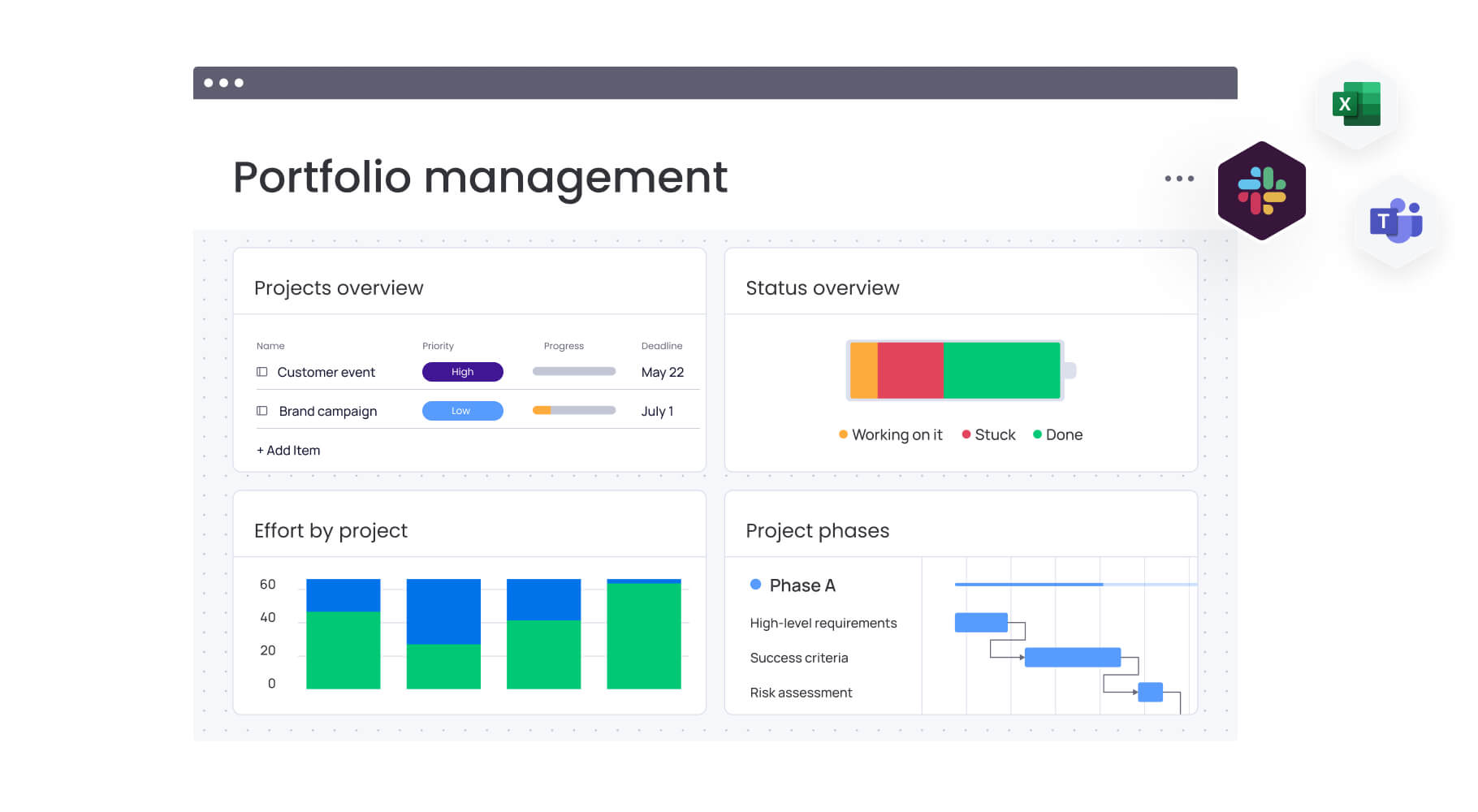
Understanding the specific capabilities that transform marketing operations can really helps leaders understand how monday work management addresses their unique challenges.
These six core features provide the foundation for streamlined campaign management across enterprise marketing organizations.
Campaign management
With monday work management, you’ll finally see your entire campaign ecosystem in one place — from initial strategy to final results. Our interactive calendars, dynamic timelines, and real-time performance dashboards catch the details that typically fall through the cracks when you’re running 20+ campaigns simultaneously.
Key capabilities:
- Visual campaign calendar: shows all marketing programs, campaigns, and activations across the organization.
- Unified dashboards: track campaign ROI, CAC, and MQL-to-Customer rates in one location.
- Multi-level visibility: leadership gets high-level snapshots while teams access detailed execution views.
For heads of marketing managing 24+ large-scale campaigns simultaneously across different service lines and regions, this feature eliminates the chaos of scattered spreadsheets and email chains while maintaining ownership and accountability across content, creative, and channel teams.
Resource management
Our platform’s resource management capabilities show you exactly who’s maxed out and who has bandwidth — in real time. You’ll spot potential bottlenecks weeks before deadlines, redirect talent where it’s needed most, and keep your creative teams focused on what they do best. The built-in Workload view shows capacity across multiple projects, enabling smooth adjustments and confident decision-making.
Critical benefits:
- Capacity visualization: see who has bandwidth for new initiatives.
- Workload balancing: ensure no team members are overloaded.
- Strategic allocation: focus resources on high-impact delivery.
This capability directly addresses one of the most critical pain points for heads of marketing. With 50-100+ person teams spread across multiple functions, understanding capacity becomes impossible without proper visibility. monday work management’s resource management ensures consistent delivery of marketing plans and ad hoc requests without over-committing teams.
Marketing operations
The intelligent platform has completely reimagined how marketing teams work together. Your content creators, designers, and channel specialists will finally operate from the same playbook — with shared briefs, connected workflows, and centralized planning that turns departmental silos into a unified marketing engine.
Operational improvements:
- Standardized processes: create templates while maintaining flexibility for different campaign types.
- Automated workflows: eliminate constant email follow-ups and manual status updates.
- Cross-functional coordination: seamless integration with legal, product, and finance teams.
For marketing leaders in services companies where campaigns require coordination across multiple departments, this feature transforms how work gets done. Teams can focus on creative and strategic work rather than administrative processes.
Dashboards and reporting
User-friendly dashboards cut through the noise, showing you exactly what matters: which campaigns are delivering ROI, where your budget is going, who’s crushing their targets, and where your team might be stretched too thin — all updated in real time. Pre-built and custom dashboards connect data from multiple projects, with easy filtering to uncover insights that keep teams aligned and goals on track.
Executive reporting capabilities:
- Real-time metrics: campaign ROI, CAC, MQL-to-Customer rates, budget adherence, and time-to-launch.
- Customizable views: match how leadership teams want to see data.
- Automated compilation: eliminate hours spent gathering data from disparate systems.
This feature is essential for heads of marketing who must report impact to executive leadership and demonstrate marketing ROI. Instead of spending hours compiling data from disparate systems, leaders access comprehensive metrics in customizable formats.
Automations
monday work management’s automation capabilities eliminate manual work and accelerate execution by automating repetitive processes, approval workflows, and notifications. With no-code automation recipes, marketing teams can set up sophisticated workflows that move work forward automatically based on triggers like status changes, deadlines, or form submissions.
Automation benefits:
- Approval workflows: route campaign briefs, creative assets, and budget requests automatically.
- Smart notifications: alert the right people at the right time.
- Process visibility: complete transparency into status and turnaround time.
These clever automations accelerate approval cycles, freeing up hours previously spent on manual follow-ups with legal, brand, and executive teams. What used to take days of email chains now happens automatically, cutting approval cycles from weeks to days.
When campaign managers submit briefs through WorkForms, specific team members receive automated notifications, and the workflow app serves as a queue for requests.
AI-powered insights
monday work management’s AI capabilities analyze org-wide data to flag risks early, categorize project requests at scale, and power faster, smarter decisions across every project, team, and timeline. The AI business partner proactively raises flags across projects to help you address issues before they become critical.
Proactive intelligence:
- Risk identification: spot potential bottlenecks, resource conflicts, or timeline risks.
- Pattern analysis: learn from campaign data to optimize future performance.
- Proactive problem-solving: address issues before they become critical.
When you’re juggling dozens of campaigns with interlocking deadlines, our AI spots potential bottlenecks days before they’d appear on your radar. Instead of putting out fires, you’re preventing them — giving your team back hours previously lost to crisis management.
How a head of marketing in services industry benefits from monday work management
Marketing leaders implementing monday work management achieve measurable improvements across operational metrics that directly impact business outcomes. These benefits demonstrate the platform’s ability to transform marketing operations at enterprise scale.
Quantifiable operational improvements:
- Time savings: marketing leaders save thousands of hours monthly by eliminating manual status updates and reducing email communication. VML’s team saved 7,000 hours per account monthly, while FARFETCH saved 3.5K hours per month, time that can be reinvested into strategic initiatives and creative work.
- Cost efficiency: the platform delivers measurable financial impact through optimized resource allocation and elimination of inefficient processes. Marketing leaders can do more with existing budgets while demonstrating value to executive leadership.
- Visibility and tracking improvements: real-time dashboards provide instant visibility into campaign performance, team workloads, and marketing ROI, eliminating the hours previously spent compiling reports from disparate systems. Genpact achieved 40% improvement in cross-team collaboration through enhanced visibility.
- Productivity improvements: teams deliver campaigns 2x faster and achieve 3x creative output by standardizing workflows while maintaining flexibility. The complete removal of spreadsheets and significant decrease in email exchanges demonstrate how the platform eliminates productivity drains.
- Output quality improvements: with standardized processes, automated approval workflows, and defined ownership, campaign quality improves while delivery accelerates. Teams maintain quality standards while reducing project management timelines.
- Compliance and accuracy: centralized campaign management ensures brand consistency, regulatory compliance, and data accuracy across all marketing initiatives. The platform serves as a single source of truth, eliminating version control issues and ensuring all stakeholders work from the same information.
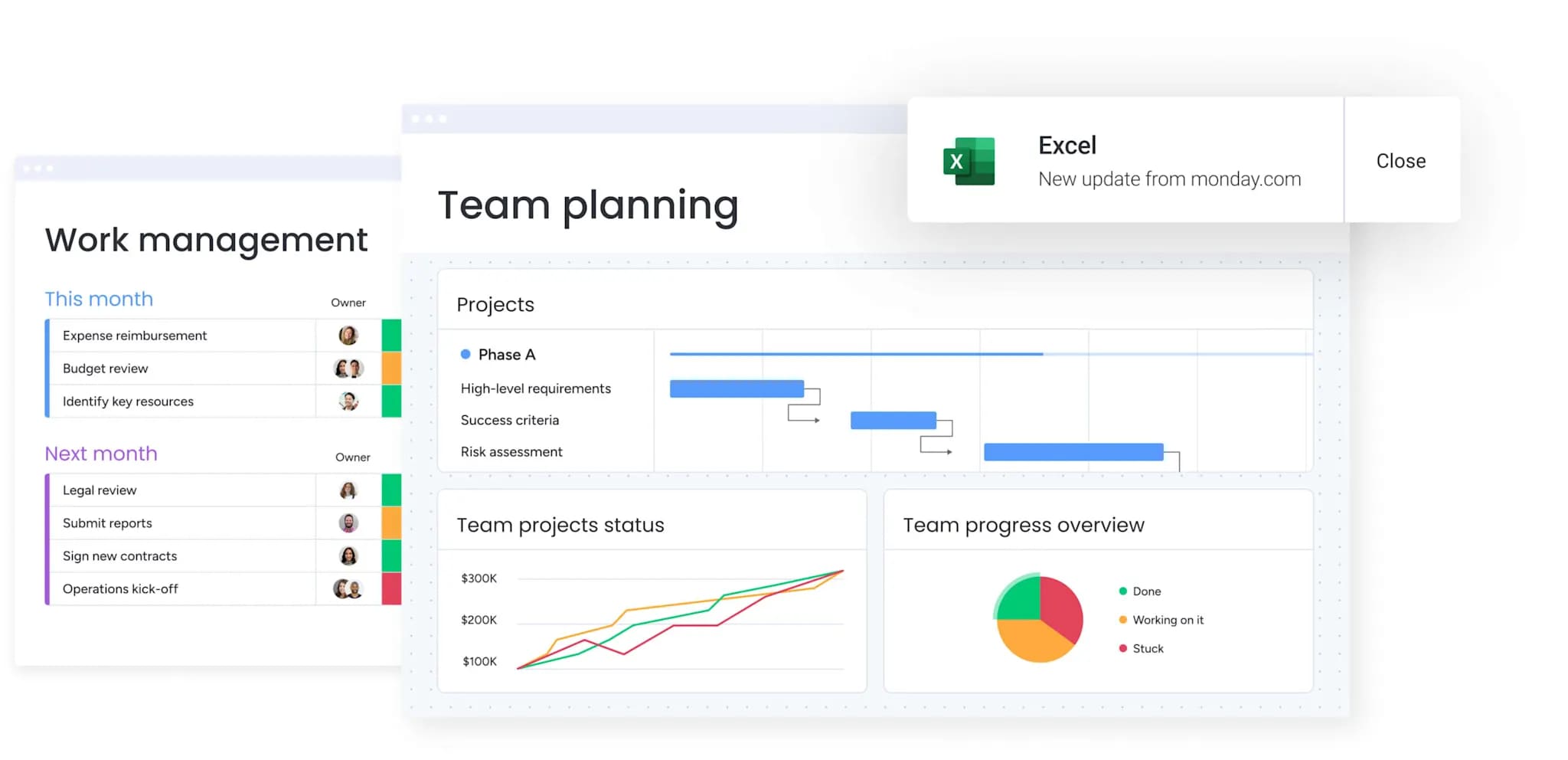
How to manage marketing campaigns with monday work management
Managing campaigns effectively requires a systematic approach that connects strategy to execution. These six steps show how to transform scattered marketing operations into a unified, high-performing engine that delivers measurable results.
Step 1: centralize your campaign planning
Create a master campaign calendar that houses all key dates, milestones, and initiatives across your marketing organization. Use the platform’s hierarchy features with subitems to show the relationship between programs, campaigns, and activations.
Implementation approach:
- Build a comprehensive calendar view of all marketing activities.
- Establish clear hierarchy between programs, campaigns, and individual activations.
- Provide leadership with high-level snapshots while giving teams detailed execution views.
Step 2: standardize workflows with templates
Build campaign templates for your most common initiatives that include all necessary phases, timelines, and approval stages. Templates for product launches, events, content campaigns, and demand generation ensure consistency across teams while allowing customization for specific needs.
Template categories to create:
- Product launch campaigns with regulatory and legal checkpoints.
- Event marketing workflows with venue, speaker, and logistics coordination.
- Content campaigns with editorial calendars and approval processes.
- Demand generation programs with lead scoring and nurture sequences.
This eliminates the inefficiency of teams constantly reinventing workflows while maintaining the flexibility needed for different campaign types.
Step 3: implement automated approval workflows
Set up automation recipes that route campaign briefs, creative assets, and budget requests through appropriate approval chains automatically. Configure notifications to alert stakeholders when their input is needed, eliminating the manual follow-ups that consume valuable time and cause delays.
Automation priorities:
- Creative asset approvals with brand and legal review stages.
- Budget request routing based on campaign size and scope.
- Campaign brief submissions with automatic stakeholder notifications.
- Status update triggers that keep all parties informed.
Step 4: connect cross-functional teams
Create interconnected boards that link marketing campaigns with legal reviews, product roadmaps, and finance approvals. Use dependencies to show how work in one area impacts others, ensuring seamless coordination across departments and eliminating the silos that scatter marketing impact.
Cross-functional integration points:
- Legal review processes for compliance and regulatory requirements.
- Product roadmap alignment for launch timing and feature availability.
- Finance approval workflows for budget allocation and spend tracking.
- Sales enablement coordination for campaign messaging and materials.
Step 5: enable resource management and capacity planning
Implement the Workload view to visualize team capacity across all campaigns and projects. Track target dates versus actual completion times to identify bottlenecks and optimize resource allocation, ensuring consistent delivery without overloading your teams.
Capacity management features:
- Visual workload distribution across team members.
- Skill-based resource allocation for specialized campaign needs.
- Timeline tracking to identify recurring bottlenecks.
- Capacity forecasting for upcoming campaign planning.
Step 6: build executive dashboards for impact reporting
Configure custom dashboards that display the metrics your leadership team cares about. Set up automated reports that keep stakeholders informed without requiring manual data compilation, demonstrating marketing’s strategic impact on business goals.
Executive dashboard components:
- Campaign ROI and performance metrics.
- Resource utilization and team productivity indicators.
- Budget adherence and spend optimization data.
- Strategic goal alignment and OKR progress tracking.
Comparison table: monday work management vs competing platforms
If you really want to unpick the best campaign management platforms for enterprise marketing teams, understanding the key differences in features, implementation, and value is absolutely essential.
This comparison highlights how monday work management, HubSpot, and Salesforce Marketing Cloud stack up across critical evaluation criteria for large marketing organizations.
| Feature | monday work management | HubSpot | Salesforce Marketing Cloud |
|---|---|---|---|
| Campaign planning & execution | Unified visual workspace with customizable views (Kanban, Gantt, Timeline, Calendar) | Marketing Hub with campaign features | Campaign management with journey builder |
| Resource management | Built-in Workload view with capacity planning | Limited resource management | Requires additional modules |
| Cross-functional collaboration | Native collaboration with legal, product, finance teams | Primarily marketing-focused | Requires Service Cloud integration |
| Automation capabilities | No-code automation builder with unlimited recipes | Workflow automation included | Advanced automation (higher tiers) |
| Implementation time | 2 weeks to 1 month typical adoption | 1-3 months | 3-6 months typical |
| Price per user/month | Starts at $10/user (annual billing) | Starts at $20/seat | Starts at $400/month (not per user) |
| Customization flexibility | Fully customizable no-code platform | Template-based with some flexibility | Highly customizable but complex |
| G2 rating | 4.7/5 (12K+ reviews) | 4.4/5 | 4.0/5 |
| Best for | Large marketing teams (50-100+) needing visibility and collaboration | All-in-one marketing with CRM | Enterprise multi-channel orchestration |
| Enterprise security | IP restrictions, 2FA, multiple SSO, BYOK, tenant-level encryption | Enterprise security features | Enterprise-grade security |
How Genpact's global marketing team transformed their campaign management
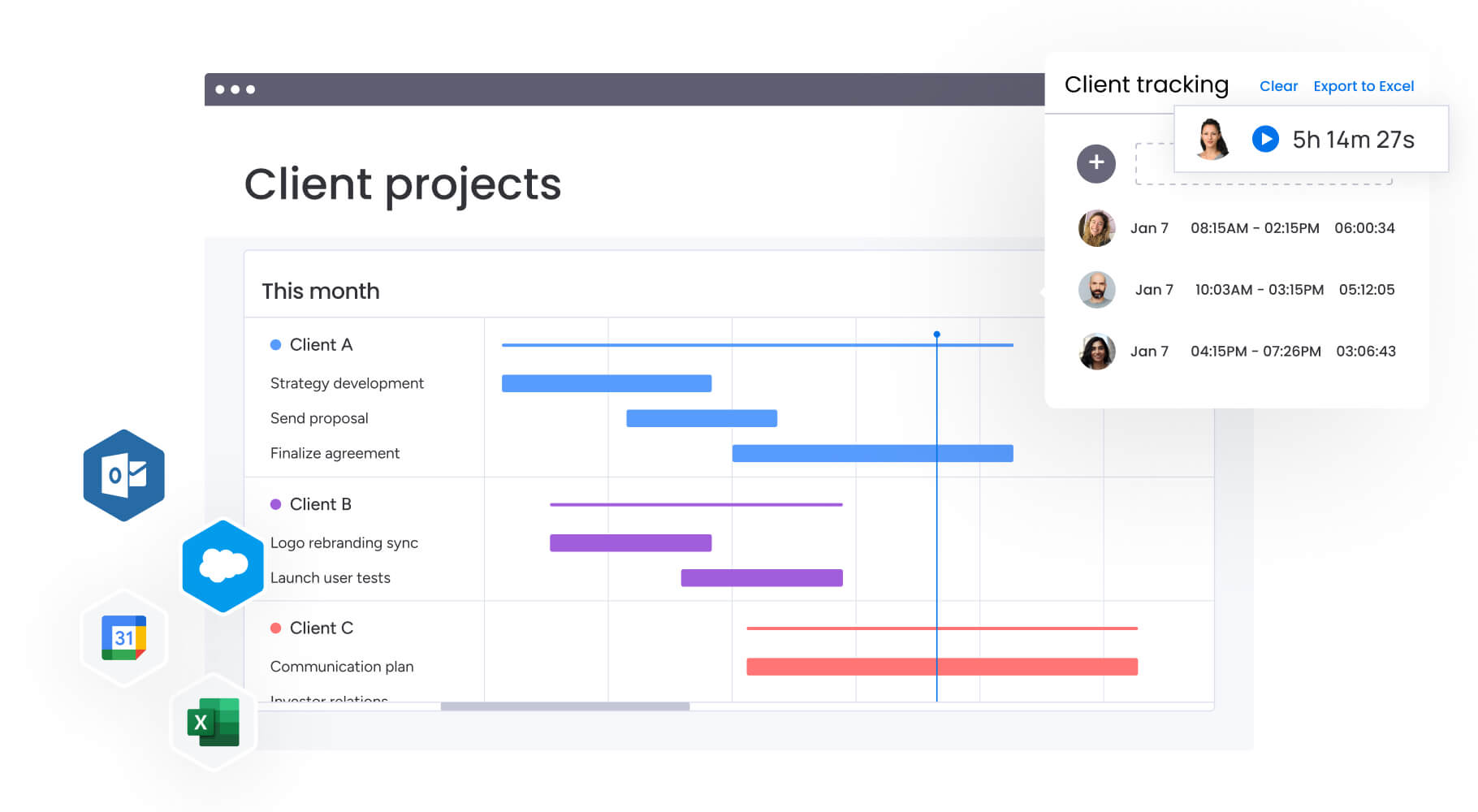
Real-world implementation demonstrates how monday work management addresses the complex challenges facing enterprise marketing teams. Genpact’s transformation (highlighted below) showcases the measurable impact of centralized campaign management across globally distributed teams.
The challenge
Genpact’s globally distributed marketing team runs approximately 24 ongoing, large-scale marketing campaigns at any given time across multiple programs focused on different industries and solutions. Each campaign involves several cross-channel activations jointly managed by campaign managers and channel owners, bringing together 400 people from 40 different teams.
Operational pain points:
- Campaign managers relied heavily on spreadsheets saved across personal desktops, emails, and Microsoft SharePoint folders.
- No one knew who had the latest version or where to find it.
- Multiple stakeholders and contributors involved in each campaign made tracking status, progression, and key information nearly impossible.
- Lack of visibility into turnaround times, delays, and sub-function involvement.
The solution
Genpact implemented monday work management to standardize their end-to-end campaign planning and execution process. The implementation focused on creating visibility and standardization across their complex marketing operations.
Implementation components:
- High-level GTM campaign calendar: created with subitems showing the hierarchy of programs, campaigns, and activations.
- Workflow apps: outlined the entire end-to-end activation process for each channel with columns for target dates and actual timeframes.
- Multiple view options: timeline view and dashboards to see outstanding campaign aspects and drill down into critical items.
- monday forms integration: formalized campaign brief submission and approval processes with automated notifications.
The marketing team utilized the platform’s flexibility to create a system that provided both high-level visibility for leadership and detailed execution tracking for operational teams.
The results
The transformation delivered measurable improvements across Genpact’s marketing operations, demonstrating the platform’s ability to drive significant operational efficiency at enterprise scale.
Quantified improvements:
- 40% improvement in cross-team collaboration for successful end-to-end campaign planning and execution.
- 100% removal of spreadsheets from the campaign management process.
- 25% decrease in email exchanges through centralized communication.
Operational benefits:
- Complete visibility into turnaround times, delays, and sub-function involvement.
- Standardized processes that eliminated version control issues.
- Automated notification system that serves as a queue for requests.
- Clear status tracking and accountability across all campaign elements.
The platform provided the visibility needed to answer questions about campaign performance that were previously impossible to answer definitively. The marketing department is now implementing the Workload feature for resource allocation to ensure consistent delivery of marketing plans without overloading teams.
Ready to level up your marketing campaign management?
Your marketing team deserves better than cobbled-together spreadsheets and endless status meetings. Intuitive solutions like monday work management brings order to the chaos, giving you the clear visibility, streamlined operations, and strategic focus needed to deliver campaigns that actually move the needle — no matter how large or complex your team.
The evidence speaks for itself: VML saved 7,000 hours per account monthly with 2x faster delivery, Genpact achieved 40% improvement in cross-team collaboration, and Canva reached 3x creative output. T
hese results demonstrate how the right platform transforms scattered marketing operations into unified, high-performing engines.
Why let another quarter go by with missed deadlines, scattered data, and late-night fire drills? Join marketing powerhouses like VML, Genpact, and Canva who’ve transformed their campaign execution with monday work management — and see what your team is truly capable of.
The content in this article is provided for informational purposes only and, to the best of monday.com‘s knowledge, the information provided in this article is accurate and up-to-date at the time of publication. That said, monday.com encourages readers to verify all information directly.
Frequently asked questions
How long does it take to implement monday work management for a large marketing team?
Most marketing teams of 50–100+ people reach productive use within two weeks to one month. The platform is intuitive, so teams can start building boards and workflows within hours. For larger, cross-functional rollouts, a phased implementation over two to three months supports consistent adoption and long-term success.
Can monday work management integrate with our existing marketing technology stack?
Yes, monday work management integrates with 200+ applications commonly used by marketing teams, including CRM systems (Salesforce, HubSpot), marketing automation platforms, analytics platforms (Google Analytics), design applications (Canva, Adobe), communication platforms (Slack, Microsoft Teams), and social media platforms. The platform also provides an open API for custom integrations, enabling you to connect any proprietary or specialized platforms your team uses.
How does monday work management handle complex approval workflows across multiple departments?
The platform's no-code automation builder enables you to create sophisticated approval workflows that route campaign briefs, creative assets, budget requests, and legal reviews through appropriate stakeholders automatically. You can configure conditional logic based on campaign type, budget thresholds, or content categories to ensure the right approvers are involved at the right time. Automated notifications alert stakeholders when their input is needed, and the platform maintains a complete audit trail of all approvals and changes.
What's the typical ROI timeline for campaign management software at enterprise scale?
Marketing leaders typically see measurable ROI within four months of implementation. FARFETCH achieved 6x ROI with $118K saved per month, while McDonald's realized 615% ROI by saving 1,224 hours monthly. Initial benefits appear within weeks as teams eliminate spreadsheets and reduce email communication, with compounding returns as standardized processes, automation, and improved resource allocation drive efficiency gains across the organization.
How does monday work management support global marketing teams across different time zones?
The platform is designed for globally distributed teams, providing 24/seven access to campaign information regardless of location or time zone. All communication and updates happen on the platform, creating a centralized history that team members can access anytime, anywhere. Automated notifications ensure team members are alerted to important changes during their working hours, and the visual nature of boards makes it easy to understand project status without requiring synchronous communication.
What level of customization is possible without requiring IT or development resources?
monday work management provides extensive no-code customization capabilities that marketing leaders and team members can implement without IT involvement. You can create custom fields, build automation recipes, design dashboards, configure approval workflows, and create templates through an intuitive drag-and-drop interface. While IT teams can leverage the open API for advanced integrations, most marketing teams operate independently, adapting the platform to their specific needs as processes evolve.

 Get started