


Retail marketing leaders face a familiar challenge: coordinating dozens of campaigns across multiple channels while keeping teams aligned and budgets on track. When campaigns span content creation, creative development, paid acquisition, and in-store activations, scattered spreadsheets and disconnected platforms create blind spots that derail execution.
The result is often missed deadlines, budget overruns, and campaigns that fail to deliver their intended impact.
The best campaign management software addresses this complexity by centralizing campaign planning, automating routine workflows, and providing real-time visibility into performance across all initiatives. These platforms enable marketing leaders to coordinate cross-functional teams, track resource allocation, and measure ROI without the manual overhead that slows down campaign execution.
Let’s dig into what truly makes campaign management software work for retail marketing teams, focusing on the specific features that actually move the needle on coordination and campaign results. We’ll further examine how leading platforms handle workload management, automation, and real-time reporting, plus share proven implementation strategies that help marketing leaders transform scattered operations.
Key takeaways
- Centralize all campaigns in one visual workspace: replace scattered spreadsheets and siloed platforms with unified campaign calendars that show every initiative, deadline, and dependency across your entire marketing operation.
- Gain real-time visibility into team capacity and workload: see exactly who’s overloaded and who has bandwidth, then redistribute work strategically to prevent burnout and missed deadlines during peak retail seasons.
- Automate repetitive workflows to save thousands of hours annually: set up approval processes, status notifications, and work assignments that run automatically, freeing your team to focus on strategy instead of administrative work.
- Track campaign ROI and performance metrics in real-time dashboards: monitor budget adherence, timeline progress, and key performance indicators without manual reporting, giving you instant insights for faster decision-making.
- Scale operations with enterprise-grade features: leverage workload management, automated workflows, and extensive integrations to transform scattered marketing operations into a unified command center that drives measurable results.
Our results say it best
Retail marketing leaders trust monday work management to drive measurable impact across their campaigns and teams. The platform has proven its value across diverse retail organizations, delivering significant operational improvements and measurable ROI.
FARFETCH’s transformation: a leading global retail platform for luxury fashion, FARFETCH saved 42,000 hours annually and achieved 6x ROI by centralizing their marketing operations on the platform. Their Marketing Planning team, which coordinates 400 people across 40 teams, eliminated scattered Google Docs and spreadsheets to gain real-time visibility into campaign progress.
The platform enabled FARFETCH’s commercial, fashion, and editorial teams to connect in one place, establishing common workflows that improved cross-team collaboration.
Officeworks’ operational efficiency: Australia’s leading retailer with 165+ stores replaced 635+ working spreadsheets after implementing monday work management. Their Space Planning team now manages thousands of product updates annually with synchronized planograms and detailed Gantt charts, providing full visibility across the business.
monday work management is recognized as a Leader in the 2024 Gartner® Magic Quadrant™ for Marketing Work Management, validating its position as the top choice for enterprise marketing teams managing complex campaigns at scale.
What makes heads of marketing choose monday work management for campaign management?
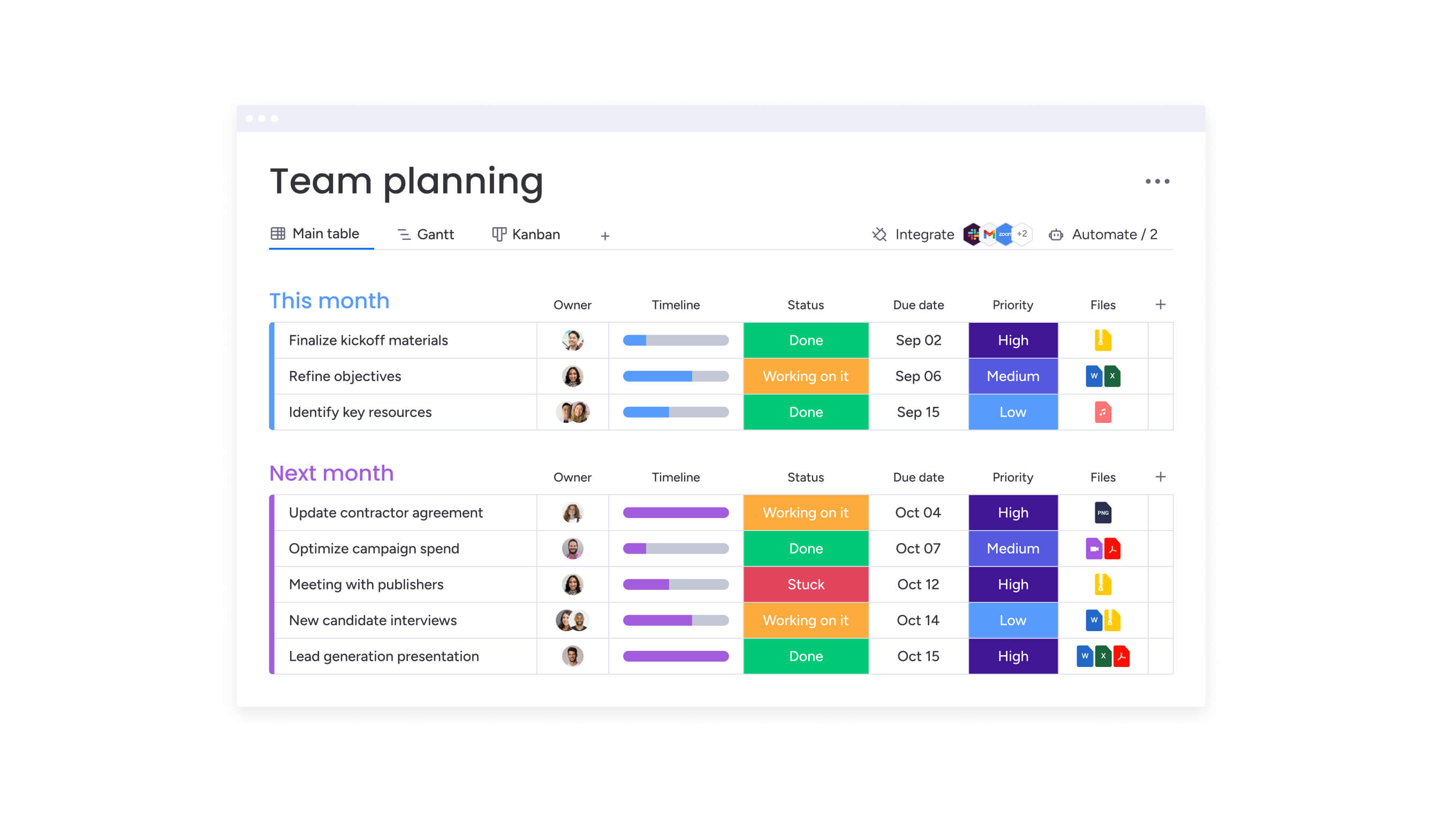
Heads of marketing in retail choose monday work management, a powerful marketing planning software, because it solves their most critical operational challenge: gaining centralized visibility into all campaigns while maintaining flexibility for seasonal retail demands. The platform delivers a single source of truth that connects strategy to execution, enabling marketing leaders to align teams with company OKRs and track campaign ROI in real time.
For retail marketing leaders managing large teams across content, creative, acquisition, events, and operations, the platform eliminates disconnected execution. Instead of scattered spreadsheets and siloed platforms, monday work management provides:
- Centralized campaign calendars that unify all marketing initiatives.
- Automated workflows that standardize processes across teams.
- Real-time dashboards that deliver operational efficiency.
The platform addresses specific pain points that prevent retail marketing leaders from achieving their goals. When teams lack visibility into priorities and capacity, campaigns miss deadlines and budgets overrun. monday work management’s workload management capabilities enable strategic resource allocation, ensuring teams deliver marketing initiatives on time with focused priorities.
monday work management top features for campaign management
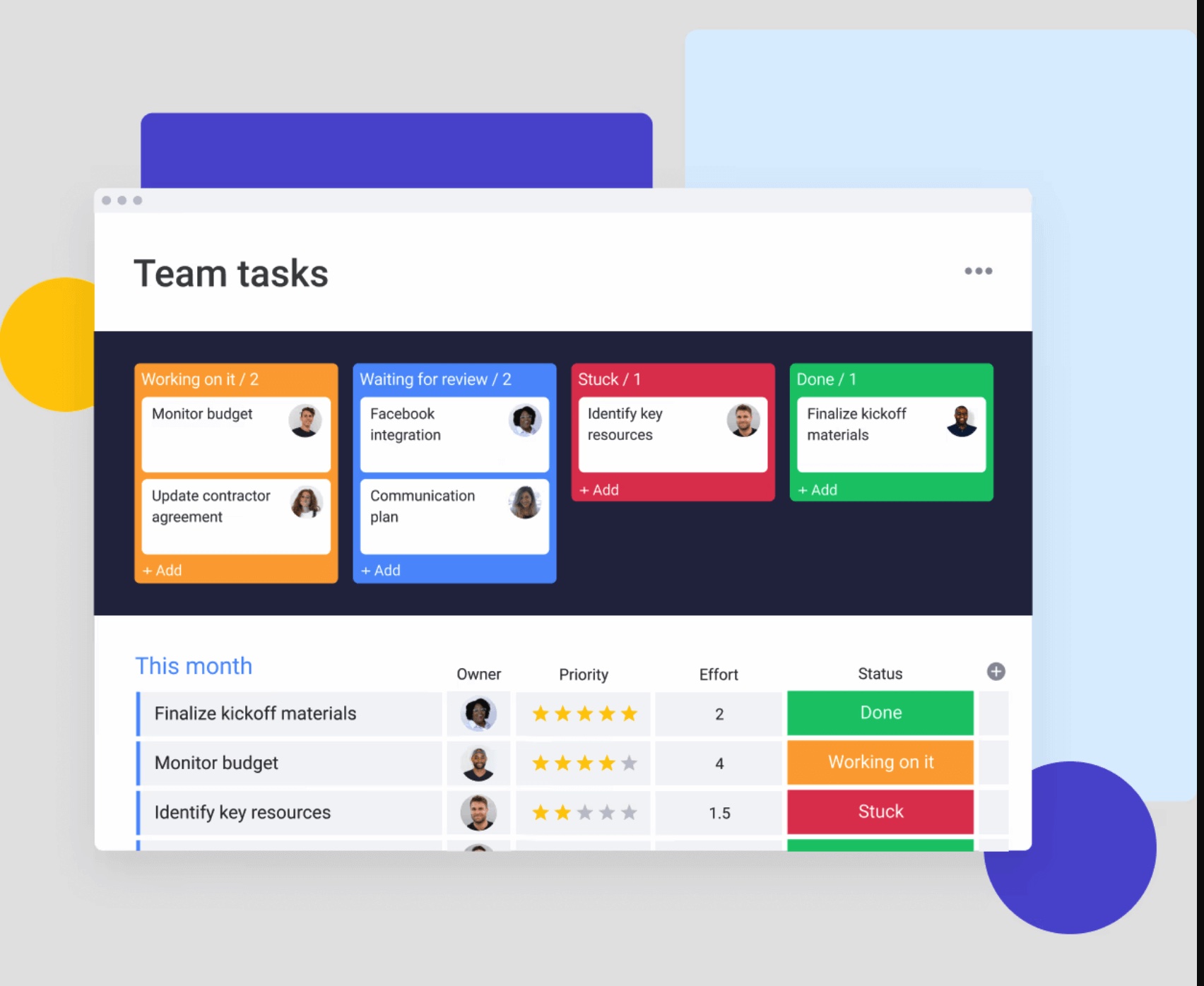
These core features address the specific challenges retail marketing leaders face when managing complex, multi-channel campaigns at scale. Each capability delivers measurable improvements in visibility, efficiency, and campaign performance.
Campaign management boards
Campaign management boards provide a centralized digital workspace where retail marketing teams plan, launch, and optimize integrated campaigns. The platform enables marketing leaders to visualize every campaign element — from initial brief to final delivery — ensuring all details are tracked and accounted for during complex retail campaigns.
For heads of marketing in retail, these boards solve the critical challenge of maintaining visibility across dozens of concurrent campaigns. Key capabilities include:
- Real-time status updates that eliminate manual tracking.
- Automated notifications that keep teams aligned.
- Dependency tracking that prevents bottlenecks.
Marketing leaders can instantly see which campaigns are on track, which face bottlenecks, and where resources need reallocation.
Workload management and resource planning
The workload management feature provides retail marketing leaders with real-time visibility into team bandwidth, skills, and capacity across multiple projects. Marketing leaders can view workload distribution across their entire team, identify overallocated resources, and rebalance assignments to ensure the right people work on the right priorities.
This capability directly addresses one of the most critical pain points for heads of marketing managing large teams. Without visibility into workload distribution, some team members become overwhelmed while others remain underutilized.
The platform’s workload planning enables marketing leaders to:
- Allocate resources strategically based on real-time capacity data.
- Make data-driven decisions about hiring and prioritization.
- Plan resource allocation months in advance for seasonal peaks.
Retail marketing teams benefit particularly during seasonal peaks when campaign volume intensifies, identifying potential capacity constraints before they become critical issues.
Automated workflows and approvals
Automation capabilities enable retail marketing teams to standardize and accelerate campaign execution. Marketing leaders can create custom automation recipes that trigger actions based on status changes, deadlines, or dependencies — such as automatically notifying stakeholders when campaigns require approval or assigning tasks when previous steps complete.
Marketing leaders drowning in approval bottlenecks can finally breathe. Automated approvals don’t just save time — they dramatically speed up how quickly campaigns move from concept to launch. Instead of chasing approvals through email, marketing teams can configure:
- Multi-stage approval workflows with automatic stakeholder notifications.
- Direct approval capabilities within the platform.
- Complete audit trails for compliance and brand consistency.
The system maintains documentation that ensures regulatory compliance and brand consistency across all campaigns.
Real-time dashboards and reporting
Real-time dashboards provide marketing leaders with instant visibility into campaign performance, team productivity, and ROI metrics through customizable visualizations. Marketing leaders can create executive dashboards that display specific KPIs — such as campaign ROI, CAC, and budget adherence — without requiring manual data compilation.
You can now generate executive reports instantly, freeing up valuable time to focus on keeping campaigns on track. These dashboards solve the classic marketing leader’s dilemma: proving your team’s value upstairs while keeping the day-to-day machine running. Dashboard benefits include:
- Automatic data aggregation from multiple campaign sources.
- Progress tracking toward company OKRs.
- Customizable visualizations for different stakeholder needs.
Instead of spending hours compiling reports from scattered platforms, marketing leaders can configure dashboards that automatically update as teams work.
Cross-channel campaign orchestration
The platform enables marketing teams to orchestrate campaigns across multiple channels within a unified workspace that maintains visibility and coordination across all touchpoints. Marketing leaders can create master campaign calendars that show all activities across channels, with dependencies that ensure proper sequencing and timing.
How do you keep campaigns connected when you’re juggling digital ads, email sequences, and in-store promotions? Cross-channel orchestration keeps your campaigns connected, whether customers see them on Instagram or walking through your stores. When content, creative, and acquisition teams work in separate platforms, campaigns lose coherence.
monday work management connects all campaign elements in one place, enabling marketing leaders to:
- Visualize campaign coordination across all channels.
- Maintain proper sequencing through dependency management.
- Track contribution of each channel to overall campaign goals.
Integration with marketing technology stack
With 200+ integrations, monday work management connects with essential marketing platforms including Google Analytics, HubSpot, Salesforce, Slack, and major social media platforms. These connections ensure that campaign data, customer information, and performance metrics flow seamlessly between systems.
For heads of marketing who have invested significantly in their marketing technology stack, integration capabilities determine whether a new platform creates value or adds complexity. The platform becomes the orchestration layer that:
- Connects disparate systems for unified visibility.
- Maintains existing workflows in specialized platforms.
- Provides centralized oversight without disrupting team preferences.
Teams can continue working in their preferred platforms for specialized tasks while marketing leaders gain the unified view they need.
How heads of marketing in retail benefit from monday work management
Retail marketing leaders adopt monday work management because it delivers immediate, measurable improvements across execution speed, cost control, and cross-team alignment. These benefits directly address the operational strain of running large, multi-channel retail campaigns.
Faster execution through automation and standardization
Automating routine workflows removes the manual coordination that slows retail campaigns. By standardizing processes like approvals, status updates, and handoffs, teams move from planning to launch faster and with fewer delays.
- Proven time savings: FARFETCH saved 3,500 hours per month by eliminating manual tracking.
- More strategic focus: less time spent on admin, more time on strategy and optimization.
Lower costs with smarter resource allocation
Built-in workload management helps leaders balance capacity across teams, preventing burnout while avoiding underutilization. This enables proactive decisions before resourcing issues turn into costly fixes.
- Measured cost impact: FARFETCH achieved $118,000 in monthly savings.
- Earlier intervention: early visibility into capacity reduces overtime and rush fees.
Fewer errors and stronger brand compliance
Centralized workflows and automated approvals reduce mistakes and ensure campaigns meet brand and regulatory standards. Every update and decision is tracked, creating a clear audit trail across all campaigns.
- Consistent execution: consistent execution across regions and channels.
- Audit-ready processes: built-in documentation for compliance and governance.
Higher productivity across teams
Real-time visibility replaces status meetings and manual reporting. Shared dashboards and automated notifications keep teams aligned without constant check-ins.
- Clear accountability: clear ownership and priorities for every campaign.
- Reduced coordination overhead: less time chasing updates, more time delivering results.
Better campaign quality through collaboration
When teams work from the same system, feedback loops tighten and issues surface earlier. Approval workflows and centralized communication ensure campaigns are reviewed properly before launch.
- Faster iteration: faster feedback cycles.
- Higher quality output: fewer late-stage changes and rework.
Complete visibility for proactive decision-making
Live dashboards give marketing leaders a clear view of performance, timelines, and resource utilization across all campaigns. This enables faster course correction and more confident decision-making.
- Risk awareness: early risk identification.
- Smarter optimization: data-driven adjustments that keep campaigns on track and on budget.
How to manage retail marketing campaigns with monday work management
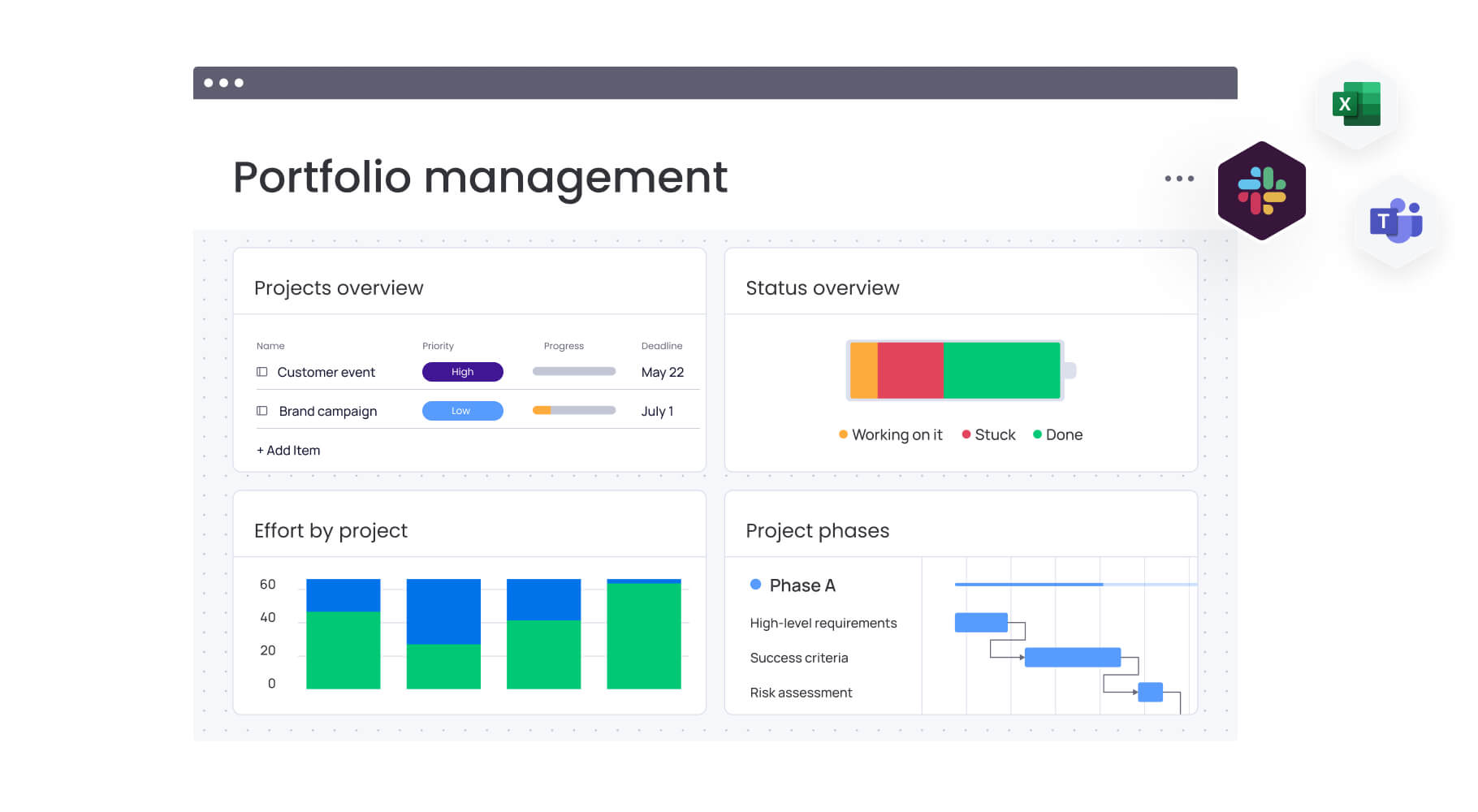
Want to run retail campaigns that actually deliver? Start with these six steps that put monday’s best features to work for your team. These steps help marketing leaders transform their campaign management from reactive to proactive, establishing the foundation for scalable campaign operations.
Step 1: centralize your campaign planning in a master calendar
Begin by creating a master campaign calendar that consolidates all marketing initiatives into a single visual timeline. This foundational step establishes the single source of truth that enables all subsequent campaign management activities.
- Import existing campaign plans from spreadsheets and scattered documents.
- Structure campaigns using customizable boards that accommodate different campaign types.
- Configure calendar views to show campaign phases, key milestones, and dependencies between related initiatives.
Step 2: set up automated workflows for campaign execution
Configure automation recipes that standardize campaign processes while reducing manual work. Automation ensures consistency across campaigns while freeing teams to focus on strategic activities.
- Create automated notifications that alert team members when tasks require attention or deadlines approach.
- Set up approval workflows that route campaign materials to appropriate stakeholders based on campaign type or budget level.
- Configure status-based triggers that automatically advance campaigns through execution phases.
Step 3: configure real-time dashboards for performance tracking
Build executive dashboards that display the KPIs that matter most for retail marketing leadership. Dashboard configuration enables continuous monitoring without manual reporting overhead.
- Connect dashboards to your campaign boards so they update automatically as teams work.
- Create multiple dashboard views tailored to different audiences — detailed operational dashboards for campaign managers and high-level strategic dashboards for executive reporting.
- Configure KPI tracking for campaign ROI, budget adherence, and timeline performance.
Step 4: implement workload management for resource optimization
Activate workload management features to gain visibility into team capacity across all campaigns. Resource optimization prevents bottlenecks and ensures optimal team utilization during peak periods.
- Configure workload views that show resource allocation by person, team, or skill set.
- Set capacity limits that prevent overallocation and identify potential constraints.
- Use workload data to make informed decisions about campaign timing, resource allocation, and hiring needs.
Step 5: track ROI and performance metrics across campaigns
Establish consistent tracking mechanisms that capture campaign performance data throughout execution. Standardized tracking enables accurate performance measurement and optimization decisions.
- Create custom fields that track campaign-specific metrics such as impressions, engagement rates, and revenue attribution.
- Build reporting templates that standardize how you measure and communicate campaign success.
- Configure automated data collection from integrated marketing platforms.
Step 6: scale standardization while maintaining flexibility
Develop campaign templates for common retail marketing scenarios that codify best practices and accelerate campaign setup. Template-based scaling ensures consistency while preserving the flexibility teams need for unique campaigns.
- Build campaign templates with the appropriate structure, workflows, and automations already configured.
- Create managed templates that scale across the organization while maintaining brand standards.
- Allow customization within approved parameters to accommodate specific campaign needs.
Comparison table: monday work management vs competing platforms
See how monday work management stacks up against the competition — from features to pricing to what real enterprise marketing teams have experienced.
| Feature | monday work management | Wrike | Smartsheet |
|---|---|---|---|
| Campaign calendar views | Multiple views (Calendar, Timeline, Gantt, Kanban, Board) with drag-and-drop | Calendar and Gantt views with limited customization | Grid, Gantt, Calendar, and Card views |
| Workload management | Built-in workload widget showing capacity across projects | Workload view on higher-tier plans | Resource management with add-on |
| Automation capabilities | 200+ automation recipes with no-code builder | Automation on Business and Enterprise plans | Limited automation on Pro plan and above |
| Real-time dashboards | Customizable dashboards with 30+ widget types | Dashboards on Business and Enterprise plans | Dashboards on Business and Enterprise plans |
| Approval workflows | Multi-level approval workflows with version control | Approval workflows on higher-tier plans | Approval requests on Business plan |
| Integration ecosystem | 200+ native integrations plus open API | 400+ integrations through marketplace | 80+ integrations plus API |
| Price per team member/month | $10-$54 depending on plan (billed annually) | $10-$24.80 depending on plan (billed annually) | $9-$32 depending on plan (billed annually) |
| Implementation time | 2 weeks to 1 month for full adoption | 1-2 months typical implementation | 2-4 weeks typical implementation |
| G2 rating | 4.7/5 (12,000+ reviews) | 4.2/5 (3,600+ reviews) | 4.4/5 (15,000+ reviews) |
As the table demonstrates, monday work management differentiates itself through its intuitive interface, comprehensive feature set at accessible price points, and proven track record with enterprise marketing teams.
Further, the platform’s workload management capabilities are built-in rather than requiring add-ons, and its automation features are accessible across all paid plans.
How FARFETCH transformed their retail marketing operations
FARFETCH’s implementation demonstrates how monday work management transforms complex marketing operations at enterprise scale. Their experience provides a roadmap for retail marketing leaders considering similar transformations.
The challenge: FARFETCH faced significant operational challenges managing their extensive marketing campaigns. Their Marketing Planning team brought together 400 people from 40 different teams to execute complex brand and marketing activations. The team relied on scattered Google Docs and Google Sheets, making it nearly impossible to track campaign status or maintain a single source of truth.
The implementation: the team implemented monday work management as their centralized platform for marketing operations. They created a custom rollout plan and built base structures showing teams what their work could look like on the platform.
The team tackled their master content calendar first, configuring dependencies, automations, and integrations that brought each team’s work together in one place.
The results: FARFETCH achieved remarkable results through their implementation:
- 42,000 hours saved annually through elimination of manual tracking and coordination.
- $118,000 in monthly savings by improving operational efficiency.
- 6x ROI through time savings and faster campaign execution.
- Improved cross-team collaboration for end-to-end campaign planning.
Take control and enhance your retail marketing with monday work management
Advanced solutions like monday work management give you what retail marketing leaders actually need: one place to see everything happening, the controls to keep it all on track, and systems that grow with your team — no matter how complex your campaigns get. The platform transforms scattered marketing operations into unified command centers that drive measurable results.
Marketing teams who implement monday work management gain the leadership visibility, standardization and alignment, and resource optimization that enterprise teams need to execute at scale. With AI-powered risk insights that scan across your entire portfolio and managed templates that ensure consistency while maintaining flexibility, the platform delivers a new layer of visibility and control where teams already work.
Experience real-time dashboards, workload management, and automated workflows that transform how your marketing team operates. Join the retail marketing leaders who trust monday work management to centralize campaign visibility, optimize resource allocation, and drive measurable ROI across their marketing operations.
The content in this article is provided for informational purposes only and, to the best of monday.com‘s knowledge, the information provided in this article is accurate and up-to-date at the time of publication. That said, monday.com encourages readers to verify all information directly.
Frequently asked questions
How does monday work management handle seasonal retail campaigns with fluctuating team capacity?
monday work management's workload management features enable retail marketing leaders to plan resource allocation months in advance for seasonal peaks. The platform allows you to model different scenarios, adjust campaign timelines based on available capacity, and visualize workload distribution across your entire team during high-volume periods.
Can monday work management integrate with retail-specific systems like POS and inventory management?
Yes, monday work management offers integration capabilities with retail-specific systems through its open API and integration platform. While the platform provides 200+ native integrations, retail organizations can build custom integrations with POS systems and inventory management platforms to create unified workflows.
What's the typical implementation timeline for a 100+ person retail marketing team?
Implementation timelines for large retail marketing teams typically range from two weeks to one month for full adoption. The key to rapid implementation is starting with a pilot team, building base structures that teams can customize, and providing ongoing support during the transition.
How does monday work management ensure brand consistency across distributed retail locations?
monday work management ensures brand consistency through standardized campaign templates, multi-level approval workflows, and centralized asset management. Marketing leaders can create campaign templates that codify brand guidelines, then distribute these templates to regional teams who customize them within approved parameters.
What training resources does monday work management provide for marketing teams?
monday work management provides comprehensive training resources including monday Academy with self-paced courses, certification programs, live webinars, and extensive documentation. For enterprise implementations, the platform offers dedicated customer success managers who provide customized training sessions and ongoing optimization guidance.
How does monday work management handle campaign budget tracking and forecasting?
monday work management enables comprehensive budget tracking through custom fields that capture campaign costs and automated calculations that sum expenses across related items. Marketing leaders can create budget columns that track planned versus actual spending and set up automated alerts when campaigns approach budget limits.

 Get started