

Retail operations run on tight timelines and complex coordination. Store openings, seasonal campaigns, and product launches involve dozens of teams across multiple locations, each with dependencies that can derail entire initiatives. When project managers juggle 150+ concurrent projects using spreadsheets and email chains, visibility disappears and deadlines slip.
AI workflow software solves this by pulling your scattered work into one place where teams collaborate — not just pass files back and forth. The most effective platforms do more than track projects; they automate repetitive work, spot risks before they become problems, and give you visibility across your entire retail operation.
These platforms help project managers maintain control over complex multi-location initiatives while reducing the manual coordination that consumes hours each week.
Let’s break down the top AI workflow platforms for retail, comparing how they handle your complex project portfolio and keep your cross-functional teams in sync. We’ll also explore essential features like intelligent resource allocation and automated risk detection, implementation strategies that ensure rapid adoption, and how to measure success across your retail operations.
Key takeaways
When you’re evaluating AI workflow software for your retail operations, you need platforms that solve real problems — not just add another layer of complexity. The right solution brings together scattered work, automates repetitive coordination, and gives you visibility across every project and location.
Here’s what sets the leading platforms apart:
- Work consolidation: the best AI workflow software eliminates the chaos of managing projects across spreadsheets, emails, and disconnected tools by creating one unified workspace.
- Intelligent automation: ai-powered features identify risks, assign resources, and flag bottlenecks before they derail timelines.
- Real-time visibility: visual dashboards show exactly where each initiative stands across 150+ concurrent projects.
- Rapid adoption: teams actually use these platforms because they’re intuitive and deliver value from day one.
What makes project managers choose AI workflow software for retail coordination?
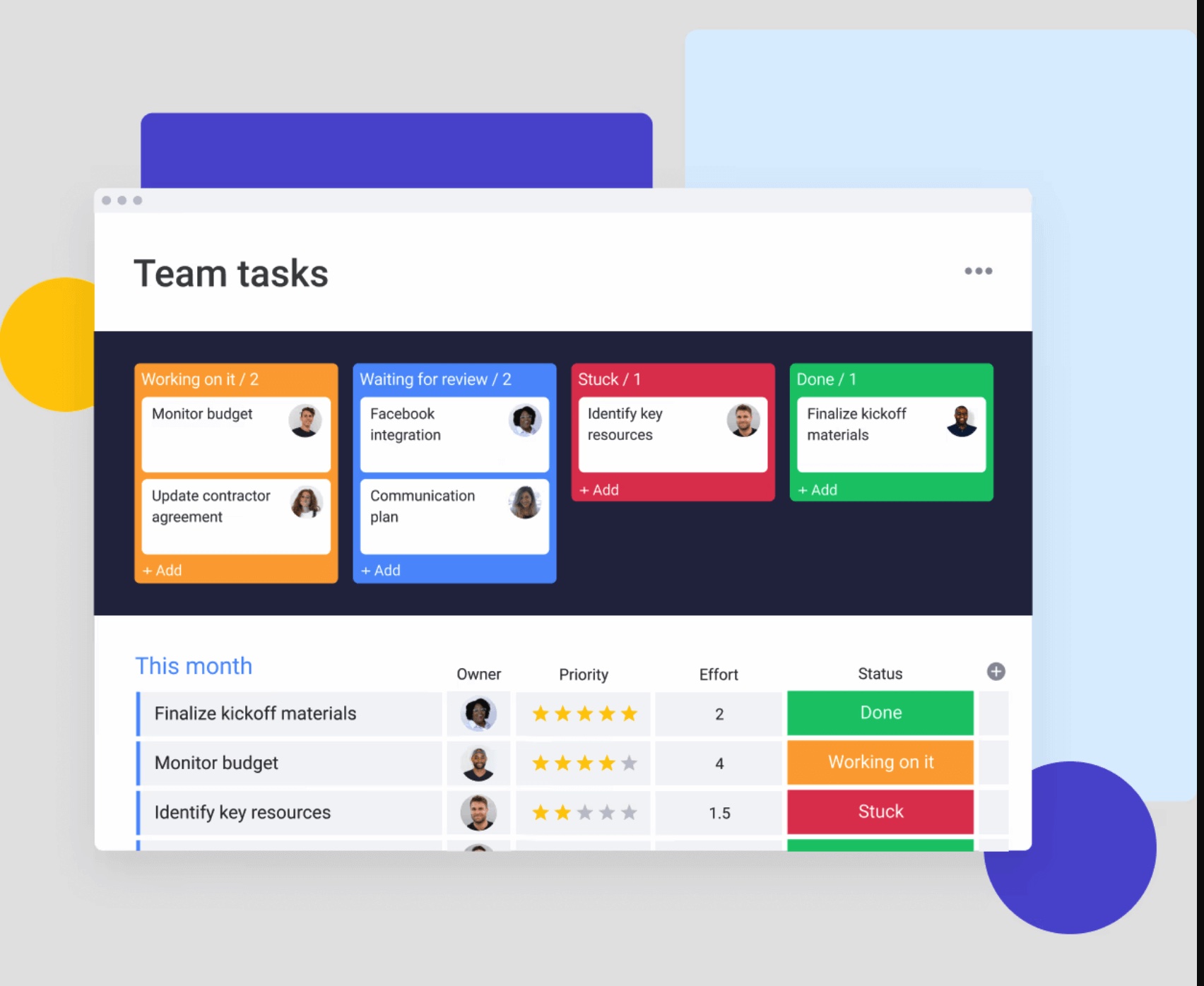
AI workflow software transforms how retail project managers handle complex, multi-location operations. Instead of juggling data across spreadsheets, emails, and multiple platforms, you get one unified workspace where all retail operations live in real time. This fundamental shift addresses the core challenge of scattered work while delivering measurable operational improvements.
If you’re a PMO project manager juggling 150+ store projects, this solves your biggest headache: no more hunting through a dozen tools to find what you need. The right platform creates a single source of truth where cross-functional teams collaborate on omnichannel campaigns, coordinate product launches across buyers and suppliers, and track multi-location initiatives without constant context-switching.
Country Road Group’s real estate team proves this value in practice. Their store planning manager transformed a cumbersome process of spreadsheets and endless meetings into a streamlined operation. The team now manages 150 projects with significantly improved efficiency.
This isn’t just software — it’s the operational backbone that lets retail project managers deliver projects faster while maintaining visibility across every store, team, and deadline.
Top AI workflow software platforms for retail operations
The landscape of AI workflow software has evolved rapidly, with platforms now offering sophisticated capabilities that go beyond basic automation. Understanding the strengths and limitations of each platform helps you make an informed decision that aligns with your retail operations’ specific needs.
Let’s examine the leading solutions and how they address retail-specific challenges.
| Platform | Best For | Key AI Features | Retail-Specific Strengths | Limitations |
|---|---|---|---|---|
| monday work management | Enterprise retail operations | AI risk insights, resource allocation, automated categorization | 150+ project capacity, 200+ integrations, proven retail results | Higher price point for small teams |
| Asana | Small to mid-size retail teams | Smart templates, automated assignments, basic risk detection | Simple adoption, collaboration focus | Limited portfolio visibility, fewer retail templates |
| ClickUp | Customization-focused teams | AI writing assistant, workflow suggestions, predictive time tracking | Extensive customization options | Best for technically proficient teams who value deep customization |
| Smartsheet | Spreadsheet-familiar teams | Data insights, predictive analytics, smart forms | Familiar interface for Excel users | Requires significant retail customization |
| Wrike | Enterprise project management | Risk prediction, resource leveling, smart routing | Robust enterprise features | Longer implementation, less workflow flexibility |
monday work management
monday work management stands out for retail organizations because it combines AI-powered intelligence with enterprise-grade scalability. The platform’s three core pillars (Leadership Visibility, Standardization and Alignment, Resource Optimization) — directly address the challenges of managing complex retail portfolios.
Key AI capabilities for retail:
- AI-powered risk insights: scans project updates to surface risks with urgency levels and mitigation options.
- Intelligent resource allocation: AI assigns the right people to projects based on skills, availability, and workload.
- Automated categorization: AI Blocks instantly categorize project requests, extract information from documents, and summarize complex briefs.
Why retail teams choose it:
- Manages 150+ concurrent projects without performance issues.
- Integrates with 200+ retail systems including POS, inventory management, and CRM platforms.
- Delivers measurable results — Country Road Group achieved 25% efficiency gains.
The platform’s managed templates ensure consistency across all store locations while allowing flexibility for local needs. Cross-project dependencies help coordinate complex initiatives like seasonal launches that span multiple departments and locations.
Asana
Asana focuses on simplicity and collaboration, making it accessible for teams new to AI-powered workflows. While it lacks some enterprise features, its straightforward approach works well for smaller retail operations.
AI features:
- Smart project templates that adapt based on past projects.
- Automated task assignments based on team capacity.
- Basic risk detection for timeline conflicts.
Limitations for retail:
- Limited portfolio-level visibility for multi-location coordination.
- Fewer retail-specific templates and workflows.
- Basic resource management capabilities.
ClickUp
ClickUp offers extensive customization options and strong automation capabilities. Its AI features focus on productivity enhancement and workflow optimization.
AI capabilities:
- AI writing assistant for project documentation.
- Automated workflow suggestions based on team patterns.
- Time tracking with predictive estimates.
Considerations:
- Steep learning curve for non-technical teams.
- Complex setup for enterprise retail operations.
- Limited retail-specific case studies.
Smartsheet
Smartsheet brings spreadsheet familiarity with added project management capabilities. Its AI features center on data analysis and reporting.
AI functionality:
- Automated data insights and trend detection.
- Predictive analytics for project timelines.
- Smart forms with conditional logic.
Trade-offs:
- Less intuitive for teams without spreadsheet expertise.
- Limited AI-powered automation compared to newer platforms.
- Requires significant customization for retail workflows.
Wrike
Wrike targets enterprise teams with robust project management needs. Its AI capabilities focus on resource optimization and project acceleration.
AI features:
- AI-powered project risk prediction.
- Automated resource leveling.
- Smart request forms with auto-routing.
Challenges:
- Higher price point for smaller retail operations.
- Longer implementation timeline.
- Less flexibility in workflow customization.
How AI transforms retail project management
AI doesn’t just automate your workflows — it completely transforms how your retail teams work together day to day. When you see how these capabilities reshape your operations, you’ll know exactly which platform is right for your team.
The following capabilities represent the most impactful ways AI enhances retail project coordination and delivery.
Proactive risk identification
AI constantly scans your projects, catching supply delays and resource conflicts before they derail your store opening or product launch. The technology analyzes patterns across hundreds of projects, flagging potential bottlenecks, resource conflicts, and timeline issues.
For retail operations, this means:
- Early warning systems: AI detects when store opening timelines are at risk based on supplier delays or resource constraints.
- Cross-project impact analysis: understand how delays in one location affect .others.
- Automated escalation: critical risks automatically notify stakeholders.
monday work management’s AI-powered risk insights scan project updates in real time, providing urgency levels and specific mitigation recommendations that help project managers stay ahead of issues.
Intelligent resource optimization
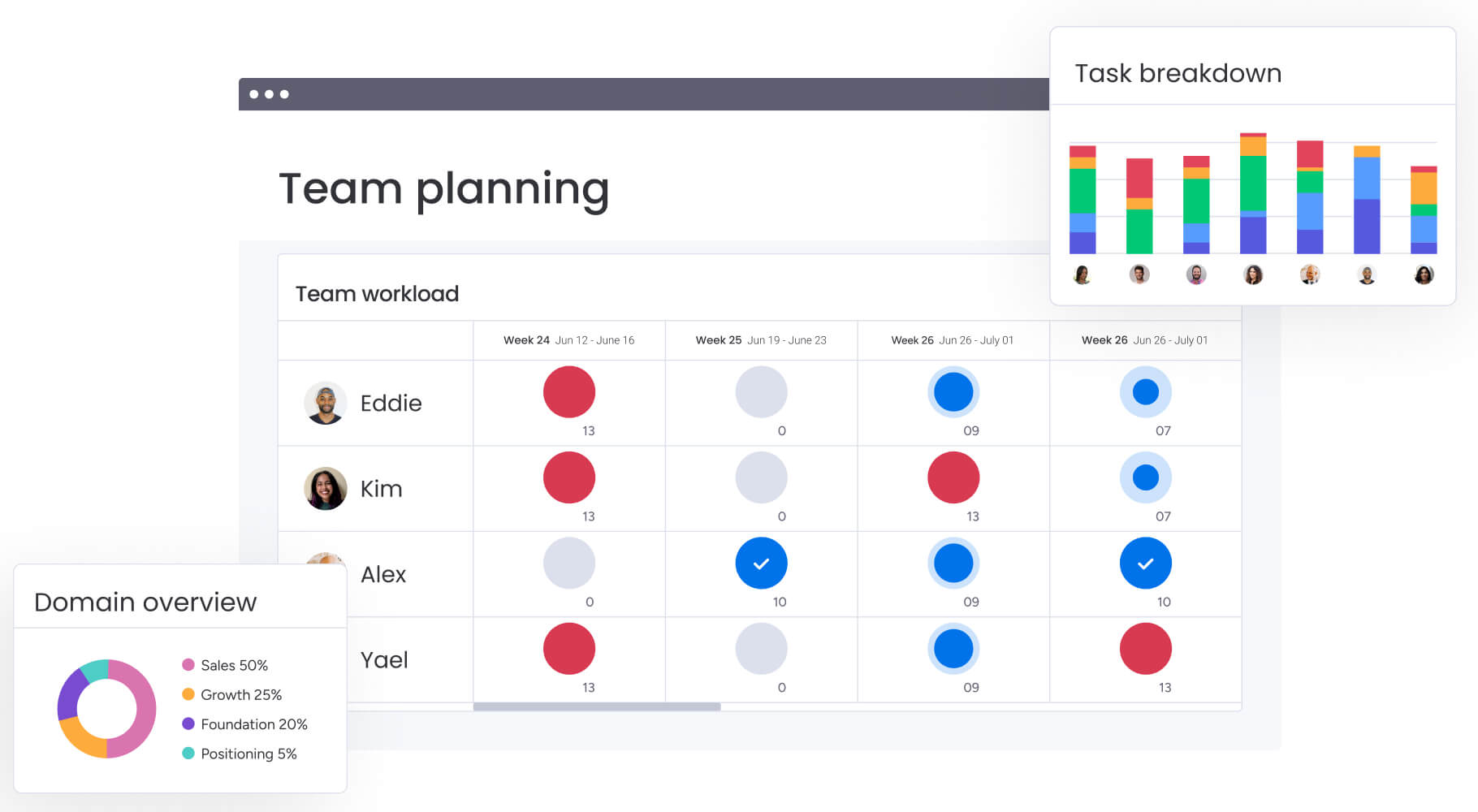
AI transforms how retail teams allocate and manage resources across multiple locations and initiatives. Instead of manual capacity planning, AI analyzes skills, availability, and workload to make optimal assignments.
This delivers several benefits:
- Skills-based matching: AI assigns team members based on expertise, not just availability.
- Workload balancing: prevents burnout by distributing work evenly.
- Predictive capacity planning: forecasts future resource needs based on project pipelines.
The platform’s resource directory and capacity manager provide live visibility into resource utilization across your entire portfolio, helping you make informed decisions about new project intake.
Automated workflow coordination
AI eliminates the manual coordination that consumes hours each week. By automating routine tasks and handoffs, teams focus on strategic work rather than administrative overhead.
Key automation capabilities include:
- Smart notifications: AI determines who needs updates and when.
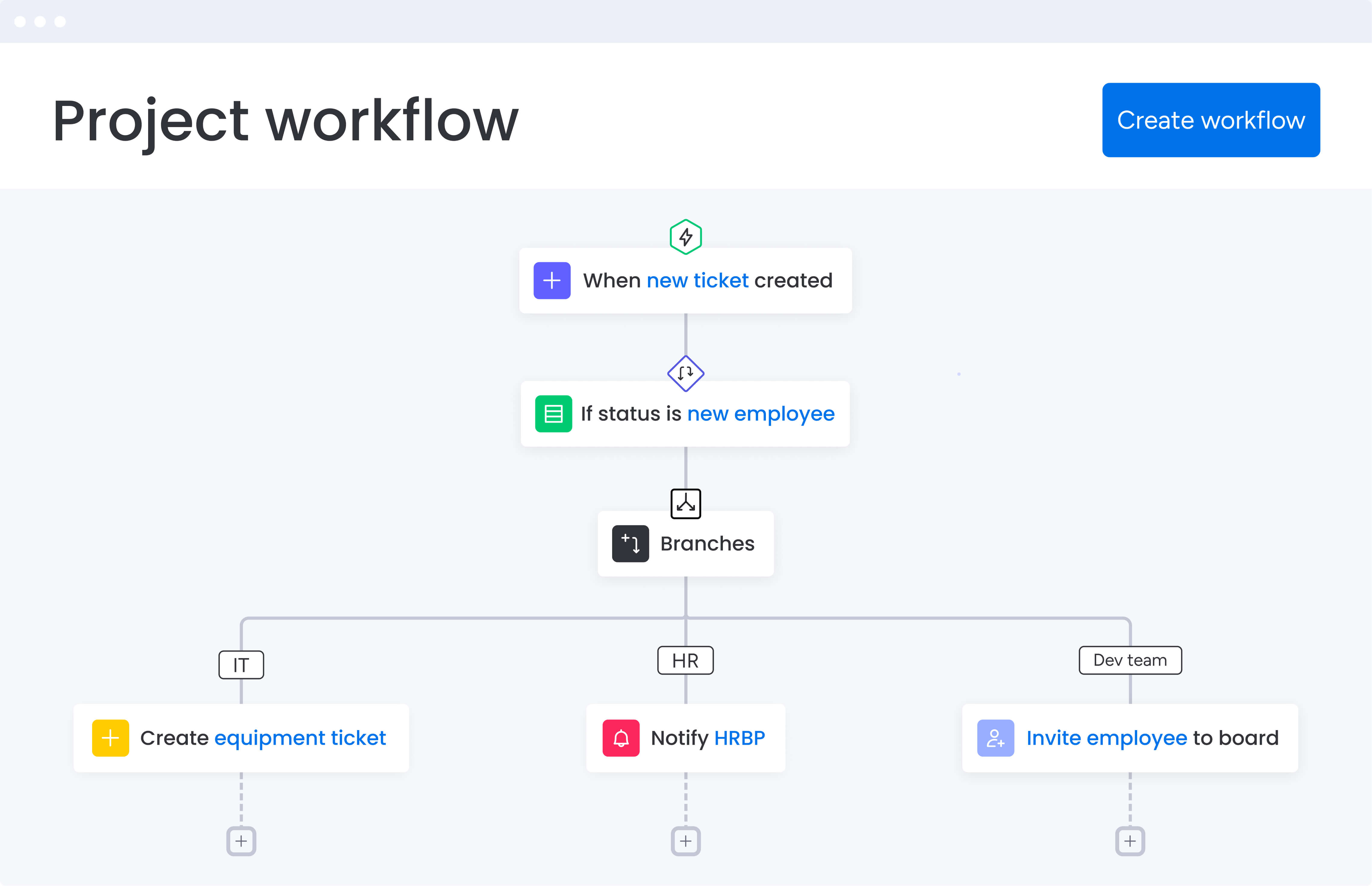
- Conditional workflows: tasks automatically route based on project status.
- Template intelligence: AI suggests workflow improvements based on successful patterns.
These automations are particularly valuable for retail’s repetitive processes like store openings, seasonal campaigns, and inventory rollouts.
Essential features to evaluate in AI workflow software
When selecting AI workflow software for retail operations, certain capabilities prove essential for success. These features determine whether your platform can scale with growing operations while maintaining performance and usability.
Focus on these features to ensure your chosen platform can scale with your needs:
Portfolio-level visibility
Retail project managers need to see across all initiatives simultaneously. Look for platforms that provide:
- Unified dashboards: real-time views across hundreds of projects.
- Drill-down capabilities: navigate from portfolio to project to task details.
- Custom views: filter by location, brand, or initiative type.
monday work management’s out-of-the-box portfolio dashboards scale to 1,000+ projects while maintaining performance, giving leadership instant visibility into progress and risks.
Integration ecosystem
Your AI workflow software must connect with existing retail systems. Essential integrations include:
- POS systems: sync sales data with project timelines.
- Inventory management: coordinate stock levels with store launches.
- Communication tools: keep teams aligned without switching platforms.
With 200+ native integrations, platforms like monday work management become the central hub connecting your entire tech stack.
Scalable automation
As your retail operations grow, automation becomes critical. Evaluate platforms based on:
- No-code builders: create custom automations without IT dependency.
- Pre-built templates: leverage proven workflows for common retail processes.
- .AI-powered suggestions: let the platform recommend automation opportunities.
The ability to standardize workflows through managed templates ensures consistency while allowing local flexibility.
Implementation strategies for retail organizations
Rolling out AI workflow software successfully takes more than just buying licenses and sending login details. The right approach ensures teams adopt the platform quickly while realizing immediate value from day one. These strategies help ensure smooth adoption and rapid value realization.
Step 1: start with pilot projects
Begin implementation with a focused pilot that demonstrates clear value. Select a high-visibility project like a seasonal campaign or store opening that involves multiple departments.
Implementation steps:
- Define success metrics: set clear goals for efficiency gains and timeline improvements.
- Choose pilot participants: include both tech-savvy early adopters and typical users.
- Document workflows: map current processes before implementing new ones.
- Measure results: track time savings, error reduction, and team satisfaction.
Step 2: build standardized templates
Create reusable templates for recurring retail processes. This ensures consistency while reducing setup time for new projects.
Template priorities for retail:
- Store openings: include all tasks from site selection to grand opening.
- Seasonal campaigns: cover planning, execution, and post-campaign analysis.
- Product launches: coordinate across merchandising, marketing, and operations.
- Renovation projects: track permits, contractors, and timeline dependencies.
monday work management’s managed templates allow you to standardize entire workspaces, including projects and automations, then deploy updates across hundreds of instances simultaneously.
Step 3: enable cross-functional adoption
Retail success requires coordination across departments. Your AI workflow platform should support this collaboration through:
- Shared visibility: all teams see relevant project information.
- Clear ownership: tasks and decisions have defined responsible parties.
- Automated handoffs: work flows smoothly between departments.
Cross-project dependencies in platforms like monday work management ensure teams understand how their work impacts others, reducing delays and miscommunication.
Measuring success with AI workflow software
Track these metrics to validate your AI workflow investment and identify optimization opportunities. Effective measurement requires monitoring both operational improvements and business impact to demonstrate ROI and guide future enhancements.
Operational metrics
Monitor improvements in day-to-day execution:
- Project delivery time: measure reduction in average project duration.
- Resource utilization: track how effectively teams use available capacity.
- Task completion rates: monitor on-time delivery percentages.
Business impact metrics
Connect operational improvements to business outcomes:
- Revenue per project: calculate efficiency gains in monetary terms.
- Customer satisfaction: measure impact on store opening quality and campaign effectiveness.
- Cost savings: quantify reduction in overtime, rework, and external resources.
Adoption indicators
Ensure your platform delivers value through actual use:
- User engagement: track daily active users and feature adoption.
- Process compliance: measure adherence to standardized workflows.
- Feedback scores: gather team satisfaction and improvement suggestions.
AI-powered portfolio reports in monday work management automatically generate executive summaries with trends, risks, and performance metrics, making it easy to communicate value to leadership.
Transform your retail operations with intelligent automation
Today’s retail reality is brutal — you need to move fast, keep teams in sync, and see exactly what’s happening across all your locations. AI workflow software provides the foundation for managing this complexity while delivering projects faster and with greater consistency. By consolidating scattered work, automating routine coordination, and providing real-time insights, the right platform transforms how your teams execute strategic initiatives.
Stop letting scattered tools and manual coordination slow down your retail projects. The right AI workflow software centralizes operations, automates repetitive tasks, and delivers projects faster through intelligent automation and real-time visibility.
With capabilities like AI-powered risk insights, automated resource allocation, and portfolio-level dashboards, platforms like monday work management help retail organizations manage complexity at scale.
Whether you’re coordinating store openings, seasonal campaigns, or cross-functional initiatives, AI transforms how your teams work together. Try the platform today.
The content in this article is provided for informational purposes only and, to the best of monday.com’s knowledge, the information provided in this article is accurate and up-to-date at the time of publication. That said, monday.com encourages readers to verify all information directly.
Frequently asked questions
What is the most effective AI platform for project management?
When weighing up the most effective AI platform for project management, it’s important to consider your organization's specific needs. For its combination of AI-powered risk insights, resource optimization, and scalability, monday work management is a leading choice. It handles 150+ concurrent projects while providing real-time visibility through AI-driven dashboards and automated workflows that reduce manual coordination by hours each week.
How can a project manager use AI?
Project managers use AI to automate routine tasks like status updates, resource assignments, and risk identification. AI analyzes project data to predict delays, suggests optimal resource allocations, and generates reports automatically. For example, AI can scan project updates to flag risks, categorize incoming requests, and even create detailed project plans with suggested tasks and phases.
How does AI workflow software handle seasonal retail planning?
AI workflow software manages seasonal planning through visual timelines, automated reminders, and portfolio views that track all initiatives simultaneously. The platform creates master boards for seasonal campaigns with recurring templates that capture best practices from previous years, while AI identifies resource conflicts and scheduling issues before peak seasons arrive.
Can AI workflow software integrate with retail POS systems?
Yes, leading AI workflow platforms connect with retail POS systems through native integrations, APIs, or middleware solutions. These connections sync project timelines with operational data, ensuring store openings align with inventory availability and marketing campaigns coordinate with sales targets. Platforms like monday work management offer 200+ integrations to connect your entire retail tech stack.
What's the typical implementation timeline for retail organizations?
Most retail organizations implement AI workflow software in two to four weeks with dedicated support. The process involves mapping core processes, building initial boards and automations, running pilot projects, and rolling out to wider teams. Organizations like Country Road Group and Officeworks achieved rapid adoption with users becoming comfortable within the first month.
How does AI workflow software support multi-location coordination?
AI workflow software excels at multi-location coordination through consolidated portfolio views and location-specific project boards. You can create overarching boards representing all projects for specific locations while maintaining detailed individual project tracking. Visual dashboards aggregate data across all stores, showing project status, resource allocation, and at-risk initiatives by region or brand.

 Get started