


Your marketing team just delivered a brilliant campaign. The content resonated, the leads poured in, and sales seemed excited. But three months later, you’re staring at conversion reports wondering what happened as leads went cold and revenue targets feel further away than ever.
This disconnect spotlights the real challenge in B2B marketing. While consumers might buy on impulse, business purchases involve committees, lengthy evaluations, and the constant need to justify every dollar spent. B2B marketing works when it matches how companies really buy — by supporting teams through months of research, evaluation, and the messy process of building internal consensus.
By reading this guide, here’s what you’ll learn about B2B marketing in 2026: how buyers actually make decisions, which strategies drive results, when AI makes personalization work, and what metrics truly matter for measuring success.
You’ll also discover proven strategies for account-based marketing, content that educates and converts, and how to coordinate complex campaigns across teams and channels for sustainable growth.
Key takeaways
- Focus on education over promotion: create content that teaches prospects about their challenges and solutions rather than pushing your product — this builds trust and positions you as an expert.
- Align marketing and sales around shared goals: break down silos by establishing common definitions for qualified B2B sales leads and measuring success through pipeline velocity and revenue outcomes, not just lead volume.
- Embrace longer sales cycles with sustained engagement: B2B purchases take 3-18 months with six to ten stakeholders involved, so nurture relationships consistently across multiple touchpoints and decision-makers.
- Orchestrate campaigns with unified visibility: use monday work management to coordinate multi-channel initiatives, manage resources efficiently, and maintain alignment across teams through centralized project boards and automated workflows.
- Measure what matters for business impact: track pipeline metrics, conversion rates, and customer lifetime value rather than vanity metrics — connect marketing activities directly to revenue outcomes through proper attribution.
What is B2B marketing?
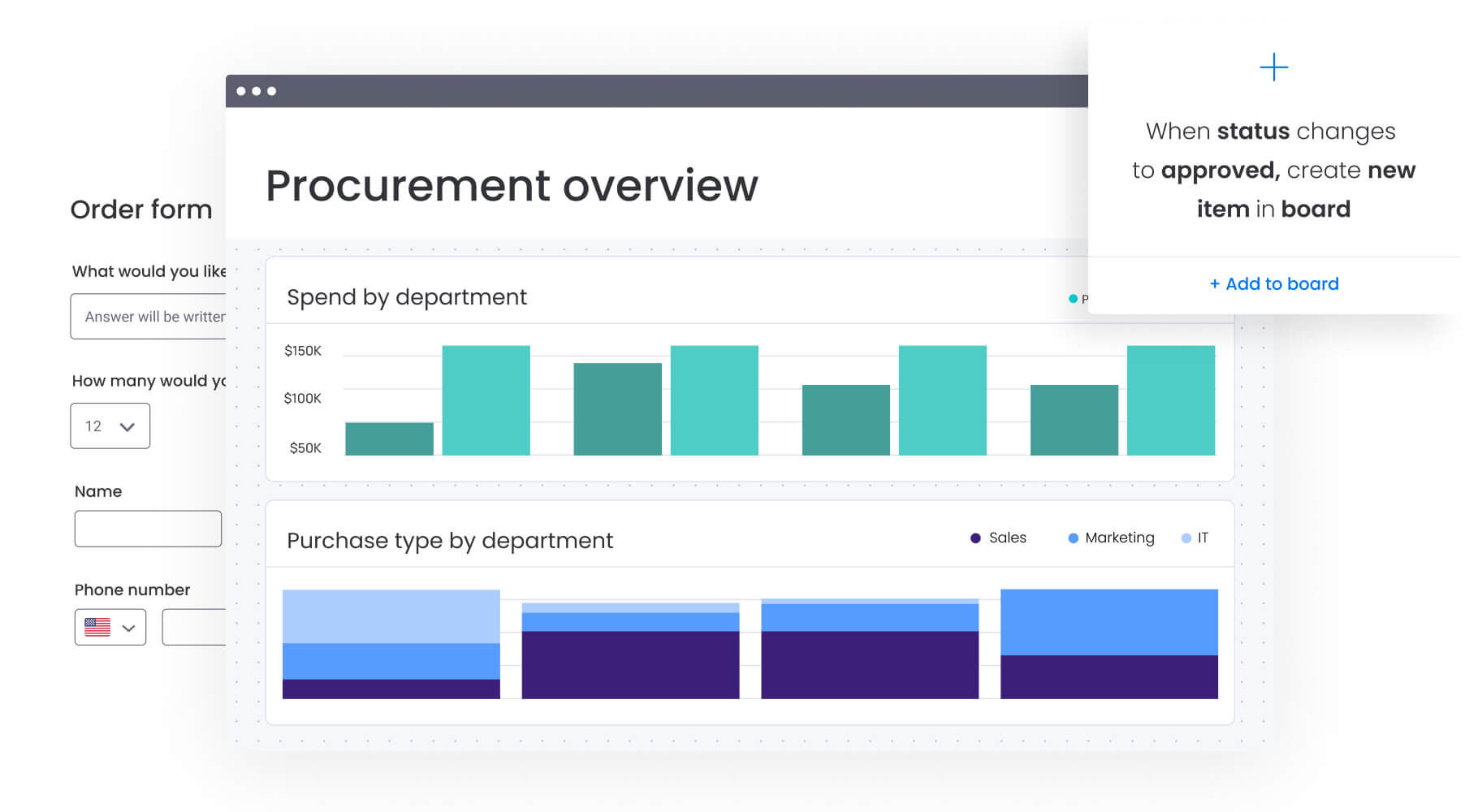
B2B marketing is the practice of promoting products or services from one business to another. It focuses on addressing organizational needs through longer sales cycles, multiple decision-makers, and relationship-building approaches that demonstrate measurable business outcomes.
A software company creating educational webinars for IT directors practices B2B marketing. So does a manufacturing company exhibiting at trade shows to connect with procurement teams. professional services firms publishing thought leadership to attract corporate clients engage in B2B marketing too. Each targets specific business roles with content that addresses their unique challenges.
What makes B2B buyers different? They’re solving business problems, not personal ones. They need to justify every purchase to a committee. They’re also constantly weighing ROI, productivity improvements, and potential revenue against the cost.
Their research spans weeks or months, comparing alternatives and building business cases that require approval from finance, IT, legal, and executive teams.
Understanding the B2B marketing landscape
B2B marketing operates on principles that distinguish it from consumer approaches. These differences shape how organizations build programs that resonate with business buyers and support complex purchasing decisions.
- Longer decision cycles: B2B purchases typically take three-six months, sometimes extending beyond a year for enterprise solutions.
- Multiple stakeholder involvement: buying decisions involve six-ten people on average, each with different priorities, with customers now using an average of ten different channels across the purchasing cycle.
- Higher transaction values: purchases often represent investments from tens of thousands to millions annually.
- Relationship-focused approaches: companies invest in customer success and ongoing support because relationships span years.
How B2B marketing drives organizational growth
B2B marketing drives growth in three powerful ways — each creating lasting revenue and giving you an edge over competitors.
Pipeline generation and conversion:
- Marketing-sourced leads from effective lead generation often close faster and at higher contract values than sales-sourced opportunities.
- Qualified prospects enter sales conversations with established trust and understanding.
Market expansion and positioning:
- Thought leadership, event participation, and strategic partnerships position companies as category leaders.
- Strong market presence makes it easier to enter new industries and geographic regions.
Customer lifetime value optimization:
- Marketing-led education programs and success content reduce churn rates.
- Retention efforts create opportunities for upselling and expanding existing accounts.
B2B vs B2C marketing: key differences that matter
Knowing exactly how B2B differs from B2C marketing ensures you’re using strategies that actually work for business buyers. These differences shape your content, how you measure success, and where you invest your resources.
| Aspect | B2B marketing | B2C marketing |
|---|---|---|
| Decision process | Committee decisions with six-ten stakeholders | Individual or household decisions |
| Sales cycle | 3-18 months typical | Minutes to days |
| Relationship duration | Multi-year partnerships | Often transactional |
| Messaging approach | Educational, ROI-focused | Emotional, lifestyle-focused |
| Primary metrics | Pipeline value, customer lifetime value | Conversion rate, customer acquisition cost |
The implications are significant. B2B marketers create content addressing different stakeholder concerns, support longer nurturing cycles, and measure success over extended timeframes.
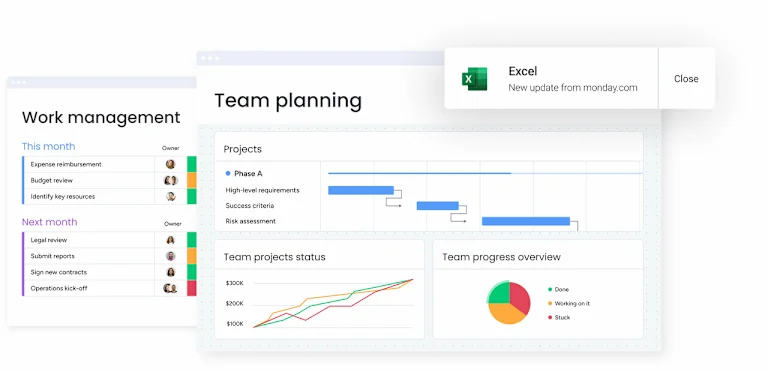
Why do B2B sales take so long?
Typically, the length is down to the fact that companies need time to evaluate thoroughly and build internal agreement. Just buying enterprise software can stretch across months with multiple decision stages.
Typical B2B purchase timeline:
- Initial research: two-four weeks of problem identification and solution exploration.
- Solution evaluation: four-eight weeks comparing vendors and capabilities.
- Stakeholder alignment: two-four weeks building internal consensus.
- Vendor selection: four-six weeks negotiating terms and finalizing decisions.
- Procurement review: two-four weeks handling legal and financial approvals.
Different decision-makers enter at various stages. End users evaluate features during demos. Technical teams assess integration capabilities. Finance analyzes ROI. Executives consider strategic alignment. Each stakeholder needs specific content addressing their concerns throughout this extended journey.
How to build relationships beyond transactions
B2B marketing prioritizes relationships because customer lifetime value exceeds initial purchase value. A company spending $50,000 on software in year one might generate $500,000 over five years through renewals and expansions, demonstrating strong customer lifetime value.
Relationship-building tactics include:
- Account-based marketing: treating high-value prospects as markets of one.
- Customer advisory boards: giving strategic accounts influence over product direction.
- Executive sponsorship programs: connecting leadership across organizations.
- Customer success initiatives: ensuring ongoing value realization.
These approaches require sustained investment but generate higher retention rates and expansion opportunities.
Importance of creating educational content that drives decisions
B2B buyers need facts, figures, and proof to justify their decisions. Your marketing should educate first, not just make emotional appeals. Software companies create technical documentation explaining capabilities and security certifications. They publish case studies with specific metrics showing how customers reduced costs or improved efficiency.
Recent research shows that eight in ten B2B decision-makers will actively look for a new vendor if performance guarantees aren’t offered, reinforcing the critical importance of demonstrating measurable ROI to stakeholders.
This focus on education means B2B content addresses real business challenges with actionable insights. The goal is building trust through expertise, not just capturing attention.
5 B2B marketing strategies that deliver results
A successful B2B marketing strategy requires approaches aligned with how businesses buy. These five strategies address real challenges while supporting complex decision-making processes that span multiple stakeholders and extended evaluation periods.
Strategy 1: account-based marketing for targeted growth
Account-based marketing (ABM) concentrates resources on high-value prospects with personalized approaches. Rather than broad campaigns, ABM identifies target accounts and creates customized content addressing their specific needs.
Three ABM approaches serve different scenarios:
- One-to-one ABM: 5-15 strategic accounts with completely customized campaigns.
- One-to-few ABM: 20-100 accounts grouped by similar characteristics.
- One-to-many ABM: hundreds of accounts with technology-enabled personalization.
Teams coordinate ABM campaigns by centralizing account intelligence, tracking multi-channel touchpoints, and aligning sales and marketing activities around shared account plans on a unified platform., tracking multi-channel touchpoints, and aligning sales and marketing activities around shared account plans.
Strategy 2: content marketing that educates and builds trust
B2B content marketing provides information buyers need during independent research. This approach meets prospects during their evaluation journey with valuable insights that support decision-making.
Effective content types include:
- Blog posts: addressing specific industry challenges and solutions.
- Industry reports: providing data-driven insights and benchmarks.
- Case studies: demonstrating measurable results and outcomes.
- Webinars: offering deep education and expert perspectives.
- Technical documentation: answering implementation and integration questions.
Content marketing meets buyers during research phases with valuable information that helps them understand challenges, evaluate solutions, and build business cases. This approach builds trust and credibility that supports sales conversations.
Strategy 3: digital self-service experiences
B2B buyers prefer researching independently before engaging sales, with spending of over €one million conducted through fully digital self-service having tripled since 2022. Digital self-service provides comprehensive product information and evaluation resources that support autonomous decision-making.
Effective self-service includes:
- Detailed product pages: explaining capabilities with real-world examples.
- Interactive tours: letting prospects explore features independently.
- Knowledge bases: answering technical and implementation questions.
- Customer stories: organized by industry and company size for relevance.
- Transparent pricing: helping prospects understand costs and value.
These experiences let prospects move through evaluation at their own pace while gathering the information needed for internal discussions.
Strategy 4: strategic partnerships expand reach
B2B partner marketing leverages relationships with complementary businesses and industry influencers. Partnerships provide access to established audiences and third-party validation that accelerates trust-building.
Partnership types include:
- Technology integrations: connecting products for enhanced functionality.
- Referral programs: where partners recommend solutions to their clients.
- Co-marketing initiatives: combining resources for greater reach and impact.
- Influencer relationships: providing credibility through industry experts.
Successful programs offer value to partners through revenue sharing or lead generation while providing structured enablement and systematic relationship management.
Strategy 5: event marketing creates connections
B2B events enable relationship building through interactions that accelerate trust. Events provide opportunities for face-to-face engagement that digital channels cannot replicate.
Event formats serve different purposes:
- Industry conferences: building brand awareness and thought leadership.
- Executive roundtables: creating intimate discussions with key decision-makers.
- Virtual webinars: reaching global audiences with educational content.
- Customer events: strengthening relationships and showcasing success.
Effective event marketing includes pre-event promotion driving qualified attendance, engaging content demonstrating expertise, systematic follow-up nurturing relationships, and ROI measurement connecting participation to pipeline.
B2B marketing channels that drive revenue
Choosing the right channels starts with knowing where your buyers actually research and decide. Focus on the platforms that deliver qualified prospects — people who match your ideal customer profile and show real buying intent.
Search and content discovery
B2B buyers use search engines throughout evaluation journeys, from initial problem awareness to final vendor comparison. Search optimization ensures companies appear for relevant queries at every stage of the buyer journey.
Search optimization strategies include:
- Long-tail keyword targeting: reflecting specific business challenges and solutions.
- Comprehensive resource pages: addressing complete topics rather than surface-level content.
- Local business optimization: when targeting specific geographic regions or markets.
Answer engine optimization addresses AI-powered search from ChatGPT, Perplexity, and Google’s AI Overviews. This requires structured content directly answering questions with comprehensive topic coverage that AI systems can confidently cite.
LinkedIn dominates B2B social
LinkedIn provides unmatched B2B targeting based on job title, company size, and industry. With 900+ million professional members, it’s where business professionals engage with industry content and research solutions.
Effective LinkedIn strategies include:
- Company pages: showcasing expertise and organizational culture.
- Employee advocacy: amplifying reach through team member networks.
- Sponsored content: targeting specific buyer personas with relevant messaging.
- Lead generation forms: capturing prospect information with minimal friction.
Other platforms serve specific purposes like YouTube for educational video content and industry communities for niche engagement.
Email nurturing through long cycles
B2B email marketing nurtures prospects with relevant information supporting evaluation processes. Unlike consumer email emphasizing promotional offers, B2B email provides educational content addressing specific business challenges.
Email automation includes:
- Welcome sequences: introducing valuable resources and establishing expertise.
- Educational campaigns: delivering value over time through insights and best practices.
- Behavioral triggers: responding to specific actions with relevant content.
- Re-engagement campaigns: reconnecting with inactive prospects through fresh value.
Personalization goes beyond names, segmenting by industry, company size, and behavior to deliver relevant content that addresses specific stakeholder concerns.
Strategic paid advertising
B2B paid advertising uses precise targeting justified by larger deal sizes. While consumer advertisers might pay $2-5 per click, B2B advertisers invest $20-100+ for qualified prospects when average deals reach tens of thousands.
Effective channels include:
- LinkedIn ads: targeting specific job titles and company characteristics.
- Google Ads: capturing high-intent keywords related to business solutions.
- Retargeting campaigns: re-engaging website visitors with relevant messaging.
- Industry publication advertising: reaching professional audiences through trusted sources.
Successful B2B advertising requires sophisticated targeting, compelling creative addressing business challenges, and patient measurement tracking influence across long sales cycles.
Transforming B2B marketing with AI
AI is completely transforming B2B marketing. It’s not just about automating routine processes — it’s personalizing experiences for thousands of prospects simultaneously, handling complex workflows, and uncovering buyer insights we couldn’t see before. This changes everything about how marketing teams work and create value.
AI enables three primary advances that drive measurable improvements in marketing performance:
- Personalization at scale: AI analyzes behavior and company data to deliver relevant experiences for thousands of prospects simultaneously.
- Process automation: AI handles lead scoring, content optimization, and performance analysis, freeing marketers for strategic initiatives.
- Predictive insights: AI identifies buyer patterns, predicts conversion likelihood, and recommends optimizations based on historical data.
AI-powered personalization at scale
AI analyzes behavior patterns and engagement history to determine optimal content and timing for each prospect. This transforms personalization from manual processes into automated operations that scale across entire prospect databases.
Applications include:
- Dynamic website content: adapting messaging based on visitor characteristics and behavior.
- Personalized email: selecting content based on interests and engagement patterns.
- Customized recommendations: suggesting relevant features based on company profile.
- Adaptive landing pages: changing messaging based on traffic source and context.
Organizations using monday work management leverage AI Blocks to categorize leads by industry, extract information from interactions, and detect sentiment in feedback. These capabilities help teams deliver relevant content without manual intervention.
Automating workflows with AI
AI automates complex processes that traditionally required significant manual effort. This automation improves consistency while freeing marketing teams to focus on strategy and creative initiatives.
AI automation includes:
- Lead scoring: based on demographics, behavior, and engagement patterns.
- Content creation: generating and optimizing messaging for different audiences.
- Campaign adjustment: real-time optimization based on performance data.
- Pipeline forecasting: predicting conversion likelihood and revenue impact.
Within monday work management, AI Blocks categorize leads, extract information from materials, summarize performance data, and detect sentiment. Digital Workers manage operations by optimizing budgets, monitoring progress, and enriching lead data. These capabilities let teams focus on strategy while automation handles repetitive work.
Managing AI implementation risks
A successful AI implementation requires thoughtful management and established guardrails. To implement AI safely, you need to define approval workflows, establish quality standards, and assign accountability for AI-driven decisions.
Common pitfalls include:
- Over-reliance on automation: removing necessary human judgment from critical decisions.
- Data quality issues: leading to poor AI recommendations and targeting.
- Algorithmic bias: creating unfair or ineffective targeting approaches.
- Loss of oversight: allowing AI to generate content misaligned with brand values.
Modern platforms like monday work management help implement AI safely through visibility into AI-driven processes, approval workflows for generated content, performance tracking against outcomes, and audit trails showing decision-making logic.
Creating cross-functional B2B marketing alignment

B2B marketing success requires coordination between marketing, sales, and customer success teams. Buyer journeys span multiple departments and touchpoints, making alignment essential for consistent experiences and optimal outcomes.
When teams are aligned, the entire customer journey improves. Prospects get mixed messages. Hot leads fall through the cracks. And your customer success team misses crucial insights from marketing that could help them improve retention and expansion outcomes.
Step 1: break down marketing and sales silos
Alignment is achieved by establishing shared goals, integrated systems, open communication, and common definitions. Marketing might be measured on lead volume while sales focuses on revenue. Marketing automation platforms disconnect from CRM systems. Teams disagree about what constitutes a qualified lead.
Alignment strategies include:
- Shared definitions: both teams agree on lead qualification criteria and scoring models.
- Joint planning: collaborating on target accounts, campaigns, and messaging.
- Integrated systems: connecting marketing automation with CRM for unified data.
- Collaborative goals: tying marketing success to pipeline and revenue outcomes.
Creating feedback loops improves quality over time. Sales provides input on lead sources generating opportunities. Marketing uses feedback to optimize campaigns and scoring models.
Step 2: build unified revenue operations
Revenue operations (RevOps) aligns marketing, sales, and customer success to drive predictable growth. RevOps creates shared processes, unified data systems, and aligned metrics that support coordinated execution.
Key components include:
- Integrated technology: connecting automation, CRM, and analytics into unified systems.
- Standardized processes: defining how leads flow between teams and stages.
- Shared reporting: providing visibility across all revenue-generating activities.
- Cross-functional structures: encouraging collaboration through shared objectives.
monday work management serves as the operational backbone by providing unified visibility across revenue-generating activities. Marketing campaigns, sales opportunities, and customer initiatives exist in one system where teams see dependencies, track progress, and collaborate effectively.
Step 3: establish shared success metrics
Traditional departmental metrics create misalignment by encouraging behaviors that optimize individual team performance rather than overall business outcomes.
Shared metrics align teams around outcomes:
- Pipeline velocity: speed of opportunity progression through sales stages.
- Customer acquisition cost: total cost across marketing and sales functions.
- Customer lifetime value: total expected revenue from acquired customers.
- CLV: CAC ratio: return on acquisition investment across the entire funnel.
Regular reviews examine shared metrics with representatives from all teams discussing performance, identifying obstacles, and aligning strategies for improvement.
Measuring B2B marketing impact and ROI
Measuring B2B marketing success is tricky. You need to watch both early warning signs (like engagement metrics) and actual business results (like revenue). With long sales cycles, you’ll need smart systems that connect what marketing does today with the deals that close months later.
Essential B2B marketing KPIs
Key metrics organize into categories providing different insights into marketing performance and business impact. Understanding these categories helps teams focus measurement efforts on what drives real value.
Pipeline metrics track prospect progression:
- Marketing qualified leads: prospects meeting defined criteria for sales engagement.
- Sales accepted leads: leads that sales agrees to pursue actively.
- Opportunity creation: formal sales processes initiated from marketing efforts.
Conversion metrics indicate quality:
- Lead-to-opportunity rate: showing lead quality and sales alignment.
- Opportunity-to-close rate: measuring sales effectiveness with marketing-sourced leads.
- Marketing-influenced opportunity rate: tracking touchpoint involvement across the journey.
Efficiency metrics reveal resource optimization:
- Cost per lead: marketing spend required to generate qualified prospects.
- Customer acquisition cost: total cost across all functions to acquire customers.
- CAC payback period: time required for revenue to exceed acquisition costs.
Outcome metrics demonstrate impact:
- Marketing-influenced revenue: revenue from opportunities with marketing touchpoints.
- Marketing-sourced revenue: revenue from opportunities initiated by marketing.
- Customer lifetime value: total expected revenue from acquired customers.
Revenue attribution across complex journeys
Attribution connects marketing activities to revenue by assigning credit to influencing touchpoints. Different models provide different perspectives on marketing contribution and investment effectiveness.
Attribution models include:
- First-touch: credits initial awareness and problem recognition.
- Last-touch: credits final conversion and decision-making touchpoints.
- Multi-touch: distributes credit across all influencing touchpoints.
- Time-decay: weights recent touchpoints higher than earlier interactions.
Effective tracking tags opportunities with sources, monitors all touchpoints throughout journeys, and analyzes which activities correlate with faster cycles and higher win rates. Organizations use this data optimizing investments toward high-performing channels while reducing ineffective spend.
Real-time performance dashboards
Dashboards enable continuous monitoring, trend identification, and quick optimization based on performance data. Effective dashboards provide actionable insights tailored to different audience needs and decision-making requirements.
Dashboard components include:
- Campaign metrics: performance across channels and initiatives.
- Lead flow indicators: progression through qualification stages.
- Pipeline health metrics: velocity and conversion rates.
- ROI calculations: return on marketing investments.
Design varies by audience. Executive dashboards emphasize outcomes with minimal detail. Manager dashboards provide campaign data and optimization opportunities. Specialist dashboards offer detailed metrics with drill-down capabilities.
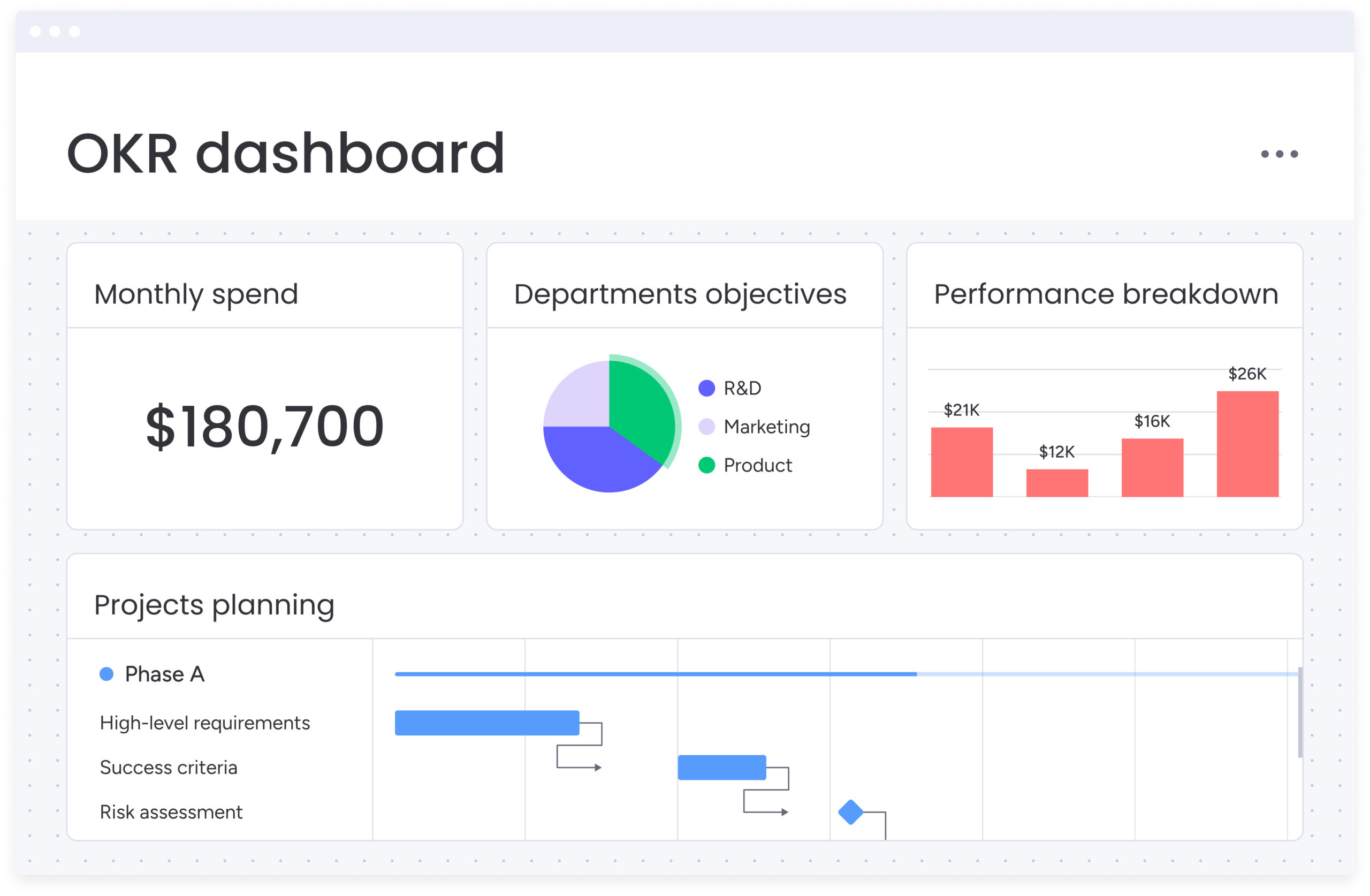
monday work management provides integrated dashboards connecting marketing metrics with business operations, showing how performance impacts company goals and enabling cross-functional visibility.
Orchestrating B2B marketing with monday work management
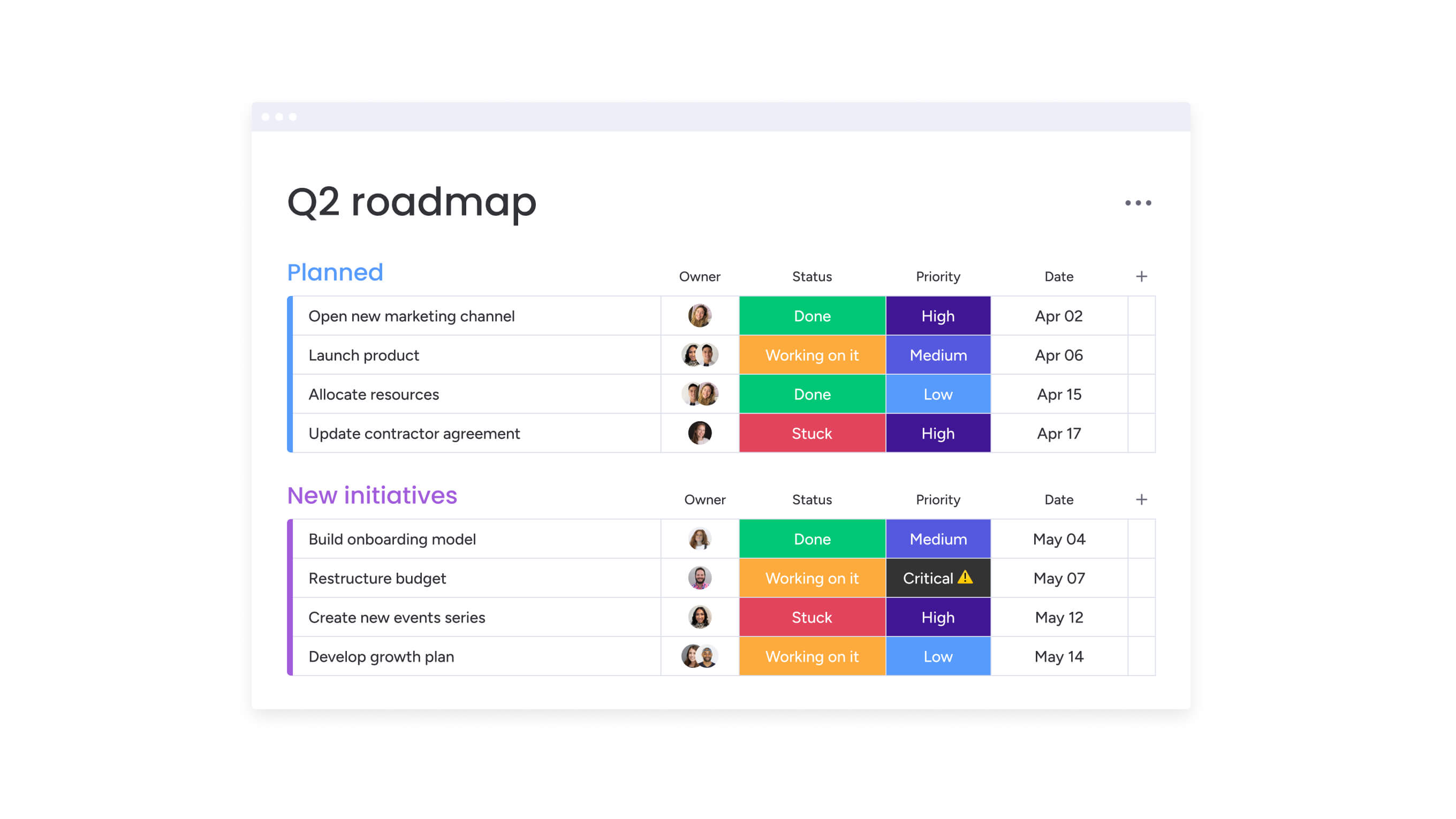
B2B marketing success depends on coordination across teams, campaigns, and channels. monday work management provides the operational infrastructure connecting all marketing activities in one unified system that scales with organizational complexity.
The sophisticated platform addresses core challenges through coordinating campaigns across channels and teams, managing resources effectively, scaling with AI and automation, and maintaining alignment between departments.
These capabilities prove valuable for organizations with complex workflows spanning beyond traditional marketing boundaries.
Coordinate multi-channel campaigns
B2B campaigns require coordination across email, social, advertising, events, and content channels. monday work management enables orchestration through centralized project management that maintains visibility and alignment.
Campaign coordination includes:
- Project boards: centralizing all campaign activities and dependencies.
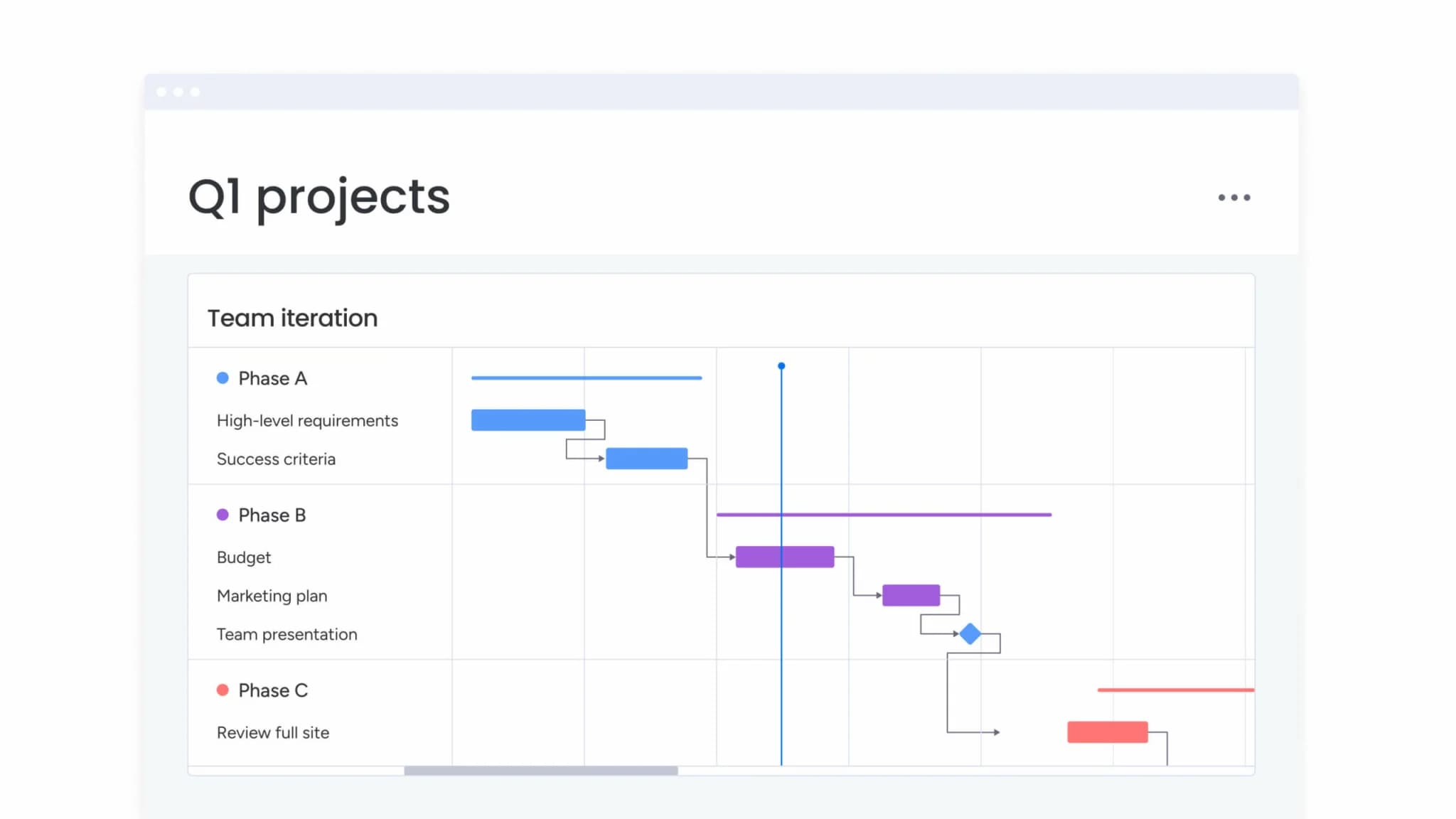
- Timeline views: showing how different workstreams connect and influence each other.
- Collaboration features: keeping teams aligned through real-time updates and communication.
A typical ABM campaign might include target research, content creation, landing page development, email setup, sales enablement, and performance tracking. These workstreams exist in one board where teams see connections, dependencies are visible, and progress updates automatically.
Automation handles workflows by notifying designers when briefs are ready, alerting sales when accounts engage, triggering approvals for review, and updating stakeholders at milestones.
Manage marketing resources efficiently
Teams balance multiple priorities requiring effective resource allocation and capacity management. monday work management supports this through visibility tools that optimize assignments and prevent overallocation.
Resource management includes:
- Workload views: showing individual and team capacity across projects.
- Planning capabilities: balancing assignments based on skills and availability.
- Allocation features: assigning the right people to high-impact initiatives.
Managers see who’s overloaded, make informed decisions about assignments, and identify low-priority work to delay. Teams prioritize high-impact activities, focus resources on pipeline drivers, and avoid conflicts through unified visibility.
Scale marketing with AI and automation
AI Blocks automate routine activities while Digital Workers handle ongoing operations. This combination lets marketing teams focus on strategy while technology manages repetitive processes.
AI capabilities include:
- Lead categorization: automatically organizing prospects by industry and characteristics.
- Information extraction: pulling insights from intelligence reports and interactions.
- Performance summarization: creating reviews and analysis for decision-making.
- Sentiment detection: understanding feedback and engagement quality.
Digital Workers handle ongoing operations. Campaign Managers monitor budgets and performance, reallocating spend and flagging underperformance. Project Analyzers track progress, identifying bottlenecks before impact. Research Assistants enrich data gathering company information for personalization.
Product Power-ups enhance operations through risk management identifying potential issues and resource allocation optimizing assignments based on skills and availability.
The content in this article is provided for informational purposes only and, to the best of monday.com‘s knowledge, the information provided in this article is accurate and up-to-date at the time of publication. That said, monday.com encourages readers to verify all information directly.
Frequently asked questions
What does B2B mean in marketing?
B2B in marketing means business-to-business marketing where companies promote products or services to other businesses rather than consumers. It involves longer sales cycles, multiple decision-makers, and relationship-building approaches addressing organizational needs.
What are the 4 types of B2B marketing?
The four main B2B marketing types are account-based marketing targeting specific accounts, content marketing educating prospects, digital marketing using online channels, and relationship marketing building long-term partnerships through ongoing engagement.
What is an example of B2B marketing?
A software company creating webinars for IT directors represents B2B marketing. Manufacturing companies exhibiting at trade shows and professional services firms publishing thought leadership for corporate clients are also examples.
How do you succeed in B2B marketing?
Success requires understanding buyer journeys, creating educational content addressing challenges, and aligning marketing with sales around shared goals. Organizations succeed by leveraging technology to scale personalization and measure impact across cycles.
What is the future of B2B marketing?
The future centers on AI-powered personalization delivering relevant experiences, digital-first buyer experiences supporting self-service evaluation, and increased focus on customer retention as expansion often provides stronger ROI than acquisition.
How does monday work management support B2B marketing?
monday work management provides unified platforms for orchestrating campaigns, managing resources, and maintaining alignment. It enables teams to coordinate multi-channel initiatives, automate workflows, and track performance through integrated dashboards connecting marketing activities to business outcomes.

 Get started