

After months of demos, pricing debates, and feature comparisons, many teams still miss the real question. Choosing a work management platform is not about checking boxes. It is about selecting a philosophy for how work flows through your organization.
Each platform is built around a different core assumption. Airtable centers on flexible data relationships, Asana prioritizes structured task coordination, and monday work management connects strategy to execution across departments. These foundations shape how teams collaborate, automate, and scale.
This article compares pricing, AI capabilities, integrations, scalability, and implementation effort. You will see which platform fits database-heavy teams, which keeps task-driven projects moving, and which supports enterprise-wide orchestration.
Key takeaways
- Strategic alignment with core business needs: selection depends on primary requirements, as Airtable prioritizes complex data relationships and Asana focuses on task coordination, while monday work management unifies cross-departmental workflows for strategic execution.
- Evaluation of total cost of ownership: organizations must consider expenses beyond monthly fees, including automation limits and storage caps that often necessitate expensive plan upgrades as a team expands.
- Operational intelligence through advanced technology: the integration of AI powered tools delivers proactive project monitoring and risk prediction to optimize resource allocation beyond basic task management.
- Architecture designed for enterprise scalability: performance under heavy loads and portfolio level visibility distinguish enterprise ready solutions from tools designed strictly for small team coordination.
- Impact of implementation speed on return on investment: platforms featuring intuitive interfaces and comprehensive template libraries deliver measurable value within weeks by ensuring rapid user adoption and immediate productivity gains.
Airtable vs Asana at a glance
Although Airtable, Asana, and monday work management share surface similarities, their architectures are fundamentally different. That structure determines how teams plan, execute, and scale work.
The following table illustrates how each platform positions itself in the market:
| Platform | Best for | Core strength | Ideal team size | Key differentiator |
|---|---|---|---|---|
| Airtable | Database-driven teams | Data organization and relational linking | Small to medium | Flexible data relationships and interface designer |
| Asana | Task-focused teams | Project coordination and task tracking | Small to large | Intuitive list-based task management |
| monday work management | Cross-departmental workflows | Strategic execution and portfolio management | Medium to enterprise | AI-powered work management and open platform |
Understanding these differences helps you make the right choice for your business. As 63% of private-sector respondents expect their companies’ profits to increase in the next six months, organizations need platforms that can scale with growth rather than limit it.
Airtable works best when organizing massive datasets and building no-code apps. It is database-first and project manager-second.
Asana focuses on structured task completion, helping teams coordinate who does what and by when.
In contrast, monday work management is built to unify departments, automate workflows with robust automation capabilities, and connect strategy to daily execution at scale. This is particularly important as 46% of organizations expect no change in workforce size, meaning productivity gains must come from better systems, not larger teams.
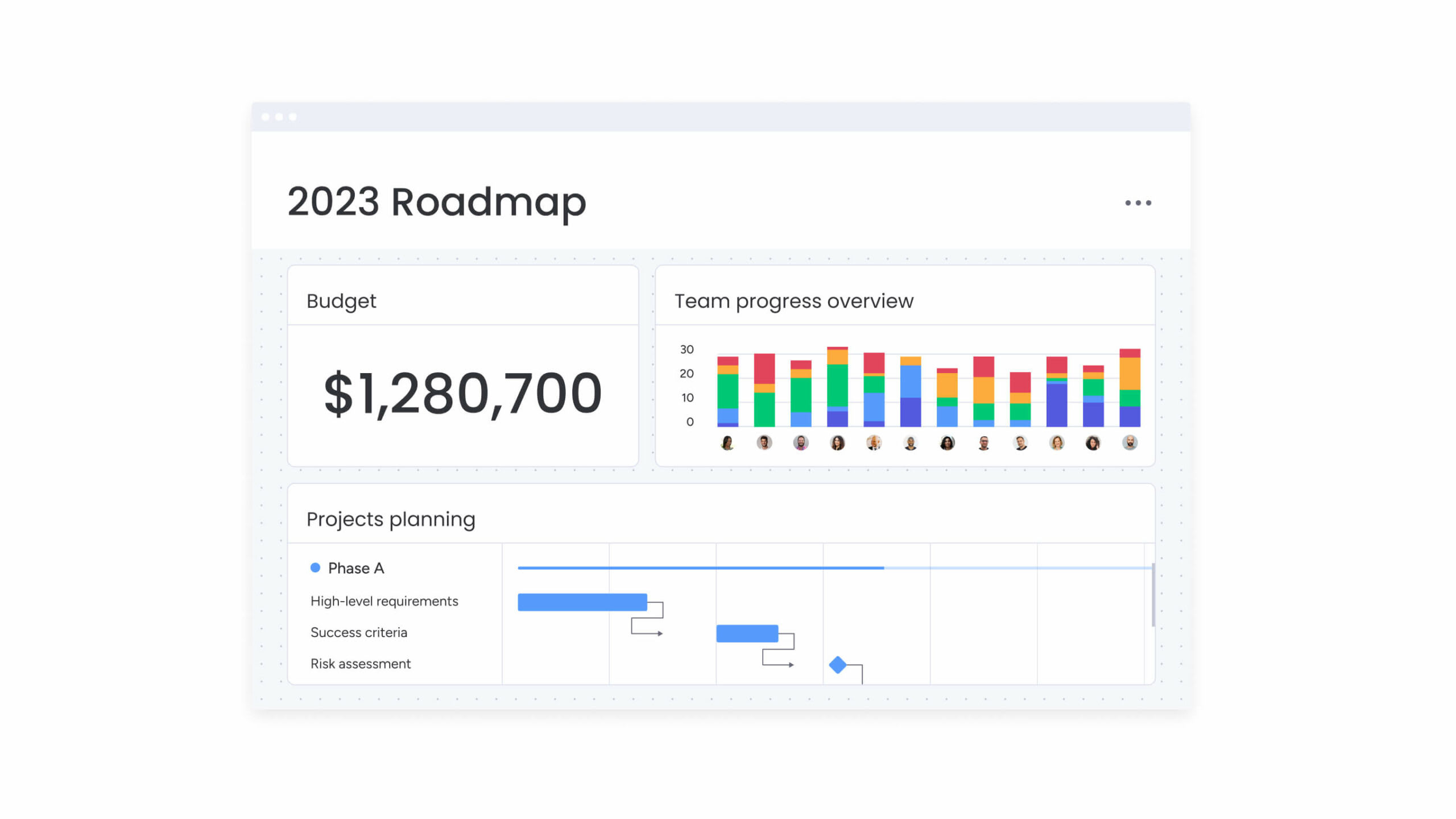
Key differences between Airtable and Asana
These platforms differ fundamentally in their architectural approach to work management. Each is built on distinct philosophies that determine how work flows through an organization.
Understanding these foundational differences enables organizations to select the platform that aligns with their operational requirements and strategic objectives.
Airtable focuses on flexible databases
Airtable is built around relational databases with a user-friendly interface. It prioritizes data relationships over workflows, making it ideal for inventory tracking, content libraries, or applicant management.
Because it starts with records and fields rather than projects and tasks, teams often spend more time configuring structure before execution begins.
Airtable is designed for organizing and connecting complex datasets. The platform’s database approach offers several distinctive characteristics:
- Relational data: link records across different tables, allowing changes in one dataset to automatically update related information elsewhere.
- Custom field types: extensive field customization including attachments, barcodes, and formulas, treating every row as a rich data object.
- Database views: visualize the same dataset in multiple ways without altering the underlying data structure.
Asana excels at project and process coordination
Asana is designed around the task as the fundamental unit of work. It’s hierarchical and rigid: work flows through Teams, Projects, Sections, and Tasks. That structure makes adoption easy for straightforward projects, but it struggles with complex, non-linear workflows.
Asana works best when you need simple task tracking without heavy customization. Asana’s core strengths include:
- Hierarchical task structure: work breaks down logically from projects into tasks and sub-items, providing a linear path to completion.
- Timeline dependencies: tasks connect so shifting one deadline automatically adjusts dependent tasks.
- Goal tracking: individual tasks link to higher-level goals, though this often requires manual updates and premium tiers.
Strategy connects to execution with monday work management
As a Work OS, monday work management enables teams to build workflows for virtually any process. It manages not just tasks, but portfolios, resources, and cross-department initiatives.
Moreover, leaders and teams operate in the same environment. Executives gain portfolio visibility while teams execute daily work.
- Portfolio visibility: leaders gain high-level views across all projects and departments, aggregating real-time data to monitor health, budget, and resources.
- Cross-functional workflows: the platform breaks down silos by allowing data and automations to flow seamlessly between departments.
- Strategic alignment: Objectives and Key Results (OKRs) live in the same environment as daily work, ensuring every task contributes to broader organizational goals.
Pricing comparison for Airtable vs Asana
Understanding the true cost of each platform requires looking beyond the monthly subscription fee. The reason is that hidden costs show up in automation limits, storage caps, and third-party tools you’ll need to fill feature gaps.
Understanding the real cost of ownership
The sticker price rarely reflects what you’ll actually pay. Automation and integration limits force plan upgrades, while add-ons and storage caps drive up costs.
| Platform | Automation limit (standard tier) | Storage limit | Integration restrictions | Enterprise features |
|---|---|---|---|---|
| Airtable | 50,000 runs/month | 100GB – 1TB | API limits based on plan | Federated search, admin panel |
| Asana | 250 actions/month | Unlimited | Integration rules capped | Service accounts, DLP |
| monday work management | 25,000 actions/month | 100GB – 1TB+ | Full library access | Multi-level permissions, HIPAA |
These limits hit hard when workflows stop mid-cycle. Consider these cost factors:
- Automation caps: hitting monthly limits stops workflows cold, forcing mid-cycle upgrades or manual workarounds.
- Storage expansion: data-heavy teams using Airtable may incur costs solely for storage, whereas monday work management and Asana offer more generous allowances.
- Third-party tools: many users pay for additional applications like reporting or time-tracking to fill feature gaps, increasing the true monthly cost per user.
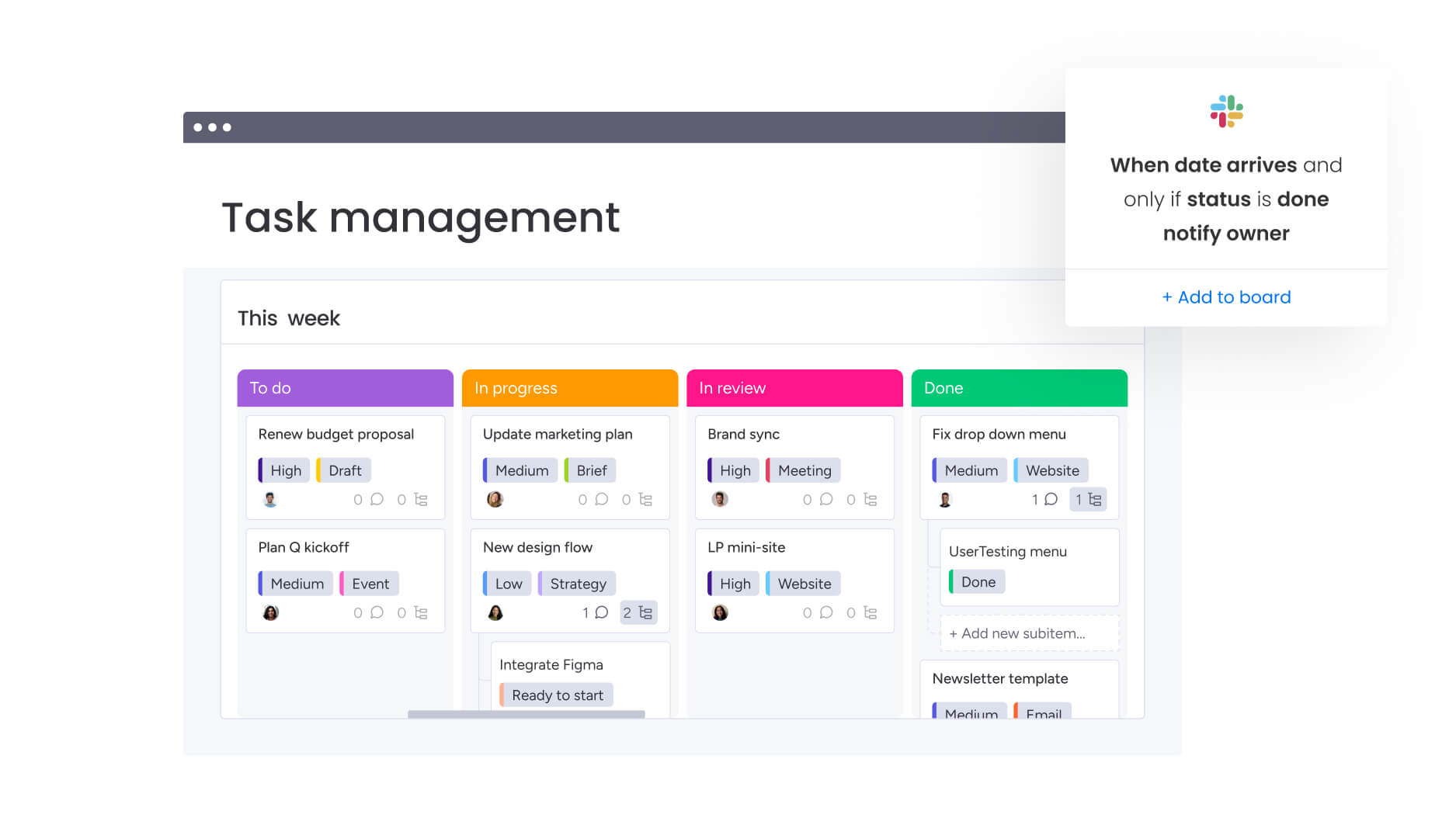
Platform capabilities that determine long-term success
Feature depth and integration quality determine whether a platform lasts or gets replaced. As each platform excels in different areas, comparing features matters.
Project and task management capabilities
Real execution needs more than a to-do list. You need tools that handle complexity, dependencies, and resource allocation. How does each platform stack up when projects get complicated?
| Feature | Airtable | Asana | monday work management |
|---|---|---|---|
| Task dependencies | Basic (via linking) | Advanced (Timeline) | Advanced (Gantt and automation) |
| Gantt charts | Available (extension) | Native (Timeline) | Native (Gantt View) |
| Time tracking | Extension required | Native (Advanced tier) | Native (Pro tier) |
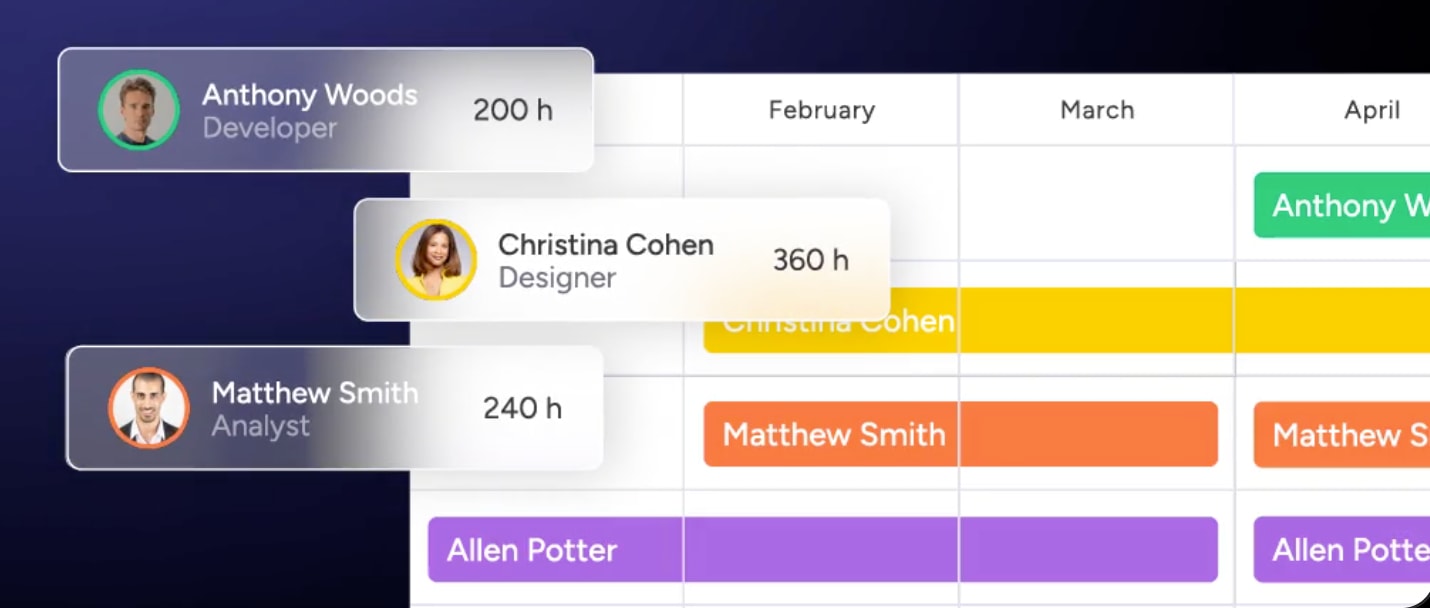
| Resource management | Manual setup required | Workload view | Native Workload Widget |
| Custom workflows | High flexibility | Moderate flexibility | High flexibility |
Each platform brings distinct strengths to project execution:
- Airtable strength: unmatched for managing non-linear projects like content calendars where data richness matters more than sequence.
- Asana strength: superior for strict, linear project management where dependency chains and critical paths are the primary concern.
- monday work management strength: best for hybrid workflows requiring both rigid project structure and flexible process management.
Views and visualization options
Teams interpret information differently. Flexible visualization ensures engineering, marketing, and operations teams all work effectively within the same system.
Airtable offers strong view flexibility inside its database structure. Asana provides multiple views, although some advanced options require higher tiers. monday work management delivers Kanban, Calendar, Timeline, Gantt, and Map views that switch instantly.
Dashboard depth also varies. Airtable requires configuration through its Interface Designer. Asana offers dashboards primarily on premium tiers. In contrast, for dashboard customization that aggregates data from multiple boards into a single view, monday work management delivers the flexibility executives need for portfolio-level visibility without drilling into every project board.
Collaboration and communication features
Context switching kills productivity. The best platforms keep communication tied to the work. Each platform approaches collaboration differently:
- Airtable: comments are restricted to individual records, making broader project-level discussions difficult without leaving the platform.
- Asana: strong commenting features on tasks and projects, but lacks dedicated space for co-creating documents.
- monday work management: integrates monday workdocs, allowing teams to co-edit documents, embed live boards and dashboards, and turn text directly into action items.
AI and automation power in each platform
As better AI means less manual work and smarter, faster decisions, it separates enterprise platforms from basic project tools.
AI blocks and Digital Workers in monday work management
AI is built directly into how work flows through three core features in monday work management. It doesn’t just generate text; it handles complex operational tasks.
The platform’s AI capabilities address real business challenges:
- Categorize data: AI automatically tags and routes incoming requests based on sentiment, urgency, and topic.
- Extract information: the system parses emails, PDFs, and documents to populate columns with relevant data.
- Risk analysis: Portfolio Risk Insights scans entire portfolios to identify potential bottlenecks before they become critical.
Digital Workers act as proactive team members, monitoring health and suggesting optimal team allocations without human intervention. These aren’t simple bots — they learn, solve problems, and push your business ahead.
Airtable AI for database intelligence
Airtable AI focuses on generative content and data synthesis within records. It excels at drafting summaries, generating formulas, and translating content directly within database fields. It’s powerful for content work, but it focuses on individual records instead of broader workflows.
Asana AI for project optimization
Asana Intelligence targets individual productivity and project status. It offers Smart Status updates that summarize project progress and Smart Answers to query project data. It helps you catch up on updates, but it can’t automate workflows like monday work management’s AI blocks.
Automation capacity and limits compared
At enterprise scale, you need automation that won’t slow you down. An unlimited automation philosophy for enterprise comes with monday work management, ensuring that as you scale, your software doesn’t penalize you for efficiency. Competitors cap automation, which creates bottlenecks as you scale.
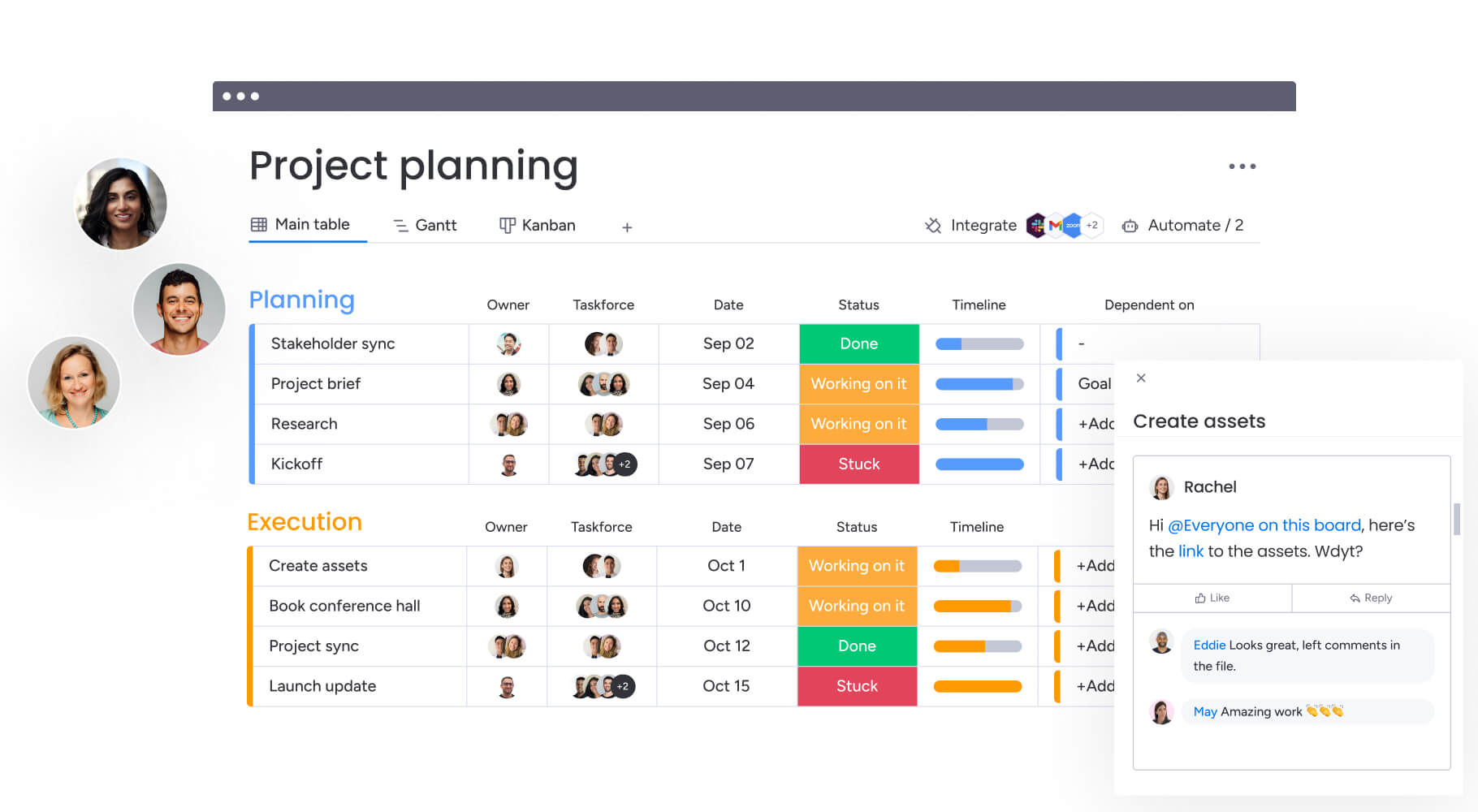
Integration ecosystem analysis
Your platform needs to connect with existing tools or you’ll end up with data silos. Integration quality decides whether a platform becomes your hub or stays isolated.
Native integration libraries
Strong integrations turn your platform into a central digital workspace instead of an isolated solution. The breadth and depth of integrations determine how well each platform connects to your existing tech stack.
Enterprise-grade connectors that allow for bi-directional sync are featured in monday work management. Updates in Salesforce or Jira reflect instantly on monday work management, and vice versa. That level of integration matters when your tech stack gets complex.
API flexibility and developer capabilities
For custom needs, an open GraphQL API that developers appreciate for its flexibility and speed is provided by monday work management. It supports comprehensive webhooks and real-time data syncing, allowing IT teams to build custom apps and widgets that sit natively within the interface.
Airtable also offers a strong API, particularly for data retrieval, while Asana’s API is robust but often stricter regarding rate limits.
Which platform wins for enterprise teams?
Enterprise teams need more than basic project management. Scale, security, cross-department coordination, and performance under load separate enterprise platforms from team tools.
Scalability and performance benchmarks
Enterprise teams need platforms that stay fast with hundreds of thousands of items. Built on a proprietary engine designed to handle millions of concurrent events, monday work management ensures dashboards load instantly even when aggregating data from massive datasets.
Airtable can experience performance lags with extremely large databases, and Asana can become cluttered when individual projects exceed task limits.
Cross-departmental workflow support
Silos undermine agility at enterprise scale. As organizations grow, workflows increasingly span marketing, sales, product, operations, and finance. The real test of a platform is how effectively it connects these teams without forcing them into a single rigid structure.
Each platform handles cross-department collaboration differently:
- Airtable approach: great for distinct teams, but linking workflows across departments often requires complex base syncing.
- Asana approach: good for visibility, but rigid structures make it hard for different teams to collaborate seamlessly in the same space.
- monday work management approach: functions as a translation layer where engineering sees a Sprint, marketing sees a Campaign, and executives see a Roadmap, all powered by the same underlying data.
Portfolio management at scale
Managing one project is easy. Managing 500 demands purpose-built tools. By pulling data from all projects across different programs into one high-level view, monday work management helps organizations see the big picture and easily detect bottlenecks.
| Capability | Airtable | Asana | monday work management |
|---|---|---|---|
| Multi-project dashboards | Interface Designer | Portfolios | Cross-board dashboards |
| Resource allocation | Manual/scripted | Workload | Workload Widget |
| Risk management | Custom setup | Status updates | Portfolio Risk Insights (AI) |
| Executive reporting | Visualizations | Universal Reporting | High-level widgets |
Portfolio Risk Insights in monday work management proactively scan projects to flag budget overruns or deadline risks before they happen, giving leaders the foresight they need to make adjustments proactively.
Implementation speed and adoption: the hidden driver of ROI
Faster deployment and adoption mean faster ROI. Implementation complexity, learning curves, and time to value differ wildly and they affect both short-term productivity and long-term success.
Implementation timeline comparison
Fast time to value separates flexible, user-friendly platforms from legacy software. Typically deploying in weeks, not months, monday work management leverages its building block architecture and vast template library that requires no code.
Migrating data is streamlined via Excel/CSV import capabilities that map fields intelligently. Asana also deploys quickly but may require culture shifts to match its rigid task philosophy. Airtable often requires longer setup time to design the database schema correctly.
User interface learning curves
Platform adoption depends significantly on interface intuitiveness and ease of use. For example, monday work management features a colorful, intuitive visual interface that requires minimal training, facilitating seamless adoption across teams.
Organizations familiar with spreadsheet applications will find the transition straightforward.
Asana also offers a user-friendly experience, though its interface tends to be more text-centric. Airtable presents a steeper learning curve, as effective utilization requires users to understand fundamental database concepts and relational structures.
Several key factors drive successful platform adoption:
- Visual feedback: color-coded statuses provide immediate clarity and visibility into work progress across projects.
- Self-serve customization: users can adjust their own views and configurations without requiring IT intervention.
- Contextual onboarding: built-in tutorials guide users through platform-specific workflows and use cases.

Customer support quality comparison
Enterprise teams need instant support. Support quality and response times matter when downtime hits multiple departments and revenue.
| Support level | Airtable | Asana | monday work management |
|---|---|---|---|
| Standard | Email/Community | 24/7 email and chat | |
| Business | Priority email | Priority support | 24/7 priority |
| Enterprise | Dedicated success | Dedicated success | Dedicated CSM and 10-min SLA |
For enterprise clients, monday work management commits to aggressive SLAs, often guaranteeing response times under 10 minutes for critical issues. The platform also offers monday Academy, a comprehensive certification and training hub, alongside a vibrant community.
Enterprise plans include tailored onboarding packages where experts assist in building initial workflows to ensure immediate ROI.
Security and compliance standards
Enterprise trust requires proof. Therefore, regulated organizations need platforms backed by rigorous security and compliance standards.
With rigorous security certifications including SOC 2 Type II, ISO 27001, ISO 27018, and full GDPR compliance, monday work management protects your data. Data is encrypted both in transit and at rest, with options for data residency to meet local sovereignty laws.
For regulated industries, it supports HIPAA compliance and includes features aligned with SOX requirements. Comprehensive audit logs track logins, downloads, and data changes to provide full traceability.
Granular permissions, down to the column level, reduce user-level risk. Teams can securely share boards with external partners while restricting access to sensitive financial or client data.

“monday.com has been a life-changer. It gives us transparency, accountability, and a centralized place to manage projects across the globe".
Kendra Seier | Project Manager
“monday.com is the link that holds our business together — connecting our support office and stores with the visibility to move fast, stay consistent, and understand the impact on revenue.”
Duncan McHugh | Chief Operations OfficerMaking the right choice for your organization
Pick the platform that matches your needs, growth plans, and operational complexity. This decision affects current productivity and your ability to scale as needs change.
An AI-first platform that runs your business, monday work management changes how teams work. Its three-pillar AI approach handles scale problems manual project management can’t solve.
Teams using monday work management get tools that change how work happens:
- Portfolio Risk Insights: AI scans hundreds of active projects instantly to predict slippage.
- Smart Resource Allocation: algorithms match tasks to team members based on skills and capacity.
- Automated Triage: incoming requests are analyzed, categorized, and assigned without human touch.
The platform delivers measurable results across industries. Portfolio management connects isolated projects into a unified view, offering real-time visibility into health, budget, and resources. Cross-departmental workflows unify disparate functions into standardized, automated processes where handoffs happen instantly.
Strategic goal alignment bridges the gap between high-level strategy and daily tasks by tracking OKRs directly alongside work.
Frequently asked questions
Is monday work management better than Airtable for project management?
For project management, you'll find monday work management is a more comprehensive solution than Airtable because it includes Gantt charts, dependencies, and resource management out of the box. Airtable needs heavy customization to match that. The platform's Work OS architecture provides the structure and flexibility needed for complex project execution at scale.
Which platform has the most comprehensive AI capabilities?
When it comes to AI capabilities, monday work management offers the most comprehensive features through its Digital Workforce and AI blocks, which proactively analyze risks, allocate resources, and automate complex workflows. It goes beyond text generation to deliver real operational intelligence.
Can I integrate Airtable with Asana for improved workflow?
Yes, you can integrate them using third-party applications like Zapier or Make, but using a unified Work OS like monday work management eliminates the fragility and cost of maintaining these complex connectors. One platform cuts integration work and keeps data consistent.
Which platform is most cost-effective for enterprise teams?
Overall,monday work management often costs less because it bundles reporting, forms, and automation that require pricey add-ons in Asana and Airtable. Its unlimited automation for enterprise means you won't pay more as you scale.
How do these platforms handle resource management?
For resource management, monday work management uses AI and dedicated widgets to visualize and balance workload across teams, whereas Asana offers a manual workload view and Airtable requires significant custom configuration to track resources effectively. The AI in monday work management gives proactive recommendations, not just visibility.
Which platform is best for cross-departmental coordination?
When it comes to cross-departmental coordination, monday work management excels by acting as a central hub that connects different workflows and departments. It keeps data flowing and processes standardized across the org. Competitors struggle with rigid structures or complex syncing.

 Get started