

Production planning becomes difficult when each team works from a different version of reality. Sales pushes for faster delivery, procurement works against supplier lead times, and operations tries to balance capacity across equipment, people, and inventory. Without a shared plan, priorities conflict and delivery dates become harder to predict.
Master production scheduling (MPS) creates a clear, time-phased plan that aligns demand with available capacity. It defines what needs to be produced, how much is required, and when production should occur so every team works from the same expectations.
A well-structured MPS connects high-level business goals with day-to-day execution. It gives sales realistic delivery timelines, helps procurement secure materials on time, and allows production teams to plan efficiently without constant last-minute changes.
This guide explains how master production scheduling works, what data it requires, and how to build an MPS that improves coordination across planning, purchasing, and production in 2026.
Key takeaways
- Bridging strategy and reality: Create time-phased plans that tell you exactly what to build, how much, and when to deliver it.
- Effective MPS requires balancing structure with flexibility through time fences: Protect near-term production from constant changes while keeping future periods open for adjustments.
- Visual scheduling transforms complex data into actionable insights: monday work management’s Gantt views and Workload management help you spot bottlenecks before they impact delivery dates.
- Successful MPS connects demand forecasting with capacity validation: Combine customer orders and sales forecasts, then check against available resources to create realistic schedules.
- Structured change management prevents chaos when disruptions occur: Use standardized processes to evaluate schedule changes and communicate impacts across sales, production, and procurement teams.
What is master production scheduling?
Master production scheduling (MPS) is the process of creating a time-phased plan that determines what products to manufacture, how much to produce, and when to deliver them. This tactical planning process translates customer demand and sales forecasts into specific production quantities and dates for finished goods.
Unlike broader production planning that looks at aggregate volumes over months or years, MPS focuses on individual products and specific time periods. It answers three fundamental questions that drive manufacturing operations:
- What products: The exact SKUs, models, or configurations to produce.
- How many: The specific quantities needed for each time period.
- When: The precise timing for production starts and completions.
The MPS serves as the primary communication bridge between sales and operations. Sales teams use it to understand what they can promise customers, while production teams rely on it to organize shop floor activities and material requirements.
This tactical planning process translates customer demand and sales forecasts into specific production quantities and dates for finished goods.
The role of MPS in manufacturing operations
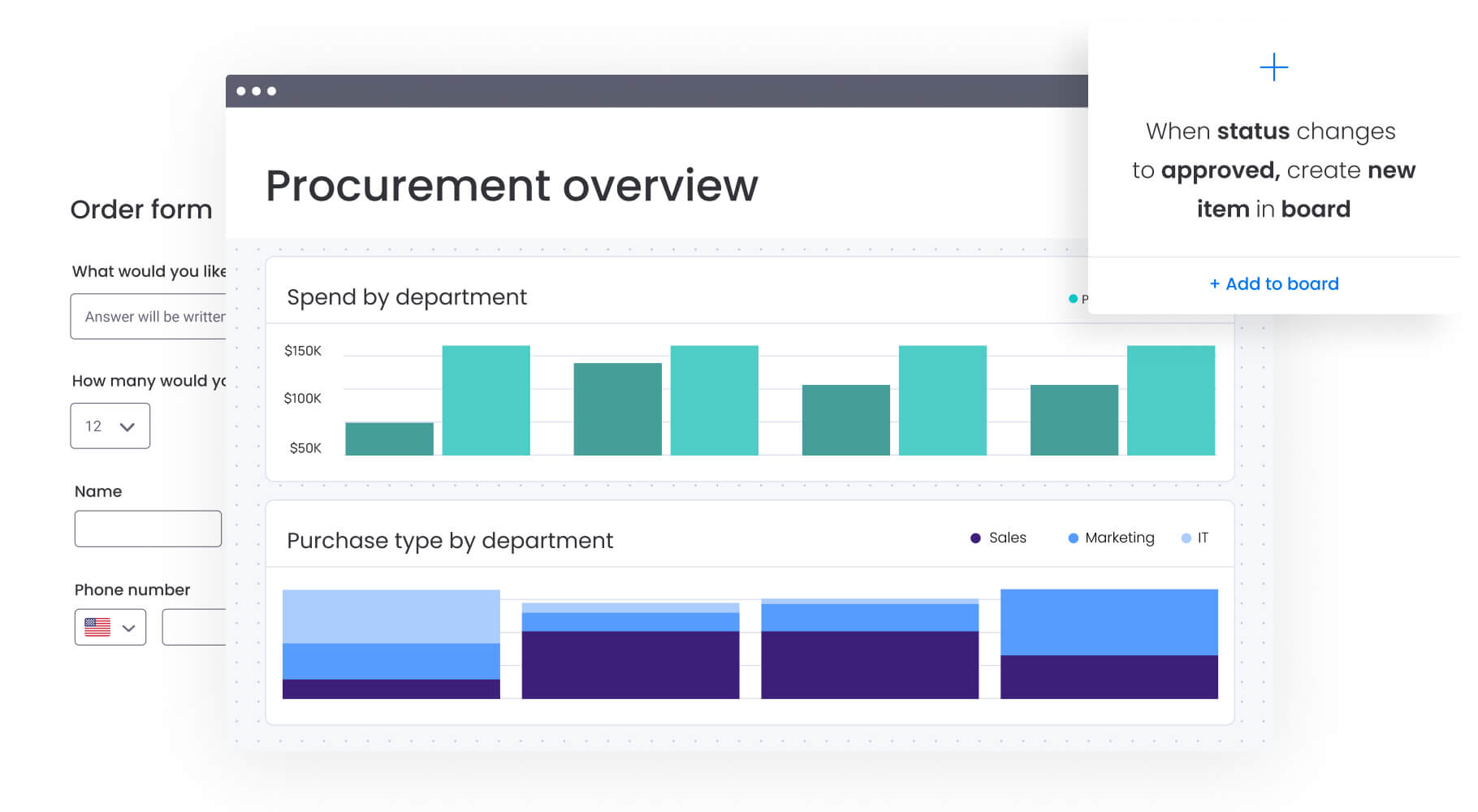
The master production schedule keeps manufacturing teams aligned around the same plan. It provides a shared view of demand, capacity, and timing so departments can coordinate decisions instead of reacting to surprises.
By translating forecasts and orders into a clear production timeline, the MPS helps reduce volatility, avoid overproduction, and prevent last-minute changes that disrupt operations. Each function relies on this visibility to plan effectively and keep work moving smoothly:
- Sales teams: Need available-to-promise (ATP) quantities to set realistic delivery dates.
- Procurement: Uses it to trigger material requirements planning (MRP) and determine when raw materials must arrive.
- Production: Relies on it to maintain efficient run rates and minimize changeover times.
- Finance: Uses it to forecast inventory investment and revenue realization.
An effective MPS also allows organizations to move from reactive firefighting to proactive planning. Sales makes promises production can’t keep. Materials arrive too early or too late. Some teams sit idle while others work overtime: the schedule becomes a source of conflict rather than coordination.
Master production scheduling vs production planning
Production planning and master scheduling serve different but connected roles in manufacturing, each operating at different levels of detail and time horizons. Think of production planning as your city map showing overall direction and long-term capacity, while MPS is your turn-by-turn navigation with specific, immediate instructions.
| Aspect | Production planning | Master production scheduling |
|---|---|---|
| Time horizon | 1 to 5 years | 3 to 18 months |
| Detail level | Product families | Specific SKUs |
| Update frequency | Monthly or quarterly | Weekly or daily |
| Primary purpose | Resource acquisition and budgeting | Order fulfillment and resource allocation |
| Decision makers | Executives and operations VPs | Master schedulers and production managers |
Production planning might determine you need capacity for 10,000 bicycles next quarter. The MPS specifies that Week one requires 200 Mountain Bikes in size medium and Week two needs 150 Road Bikes in size large.
Try monday work managementHow MPS connects with MRP and enterprise planning
Manufacturing operations rely on a hierarchy where strategy flows down to execution through connected planning systems: this connection makes sure high-level business goals become real production plans without running out of materials or people.
Sales and Operations Planning (S&OP) sets high-level volume targets. The MPS breaks these down into buildable items. Material Requirements Planning (MRP) then calculates the components needed to execute the schedule.
Keep in mind that the MPS drives the entire MRP system. Without a valid master schedule, MRP cannot determine net requirements for raw materials. When MRP identifies material shortages that can’t be resolved, this information flows back to the master scheduler who adjusts the MPS to reflect reality. This synchronization prevents production from stalling due to missing components.
The MPS also validates whether high-level S&OP plans are actually executable. If S&OP calls for 10,000 units but capacity constraints only allow 8,000, the MPS surfaces this gap before commitments are made to customers.
Core components of an effective master production schedule
Building a functional MPS needs several core data points working together to create plans you can actually execute. Each piece affects the scheduling puzzle, and getting these right determines whether your schedule actually works.
Demand inputs and forecasting
The MPS combines two demand streams you need to manage carefully so production matches what the market actually wants:
- Independent demand: Statistical forecasts based on historical patterns and market trends.
- Dependent demand: Firm customer orders with committed delivery dates.
Near-term schedules rely primarily on firm orders, while longer horizons depend on forecasts. The MPS reconciles these inputs, consuming forecast with actual orders as time progresses. This way, you build what customers actually want instead of what models predicted months ago.
Capacity constraints and validation
A schedule becomes an actionable plan only when it is validated against your actual capacity. The MPS must be checked against Rough-Cut capacity planning (RCCP) to ensure feasibility. This involves validating the schedule against critical resources:
- Machine groups: Available hours on key production equipment.
- Specialized labor: Skilled workers required for specific operations.
- Storage space: Warehouse capacity for raw materials and finished goods.
Good capacity planning shows you overloads early. Management can then decide on overtime, outsourcing, or rescheduling before you miss delivery dates. Visual tools help teams see capacity conflicts instantly and make adjustments before problems cascade.
Time fences and planning stability
Time fences protect the shop floor from constant disruption while maintaining flexibility where needed. These zones dictate how easily the schedule can be changed:
- Frozen zone: The next one to two weeks where changes require executive approval.
- Slushy zone: A middle period where product mix can adjust but volume stays fixed.
- Liquid zone: The distant future open for any adjustments.
These boundaries keep production efficient while giving sales the flexibility to meet customer needs. Find the right balance for how your operation runs.
Near-term schedules rely primarily on firm orders, while longer horizons depend on forecasts. The MPS reconciles these inputs, consuming forecast with actual orders as time progresses.
How to build your master production schedule: 7 steps
A reliable master production schedule doesn’t happen all at once — it develops by connecting demand, capacity, inventory, and timing into a plan that can actually be executed. Each step adds clarity, helping you balance what the market needs with what your operation can realistically deliver.
The following process outlines how to structure your MPS so it stays practical, adaptable, and aligned with business priorities as conditions change.
Step 1: consolidate all demand sources
Start by aggregating demand from every source into a single view. This includes:
- Sales forecasts from market analysis.
- Confirmed orders with delivery commitments.
- Inter-plant transfers between facilities.
- Service part requirements for maintenance.
Consolidate this data by removing duplicates and resolving ambiguous requirements. The goal is to establish a single, definitive demand figure for operations.
Step 2: assess available capacity
Next. calculate the total available hours at critical work centers. Key considerations include:
- Planned maintenance schedules.
- Holiday and vacation time.
- Historical efficiency rates.
- Equipment reliability factors.
Also be sure to identify your primary bottleneck resource early since this constraint will govern the entire schedule. Understanding true capacity stops you from creating schedules that look good on paper but fall apart on the floor.
Step 3: define planning parameters
Set your time fences based on cumulative lead times and supplier constraints. Establish rules for:
- Minimum lot sizes for efficient production runs.
- Production sequences to minimize changeover time.
- Changeover priorities based on customer importance.
These parameters guide decisions when conflicts pop up and keep planning cycles consistent.
Step 4: map gross requirements
Plot demand onto your planning timeline to determine gross requirements in each time bucket. This shows the total amount needed without considering current inventory. Adjust timing to account for seasonality or planned promotions that might spike demand.
Step 5: calculate net production needs
Subtract current inventory levels and scheduled receipts from gross requirements. This reveals what actually needs to be produced. Simultaneously calculate Available-to-Promise quantities for each period, giving sales immediate visibility into sellable inventory.
Step 6: create the initial schedule
Generate your first pass of the MPS. Review it against capacity constraints and material availability. Iterate on the schedule by moving orders to smooth peaks and fill valleys. This balancing act gets the most from your assets while keeping commitments realistic.
Step 7: validate with capacity planning
Finally, run the proposed MPS through a rough-cut capacity check. Confirm that aggregate load on critical resources stays within available capacity for every period. When violations appear, adjust the schedule or approve capacity solutions like overtime.
Try monday work management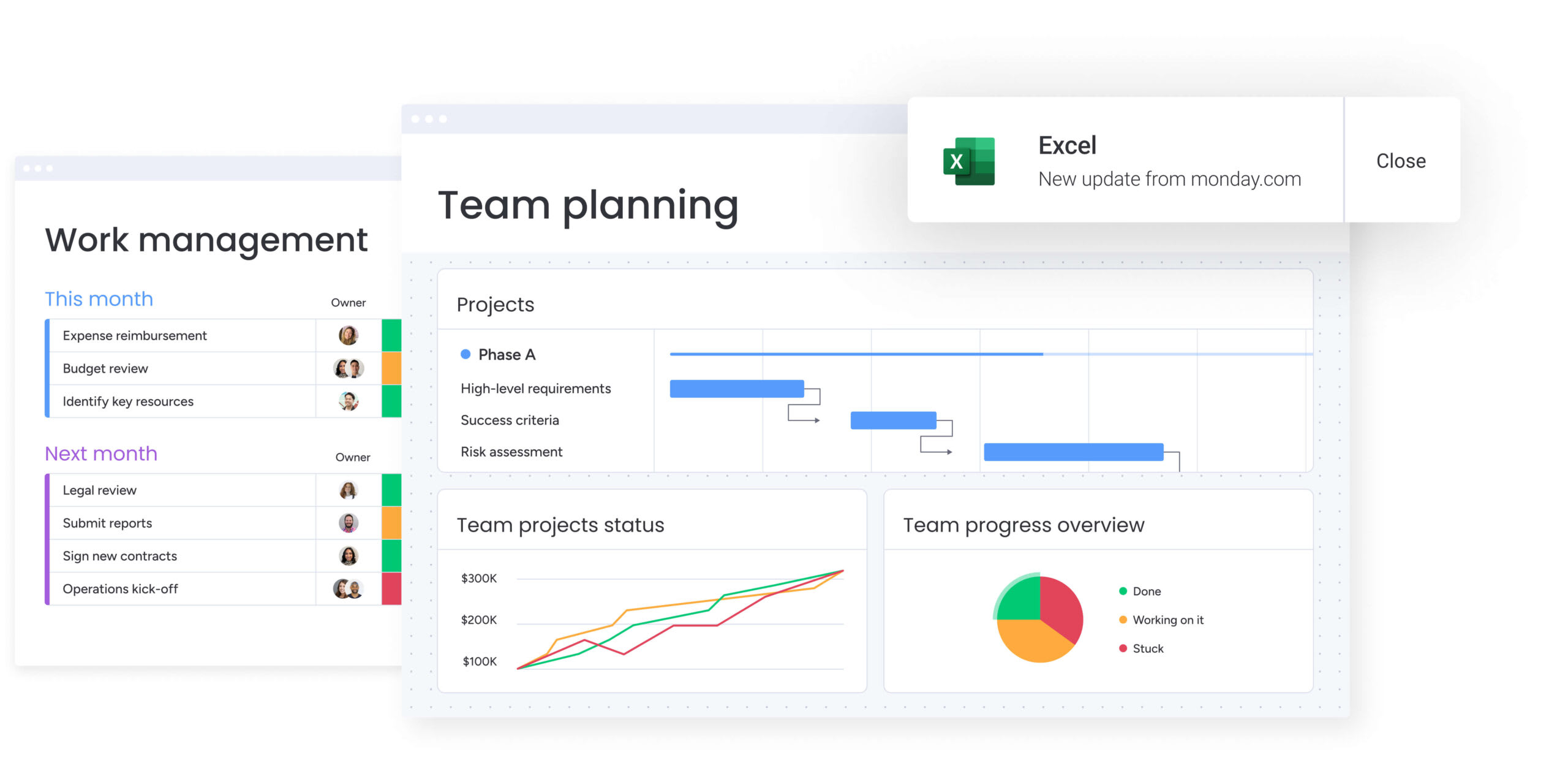
Managing schedule changes and disruptions
Effective schedules must be dynamic because market conditions, priorities, and constraints are always evolving. Demand shifts, priorities change, and constraints emerge unexpectedly. Your MPS needs to adapt without creating chaos — through clear processes and staying ahead of problems.
Structured change management
Every change request needs a defined process for capture, evaluation, and approval. Standardized forms help teams understand:
- What’s changing: Specific products, quantities, or dates affected.
- Why it matters: Business rationale and customer impact.
- How it impacts: Effects on other commitments and resources.
This creates an audit trail and stops ad-hoc decisions from causing problems across operations.
When changes are approved, automated workflows update the schedule and notify affected teams. Everyone sees the same current plan instead of working from different versions. You document why decisions were made, so there’s no confusion later about adjustments.
Responding to capacity bottlenecks
Bottlenecks shift based on product mix and volume. When constraints emerge, you have several options:
- Offload work: Move production to alternative work centers or subcontractors.
- Adjust mix: Change the product combination to balance resource loads.
- Add capacity: Approve overtime or additional shifts for critical resources.
- Reschedule: Push out lower-priority orders to protect key commitments.
Spot bottlenecks before they stop production. Seeing capacity use in real time helps planners get ahead of problems instead of reacting to them.
Material and supplier disruptions
When suppliers delay shipments or quality issues arise, the MPS must quickly adapt. Re-sequence production to pull forward products with available materials. This minimizes downtime while you resolve supply issues. Clear communication with sales prevents customer commitments that can’t be met.
Advanced MPS capabilities with AI and real-time collaboration
As manufacturing complexity grows, advanced scheduling technology is necessary to create smarter, faster production plans. Advanced master scheduling uses technology to handle what human planners can’t process alone, creating smarter, faster production plans.
AI-powered planning assistance
Artificial intelligence transforms how schedules are created and maintained. AI algorithms provide several key capabilities:
- Predictive analysis: Forecast potential delays based on historical patterns.
- Constraint identification: Spot capacity violations and material shortages before they impact production.
- Scenario modeling: Show the impact of changes in seconds rather than hours.
AI doesn’t replace human judgment. It boosts what planners can do by handling routine analysis and flagging exceptions. Planners focus on big decisions while AI handles the number crunching.
Real-time shop floor integration
Advanced MPS systems connect directly to production equipment through APIs and sensors. Production progress updates automatically. When work orders fall behind, the impact on the master schedule appears instantly. This cuts the lag between what’s happening on the floor and what’s in your planning system.
Automated alerts notify relevant stakeholders when issues emerge:
- Sales knows immediately if delivery dates are at risk.
- Planners can adjust schedules based on actual performance.
- Management receives exception reports for critical decisions.
Cross-functional collaboration platforms
Cloud-based systems break down departmental walls. Sales, finance, and operations work from a single shared view. Comments, approvals, and updates happen within the platform rather than through email chains. Everyone stays aligned on the current plan and its constraints.
Visual dashboards make complex data digestible. Executives see high-level metrics while planners access detailed schedules. Role-based views give each person relevant information without burying them in details.
Try monday work management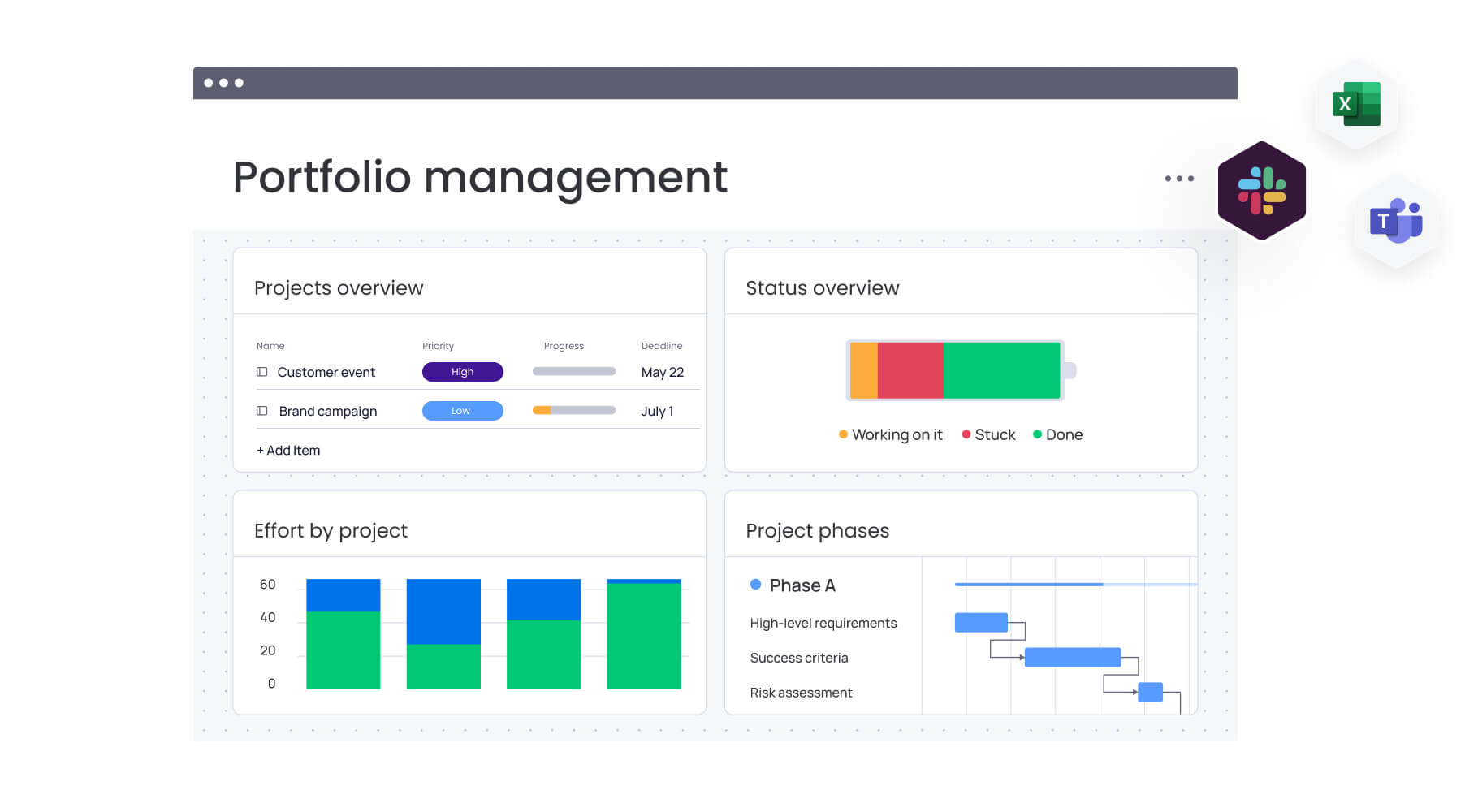
Manage master production scheduling with monday work management
Master production schedules need to stay accurate, visible, and easy to adjust as conditions change. Static spreadsheets make it difficult to keep teams aligned when demand shifts, capacity changes, or priorities evolve. A connected platform allows planners, operations, and leadership to work from the same live schedule without duplicating updates across tools.
monday work management provides a structured yet flexible environment for building and maintaining an MPS. Visual views, shared dashboards, and automated workflows help teams coordinate production timelines, monitor capacity, and respond quickly when plans need to adapt.
Visual scheduling and capacity management
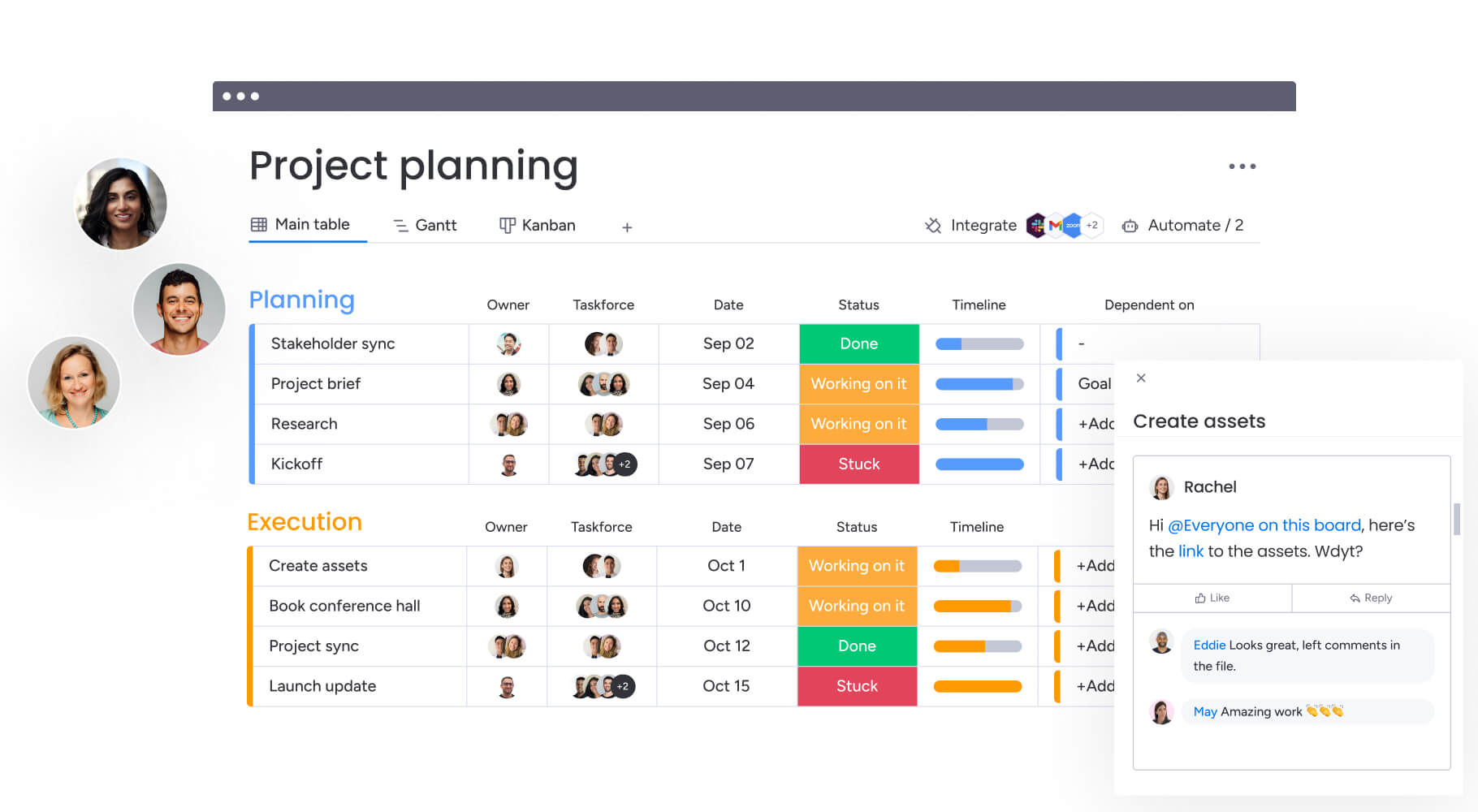
Transform rows of data into intuitive visual timelines using Gantt views. See your entire production horizon at a glance. Dependencies map automatically, and when one production run gets delayed, the timeline adjusts everything else instantly. Everyone immediately sees how schedule changes affect the plan.
The Workload View bridges demand and capacity by visualizing resource allocation across teams and time periods. Spot over-allocated resources before bottlenecks form. Redistribute work proactively to maintain smooth production flow. Planning for actual human capacity prevents the burnout and quality issues that come from overloading teams.
Automated workflows and intelligent updates
Build automation rules that reduce administrative burden. When production status changes to delayed, the system automatically notifies sales and updates delivery expectations. Forms standardize change requests, capturing what needs to change, why, and the customer impact. Automated workflows route these requests through stakeholders, creating clear audit trails.
AI Blocks enhance planning capabilities by processing information at scale. Extract key details from supplier communications. Categorize incoming rush orders by urgency. Summarize production issues into actionable insights. These capabilities free planners from manual data processing so they can focus on bigger decisions.
Enterprise-ready collaboration
Connect your MPS to procurement boards, production tracking, and quality systems. Everyone sees how their work fits into the bigger picture. Permissions control who can edit versus view, keeping data accurate while staying transparent. Guest access lets suppliers see relevant schedule portions without accessing sensitive information.
Dashboards aggregate data from multiple facilities into consolidated views. Executives gain real-time visibility into global production performance. Standardized templates ensure consistency across locations while allowing local customization. API integrations connect this visual layer to your existing ERP systems, so you don’t enter data twice.

“monday.com has been a life-changer. It gives us transparency, accountability, and a centralized place to manage projects across the globe".
Kendra Seier | Project Manager
“monday.com is the link that holds our business together — connecting our support office and stores with the visibility to move fast, stay consistent, and understand the impact on revenue.”
Duncan McHugh | Chief Operations OfficerElevate your manufacturing operations with effective MPS
Master production scheduling turns manufacturing chaos into coordinated execution. When done right, MPS creates the foundation for predictable delivery dates, better inventory levels, and teams that work together.
MPS success comes down to balancing structure with flexibility. Rigid schedules break under real-world pressures, while overly flexible plans create confusion and inefficiency. The right approach combines systematic planning processes with responsive change management and real-time visibility.
Companies that master this balance achieve faster response times, higher customer satisfaction, and more efficient use of resources. In short, they move from firefighting to planning ahead, building operations that grow with the business.
Try monday work managementFrequently asked questions
How often should you update a master production schedule?
Master production schedules typically require weekly updates to reflect new orders and completed production. High-volume environments may need daily reviews for the immediate frozen period to maintain accuracy.
What is the typical planning horizon for master production scheduling?
The planning horizon generally extends three to 18 months into the future. This must cover at least the cumulative lead time of your longest-lead product to ensure material availability.
Can small manufacturers benefit from master production scheduling?
Small manufacturers gain significant value from MPS by replacing chaotic firefighting with predictable delivery dates and optimized inventory levels. Visual platforms make this achievable without complex implementations.
How does master production scheduling reduce inventory costs?
MPS reduces inventory costs by synchronizing production timing with actual demand dates. This minimizes the need for excess finished goods and reduces safety stock requirements.
What's the difference between MPS and detailed scheduling?
MPS determines what to produce and when at a weekly or daily level. Detailed scheduling sequences specific operations on specific machines minute by minute to execute that plan.
How does monday work management support master production scheduling?
monday work management simplifies MPS through visual interfaces, real-time updates, and automated alerts. The platform makes schedules accessible across the organization while maintaining the structure needed for complex manufacturing planning.

 Get started