


Small business marketing teams operate with limited budgets, lean staff structures, and the constant pressure to demonstrate ROI. As a result, managing social media, email campaigns, and performance tracking across multiple platforms often creates operational complexity that undermines strategic execution.
In reality, small business marketing works differently than enterprise marketing. You cannot waste resources on vanity metrics or experimental campaigns that do not drive revenue. Instead, success means building processes that turn scattered promotional activities into a coordinated growth engine. In essence, every dollar and every hour must contribute directly to your bottom line.
Therefore, this guide provides a complete small business marketing execution system. You will learn how to build a focused strategy, pick the right channels for maximum ROI, and set up workflows that scale with your business. You will also discover how to coordinate campaigns across platforms without losing your competitive agility by building a central system for your marketing work.
Key takeaways
- Focus on 3-5 high-impact marketing channels instead of spreading thin: Master email marketing, local SEO, and content creation rather than trying every platform available.
- Build repeatable marketing processes to scale without burning out: Create standard workflows for campaigns, content creation, and customer communication that your team can follow consistently.
- Set measurable goals tied directly to revenue, not vanity metrics: Track monthly sales figures, customer acquisition numbers, and conversion rates instead of just followers or likes.
- Centralize marketing operations with modern platform: Manage campaigns, track performance, and coordinate team activities in one unified workspace provided by solutions like monday work management instead of juggling multiple disconnected apps.
- Allocate 70% of budget to proven channels, 20% to optimization, 10% to experiments: This framework balances financial stability with innovation while maximizing return on limited marketing dollars.
What is small business marketing?
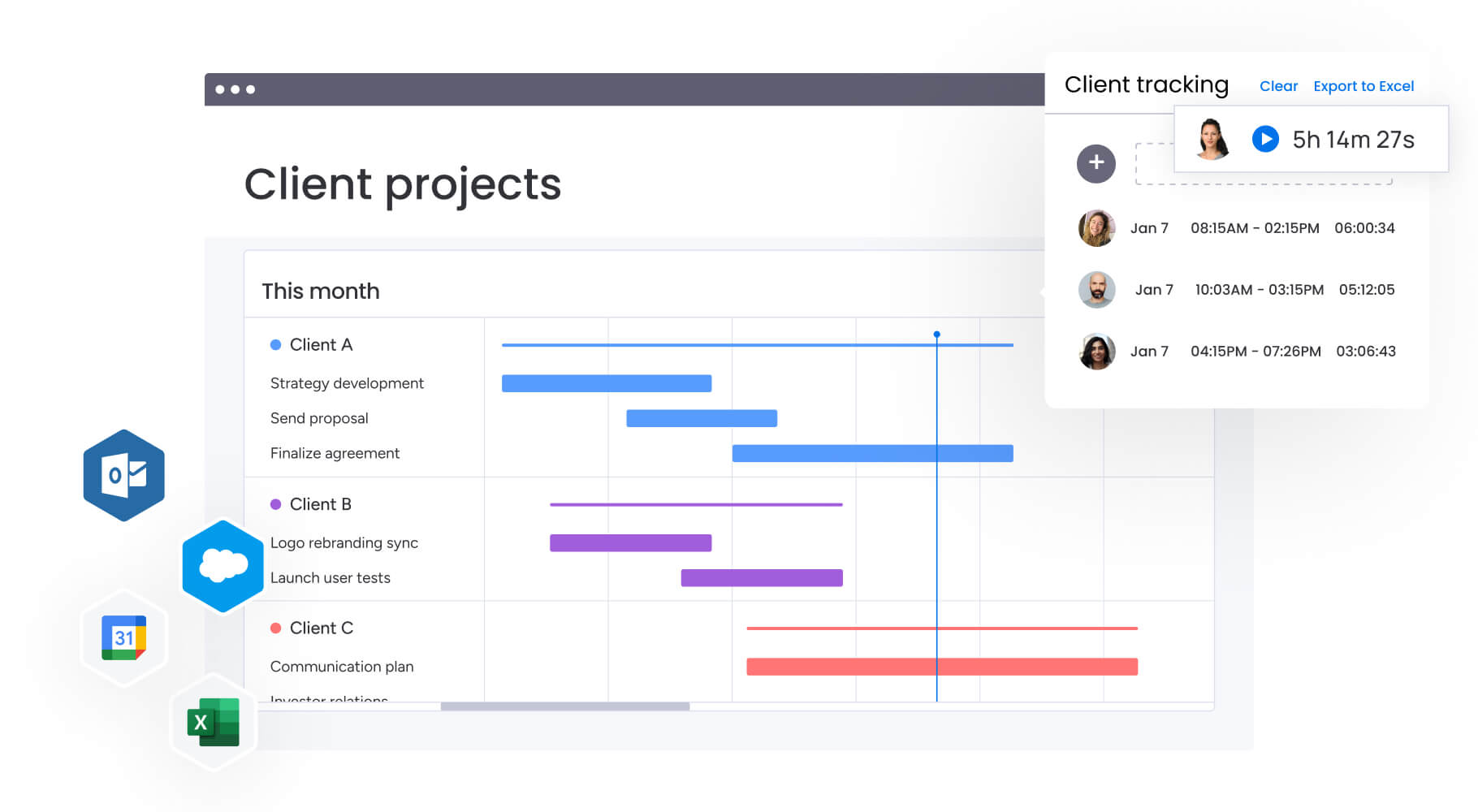
Small business marketing is the systematic process organizations use to attract customers, build brand awareness, and drive revenue growth through coordinated promotional activities managed by marketing teams. It includes digital campaigns, content creation, customer relationship management, and performance tracking.
Unlike enterprise marketing with massive budgets and dedicated teams, small business marketing demands precision and agility. Every dollar counts. Every campaign needs to deliver measurable results — a reality underscored by the fact that organizations using generative AI in marketing and sales are reporting significant revenue increases.
For organizations with 100+ employees managing complex workflows, marketing goes beyond isolated campaigns. It requires cross-functional coordination, standardized processes, and unified systems that transform scattered activities into a growth engine.
Why does small business marketing require different approaches?
Small businesses face unique challenges that shape their marketing approach. Resource constraints force teams to focus on high-impact activities, particularly given that 82% of small businesses have fewer than 20 employees, requiring maximum efficiency from limited resources.
But these constraints create advantages. As small businesses have agility that enterprises lack, they can make faster decisions and pivot strategies overnight based on real-time feedback.
| Aspect | Enterprise marketing | Small business marketing |
|---|---|---|
| Budget | Extensive, allows for experimentation | Limited, requires precision |
| Decision speed | Slow, multi-layer approval | Fast, immediate implementation |
| Customer connection | Data-driven, distant | Direct, relationship-focused |
| Team structure | Specialized departments | Generalists wearing multiple hats |
| Risk tolerance | Low, protects brand equity | High, seeks growth opportunities |
Key benefits of strategic marketing execution
Systematic marketing execution turns chaotic promotional efforts into reliable growth. When marketing runs as a structured process instead of ad-hoc events, small businesses gain specific advantages that compound over time.
These benefits build a foundation for sustainable growth and competitive positioning:
- Predictable customer acquisition: Consistent lead generation replaces feast-or-famine cycles. You can forecast revenue and plan resources with confidence.
- Resource optimization: Organized workflows help limited budgets deliver maximum impact by cutting waste on ineffective channels.
- Scalable growth: Systems let businesses handle increased demand without adding proportional complexity.
- Competitive positioning: Focused execution breaks through competitor noise with locally relevant, agile messaging.
Every campaign needs to deliver measurable results — a reality underscored by the fact that organizations using generative AI in marketing and sales are reporting significant revenue increases.
How to create a small business marketing strategy?
A strong marketing strategy provides the roadmap for execution. It goes beyond general ideas to give you a concrete framework for where to compete and how to win. For small businesses, this strategy must be immediately actionable. It’s built on four foundational elements that inform every marketing decision.
1. Understanding your target market
Deep customer knowledge is the foundation of effective marketing. This research goes beyond assumptions to gather concrete data about who customers are and what drives their behavior.
Specifically, you should focus on these four specific areas that shape every marketing decision:
- Customer demographics: Measurable audience characteristics like age, location, income level, and job roles.
- Pain points and needs: The specific problems your product or service solves, discovered through direct feedback or support queries.
- Buying behavior: Patterns showing how, when, and where customers make purchasing decisions.
- Communication preferences: Channels and messaging styles that resonate most with your audience.
Low-cost research methods deliver high-value insights. Customer surveys, social media listening, and competitor analysis give you data without heavy investment. In fact, direct conversations with existing customers often reveal the most accurate information about what motivates them and what stops them from buying.
2. Defining your competitive advantage
Your competitive advantage is why customers choose your business over alternatives. It must be tangible and customer-focused. Therefore, you should skip abstract claims and focus on provable differentiators.
Consider these categories when figuring out what sets your business apart:
- Service delivery differences: Think operational advantages like faster response times, personalized onboarding, or deep local expertise.
- Product or pricing advantages: Unique features, superior value ratios, or flexible contract options.
- Brand positioning: A reputation intentionally built around specific values like sustainability or community focus.
- Proof points: Evidence that backs up your claims, like case studies, testimonials, and performance data.
3. Setting measurable marketing goals
Goals give direction to all marketing activities. To be effective, they must be realistic, trackable, and directly tied to business outcomes. Consequently, you should swap vague aspirations for hard numbers that determine success or failure:
- Revenue-focused goals: Monthly sales figures, customer acquisition numbers, and average order value targets.
- Awareness goals: Website traffic growth, social media follower increases, and email list expansion metrics.
- Engagement goals: Email open rates, social media interaction levels, and customer retention percentages.
- Operational goals: Campaign frequency, content production volume, and deadline adherence rates.
4. Building your marketing plan
A marketing plan converts strategy into a timeline of actions. It organizes activities into a structured schedule for the next 90 days.
This document becomes the daily reference point for marketing teams. It includes:
- Channel selection: A focused list of 3-5 marketing channels based on target audience behavior.
- Content calendar: Detailed schedule of publication dates and content types.
- Budget allocation: Specific distribution of funds across channels and activities.
- Timeline and responsibilities: Assignment of task ownership and completion deadlines.
7 essential marketing channels for small businesses
Effective channel selection focuses on ROI and how manageable each channel is. Small businesses succeed by dominating a few key channels instead of spreading themselves thin across every platform. In fact, these seven channels offer the highest return while staying manageable for resource-constrained teams.
1. Content marketing
Content marketing creates and shares valuable information to attract and engage your target audience. It builds the authority and trust you need for long-term customer relationships.
Understanding these content marketing components helps teams plan and execute consistently:
- Content types: Blog posts for SEO, how-to guides for education, customer stories for social proof, and industry insights for thought leadership.
- Distribution channels: Company website, email newsletters, social media feeds, and local publications.
- Resource requirements: Time for research and writing, basic design skills, and consistent planning workflows.
- Success metrics: Organic website traffic, time on page, engagement rates, and leads generated from content downloads.
2. Social media marketing
Social media marketing for small businesses focuses on community building and consistency over chasing viral trends. Instead, pick platforms where your target audience actively engages and maintain a steady communication rhythm.
Effective social media execution for resource-constrained teams includes:
- Platform selection: Focus on 2-3 core platforms to avoid spreading resources too thin.
- Content strategy: Balance promotional offers, educational material, and behind-the-scenes content.
- Posting frequency: Realistic schedules have more impact than sporadic bursts.
- Community engagement: Active participation through comment responses and local group involvement.
3. Email marketing
Email marketing remains a high-ROI channel for direct communication and audience engagement. In particular, it lets businesses own their audience instead of renting it from social media algorithms.
Building and maintaining an email program means paying attention to:
- List building: Website opt-ins, in-store sign-ups, lead magnets, and referral incentives.
- Campaign types: Welcome emails, regular newsletters, promotional blasts, and customer updates.
- Content strategy: Balance value-driven advice with sales messages to maintain open rates.
- Automation opportunities: Welcome sequences, birthday offers, and re-engagement campaigns.
4. Local SEO and search marketing
Local SEO makes sure your business shows up when customers search for immediate solutions in their area. Specifically, it brings in high-intent traffic from people ready to buy.
These components are the foundation of local search visibility:
- Google Business Profile: Complete setup, regular photo updates, and active review management.
- Local directory listings: Consistent Name, Address, Phone number (NAP) across online directories.
- Website optimization: Location-based keywords, contact information, and dedicated service area pages.
- Customer reviews: Proactive strategy for requesting and responding to reviews.
5. Paid advertising strategies
Paid advertising gives you immediate visibility and traffic. In essence, it lets you jumpstart growth while organic channels build momentum.
Managing paid campaigns effectively means careful budget management:
- Google Ads: Capture high-intent searches when customers actively look for solutions.
- Facebook and Instagram ads: Target specific demographics and interests for brand awareness.
- Budget management: Start with small daily budgets to test effectiveness before scaling.
- Performance tracking: Monitor Cost Per Click and Cost Per Acquisition to optimize campaigns.
6. Referral and word-of-mouth marketing
Referral marketing turns organic word-of-mouth into a system by making satisfied customers an active sales force through structured incentives.
Building a referral engine involves:
- Referral programs: Simple incentive structures rewarding customers for bringing new business.
- Customer experience optimization: Exceptional service creates moments that trigger natural conversations.
- Follow-up systems: Automated post-purchase communication helps you find the best time to ask for referrals.
- Community involvement: Active local networking keeps your business front and center.
7. Partnership and collaboration marketing
Partnership marketing taps into the trust and audience of complementary businesses. As a result, it gives you cost-effective access to new potential customers who fit your target profile.
Partnership approaches to consider are listed below:
- Cross-promotion: Non-competing businesses promote each other to respective audiences.
- Joint events: Collaborative workshops or webinars split the hosting work while doubling attendance potential.
- Content collaboration: Guest blogging, podcast swaps, or co-authored guides get your brand in front of new audiences.
- Referral partnerships: Formal agreements between businesses create steady qualified lead flow.
Building your marketing operations system
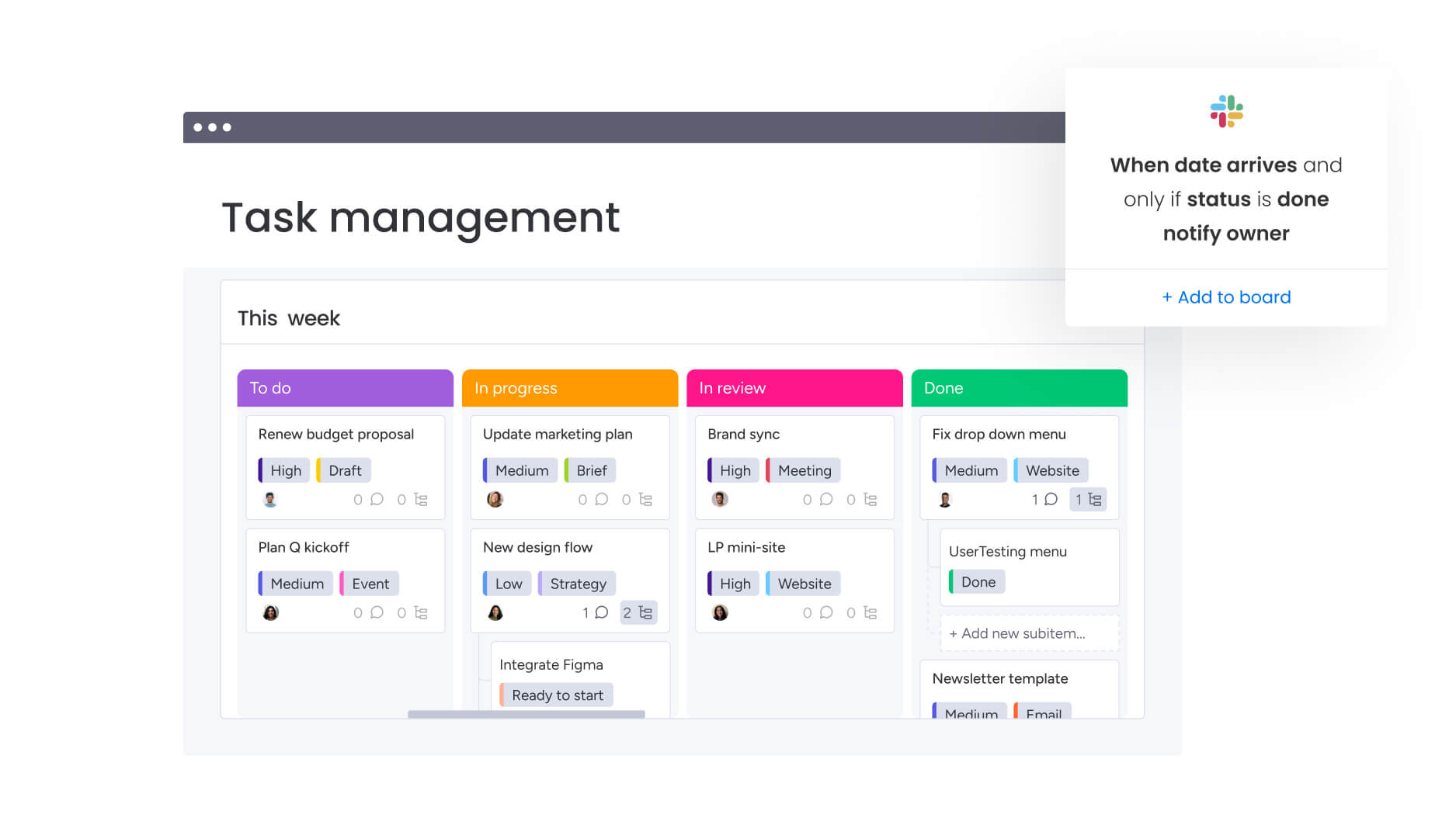
Marketing operation is the backbone that supports all creative and strategic work. It means organizing, coordinating, and systematizing marketing execution to get consistent results. Without a strong operational foundation, even brilliant strategies fail because of poor execution.
To build this foundation, effective marketing operations need four core components that work together to create sustainable, scalable processes.
Creating repeatable marketing processes
Standardization lets you scale marketing efforts without burning out teams. Documented processes keep quality high while making sure activities get done efficiently.
Teams using monday work management build standardized workflows directly into their boards. This creates one place for every marketing process:
- Content creation workflows: Map out the path from idea generation to publication, including drafting, design, and distribution steps.
- Campaign planning processes: Standard checklists for launching initiatives make sure no critical step gets missed.
- Customer communication sequences: Defined touchpoints throughout the customer journey keep follow-up consistent.
- Performance review procedures: Regular analysis schedules make sure optimization happens systematically.
Setting up marketing workflows
Workflows show the sequence of activities needed to complete projects. They identify dependencies and prevent bottlenecks by making work flow transparent to everyone involved.
How do you ensure one delayed activity doesn’t derail an entire campaign? Focus on these workflow elements:
- Dependencies: Identify which steps must complete before others begin.
- Approval processes: Define review requirements to prevent last-minute changes.
- Timeline management: Realistic scheduling accounts for revisions and potential delays.
- Responsibility assignment: Every step has an owner, eliminating ambiguity about project advancement.
Managing marketing requests and approvals
As businesses grow, marketing teams face increasing requests from other departments. A structured intake system replaces chaotic email threads with prioritized work queues.
In practice, the intuitive forms in solutions like monday work management enable teams to collect all the information needed for efficient project proposals and work requests:
- Request intake systems: Standardized forms collect all necessary information upfront, reducing back-and-forth communication.
- Priority frameworks: Agreed-upon criteria help teams decide which requests support business goals.
- Approval hierarchies: Defined decision-making authority streamlines the sign-off process.
- Communication protocols: Automated updates keep stakeholders informed of request status.
Coordinating cross-channel campaigns
Campaigns run simultaneously across email, social media, ads, and web. As a result, coordination ensures messages land with maximum impact and timing stays synchronized.
These coordination elements prevent fragmentation that undermines campaign effectiveness:
- Message consistency: Centralized asset management ensures uniform brand voice and visual identity.
- Timing synchronization: Master calendars align launch dates so ads run when landing pages are live.
- Resource allocation: Visibility into team capacity ensures sufficient bandwidth supports all campaign aspects.
- Performance integration: Tracking results across channels provides holistic campaign effectiveness views.
5 steps to execute marketing campaigns efficiently
Successful campaign execution follows a structured process that ensures consistent results and continuous improvement. These five sequential steps guide teams from initial planning through post-campaign analysis, creating a repeatable framework for marketing success.
Step 1: campaign planning and setup
Success gets determined before campaigns launch. Thorough planning aligns teams on objectives and ensures all necessary resources are in place.
Essential planning components include:
- Campaign objectives: Specific, measurable goals tied directly to revenue or growth targets.
- Target audience definition: Detailed profiles and channel preferences guide creative direction.
- Resource requirements: Finalized budgets, assigned team members, and secured external contractors.
- Success metrics: Selected KPIs and tested tracking mechanisms.
Step 2: content production workflows
Efficiency in production maintains momentum. Structured workflows enable batch asset creation while maintaining quality standards.
Production workflows encompass:
- Content planning: Editorial calendars map out themes and deliverables.
- Creation processes: Writers, designers, and video editors follow defined steps.
- Quality control: Mandatory review stages for editing, fact-checking, and brand compliance.
- Asset management: Final files organized in central repositories for easy access.
Step 3: campaign launch and management
Launch phase requires precise coordination and involves simultaneous asset activation and real-time monitoring for smooth rollout.
It includes:
- Pre-launch checklist: Final verification of links, tracking codes, and creative assets.
- Launch coordination: Channels activated according to schedule for unified market entry.
- Real-time monitoring: Initial performance data checked immediately to identify issues.
- Adjustment protocols: Pre-planned scenarios dictate when to modify bids or change creative.
Step 4: performance monitoring
Ongoing monitoring keeps campaigns on track. It moves beyond passive observation to active campaign health management.
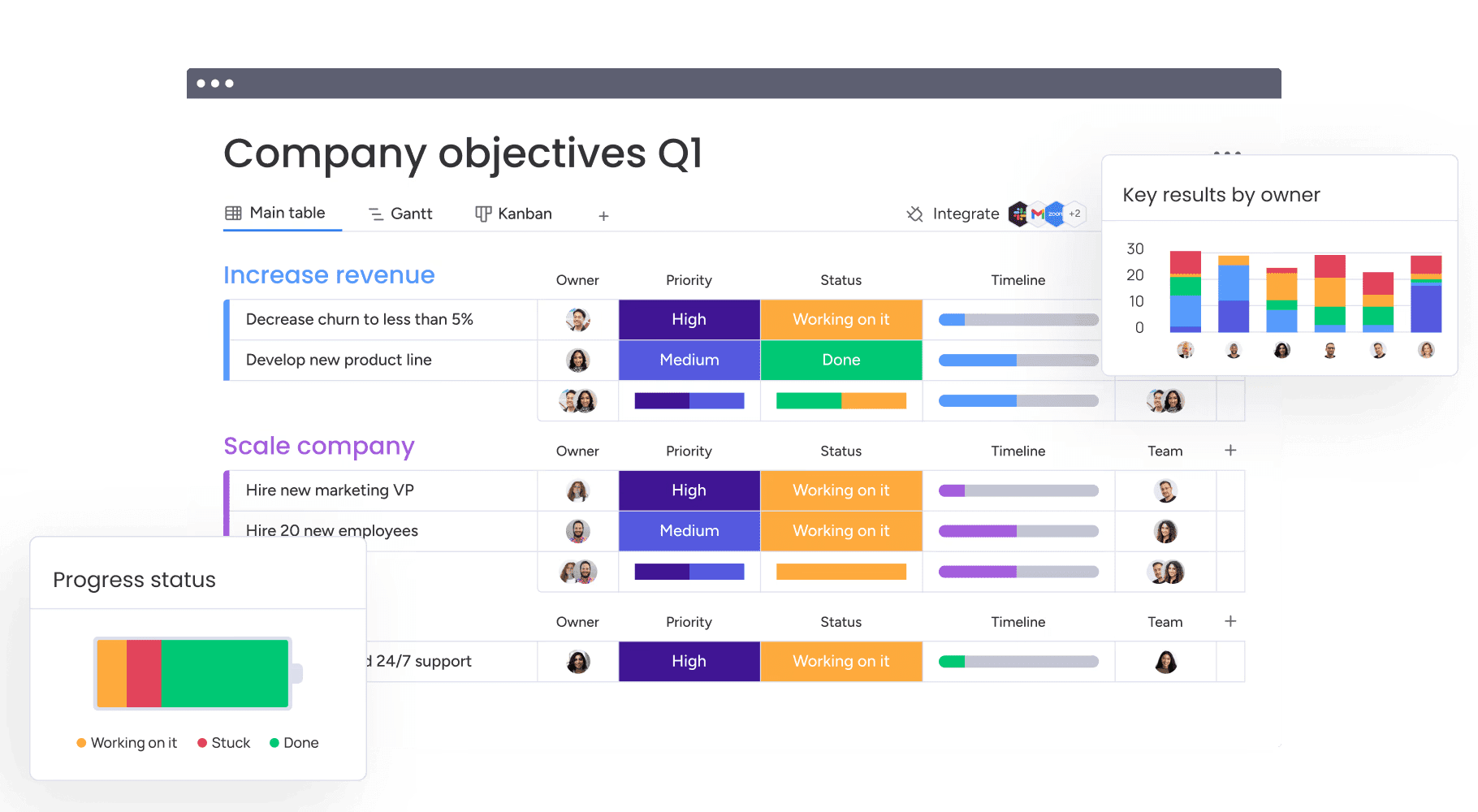
Dashboards provided by platforms like monday work management display live project data for insights on budget, goals, schedules, and resources:
- Daily tracking: Critical metrics like spend, traffic, and lead volume checked daily.
- Weekly analysis: Deeper performance trend dives reveal which segments drive results.
- Issue identification: Warning signs trigger immediate investigation.
- Reporting procedures: Standardized reports communicate progress to stakeholders.
Step 5: post-campaign analysis and optimization
The cycle concludes with learning. Analysis extracts insights that improve future performance, turning every campaign into a lesson.
Analysis components include:
- Results evaluation: Actual performance compared against initial objectives.
- Success factor identification: Data analysis reveals which elements contributed most to results.
- Improvement opportunities: Weak points identified and hypotheses generated for next campaign.
- Knowledge documentation: Lessons learned recorded to prevent repeating mistakes.
Success gets determined before campaigns launch. Thorough planning aligns teams on objectives and ensures all necessary resources are in place.
Streamline marketing chaos with monday work management
As the operational backbone for small business marketing, monday work management transforms scattered activities and fragmented platforms into a cohesive system, enabling teams to execute strategies with precision.
Organizations using the platform experience streamlined marketing operations through three core capabilities that address the most common challenges facing growing businesses.
Centralizing all marketing operations
A unified workspace eliminates the friction of switching between multiple apps. Therefore, with monday work management, every aspect of marketing comes into a single view:
- Unified workspace: Marketing projects, campaigns, and daily activities live on customizable boards, providing a single source of truth.
- Cross-channel coordination: Teams manage social media calendars, email schedules, and ad campaigns from one central dashboard.
- Team collaboration: Real-time updates and in-context discussions keep everyone aligned.
- Asset management: Files, creative assets, and brand guidelines store directly within project workflows.
Automating marketing workflows
Built-in automation capabilities remove manual grunt work, allowing teams to focus on strategy and creativity:
- Campaign workflow automation: The platform automatically creates activities, sets deadlines, and notifies team members when campaign phases complete.
- Content production workflows: Status changes trigger the next process step without manual handoffs.
- Lead management automation: New leads automatically assign to the right team member.
- Performance reporting automation: Scheduled reports generate and distribute to stakeholders.
Real-time campaign performance tracking
Visibility drives agility. With monday work management, teams gain immediate insight into what works and what needs attention:
- Marketing dashboards: Customizable widgets display real-time data on campaign performance, budget burn rates, and goal progress.
- Cross-channel reporting: Consolidated views show how different channels contribute to overall objectives.
- Goal tracking: Visual indicators track progress against KPIs, alerting teams to potential misses.
- Resource utilization: Workload views show team capacity, helping managers balance assignments.

“monday.com has been a life-changer. It gives us transparency, accountability, and a centralized place to manage projects across the globe".
Kendra Seier | Project Manager
“monday.com is the link that holds our business together — connecting our support office and stores with the visibility to move fast, stay consistent, and understand the impact on revenue.”
Duncan McHugh | Chief Operations OfficerScale your marketing operations with confidence
Small business marketing success depends on systematic execution rather than sporadic bursts of activity. The most effective marketing organizations build repeatable processes that deliver consistent results while remaining agile enough to capitalize on new opportunities.
Strategic marketing operations create the foundation for sustainable growth. When teams organize their workflows, automate routine assignments, and maintain visibility into performance, they transform marketing from a cost center into a predictable revenue driver.
Organizations ready to elevate their marketing execution find that monday work management provides the operational backbone needed to coordinate complex campaigns, manage cross-functional teams, and track performance across multiple channels. The platform enables marketing teams to focus on strategy and creativity while ensuring nothing falls through the cracks.
Frequently asked questions
What is the 3 3 3 rule in marketing?
The 3 3 3 rule in marketing suggests focusing on three specific marketing channels, three key brand messages, and three distinct target customer segments. This approach prevents resource dilution and ensures marketing efforts remain focused and impactful for small businesses.
What is the best marketing strategy for a small business?
The most effective small business marketing strategy combines local SEO for visibility, content marketing for authority, and referral programs for trust. These three elements work together to provide high ROI and build long-term customer relationships without requiring massive ad budgets.
What is the 70 20 10 rule for the marketing budget?
The 70 20 ten rule allocates 70% of marketing budget to proven high-ROI channels, 20% to optimize and expand successful efforts, and 10% to experimental tactics. This framework balances financial stability with the need for creativity and growth.
How do I start marketing my small business with no experience?
Start marketing your small business by optimizing your Google Business Profile to capture local traffic and creating valuable content that answers specific customer questions. Focus efforts on the single social media platform where your target audience is most active rather than trying to be everywhere at once.
How can I manage marketing without a dedicated marketing team?
Managing marketing without a dedicated team requires using marketing automation to handle repetitive activities and creating standardized workflows for efficiency. Focus on 3-4 high-impact channels to execute effectively without burnout.
How much should a small business spend on marketing?
Small businesses should invest between 7% and 12% of gross revenue into marketing activities. Start with a smaller percentage and scale investment up as specific channels prove their return on investment.

 Get started