

Marketing teams have ambitious organic growth targets. Content teams are publishing consistently, and developers are fixing technical issues. Yet results can still fall short: traffic isn’t converting to leads, efforts are duplicated across teams, and leadership keeps asking when SEO will actually drive measurable business growth.
When marketing, content, and development are all executing flawlessly but growth remains flat, the problem isn’t effort — it’s alignment. Strategic SEO planning connects every search-related activity, from technical fixes to content creation, directly to shared business outcomes. Instead of isolated keyword research or standalone content production, structured SEO planning creates a unified approach where teams coordinate effectively to drive measurable results.
This helpful guide covers how to build an SEO plan that unites teams and delivers results. It walks through setting goals that connect search metrics to business impact, a 7-step planning framework, cross-departmental campaign coordination, and tracking performance with metrics that matter.
Key takeaways
- Bridge SEO metrics to business outcomes: Connect organic traffic, rankings, and conversions directly to revenue, leads, and customer acquisition costs so leadership sees SEO as a growth driver.
- Coordinate teams through unified workflows: Break down silos between marketing, content, and development teams with shared goals, clear handoffs, and regular communication to accelerate campaign execution.
- Build authority with topic clusters: Develop comprehensive pillar pages and interconnected content to dominate search results across entire subject areas rather than focusing on isolated keywords.
- Streamline SEO planning on monday work management: Leverage automated workflows, real-time dashboards, and cross-team visibility to track dependencies, balance resources, and link daily work to strategic objectives.
- Future-proof SEO for AI-powered search: Implement schema markup, optimize for featured snippets and zero-click results, and expand beyond Google to voice, video, and social platforms to stay ahead of evolving search behavior.
What is SEO planning?
SEO planning is not a single-team effort. It is a coordinated, cross-functional initiative that aligns marketing, content, and development around shared search goals tied directly to business growth.
It goes beyond choosing keywords or publishing blog posts. Strong SEO planning ensures every contributor, from writers and designers to developers and leadership, understands the objective and how their work supports it.
Search engines now reward depth, authority, and user experience. That requires collaboration. Developers resolve technical blockers. Designers improve usability. Content teams build topical authority. Leadership tracks performance against revenue goals. Isolated tactics no longer deliver consistent results.
A structured SEO planning process connects all of this. It ensures your website supports real growth initiatives, clarifies resource requirements, and creates visibility across teams. When everyone works from the same plan, duplication drops, campaigns launch faster, and the organization can adapt quickly as search evolves.
Structured SEO planning creates advantages that build over time:
- Improved resource allocation: Teams focus budget and talent on high-impact initiatives instead of scattered keyword efforts.
- Reduced operational friction: Clearly defined workflows remove confusion between technical and creative teams and speed execution.
- Measurable ROI: Linking SEO activities to revenue, leads, and customer acquisition costs makes impact visible to leadership.
- Faster implementation cycles: Coordinated planning allows content and development teams to work in parallel, reducing time to launch.
Learn more: SEO project management (strategies and workflows) and the best SEO project management software
Strong SEO planning ensures every contributor, from writers and designers to developers and leadership, understands the objective and how their work supports it.
How to set SEO goals that unite teams and drive business results
Good SEO planning starts with alignment. Search metrics should support business priorities, not exist in isolation. That means focusing on qualified leads, revenue, and customer acquisition costs instead of rankings alone.
A strong plan makes impact visible. If marketing targets 500 qualified leads per month, your SEO planning should reverse-engineer the traffic, intent mix, and conversion rates required to reach that number. This shifts SEO from a technical side initiative to a measurable growth driver.
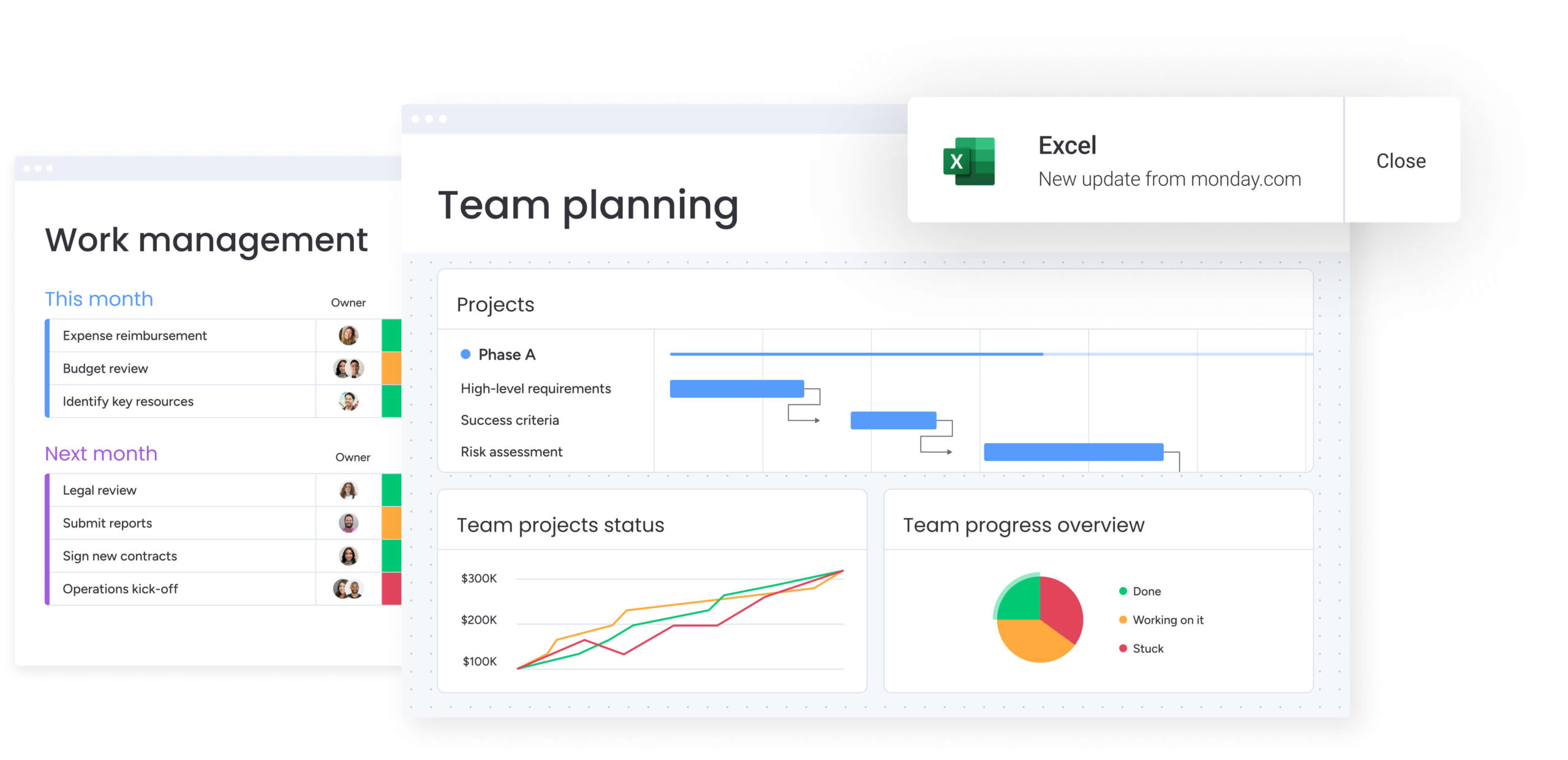
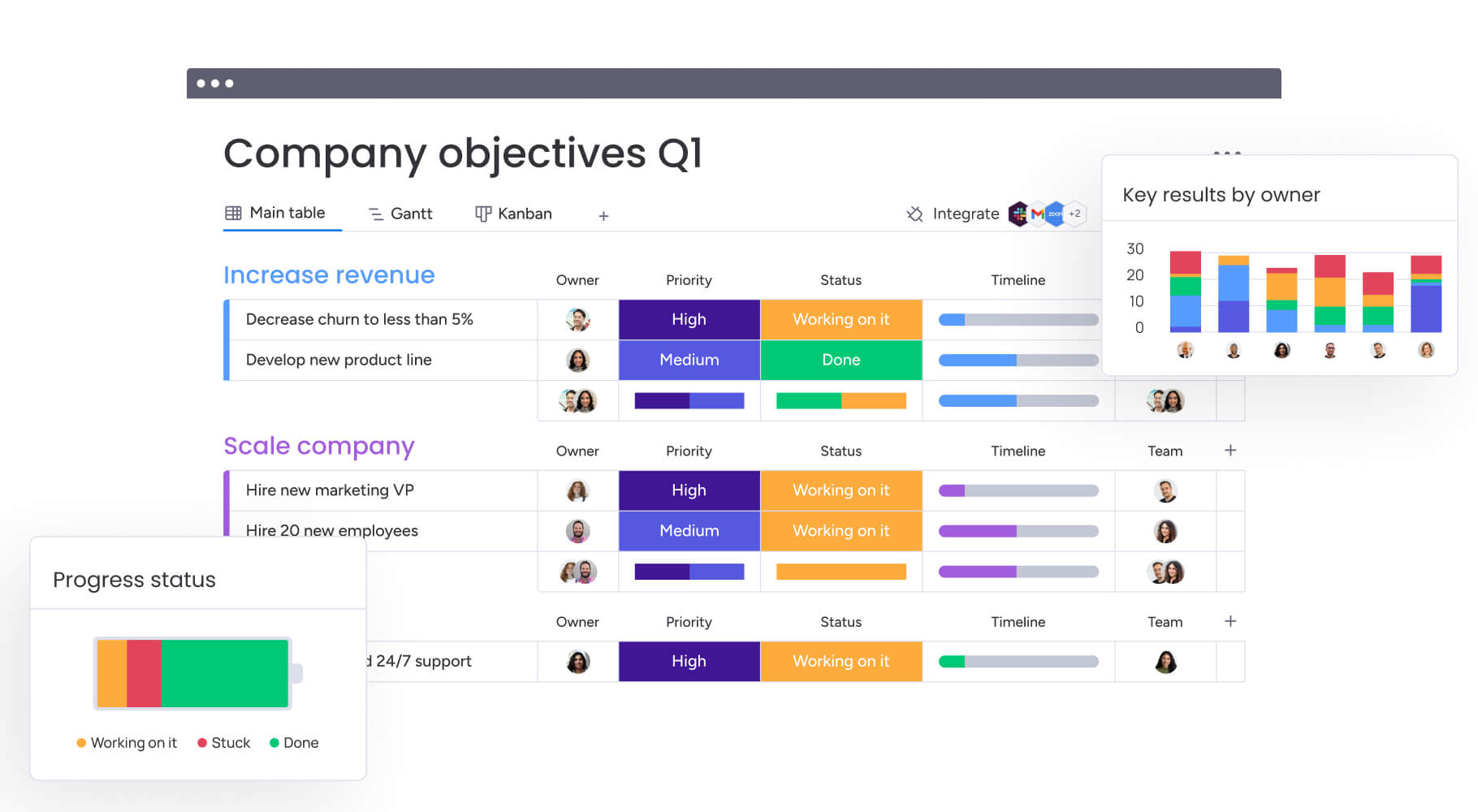
Clear coordination keeps those targets realistic. Teams need shared visibility into priorities, timelines, and performance. Platforms like monday work management connect daily execution to strategic objectives through live dashboards, shared workflows, and real-time progress tracking.
To keep goals structured and accountable, use the SMART framework. Each element solves a common planning weakness:
- Specific: Objectives target defined keywords, content themes, or technical improvements rather than vague visibility goals.
- Measurable: Success is tied to concrete metrics such as a 20% increase in organic traffic or a 5% lift in conversion rates.
- Achievable: Targets reflect current domain authority, competition levels, and available resources.
- Relevant: Goals connect directly to revenue priorities and distinct stages of the customer journey.
- Time-bound: Quarterly milestones and annual targets maintain momentum and accountability.
Build your search engine optimization plan in 7 steps
Developing an SEO plan that delivers results requires attention to technical foundations, content strategy, and team collaboration. These seven steps guide teams to work together efficiently, allocate resources strategically, and measure performance accurately.
Step 1: Audit current SEO performance across all properties
Begin with a comprehensive assessment of your current SEO landscape. Review technical setup, including site speed, mobile responsiveness, crawl errors, and indexation issues, alongside content and keyword performance.
Consolidate all findings into a shared reference so developers, writers, and strategists work from the same data. Focus on three key areas:
- Technical infrastructure: Evaluate site speed, mobile responsiveness, crawl errors, and indexation issues.
- Content performance: Identify top-performing pages, content gaps, and keyword ranking positions.
- Competitive positioning: Analyze market share, discover opportunities, and compare against competitors.
Step 2: Research keywords on every platform your audience uses
Keyword research extends beyond Google to include voice search, video platforms, social media, and emerging AI-driven channels.
Identify what people are searching for on each platform, then map those keywords to stages of the buying process.
Prioritize keywords based on potential business impact, competition level, and what your team can realistically manage. Consider these research dimensions:
- Search intent mapping: Informational, navigational, commercial, and transactional queries.
- Platform-specific optimization: YouTube, LinkedIn, voice assistants, and AI chatbots.
- Customer journey alignment: Awareness, consideration, and decision-stage keywords.
Step 3: Analyze competitors for strategic opportunities
Competitive analysis identifies the gap between current performance and market potential. Examine competitor content, backlinks, and site structure to inform your strategy.
Also analyze team structures and resource allocation to set realistic expectations for what it takes to outperform competitors.
Focus on:
- Content strategy analysis: Topic coverage, content formats, and publishing frequency.
- Technical implementation: Site architecture, page speed, and mobile optimization.
- Resource requirements: Team size, content velocity, and link-building efforts.
Step 4: Define content pillars that build topical authority
Content pillars establish themes that demonstrate expertise and support business objectives. Use a hub-and-spoke approach: create comprehensive pillar pages linking to specific content that solves customer problems at every stage.
Assign ownership of each pillar to subject matter experts to establish accountability within the production workflow. Key considerations include:
- Authority mapping: Topics where your organization has genuine expertise.
- Business alignment: Content themes that support revenue and lead generation goals.
- Resource allocation: Subject matter expert availability and content production capacity.
Step 5: Plan technical SEO foundations for scalability
Technical SEO builds a foundation that can scale as your site grows. This includes site architecture, page speed, mobile responsiveness, and structured data.
Tech decisions directly affect content creation and user experience. Dev, design, and content teams must collaborate so your site remains fast and accessible. Priority areas include:
- Site architecture: URL structure, internal linking, and navigation design.
- Performance optimization: Core web vitals, image compression, and caching strategies.
- Structured data: Schema markup for enhanced search visibility.
Step 6: Allocate resources based on impact and effort
Use an impact vs effort matrix to determine which projects to tackle first. Estimate resources for content, technical improvements, and link-building, balancing quick wins with long-term initiatives.
Cross-train team members to improve workflow velocity, allowing content campaigns and technical projects to progress in parallel. Consider these allocation factors:
- High-impact, low-effort wins: Optimizing existing high-performing content.
- Strategic investments: Long-term authority building and technical infrastructure.
- Team development: Skills training and cross-functional collaboration capabilities.
Step 7: Establish 90-day sprint cycles for agile execution
Finally, break your annual plan into 90-day sprints with clear objectives and regular check-ins. This approach keeps the strategy flexible, allowing adjustments based on performance data, algorithm changes, or business priorities.
Regular cross-team communication ensures dependencies are managed and the strategy remains responsive to market shifts. Sprint planning includes:
- Quarterly objectives: Specific, measurable goals for each 90-day period.
- Cross-team dependencies: Coordination points between marketing, content, and development.
- Performance reviews: Data-driven adjustments to strategy and tactics.
Create an SEO content strategy planning framework that scales
Content strategy is central to sustainable SEO. Clear processes for selecting topics, producing content, and matching user intent ensure your strategy drives results. A scalable framework builds authority and supports business objectives at every stage of the customer journey.
Build topic clusters to dominate search results
Topic clusters use a hub-and-spoke model where a pillar page covers a broad topic comprehensively, and cluster pages target specific long-tail keywords. Linking related content demonstrates expertise to search engines and provides a seamless experience for users. Align clusters with customer journey stages to serve both acquisition and retention goals. Consider:
- Authority mapping: Topics your organization can own in search results.
- Customer journey alignment: Content that supports awareness, consideration, and decision stages.
Design content production workflows for consistency
Scaling content production requires predictable processes that maintain quality. Establish workflows from idea generation to publishing and promotion. It’s also really important to use style guides and quality checks to maintain brand voice across all content.
Sophisticated platforms like monday work management help streamline content production with automations and templates, saving time and increasing velocity. Key workflow components include:
- Content briefing templates: Standardized requirements for keyword targeting, user intent, and business objectives.
- Review and approval processes: Quality control checkpoints for technical optimization and brand consistency.
- Distribution coordination: Cross-channel promotion and internal linking strategies.
Optimize for user intent across the buyer journey
Optimize content to match what customers actually want — whether they are researching, looking for a specific page, comparing options, or ready to make a purchase. This framework identifies user intent and guides the format and depth each piece of content needs.
Go beyond measuring traffic by tracking whether customers found the information they needed. Consider these optimization factors:
- Intent-based content formats: Create how-to guides for informational queries and comparison pages for commercial intent.
- Journey stage alignment: Provide awareness content for top-funnel keywords and decision-support content for bottom-funnel terms.
- Conversion optimization: Include clear calls-to-action and next-step guidance for each content piece.
Optimize content to match what customers actually want — whether they are researching, looking for a specific page, comparing options, or ready to make a purchase.
Plan technical SEO foundations for sustainable performance
Technical SEO lays the foundation for strong content and user experiences. Development, design, and content teams must collaborate to create a site that performs consistently and scales as the organization grows. Early planning also ensures long-term search visibility and reduces costly fixes later.
Prioritize site architecture and crawl efficiency
Site architecture acts as a blueprint for how search engines and users navigate your site. Focus on clean URLs, strategic internal linking, and intuitive navigation to help visitors find the content they need. Fix crawl budget issues, duplicate content, and indexing problems to ensure search engines rank your best pages.
Key considerations include:
- URL structure design: Logical hierarchy that reflects content organization and business priorities.
- Internal linking strategy: Strategic link distribution that supports topical authority and user navigation.
- Crawl optimization: XML sitemaps, robots.txt configuration, and crawl budget management.
Optimize core web vitals for user experience
Core Web Vitals link technical performance directly to usability. Measure and improve loading speed (LCP), interactivity (INP), and visual stability (CLS) across devices. Dev teams and content teams should work together to maintain performance improvements over time. Focus areas include:
- Loading performance: Image optimization, code minification, and caching strategies.
- Interactivity optimization: JavaScript optimization and third-party script management.
- Visual stability: Layout shift prevention and progressive loading techniques.
Implement structured data for enhanced visibility
Structured data allows search engines and AI systems to better interpret content. Implement schemas based on business goals to improve discoverability and context. Content and development teams should coordinate to keep structured data up to date. Priority areas include:
- Content structure markup: Article, FAQ, and how-to schemas for better AI comprehension.
- Business entity markup: Organization and service schemas for improved brand recognition.
- Product information schemas: Detailed product data for e-commerce and service providers.
How to coordinate SEO campaigns across different teams
SEO planning breaks down when teams operate in silos. Organic growth depends on tight coordination between marketing, content, design, and development. Without clear workflows, even strong strategies stall in execution.
To keep initiatives moving, keep this guidance in mind:
Design cross-functional SEO workflows
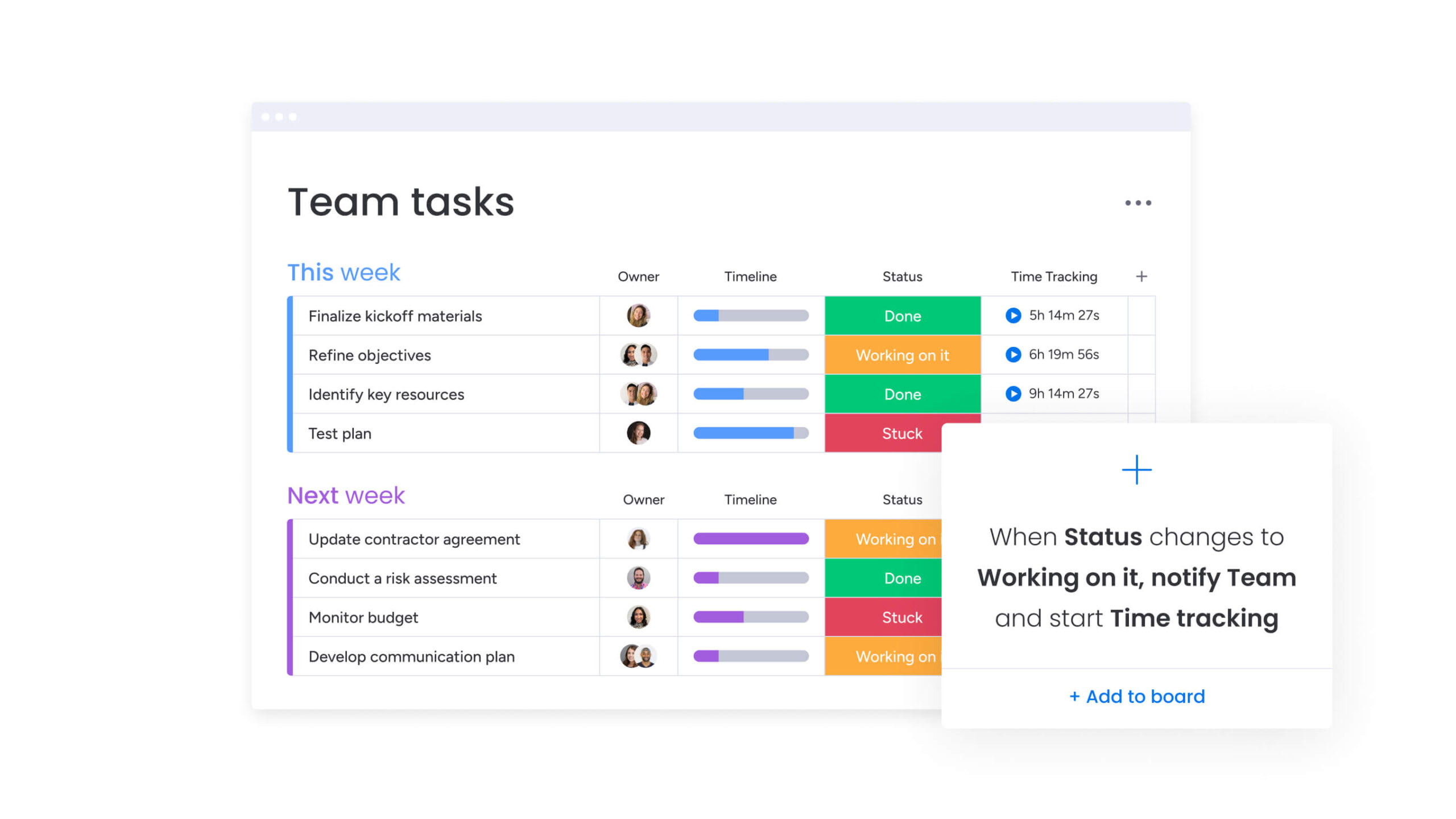
Effective SEO workflows connect strategy to execution without slowing teams down. Map how initiatives move from planning to production to reporting so everyone understands their role.
Clear ownership and standardized processes reduce confusion and keep momentum strong. Core workflow components include:
- Role definitions: Establish responsibilities across strategy, content creation, technical implementation, and performance measurement.
- Handoff protocols: Create standardized processes for transferring work between teams to avoid bottlenecks.
- Communication channels: Maintain regular check-ins and status updates to keep priorities aligned.
Manage dependencies between SEO tasks
SEO work is deeply interconnected. Content depends on keyword research. Technical updates rely on design input. Reporting requires accurate tracking and tagging.
Careful sequencing prevents delays and protects timelines. Key execution strategies include:
- Critical path identification: Map the sequence of activities that directly impact delivery timelines.
- Parallel work streams: Identify tasks that can run simultaneously to accelerate progress.
- Contingency planning: Prepare alternative approaches when dependencies create delays.
Maintain brand consistency across all channels
SEO should strengthen your broader marketing strategy, not compete with it. Every optimized page reinforces your brand voice and positioning.
Consistency across channels builds trust and authority. Focus on:
- Voice and tone guidelines: Maintain consistent messaging across SEO content and technical implementations.
- Visual identity standards: Use brand-aligned design elements and imagery across all touchpoints.
- Cross-channel coordination: Align SEO initiatives with paid media, social, and email campaigns.
Strong coordination turns SEO planning into operational execution instead of scattered activity.
Choose the right tools to support SEO planning at scale
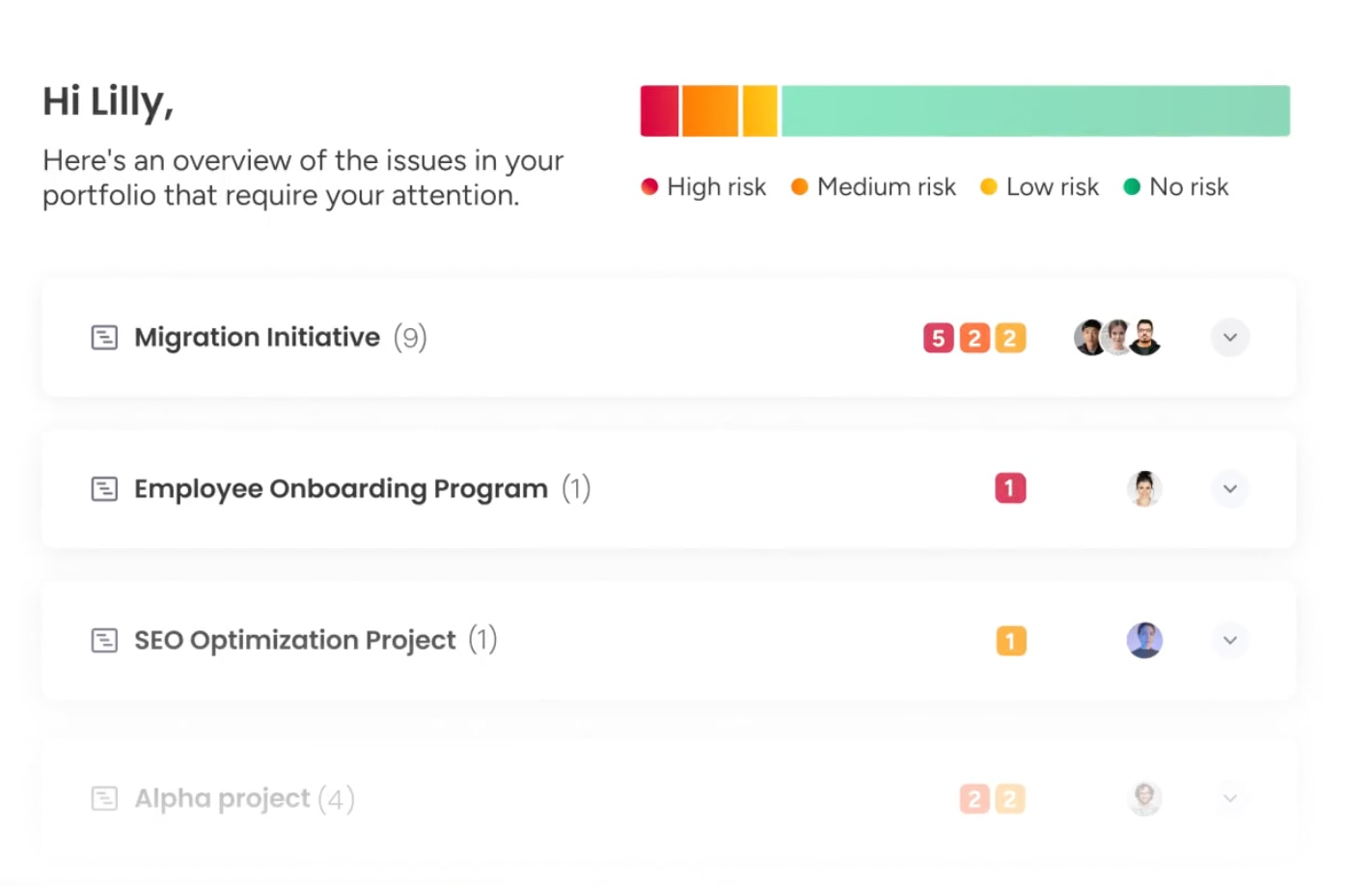
SEO planning becomes difficult when research, execution, and reporting sit in disconnected systems. Teams lose visibility. Dependencies slip. Reporting turns reactive.
Scalable SEO requires connected tools that bring strategy, content, technical execution, and performance tracking into one structured workflow. The comparison below highlights how different tool categories support cross-functional SEO planning and where gaps typically appear.
| Capability | monday work management | Traditional project management | Specialized SEO platforms | Spreadsheet-based planning |
|---|---|---|---|---|
| Cross-team coordination | Built-in collaboration workflows | Limited cross-functional visibility | Siloed approach | Manual coordination required |
| SEO-specific automation | AI Blocks for SEO activities | Generic automation only | SEO-focused but isolated | No automation capabilities |
| Portfolio visibility | Unified dashboard across all initiatives | Project-level view only | Platform-specific metrics | Fragmented data views |
| Resource management | Skills-based allocation and balancing | Basic resource tracking | No resource management | Manual resource planning |
| Executive reporting | Customizable business-impact dashboards | Limited business context | Technical metrics only | Manual report creation |
The table makes one thing clear. research platforms deliver deep insights but often lack execution visibility. Traditional project management tools track tasks but are not built for SEO-specific workflows. Spreadsheets require heavy manual coordination and fragment quickly.
Connected platforms like monday work management bridge these gaps by combining collaboration, visibility, and automation in one place.
Essential SEO research and analysis platforms
Strong SEO planning starts with reliable data. The right research tools give teams confidence in prioritization and forecasting.
Choose platforms that match your team’s size, technical depth, and business goals. Core categories include:
- Keyword research tools: Provide search volume, competition insights, and intent data to guide content priorities.
- Technical audit platforms: Crawl your site to identify performance issues, indexing errors, and structural weaknesses.
- Rank tracking systems: Monitor keyword positions across search engines and geographic regions.
- Competitive intelligence tools: Analyze backlinks, content gaps, and market share opportunities.
Workflow management for distributed teams
Research alone does not drive growth. Execution requires structured coordination across content, design, development, and leadership.
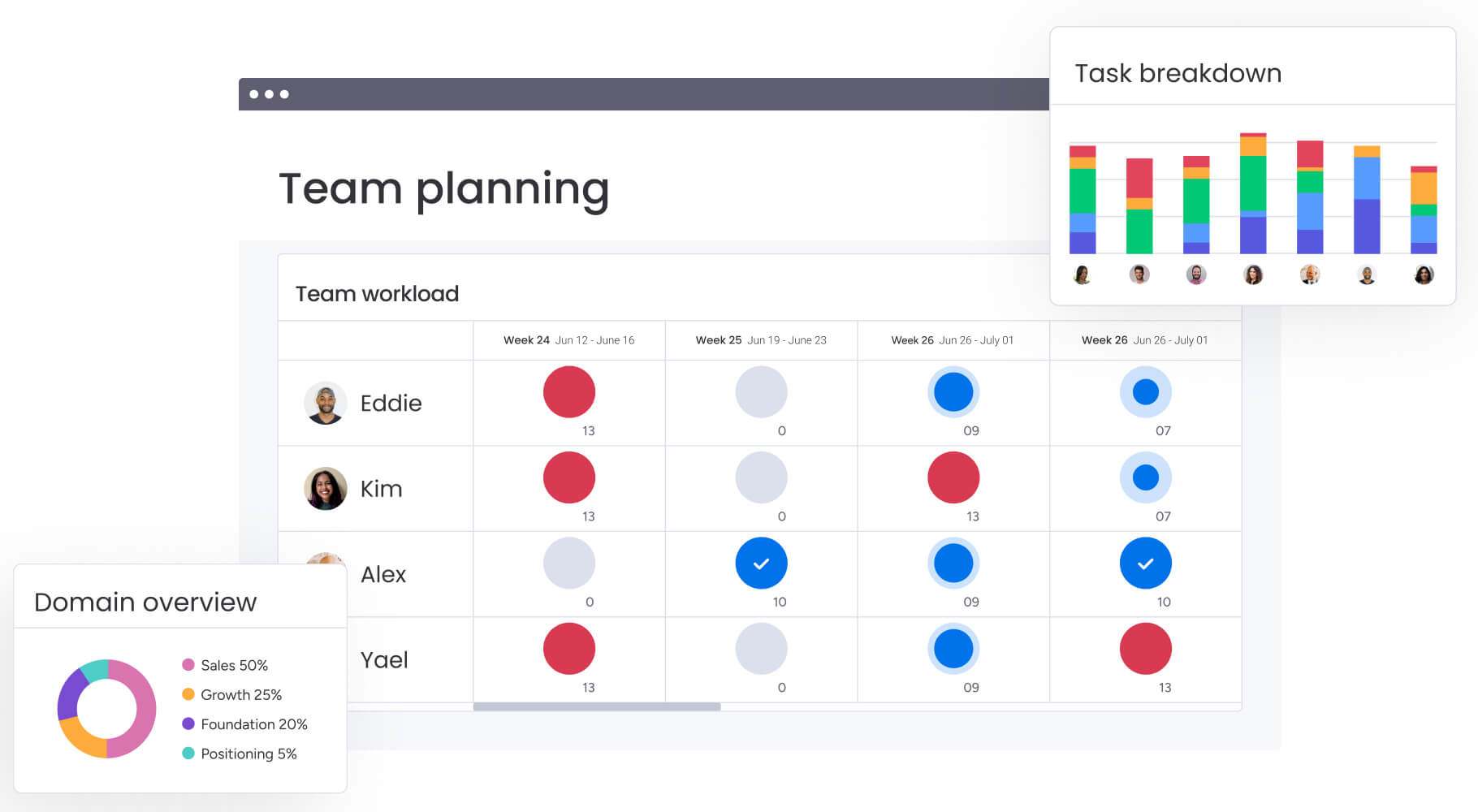
Project management platforms centralize SEO planning and reduce scattered communication. Teams using monday work management rely on shared dashboards and the Workload View to balance capacity and adjust priorities in real time. Core capabilities include:
- Resource allocation: Assign work based on skills and balance workloads across team members.
- Progress tracking: Maintain real-time visibility into milestones, deliverables, and blockers.
- Communication integration: Centralize discussions, files, and updates so nothing gets lost.
Automate repetitive SEO activities for efficiency
Manual reporting and repetitive optimization consume strategic time. Automation allows teams to focus on higher-impact initiatives.
Start with repeatable processes and scale gradually. Priority automation areas include:
- Performance reporting: Automatically collect data and update dashboards with key metrics.
- Content optimization: Standardize meta descriptions, title tags, and internal linking through structured templates.
- Monitoring and alerts: Trigger notifications for ranking shifts, technical issues, or competitor changes.
Measure SEO performance against business outcomes
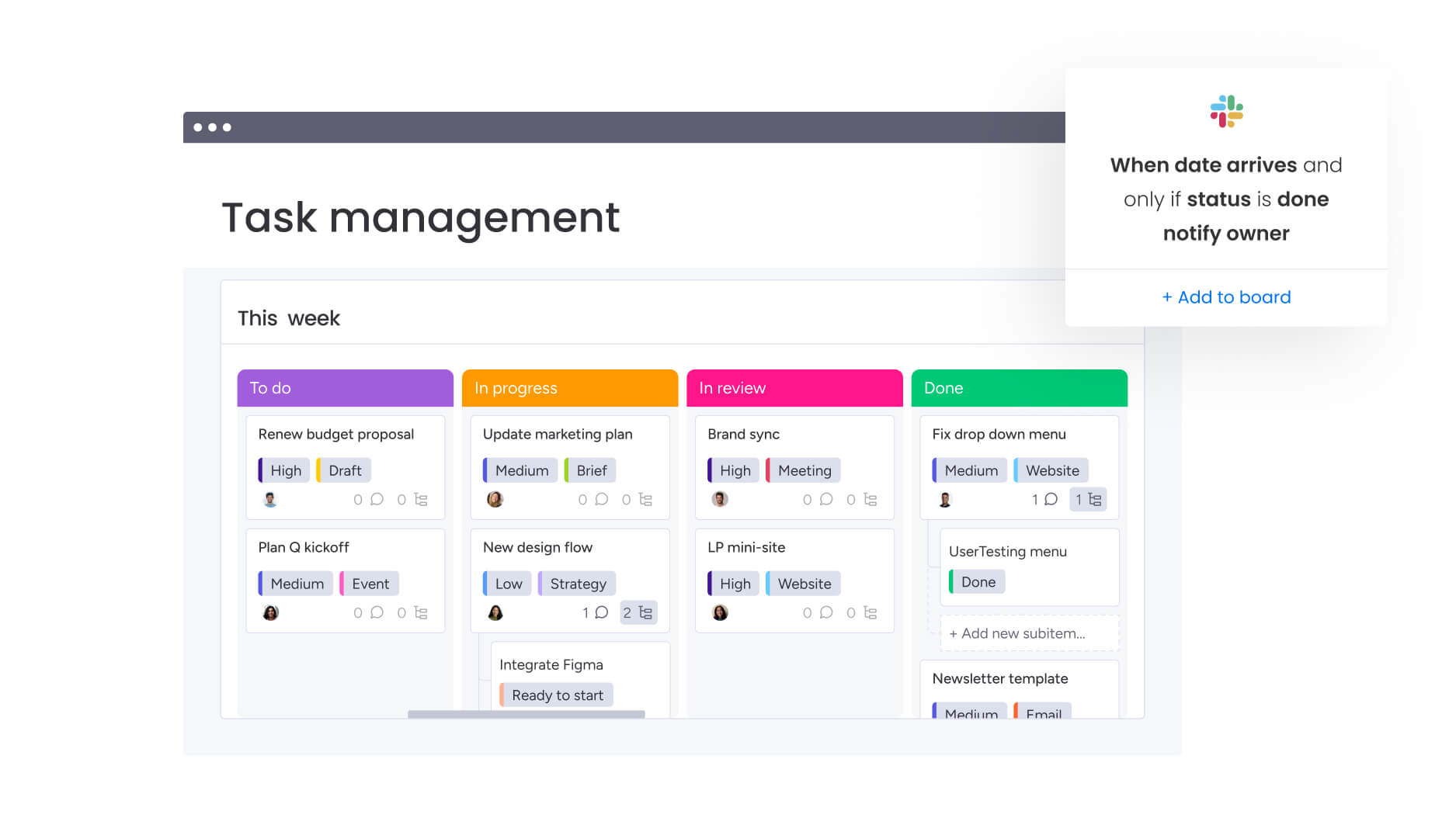
Measure SEO using metrics that connect your work to business outcomes, enabling leadership to make informed decisions. Monitor both early signals and final results to manage proactively and validate your impact.
Define leading indicators for proactive management
Leading indicators reveal trends before they become problems, allowing timely adjustments. Track publishing speed, technical issue resolution, and ranking movement — these provide early signs of SEO success.
Set baselines and realistic targets to identify challenges quickly. Key leading indicators include:
- Content velocity metrics: Publishing frequency, content depth scores, and topic coverage expansion.
- Technical health indicators: Page speed improvements, crawl error resolution rates, and mobile optimization scores.
- Engagement signals: Time on page, bounce rate improvements, and internal link click-through rates.
Build executive dashboards for SEO insights
Executive dashboards translate technical data into insights leadership values. Visualizing trends, opportunities, and ROI in a clear format helps decision-makers act confidently.
Focus on growth, revenue, and market share rather than granular technical details. Modern platforms like monday work management can automatically display live project data to inform budgets, schedules, and resource allocation.
Customizable dashboards with drag-and-drop widgets allow stakeholders to view data in ways that support faster, smarter decisions. Essential dashboard components include:
- Business impact metrics: Revenue attribution, lead generation, and customer acquisition costs.
- Growth indicators: Organic traffic trends, market share expansion, and competitive positioning.
- Resource efficiency: Cost per acquisition, team productivity metrics, and ROI calculations.
Connect SEO metrics to revenue and growth
Attribution models quantify the dollar value of SEO efforts. Track customers from first organic search to conversion and beyond, calculating lifetime value and ROI.
These models demonstrate SEO’s contribution even when it is not the final touchpoint. Consider the following attribution methods:
- Multi-touch attribution: Credit distribution across all touchpoints in the customer journey.
- Lifetime value calculation: Long-term revenue impact from organic search acquisition.
- Assisted conversion tracking: SEO’s role in supporting other marketing channels.
Future-proof your SEO digital marketing strategy for AI search
The search landscape is rapidly evolving with AI-driven experiences, voice queries, and zero-click results. Forward-thinking SEO strategies must adapt while preserving focus on user value and business goals.
Optimize for zero-click search results
Zero-click searches deliver answers directly on the SERP. Content strategies should target featured snippets, knowledge panels, and AI-generated summaries to maintain visibility and brand recognition.
Success can be measured by impression share and brand recall in zero-click scenarios. Optimization strategies include:
- Featured snippet targeting: Structured content that directly answers common questions.
- Knowledge panel optimization: Consistent business information across digital properties.
- AI summary preparation: Content structured for easy extraction by AI systems.
Implement schema markup for AI understanding
Schema markup helps AI systems interpret content effectively. Prioritize schema based on business objectives, ensuring AI models accurately represent your content.
Coordination between content and development teams ensures schema remains current with evolving standards. Priority areas include:
- Content structure markup: Article, FAQ, and how-to schemas for improved AI comprehension.
- Business entity markup: Organization and service schemas for better brand recognition.
- Product information schemas: Detailed product data for e-commerce and service providers.
Plan multi-platform SEO beyond Google
Search behavior is diversifying across voice assistants, video platforms, and social media. Expanding SEO plans to these channels ensures visibility across the digital ecosystem.
Resource allocation should reflect channel importance, with performance measured through engagement and reach. Multi-platform considerations include:
- Voice search optimization: Conversational keywords and local search targeting.
- Video platform SEO: YouTube optimization and video content strategy.
- Social media search: Platform-specific optimization for LinkedIn, TikTok, and emerging channels.

“monday.com has been a life-changer. It gives us transparency, accountability, and a centralized place to manage projects across the globe".
Kendra Seier | Project Manager
“monday.com is the link that holds our business together — connecting our support office and stores with the visibility to move fast, stay consistent, and understand the impact on revenue.”
Duncan McHugh | Chief Operations OfficerScale your SEO planning with monday work management
Strategic SEO planning only works when execution is visible, coordinated, and measurable. Without shared workflows and real-time insight, even the strongest strategy becomes reactive.
monday work management gives teams the structure to move from isolated SEO tasks to connected execution. Marketing, content, and development can plan campaigns, manage dependencies, and track performance in one shared workspace. Leadership gains clear visibility into progress, priorities, and business impact.
Instead of chasing rankings, teams align daily work with revenue goals. Instead of manual updates, dashboards surface live performance data. Instead of siloed initiatives, cross-functional workflows keep projects moving forward.
When SEO planning lives inside a structured platform, growth becomes repeatable.
Frequently asked questions
How long does it take to see results from an SEO plan?
Initial improvements are typically visible within three to six months, with sustainable results emerging after six to twelve months of consistent execution. Timing depends on starting point, competition, and resources.
What's the difference between SEO planning and SEO strategy?
SEO strategy defines the “what” and “why,” while planning covers the “how,” including team coordination, resource allocation, and activity execution. Planning translates strategy into actionable steps.
How much budget should I allocate for SEO planning?
Organizations typically allocate 15 to 25% of the total SEO budget to planning, including research, project management, and coordination. Investing in planning maximizes the effectiveness of the remaining budget.
Can small businesses benefit from formal SEO planning?
Small businesses gain significant value from structured planning, as it optimizes limited resources and avoids redundant efforts. Even basic frameworks help teams focus on high-impact initiatives.
How do I prioritize SEO activities when resources are limited?
Prioritize high-impact, low-effort actions, such as optimizing high-performing content or fixing critical technical errors. An impact-effort matrix identifies quick wins with measurable results.
Should SEO planning follow quarterly or annual cycles?
The most effective approach combines annual strategic planning with quarterly execution sprints, maintaining long-term focus while allowing flexibility every 90 days.

 Get started