

Every day, millions of people buy coffee, stream movies, order groceries, and download apps without thinking twice about the sales process behind these purchases. B2C sales drives the consumer economy, connecting businesses directly with individual buyers who make decisions based on personal needs, preferences, and emotions rather than committee approvals or lengthy procurement cycles.
Unlike B2B sales, where deals move through multiple stakeholders and approval layers, B2C creates direct relationships between companies and end users. The consumer is both the decision-maker and the product user, which fundamentally changes marketing, pricing, and customer experience strategies. Speed matters more than consensus, emotional appeal often outweighs technical specifications, and volume trumps deal size.
This guide explains the realities of B2C sales day-to-day, why it differs fundamentally from B2B, and which strategies actually drive results in consumer markets. From understanding purchase patterns to leveraging technology and building specialized teams, you’ll get practical insights to optimize your sales process and increase revenue.
Key takeaways
- Speed wins in B2C: consumer purchases happen in minutes or days, not months. The faster you can guide someone from discovery to checkout, the better your conversion rates will be.
- Personalization drives conversions: today’s consumers expect experiences tailored to their preferences. AI and automation make it possible to deliver relevant recommendations and messaging to thousands of customers at once.
- Emotion trumps logic: unlike B2B buyers calculating ROI, consumers make decisions based on how products make them feel. Your brand story and emotional appeal matter as much as your features.
- Automation scales your sales process: solutions like monday CRM help you capture leads, score prospects, and trigger personalized follow-ups automatically, so you can focus on strategy instead of manual tasks.
- Metrics reveal what’s working: track conversion rates, customer acquisition costs, and lifetime value to spot opportunities. Use data to test different approaches and invest more in what drives results.
What is B2C sales?
B2C sales is the process of selling products or services directly to individual consumers for personal use. Examples include purchasing sneakers from Nike’s website, subscribing to Netflix, or ordering dinner through DoorDash. These transactions connect businesses directly with end users who make purchasing decisions based on personal needs, preferences, and emotions.
Unlike B2B sales where companies sell to other organizations through complex approval processes, B2C sales creates direct relationships between sellers and individual buyers. The consumer is both the decision-maker and the final user, without intermediaries or lengthy approval chains.
Understanding business-to-consumer sales
B2C sales forms the backbone of the consumer economy. Every time you purchase clothing, entertainment, food, or digital services for personal use, you’re participating in B2C sales. These transactions move fast, often completing within minutes to days rather than the weeks or months typical in B2B sales.
That direct business-to-consumer connection? It’s your chance to build real loyalty and craft experiences that keep people coming back; for thousands or millions of customers at once. Technology and customer data create personalized experiences for millions of customers simultaneously, using B2C CRM software to tailor product recommendations, pricing, and communications.
Key characteristics of B2C sales
B2C sales plays by its own rules. Knowing what makes it tick helps you build processes that actually work and pick tech that fits how consumers really buy. Here are the five defining features that separate B2C from other sales approaches:
- Shorter sales cycles: consumer purchases happen quickly. A customer might discover a product on Instagram and complete the purchase within the same browsing session, unlike enterprise software purchases that can take six to twelve months.
- Emotional decision-making: personal preferences, feelings, and desires drive consumer purchases more than logical ROI calculations. Brand identity and emotional appeal often outweigh technical specifications.
- High-volume transactions: B2C businesses handle thousands or millions of smaller transactions rather than a few large deals. A clothing retailer might process 10,000 daily orders averaging $75 each.
- Direct consumer relationships: companies maintain direct connections with end users without navigating organizational hierarchies, enabling personalized marketing and immediate feedback.
- Brand experience focus: success depends on creating positive experiences across all touchpoints. Every interaction shapes customer perception and influences repeat purchases.
B2C vs B2B sales: understanding the differences
B2C and B2B sales operate under fundamentally different principles. Consumer and business buyers approach purchasing decisions with distinct mindsets, evaluation criteria, and buying processes, requiring tailored sales strategies for each market. Understanding the key differences between these approaches is essential for developing effective sales processes.
Sales cycle and timeline
B2C sales cycles move at consumer speed. Purchases often happen within minutes to hours, with some considered purchases extending to days. B2B sales, however, involve multiple stakeholders and can stretch across months of evaluation periods.
This dramatic speed gap changes everything, from how you market and engage customers to how you optimize for quick conversions instead of lengthy nurturing. B2C companies focus on removing friction and creating urgency, while B2B organizations invest in relationship building and demonstrating long-term value.
Decision-making dynamics
Individual consumers make B2C purchasing decisions based on personal benefits and emotional factors. They evaluate comfort, style, and how purchases make them feel without needing committee approval.
B2B decisions involve multiple departments and approval processes. Purchasing B2B CRM software requires satisfying IT requirements, getting finance approval, and ensuring team adoption. B2C strategies emphasize individual value propositions, while B2B focuses on building consensus across organizational hierarchies.
Transaction patterns comparison
Before diving into specific B2C sales models, it helps to understand how consumer buying behavior differs from B2B. Transaction volume, purchase frequency, and contract complexity all influence how companies structure their sales operations. Here’s a side-by-side look at the key distinctions:
| Aspect | B2C sales | B2B sales |
|---|---|---|
| Transaction volume | Thousands to millions daily | Dozens to hundreds monthly |
| Average deal size | $50-500 typically | $10,000-1M+ typically |
| Purchase frequency | Weekly to monthly | Quarterly to annually |
| Payment terms | Immediate payment | Net 30-90 days common |
| Contract complexity | Simple terms of service | Negotiated agreements |
| Customer lifetime | Months to years | Years to decades |
5 types of B2C sales models
B2C sales operates through various business models, each with distinct characteristics that determine how companies connect with consumers and generate revenue. Picking the right model for your products and growth goals can make or break your business.
Each option comes with its own set of strengths and hurdles that’ll directly impact how you operate and connect with customers.
1. Direct selling model
Direct selling connects companies with consumers without intermediaries, giving businesses complete control over brand experience and profit margins. Apple exemplifies this through retail stores and its website, maintaining control over product presentation and service quality.
D2C brands like Warby Parker built their businesses on direct selling, using digital channels to reach consumers while avoiding retail markups. This model gives businesses unparalleled control and a direct line to their customers. By cutting out the middleman, companies can capture higher margins and gather immediate feedback. The direct selling model provides several key advantages:
- Higher profit margins: through elimination of middleman costs.
- Direct customer data: for personalization and insights.
- Complete control: over messaging and brand experience.
- Immediate customer feedback: for product development.
2. Online intermediary model
Online intermediaries create platforms connecting sellers with consumers. Amazon, eBay, and Etsy enable thousands of sellers to reach millions of customers through established platforms with built-in traffic.
These platforms provide immediate access to large customer bases and infrastructure for payments and logistics. However, sellers face intense competition, reduced margins from platform fees, and limited control over customer relationships.
3. Advertising-based model
This model provides free or low-cost products to consumers while generating revenue through advertising. Google, Facebook, and most free mobile apps operate this way; users get valuable services without payment while advertisers pay to reach targeted audiences.
Success requires massive user bases and sophisticated analytics to demonstrate advertising effectiveness. Companies must balance user experience with advertising exposure, ensuring ads are relevant and engaging enough to retain users while maximizing revenue.
4. Community-driven model
Community-driven models leverage social networks and peer influence to drive sales. Social commerce on Instagram and TikTok enables direct purchasing within social environments where users discover products through friends and influencers.
This approach relies on peer recommendations and user-generated content. Consumers trust recommendations from people like them more than traditional advertising, creating powerful word-of-mouth effects and customer loyalty.
5. Subscription service model
Subscription models generate recurring revenue through regular fees for ongoing access. Netflix transformed entertainment consumption, while Dollar Shave Club disrupted consumer products through subscription delivery.
The model creates predictable revenue streams and higher customer lifetime values. However, businesses must focus intensely on retention and continuously demonstrate value to justify recurring payments.
The B2C sales process from start to finish
B2C sales isn’t random — it’s a journey from that first “hmm, what’s this?” moment all the way through keeping happy customers coming back. You’ll need different tactics and tools at each step to nudge people toward buying and stick with them for the long haul. Understanding this process helps businesses optimize every touchpoint for maximum conversion and customer satisfaction.
Step 1: discovery and awareness stage
Potential customers first encounter products through social media, search results, advertising, or word-of-mouth. At this stage, consumers are recognizing problems or identifying needs, often without specific solutions in mind.
Businesses create awareness through:
- Content marketing: addressing customer pain points.
- SEO optimization: capturing search traffic.
- Targeted advertising: reaching potential customers.
- Brand positioning: that creates memorable first impressions.
Brand positioning and first impressions matter enormously as consumers form quick judgments about relevance and trustworthiness.
Step 2: evaluation and consideration
Once aware of their need, consumers research and compare options through multiple channels. They read reviews, compare prices, check ratings, and seek recommendations from friends or online communities.
Businesses optimize this stage by providing:
- Detailed product information: high-quality images, videos, and specifications.
- Social proof: customer testimonials, reviews, and ratings.
- Comparison tools: features helping customers evaluate options.
- Retargeting campaigns: re-engaging visitors who left without purchasing.
Step 3: purchase decision and conversion
Final purchase decisions are influenced by price competitiveness, convenience, brand trust, and urgency created through limited offers. How can businesses ensure they’re capturing every opportunity at this critical moment?
Optimizing the purchase process requires:
- Streamlined checkout flows: with minimal friction.
- Multiple payment options: for customer convenience.
- Security assurances: to build trust.
- Urgency messaging: through scarcity or time-limited offers.
- Mobile optimization: increasing percentages of B2C purchases happen on smartphones.
Step 4: customer retention and loyalty
Post-purchase strategies transform one-time buyers into repeat customers. This includes onboarding sequences helping customers get value from purchases, proactive support addressing issues, and loyalty programs rewarding repeat purchases.
Businesses use purchase history to suggest complementary products, notify customers about relevant items, and create exclusive offers. Customer feedback serves dual purposes: gathering insights while creating social proof for future customers.

7 B2C sales strategies for revenue growth
B2C sales success requires more than a quality product. You need strategic approaches that leverage technology, data analytics, and deep customer insights to drive results. The goal is delivering personalized experiences efficiently while maximizing the value of every customer interaction. Each strategy tackles specific consumer market challenges while creating sustainable competitive advantages that set your business apart.
Strategy 1: personalization at scale
AI and machine learning deliver personalized experiences to millions of customers simultaneously. Personalization extends across product recommendations, customized content, targeted messaging, and adaptive pricing based on customer behavior.
Businesses collect browsing behavior, purchase history, and engagement patterns to create detailed customer profiles. Machine learning algorithms continuously improve recommendations by learning from customer responses.
Strategy 2: omnichannel engagement
Omnichannel approaches provide consistent experiences across websites, mobile apps, social media, email, and physical stores. Customers expect seamless transitions between channels with consistent information and pricing.
Implementation requires:
- Unified customer data systems: connecting all touchpoints.
- Consistent branding: across all channels.
- Integrated inventory systems: providing accurate availability information.
- Cross-channel communication: maintaining conversation context.
Strategy 3: speed to lead optimization
Quick response to customer inquiries dramatically increases conversion rates. Fast response requires:
- Automated confirmations: acknowledging inquiries immediately.
- Chatbot assistance: providing instant answers to common questions.
- Mobile notifications: alerting teams to high-priority leads.
- Lead scoring: prioritizing responses based on conversion likelihood.
Strategy 4: strategic pricing approaches
Price isn’t just a number, but a psychological trigger that can make or break a sale. The right pricing strategy influences how consumers perceive value, creates urgency, and maximizes revenue without leaving money on the table. Different approaches work for different products and customer segments, so understanding your options helps you choose what fits your business goals.
| Strategy | Implementation | Best for |
|---|---|---|
| Psychological pricing | $9.99 instead of $10 | Impulse purchases |
| Bundle pricing | Package multiple products | Increasing order value |
| Tiered pricing | Good/better/best options | Different customer segments |
| Promotional pricing | Limited-time discounts | Driving urgency |
| Value-based pricing | Price based on perceived value | Premium products |
Strategy 5: social commerce integration
Social commerce enables direct purchasing within social platforms. Instagram Shopping and TikTok Shop allow users to browse and purchase without leaving social apps.
Success requires:
- Engaging content: that doesn’t feel like advertising.
- Authentic responses: to comments and interactions.
- User-generated content: for social proof.
- Influencer partnerships: for expanded reach.
Strategy 6: retention program development
Retention strategies keep existing customers engaged through loyalty programs, subscription models, exclusive offers, and personalized communication. Retaining customers costs less than acquiring new ones while providing higher lifetime value.
Strategy 7: data-driven optimization
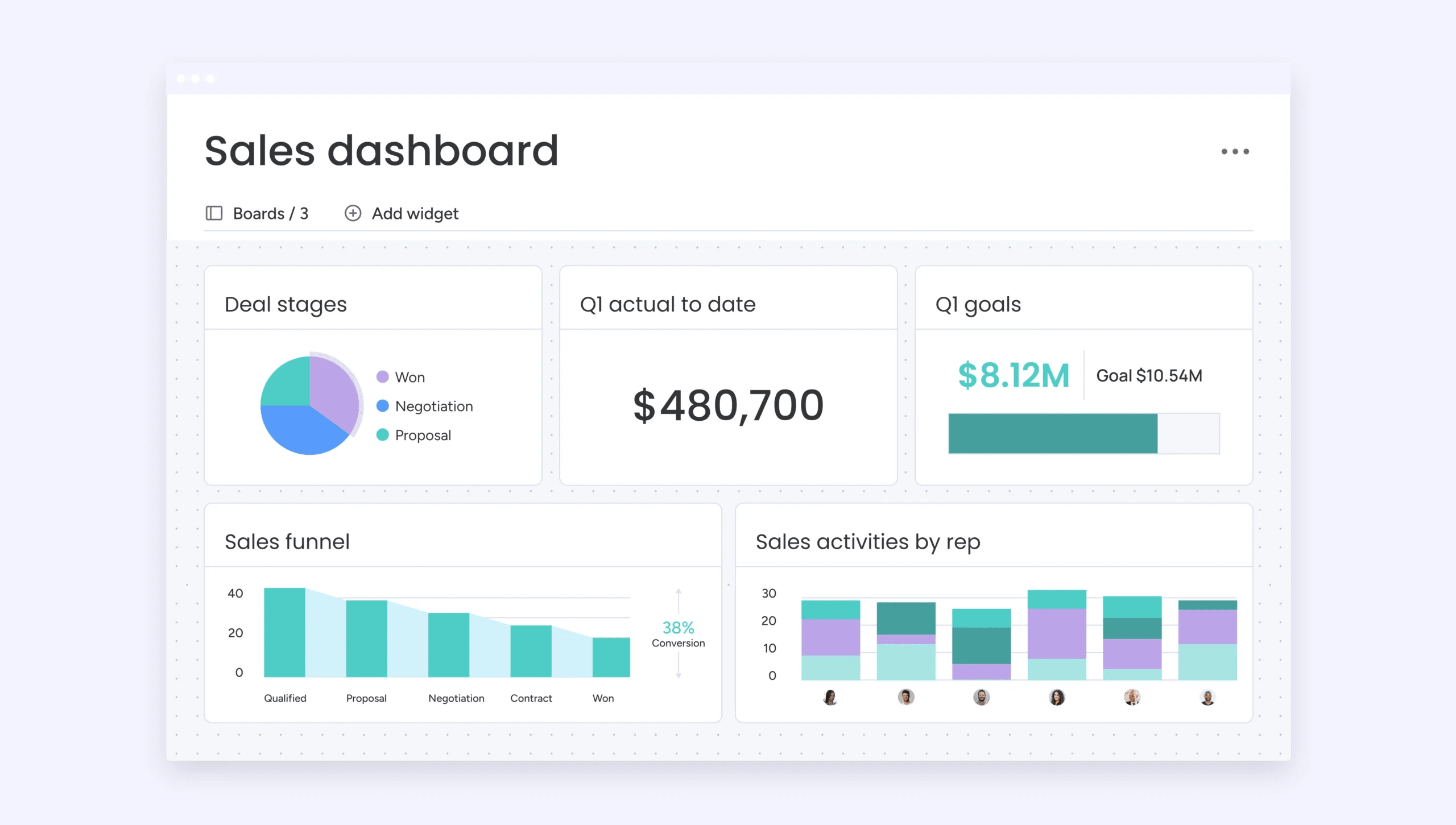
Analytics guide sales strategies through tracking conversion rates, customer acquisition costs, lifetime value, and churn rates. A/B testing compares different approaches to identify what resonates with customers.
Technology transforming B2C sales
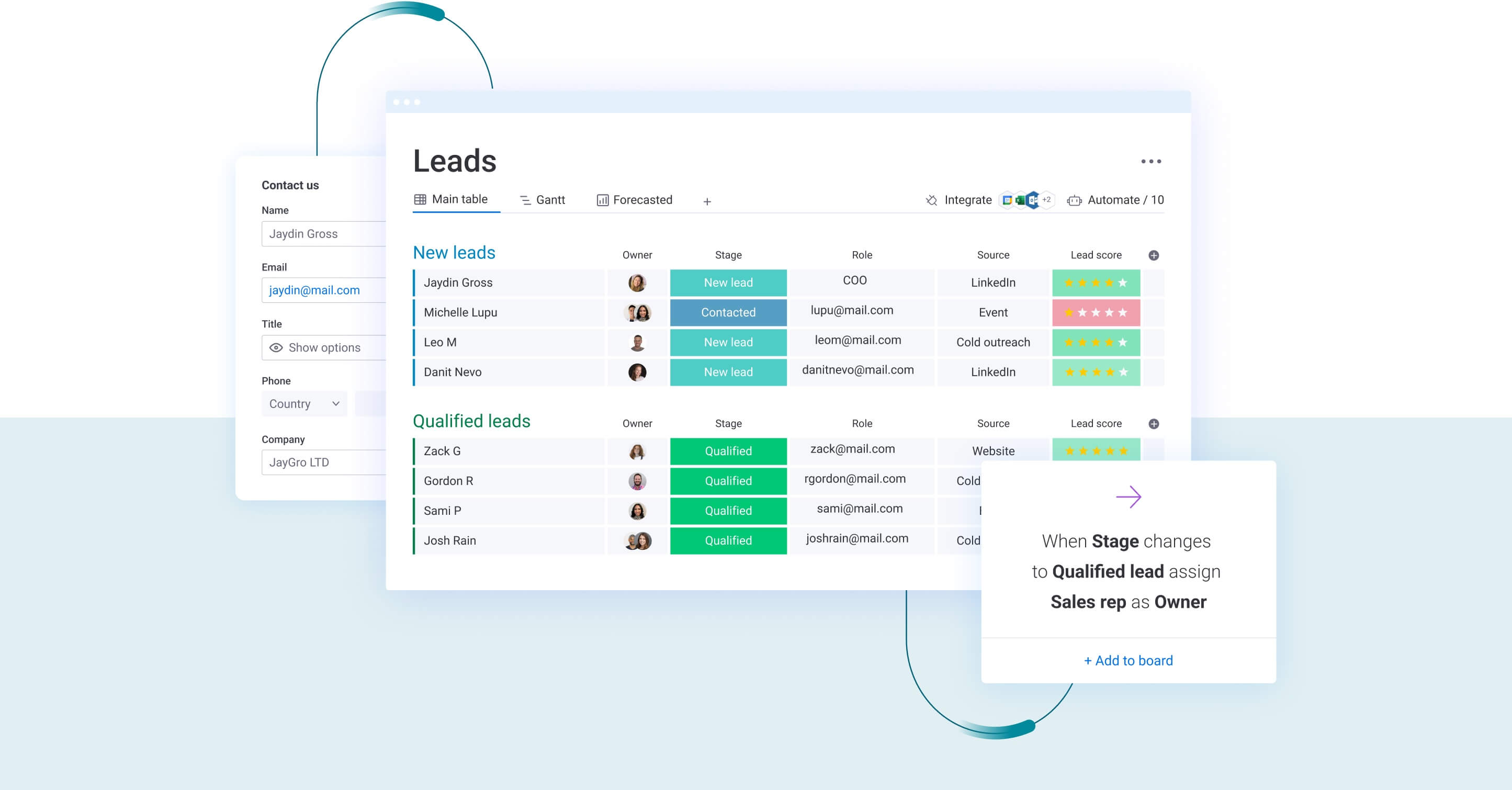
AI and advanced technologies are enabling businesses to operate at scale while maintaining personalized experiences that drive customer loyalty. These innovations enable businesses to operate at scale while maintaining personalized experiences. Understanding how technology enhances each aspect of the sales process helps businesses stay competitive in rapidly evolving consumer markets.
AI-powered personalization
Generative AI creates personalized content, product descriptions, and customer communications at scale. Applications include:
- Website content: adjusting to visitor behavior.
- Personalized recommendations: with custom descriptions.
- Automated email sequences: adapting to customer responses.
- Dynamic pricing: based on customer segments.
Solutions like monday CRM leverage AI capabilities to generate personalized email content automatically, analyzing customer data to create relevant messages that drive engagement without manual composition.
Automated lead management
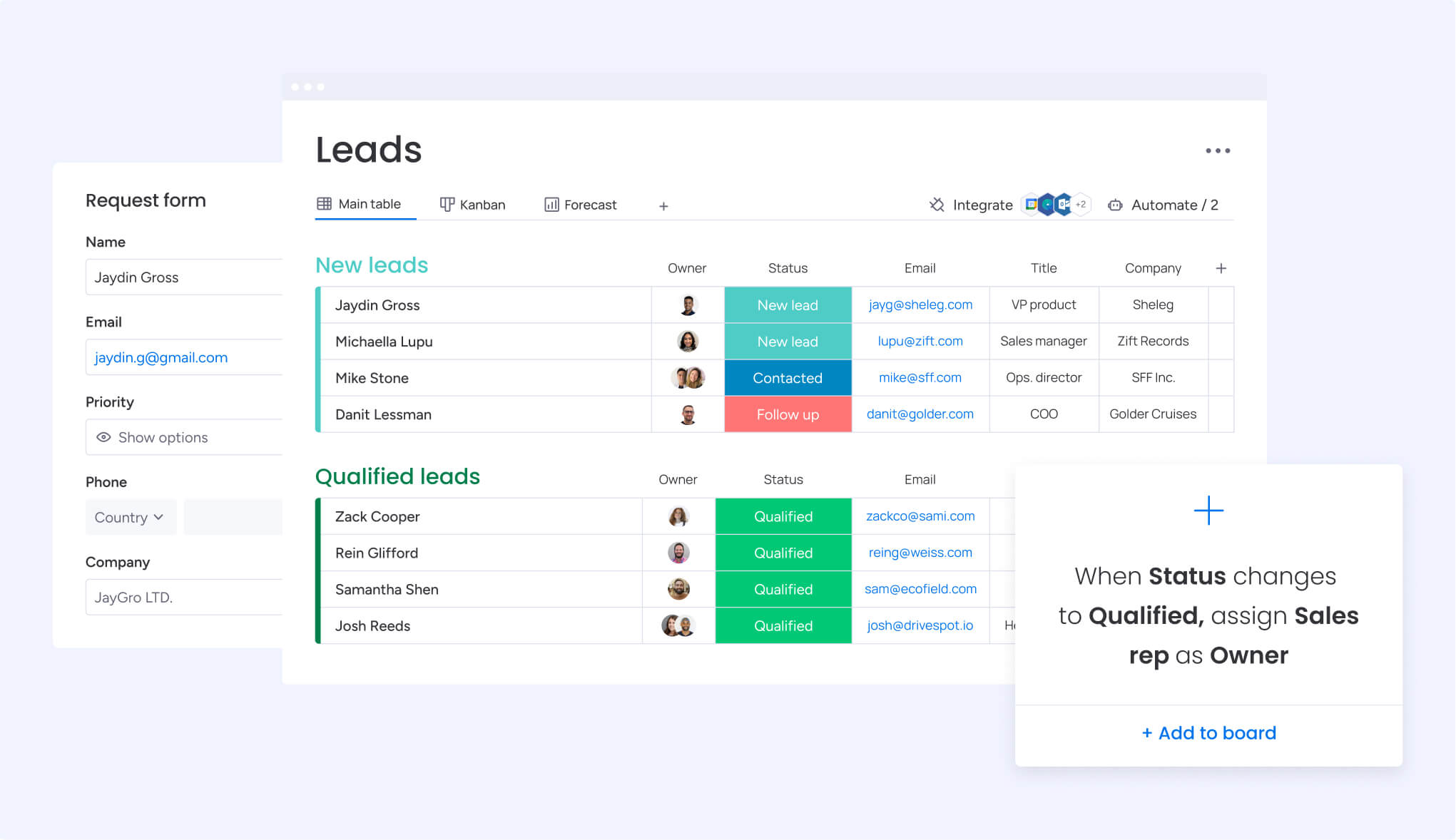
Automation streamlines lead capture, qualification, and nurturing. Automated lead scoring evaluates prospects based on demographics and behavior, prioritizing high-potential leads for immediate follow-up.
Revenue teams using modern platforms like monday CRM benefit from automation capabilities that:
- Capture leads: from multiple sources automatically.
- Enrich lead data: with additional information.
- Trigger follow-up actions: based on customer behavior.
- Score prospects: for prioritization.
Predictive analytics applications
Predictive analytics anticipates customer behavior, forecasts sales, and optimizes resource allocation. Applications include:
- Churn prediction: identifying customers likely to stop buying.
- Lifetime value forecasting: estimating future revenue from relationships.
- Demand planning: predicting product popularity.
- Next-best-action recommendations: suggesting optimal engagement strategies.
Building effective B2C sales teams
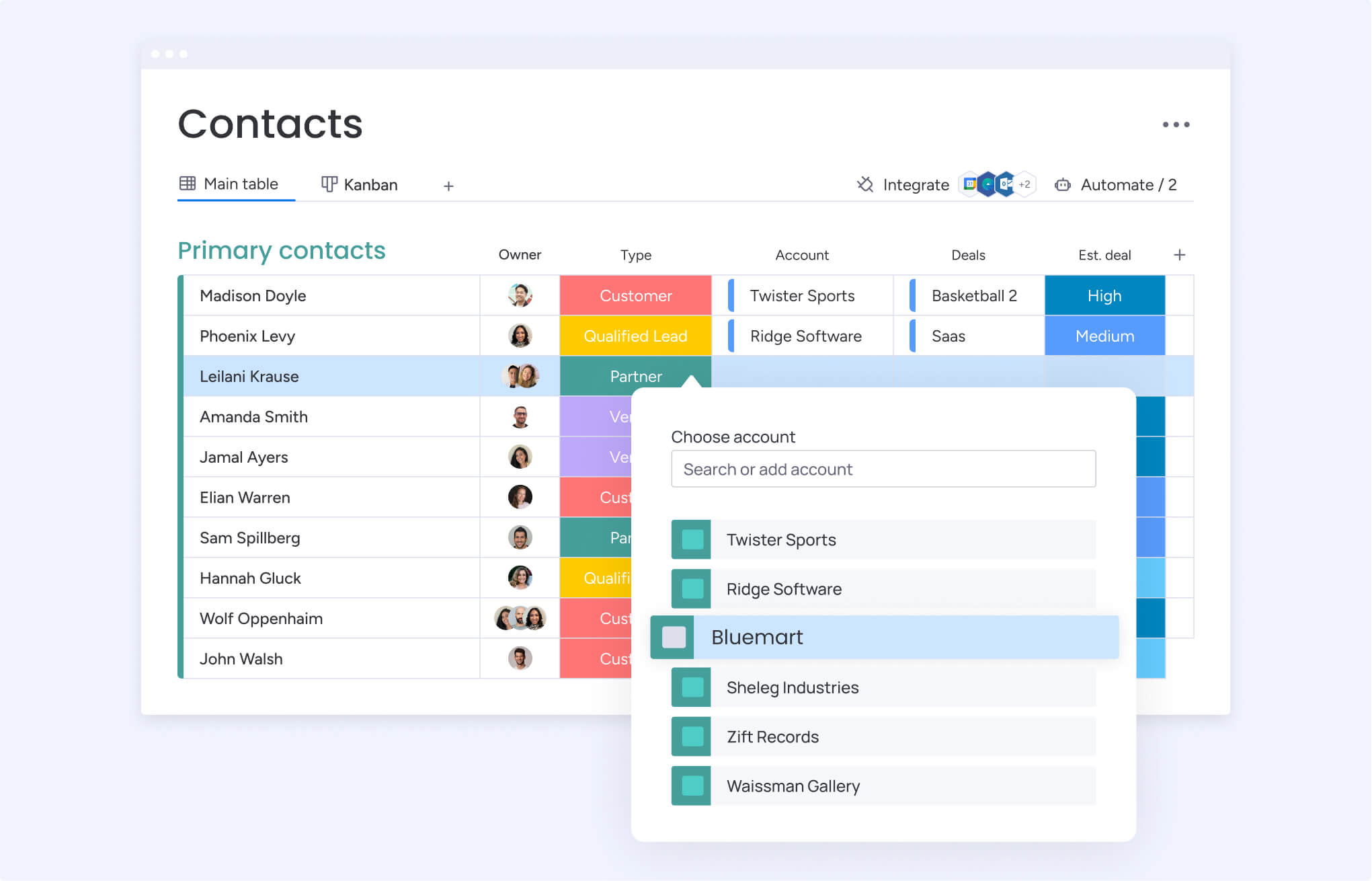
Top B2C teams live and breathe digital, put customers at the center of everything, and let data guide their decisions. You can’t win with old-school sales structures; consumer markets demand specialized skills and fresh approaches. Building the right team structure and capabilities ensures businesses can execute sophisticated B2C strategies effectively.
Essential B2C sales roles
Modern B2C sales teams require specialized roles that didn’t exist in traditional sales organizations. Each role addresses specific aspects of the digital consumer journey:
- Customer Experience Specialists: manage customer journeys across touchpoints, analyzing feedback and identifying friction points preventing conversions.
- Digital Marketing Specialists: drive online acquisition through SEO, paid advertising, social media, and email campaigns, optimizing based on performance data.
- Sales Analytics Specialists: analyze performance data, conduct tests, and translate insights into actionable recommendations for improving conversion rates.
- E-commerce Managers: optimize online sales channels, managing website experiences, checkout processes, and conversion funnels.
Training priorities for digital selling
B2C sales teams need specific skills for the digital age. Training should cover:
- Customer psychology: understanding emotional decision-making factors.
- Digital marketing channels: mastering optimization techniques.
- Data analysis capabilities: for performance improvement.
- Social selling skills: for community engagement.
- Technology proficiency: with CRM and automation platforms.
Teams must understand how customers move from awareness to purchase, identifying optimization opportunities at each touchpoint. Advanced solutions like monday CRM support team development through centralized training resources and performance tracking.
Measuring B2C sales performance
In B2C, you’re only as good as your numbers. Track what actually matters and never stop tweaking based on what the data tells you. The right KPIs don’t just measure success — they spotlight exactly where you need to improve. Understanding which metrics matter most helps businesses focus their optimization efforts where they’ll have the greatest impact.
Critical performance metrics
Success in B2C sales isn’t about gut feelings, but about tracking the right numbers and acting on what they reveal. These five metrics give you a clear picture of what’s working, where you’re losing money, and which improvements will actually move the needle on revenue.
| Metric | Definition | Why it matters |
|---|---|---|
| Conversion rate | Percentage of visitors who purchase | Indicates sales process effectiveness |
| Customer acquisition cost | Marketing/sales spend per new customer | Determines growth profitability |
| Average order value | Average amount per transaction | Impacts revenue and profitability |
| Customer lifetime value | Total revenue from customer relationship | Guides acquisition spending |
| Cart abandonment rate | Percentage of incomplete purchases | Identifies checkout friction |
Optimization strategies
Improving conversion rates requires systematic optimization across the customer journey. Website improvements include:
- Faster load speeds: to reduce bounce rates.
- Mobile responsiveness: for smartphone users.
- Compelling calls-to-action: that drive action.
- Streamlined checkout processes: with minimal steps.
Testing different approaches helps identify what resonates: comparing headlines, images, pricing displays, and form designs. Social proof elements like reviews and trust badges increase confidence and reduce hesitation.

“With monday CRM, we’re finally able to adapt the platform to our needs — not the other way around. It gives us the flexibility to work smarter, cut costs, save time, and scale with confidence.”
Samuel Lobao | Contract Administrator & Special Projects, Strategix
“Now we have a lot less data, but it’s quality data. That change allows us to use AI confidently, without second-guessing the outputs.”
Elizabeth Gerbel | CEO
“Without monday CRM, we’d be chasing updates and fixing errors. Now we’re focused on growing the program — not just keeping up with it."
Quentin Williams | Head of Dropship, Freedom Furniture
“There’s probably about a 70% increase in efficiency in regards to the admin tasks that were removed and automated, which is a huge win for us.“
Kyle Dorman | Department Manager - Operations, Ray White
"monday CRM helps us make sure the right people have immediate visibility into the information they need so we're not wasting time."
Luca Pope | Global Client Solutions Manager at Black Mountain
“In a couple of weeks, all of the team members were using monday CRM fully. The automations and the many integrations, make monday CRM the best CRM in the market right now.”
Nuno Godinho | CIO at VelvDriving B2C sales success
B2C sales success requires understanding consumer psychology, leveraging technology for personalization at scale, and optimizing every touchpoint in the customer journey. The strategies and approaches outlined in this guide provide a foundation for building effective B2C sales operations that drive sustainable growth.
Successful B2C organizations balance operational efficiency with personalized customer experiences. This means handling high transaction volumes while maintaining meaningful connections with individual customers. Automation enables scale, but the most effective strategies preserve authentic engagement that builds customer loyalty. Teams that achieve this balance, supported by appropriate technology and data-driven optimization, position themselves for long-term success in competitive consumer markets.
Ready to transform your B2C sales approach?
The content in this article is provided for informational purposes only and, to the best of monday.com’s knowledge, the information provided in this article is accurate and up-to-date at the time of publication. That said, monday.com encourages readers to verify all information directly.
Frequently asked questions
What skills do B2C salespeople need most?
B2C salespeople need digital marketing knowledge, understanding of customer psychology, data analysis capabilities, and technology proficiency with CRM systems and automation platforms to manage relationships at scale.
Is B2C sales easier than B2B sales?
B2C sales has different challenges rather than being easier — higher competition, emotional decision factors, and need for scale create unique difficulties requiring sophisticated personalization and efficient processes.
What is the typical B2C conversion rate?
E-commerce conversion rates typically range from 2-5%, though rates vary by industry, with retail often seeing 3-5% while luxury items may have 1-2% conversion rates.
How do you transition from B2B to B2C sales?
Transitioning requires shifting from logical ROI-focused selling to emotional appeal, adapting to shorter sales cycles, and learning to manage high-volume transactions through automation and personalization at scale.
What industries rely most on B2C sales?
Retail, e-commerce, food and beverage services, entertainment, consumer technology, personal services, and subscription-based services across multiple categories rely heavily on B2C sales models.
How is AI changing B2C sales?
AI enables personalization at scale through product recommendations, powers automated customer service, provides predictive analytics, optimizes pricing, generates personalized communications, and automates routine tasks while maintaining quality.

 Get started