

Revenue targets remain abstract figures on a spreadsheet without a defined path to achieve them. That path is a sales plan. It serves as the blueprint teams follow to transform ambitious goals into predictable results. Without one, teams pursue leads without strategic direction and rely on guesswork, which leads to missed opportunities and inaccurate growth forecasting.
But a great sales plan is more than a document created once a year. It’s a living playbook that adapts to market changes and team performance. Success depends on having the right systems in place to track progress, automate routine work, and give everyone visibility into what’s working. This alignment turns strategy into daily actions that close deals faster.
This guide shines a light on exactly what a sales plan is and how to build one that drives real revenue in 2026. It covers the essential components every plan needs, from defining target customers to setting measurable goals. It also explores the step-by-step process for creating an effective plan and the common mistakes that can derail team efforts.
Key takeaways
- A sales plan transforms chaotic selling into predictable revenue: by mapping exactly who you’ll sell to, what you’ll sell, and the specific actions needed to close deals.
- Set SMART goals and work backwards from your revenue target: to calculate daily activities; if you need 50 deals at $10K each with a 25% close rate, you need 200 qualified opportunities.
- Include 6 essential components: target customers, revenue goals, sales strategies, team structure, budget, and performance metrics to ensure complete execution coverage.
- Custom pipelines and AI-powered insights with advanced platforms: adapt to any sales process with solutions like monday CRM, automating routine tasks so your team focuses on selling instead of data entry.
- Review your plan monthly and update quarterly: to stay responsive to market changes as what worked in January might not work in July.
What is a sales plan?
A sales plan is a strategic document that outlines how your company will achieve its revenue targets. It specifies your target customers, product offerings, and the specific actions your team must take to close deals.
A sales plan serves as your sales team’s operational guide. While a business plan addresses your entire company’s strategy, a sales plan focuses specifically on revenue generation. It typically spans 12 months and includes defined goals, timelines, and the precise steps required to achieve them.
Why does your sales team need a sales plan?
Operating without a sales plan is like navigating a ship without a compass; you might be moving, but you have no way of knowing if you’re on course for your destination. To transform this potential chaos into a predictable revenue engine, you need a formalized roadmap that bridges the gap between high-level goals and daily execution.
- Drive predictable revenue growth: sales plans turn guesswork into science. When you know exactly how many prospects need to enter your pipeline to hit your revenue target, you can plan accordingly. This predictability helps you secure funding and make smart growth decisions; companies with formalized sales processes see 15% higher revenue growth, according to research from Alore.
- Align teams around shared sales goals: nothing kills momentum like teams working at cross-purposes. A sales plan ensures everyone, from sales to marketing to customer success, pulls in the same direction. According to a 2024 analysis on sales and marketing alignment, organizations with tightly aligned departments achieve 38% higher sales win rates. You’ll eliminate duplicate efforts and conflicting priorities.
- Optimize resource allocation: where should you spend your sales budget? A good plan answers this by showing which activities generate the highest return. You’ll discover which customer segments, sales channels, and tactics deserve more investment.
- Track and improve sales performance: you can’t improve what you don’t measure. Implementing sales performance management helps teams identify areas for improvement. Sales plans establish specific benchmarks that show exactly where your process succeeds or fails. This data transforms vague feedback into targeted coaching that actually moves the needle.
Essential components of every sales plan
A complete sales plan contains six core elements that work together to drive revenue. Each component plays a specific role: target customers tell you who to sell to, revenue targets define success, strategies outline your approach, team structure assigns responsibilities, budget allocates resources, and metrics track progress.
Miss any of these, and you’ll create gaps in execution that lead to missed quotas and wasted effort.
Target customers and buyer personas
Buyer personas are detailed profiles of your ideal customers. They go beyond basic demographics to include pain points, buying behaviors, and decision-making processes.
Creating accurate personas means analyzing your best customers and identifying patterns. What challenges do they face? How do they evaluate solutions? Who gets involved in the purchase decision?
Revenue targets and sales goals
Vague goals like “sell more” lack the specificity needed for effective execution. Sales plans require SMART goals — Specific, Measurable, Achievable, Relevant, and Time-bound.
For example, instead of “increase sales,” set a goal to “generate $2.4 million in new revenue by December 31st through 240 closed deals averaging $10,000 each.” This level of detail enables you to reverse-engineer the exact activities needed to succeed.
Sales strategies and tactics
Strategy is your overall approach to winning customers, while tactics are the specific actions you’ll take. Common strategies include:
- Inbound selling: attract prospects through content and thought leadership.
- Outbound prospecting: proactively reach out to potential customers.
- Account-based selling: focus intensively on high-value target accounts.
Your sales strategy should match how your customers prefer to buy and play to your team’s strengths.
Team structure and territory planning
To ensure complete market coverage and prevent internal competition, you must clearly define “who sells to whom.” Implementing strategic sales territory management prevents lead overlap while maximizing your team’s reach. Typically, you might divide these territories by:
- Geography: specific regions or cities.
- Industry: healthcare, finance, technology.
- Company size: enterprise, mid-market, small business.
Consider travel requirements, market potential, and each rep’s experience when making assignments. A dedicated sales operations approach can unify territory planning and resource allocation.
Budget and resources
Identify all resources required for plan execution. This includes salaries, a commission plan, technology subscriptions, travel budgets, and training costs. Marketing support should also be factored in, as lead generation requires dedicated investment.
Performance metrics and KPIs
Track sales metrics that actually matter for sales success:
- Conversion rates: how many prospects become customers at each stage?
- Sales cycle length: how long does it take to close deals?
- Average deal size: what’s the typical revenue per customer?
- Activity levels: how many calls, emails, and meetings happen daily?
Sales plan vs business plan
Sales plans and business plans serve different purposes, even though they’re both strategic documents.
A business plan maps out your entire company’s direction, from operations to finances to long-term vision. On the other hand, a sales plan zeroes in specifically on how you’ll generate revenue.
A business plan is like the blueprint for your entire house, while the sales plan details exactly how you’ll build and furnish the kitchen. A table below demonstrates how they differ:
| Aspect | Sales plan | Business plan |
|---|---|---|
| Scope | Revenue generation only | Entire business operations |
| Time frame | 12 months | 3-5 years |
| Audience | Sales teams and revenue leaders | Investors and stakeholders |
| Focus | Tactical execution | Strategic vision |
| Detail level | Specific quotas and activities | High-level goals |
| Updates | Monthly or quarterly | Annual |
7 steps to create your sales plan
Building a sales plan from scratch might seem overwhelming, but breaking it down into clear steps makes the process manageable. These seven steps guide you from analyzing where you are today to establishing systems that keep your plan on track. Remember that each step builds on the previous one.
Step 1: analyze current sales performance
Start by examining your sales data from the past year. What worked? What didn’t? Look at win rates, deal sizes, and sales cycle lengths across different customer segments.
Pay special attention to conversion rates between stages. If prospects often stall at the proposal stage, you know where to focus improvements.
Step 2: define your target market
Identify your ideal customers with precision. For example, “Companies with 50-200 employees in the technology sector struggling with project management” provides significantly more clarity than “mid-size businesses.”
Segment your market by factors that influence purchasing behavior. A Fortune 500 company follows different buying processes than a startup, even when evaluating the same product.
Step 3: set SMART sales goals
After that, break your annual revenue target into quarterly and monthly goals. Then calculate the activities needed to hit those numbers using a sales forecast template.
If you need $500,000 in Q1 revenue and your average deal is $10,000, you need 50 closed deals. With a 25% close rate, that means 200 qualified opportunities. Work backwards until you know exactly how many calls to make daily.
Step 4: choose your sales strategies
Match your sales approach to your customers’ buying preferences. Complex, expensive solutions often require consultative selling. Simple, low-cost products might use transactional approaches.
Consider where your customers research solutions. Do they attend trade shows? Read industry publications? Search online? Your strategy should meet them where they are.
Step 5: allocate resources and budget
Having done that, calculate how many salespeople you need based on quotas and productivity expectations. Factor in ramp-up time for new hires, as it takes time for them to reach full productivity.
Budget for the technology, including sales management software, that enables your strategy. Flexible solutions like monday CRM adapt to any sales process, letting you customize pipelines and automate repetitive work without technical expertise.
Step 6: build your sales action plan
Transform strategies into daily activities. If your strategy includes social selling, specify exactly what that means: “Connect with 10 prospects on LinkedIn daily and share one industry insight.”
Assign clear ownership for each activity. When everyone knows their specific responsibilities, execution becomes automatic.
Step 7: establish tracking and review processes
The last step is setting up weekly pipeline reviews, monthly performance assessments, and quarterly strategy evaluations using sales tracking software for real-time data insights. Build triggers for adjustments: if you miss monthly targets by 15%, what changes will you make?
Regular reviews keep your plan alive and responsive to market changes. What worked in January might not work in July.
4 types of sales plans for different needs
Not all sales plans serve the same purpose. Your startup chasing rapid growth needs a different approach than an enterprise team managing Fortune 500 accounts. The right plan type depends on your time frame, market complexity, and what you’re trying to achieve. Here are four common types, each designed to solve specific sales challenges.
- Strategic sales plan: a strategic sales plan covers two to three years and focuses on market positioning. They answer big questions: Which markets should we enter? How do we differentiate from competitors?
- Tactical sales plan: tactical plans zoom in on immediate execution, usually quarterly or monthly. They specify exact campaigns, outreach sequences, and daily activity targets.
- Territory sales plan: territory plans divide your market to maximize coverage. They assign specific regions, industries, or account lists to individual reps based on potential and existing relationships.
- Account sales plan: for key accounts, you need detailed strategies covering relationship mapping, expansion opportunities, and competitive threats. These plans often span multiple years for enterprise customers.
5 common sales planning mistakes to avoid
Even the most experienced sales leaders fall into predictable traps when building their plans. These mistakes don’t just waste time; they actively sabotage your revenue goals and frustrate your team. Recognizing these pitfalls before they derail your efforts means the difference between a plan that drives results and one that collects dust.
Those are five critical mistakes to watch for and how to avoid them.
1. Setting unrealistic sales targets
While ambitious goals can motivate a team, impossible targets are inherently demoralizing. Therefore, you should base your targets on historical performance and current market conditions rather than wishful thinking.
2. Ignoring market conditions
A static plan fails to account for economic trends, competitive shifts, and industry changes. To stay ahead, incorporate regular market research to ensure your strategies remain relevant in a fluctuating landscape.
3. Failing to align with marketing
When sales and marketing target different audiences or use conflicting messaging, lead quality suffers. By establishing shared definitions for qualified leads and coordinating your outreach, you ensure both departments are working toward the same objective.
4. Using outdated sales plan templates
Generic formats often overlook the unique challenges of your business. Instead, customize your plan to address your specific industry, sales cycle, and customer types to ensure it provides actual value.
5. Not reviewing plans regularly
Because markets move fast, a “set it and forget it” mentality is dangerous. Consequently, you should review your progress monthly and adjust your tactics quarterly, fixing issues as they arise rather than waiting for the next annual planning cycle.
Make your sales planning efficient with monday CRM
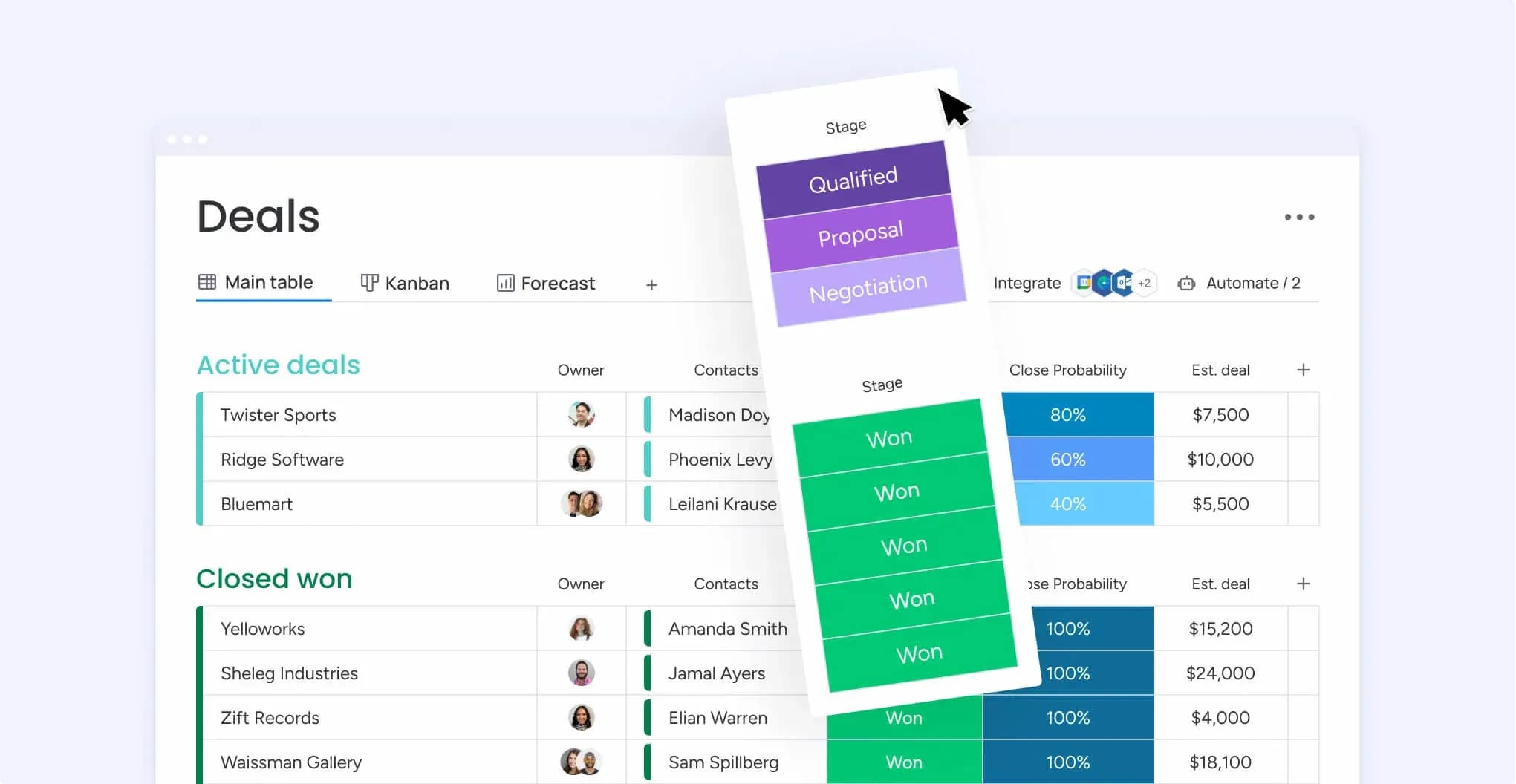
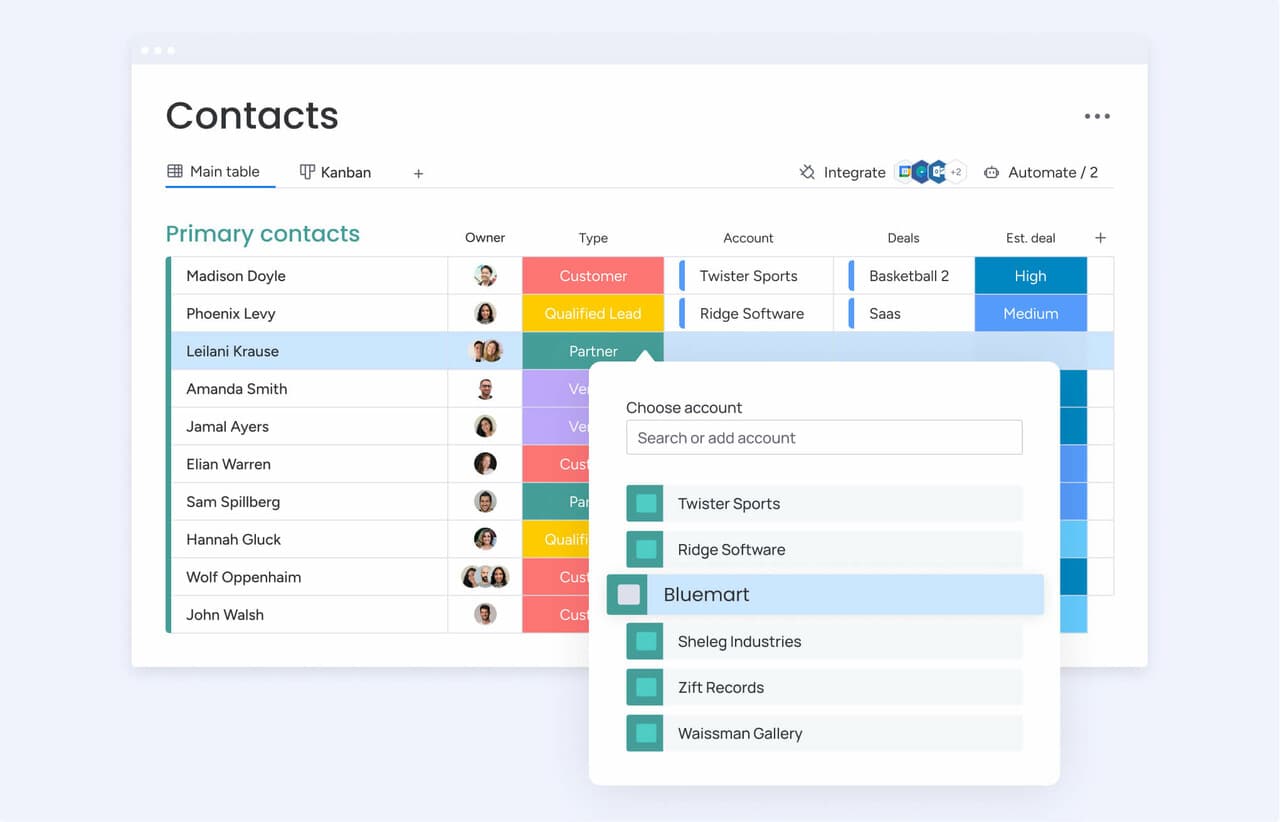
Effective sales planning requires flexibility and real-time visibility to drive results. Custom pipelines that align with your specific sales process through intuitive drag-and-drop functionality are what monday CRM provides.
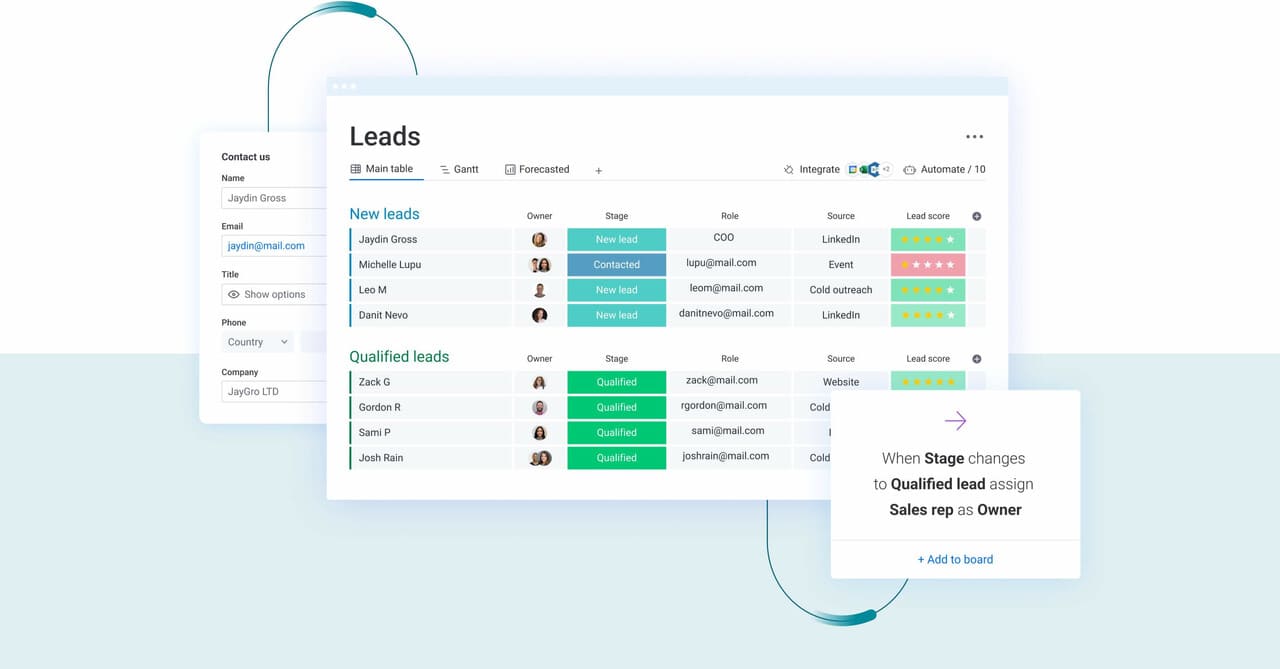
The platform’s AI capabilities analyze historical data to identify patterns and generate predictive insights. Automated workflows manage routine tasks, enabling your team to concentrate on revenue-generating activities rather than administrative work.
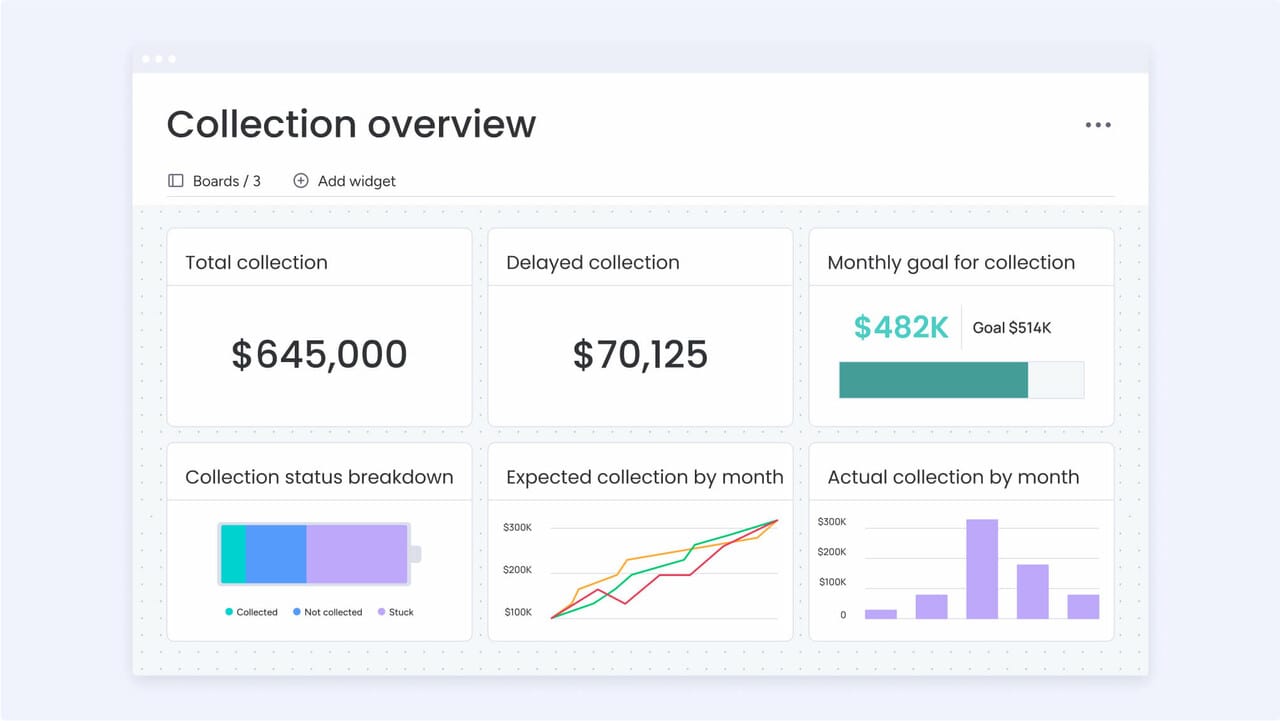
Real-time dashboards deliver comprehensive visibility into pipeline health, individual performance, and goal progress without requiring manual reporting. Integration capabilities with existing platforms ensure seamless data flow across systems.
Additionally, the flexibility to evolve alongside your sales process is what monday CRM offers. Stages, fields, and automations can be modified in minutes without technical support.
Frequently asked questions
How long should a sales plan document be?
It should typically run 10-20 pages, covering all essential components without unnecessary detail. The exact length depends on your business complexity and team size.
How often should I update my sales plan?
Review your sales plan monthly and make significant updates quarterly to account for market changes and performance results. Complete overhauls typically happen annually during strategic planning.
Who needs to be involved in creating a sales plan?
Sales leaders should drive the process, but include input from marketing, finance, and frontline sales reps. Their perspectives ensure your plan is both strategic and practical.
Can AI help me create a sales plan?
AI enhances sales planning by analyzing historical data to identify trends and predict outcomes. Modern CRM platforms use AI to improve forecast accuracy and suggest optimization opportunities.
What's the difference between a sales strategy and a sales plan?
A sales strategy defines your overall approach to winning customers — the "what" and "why." A sales plan details the specific actions, timelines, and resources needed to execute that strategy — the "how" and "when."
What format should I use for my sales plan?
The most effective format includes an executive summary, market analysis, goals, strategies, action items, and metrics in a logical flow. Digital formats enable real-time updates and team collaboration.

 Get started