


Customers are talking. Feedback flows through support tickets, sales calls, surveys, and product reviews. The challenge? That valuable intelligence sits scattered across platforms, departments, and spreadsheets. The gap between collecting feedback and turning it into revenue action is where deals slip through the cracks.
Voice of Customer (VoC) strategy bridges that gap by connecting customer feedback directly to revenue outcomes. Unlike traditional satisfaction surveys that measure sentiment, VoC strategy creates feedback loops that inform sales strategies, predict churn risks, and identify expansion opportunities. Customer insights flowing into sales workflows become competitive intelligence that drives measurable business results.
Instead of letting feedback sit idle, discover how platforms that centralize customer data can transform scattered comments into the kind of “revenue intelligence” your team will actually use to win. By aligning your technology with these insights, you ensure that every customer interaction becomes a strategic asset rather than a lost data point.
Key takeaways
- Connect customer feedback directly to revenue outcomes: track how VoC insights impact deal velocity, expansion rates, and retention instead of just measuring satisfaction scores.
- Build systematic feedback collection across your entire revenue journey: capture insights at key milestones from initial purchase through renewal to identify expansion opportunities and prevent churn.
- Centralize all customer communications: unite emails, call notes, support tickets, and survey responses in one timeline on monday CRM so teams see the complete customer story without switching platforms.
- Use AI to automatically analyze feedback patterns and trigger actions: let automation detect sentiment changes, create action items for account managers, and alert sales teams when customers show expansion readiness.
- Focus VoC efforts on high-value customer segments first: prioritize enterprise accounts, growth customers, and strategic industries where feedback insights will have the greatest revenue impact.
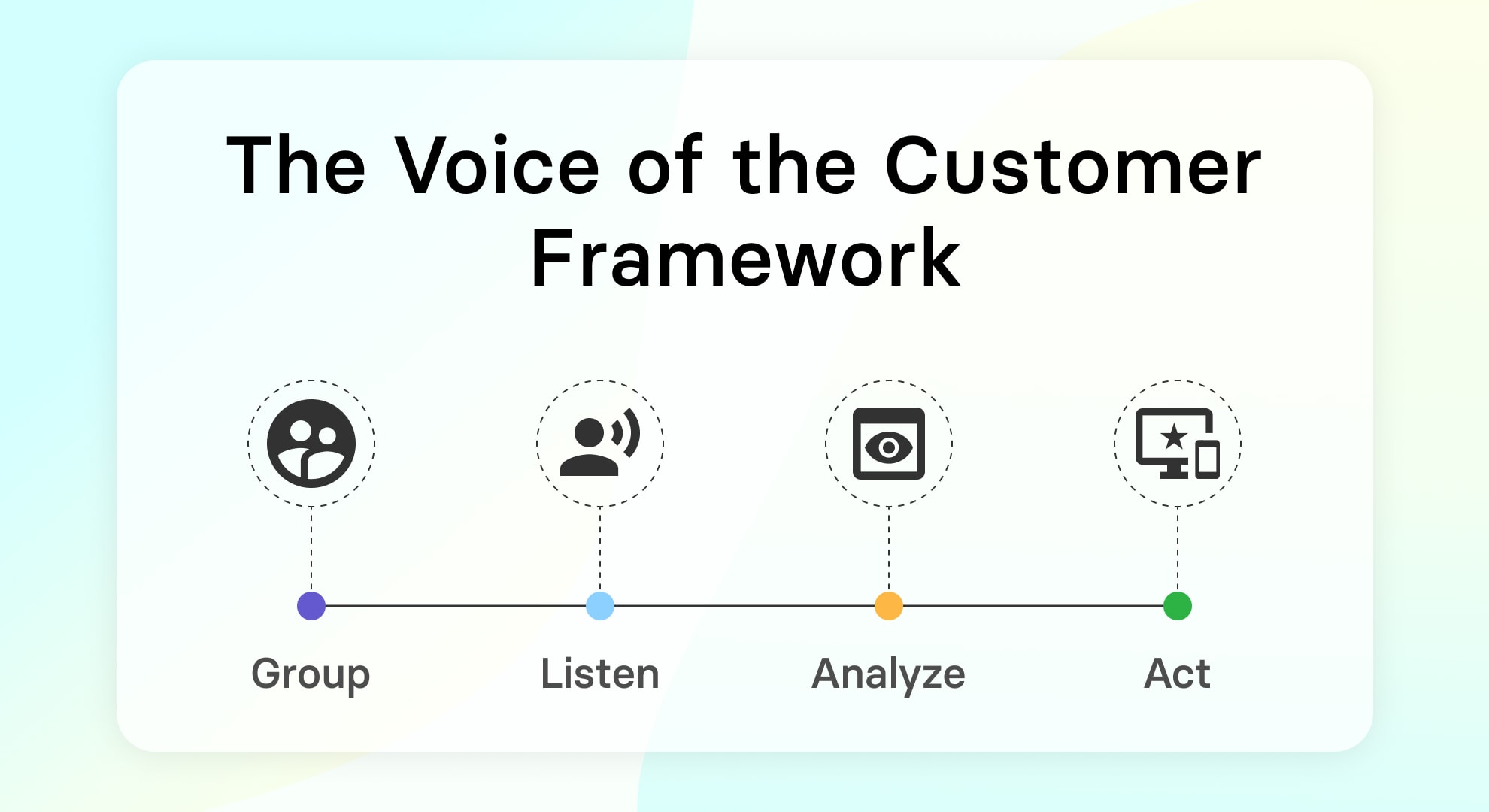
What is VoC strategy?
Voice of Customer (VoC) strategy is a systematic approach to collecting, analyzing, and acting on customer feedback to drive measurable business outcomes. This means going beyond basic surveys to create structured feedback loops that connect customer comments to revenue patterns and strategic opportunities.
Furthermore, a VoC strategy functions as an early warning system for revenue teams. Unlike traditional customer feedback that captures satisfaction at a single moment, VoC strategy builds continuous intelligence that informs product development, sales strategies, and customer success initiatives. The distinction lies in how feedback flows into action: rather than remaining in static reports, it triggers real-time workflows that impact deals, retention, and expansion.
The core elements that make VoC strategy work for revenue teams include:
- Systematic data collection: multiple channels feeding into centralized systems.
- Cross-functional analysis: connecting feedback to revenue implications across departments.
- Action-oriented outcomes: plans tied to measurable business results.
Sales calls, support tickets, product usage, and surveys all feed into a centralized system that maintains context and customer history. When sales, marketing, product, and customer success teams collaborate on interpreting these patterns, they identify opportunities that single departments miss.
Why does VoC strategy drive revenue growth?
VoC strategy creates revenue growth through three mechanisms that directly impact your bottom line. By understanding these connections, revenue teams can better prioritize VoC investments and measure their specific impact on business outcomes.
First, customer retention improves when you systematically identify and address satisfaction issues before they escalate to churn. Second, upsell and cross-sell opportunities become visible through feedback patterns that reveal expansion readiness.
Finally, customer acquisition costs decrease when VoC insights inform your targeting and messaging strategies, ensuring you attract leads with a higher propensity to close.
How do you know which customers are ready to expand their contracts? Feedback analysis reveals the signals:
- Customers requesting specific features: show expansion readiness.
- Those expressing satisfaction with current capabilities: indicate growth potential.
- Mentions of challenges that your additional products solve: present cross-sell opportunities.
Teams that track these signals consistently outperform competitors who rely on gut instinct when it comes to expansion rates.
7 key benefits of revenue-focused VoC strategy
Revenue-focused VoC strategy beats traditional satisfaction programs in one crucial way: it drives pipeline velocity, bigger deals, and higher customer lifetime value instead of just generating feel-good scores. Each benefit reinforces the others, creating compound effects as your program matures.
1. Increase cross-sell rates
VoC data spots exactly when customers are ready to buy more from you by tracking their usage patterns, feature requests, and satisfaction signals. Support ticket analysis might reveal that customers using project management features frequently request time tracking capabilities — a clear cross-sell pathway.
Revenue teams using solutions like monday CRM can track these patterns by connecting product usage data with customer feedback and deal history. Automated alerts notify sales teams when customers exhibit behaviors that align with expansion opportunities, enabling timely cross-sell conversations.
2. Boost customer retention and lifetime value
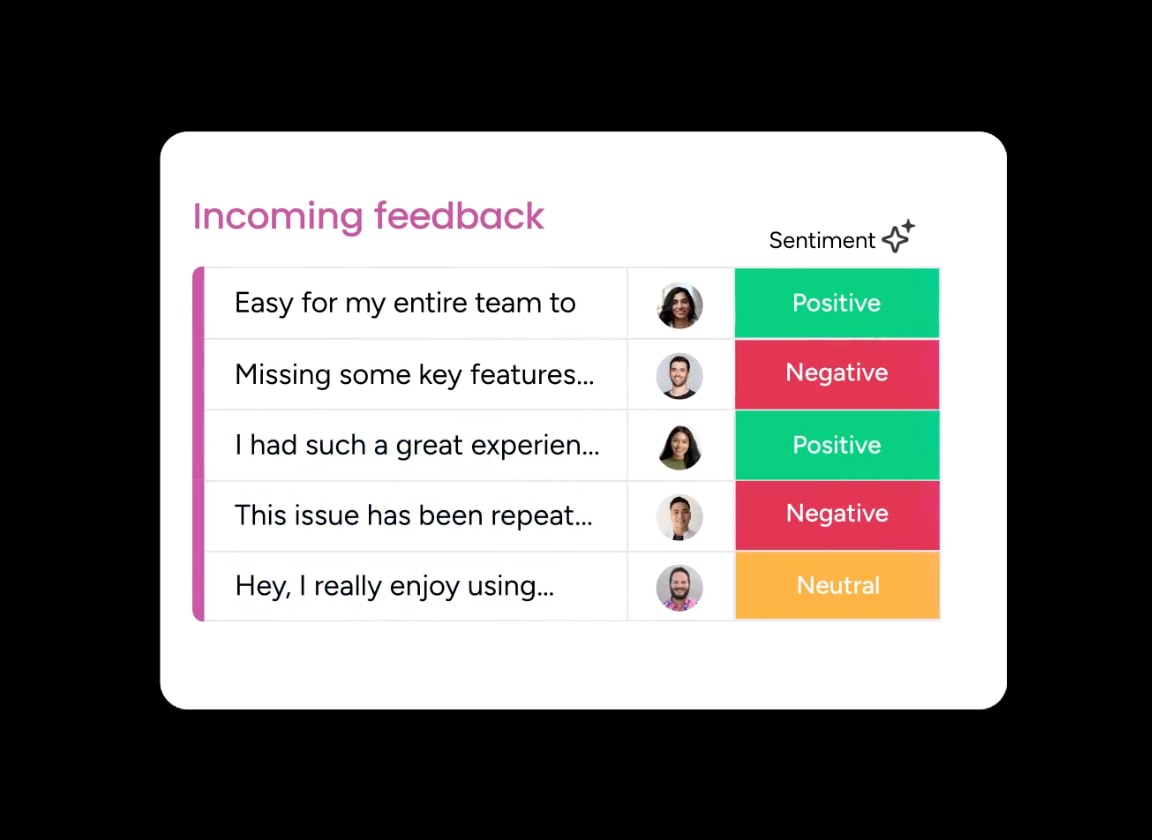
VoC strategy identifies at-risk customers through early warning signals in feedback sentiment, response patterns, and engagement levels. Customers who stop responding to outreach, express frustration in support interactions, or reduce product usage trigger proactive retention campaigns.
The connection between feedback analysis and retention appears across all customer segments:
- High-value accounts: receive immediate attention when sentiment drops.
- Mid-market customers: benefit from automated workflows addressing common concerns.
- Small accounts: get scaled interventions based on pattern recognition.
Teams that act on these signals keep more customers than those who wait until someone threatens to cancel.
3. Enable data-driven revenue decisions
Customer feedback provides quantitative backing for pricing strategies, product roadmaps, and market expansion decisions. When a significant percentage of enterprise customers request a specific integration, product teams can justify development investment with clear revenue potential.
Consider how feedback data showing customer willingness to pay premium prices for compliance features supports both pricing tier increases and market expansion into regulated industries. These decisions gain executive support because they’re backed by direct customer input rather than market assumptions.
4. Improve sales forecasting accuracy
Customer sentiment and feedback patterns warn you about risks and opportunities long before traditional sales metrics catch up. VoC data adds a qualitative layer to pipeline analysis that reveals the story behind the numbers.
VoC insights enhance forecast accuracy through the following mechanisms:
- Predict churn risk earlier: satisfaction scores combined with sentiment trends identify at-risk accounts before they enter renewal periods.
- Spot expansion opportunities: feature requests from existing customers signal readiness to grow their contracts.
- Improve renewal predictions: customer health scores that combine feedback sentiment, response rates, and satisfaction trends forecast outcomes more accurately than usage data alone.
This combined approach gives revenue teams the context they need to forecast with confidence and adjust strategies proactively.
5. Accelerate deal velocity
Understanding customer pain points from similar accounts enables sales teams to address concerns proactively. Feedback analysis reveals common objection patterns that slow deals. When you know that prospects in specific industries worry about integration complexity, your team develops standard responses, case studies, and technical documentation addressing these concerns upfront.
The result is faster sales cycles. Teams armed with VoC insights close deals more quickly because they anticipate and address objections before prospects raise them. This preparation transforms reactive selling into proactive consultation.
6. Reduce customer acquisition costs
VoC data sharpens your targeting, refines your messaging, and strengthens your positioning so you attract leads that actually close. Customer feedback reveals which value propositions resonate most strongly with successful customers. When testimonial analysis shows customers consistently mention specific benefits, these insights inform ad copy and sales scripts.
Marketing teams using VoC insights refine messaging to attract leads that close faster and require less nurturing. The feedback loop between customer success and marketing ensures positioning evolves with actual customer experience.
7. Drive competitive advantage
When you analyze VoC data systematically, you’ll spot gaps your competitors miss and opportunities to stand out in crowded markets. Customer feedback might show that existing solutions lack capabilities your market increasingly needs. Organizations acting on these insights develop features and messaging that directly address unmet needs.
Feedback analysis showing why customers switch from alternatives informs both product positioning and service investment decisions. These insights become core differentiators in sales conversations and marketing campaigns.

“With monday CRM, we’re finally able to adapt the platform to our needs — not the other way around. It gives us the flexibility to work smarter, cut costs, save time, and scale with confidence.”
Samuel Lobao | Contract Administrator & Special Projects, Strategix
“Now we have a lot less data, but it’s quality data. That change allows us to use AI confidently, without second-guessing the outputs.”
Elizabeth Gerbel | CEO
“Without monday CRM, we’d be chasing updates and fixing errors. Now we’re focused on growing the program — not just keeping up with it."
Quentin Williams | Head of Dropship, Freedom Furniture
“There’s probably about a 70% increase in efficiency in regards to the admin tasks that were removed and automated, which is a huge win for us.“
Kyle Dorman | Department Manager - Operations, Ray White
"monday CRM helps us make sure the right people have immediate visibility into the information they need so we're not wasting time."
Luca Pope | Global Client Solutions Manager at Black Mountain
“In a couple of weeks, all of the team members were using monday CRM fully. The automations and the many integrations, make monday CRM the best CRM in the market right now.”
Nuno Godinho | CIO at Velv7 steps to build a revenue-driving VoC strategy
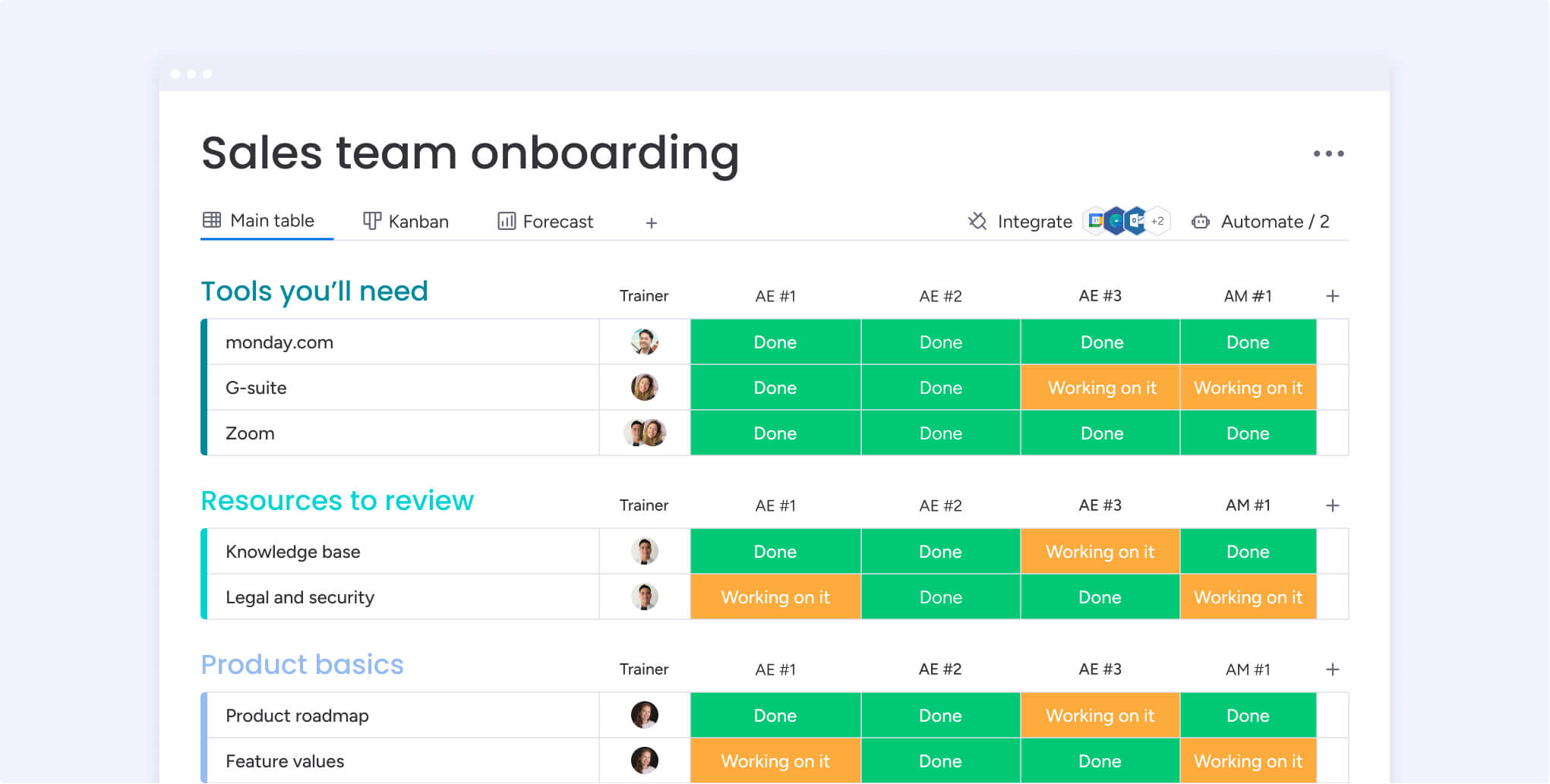
Building an effective VoC strategy requires systematic implementation that connects customer voice with business outcomes. Each step creates the foundation for capturing, analyzing, and acting on customer insights. Organizations following this framework see faster time-to-value from VoC investments.
Step 1: audit your current customer data points
First, take stock of all the places you’re already getting customer feedback. Figure out where this intel lives today and spot the gaps that keep you from seeing the complete picture.
Common data sources and their insights include:
- Support tickets: detailed problem descriptions and product issues.
- Sales call notes: objections, competitive intelligence, and buying criteria.
- Survey responses: structured feedback on specific topics.
- Product usage analytics: behavioral patterns and feature adoption.
- Email communications: ongoing concerns and requests.
- Social media mentions: public sentiment and brand perception.
Categorize these sources by three key criteria:
- Quality: how actionable is the feedback?
- Frequency: how often does feedback arrive?
- Revenue relevance: how directly does it connect to outcomes?
This audit reveals which sources provide the highest-quality revenue intelligence and where new collection methods will yield returns.
Step 2: identify high-value customer segments
Segment customers based on revenue potential, expansion opportunity, and feedback quality rather than traditional demographics. Focus your VoC efforts where they’ll have the greatest impact.
High-value segments for VoC purposes include:
- Enterprise accounts: multi-year contracts with significant revenue impact.
- Growth customers: mid-market accounts showing rapid expansion.
- Strategic industries: accounts in target verticals or use cases.
- Engaged advocates: customers who provide detailed, actionable feedback.
Consider these factors when prioritizing segments:
- Contract size and growth trajectory: current revenue and expansion patterns.
- Expansion potential and renewal timeline: opportunities for growth and retention.
- Feedback quality and engagement level: depth of insights and participation rates.
- Strategic importance to business goals: alignment with company objectives.
Different segments require different feedback collection approaches. Enterprise customers might participate in quarterly business reviews with structured feedback collection, while mid-market customers engage through product-specific surveys and user communities.
Step 3: map feedback collection across the revenue journey
Align feedback collection with key revenue milestones to capture insights when they’re most relevant. The revenue journey includes initial purchase decisions, onboarding experiences, feature adoption phases, expansion considerations, and renewal periods.
| Revenue Stage | Feedback Focus | Revenue Impact |
|---|---|---|
| Initial purchase | Buying criteria, decision process | Improves win rates, shortens cycles |
| Onboarding | Implementation challenges, early value | Reduces time-to-value, prevents churn |
| Feature adoption | Usage patterns, feature requests | Identifies upsell opportunities |
| Expansion decision | Satisfaction, unmet needs | Increases expansion rates |
| Renewal period | Value perception, alternatives | Improves retention |
Space feedback requests strategically to avoid survey fatigue. Vary collection methods between:
- Formal surveys: structured data collection at key milestones.
- Interviews: deep insights from high-value accounts.
- Passive monitoring: continuous analysis through support tickets and product usage.
Step 4: choose the right VoC technology stack
Revenue-focused VoC requires technology that connects customer feedback directly to revenue metrics. Essential capabilities include centralized data collection, automated analysis, integration with sales and marketing systems, and real-time alerting.
When evaluating VoC technology, consider these factors:
- Ease of use: can revenue teams access insights without technical expertise?
- Integration capabilities: does it connect with existing CRM and support platforms?
- AI-powered analysis: does it automatically detect sentiment and patterns?
- Customization: can workflows adapt to specific business needs?
- Scalability: will it grow with increasing feedback volume?
Platforms like monday CRM offer integrated VoC capabilities that consolidate customer communications, feedback history, and revenue data in one system. This integration enables faster insights and action without switching between multiple platforms.
Step 5: create your VoC analysis framework
Establish consistent methods for categorizing, prioritizing, and analyzing feedback for revenue impact. A structured framework ensures team members interpret feedback similarly and high-priority insights receive immediate attention.
Your framework should include:
- Feedback taxonomies: feature request, bug report, competitive intelligence.
- Sentiment scoring: automated analysis of customer emotion and satisfaction.
- Impact assessment criteria: revenue potential and urgency evaluation.
Score feedback using these dimensions:
- Revenue potential: high (affects significant annual revenue), Medium, or Low.
- Urgency: immediate (churn risk within 30 days), Near-term (affects renewal), or Long-term.
- Effort required: quick win, Moderate effort, or Major initiative.
This scoring system helps teams prioritize which feedback to act on first, balancing revenue impact with implementation feasibility. Connect qualitative feedback to quantitative metrics by tracking outcomes from feedback-driven actions.
Step 6: define revenue-focused success metrics
Track metrics that connect VoC activities to revenue outcomes rather than traditional satisfaction scores. Focus on feedback-to-action conversion rates, revenue impact of VoC-driven changes, customer health score improvements, and expansion rate increases.
Key metrics to monitor include:
- Feedback response rate: percentage of customers providing feedback when requested.
- Time to insight: days from collection to actionable analysis.
- Insight-to-action rate: percentage of high-priority insights triggering specific actions.
- Revenue attribution: dollar value preserved or generated through VoC-driven actions.
- Health improvement: percentage of at-risk customers improving after interventions.
Establish baselines before implementing new initiatives. Measure current expansion rates, then track improvements as VoC insights inform account management strategies. Set realistic targets that account for market conditions and organizational capacity.
Step 7: build your cross-functional VoC team
Effective VoC execution requires clear roles across departments. Sales teams provide competitive intelligence and objection patterns. Marketing analyzes campaign responses and market sentiment. Product tracks feature requests and usage patterns. Customer success monitors satisfaction and health trends.
Make sure everyone knows their role while keeping communication open across teams:
- VoC program manager: coordinates activities and maintains the feedback system.
- Department representatives: serve as feedback champions within their teams.
- Executive sponsor: provides resources and removes organizational barriers.
Regular review processes include:
- Weekly triage meetings: address urgent feedback and assign actions.
- Monthly cross-functional reviews: analyze trends and adjust strategies.
- Quarterly executive briefings: report revenue impact and program ROI.
Organizations with dedicated VoC roles act on feedback faster than those where responsibilities are secondary duties. Even small teams achieve strong results by establishing clear processes and leveraging automation.
Turn VoC insights into revenue with monday CRM
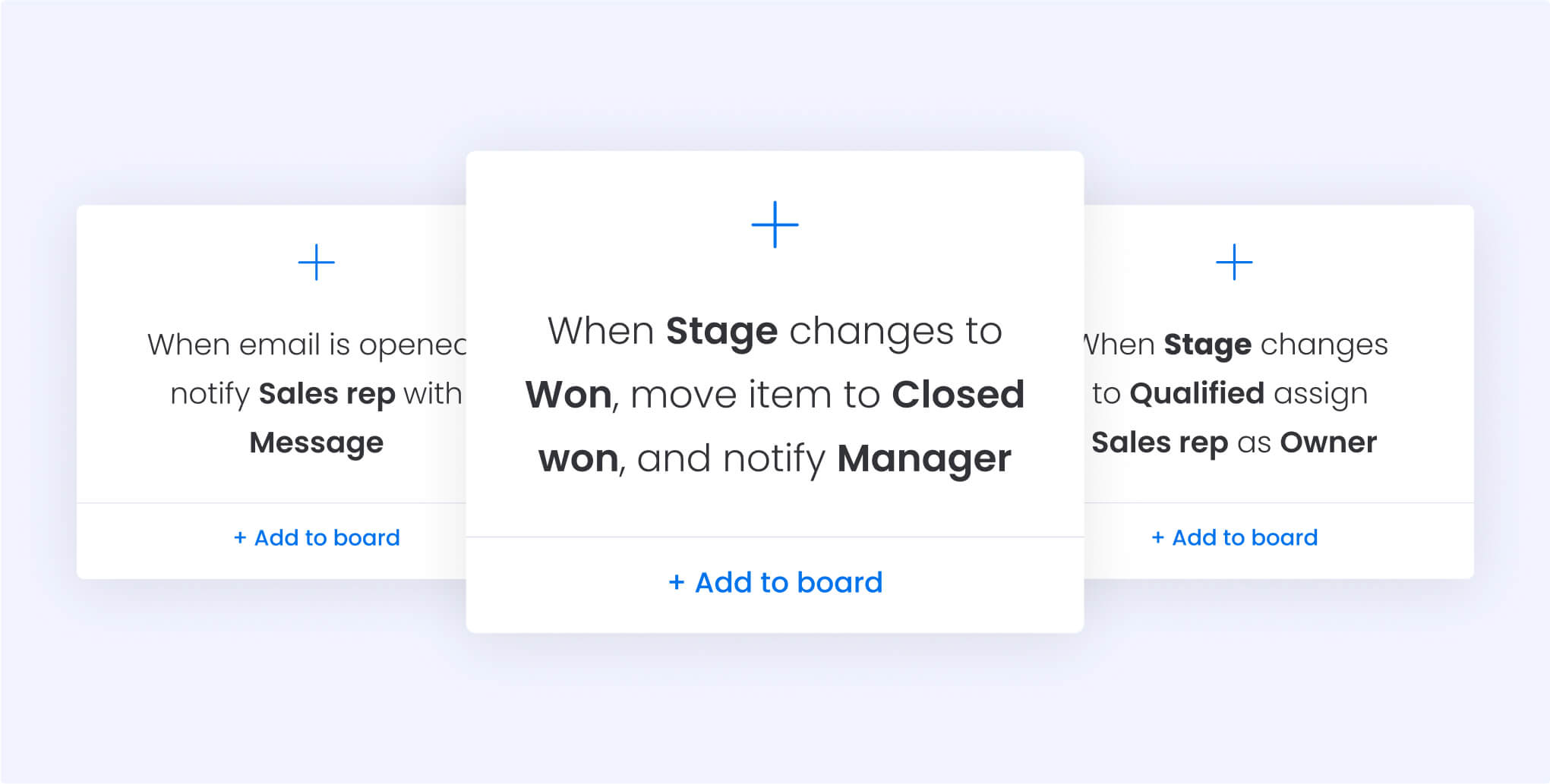
VoC strategy works only when you act on what you learn. Feedback transforms from a box-checking exercise into a revenue machine with monday CRM, which puts VoC tools right where your sales team already works. The platform connects customer voice to revenue outcomes through integrated analysis, automation, and reporting.
Centralize feedback where deals happen
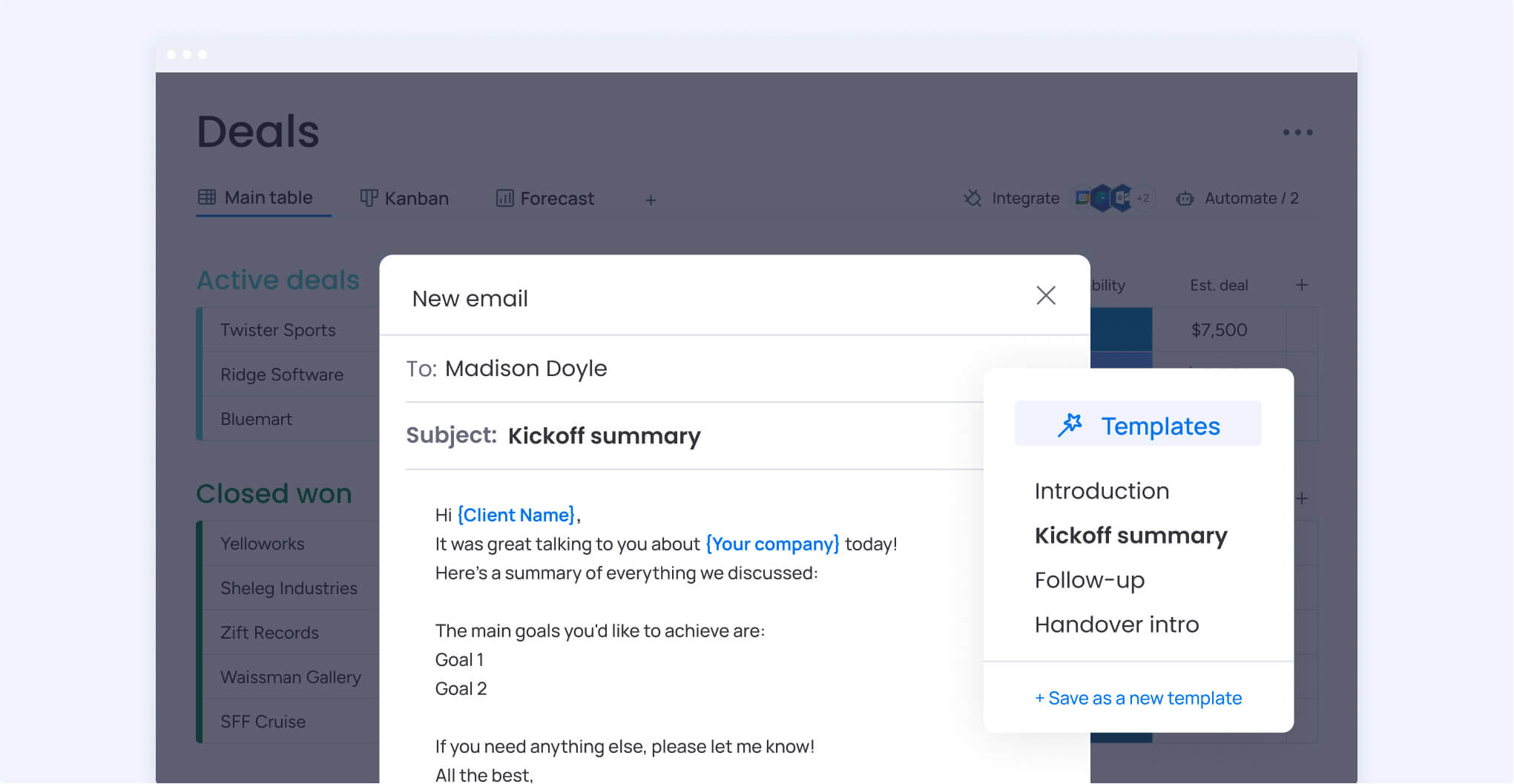
Customer feedback shouldn’t live in separate survey platforms or spreadsheets. Instead, all customer communications including emails, call notes, support tickets, and survey responses, consolidate in one unified timeline connected to accounts and deals with monday CRM. Sales teams see the complete customer story in a single, unified view.
This centralization eliminates the gaps that cause missed opportunities. When account managers can see support ticket sentiment alongside deal progression, they address concerns before they impact renewals. The unified view ensures no feedback gets lost between departments.
Automate analysis with AI
Because manual feedback analysis takes too long and often misses critical patterns, AI capabilities in monday CRM automatically summarize interactions and detect sentiment changes. By extracting key information from emails and documents, AI provides teams with instant context on every relationship.
Furthermore, this analysis scales with your volume, ensuring that insights reach your team while they can still impact the outcome.
Trigger actions based on insights
Feedback without action is just data. Automation capabilities in monday CRM turn VoC insights into workflows:
- Sentiment drops: platform automatically creates tasks for account managers.
- Expansion signals: sales teams receive alerts when feedback indicates readiness.
- Risk indicators: customer success gets notified of potential churn threats.
- Feature requests: product teams track demand patterns across accounts.
These automated workflows ensure insights reach the right people at the right time. The platform eliminates the manual handoffs that delay response to critical feedback.
Connect feedback to revenue metrics
Understanding VoC impact requires connecting feedback to business outcomes. Customizable dashboards in monday CRM unite customer feedback with pipeline data, renewal rates, and expansion metrics. This allows revenue leaders to see exactly how customer sentiment affects forecasting and where to focus resources for maximum impact.
The integrated reporting shows VoC ROI in revenue terms. Teams track how feedback-driven actions impact deal velocity, expansion rates, and customer lifetime value. This visibility justifies VoC investments and guides program improvements.
Make VoC strategy your competitive advantage
Building a VoC program that impacts revenue requires more than collecting feedback. Success comes from operational integration, automation, and connecting insights to the metrics that matter. The organizations that win are those who turn customer voice into competitive intelligence faster than their competition.
Revenue teams that master VoC don’t just understand customers: they forecast more accurately, retain more accounts, and close more deals. The question isn’t whether to build a VoC program but how quickly you can make it operational.
Start with the fundamentals:
- Audit your current feedback sources: to understand what intelligence already exists.
- Identify high-value segments: where VoC efforts will have the greatest impact.
- Choose technology: that connects insights to action without adding complexity.
Your customers are already talking. The winners are those who listen, analyze, and act faster than their competition. VoC strategy gives you that speed advantage by turning customer voice into revenue intelligence that drives measurable business outcomes.
Frequently asked questions
What is the difference between VoC and customer feedback?
VoC strategy is a systematic approach to collecting, analyzing, and acting on customer feedback across all touchpoints to drive revenue decisions. Customer feedback refers to individual comments or responses without the strategic framework that connects insights to business outcomes.
How long does it take to implement a VoC strategy?
A basic VoC strategy can be implemented in four to six weeks, while a comprehensive program with AI analysis and cross-functional integration typically takes two to three months. The timeline depends on your existing technology stack and team readiness.
What budget should I allocate for a VoC program?
Organizations typically allocate resources based on their size and complexity. Consider technology platforms, personnel time, and analysis capabilities as primary cost categories that scale with program maturity.
Can small businesses benefit from VoC strategy?
Small businesses often see strong ROI from VoC strategy because they can act on customer insights quickly. Their closer customer relationships and ability to iterate faster than larger organizations create advantages in implementing feedback-driven improvements.
How do I get executive buy-in for VoC initiatives?
Present VoC initiatives in terms of revenue impact. Show how customer insights will improve retention rates, increase expansion opportunities, and reduce acquisition costs with specific, measurable outcomes tied to business goals.
What are common VoC strategy mistakes to avoid?
Common mistakes include collecting feedback without acting on it, focusing on satisfaction scores instead of revenue metrics, failing to close the loop with customers who provide feedback, and treating VoC as a single department's responsibility rather than a cross-functional initiative.

 Get started