Your sales team hit 87% of quota last quarter. Not terrible, but not great either. The real kicker? You have no idea if this quarter will be better or worse. Your pipeline looks healthy, but so did last quarter’s until deals started slipping in the final weeks. Without a strategic sales plan connecting your revenue targets to daily activities, you’re essentially flying blind with expensive consequences.
A strategic sales plan replaces guesswork with data-backed forecasts and projections you can actually trust. It connects market opportunities to team capabilities, links territory design to quota allocation, and turns daily activities into quarterly wins. Basic sales plans stop at individual quotas. Strategic planning digs deeper — competitive analysis, resource optimization, and performance systems that shift when the market does.
This guide walks you through building a comprehensive strategic sales plan from scratch. We’ll discuss the top components every plan needs, break down how to build one, and give you templates you can customize for your team. Plus, you’ll see real examples from companies that crushed their targets.
Key takeaways
-
Turn targets into predictable revenue: a strategic sales plan connects daily activities to revenue goals so forecasts are accurate and performance is repeatable.
-
Align eight core components: market analysis goals territories quotas processes compensation and technology must work together to drive results.
-
Plan from real market data: strong strategies start with customer demand competitive positioning and current performance baselines.
-
Connect planning to execution: visual solutions like monday CRM help teams track pipelines quotas and progress in real time.
-
Treat planning as a living system: reviewing quarterly and adjusting monthly keeps your sales strategy relevant as markets change.
What is a strategic sales plan?
A strategic sales plan connects revenue targets to daily sales activities and gives teams real-time visibility into whether they’ll hit their goals. Unlike static documents that sit in drawers, a strategic plan adapts with your market, tracks performance automatically, and answers the critical question every sales leader faces: “Will we hit our numbers this quarter?”
Think of it as your sales GPS. You wouldn’t navigate a new city with a five-year-old map. Don’t run sales with outdated planning methods either. Strategic plans include market intelligence, competitive positioning, territory optimization, and performance metrics that guide execution and keep you focused on long-term growth.
Strategic planning goes deeper than basic quota-setting. It’s about depth and adaptability. Here’s what sets strategic planning apart:
- Market intelligence integration: competitive analysis and customer insights inform every targeting decision.
- Cross-functional alignment: sales activities sync with marketing, finance, and operations so everyone moves together.
- Resource optimization: budget and personnel allocation based on real ROI analysis, not gut feelings.
- Performance systems: metrics and accountability structures that keep improving performance.
- Revenue modeling: multi-quarter projections so you can plan resources ahead of time.
Strategic sales plan vs basic sales plan
Know the difference between strategic and basic sales planning, and you’ll know which one your team needs. Here’s how they compare:
| Dimension | Basic sales plan | Strategic sales plan |
|---|---|---|
| Scope | Individual quotas and monthly targets | Market analysis, competitive positioning, and multi-year revenue modeling |
| Time horizon | Quarterly focus with limited visibility | 12-18 month cycles with 3-5 year projections |
| Data requirements | Historical sales and pipeline metrics | Market research, competitive intelligence, and predictive analytics |
| Stakeholder involvement | Sales leadership only | Cross-functional planning with executive oversight |
| Outcome focus | Quota achievement and activity metrics | Process optimization, market share growth, and competitive advantage |
Keep in mind that basic plans work for simple, transactional sales with short cycles and predictable patterns. They track activities like calls made and meetings held but miss the strategic context for real growth.
Strategic plans answer fundamental questions about market positioning, resource allocation, and organizational design. They shift sales from reactive order-taking to proactive revenue generation.
Why strategic planning drives revenue growth
Strategic planning creates predictable revenue through three things that directly impact performance. Each addresses specific challenges revenue leaders face when building sales teams that scale.
- Predictable forecasting: establishes systematic data collection and growth modeling. Organizations with strategic plans predict quarterly revenue with 85% greater accuracy. That means confident hiring decisions and reliable stakeholder communication.
- Systematic optimization: identifies and eliminates process inefficiencies. Teams see 30% productivity improvements within the first year as they cut busywork and focus on what actually drives revenue. Every hour saved on admin work is an hour spent selling.
- Market alignment: ensures sales activities target the right opportunities. Companies win more deals in target segments when they match capabilities with market needs. You’ll see shorter cycles, larger deals, and better retention.
Unlike static documents that sit in drawers, a strategic plan adapts with your market, tracks performance automatically, and answers the critical question every sales leader faces: “Will we hit our numbers this quarter?”
7 reasons you need a strategic sales plan
Strategic planning tackles the core challenges sales leaders face: unpredictable performance, wasted resources, and competitive disadvantages. Without strategic plans, organizations operate reactively, always scrambling instead of planning ahead. Here’s why strategic planning improves sales performance and creates real competitive advantages.
1. Predictable revenue forecasting
As we alluded to above, strategic planning turns forecasting from guesswork into science through systematic data collection and analysis. Organizations establish baseline metrics that account for seasonal patterns, market cycles, and historical trends. That means accurate predictions that guide resource decisions.
The planning elements that drive accuracy include:
- Historical analysis: identifying patterns and trends in past performance.
- Market sizing: quantifying total addressable opportunity.
- Competitive assessment: predicting win rates based on positioning.
- Capacity modeling: determining realistic output levels.
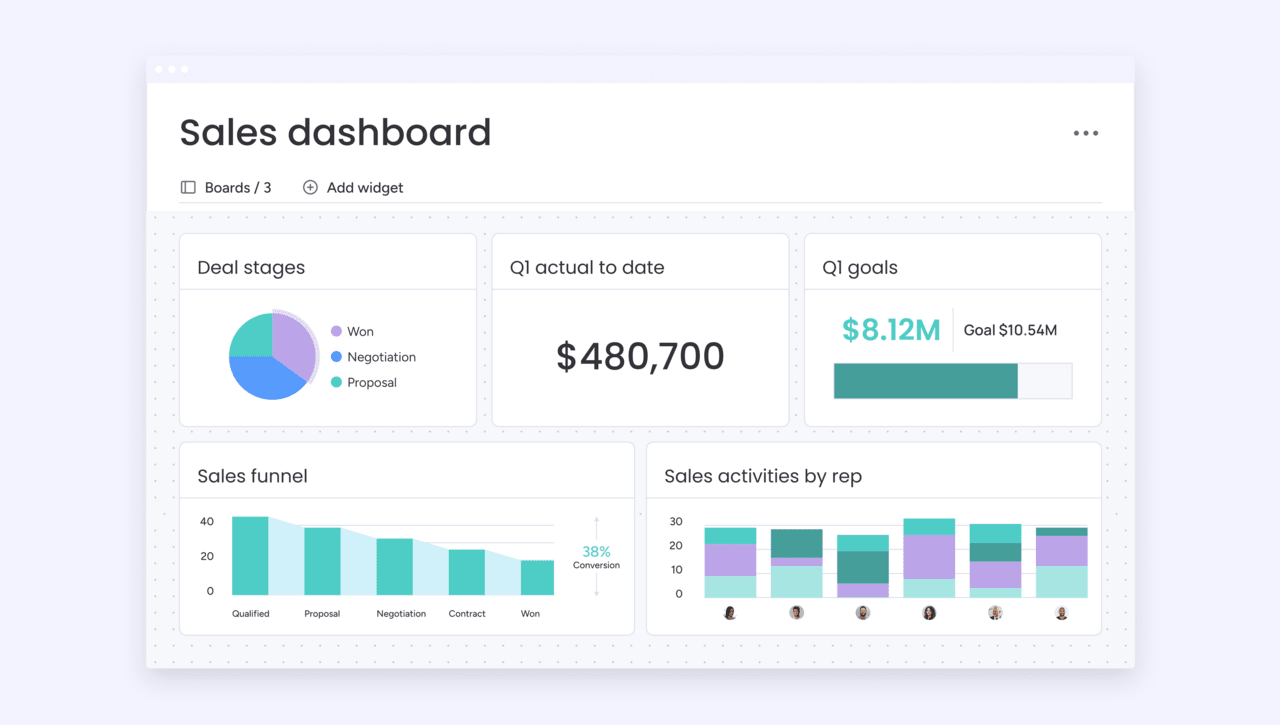
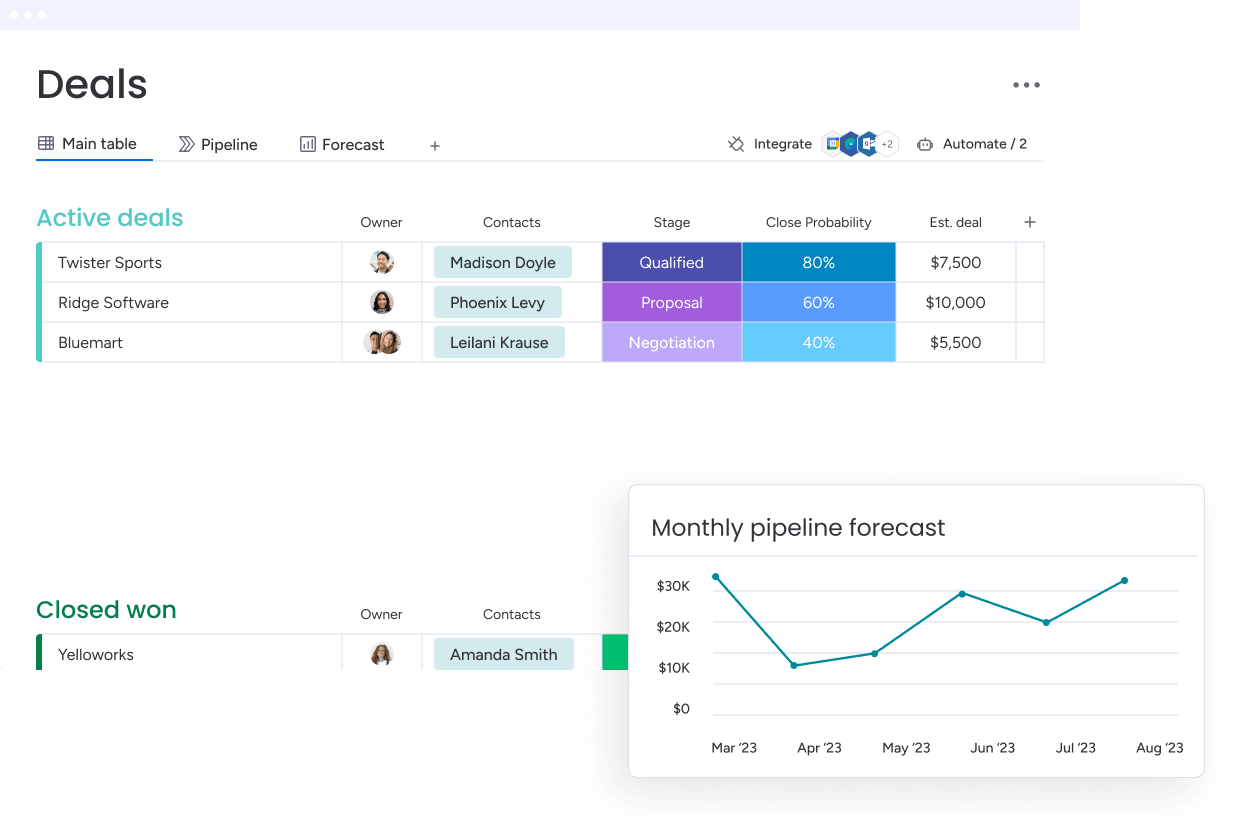
The right sales platform provides visibility into these components through customizable sales dashboards that track pipeline health, conversion rates, and deal progression. Visual workflows make forecast accuracy transparent, so leaders spot risks early and adjust fast.
2. Optimized team performance
Strategic planning improves performance by identifying skill gaps, defining clear roles, and establishing benchmarks. Plans include competency mapping, targeted training programs, and continuous feedback systems that build skills systematically.
Common performance issues strategic planning solves:
- Unclear expectations: team members know exactly what success looks like.
- Misaligned incentives: compensation rewards the right behaviors.
- Inadequate coaching: regular development opportunities improve skills.
Performance standards and sales performance management frameworks eliminate ambiguity, creating conditions for consistent high performance across your entire team.
3. Data-driven resource allocation
Strategic planning helps you distribute budget, personnel, and technology investments by identifying high-ROI opportunities. Organizations allocating resources through strategic sales operations often see significantly improved returns on sales investment compared to those using historical patterns.
The analytical frameworks include:
- Territory potential analysis: identify highest-value geographic areas.
- Customer lifetime value modeling: prioritize segments with greatest long-term value.
- Activity ROI measurement: focus efforts on highest-impact activities.
Every dollar and hour you invest generates better returns.
4. Faster adaptation to market changes
Strategic planning creates agility through scenario planning, competitive monitoring, and systematic reviews. Organizations with a strategic sales strategy respond to market shifts 3x faster, maintaining competitive position during disruptions. This agility is particularly crucial, as a recent McKinsey survey found that 52% of private-sector respondents expect customer demand to increase in the next six months, requiring rapid strategic adjustments.
Planning elements enabling rapid adaptation:
- Competitive frameworks: track competitor moves and positioning shifts.
- Market monitoring: identify emerging trends and behavior changes.
- Contingency planning: prepare response strategies for different scenarios.
5. Aligned compensation and quotas
Strategic planning ensures sales quotas reflect market reality rather than arbitrary targets. Fair, motivating compensation structures drive desired behaviors while maintaining cost-effective revenue generation.
The analytical process includes:
- Territory analysis: evaluate market potential by geography.
- Performance baselines: establish realistic achievement levels.
- Market growth projections: factor in expansion opportunities.
- Capacity planning: match targets to team capabilities.
This creates targets that stretch performance without setting teams up for failure.
6. Improved win rates
Strategic planning improves win rates through better qualification, positioning, and process optimization. Organizations achieve 25% higher win rates by systematically pursuing opportunities through their sales pipeline where they have genuine advantages.
Elements driving win rate improvement:
- Competitive analysis: identify situations with natural advantages.
- Customer segmentation: define and pursue ideal customer profiles.
- Value proposition: articulate differentiated benefits.
- Sales methodology: align selling approaches with buying processes.
7. Competitive edge in digital sales
Strategic planning addresses digital-first selling through technology integration, sales automation, and virtual capabilities. Organizations with digital sales plans achieve 35% higher productivity in remote environments.
Digital planning considerations include:
- CRM optimization: maximize platform effectiveness.
- Sales automation: reduce manual tasks.
- Virtual meeting effectiveness: improve remote engagement.
- Content strategy: support digital selling processes.
These ensure technology supports rather than complicates sales activities.
Try monday CRM
8 essential components of a strategic sales plan
Effective strategic plans require eight interconnected components working together as a comprehensive system. Missing any component weakens the entire plan’s effectiveness.
Each element below builds on the others to create a cohesive framework that guides decision-making and execution.
Component 1: market analysis and customer segmentation
Market analysis forms your planning foundation through comprehensive research into market size, growth trends, and competitive positioning. This analysis informs every subsequent decision from targeting to resource allocation.
Research components for thorough analysis:
- TAM calculation: quantify full market opportunity.
- SAM assessment: identify realistic target market.
- Competitive mapping: understand competitor strengths and weaknesses.
- Customer needs: identify buying criteria and decision processes.
- Behavioral studies: reveal how customers research and purchase.
Effective customer segmentation divides markets into three to five primary segments based on firmographic factors, behavioral characteristics, and specific needs. This enables focused targeting with customized value propositions.
Component 2: revenue goals and sales targets
Strategic planning establishes ambitious yet achievable goals through bottom-up analysis of opportunity, capacity, and performance. Proper goal setting creates motivation while maintaining achievability.
The methodology includes:
- Market potential analysis: assess total opportunity size.
- Capacity calculations: determine realistic team output.
- Trend analysis: factor in historical growth patterns.
- Growth validation: test assumptions against market data.
Annual goals cascade into quarterly targets and monthly milestones, connecting individual quotas to organizational objectives.
Component 3: territory planning and design
Territory planning optimizes coverage through systematic analysis of geographic and demographic factors. Proper design balances opportunity with capacity, ensuring territories contain sufficient potential while remaining manageable.
The design process involves:
- Market mapping: visualize opportunity distribution.
- Opportunity analysis: quantify potential by geography.
- Travel consideration: account for coverage constraints.
- Workload balancing: ensure fair account distribution.
Component 4: quota allocation framework
Quota allocation translates goals into individual targets through systematic analysis. Fair allocation creates motivating targets reflecting market reality while driving appropriate performance.
The methodology includes:
- Territory analysis: evaluate market potential by region.
- Performance baselines: establish realistic achievement levels.
- Growth projections: factor in market expansion.
- Capacity assessment: match targets to individual capabilities.
This ensures quotas challenge without overwhelming.
Component 5: sales team structure and roles
Organizational design optimizes performance through clear role definition and the right management structure. The goal is efficient execution today, with room for growth tomorrow.
Key structural considerations include:
-
Role specialization: separate hunting from farming when it improves focus and efficiency.
-
Management span: balance oversight with autonomy so managers can coach without bottlenecking progress.
-
Support integration: embed sales operations and enablement into daily workflows.
-
Career pathways: create clear progression for top performers to retain talent.
Component 6: sales process and methodology
A defined sales process standardizes execution while staying flexible across customer types. Clear stages and criteria improve consistency and decision-making.
Core process components include:
-
Qualification criteria: define what makes an opportunity worth pursuing.
-
Progression stages: map each step of the customer buying journey.
-
Required deliverables: specify what must be completed to advance deals.
-
Decision frameworks: guide opportunity advancement with objective signals.
These elements keep deals moving forward systematically instead of stalling late in the cycle.
Component 7: compensation and incentive design
Compensation drives behavior. The right balance of fixed and variable pay motivates performance while supporting retention and long-term growth.
Key design considerations include:
-
Base versus commission mix: balance income stability with performance incentives.
-
Accelerators: reward exceptional results above quota.
-
Team versus individual balance: encourage collaboration without diluting accountability.
-
Non-monetary recognition: reinforce performance beyond compensation alone.
Component 8: technology and enablement
Technology supports execution by automating processes, improving visibility, and surfacing insights at the right time.
Essential technology components include:
-
CRM platforms: manage customer data and sales interactions in one place.
-
Automation tools: enforce process consistency and reduce manual work.
-
Analytics systems: provide real-time visibility into performance and trends.
-
Content management: give reps fast access to sales materials that support conversations.
Strategic planning establishes ambitious yet achievable goals through bottom-up analysis of opportunity, capacity, and performance. Proper goal setting creates motivation while maintaining achievability.
How to build a strategic sales plan in 7 steps
Building a comprehensive strategic sales plan typically takes four to six weeks of focused effort. Each step builds on the last, so skipping steps creates gaps that weaken execution. This structured approach helps you drive results while keeping the team aligned and invested.
Step 1: audit your current sales performance
A performance audit establishes your baseline by analyzing results, capabilities, and processes. This shows where to double down and where change is required.
Key audit components include:
-
Revenue trends: identify growth patterns and seasonality.
-
Win and loss analysis: reveal competitive strengths and weaknesses.
-
Sales cycle assessment: uncover bottlenecks and inefficiencies.
-
Territory review: highlight coverage gaps and imbalances.
-
Process measurement: determine which activities actually drive outcomes.
Visual dashboards in monday CRM surface historical performance and trends, making it easier to spot patterns without manual reporting.
Step 2: research your market and competition
Market research adds external context by examining demand, positioning, and customer behavior. These insights guide targeting and differentiation decisions.
Core research activities include:
-
Market sizing: quantify total addressable market and opportunity.
-
Competitive intelligence: analyze competitor strategies and positioning.
-
Customer interviews: understand buying criteria and decision processes.
-
Trend monitoring: identify emerging opportunities and risks.
These insights shape positioning and focus efforts on the highest-value segments.
Step 3: set SMART revenue goals
Goal setting turns market opportunity into concrete targets using capacity and growth analysis. SMART criteria keep goals ambitious but achievable.
The goal-setting process includes:
-
Opportunity quantification: calculate realistic market potential.
-
Capacity calculations: assess how much the team can produce.
-
Assumption validation: test projections against historical performance.
-
Scenario modeling: plan for multiple market conditions.
This approach creates targets that motivate performance without setting teams up to fail.
Step 4: design territories and assign quotas
Territory design optimizes coverage using geographic and demographic data. The right design balances fairness with achievable performance expectations.
Territory design methodology includes:
-
Market mapping: visualize opportunity distribution across regions.
-
Opportunity analysis: quantify potential at the territory level.
-
Workload balancing: ensure territories remain manageable.
-
Quota calculation: base targets on opportunity, not equal splits.
Step 5: structure your sales organization
Sales organization design aligns roles and reporting with market demands. Structure decisions affect productivity, coaching, and long-term scalability.
Key structure considerations include:
-
Role definition: clarify responsibilities and expectations.
-
Management layers: balance oversight with autonomy.
-
Support functions: integrate operations and enablement effectively.
-
Career progression: create clear advancement paths for top performers.
Step 6: document sales processes and playbooks
Process documentation standardizes execution while remaining flexible. Clear playbooks improve consistency, onboarding, and training.
Documentation should include:
-
Process flows: visualize the end-to-end sales journey.
-
Activity checklists: specify required actions at each stage.
-
Qualification criteria: define which opportunities to pursue.
-
Decision frameworks: guide prioritization and resource allocation.
Step 7: plan your rollout and communication
A strong rollout ensures adoption through structured change management and training. Treat implementation as a strategic initiative, not an announcement.
Effective rollout planning includes:
-
Communication timelines: schedule announcements and training phases.
-
Training curriculum: deliver role-specific education.
-
Support resources: provide ongoing guidance and documentation.
-
Feedback mechanisms: adjust quickly based on team input.
If you want, I can tighten this further for scannability or align the language more closely with the earlier components section.
“With monday CRM, we’re finally able to adapt the platform to our needs — not the other way around. It gives us the flexibility to work smarter, cut costs, save time, and scale with confidence.”
Samuel Lobao | Contract Administrator & Special Projects, Strategix
“Now we have a lot less data, but it’s quality data. That change allows us to use AI confidently, without second-guessing the outputs.”
Elizabeth Gerbel | CEO
“Without monday CRM, we’d be chasing updates and fixing errors. Now we’re focused on growing the program — not just keeping up with it."
Quentin Williams | Head of Dropship, Freedom Furniture
“There’s probably about a 70% increase in efficiency in regards to the admin tasks that were removed and automated, which is a huge win for us.“
Kyle Dorman | Department Manager - Operations, Ray White
"monday CRM helps us make sure the right people have immediate visibility into the information they need so we're not wasting time."
Luca Pope | Global Client Solutions Manager at Black Mountain
“In a couple of weeks, all of the team members were using monday CRM fully. The automations and the many integrations, make monday CRM the best CRM in the market right now.”
Nuno Godinho | CIO at Velv
“monday.com provides developmental flexibility, operational efficiency, and data transparency — all in one place. We became a company that moved from chasing data to leading with it.”
Hyunghan Lee | Team Lead, Sandbox Network
"monday.com brought every part of our business into one connected space. The harmony between work management and CRM has become our operating system — giving us the clarity and confidence to scale.”
Jennifer Chinburg | Executive Vice President of Corporate Development & Brand, Chinburg Properties
“We just weren’t getting value from our old CRM. With monday.com, it's a thousand times better. Our sales teams are more informed, more consistent, and far more connected."
James Arnold | Chief Operating Officer, CenversaStrategic sales plan templates you can use today
Templates provide strong starting points for different sales environments, but each requires customization to fit your market and organization. Choose the template that matches your sales motion, then adapt it to reflect your customers, deal cycles, and growth goals.
Enterprise B2B sales plan template
Built for complex sales with long cycles and multiple stakeholders, this template supports 6–18 month deal timelines and committee-based decisions.
Core template components include:
-
Executive summary: provide a high-level overview of the sales strategy.
-
Market analysis: map the competitive landscape and buyer dynamics.
-
Territory design: structure account-based territories around opportunity.
-
Quota allocation: set targets based on market potential.
-
Team structure: define specialized roles for complex sales motions.
-
Process documentation: support multi-stage enterprise selling.
-
Success metrics: track performance across multiple dimensions.
This template supports account-based selling, relationship mapping, and multi-year deal planning.
Mid-market sales plan template
Designed for two to six month sales cycles, this template balances structure with flexibility while maximizing efficiency.
Key focus areas include:
-
Segmentation: define clear and actionable market categories.
-
Territory optimization: balance coverage across accounts and regions.
-
Quota setting: create fair and motivating performance targets.
-
Process standardization: maintain consistency across deals.
-
Performance tracking: monitor the metrics that matter most.
This approach supports scalable growth without overloading limited resources.
Digital-first sales plan template
Optimized for remote and virtual selling, this template supports digital engagement across the full sales cycle.
Essential components include:
-
Online lead generation: integrate digital marketing and inbound demand.
-
Virtual meeting optimization: improve remote sales conversations.
-
Content strategy: enable digital-first selling with the right assets.
-
CRM automation: reduce manual work through technology-driven workflows.
-
Remote management: support distributed team leadership.
This structure enables social selling, video communication, and automated nurturing.
Startup sales plan template
Designed for early-stage teams, this template balances strategic clarity with the flexibility startups need as product-market fit evolves.
Key elements include:
-
Lean planning: focus on essential strategy without over-engineering.
-
Rapid iteration: adjust quickly based on market feedback.
-
Resource optimization: maximize impact with limited budget and headcount.
-
Customer feedback integration: validate assumptions through real demand.
-
Scalable design: build a foundation that supports future growth.
This template works well when data is limited and speed matters most.
Try monday CRM
3 strategic sales plan examples from top performers
Real-world examples demonstrate how planning principles apply in practice, showing connections between decisions and outcomes. These cases illustrate how different organizations adapted strategic planning to their unique challenges and achieved measurable results.
Example 1: SaaS company achieving 150% of target
A mid-market SaaS company exceeded its revenue target by 50% after implementing a structured strategic sales plan. Growth had stalled, and leadership needed clearer focus on where to invest effort.
Key elements included:
-
Segment refinement: identified high-value opportunities within financial services.
-
Territory rebalancing: redistributed coverage based on opportunity concentration.
-
Potential-based quota adjustment: aligned targets with realistic market potential.
-
Stage-specific qualification: improved deal progression and forecast confidence.
-
Technology implementation: increased visibility and execution consistency.
Visual pipelines within platforms like monday CRM gave leaders real-time insight into performance and forecast accuracy.
Example 2: B2B services firm reducing sales cycle by 40%
A professional services firm shortened its sales cycle by removing bottlenecks uncovered through process analysis. Deals were stalling late, despite strong early engagement.
Improvements came from:
-
Process mapping: exposed stall points during proposal and approval stages.
-
Stakeholder analysis: revealed missing decision-makers late in the cycle.
-
MEDDIC qualification: introduced a structured approach to opportunity evaluation.
-
Engagement protocols: ensured consistent stakeholder involvement throughout deals.
This systematic approach turned unpredictable sales cycles into controlled, repeatable processes.
Example 3: tech startup scaling from $1M to $10M ARR
A B2B startup used strategic planning to scale beyond founder-led selling while maintaining performance and speed.
The scaling strategy included:
-
Market expansion evaluation: assessed new segments using clear criteria.
-
Team evolution: shifted from generalists to specialized roles.
-
Process systematization: documented sales methodology to reduce ramp time.
-
Technology coordination: integrated systems to support rapid growth.
This structure enabled scale without sacrificing deal quality or visibility.
Future-proof your sales plan with AI and automation
I and automation enhance strategic sales planning through better analysis, prediction, and optimization. These technologies support human decision-making rather than replace it, improving accuracy and execution speed when applied thoughtfully.
AI-powered sales forecasting
AI increases forecast accuracy by identifying patterns and relationships that are difficult to spot manually. Predictive models evaluate multiple variables at once to improve confidence in revenue projections.
Key AI forecasting applications include:
-
Pipeline scoring: analyze deal characteristics to estimate close probability.
-
Trend identification: detect seasonal and cyclical performance patterns.
-
Impact modeling: incorporate external factors into forecast projections.
-
Scenario automation: generate multiple forecast outcomes automatically.
Automated lead scoring and routing
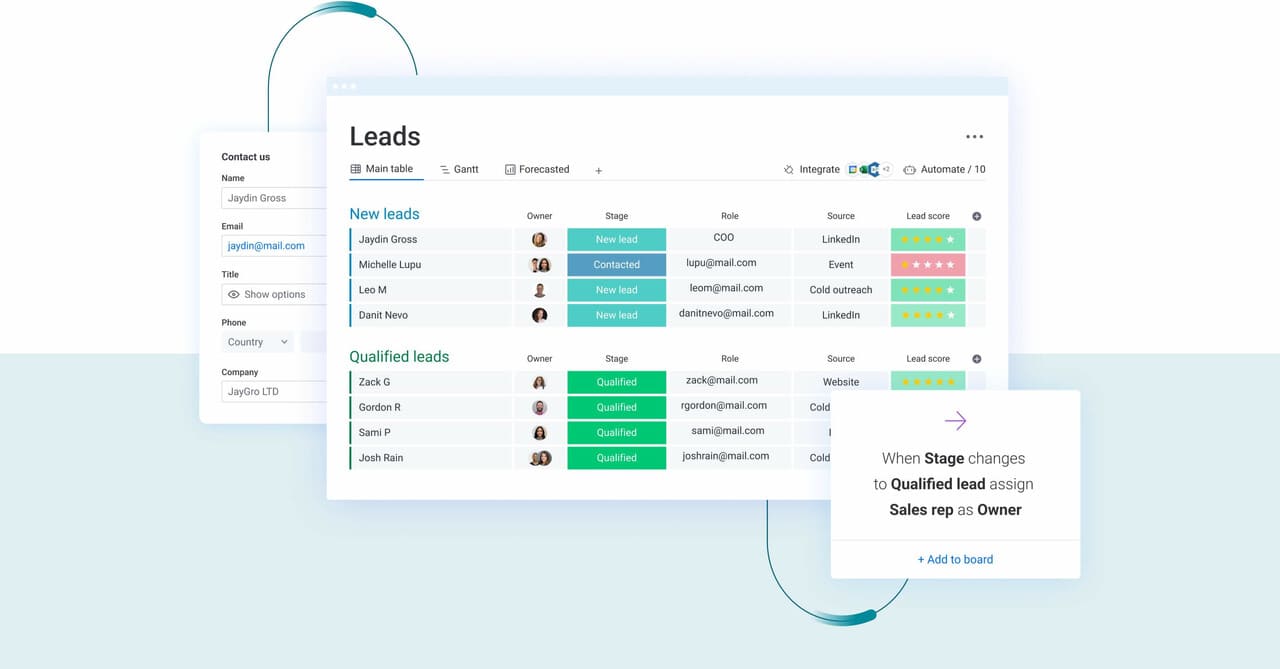
Automation improves lead management by scoring and distributing opportunities consistently. This reduces response times and prevents high-value leads from getting stuck.
Core automation components include:
-
Behavioral scoring: track engagement signals across channels.
-
Demographic qualification: filter leads based on ideal customer profiles.
-
Territory-based routing: assign leads to the right representatives.
-
Workload balancing: distribute opportunities based on capacity.
Adaptive territory optimization
AI enables continuous territory optimization by analyzing opportunity distribution and performance in real time.
Optimization capabilities include:
-
Market analysis: monitor shifts in opportunity and demand.
-
Performance monitoring: evaluate territory effectiveness over time.
-
Workload balancing: adjust assignments as capacity changes.
-
Boundary recommendations: suggest territory updates proactively.
Real-time performance insights
AI-driven insights allow proactive management by surfacing issues as they emerge, paired with clear recommendations.
Insight capabilities include:
-
Trend identification: spot performance patterns early.
-
Anomaly detection: flag unusual activity that needs attention.
-
Coaching recommendations: suggest targeted improvement actions.
-
Predictive alerts: warn of potential risks before they impact results.
Transform your strategic sales plan with monday CRM
Strategic planning challenges require integrated functionality, visual management, and real-time analytics. monday CRM addresses these through visual project management and customizable workflows that translate plans into executable processes. The platform eliminates traditional barriers between planning and execution, creating seamless connections between strategic objectives and daily activities.
| Capability | Traditional CRM limitations | monday CRM advantage |
|---|---|---|
| Visual planning | Static reports separating planning from execution | Visual boards connecting objectives to daily activities |
| Customization | Complex configuration requiring IT resources | No-code customization for rapid adaptation |
| Real-time monitoring | Delayed periodic reports | Live dashboards with instant updates |
| Collaboration | Limited cross-team visibility | Transparent workflows aligning stakeholders |
| Implementation | Months-long technical implementations | Days to operational with intuitive setup |
Build visual sales pipelines in minutes
Visual interfaces make it easy to create sales pipelines without technical setup. Drag-and-drop configuration lets teams match pipelines to their actual selling process.
Key capabilities include:
-
Customizable stages: align pipeline steps with the customer journey.
-
Color-coded indicators: track deal status at a glance.
-
Collaborative features: support cross-functional planning and input.
-
Shared boards: maintain transparency across the sales organization.
Automate territory and quota management
Automation reduces administrative work while improving accuracy and accountability. Clear assignment logic shows exactly who owns which accounts and targets.
Management features include:
-
Territory assignment tracking: maintain clear account ownership.
-
Quota monitoring: track progress against targets in real time.
-
Custom metrics: monitor performance indicators that matter most.
-
Automated alerts: notify managers when performance deviates.
Track KPIs with customizable dashboards
Dashboards translate strategic goals into measurable indicators. Teams can define and track KPIs that reflect their specific sales objectives.
Dashboard features include:
-
Custom metrics: define success indicators by role or team.
-
Visual charts: display performance through flexible formats.
-
Real-time updates: refresh automatically as data changes.
-
Stakeholder sharing: provide visibility without full CRM access.
Adapt your strategy with real-time data
Real-time analysis supports agile planning by monitoring execution continuously and highlighting changes early.
Adaptation capabilities include:
-
Performance monitoring: track plan execution as it happens.
-
Trend analysis: identify emerging patterns quickly.
-
Collaborative planning: enable cross-functional adjustments.
-
Rapid modification: update strategies as conditions change.
Frequently asked questions
How often should you update a strategic sales plan?
To know how often you should update a strategic sales plan, best practice is to conduct comprehensive annual reviews, with quarterly assessments and monthly monitoring. Annual reviews examine fundamental assumptions about market conditions and capabilities. Quarterly assessments evaluate progress and make tactical adjustments, while monthly monitoring tracks KPIs and pipeline health.
What's the ideal length for a sales plan document?
The ideal length for a strategic sales plan document is 15-25 pages, which allows for comprehensive coverage while maintaining readability. Include a 2-page executive summary, 8-12 pages of strategic content covering market analysis and goals, 5-8 pages of operational details, and appendices containing detailed analysis and templates.
How do you align sales planning with marketing strategies?
Sales and marketing alignment requires integrated planning coordinating customer definitions, messaging, lead generation, and metrics. Use shared ideal customer profiles, coordinated messaging frameworks, integrated lead management processes, and joint performance metrics to ensure both teams work toward common goals.
Can AI replace traditional sales planning methods?
AI enhances rather than replaces strategic planning by providing data analysis and predictive insights while human judgment remains essential for strategic decisions. The optimal approach combines AI capabilities for data analysis with human interpretation and strategic decision-making.
What metrics best measure sales plan effectiveness?
Key metrics include revenue achievement versus targets, forecast accuracy, sales cycle length, win rates, and quota attainment distribution. Combine leading indicators that predict future results with lagging indicators measuring actual outcomes for comprehensive measurement.
How do you get buy-in for a new strategic sales plan?
Building buy-in requires involving stakeholders in planning, communicating rationale for changes, demonstrating expected benefits, and providing adequate training. Collaborative planning gives stakeholders voice in decisions affecting them, creating ownership and commitment to execution.