


Many revenue teams face a “feast or famine” cycle, closing strong quarters only to find next month’s pipeline empty. This uncertainty stems from relying on organic discovery rather than a proactive approach to sales lead generation. A systematic process replaces this chaos with a dependable engine for consistent opportunities.
A structured framework identifies and attracts customers who align with your product, replacing guesswork with data-driven strategies. By focusing on high-value prospects, sales leaders can base growth decisions on reliable forecasts. This shift ensures your team spends time only on the most promising accounts.
The following article details the 2026 framework for building a scalable revenue engine through ideal customer profiling and AI-powered scoring. It covers the essential steps to automate capture and nurture prospects toward a final purchase. Ultimately, this text explains how to build a predictable system for long-term success.
Key takeaways
- Build predictable revenue with systematic lead generation: create repeatable processes for finding and qualifying prospects so you know exactly where your next customers will come from instead of chasing random opportunities.
- Focus on quality over quantity by defining your ideal customer profile: analyze your best existing customers to identify specific company sizes, industries, and pain points that predict success with your solution.
- Combine inbound and outbound strategies for maximum impact: use content marketing to attract prospects actively searching for solutions while running targeted outreach to create immediate pipeline opportunities.
- Automate lead scoring and qualification to prioritize high-value prospects: let AI analyze behavioral signals and demographic data to identify which leads deserve immediate sales attention versus continued nurturing.
- Improve handoffs and eliminate bottlenecks with integrated systems: gain complete lead visibility and use automated workflows that prevent prospects from falling through cracks during sales transitions with solutions like monday CRM
What is sales lead generation?
.jpg)
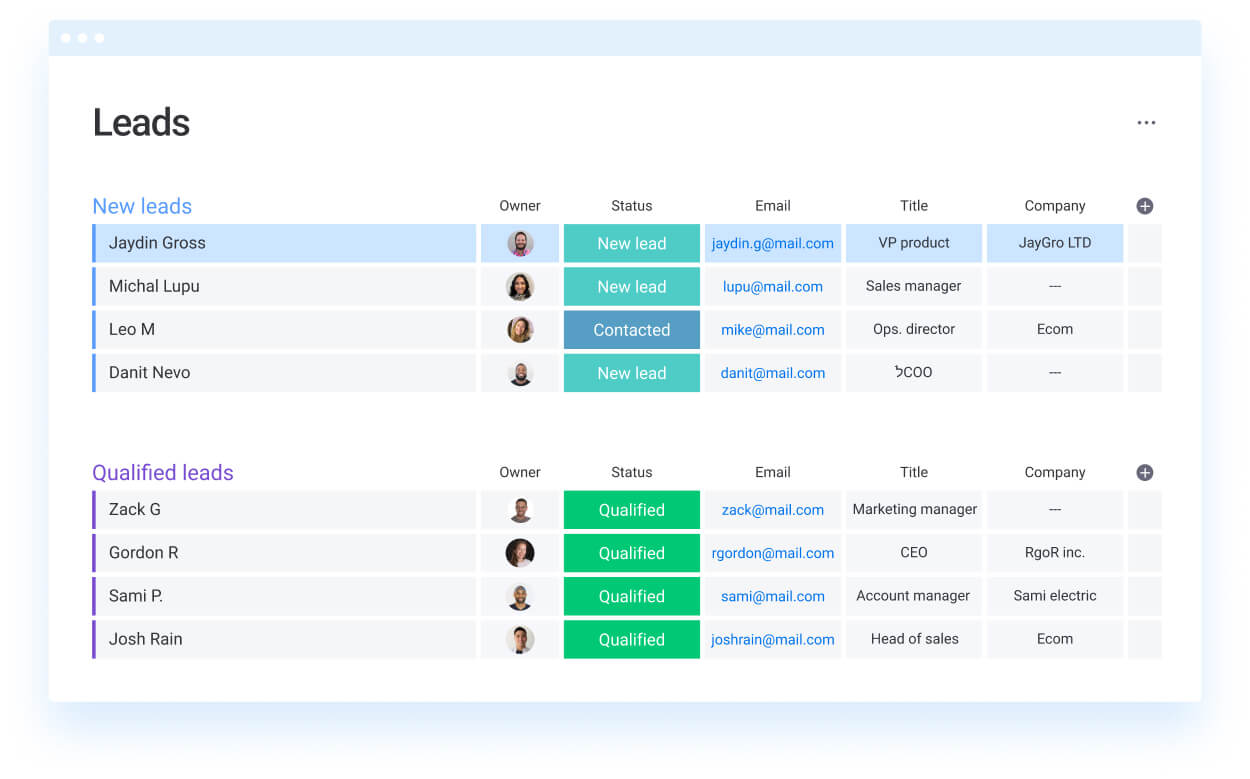
Sales lead generation is the process of identifying and attracting potential customers who show interest in your product or service. This means finding people who match your ideal customer profile, capturing their information, and nurturing them until they’re ready to buy.
This approach involves targeting the right prospects in the right channels. Rather than pursuing broad, unfocused outreach, you position your business where potential customers are already active, then provide them with compelling reasons to engage with your solutions.
Without a solid lead generation process, sales teams waste time chasing unqualified prospects. They operate without knowing if they’ll hit targets next quarter. A systematic approach transforms this chaos into predictable revenue growth, where teams know exactly where their next customers will come from.
The foundation of predictable revenue growth
Predictable revenue begins with steady lead flow. Set up repeatable processes for finding and qualifying prospects, and suddenly your forecasts actually mean something. Now you’re making hiring decisions, market expansions, and growth investments based on reliable data and accurate forecasts.
Furthermore, pipeline predictability changes how you allocate resources. Sales leaders can calculate exactly how many leads they need at each stage to hit quarterly targets. Instead of spreading budget thin across unproven tactics, you can double down on channels that deliver the highest return.
The most significant impact occurs when improvements compound over time. Reducing response times by even a minute, refining qualification criteria, or streamlining handoffs between teams can create substantial ripple effects throughout your sales operation. Incremental optimizations accumulate to drive meaningful results.
Inbound vs outbound lead generation strategies
Choosing between inbound and outbound approaches shapes your entire B2B sales strategy; therefore, understanding which approach fits your business context helps you invest resources wisely and maximize your return on investment.
Inbound lead generation attracts prospects through valuable content and digital presence (prospects find you while actively searching for solutions), while outbound involves proactive outreach to prospects who might not know about your solution yet.
| Strategy type | Primary methods | Timeline to results | Cost considerations | Best suited for |
|---|---|---|---|---|
| Inbound | Content marketing, SEO, social media, webinars | three to six months to build momentum | Lower ongoing costs after initial investment | Companies with strong content resources and longer sales cycles |
| Outbound | Cold calling, email campaigns, direct mail, events | Immediate results possible | Higher per-lead costs with sales team time | Businesses targeting specific accounts or needing quick pipeline fill |
| Hybrid | Combined inbound content with targeted outreach | one to three months for initial results | Balanced investment across channels | Most B2B companies seeking sustainable growth |
Most successful businesses combine both approaches. Inbound builds long-term authority while outbound creates immediate opportunities. The key is finding the right mix for your specific situation.
Understanding your lead types: MQL, SQL, and PQL
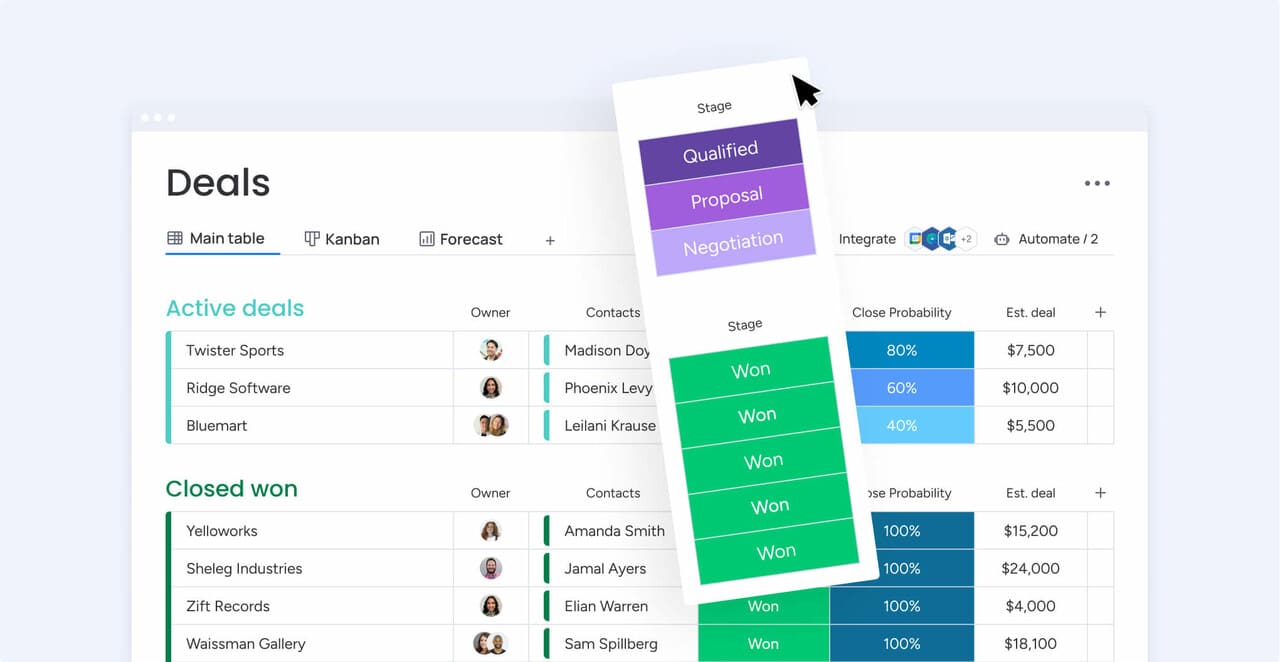
Not all leads deserve immediate sales outreach. By treating each lead type differently, you focus selling time on high-intent prospects and nurture others until they are ready to engage. Know exactly what makes a lead Marketing Qualified, Sales Qualified, or Product Qualified, and you’ll nail the timing of every conversation.
Marketing qualified leads (MQL)
MQLs have shown interest through marketing activities but aren’t ready for direct sales contact yet:
- Engagement indicators: downloaded whitepapers, attended webinars, or visited your pricing page multiple times.
- Scoring approach: combine demographic fit with engagement signals to identify higher intent prospects.
- Next steps: provide additional educational content before initiating sales conversations.
Sales qualified leads (SQL)
SQLs meet specific criteria for direct sales engagement and demonstrate clear buying signals:
- Qualification criteria: budget authority, defined timelines, specific pain points your solution addresses, and decision-making power.
- Buying signals: requesting demos, asking detailed pricing questions, or inquiring about implementation timelines.
- Sales readiness: warrant immediate sales attention and personalized engagement.
Product qualified leads (PQL)
PQLs have experienced value through direct product interaction and hands-on usage:
- Product engagement: used free trials, activated key features, invited team members, or reached usage limits on free plans.
- Validation proof: hands-on experience confirms your product solves their specific problems.
- Conversion advantage: convert at higher rates because they’ve already proven product-solution fit.
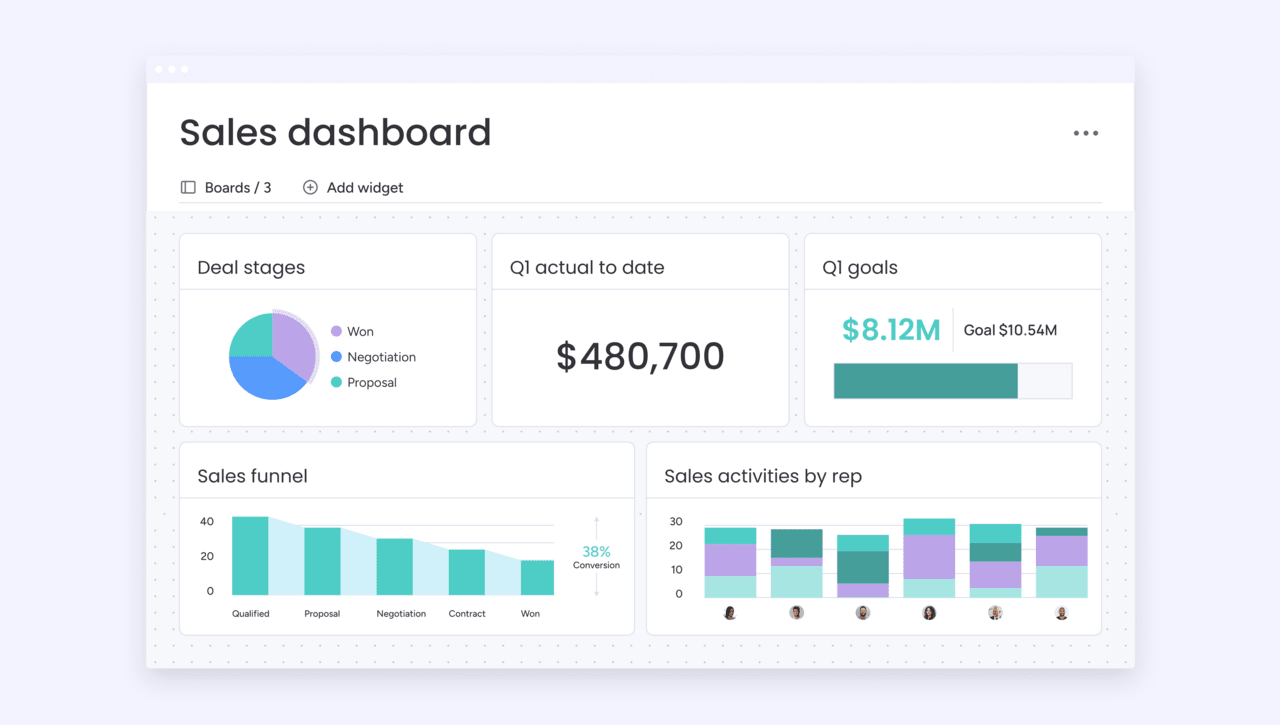
7 steps to build your sales lead generation process
Creating a repeatable lead management process transforms random tactics into reliable revenue. Each of the following steps builds on the previous one to compose a comprehensive process that identifies, attracts, qualifies, and converts prospects efficiently. This systematic approach ensures consistent results while providing the foundation for scalable growth.
Step 1: define your ideal customer profile
Your Ideal Customer Profile (ICP) describes the company or individual most likely to succeed with your solution. Begin by analyzing your best existing customers: those with the highest lifetime value, fastest implementation times, and strongest product adoption.
Defining your ICP is the most critical step for focusing your resources effectively. By understanding these key elements, you can direct your sales and marketing efforts toward prospects who are most likely to convert and thrive as long-term customers:
- Company size and revenue: employee count ranges and annual revenue brackets that indicate budget capacity.
- Industry and vertical: specific sectors where your solution delivers the most value.
- Geographic location: regional considerations including time zones and market maturity.
- Technology stack: current platforms they use and integration requirements.
- Pain points: specific problems your solution solves and business outcomes they seek.
- Decision-making process: who influences purchases, approves budgets, and typical committee size.
Teams using advanced platforms like monday CRM can track and refine ICP data over time through customer interaction analysis, revealing which characteristics correlate most strongly with successful outcomes.
Step 2: set up multi-channel lead capture
Set up multi-channel lead capture to meet prospects where they live and attract diverse lead types through their preferred communication methods.
Creating comprehensive touchpoints maximizes your reach while maintaining consistent messaging:
- Website forms: optimized conversion points with clear value propositions and minimal form fields.
- Social media: LinkedIn outreach targeting specific roles, Twitter engagement with relevant discussions.
- Content marketing: blog posts optimized for search terms, whitepapers addressing complex challenges.
- Email campaigns: targeted messaging based on segments, personalized outreach referencing specific challenges.
- Events and webinars: virtual presentations demonstrating expertise, in-person networking at conferences.
- Referral programs: structured processes leveraging customer networks with appropriate incentives.
Step 3: launch targeted outreach campaigns
Launch targeted outreach by combining research-based personalization with multi-touch sequences to turn cold contacts into warm conversations. Use LinkedIn profiles, company news, and industry trends to understand prospect challenges and tailor messaging that resonates.
These sales prospecting strategies transform cold contacts into warm conversations:
- Research and personalization: review prospect profiles and company context before reaching out.
- Multi-touch sequences: combine six to eight touchpoints across email, phone, and social over two to three weeks.
- Value-first approach: lead with insights and solutions rather than product features.
- Timing optimization: engage when prospects are most likely to respond based on industry patterns.
- A/B testing: continuously improve by testing subject lines, messaging, and call-to-actions.
Step 4: score and qualify leads automatically
Implement automated lead scoring to identify which prospects are most likely to buy and ensure your sales team stops chasing gut feelings. Configure your system to look at the same demographic and behavioral factors for every lead so you can focus resources on prospects who actually matter.
Effective scoring models combine multiple data points:
- Demographic scoring: company size matching your ICP, industry alignment, role seniority.
- Behavioral scoring: website activity, email engagement, content consumption patterns.
- Engagement scoring: response rates, meeting attendance, question sophistication.
- Negative scoring: factors decreasing quality like student emails or incompatible industries.
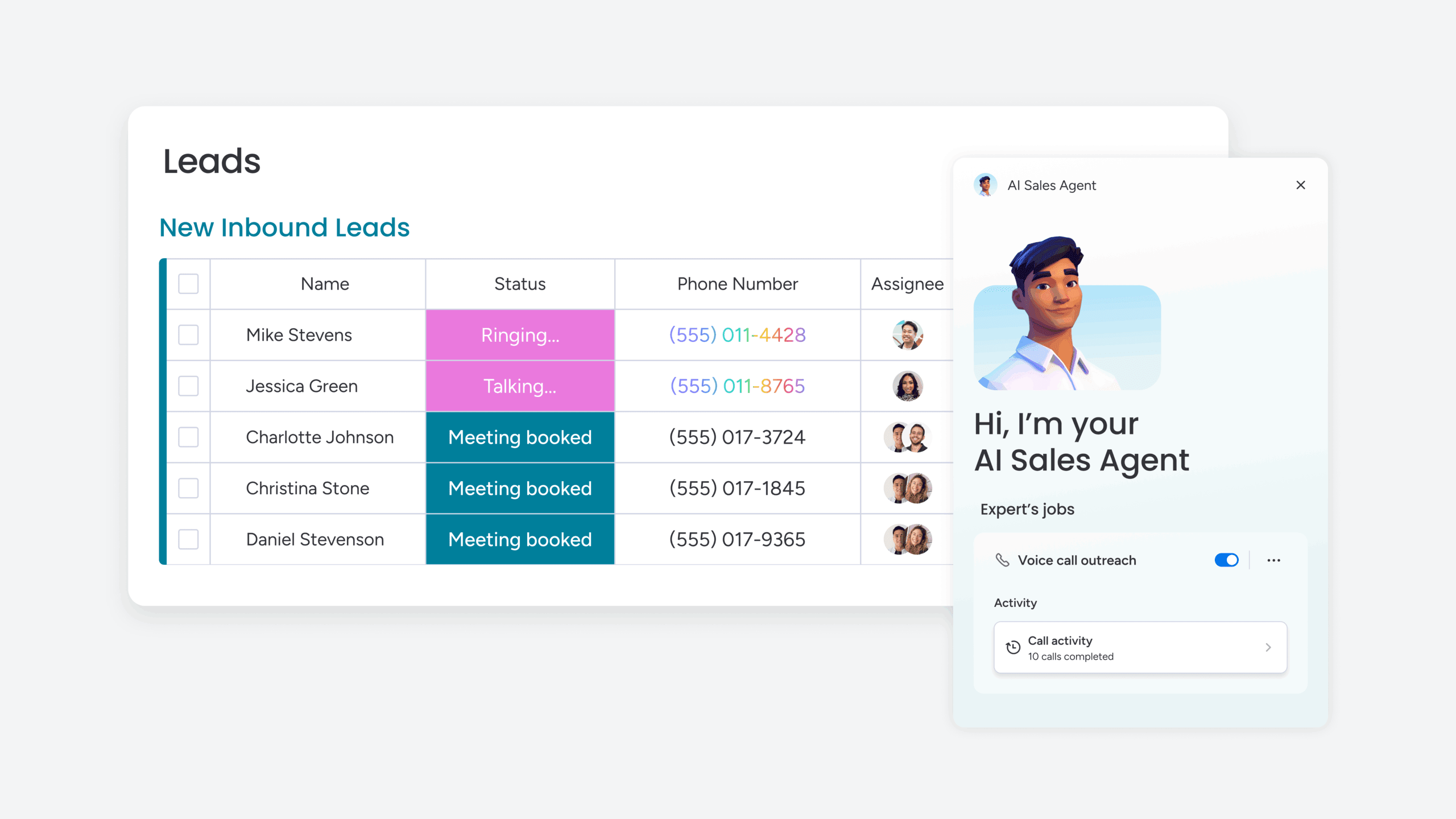
AI-powered platforms like monday CRM analyze conversion patterns to continuously improve scoring accuracy, automatically updating scores based on real-time activities and alerting teams when prospects cross qualification thresholds.
Step 5: nurture leads with personalized automation
Lead nurturing maintains engagement with prospects who aren’t ready to buy immediately. Providing value through educational content keeps your solution top-of-mind without pressuring prospects.
Strategic nurturing approaches build trust while moving prospects forward:
- Segmented sequences: tailor content based on industry challenges and role priorities.
- Educational delivery: share relevant case studies and best practice guides.
- Behavioral triggers: automate responses to specific actions like content downloads.
- Progressive profiling: gradually collect additional information through each interaction.
- Multi-channel nurturing: combine email with social engagement and retargeting.
Step 6: execute seamless sales handoffs
Execute smooth transitions from marketing to sales to maintain prospect momentum. Sharing complete context allows sales teams to pick up the conversation seamlessly.
Successful handoff practices prevent opportunities from falling through cracks:
- Defined criteria: document standards for sales-ready leads that both teams reference.
- Complete context: share interaction history including content consumed and questions asked.
- Timely follow-up: contact leads within five minutes when possible, 24 hours maximum.
- Feedback loops: sales input on lead quality helps marketing refine criteria.
- Shared visibility: both teams access the same information through integrated systems.
Step 7: measure, learn, and optimize
Lead generation requires continuous measurement and improvement. Regular analysis reveals what’s working and what needs adjustment.
Focus optimization efforts on these key areas:
- Conversion analysis: calculate rates between each stage to identify bottlenecks.
- Channel performance: track quality metrics beyond volume to reallocate budget effectively.
- Message effectiveness: test and refine outreach content through controlled experiments.
- Process efficiency: identify activities automation could handle to free team capacity.
- ROI measurement: calculate cost per lead and customer acquisition across channels.
AI-powered lead generation strategies that drive results
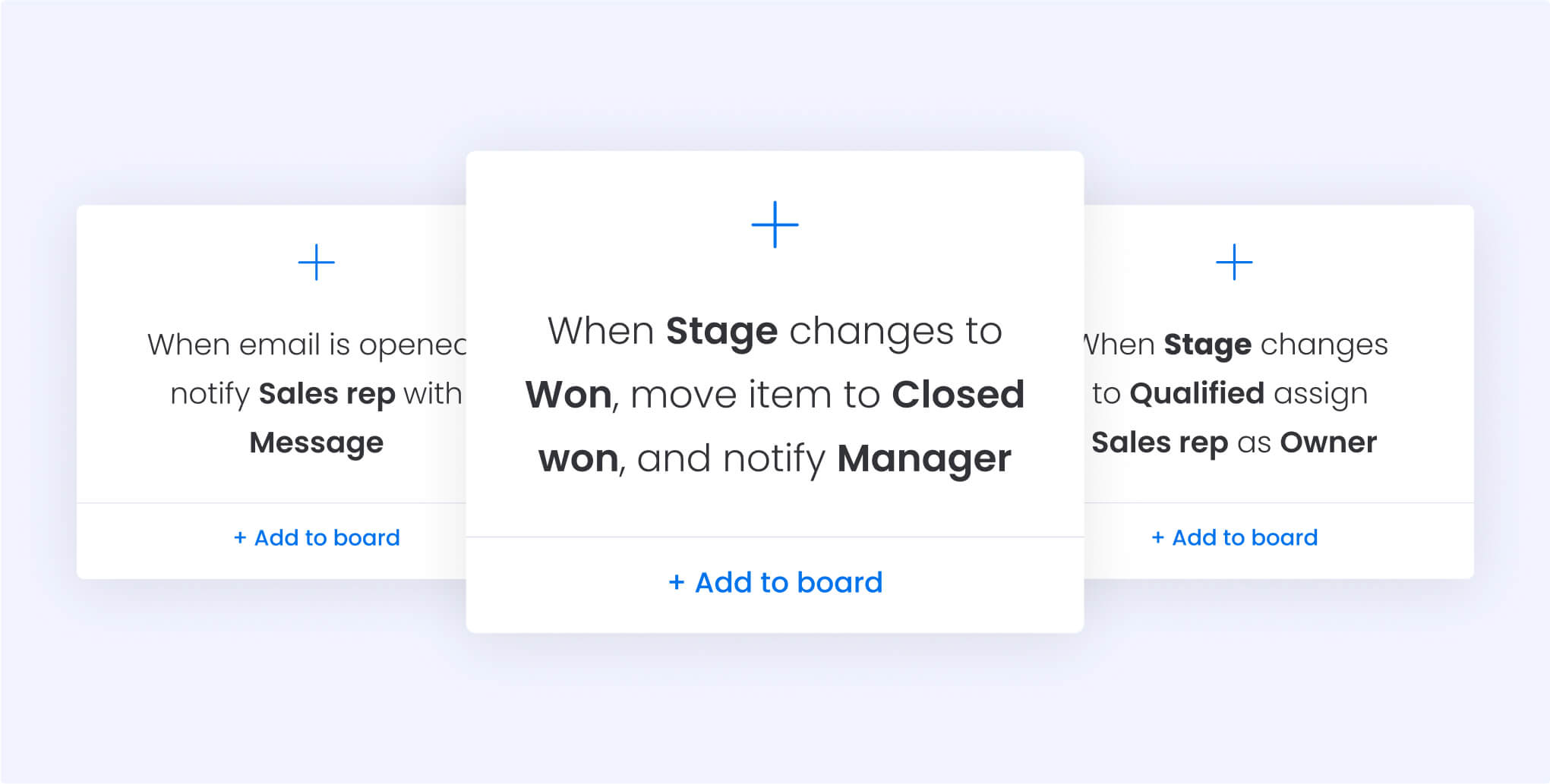
AI transforms lead generation by automating repetitive tasks and identifying patterns that enable teams to focus on strategic initiatives. Rather than replacing relationship building, AI makes it scalable and more efficient.
Leading sales teams leverage AI to handle high-volume activities such as lead scoring and data analysis, allowing them to dedicate their time to meaningful prospect conversations that drive conversions.
Automated lead scoring and prioritization
AI analyzes historical data to identify conversion patterns humans might miss. Machine learning processes demographic information, behavioral signals, and contextual factors simultaneously to create more accurate scoring models.
AI scoring advantages that transform team prioritization:
- Pattern recognition: identify subtle indicators like page visit sequences that predict conversion.
- Real-time updates: continuously adjust scores based on new behaviors.
- Predictive insights: forecast which leads will convert and optimal engagement timing.
- Bias reduction: remove assumptions by relying on data patterns.
Revenue teams using modern solutions like monday CRM leverage AI to automatically prioritize leads and suggest optimal engagement timing based on similar prospect patterns.
Social selling for higher response rates
Social selling builds familiarity before formal sales approaches. LinkedIn serves as the primary B2B platform, though Twitter and industry forums play supporting roles.
Effective social selling strategies that create authentic connections:
- Profile optimization: create professional profiles with specific value propositions.
- Content sharing: post valuable insights demonstrating expertise without promotion.
- Engagement tactics: comment meaningfully on prospect posts and industry discussions.
- Relationship building: develop connections through shared interests and challenges.
- Social listening: monitor activity to identify pain points and optimal outreach timing.
Digital workers for 24/7 lead qualification
Digital Workers handle specific lead generation processes continuously. These AI specialists qualify leads, schedule meetings, and provide prospect research around the clock.
Digital Worker capabilities that extend team capacity:
- Lead qualification: ask qualifying questions and score responses automatically.
- Meeting scheduling: coordinate calendars and book appointments without human involvement.
- Prospect research: gather company information from public databases.
- Follow-up management: send timely responses and nurturing sequences.
- Data enrichment: update records with current information from multiple sources.
How to solve key lead generation roadblocks?
Well-designed processes still face obstacles that prevent successful implementation. Recognizing these challenges and applying specific solutions helps teams maintain momentum and achieve consistent results. The most successful organizations anticipate these roadblocks and build solutions directly into their processes.
Aligning sales and marketing teams
Bridging the gap between departments prevents lost opportunities and wasted budget caused by disconnected goals. These strategies create a cohesive revenue engine where both teams work toward shared outcomes rather than operating in silos:
- Shared definitions: agree on qualification criteria through documented service level agreements.
- Common metrics: focus on revenue outcomes rather than activity metrics.
- Regular communication: weekly meetings discussing lead quality and campaign strategies.
- Integrated technology: use shared systems for complete lead visibility.
- Joint planning: collaborate on campaign development and target account selection.
Eliminating manual process bottlenecks
Identifying repetitive tasks like data entry and follow-up scheduling reveals where productivity frequently slows down and team output is reduced. Leveraging lead generation automation allows staff to move away from administrative management and focus on high-value strategic activities:
- Lead data entry: automatically capture information from forms and email signatures.
- Follow-up sequences: send personalized messages based on prospect behavior.
- Meeting scheduling: use scheduling links that check availability automatically.
- Lead scoring updates: continuously adjust scores based on new activities.
- Report generation: create dashboards providing real-time visibility.
Scaling quality lead generation
Standardizing workflows ensures that an increase in lead volume does not result in a corresponding decrease in conversion standards. The following strategies enable sustainable growth while maintaining core performance requirements as the business expands:
- Process standardization: create repeatable workflows that maintain consistency across all lead generation activities.
- Technology leverage: use automation and AI to handle increased volume without proportional resource increases.
- Team specialization: assign specific roles for generation, qualification, and nurturing to build deep expertise.
- Quality controls: implement checks ensuring standards remain high as volume increases.
- Continuous training: keep teams updated on best practices and new platforms as the market evolves.
Building your lead generation engine for long-term success
Focus on building sustainable systems for long-term success. Real lead generation creates a reliable engine that keeps delivering qualified opportunities as you grow. The winners combine human judgment (knowing exactly what makes a good customer) with tech automation (handling the repetitive stuff) to create revenue you can actually count on before it arrives.
Start with the fundamentals: define your ideal customer, set up multi-channel capture, and implement basic scoring. Then layer on AI-powered insights and automation to scale without losing the personal touch that converts prospects into customers.
How does monday CRM power your lead generation engine?
Revenue teams using monday CRM discover that integrated lead management transforms scattered activities into cohesive strategies. When your entire team works from the same data and follows consistent processes, every interaction moves prospects closer to purchase.
Your lead generation process needs infrastructure to thrive, and monday CRM provides exactly that:
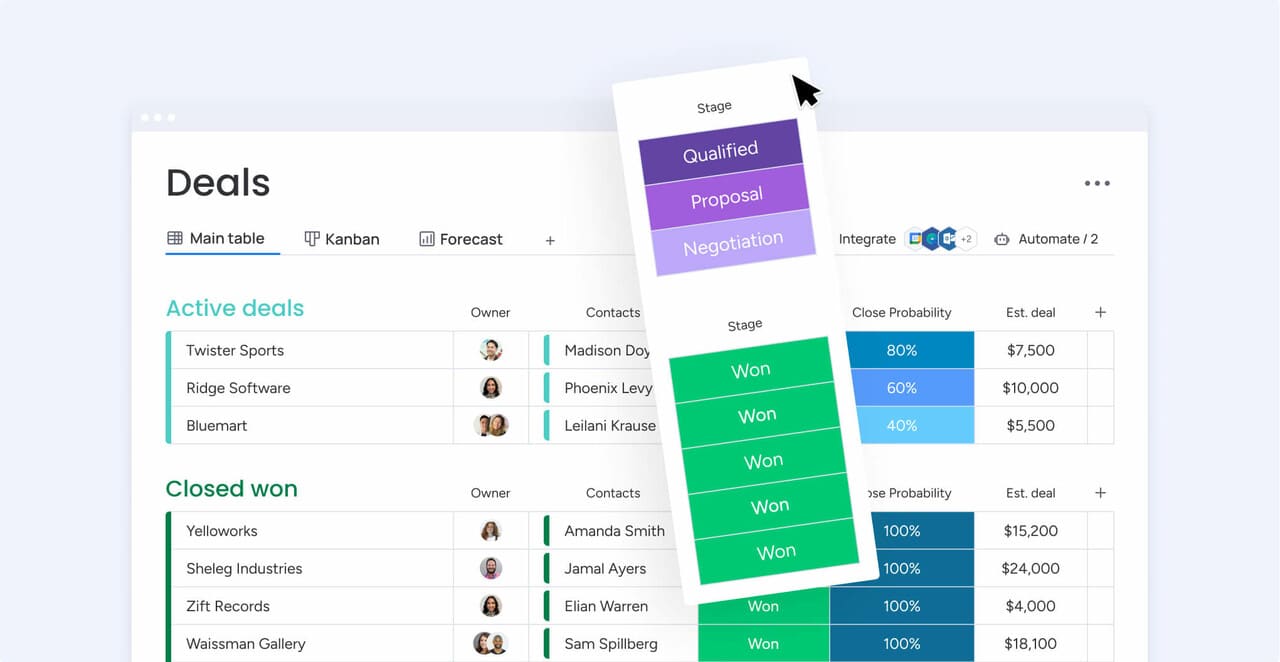
- Centralized lead visibility: track every prospect interaction in one place, from first website visit to closed deal.
- Automated workflows: set up triggers that automatically score leads, assign follow-up tasks, and move prospects through your pipeline.
- AI-powered insights: let machine learning analyze conversion patterns and surface the leads most likely to close.
- Seamless team collaboration: break down silos between marketing and sales with shared dashboards and real-time updates.
- Customizable pipelines: build lead stages that match your actual sales process, not generic templates.
- Real-time reporting: monitor conversion rates, channel performance, and pipeline health through visual dashboards.
Getting started with your lead generation transformation
Transitioning from reactive prospecting to a systematic engine begins by applying the core steps of identification, qualification, and measurement. This shift allows businesses to move beyond hope-based forecasting and toward a model where revenue is a predictable outcome of well-managed processes.
Using purpose-built platforms streamlines this change, providing the necessary automation to handle administrative burdens while the team focuses on strategic relationship building. Ultimately, the move toward a structured system is what separates organizations that merely survive from those that dominate their market.
The content in this article is provided for informational purposes only and, to the best of monday.com’s knowledge, the information provided in this article is accurate and up-to-date at the time of publication. That said, monday.com encourages readers to verify all information directly.
FAQs
What is the five minute rule for leads?
The five minute rule states that sales teams should contact new leads within five minutes of their initial inquiry. Research shows leads contacted within this timeframe are 21 times more likely to qualify than those contacted after 30 minutes.
How long does it take to implement a lead generation process?
Implementing a basic lead generation process typically takes two to four weeks. You can start generating leads within the first week by setting up capture forms and basic outreach, while refining qualification criteria and nurturing sequences over the following weeks.
What is the difference between lead generation and demand generation?
Lead generation captures contact information from prospects showing interest in your solution. Demand generation creates awareness and interest among potential buyers who may not yet know they need your product.
How many touchpoints does it take to convert a B2B lead?
B2B lead conversion typically requires six to eight touchpoints across multiple channels. The key is providing value in each interaction rather than simply increasing contact frequency.
Can small businesses compete with enterprise lead generation?
Small businesses can effectively compete by focusing on niche markets and providing personalized service. Automation platforms level the playing field, letting smaller teams execute sophisticated strategies.
What's the average conversion rate for qualified leads?
Qualified leads typically convert to customers at rates between 10-30%. Higher rates usually indicate effective qualification processes and strong sales execution, while lower rates suggest the need for improved nurturing or qualification standards.

 Get started