


Many sales teams struggle to hit quota despite significant effort. Reps often spend more time on manual data entry and chasing low-quality leads than on advancing deals, while pipelines move slower than expected. These operational challenges make it difficult to pinpoint performance gaps and take effective action.
Sales growth strategies provide a structured approach to turn these challenges into predictable revenue outcomes. By aligning people, processes, and technology, they help accelerate deal velocity, reduce inefficiencies, and provide clear visibility into team performance and pipeline health.
This article covers seven actionable sales growth strategies that can be implemented this quarter. It explains how to identify the strategies that address current performance gaps, build an implementation roadmap that fits available resources, and measure success using meaningful metrics. Each approach emphasizes sustainable, measurable results that deliver immediate impact while laying the foundation for long-term growth.
Key takeaways
- Customer retention drives immediate revenue impact: focusing on existing accounts is faster and more cost-effective than acquiring new customers.
- Data and visibility are critical for decision-making: real-time insights into pipeline health, deal progression, and team activity enable proactive course corrections.
- Automation scales growth without adding complexity: automating lead routing, follow-ups, and data entry frees reps to focus on high-value interactions.
- Start with one strategy and execute fully: sequential implementation ensures resources are effectively used and results are measurable.
- Centralized platforms like monday CRM support coordination: consolidating deals, accounts, and activities in a single system improves team alignment and process efficiency.
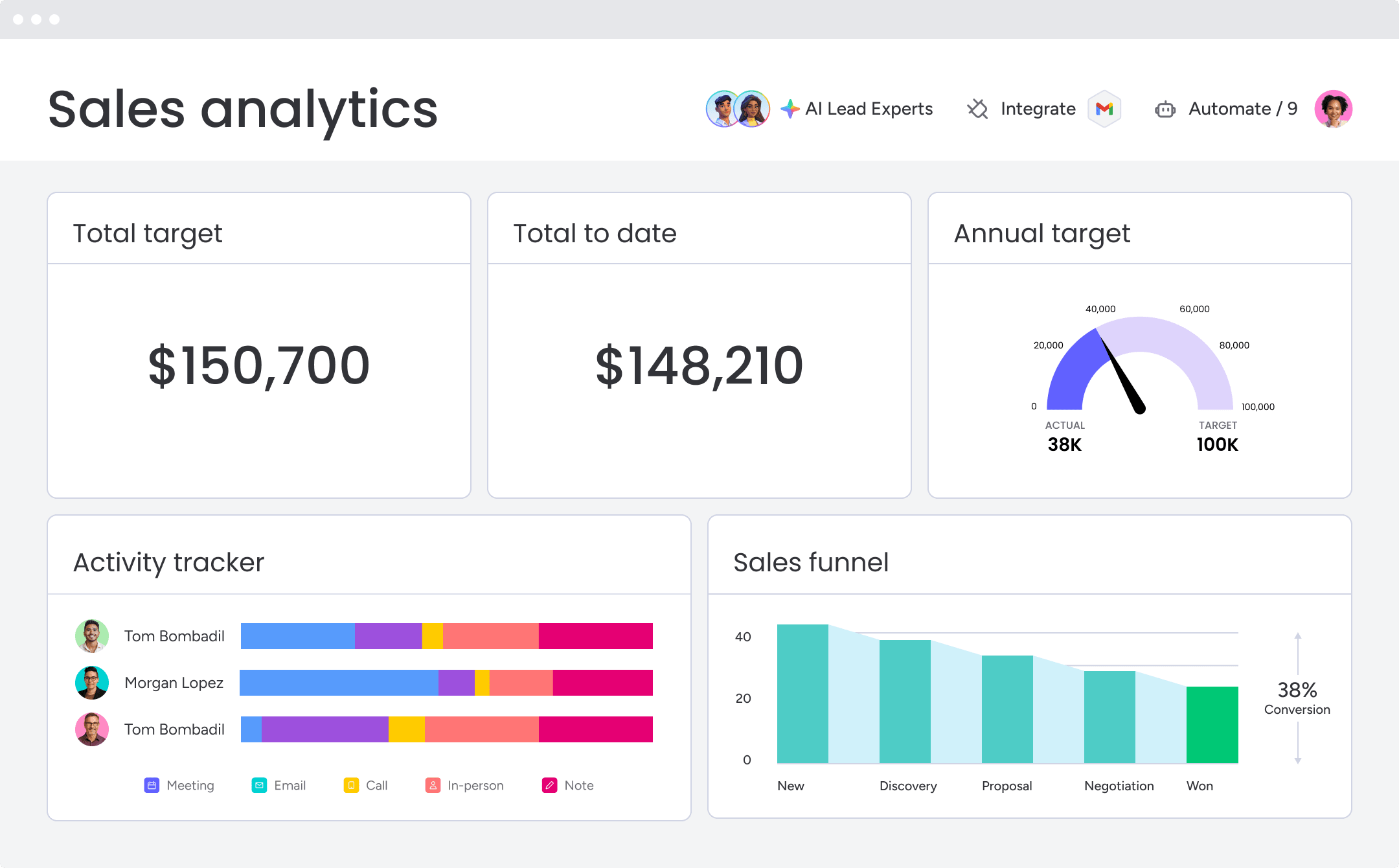
Sales growth strategies are systematic approaches that revenue teams use to improve sales performance, expand market share, and accelerate deal velocity. They connect teams, workflows, and technology to build a revenue engine that scales as the organization grows.
These strategies turn disorganization into coordination — helping teams focus on revenue rather than running in circles. They sit above your tech stack as the guiding “how” that determines whether CRM investments deliver real ROI. With a clear strategy, teams can transform data into actionable insights that drive deal closures.
The most effective strategies address multiple revenue challenges at once:
- Revenue acceleration: shorten sales cycles and increase deal sizes by reducing friction in the buying process. A January 2026 McKinsey survey of M&A practitioners found that generative AI users achieved roughly 20% average cost reduction, while 40% reported 30–50% faster deal cycles.
- Process optimization: remove manual work so teams can focus on relationship building and strategic account planning.
- Data-driven decisions: rely on real-time insights rather than gut feelings to identify effective approaches.
- Cross-functional alignment: connect sales with marketing and customer success to prevent handoff failures.
Why sales growth strategies matter now
Mid-market teams face pressure from both ends. They need the forecasting confidence of large enterprises without equivalent budgets or headcount. Leaders must report reliably while managing sellers who may not execute consistently.
Without visibility into pipeline health, deal progression, and team activity, predicting next quarter’s revenue is difficult. That gap creates a domino effect:
- Difficulty allocating resources
- Inability to course-correct in time
- Constant pressure to explain performance variations to leadership
Sales growth strategies provide the structure to build dependable revenue. They transform individual wins into repeatable team playbooks and backward-looking reports into forward-looking signals.
Quick wins vs sustainable growth
Quick wins such as discount campaigns or outbound pushes spike revenue temporarily but do not create lasting value. They consume resources, cannot be reliably repeated, and train customers to delay purchases.
| Quick wins | Sustainable growth strategies |
|---|---|
| Immediate revenue that disappears when campaign ends | Long-term acceleration that compounds as processes mature |
| Resource-intensive execution requiring constant oversight | Process-driven efficiency with minimal management |
| Difficult to repeat consistently across quarters | Scalable approaches that work in any market condition |
| Limited visibility into actual drivers | Data-driven insights for continuous optimization |
| Creates dependency on discounting | Builds capabilities that increase over time |
The strategies here deliver results this quarter and build momentum that compounds over time.
7 sales growth strategies that actually move revenue
These strategies are designed for mid-market teams seeking results without massive budgets or headcount. Each can be implemented this quarter, with benefits compounding over time.
Strategy 1: prioritize customer retention to maximize ROI
Customer retention is the fastest, most cost-effective way to grow revenue. McKinsey analysis of the medtech industry found that a 10–20% increase in customer satisfaction correlates with a 32% revenue increase and up to a 50% reduction in service costs. Existing customers are cheaper to sell to because they already trust your product and recognize its value.
Retention strategies work best when teams can see customer health, usage trends, and satisfaction scores in real time. Key approaches include:
- Proactive account management: schedule check-ins based on usage data rather than a calendar.
- Value realization tracking: monitor milestones and intervene when expected outcomes are not achieved.
- Expansion opportunity identification: use data to spot upsell opportunities based on usage patterns.
Platforms like monday CRM centralize emails, meetings, and notes on a single timeline, helping account managers identify risk or growth signals without manual consolidation.
Strategy 2: use AI to accelerate lead generation
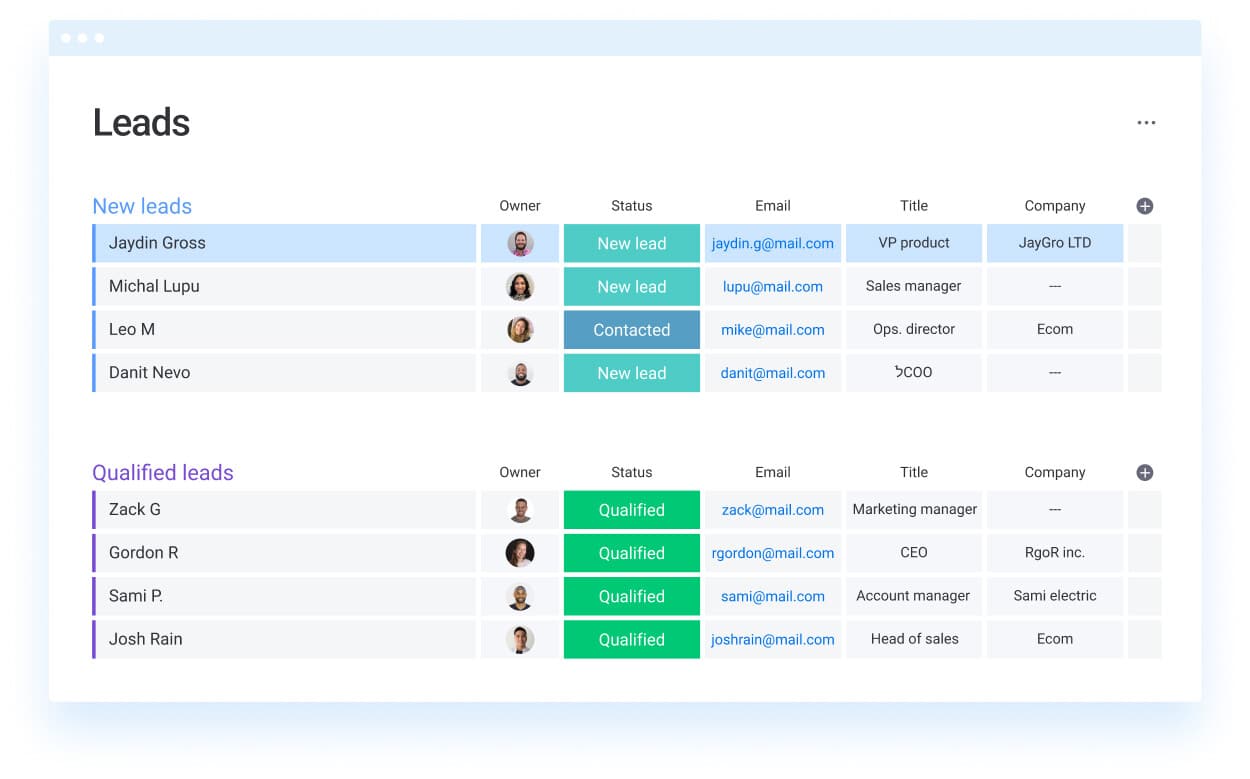
AI is solving lead generation challenges for mid-market teams without enterprise budgets. AI focuses on removing manual work while keeping outreach personal, giving reps time for conversations that close deals.
Core AI capabilities include:
- Lead scoring and prioritization: identify high-probability opportunities using conversion data.
- Personalized outreach at scale: generate sequences that maintain personal touch automatically.
- Prospect research automation: collect company and leadership information automatically.
monday CRM’s AI tools include autofill, sentiment detection, and lead assignment based on predefined criteria. Its AI email assistant drafts messages directly within Emails & Activities, reducing time spent on routine communication.
Strategy 3: implement value-based pricing for profit optimization
Dynamic pricing adjusts prices based on market conditions, customer segments, and deal specifics rather than fixed price lists. It works well for B2B companies with complex offerings where value perception varies across customers.
Dynamic pricing requires robust data on price points, customer segments, and win rates. Core components include:
- Value-based pricing models: set prices based on customer outcomes, not internal costs.
- Competitive intelligence integration: monitor competitor pricing for timely adjustments.
- Approval workflow automation: manage pricing exceptions efficiently without creating bottlenecks.
Strategy 4: expand wallet share through strategic upselling
Expanding wallet share is efficient because existing customers cost less, convert faster, and close more quickly. Upselling works when integrated into routine account check-ins rather than as standalone pitches.
Effective upselling includes:
- Usage-based expansion triggers: automate alerts when customers approach limits or show readiness.
- Cross-functional collaboration: align sales and customer success with shared visibility.
- Timing optimization: identify the optimal moment for expansion conversations using data.
Platforms like monday CRM provide a connected view of deals, accounts, contacts, and projects, helping teams identify opportunities with full relationship context.
Strategy 5: create a dedicated big-deal team
Large deals require specialized playbooks and focused attention. Standard processes often fail when selling to enterprises with multiple decision-makers and extended buying cycles.
A big-deal team does not require new hires. Assign top reps to high-value deals while the rest manage standard opportunities. Requirements include:
- Specialized skill sets: train in complex sales, stakeholder mapping, and enterprise buying behavior.
- Extended cycle management: design processes for long-duration deals with multiple approvals.
- Cross-functional support: coordinate legal, finance, and technical resources appropriately.
Strategy 6: align sales and customer success for unified growth
Sales and customer success alignment is essential for sustainable growth, particularly in subscription and recurring revenue models. When sales and CS aren’t aligned, customers notice — and your competitors get an opening.
When a customer’s experience with sales doesn’t match their experience with account management, confusing handoffs and conflicting messages erode trust quickly.
Effective alignment includes:
- Shared metrics and goals: define revenue targets that cover acquisition and retention.
- Handoff process optimization: ensure seamless transitions with complete context transfer.
- Joint account planning: collaborate using sales insights on business needs and customer success data on product usage.
Centralized platforms like monday CRM keep all communications and interactions visible, preventing context loss when accounts transition between teams.
Strategy 7: build repeatable processes with smart automation
Automation enables growth strategies to scale. In retail merchandising, agentic AI can reclaim uup to 40% of merchants’ time by automating low-value work, with up to 60% of decision support standardized. Without automation, increased leads, customers, or reps create chaos.
Well-defined processes are essential before automating. Critical automation areas include:
- Lead qualification and routing: score and route leads based on territory or expertise automatically.
- Follow-up sequence management: use systematic email sequences to nurture prospects.
- Data entry and updating: automate interaction data capture to keep CRM records current.
Platforms like monday CRM allow teams to create no-code workflows that assign leads, trigger follow-ups, and update deal stages automatically, reducing administrative burden and scaling team capacity.
Try monday CRMHow to choose the right strategies for your sales team
Selecting the right strategy determines whether your efforts produce results or waste resources. A clear framework guides which strategy to tackle first and how to deploy the resources you already have. It prevents teams from pursuing tactics that do not address the most critical performance gaps.
Evaluate your current performance gaps
Begin with a detailed review of sales metrics to identify areas with the most room for improvement. This ensures your team does not focus on minor issues while major gaps continue to impact revenue.
Consider these key areas across your sales operation:
- Pipeline health metrics: conversion rates at each stage, average deal size, and sales cycle length.
- Team productivity indicators: activities per rep, quota attainment rates, and ramp time for new hires.
- Customer lifecycle performance: retention rates, expansion revenue, and customer satisfaction scores.
- Process efficiency measures: manual tasks consuming rep time, data quality issues, and forecasting accuracy.
Modern platforms like monday CRM provide customizable dashboards with real-time visibility into these metrics. Sales-specific widgets such as the leaderboard and funnel help teams pinpoint strengths and weaknesses without manual spreadsheet analysis.
Match strategies to available resources
Be honest about what your team can realistically execute. Even the most sophisticated strategy is ineffective if the resources or capacity to implement it do not exist.
- Resource alignment: ensure each strategy matches the time, personnel, and technology available.
- Execution feasibility: consider complexity, training needs, and team bandwidth before committing.
Strategies that fit your resources are far more likely to succeed than those that overextend the team.
Prioritize based on revenue impact
A robust prioritization approach balances quick wins with longer-term opportunities. Score each strategy on:
- Revenue potential: the likely contribution to top-line growth.
- Implementation effort: how much time, technology, and personnel it requires.
- Time to impact: how quickly results will appear.
- Strategic alignment: whether it supports broader organizational goals.
Combining short-term wins with long-term plays builds momentum and credibility, enabling your team to tackle more ambitious initiatives.
Implementation roadmap for resource-constrained teams
Most mid-market teams operate with limited bandwidth — implementing new strategies is rarely straightforward. This roadmap outlines how to execute successfully even when resources are stretched thin. Following this approach helps avoid the mistakes that prevent most growth initiatives from gaining traction.
Start with one strategy at a time
Focus on a single strategy to achieve better results than trying to execute everything at once. Concentrating effort allows your team to adopt processes more effectively, allocate resources where they have the most impact, and measure outcomes before adding complexity.
Choose the strategy that addresses your largest performance gap, aligns with your available resources, and delivers measurable results within the current quarter.
Leverage your existing tech stack
Optimizing current echnology investments often yields better outcomes than introducing new platforms. Many teams only use basic CRM functions and miss features that could resolve real challenges.
Flexible platforms like monday CRM allow teams to customize pipelines, fields, and workflows without technical configuration. This flexibility enables the rollout of new strategies without the need for additional software.
Focus on activities that scale
Build processes that compound over time rather than ones requiring constant manual effort. Documentation, training and enablement, automation, and measurement systems all contribute to scalable growth.

Tracking results goes beyond revenue — it requires monitoring the full scope of your strategy’s performance. Capturing early indicators allows teams to address problems quickly and validate that the strategy produces meaningful impact over time.
Track essential metrics for progress
Track performance in these key areas:
- Revenue metrics: pipeline velocity, average deal size, win rate, and customer lifetime value.
- Efficiency metrics: sales cycle length, activities per closed deal, and cost per acquisition.
- Quality metrics: customer satisfaction, forecast accuracy, and process adherence.
Platforms like monday CRM provide real-time reporting across these dimensions. Teams can manage quotas, monitor attainment, and gain immediate insights into pipeline status, forecasting, and performance through customizable dashboards.
Set realistic quarterly milestones
Establish milestones that your team can realistically achieve. Milestones help maintain momentum while progressing toward larger goals. Review performance at thirty, sixty, and ninety days to ensure processes are functioning, early indicators are positive, and metrics are trending in the right direction.
Use data to optimize performance
Turning insights into improvements requires analytical thinking and continuous adjustment. Performance analysis, A/B testing, feedback integration, and predictive insights all support ongoing refinement of your strategy.
Try monday CRM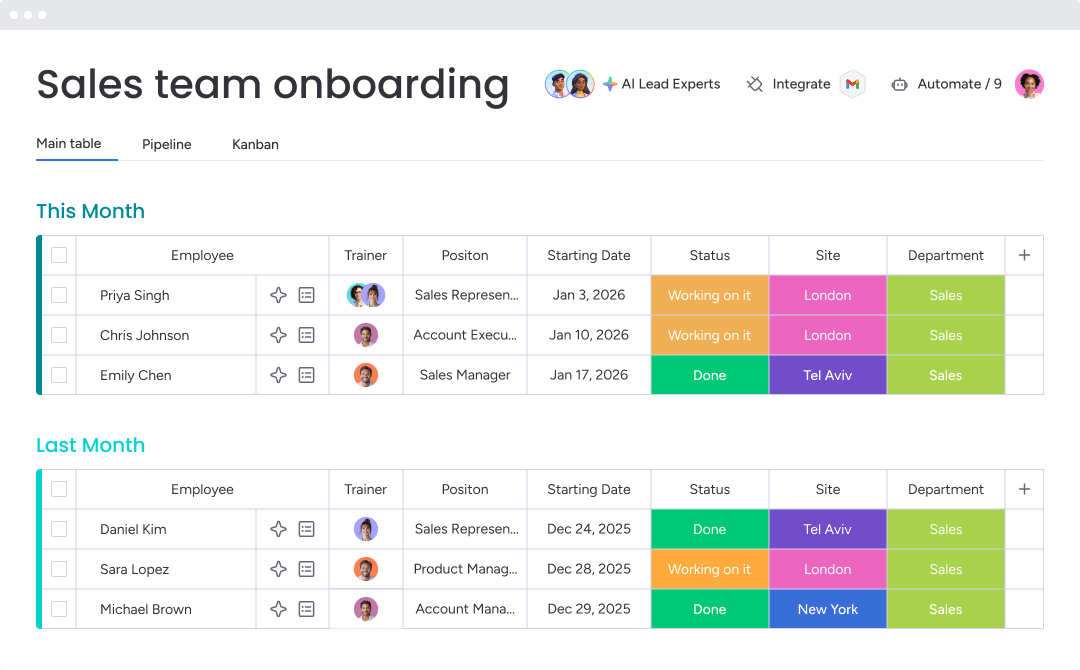
Why visibility makes or breaks growth strategies
Visibility determines whether growth strategies succeed or stall. Without insight into pipeline health, team activity, and customer engagement, strategy execution relies on guesswork. Real-time data shifts teams from reactive to proactive.
The value of real-time visibility
Complete, real-time views of sales operations capture every opportunity, support resource allocation, and enable accurate forecasting. Visibility helps teams understand which deals are progressing and which are stagnant, reducing the risk of missed revenue.
How top performers use real-time data
High-performing sales teams leverage visibility to close more deals. Access to current, accurate data improves pipeline management, optimizes activity, enables smarter coaching, and directs resources effectively.
Modern platforms like monday CRM provide centralized dashboards that display deal progression, risk factors, and customer information in one place. This visibility supports leadership oversight and aligns the revenue team throughout the customer journey.
Creating accountability across teams
Visibility drives accountability without micromanagement. Shared dashboards, regular check-ins, goal tracking, and process monitoring reinforce responsibility while enhancing performance.

“With monday CRM, we’re finally able to adapt the platform to our needs — not the other way around. It gives us the flexibility to work smarter, cut costs, save time, and scale with confidence.”
Samuel Lobao | Contract Administrator & Special Projects, Strategix
“Now we have a lot less data, but it’s quality data. That change allows us to use AI confidently, without second-guessing the outputs.”
Elizabeth Gerbel | CEO
“Without monday CRM, we’d be chasing updates and fixing errors. Now we’re focused on growing the program — not just keeping up with it."
Quentin Williams | Head of Dropship, Freedom Furniture
“There’s probably about a 70% increase in efficiency in regards to the admin tasks that were removed and automated, which is a huge win for us.“
Kyle Dorman | Department Manager - Operations, Ray White
"monday CRM helps us make sure the right people have immediate visibility into the information they need so we're not wasting time."
Luca Pope | Global Client Solutions Manager at Black Mountain
“In a couple of weeks, all of the team members were using monday CRM fully. The automations and the many integrations, make monday CRM the best CRM in the market right now.”
Nuno Godinho | CIO at VelvHow to create sustainable sales growth this quarter
Sales growth is most effective when executed as a system, not a set of disconnected tactics. Revenue teams achieve better results by stacking strategies that reinforce each other and compound impact over time.
Strategy choice is less important than consistent execution and measurement. Teams that focus on one approach, implement it fully, and iterate based on data outperform those that jump between multiple initiatives without completion.
Modern platforms like monday CRM make sophisticated growth strategies accessible to mid-market teams. Teams can execute enterprise-level approaches without enterprise-level resources when supported by the right tools.
Try monday CRMFrequently asked questions
How quickly can sales growth strategies show results?
Initial improvements in process and team productivity typically appear within thirty to sixty days. Measurable revenue impact often occurs within a single quarter, depending on the strategy’s complexity and execution quality.
Which strategy should my team implement first?
Teams with an existing customer base should prioritize customer retention strategies. Teams focused on new acquisition should begin with lead generation optimization. Addressing the largest current performance gap first ensures the most immediate impact.
What budget do I need for sales growth initiatives?
Many strategies can be executed with existing resources by optimizing current workflows and leveraging technology. Additional budget is generally required only for new platforms or specialized training.
Can these strategies work for small sales teams?
Small teams benefit from strategies emphasizing efficiency and process optimization rather than headcount growth. Implementation tends to be faster, and results often appear more dramatic than with larger teams.
How do I get leadership buy-in for new strategies?
Present leadership with concrete revenue projections, implementation timelines, and resource requirements. Demonstrating measurable ROI within a single quarter and addressing recognized pain points increases buy-in.
What role does technology play in sales growth strategy success?
Technology enables execution through visibility, automation, and scalability that manual processes cannot achieve. The right CRM platform provides a foundation for multiple strategies without overwhelming teams.

 Get started