


A sales team sends 200 emails this week. Twelve prospects reply, three book meetings and just one becomes an actual customer. Meanwhile, competitors generate replies faster, convert more conversations, and move deals through the pipeline with precision. Reps spend hours writing follow-ups and updating spreadsheets instead of actually selling.
This is the bottleneck of manual outreach at scale. Every message requires research, personalization, scheduling, and tracking. Multiply that across hundreds of prospects, and administrative work overwhelms revenue-generating activity. Outreach sales automation changes the equation by systemizing repetitive tasks — ensuring consistent follow-ups, real-time tracking, and intelligent sequencing — so teams can focus on relationship-building and closing deals.
Building AI-powered outreach workflows that actually convert requires more than turning on automation. It demands the right features, smart implementation, and a platform flexible enough to grow with your team. In this guide, you’ll learn how outreach automation works, what capabilities matter most, and how to implement multi-channel, AI-driven campaigns that scale without sacrificing personalization.
Key takeaways
- Save 15+ hours weekly by automating repetitive tasks: let AI handle email sequences, follow-ups, and data entry while your team focuses on closing deals and building relationships.
- Triple response rates with AI-powered personalization: use behavioral triggers, company insights, and contextual messaging to create outreach that feels genuinely relevant to each prospect.
- Scale outreach without hiring more reps: manage 1,000+ prospects monthly with the same team size by automating execution while maintaining personalization quality.
- Build sophisticated workflows without coding: a visual workflow builder lets sales teams create multi-channel automation in hours, not weeks with no technical expertise required.
- Unify your sales operations in one platform: eliminate data silos and integration headaches by managing outreach automation, CRM, and analytics in a single system like monday CRM.

What is outreach sales automation?
Outreach sales automation is technology that handles repetitive sales communication tasks without manual intervention. This means your system automatically executes email sequences, schedules follow-ups, updates lead scores, and manages multi-channel touchpoints while your sales team focuses on high-value activities like discovery calls and closing deals.
The system operates through a straightforward mechanism: you define the conditions, and the platform executes the corresponding actions automatically:
- Prospect opens email: the system schedules follow-ups automatically.
- Lead hits engagement threshold: it routes them to the right rep.
- Someone visits your pricing page: it launches personalized outreach.
These responses occur instantly, eliminating manual delays and preventing missed opportunities. Technology manages the repetitive tasks while your team focuses on building relationships and driving strategic conversations.
Traditional automation vs AI-powered automation
The shift from rule-based automation to AI-driven systems changes what’s possible in sales outreach. The following table shows what separates them:
| Capability | Traditional automation | AI-powered automation |
|---|---|---|
| Personalization | Basic merge tags (name, company) | Contextual insights from company news, behavior, industry trends |
| Decision making | Fixed if/then rules | Adaptive responses based on engagement patterns and intent signals |
| Content creation | Static templates requiring manual updates | Dynamic content generation tailored to prospect context |
| Learning | Manual rule adjustments by admins | Continuous improvement through interaction analysis |
| Timing optimization | Preset schedules | Predictive send-time optimization based on individual behavior |
Traditional systems need constant manual updates. Markets shift, messaging changes, and you’re back to square one — rebuilding workflows and rewriting templates. In contrast, AI-powered systems learn from outcomes, automatically adjusting messaging, timing, and sequencing based on what actually drives results.
How does agentic AI transform sales engagement?
Agentic AI operates autonomously to achieve specific goals rather than just following instructions. In sales, that means AI agents research prospects, figure out the best way to engage, and run entire workflows on their own.
- Autonomous prospect research: AI agents continuously monitor prospect companies for trigger events like funding announcements, leadership changes, product launches, and expansion news. They automatically incorporate these insights into outreach. A prospect announcing Series B funding receives messaging about scaling challenges. A company launching new products gets outreach highlighting integration capabilities.
- Predictive engagement timing: AI analyzes individual prospect behavior to determine optimal contact moments. Some prospects engage with morning emails, others respond to afternoon outreach. The system identifies these preferences and adjusts timing automatically without manual segmentation.
- Adaptive message optimization: instead of static templates, agentic AI generates message variations based on prospect characteristics and engagement history. The system tests different value propositions and messaging angles, learning which approaches resonate with specific segments.
7 key benefits of automated sales outreach
Sales teams implementing outreach automation solve three core challenges simultaneously: time constraints limiting outreach volume, inconsistent follow-up losing opportunities, and the difficulty of maintaining personalization at scale. Teams see these results in their first 90 days.
1. Save 15+ hours weekly on manual tasks
Manual outreach eats hours on repetitive tasks. As sending 50 personalized emails manually takes about three hours, automation reduces this to 15 minutes of initial setup, with the system handling execution automatically.
The time you save adds up fast:
- Email composition and sending: automated sequences eliminate manual message crafting.
- Follow-up scheduling: the system tracks engagement and triggers follow-ups automatically.
- Data entry and CRM updates: activity logging happens automatically, saving 30-45 minutes daily.
- Prospect research: AI agents gather context automatically instead of requiring manual research.
2. Triple response rates with AI personalization
AI personalization does way more than drop names into templates. Smart systems pull from multiple data sources to create outreach that actually fits the prospect.
Effective AI personalization incorporates:
- Company-specific insights: recent news, funding announcements, and product launches.
- Behavioral triggers: website visits, content downloads, and email engagement.
- Industry context: sector challenges and regulatory changes.
- Message tone: based on engagement history and preferences.
Teams using advanced platforms leverage AI capabilities through features that extract relevant details from prospect websites and documents. The Writing Assistant generates contextual email content based on prospect characteristics, while Detect Sentiment analyzes responses to inform follow-up tone.
3. Scale outreach without adding headcount
Manual outreach creates a direct relationship between team size and outreach capacity. Each SDR manages 200-300 prospects monthly through manual processes, creating a hard ceiling on pipeline generation.
Automation breaks this constraint enables a team of five SDRs manage outreach to 1,000+ prospects monthly, maintaining personalization quality while dramatically expanding reach. The system handles execution while humans focus on strategy, content quality, and high-value interactions.
4. Improve lead scoring accuracy
Manual lead scoring relies on limited data points, typically job title, company size, and maybe one or two engagement signals. This incomplete picture results in misallocated resources, with reps chasing low-intent prospects while high-potential opportunities receive insufficient attention.
Automated systems track comprehensive engagement across multiple touchpoints:
- Email opens, clicks, time spent reading: track engagement depth.
- Website activity and content interaction: monitor browsing behavior.
- Response quality and engagement patterns: assess communication signals.
This scoring shows you who’s seriously shopping versus just looking around. Automated systems can use AI to automatically categorize leads based on engagement patterns and text analysis ensuring accurate segmentation without manual intervention through lead generation automation.
5. Gain real-time pipeline visibility
Manual processes leave you blind to what’s working until it’s too late. Sales leaders discover underperforming campaigns weeks after launch, when significant resources have already been wasted, while reps lack insight into which messages resonate, making optimization guesswork.
Automation provides instant visibility into:
- Campaign performance and prospect engagement levels: track real-time metrics across all touchpoints.
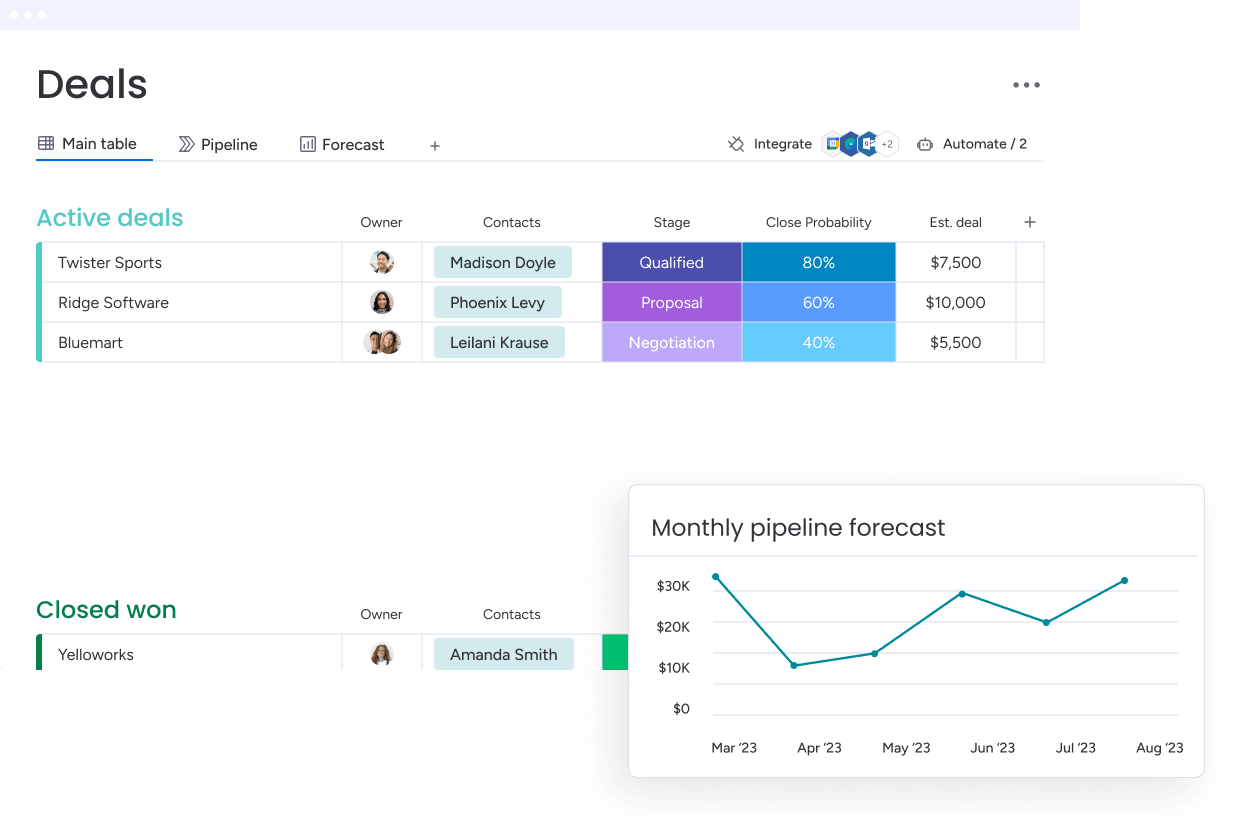
- Pipeline progression and conversion metrics: monitor deal movement and stage transitions.
- Subject lines that generate opens: identify messaging that captures attention.
- Value propositions that drive responses: discover which benefits resonate most.
- Sequences that convert prospects to opportunities: optimize workflows based on performance data.
6. Reduce costs through consolidation
Most sales teams accumulate multiple point solutions over time: separate platforms for email automation, lead enrichment, CRM management, analytics, and reporting. Each requires its own subscription, integration maintenance, and user training.
Comprehensive automation platforms eliminate this sprawl by providing integrated capabilities within a single system:
- Email sequences and lead scoring: automate outreach and qualification in one place.
- CRM updates and multi-channel orchestration: coordinate all touchpoints seamlessly.
- Analytics and reporting: track performance without switching platforms.
Consolidation cuts direct costs and kills those hidden integration fees.
7. Enable cross-team collaboration
Outreach automation facilitates seamless coordination between marketing and sales teams. Marketing-generated leads flow automatically into appropriate sales sequences based on engagement level and qualification criteria. Sales feedback on lead quality flows back to marketing, informing campaign optimization.
The benefits extend beyond the initial sale. When prospects convert to customers, automation triggers handoff workflows that provide account management teams with comprehensive context on the customer’s journey, stated needs, and engagement history.
Essential features of sales outreach platforms
Not all automation platforms deliver equal value. Certain capabilities separate effective solutions from those that create more problems than they solve.
Visual workflow builders for non-technical teams
Platforms that need coding or complex setup lock you into IT dependency. That bottleneck slows you down, kills fast iteration, and leaves all the automation knowledge with tech specialists.
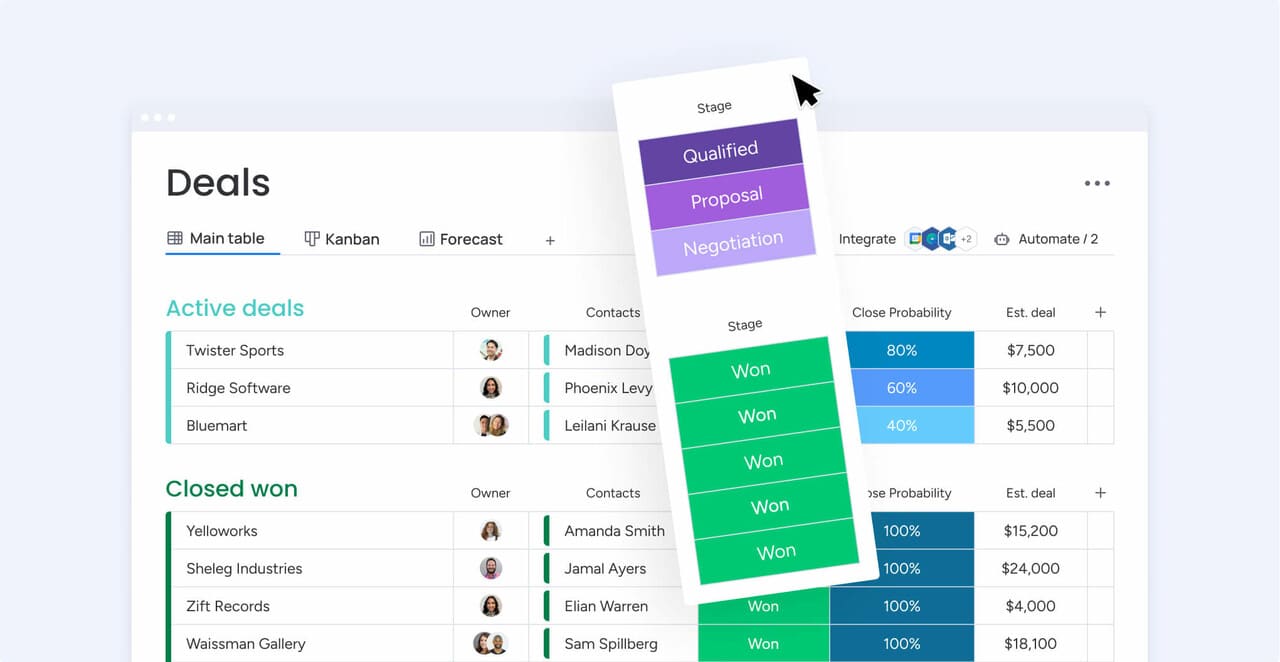
Visual workflow builders put automation in everyone’s hands. Drag-and-drop interfaces allow sales professionals to build sophisticated workflows without writing code. Teams map out processes visually, connecting triggers, conditions, and actions in an intuitive interface.
Multi-channel campaign orchestration
Buyers engage across email, LinkedIn, phone, and SMS. Therefore, they expect coordinated communication, not random messages. Single-channel automation limits effectiveness by ignoring how prospects actually research and evaluate solutions.
In contrast, multi-channel orchestration coordinates outreach across all channels within unified workflows. A sequence might:
- Start with email introduction: introduce value proposition.
- Follow with LinkedIn connection request: build relationship on social platform.
- Attempt a phone call: add personal touch.
- Send SMS reminder: maintain momentum with timely nudge.
All automatically timed and coordinated based on prospect responses.
AI agents for autonomous prospecting
AI agents work like digital teammates, handling complex prospecting tasks on their own. They analyze data, understand context, and optimize for your goals.
Practical applications include:
- Automatic lead enrichment: across multiple data sources.
- Behavioral trigger responses: when prospects exhibit high-intent behaviors.
- Intelligent follow-up scheduling: based on engagement patterns.
- Content selection: based on prospect characteristics.
Teams leveraging AI capabilities provided by platforms like monday CRM support these autonomous functions through features like Custom Action, which allows teams to define personalization logic in plain language. The Assign Person action uses AI to route leads to the most appropriate team member based on defined criteria and skills.
Native CRM integration capabilities
Outreach automation generates tons of data: email sends, opens, clicks, responses, call attempts, and more. This data must flow seamlessly into the CRM to provide complete visibility of prospect interactions.
Native integrations work differently than third-party connectors:
- Built and maintained by platform vendor: ensuring consistent performance.
- Comprehensive data synchronization: no data loss or delays.
- Immediate support for new features: automatic updates.
Organizations using solutions like monday CRM benefit from unified platform architecture where outreach automation and CRM functionality exist within the same system. All interactions appear in one timeline for each contact, eliminating integration complexity.
6 steps to implement outreach automation
Successful automation implementation requires a structured approach that begins with establishing a solid foundation before moving to execution. Organizations that skip critical steps or accelerate the process without proper preparation typically experience suboptimal results.
This roadmap provides a systematic framework for deploying automation that delivers value from the initial implementation.
Step 1: map your current sales workflow
Begin with documenting your existing outreach process from initial prospect identification through deal closure. This mapping shows you where to automate, where you’re stuck, and what your starting metrics are.
The mapping process captures:
- Touchpoint frequency: how often you contact prospects.
- Message types: what content you send at each stage.
- Decision points: when prospects move between stages.
- Handoff procedures: how leads transfer between team members.
- Manual tasks: activities that consume time but add limited value.
Key questions to answer: What triggers first outreach? How many touchpoints occur before marking prospects unresponsive? When do marketing-qualified leads transfer to sales?
Step 2: audit and clean your contact data
Nothing matters more to automation success than clean data. Automated systems amplify data problems fast: invalid emails, wrong personalization, misrouted leads. This allows automated systems to operate at a scale and speed that manual processes cannot match.
Your data cleaning checklist should include:
- Remove duplicates: eliminate multiple records for the same contact.
- Update contact information: verify emails, phone numbers, and job titles.
- Standardize formats: ensure consistent data entry across all fields.
- Enrich missing fields: fill gaps in company size, industry, and other key data.
- Validate email deliverability: remove bounced and invalid addresses.
- Verify segmentation accuracy: confirm prospects are categorized correctly.
Invest time in data quality before launching automation. The effort pays dividends through improved deliverability and higher response rates.
Step 3: design multi-touch sequences
Good outreach sequences stay persistent without being annoying. Therefore, think about sequence length, message spacing, content variety, and how you build value.
A typical cold outreach sequence includes six to eight touchpoints over three to four weeks:
- Initial email: introduce value proposition.
- Additional context: share relevant case study or insight.
- LinkedIn connection: build relationship on social platform.
- Phone call attempt: add personal touch.
- Case study share: provide social proof.
- Break-up email: final attempt with different angle.
Each message provides distinct value rather than simply repeating “checking in.”
Step 4: configure AI personalization rules
AI personalization needs three things: data sources, triggers, and rules for adapting content. Then it creates relevant messages automatically.
Teams using AI features within platforms like monday CRM enable sophisticated personalization without complex configuration:
- Extract Info action: pulls relevant details from prospect websites automatically.
- Detect Sentiment action: analyzes email responses to inform follow-up tone.
- Summarize action: condenses long email threads into concise summaries for quick context.
Step 5: connect your existing tech stack
Your automation platform must integrate smoothly with your existing tech stack. This includes your CRM, marketing tools, analytics, calendar, and communication channels. Without seamless integration, your data can become disorganized and workflows may fail.
Test integrations thoroughly before launching automation at scale:
- Send test messages: verify delivery and formatting.
- Verify data syncs correctly: confirm information flows between systems.
- Confirm triggers fire as expected: test all automation rules.
- Ensure error handling works properly: plan for system failures.
Step 6: launch, monitor, and optimize
Launch automation gradually rather than flipping on all workflows at once. Start with a pilot group of 100-200 prospects, monitor performance closely, and expand once results meet expectations.
Key metrics to track:
- Deliverability rate: percentage of emails reaching inboxes.
- Open rate: engagement with subject lines.
- Response rate: quality of prospect interest.
- Conversion rate: movement through sales funnel.
- Unsubscribe rate: audience fatigue indicators.
- Time to respond: speed of prospect engagement.
Keep optimizing. Markets change, buyers shift, and competitors move fast. Regular testing and iteration keep automation effective over time.
Building AI-powered multi-channel campaigns
Buyers research solutions across multiple channels before engaging with sales teams. They read emails, check LinkedIn profiles, visit websites, and consume content across various platforms. Because single-channel outreach ignores how prospects actually want to communicate, successful teams run campaigns that reach them on their preferred channels.
Automated email sequences that convert
Email is still the foundation, but AI turns basic sequences into conversion machines. Unlike static outreach, these sequences adapt based on prospect behavior:
- Subject line optimization: AI tests variations and identifies patterns that drive opens. The system learns which phrases, lengths, and approaches resonate with different segments.
- Send time optimization: AI analyzes individual prospect behavior to determine optimal delivery timing. Some prospects engage with morning emails, others respond to afternoon outreach.
- Content personalization: AI extends beyond name insertion to include contextual elements that demonstrate understanding of the prospect’s situation.
Revenue teams leveraging monday CRM’s Writing Assistant generate email content tailored to prospect context, while the Improve Text action automatically refines messaging for tone, length, and refinement level.
LinkedIn outreach automation strategies
LinkedIn automation needs to stay effective without breaking platform rules. Adhering to LinkedIn’s platform rules with compliant automation helps protect and enhance your professional reputation.
Compliant automation focuses on:
- Connection request personalization: craft relevant messages for connection requests.
- Value-focused message sequencing: send helpful content after connection acceptance.
- Engagement automation: like and comment on prospect posts strategically.
- Scheduled posting: share valuable insights to build thought leadership.
LinkedIn automation works best as part of multi-channel sequences rather than standalone campaigns. Email introduces the value proposition, LinkedIn builds relationship, phone deepens conversation, and email follow-up maintains momentum.
Coordinating phone and SMS follow-ups
Incorporating voice and text messaging into your automated sequences enables comprehensive multi-channel campaigns. Phone calls establish personal connections that email alone cannot achieve, while SMS provides immediate visibility for time-sensitive communications.
Phone automation includes:
- Intelligent call scheduling: based on prospect time zones and engagement history.
- Automatic voicemail drops: consistent messaging when prospects don’t answer.
- Call outcome tracking: record results and trigger appropriate follow-up.
- Callback reminders: ensure no opportunities slip through cracks.
SMS automation requires particular care around compliance and frequency:
- Appointment reminders: reduce no-shows with timely notifications.
- Time-sensitive updates: share urgent information quickly.
- Event invitations: drive attendance to webinars and demos.
Trigger-based behavioral workflows
Behavioral triggers enable real-time response to prospect actions through lead generation automation, creating outreach that feels timely and relevant rather than randomly scheduled. The system watches prospect behavior across channels and kicks off the right workflows automatically.
High-value behavioral triggers include:
- Website visits to key pages: pricing, case studies, product demos.
- Content downloads: whitepapers, guides, templates.
- Email engagement patterns: opens, clicks, forwards.
- Social media interaction: likes, comments, shares.
- Event attendance: webinars, conferences, demos.
- Competitive research signals: visits to competitor websites.
These workflows create conversations that feel natural and fit the moment.
Best practices for AI sales outreach
Automation amplifies the existing quality of your operations; while it scales successful tactics, it also accelerates the impact of flawed processes. Implementing automation without a strategic foundation risks magnifying operational inefficiencies.
Adhering to the following best practices ensures that automation serves as a catalyst for growth rather than a source of friction.
Maintain personalization at scale
The key to success is maintaining the personal touch that makes outreach effective. Generic automated messages get ignored fast. Staying personal at scale needs smart strategy and solid data.
Effective personalization strategies include:
- Multi-dimensional data collection: gather information from multiple sources including CRM data, website behavior, social media activity, and third-party enrichment.
- Behavioral personalization: reference specific prospect actions like content downloads, website visits, or email engagement.
- Industry-specific messaging: create distinct value propositions for different sectors based on unique challenges and opportunities.
- Role-based content: tailor messaging to specific job functions, addressing the concerns of executives versus individual contributors.
Balance automation with human touch
The best outreach mixes automation’s speed with human judgment and relationships. Automation handles the repetitive, mechanical tasks and initial touchpoints, while humans focus on the high-value work that needs empathy, creativity, and strategy.
- Automate initial touchpoints: these typically receive lower response rates and benefit from consistent execution. Let automation handle first contact, follow-ups, and nurture sequences.
- Route engaged prospects to humans: when prospects respond or show high engagement, immediately route to human reps for personalized follow-up. Define escalation triggers for when automation hands off to human team members.
Ensure compliance and data governance
Scale outreach without managing compliance, and you’re asking for trouble. GDPR, CAN-SPAM, and CASL have strict rules for commercial emails. Break the rules, and you’ll face big fines and reputation damage.
Critical compliance considerations include:
- Consent management: track and respect opt-in preferences.
- Opt-out handling: process unsubscribe requests immediately.
- Data retention policies: delete data according to regulatory requirements.
- Geographic restrictions: respect regional communication laws.
- Suppression lists: maintain do-not-contact databases.
- Audit trails: document all communication for compliance reviews.
Automation platforms should include built-in compliance features while organizations maintain policies and regular team training.
Optimize based on performance metrics
Keep optimizing, or your automation gets stale and stops working. Check your metrics regularly to spot what needs fixing and adjust your strategy.
A/B testing methodologies for optimization:
- Single variable testing: change one element at a time to isolate impact.
- Statistical significance: ensure minimum 100 recipients per variation.
- Test duration: run tests for at least one week to account for timing variations.
- Implementation: deploy winning variations before testing new elements.
Track metrics that matter: response rates, conversion rates, unsubscribe rates, and pipeline velocity provide actionable insights for improvement.
How to choose outreach automation software?
Choosing the right platform is crucial for successful implementation, adoption, and results. The right platform reduces technical overhead, enables scalability, and empowers your team to succeed. This framework helps you find platforms that fit your team’s needs and growth plans.
Evaluation criteria for growing teams
Good evaluation goes beyond feature checklists. It means finding platforms that match your team’s skills, growth plans, and priorities.
Functionality assessment should examine:
- Channel support: email, LinkedIn, phone, SMS integration.
- Multi-touch sequence capabilities: complex workflow automation.
- AI features: personalization, optimization, and predictive capabilities.
- Reporting comprehensiveness: analytics depth and customization.
- A/B testing support: built-in experimentation tools.
Scalability evaluation should consider:
- Volume handling: contact limits and message throughput.
- Pricing structure: cost per user and feature tiers.
- Workflow complexity limits: advanced automation capabilities.
Ease of use assessment should evaluate:
- Non-technical team member capabilities: can sales reps build workflows independently?
- Learning curve: time to productivity for new users.
- Support quality: training resources and customer success.
All-in-one platforms vs point solutions
The market offers two distinct approaches: comprehensive all-in-one platforms that unify multiple functions, or specialized point solutions designed to excel at specific tasks.
| Factor | All-in-one platforms | Point solutions |
|---|---|---|
| Cost | Single subscription covers multiple functions | Multiple subscriptions add up quickly |
| Complexity | Unified interface, single learning curve | Multiple platforms require separate training |
| Integration | Native integration within platform | Requires connecting multiple systems |
| Feature depth | Good at many things, may lack specialized capabilities | Deep expertise in specific areas |
| Data consistency | Single source of truth | Risk of data sync issues |
All-in-one platforms make sense when:
- Teams lack technical resources: for managing multiple integrations.
- Data consistency is a priority: single source of truth matters.
- Rapid implementation is critical: speed to value is essential.
- Budget constraints favor consolidated solutions: cost efficiency drives decisions.
Point solutions work better when:
- Specific functionality requirements exceed all-in-one capabilities: specialized features are non-negotiable.
- Technical team can manage complex integrations: resources exist for system orchestration.
- Best-of-breed approach is prioritized: over convenience and simplicity.
Implementation timeline and ROI expectations
Realistic timelines and ROI expectations prevent disappointment and ensure adequate resource allocation throughout implementation.
- Phase 1 (Weeks 1-2): platform setup, user accounts, integrations, data migration, initial training.
- Phase 2 (Weeks 3-4): sequence design, workflow building, AI configuration, testing.
- Phase 3 (Weeks 5-6): pilot launch with limited volume, close monitoring, process refinement.
- Phase 4 (Weeks 7-8): expanded deployment, ongoing training, optimization based on performance data.
ROI timeline expectations:
- Time savings appear within the first month: immediate reduction in manual tasks.
- Response rate improvements emerge in months two to three: as personalization and timing optimize.
- Full ROI realization typically occurs within six to twelve months: including increased pipeline and closed deals.
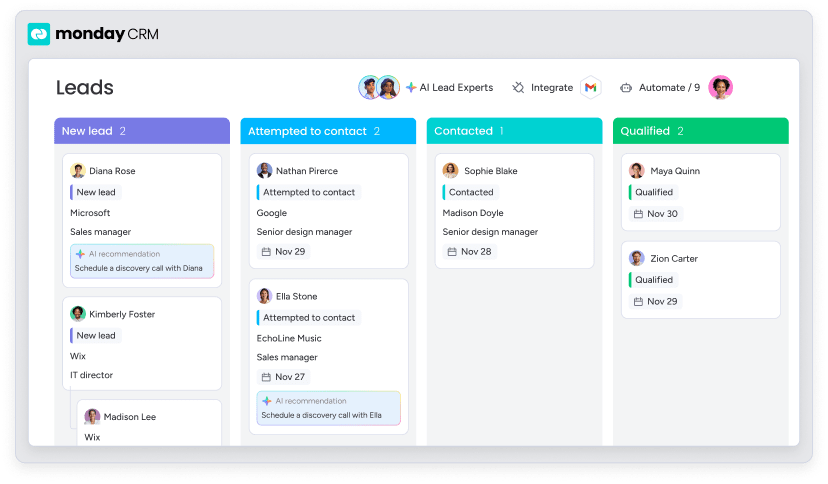
The future of outreach AI and digital workers
Outreach automation is evolving rapidly: from basic task automation to AI agents that manage entire sales processes. Understanding these trends enables organizations to select platforms that remain relevant as technology advances.
Autonomous sales agents and agentic AI
The industry is transitioning from AI that assists humans to AI that executes entire workflows independently. These agents operate beyond predefined scripts, making decisions based on goals, context, and real-time data.
Current autonomous capabilities include:
- Intelligent prospect research: gathering and analyzing company information automatically.
- Multi-turn email conversation management: handling back-and-forth communication.
- Opportunity qualification: assessing prospect fit and buying readiness.
- Meeting scheduling: coordinating calendars and booking appointments.
Near-term developments will include:
- Voice-based sales agents: AI handling phone conversations.
- Negotiation assistance: supporting pricing and contract discussions.
- Account planning: strategic relationship mapping and growth planning.
Predictive intent scoring and timing
AI is getting better at predicting prospect intent and nailing the right time to reach out. Advanced systems don’t just track basic engagement. They analyze hundreds of signals to figure out buying readiness and the best time to reach out.
Data sources feeding predictive models include:
- First-party data: CRM and website behavior patterns.
- Third-party intent data: publisher networks and content consumption.
- Social signals: LinkedIn activity and company announcements.
- Technographic data: technology stack and implementation patterns.
- Firmographic data: company size, growth, and financial indicators.
This analysis helps AI predict who might buy, when they’ll engage, and what messaging will land.
Cross-department revenue automation
Automation is spreading beyond sales to cover the entire revenue cycle including marketing, sales, customer success, and support.
- Marketing to sales handoff automation: triggers personalized sales outreach when leads reach threshold scores, ensuring smooth transition and immediate follow-up.
- Sales to customer success transition automation: creates onboarding plans and schedules calls upon deal closure, maintaining momentum through implementation.
- Customer success to sales collaboration automation: alerts sales reps when expansion opportunities are identified, enabling proactive account growth.
This approach breaks down silos and creates smooth customer experiences everywhere.
Scale your outreach with monday CRM
Sales teams need platforms with powerful AI and easy interfaces that let you deploy and iterate fast. Therefore, monday CRM gives you one platform that cuts complexity while delivering powerful automation.
Build visual workflows without code
The visual builder in monday CRM lets sales teams build powerful automation without tech skills or IT help. The drag-and-drop interface turns sales processes into automated workflows — no tech skills needed.
The visual approach speeds up implementation:
- Workflows that would take weeks to develop with code-based platforms: deploy in hours.
- Sales managers map out their ideal outreach sequences: visually.
- Teams connect triggers, conditions, and actions: in an intuitive interface.
- No technical intermediaries needed: between process knowledge and automation.
Deploy AI features for instant automation
The AI in monday CRM comes with ready-to-use functions you can deploy right away with no data science degree needed:
- Categorize: automatically segments leads based on engagement patterns and company characteristics.
- Extract Info: pulls relevant details from prospect websites, documents, and images.
- Detect Sentiment: analyzes email responses to gauge prospect interest and emotional tone.
- Summarize: condenses long email threads and meeting notes into concise summaries.
- Writing Assistant: generates email content based on prompts with adjustable tone and length.
- Custom Action: allows teams to define personalization logic in plain language.
These AI features team up to build automation that adapts to prospects and optimizes itself.
Unify sales data across your organization
Data silos disappear when monday CRM unifies outreach automation, CRM, and analytics in one place.
You get:
- Comprehensive prospect views: all interactions in single records.
- Consistent data quality: single source of truth eliminates sync issues.
- Coordinated team collaboration: aligned messaging and smooth handoffs.
- Simplified reporting: CRM data combines with outreach metrics automatically.
| Capability | monday CRM | Traditional solutions |
|---|---|---|
| Setup complexity | Visual workflows, no coding required | Technical configuration, often requires developers |
| AI integration | Built-in AI features ready to deploy | Separate AI requiring integration |
| Personalization | AI-powered contextual messaging | Manual merge tags and basic rules |
| Team collaboration | Unified platform for all revenue teams | Disconnected systems requiring integration |
| Scalability | No-code expansion as needs grow | Development required for advanced workflows |
“With monday CRM, we’re finally able to adapt the platform to our needs — not the other way around. It gives us the flexibility to work smarter, cut costs, save time, and scale with confidence.”
Samuel Lobao | Contract Administrator & Special Projects, Strategix
“Now we have a lot less data, but it’s quality data. That change allows us to use AI confidently, without second-guessing the outputs.”
Elizabeth Gerbel | CEO
“Without monday CRM, we’d be chasing updates and fixing errors. Now we’re focused on growing the program — not just keeping up with it."
Quentin Williams | Head of Dropship, Freedom Furniture
“There’s probably about a 70% increase in efficiency in regards to the admin tasks that were removed and automated, which is a huge win for us.“
Kyle Dorman | Department Manager - Operations, Ray White
"monday CRM helps us make sure the right people have immediate visibility into the information they need so we're not wasting time."
Luca Pope | Global Client Solutions Manager at Black Mountain
“In a couple of weeks, all of the team members were using monday CRM fully. The automations and the many integrations, make monday CRM the best CRM in the market right now.”
Nuno Godinho | CIO at VelvTransform your sales process with intelligent automation
Outreach automation delivers more than operational efficiency; it fundamentally transforms how sales teams operate. By automating administrative tasks, automation enables sales representatives to concentrate on high-value activities: building meaningful relationships, addressing customer challenges, and advancing deals through the pipeline.
Leading organizations approach automation strategically, integrating it throughout their sales processes rather than treating it as an add-on. These teams leverage AI to identify prospects with the highest conversion potential, deliver personalized outreach at scale, and orchestrate multi-channel campaigns that maintain authentic engagement.
An effective automation strategy should align with your organization’s growth trajectory. Begin with foundational email sequences, incorporate AI-powered personalization as your capabilities mature, and expand to comprehensive multi-channel orchestration as your requirements evolve. Success depends on selecting a platform that scales alongside your business rather than constraining future possibilities.
Frequently asked questions
How much does outreach automation software cost?
The cost of outreach automation software typically ranges from $50-150 per user monthly for basic email automation to $150-400 per user monthly for comprehensive platforms with AI capabilities and multi-channel orchestration.
What's the difference between a CRM and outreach automation platform?
CRM systems store and manage customer data while outreach automation platforms execute communication workflows. Platforms like monday CRM combine both capabilities in unified systems.
Can AI outreach maintain authentic personalization?
AI personalization uses multiple data sources including company news, behavioral signals, and engagement history to create genuinely relevant messages that address specific prospect contexts.
How quickly can teams see ROI from sales automation?
Time savings appear within the first month, response rate improvements emerge in months two to three, and full ROI realization typically occurs within six to twelve months.
Do outreach automation platforms require technical expertise?
Platforms with visual workflow builders enable non-technical sales professionals to create and manage automation independently without coding knowledge or IT support.
Which metrics best measure outreach automation success?
Response rate, conversion rate, time savings, deliverability rate, pipeline velocity, and unsubscribe rate together provide a comprehensive view of automation performance.

 Get started