

Activity targets can look strong on paper while deals stall in the pipeline. Prospects engage during early calls, then go quiet for weeks, leaving momentum to fade. When that pattern repeats, the issue is often the sales model behind the motion, not the effort behind it.
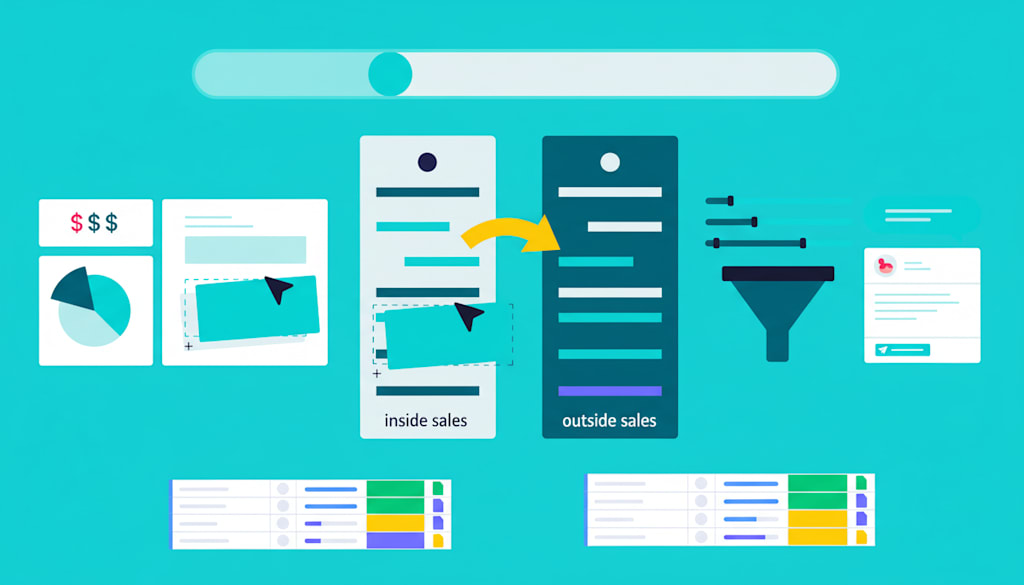
Inside sales and outside sales drive revenue in very different ways. Inside sales focuses on speed, volume, and digital-first engagement, while outside sales prioritizes face-to-face relationships for larger, more complex deals. The right model shapes costs, pipeline health, and how quickly opportunities move forward.
This guide breaks down inside sales vs outside sales in 2026, with a clear comparison of when each approach works best. It also covers hybrid strategies, cost and cycle considerations, and practical criteria to help teams choose the model that fits their buyers and revenue goals.
Key takeaways
- Align the sales model with deal size and cycle length: Inside sales typically supports $5,000–$50,000 deals with 2–8 week cycles, while outside sales is better suited for $50,000+ opportunities that require months of relationship building.
- Use hybrid sales to balance speed and depth: Many teams combine inside sales for qualification and early momentum with outside sales for complex, high-value stages of the buying process.
- Account for different cost and ramp profiles: Inside sales reaches productivity faster, often within 4–6 weeks, while outside sales requires longer ramp time but delivers higher value per deal over time.
- Let buyer expectations guide engagement: Digital-first buyers tend to prefer remote interactions, while traditional industries often expect face-to-face meetings for major purchasing decisions.
- Support multiple sales motions with the right CRM: Platforms like monday CRM help teams manage inside, outside, and hybrid workflows through shared pipelines, mobile access, and clear handoffs.
What is inside sales?
Inside sales refers to selling products or services remotely through digital communication platforms rather than in-person meetings. Representatives typically work from an office or home, connecting with prospects via phone calls, email, video conferencing, and CRM platforms without meeting customers face-to-face.
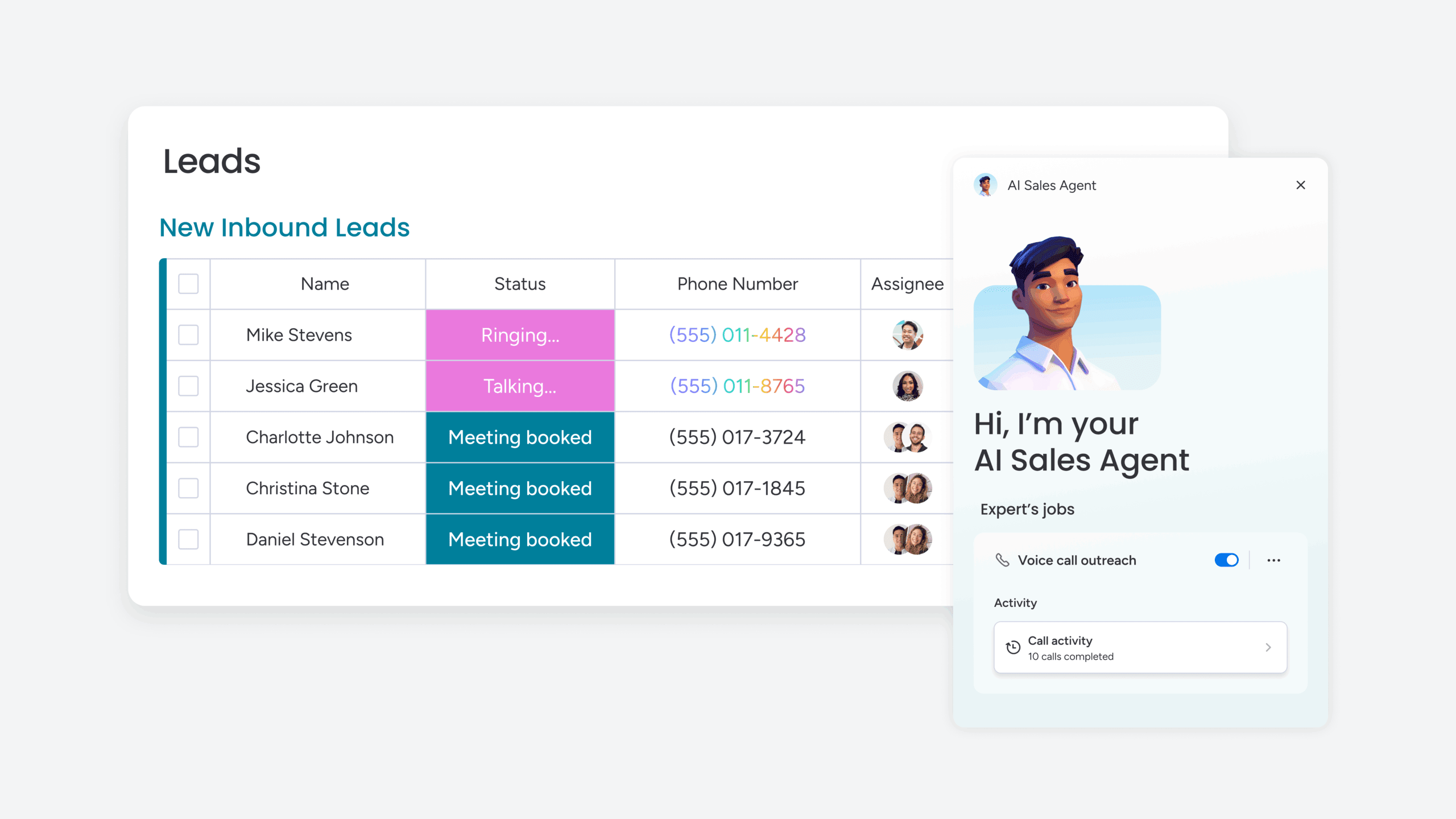
This model is built around efficiency and volume. Inside sales reps often engage 40–60 prospects per day using structured outreach sequences that prioritize speed and consistency. They qualify leads through discovery calls, deliver product demonstrations through screen sharing, and manage the full sales cycle digitally.
For example, a software company selling $15,000 annual subscriptions may rely on 30-minute video demonstrations, follow-up conversations over email, and contracts finalized within two weeks.
Daily responsibilities of inside sales teams
Inside sales representatives spend most of their time managing high-volume digital interactions that keep deals moving forward. These activities support fast sales cycles while maintaining accurate pipeline visibility across the organization.
Typical responsibilities include:
- Lead qualification through phone discovery: Making 50–80 calls per day to identify genuine opportunities.
- Product demonstrations via video conferencing: Using screen sharing to explain features without travel.
- Email sequence management: Coordinating automated and manual follow-ups between live conversations.
- Pipeline updates in CRM systems: Logging activity in real time to keep forecasts accurate.
- Collaboration with marketing teams: Sharing feedback that improves lead quality and messaging.
The digital nature of inside sales also creates operational advantages. Teams can scale quickly by adding representatives who often reach productivity within six weeks, supported by call recordings, email analytics, and ongoing coaching.
What is outside sales?
Outside sales refers to selling through face-to-face interactions and on-site relationship building. Representatives typically travel to customer locations and industry events, spending approximately 60–70% of their time meeting prospects in person.
This approach emphasizes depth over volume. Outside sales reps manage fewer accounts, conduct site visits to understand business operations first-hand, and facilitate discussions with multiple stakeholders. Trust is built through repeated in-person engagement over longer sales cycles.
An enterprise software company pursuing a $200,000 implementation serves as a good example of how this model works in practices. Representatives may meet with IT leaders on-site, run discovery sessions with department heads, and negotiate contracts across several face-to-face meetings over multiple months.
Core activities of outside sales professionals
Outside sales success depends on territory planning and relationship depth, not high activity volume. Representatives prioritize face-to-face time while keeping deals moving forward through consistent follow-up and account coordination.
The activities below reflect how outside sales teams build long-term customer relationships.
- Territory planning and route optimization: Structuring schedules to reduce travel time between appointments.
- Executive presentations at customer sites: Meeting decision-makers in person to support alignment and trust.
- Industry event networking: Building pipeline through conferences, trade shows, and local introductions.
- On-site product demonstrations: Showing solutions in the customer environment to address operational needs.
- Relationship maintenance visits: Checking in regularly to strengthen partnerships beyond the initial deal.
Keep in mind that the in-person nature of outside sales often comes with higher costs, but it can be justified by larger deal sizes and stronger retention. Deeper relationships can also reduce churn and support referrals within regional markets.
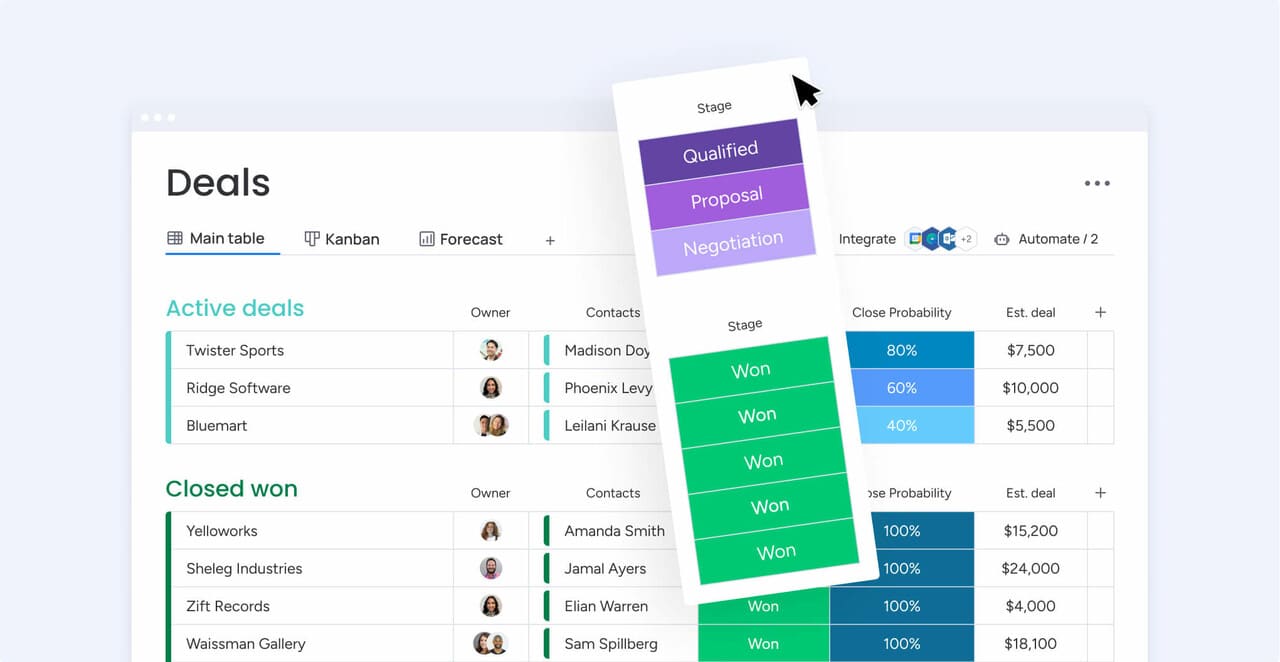
Inside sales vs outside sales: 5 key differences
Understanding how inside and outside sales operate can really help your team choose a model that matches your buyers, deal motion, and growth targets. The differences below influence hiring, enablement, technology needs, and how opportunities move through the pipeline.
1. Work environment and location flexibility
Inside sales teams sell primarily through digital channels, usually from an office or home setup with consistent infrastructure. Working in shared environments can speed up onboarding, coaching, and knowledge-sharing across the team. Repetition and real-time feedback often help new hires ramp faster.
On the other hand, outside sales representatives work independently across defined territories, with travel shaping how they plan their week. They make decisions on the move, often without immediate access to peers or managers.
This model supports autonomy, but it also requires strong self-management and disciplined follow-through.
You may be wondering how remote work has influenced both models in 2026. Inside sales now operates more frequently from distributed home offices, while outside sales often mixes in-person meetings with video calls to reduce travel without losing relationship depth.
Organizations using monday CRM adapt to these changes through customizable dashboards that provide visibility regardless of where representatives work.
2. Customer engagement methods
Inside sales relies on multichannel communication to build momentum quickly. Phone calls, email sequences, and video demos help reps stay responsive and maintain consistent touchpoints across many accounts.
Outside sales emphasizes in-person interaction, including site visits, workshops, and executive meetings. Being on-site helps reps read body language, adjust messaging in real time, and understand customer context through direct observation.
This is the typical communication breakdown and differences:
- Inside sales communication mix: Phone (60%), email (25%), video conferencing (15%).
- Outside sales interaction breakdown: In-person meetings (70%), phone (20%), email (10%).
3. Deal size and sales cycle dynamics
Deal size and cycle length often determine which model performs best. Inside sales typically supports faster decisions and shorter cycles, while outside sales is built for longer timelines and multi-stakeholder coordination.
The table below summarizes the operational differences that show up most clearly in forecasting and resourcing.
| Metric | Inside sales | Outside sales |
|---|---|---|
| Average deal value | $5,000-$50,000 | $50,000-$500,000+ |
| Sales cycle length | 2-8 weeks | 2-12 months |
| Cost per acquisition | $500-$2,000 | $3,000-$15,000 |
| Daily customer contacts | 40-60 prospects | 3-5 meetings |
| Geographic reach | National/international | Regional territories |
As the table highlights, inside sales compresses timelines by reducing scheduling friction. Discovery calls can even happen within 24 hours of first contact, proposals often follow immediately after demos, and contracts can move quickly when the product is standardized and the buying group is small.
Outside sales extends timelines to match complex stakeholder needs. Early meetings may be weeks apart, and additional sessions with different decision-makers can stretch across months.
4. Cost structure and ROI calculations
Inside sales tends to reach profitability faster because the model is built for efficiency. With a $60,000 salary and $15,000 in technology costs, a representative can generate $750,000 in revenue across 50 deals. That creates an average cost of $1,500 per sale, without ongoing travel expenses.
Outside sales meanwhile carries higher operating costs, but the economics can work when deal sizes justify the investment. A rep earning $90,000, with $25,000 in travel and $10,000 in entertainment, can generate $2,000,000 from 15 deals.
In this scenario, the cost per sale rises to $9,667, but the $133,000 average deal value can support stronger absolute profit.
5. Scalability and growth potential
Inside sales scales through standardization and technology. Adding ten representatives typically means extending access to laptops, a CRM, and established messaging, with new hires reaching productivity within weeks. Teams can grow from 10 to 50 in months without major operational changes.
Conversely, outside sales expansion requires more planning because coverage is tied to geography. New hires need defined territories, enough account density, and time to build relationships, which extends ramp periods. Expanding from 10 to 50 representatives often takes 12–18 months with more structured territory management.
Teams using monday CRM overcome traditional scaling challenges through unified platforms that support both models. Automated lead distribution can reduce territory conflict, and customizable pipelines can support different sales cycles without creating separate systems.
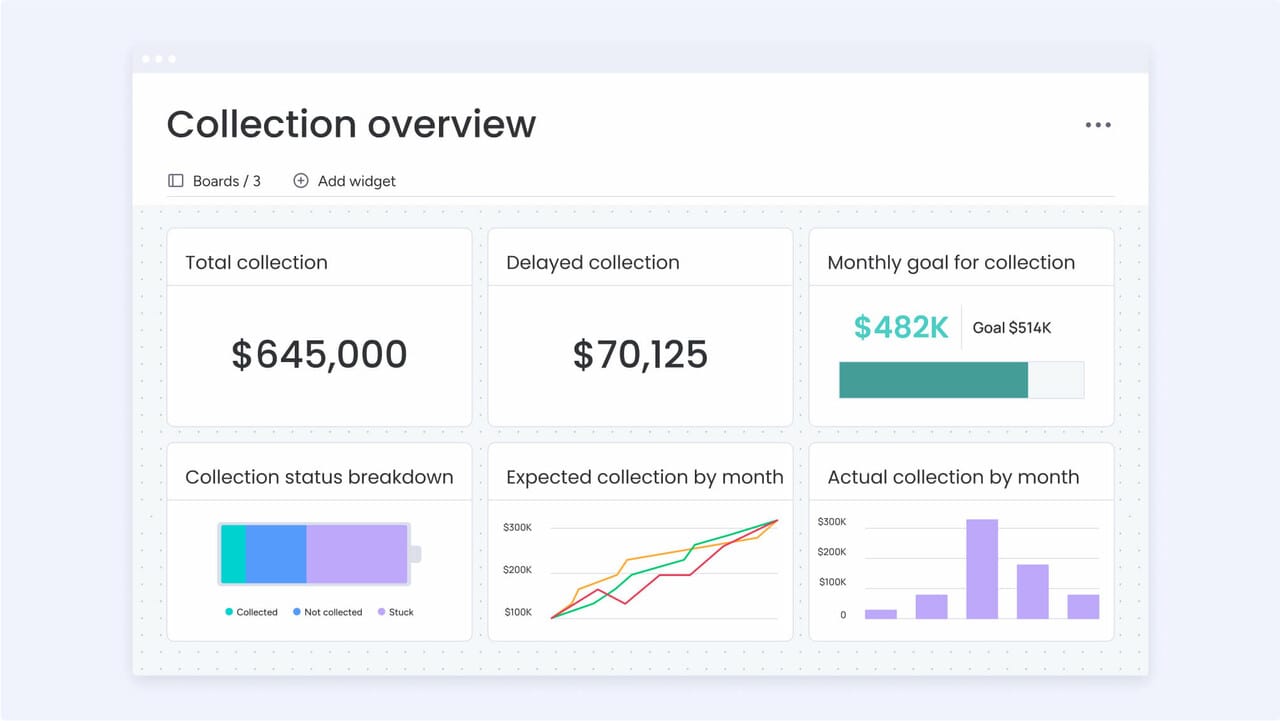
How to choose between inside and outside sales
Choosing the right sales model starts with how customers buy, not how a team prefers to sell. The sections below break down four factors that typically shape the best-fit approach, based on product complexity, customer expectations, market coverage, and budget.
Step 1: Evaluate product complexity and pricing
Products that require customization or deep technical validation often benefit from outside sales. Large purchases, such as enterprise resource planning systems priced at $200,000+, usually justify in-person discovery because representatives need time on-site to understand workflows and stakeholders.
More standardized offerings typically fit inside sales. When pricing is predictable and value can be shown through screen sharing, teams can run faster demos, answer questions quickly, and keep the process moving without travel.
Midrange deals in the $25,000–$75,000 range can support either model. Many organizations use inside sales for qualification and early demos, then add outside sales for negotiation and implementation planning when complexity increases.
Step 2: Understand your target customer preferences
Customer expectations should drive your model selection. Different industries and buyer profiles have distinct preferences for how they want to engage with sales teams. Understanding these preferences prevents misalignment that kills deals.
Enterprise buyers in traditional industries expect in-person meetings:
- Manufacturing, construction, and healthcare: Value the commitment demonstrated when representatives travel to understand their businesses.
- View remote-only engagement: Consider it insufficient for major purchases.
- Prefer relationship depth: trust builds through repeated face-to-face interactions.
Technology buyers prefer efficient digital interactions:
- Software, digital marketing, and e-commerce: Appreciate inside sales representatives who respect their time.
- Value quick video calls: Instant information delivery without meeting overhead.
- Find in-person meetings unnecessary: For straightforward purchases with clear value propositions.
Key preference patterns:
- Traditional industry preferences: Face-to-face relationship building, on-site demonstrations, local market presence.
- Digital-native buyer expectations: Fast response times, self-service resources, minimal meeting requirements.
Step 3: Assess market reach and coverage needs
Organizations targeting broad geographic markets benefit from inside sales efficiency.
For example, a company selling nationwide can deploy 20 inside sales representatives from a single office, reaching thousands of prospects monthly without travel costs. International expansion becomes feasible when representatives engage global prospects through adjusted working hours.
Companies requiring deep local penetration typically benefit from outside sales presence too. Regional businesses competing against established local players often see stronger results when representatives attend community events and join business organizations. Industries where referrals drive growth also depend on the personal relationships that outside sales provides.
Many revenue teams support both approaches with flexible territory management and lead routing. Platforms like monday CRM adapt whether teams are scaling inside sales nationally or building outside sales presence in specific markets.
Step 4: Calculate budget and resource requirements
Inside sales requires lower initial investment but significant technology infrastructure. First-year costs for a team of ten people include:
- Technology and tools: $150,000-$200,000 (CRM, communication platforms, lead generation).
- Salaries and overhead: $600,000-$700,000.
- Training and enablement: $50,000-$75,000.
Outside sales demands higher ongoing expenses. A ten person field team requires:
- Technology and equipment: $100,000-$150,000.
- Salaries and overhead: $900,000-$1,200,000.
- Travel and entertainment: $240,000-$360,000 annually.
Break-even analysis often shows inside sales reaching profitability within nine months, compared with 12-18 months for outside sales. Outside sales can still deliver stronger absolute profit once established, which makes the longer timeline worthwhile for businesses with adequate capital.
Try monday CRM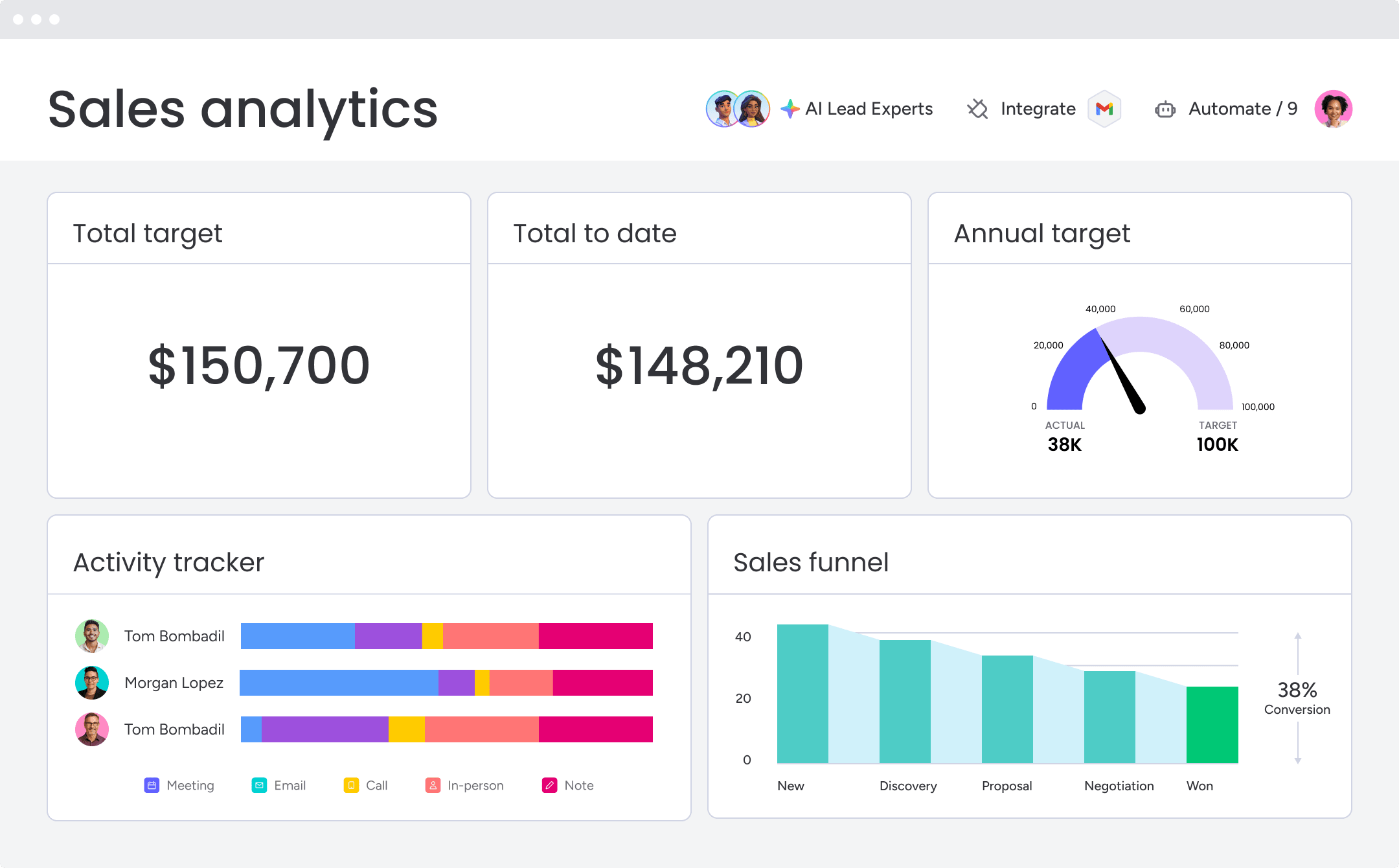
The rise of hybrid sales models
Hybrid selling combines inside and outside sales within a single sales motion or across customer segments. Organizations use each approach where it delivers the most value, rather than treating sales models as mutually exclusive. This structure also reflects the reality that different deal stages and buyer types require different engagement methods.
A common hybrid process uses inside sales for prospecting and qualification, then transitions qualified opportunities to outside sales for complex demonstrations. Ongoing account management often returns to inside sales once deals are closed.
Software companies often use this model in practice. Inside sales handles early discovery and qualification, running initial calls and video demos for smaller deals. When opportunities grow beyond around $50,000 or involve multiple stakeholders, ownership shifts to outside sales.
Why most companies now use hybrid approaches
Customer expectations are a primary driver of hybrid adoption. Buyers want the convenience of digital engagement for routine interactions, but they still expect personal attention for high-impact decisions.
Inside sales supports fast information sharing, while in-person engagement builds confidence when budgets and risk increase.
Cost efficiency also pushes organizations toward hybrid models. Fully field-based sales becomes expensive at scale, while inside-only approaches can leave revenue unrealized. Hybrid strategies align sales investment with deal potential, reserving higher-cost engagement for opportunities where it delivers clear returns.
Advances in technology also make hybrid selling far easier to execute. Unified CRM platforms can now track engagement across teams, video conferencing reduces the need for travel, and mobile access ensures consistent customer context.
How to implement a successful hybrid strategy
A successful hybrid model depends on clear structure and ownership. Organizations must define when deals move between teams and how information transfers during handoffs. Without clear processes, deals risk stalling during transitions.
Mapping the customer journey helps identify where each sales motion adds value. Reviewing successful deals highlights which activities drive progress and which engagement methods customers prefer at each stage.
Create specific criteria for model transitions:
- Deal size thresholds: Opportunities above $50,000 trigger outside sales engagement.
- Stakeholder complexity: Three or more decision-makers warrant in-person meetings.
- Customer requests: Direct asks for face-to-face meetings initiate field visits.
- Geographic factors: Local high-value accounts receive outside sales attention.
Strong handoff processes keep momentum intact. Documenting required context, defining ownership at each stage, and standardizing templates help ensure continuity as deals move between teams.
Teams using monday CRM automate these handoffs through customizable workflows that trigger notifications, transfer deal ownership, and maintain complete interaction history regardless of which representative engages the customer.
Build a flexible sales engine with monday CRM
Modern sales organizations need tech that adapts to their sales model instead of forcing rigid structures. That’s why the platform you select shapes how efficiently teams work and how consistently they track pipeline activity.
Here’s how monday CRM supports inside, outside, and hybrid sales while maintaining alignment and clean data:
Unified platform for all sales models
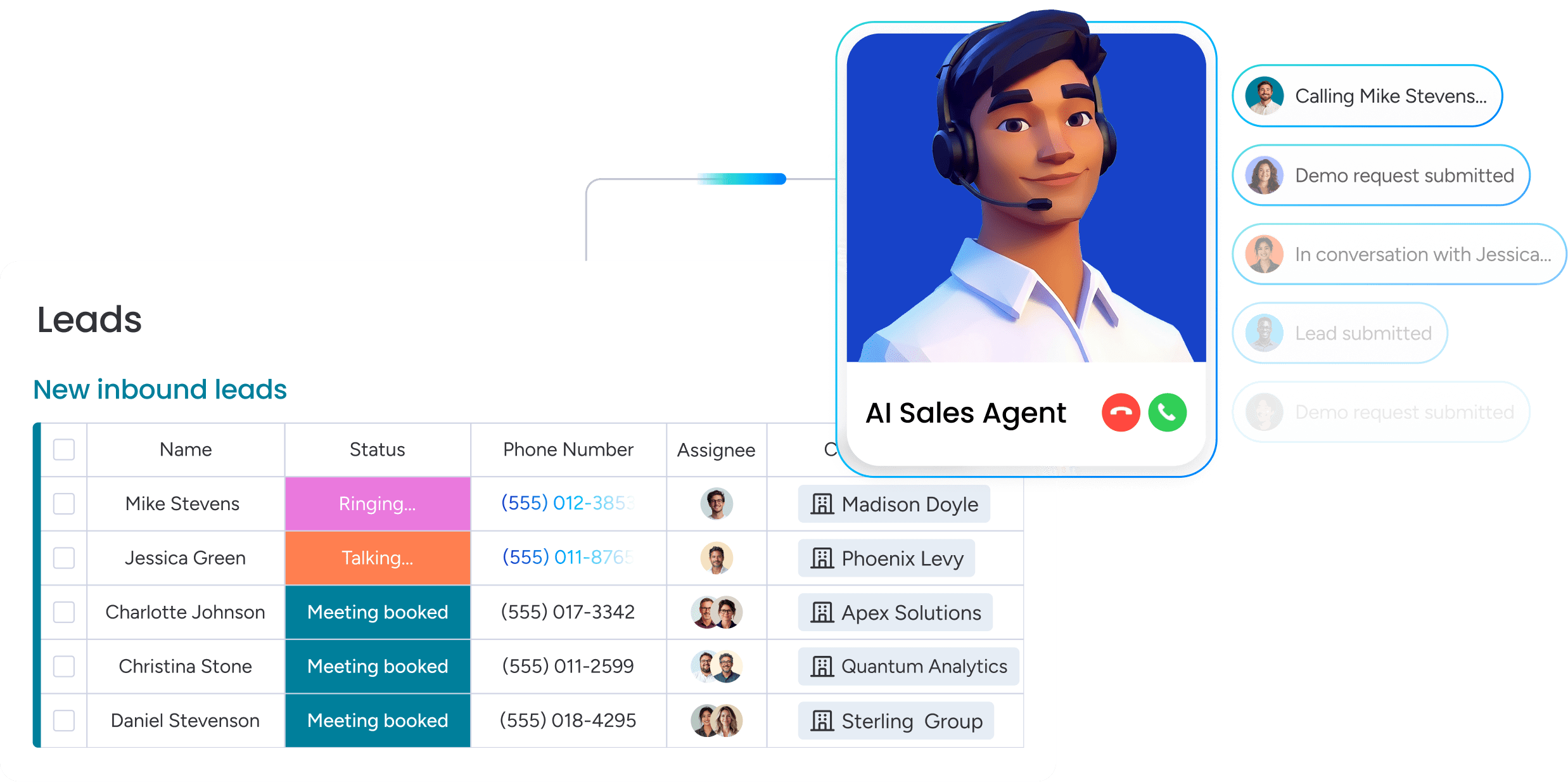
Visual pipeline management in monday CRM supports different sales motions without requiring separate systems. Inside sales teams can run streamlined pipelines with five to seven stages that reflect shorter cycles. Outside sales teams can build more detailed pipelines with 8–12 stages that match longer, stakeholder-heavy timelines.
Mobile access helps outside sales stay productive during fieldwork. Representatives can update deal stages from a smartphone, capture meeting notes right after conversations, and review account history before walking into an appointment. Inside sales teams benefit from the same flexibility when working remotely, without losing visibility or consistency.
Territory management also supports both geographic and account-based strategies.
Inside sales can be assigned by industry or company size, while outside sales can be organized by regional territories. Lead routing distributes opportunities based on deal characteristics, sending higher-value prospects to outside sales and lower-value deals to inside teams.
AI-powered productivity for both models
In 2026 it’s time to embrace automation as it reduces manual work that takes time away from selling. Inside sales representatives can save 30–45 minutes per day by reducing repetitive data entry. Outside sales teams benefit from structured meeting recaps and follow-up reminders that keep momentum between visits.
Key AI capabilities include:
- AI email composition: Generate personalized outreach based on deal context and customer industry.
- Timeline summarization: Provide instant account history summaries before calls or meetings.
- Sentiment analysis: Identify buying signals and concerns across communication channels.
- Lead scoring: Prioritize opportunities using predictive analytics.
- Custom automations: Build workflows for your sales process without coding.
Real-time visibility across sales teams
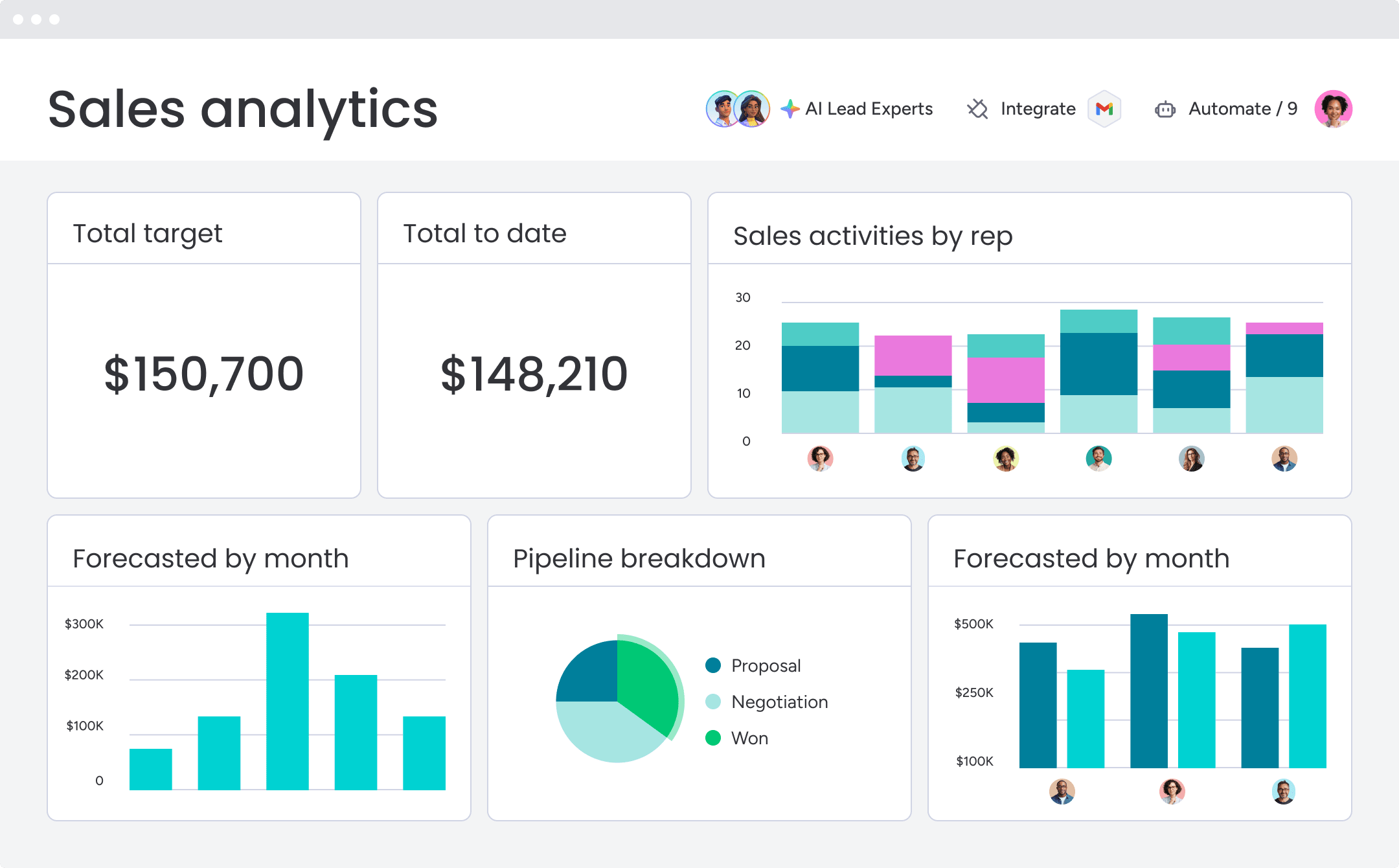
Dashboards and analytics make it easier to evaluate performance across both models. Activity reporting can track call volume for inside sales alongside meeting frequency for outside teams. Pipeline analysis shows which motion drives faster progression, stronger conversion, and higher win rates.
Side-by-side performance dashboards further support clearer decisions about model assignment. Teams can adjust coverage when data shows stronger outcomes, shifting deals between inside and outside motions based on deal needs. Forecasting also improves when analytics account for both high-volume inside pipelines and high-value outside opportunities.
Finally, real-time visibility supports better resource planning across the entire organization. Leaders can see where to invest, whether that means scaling inside sales for efficiency or expanding outside sales for relationship depth.

“With monday CRM, we’re finally able to adapt the platform to our needs — not the other way around. It gives us the flexibility to work smarter, cut costs, save time, and scale with confidence.”
Samuel Lobao | Contract Administrator & Special Projects, Strategix
“Now we have a lot less data, but it’s quality data. That change allows us to use AI confidently, without second-guessing the outputs.”
Elizabeth Gerbel | CEO
“Without monday CRM, we’d be chasing updates and fixing errors. Now we’re focused on growing the program — not just keeping up with it."
Quentin Williams | Head of Dropship, Freedom Furniture
“There’s probably about a 70% increase in efficiency in regards to the admin tasks that were removed and automated, which is a huge win for us.“
Kyle Dorman | Department Manager - Operations, Ray White
"monday CRM helps us make sure the right people have immediate visibility into the information they need so we're not wasting time."
Luca Pope | Global Client Solutions Manager at Black Mountain
“In a couple of weeks, all of the team members were using monday CRM fully. The automations and the many integrations, make monday CRM the best CRM in the market right now.”
Nuno Godinho | CIO at Velv
“monday.com provides developmental flexibility, operational efficiency, and data transparency — all in one place. We became a company that moved from chasing data to leading with it.”
Hyunghan Lee | Team Lead, Sandbox Network
"monday.com brought every part of our business into one connected space. The harmony between work management and CRM has become our operating system — giving us the clarity and confidence to scale.”
Jennifer Chinburg | Executive Vice President of Corporate Development & Brand, Chinburg Properties
“We just weren’t getting value from our old CRM. With monday.com, it's a thousand times better. Our sales teams are more informed, more consistent, and far more connected."
James Arnold | Chief Operating Officer, CenversaChoose the sales model that drives your growth
Choosing between inside sales, outside sales, or a hybrid approach depends on product complexity, customer expectations, and deal dynamics. Remember, inside sales supports speed and efficiency for standardized offerings whereas outside sales supports deeper relationship building for complex, high-value deals.
Many organizations combine both models to match effort to opportunity. Inside sales can qualify and progress deals efficiently, while outside sales focuses on closing larger opportunities with higher stakeholder complexity.
The strongest approach in 2026 depends on having a CRM that supports the way sales teams work. A platform should fit the sales process, rather than forcing rigid workflows that slow teams down.
With monday CRM, organizations can start with one model and expand into another while keeping data integrity and team execution consistent.
Frequently asked questions
What's the main difference between inside and outside sales?
The main difference between inside and outside sales is location and interaction method. Inside sales representatives work remotely using digital tools like phone and email, while outside sales representatives travel to meet customers face-to-face at their locations.
Which sales model typically has shorter sales cycles?
Inside sales typically has shorter sales cycles of up to eight weeks compared to outside sales cycles of 2–12 months, as digital communication enables faster follow-up and decision-making without coordinating in-person meetings.
Can small businesses effectively use outside sales?
Small businesses can use outside sales effectively when targeting local markets with high-value products or services, although most begin with inside sales due to lower costs and faster scaling potential.
How do you transition from inside sales to outside sales?
Transitioning from inside sales to outside sales requires defining territory assignments, training representatives in in-person selling, investing in travel infrastructure, and establishing performance metrics focused on relationship depth rather than volume.
What technology do hybrid sales teams need?
Hybrid sales teams need unified CRM platforms with mobile accessibility, video conferencing tools, automated handoff workflows, and analytics that track performance across both inside and outside sales models.
Is inside sales replacing outside sales completely?
Inside sales is not replacing outside sales completely. Most organizations adopt hybrid models that use inside sales for efficiency and outside sales for high-value relationships, with 85% of B2B companies combining both approaches.

 Get started