



To thrive in a landscape where AI handles initial outreach, sales professionals must evolve from information gatherers into strategic advisors. When a notification lands signaling a qualified lead, the value you provide shifts from asking questions to interpreting the data AI has already collected.
The shift is already underway as AI manages lead scoring, first-touch engagement, and automated sequencing. Consequently, prospects now arrive at human conversations with higher expectations, seeking real strategy over basic discovery. Success depends on your ability to leverage these automated insights to build deeper, more authentic connections.
The following sections outline how to differentiate your approach when AI handles the first touch. You will gain strategies for mastering the handoff, leveraging human skills as a competitive edge, and adding value post-qualification. By the end, you’ll be equipped to build a high-visibility model that accelerates deal closure.
Key takeaways
- Focus on strategy, not discovery: AI handles basic qualification, so sales reps should enter conversations as strategic advisors who interpret data and design solutions rather than gathering basic information.
- Master the handoff moment: set clear triggers for when humans should take over from AI, like complex questions, demo requests, or multiple stakeholders, to maximize impact and avoid awkward transitions.
- Build trust through authentic conversations: use emotional intelligence and real storytelling to create genuine connections that AI cannot replicate, especially during complex decision-making scenarios.
- Track quality over quantity: measure conversation depth, deal progression velocity, and stakeholder engagement rather than call volume or email sends to understand what actually drives revenue.
- Gain unified visibility: see every AI and human interaction in one timeline, set custom automation triggers, and leverage AI insights while maintaining complete context across your entire revenue team with solutions like monday CRM.
What happens after AI handles the first touch?
Sales has changed. AI now manages initial prospect interactions, including lead scoring, first-touch outreach, basic qualification, and automated email sequences. With 88% of organizations now using AI in at least one business function, this transformation is becoming the standard rather than the exception. Sales reps need to rethink what they actually do.
“First touch” encompasses everything from the moment a lead enters your system to the point where basic qualification questions have been answered and initial information has been delivered. What happens next determines whether deals accelerate or stall.
When AI handles the first touch, it creates three big changes that hit revenue teams every day. It’s the first step toward adapting your sales strategy to focus on high-value human interaction.
- From discovery to strategy: traditional discovery calls are being replaced by AI-powered data collection. Reps now enter conversations with pre-qualified prospects, shifting from asking questions to interpreting AI data and building solutions.
- Elevated buyer expectations: prospects who engage with AI systems expect immediate responses and personalized communication. They expect reps to already know their company info, industry challenges, and potential solutions — not start from scratch.
- Strategic intervention points: human connection creates the most impact during complex decision-making, multi-stakeholder situations, and emotional buying triggers that AI cannot handle. With platforms like monday CRM, teams can set clear triggers for these intervention points, ensuring reps engage when they deliver the most value.
Understand the shift from discovery to strategy
AI-powered data collection eliminates the need for traditional discovery calls where sales reps gather basic information. Prospects arrive at human conversations already pre-qualified, with their initial pain points documented and basic company information collected.
AI systems have already captured details like:
- Company size and industry: basic firmographic data that shapes solution fit.
- Budget ranges and timeline expectations: financial parameters and decision urgency.
- Primary challenges and stated needs: surface-level pain points expressed by prospects.
- Engagement patterns and content preferences: behavioral signals indicating interest areas.
Sales professionals now operate as strategic advisors rather than information gatherers. When a rep connects with a prospect, they already have access to engagement patterns, stated needs, and preliminary qualification data.
The conversation immediately focuses on solution design, strategic fit, and relationship building rather than asking “What keeps you up at night?” or “Tell me about your current process.”
This transformation requires a different skill set. Sales reps must excel at interpreting AI-collected data, identifying patterns and insights that automated systems miss, and translating raw information into strategic recommendations.
For example, a prospect might have told the AI they need “better reporting,” but the human sales rep recognizes this actually signals misaligned team goals or inadequate data collection processes.
Adapt to new buyer expectations in AI-first engagement
Buyers who interact with AI systems develop specific expectations for human follow-up. They expect sales reps to already know their company size, industry, primary challenges, and basic requirements. Asking these questions again signals poor internal coordination and wastes the prospect’s time.
Buyers anticipate that human sales reps will arrive prepared with:
- Relevant solutions: industry-specific recommendations based on AI-gathered data.
- Strategic insights: implementation approaches and stakeholder alignment strategies.
- Business outcomes focus: immediate discussions about results rather than basic qualification.
This creates both opportunities and challenges. Sales reps who leverage AI insights effectively can create impressive first impressions by demonstrating deep understanding of the prospect’s situation. However, reps who ignore AI-collected data or ask redundant questions damage credibility and slow deal progression.
Identify where human connection accelerates deals
Specific moments in the sales process demand human intervention to accelerate deal progression. Know these moments and you’ll close deals faster.
- Complex decision-making scenarios: require human judgment that AI cannot replicate. When a prospect must choose between competing priorities or navigate organizational constraints, human sales reps provide the strategic guidance that moves deals forward.
- Multi-stakeholder situations: create another critical intervention point. AI can identify that multiple people are involved in a decision, but only human sales reps can navigate the relationships, understand power dynamics, and build consensus across different departments and levels. A CFO cares about ROI and risk mitigation, while an operations manager focuses on implementation ease and team adoption.
- Emotional buying triggers: represent the most significant opportunity for human value creation. When prospects express frustration with current solutions, anxiety about making the wrong choice, or excitement about potential outcomes, human sales reps can respond with empathy and authentic connection that builds trust and accelerates decisions.
6 human skills that become your competitive edge
While AI handles routine activities with increasing efficiency, certain uniquely human capabilities become more valuable than ever in the sales process. These skills cannot be replicated by AI systems and they represent the key differentiators for top-performing sales professionals.
Rather than competing with AI, successful sales reps focus on capabilities that only humans can deliver. The six essential skills that separate top performers from the rest are:
1. Complex problem-solving beyond surface needs
AI excels at identifying surface-level problems based on stated needs and common patterns. A prospect tells the AI they need “better reporting,” and the system recommends reporting features. But real business problems don’t show up clearly. What prospects say they need usually hides the actual issue.
Human sales reps uncover root causes by:
- Asking probing questions: digging deeper than surface-level responses.
- Connecting unrelated information: spotting patterns across different data points.
- Recognizing hidden issues: understanding when stated needs to mask deeper problems.
When a company says they need better reporting, the real issue might be misaligned team goals, inadequate data collection processes, or lack of accountability mechanisms. The reporting problem is a symptom, not the disease.
2. Reading the room with emotional intelligence
After AI sets the bar for personalized service, emotional intelligence matters more than ever. Sales reps must read verbal and non-verbal cues, understand stakeholder dynamics, and adapt their approach based on emotional context that automated systems cannot detect.
During video calls or in-person meetings, human sales reps:
- Recognize hesitation: identifying when prospects are uncertain due to past vendor experiences.
- Identify decision-makers: understanding group dynamics and real influence patterns.
- Adapt communication style: adjusting approach based on personality types and stress levels.
3. Industry expertise that AI can’t replicate
Real industry expertise delivers something AI can’t match with data alone. When you know industry challenges, regulations, and market shifts, you can offer insights AI’s generic responses can’t touch.
- Healthcare expertise: sales reps who understand HIPAA compliance requirements, reimbursement models, and clinical workflow challenges can speak credibly with healthcare administrators and clinicians.
- Manufacturing knowledge: reps who know changeover time optimization or OEE tracking can engage meaningfully with operations leaders.
4. Creative deal structuring for unique situations
AI can suggest standard pricing and package options based on deal size and customer segment, but human creativity is required for custom deal structures that meet unique client needs.
Sales reps design:
- Flexible payment terms: accommodating budget constraints and cash flow concerns.
- Creative implementation approaches: phased rollouts that align with organizational readiness.
- Customized service packages: solutions that standard configurations cannot address.
Budget limitations might require phased implementations where core functionality deploys first and additional features roll out as budget becomes available. Cash flow concerns might necessitate performance-based pricing models where costs align with realized value.
5. Cross-functional orchestration
B2B deals need coordination across legal, technical, implementation, and customer success. Human sales reps excel at orchestrating these relationships. This matters even more when AI’s already promised fast, smooth service.
Cross-functional orchestration involves:
- Knowing when to involve specialists: understanding which situations require expert input.
- Preparing team members: ensuring specialists understand prospect context and priorities.
- Maintaining continuity: keeping conversations connected across different handoffs.
A technical question might require an engineering demo, but the sales rep ensures the engineer understands the prospect’s context, priorities, and concerns before the conversation.
6. Authentic storytelling that inspires action
Real stories build emotional connections that close deals — something data and feature lists can’t do. Human sales reps share relevant customer success stories, paint vivid pictures of future outcomes, and create compelling narratives that resonate with specific stakeholder concerns.
Effective storytelling goes beyond generic case studies. Sales reps select stories that mirror the prospect’s specific situation, including:
- Similar industry challenges: relevant context that prospects can relate to.
- Comparable organizational size: situations that feel applicable to their scale.
- Relevant transformation outcomes: results that align with their goals.
A manufacturing company considering CRM adoption cares more about how another manufacturer transformed their sales process than about a technology company’s success story.

Build seamless AI-to-human handoffs
Effective handoffs from AI to human representatives are critical for maintaining deal momentum and prospect confidence. Poor transitions can erode trust and negatively impact conversion rates. Prospects experience frustration when they need to repeat information or when human follow-up appears disconnected from their previous AI interactions.
Three core components ensure successful handoffs:
| Component | Purpose | Impact on deals |
|---|---|---|
| Trigger points | Determine when human intervention adds value | Prevents premature or delayed engagement |
| Information transfer | Ensures sales reps have complete context | Eliminates redundant questions and awkward transitions |
| Consistent messaging | Creates unified experience between AI and human | Builds prospect confidence in your organization |
Step 1: set clear triggers for human intervention
Specific criteria should trigger human takeover from AI systems, based on prospect behavior, engagement level, deal complexity, and strategic importance. These triggers get reps involved exactly when they can make the biggest difference.
Behavioral triggers signal when prospects demonstrate readiness for deeper engagement:
- Multiple touchpoints: several interactions within short time frames.
- Complex questions: inquiries beyond AI capabilities.
- High-value content engagement: deep interaction with premium resources.
Explicit triggers occur when prospects take direct actions requesting human involvement:
- Demo requests: direct asks for product demonstrations.
- Custom solution inquiries: questions about specialized configurations.
- Stakeholder expansion: additional decision-makers joining conversations.
Strategic triggers identify opportunities that deserve prioritized human attention:
- Revenue thresholds: opportunities exceeding certain deal sizes.
- Ideal customer profile matches: prospects fitting your best customer criteria.
- Competitive situations: scenarios requiring strategic positioning.
Step 2: capture AI insights for smarter follow-up
Sales representatives can utilize AI-generated data to enhance the effectiveness of their outreach. The information captured during the automated qualification phase establishes the foundation for high-value human conversations.
To ensure informed engagement, AI systems should systematically organize the following insights:
- Content interaction history: which resources the prospect downloaded, which pages they visited, and how much time they spent on each indicates what topics interest them most.
- Response timing and frequency: how quickly prospects respond to AI outreach and how often they engage signals their urgency and interest level.
- Channel preferences: whether prospects engage primarily through email, website visits, or other channels helps sales reps choose the most effective follow-up methods.
Stated needs and pain points provide conversation starting points. When prospects describe their current challenges to AI systems, these statements become valuable context for human conversations. Any information prospects share about budget ranges or decision timelines helps sales reps prioritize opportunities and tailor their approach.
Teams using advanced platforms like monday CRM gain significant value by logging and tracking every interaction including emails, meetings, and notes, on a single, unified timeline. This centralized view ensures sales reps see exactly what AI communicated, how prospects responded, and which stakeholders are engaged before picking up the conversation.
Step 3: create visibility across your revenue team
Handoffs need coordination across SDRs, AEs, and customer success. When everyone sees AI interactions, they understand prospect context and stay consistent.
Without visibility, common failures occur:
- Redundant outreach: SDRs reach out to prospects who have already engaged extensively with AI systems.
- Repeated questions: account executives ask questions prospects already answered.
- Lost context: customer success teams lack information about what was promised during the sales process.
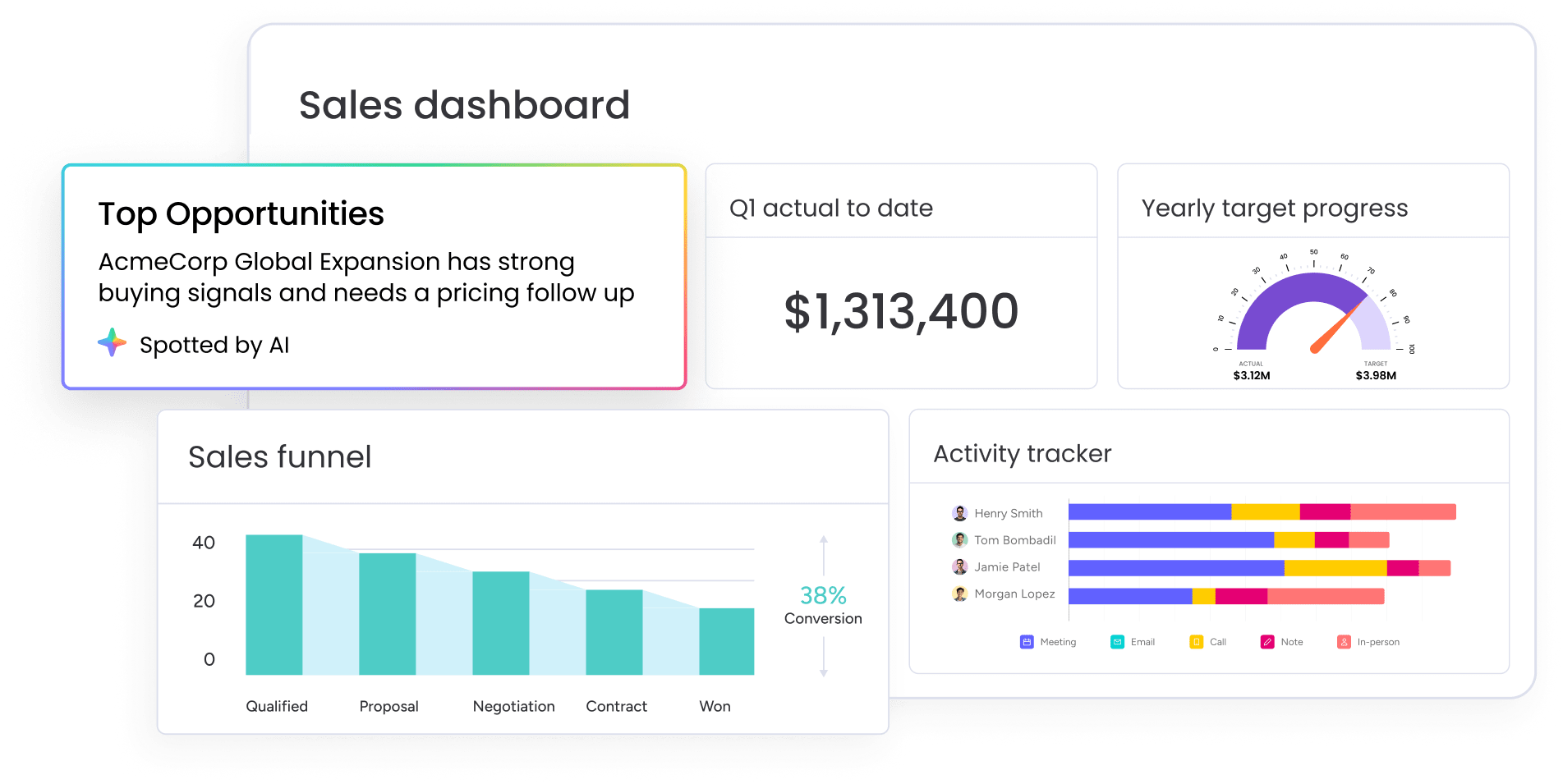
Centralized dashboards provide unified views of prospect interactions, including interaction timelines, engagement scoring, and stakeholder mapping. Revenue teams find success using solutions like monday CRM to gain real-time insight into pipeline status, team performance, and activity status through customizable dashboards, enabling data-driven decisions about when and how to intervene.
5 ways to add value after AI qualification
Once AI completes the qualification phase, sales representatives must pivot to delivering specialized value that automated systems cannot replicate. Leveraging human-centric strategies in high-stakes scenarios accelerates deal closure and distinguishes an organization from competitors who rely solely on automation.
The following five approaches maximize the impact of human intervention:
1. Navigate multi-stakeholder politics
B2B deals involve multiple decision-makers with different priorities and influence. Human sales reps identify key stakeholders, understand their relationships, and navigate internal politics to build consensus.
Effective stakeholder navigation starts with mapping influence and interests:
- Economic buyer: controls budget and makes final decisions.
- Champion: advocates internally for your solution.
- Blockers: oppose the purchase due to competing priorities or past negative experiences.
Sales reps create tailored messaging for each stakeholder group, addressing their specific concerns and priorities. Financial stakeholders receive ROI analyses and risk mitigation strategies, while technical stakeholders get detailed integration documentation. End users see workflow demonstrations and productivity benefits.
2. Customize solutions for edge cases
AI qualification often reveals standard requirements that fit predefined solution packages. However, many prospects have unique requirements that don’t fit standard offerings. Human sales reps identify these edge cases and work with product and technical teams to design custom solutions.
Custom solutions win deals when competitors all offer the same basic features. The vendor who can accommodate unique requirements wins the deal, even if their standard offering isn’t superior.
Common edge cases include:
- Unique integration requirements: connecting with specialized systems.
- Specific compliance needs: meeting industry-specific regulations.
- Unusual implementation timelines: accommodating accelerated or phased rollouts.
Organizations win more deals when they leverage platforms like monday CRM’s no-code customization to adapt workflows to their specific processes without technical complexity, addressing unique requirements that rigid systems cannot accommodate.
3. Build trust through real conversations
Establishing professional trust requires genuine interpersonal engagement that extends beyond automated responses. Sales representatives cultivate meaningful connections through active listening, empathy, and the communication of shared experiences, demonstrating a comprehensive grasp of the prospect’s unique challenges.
Authentic trust-building techniques include:
- Sharing relevant experiences: how similar companies overcame comparable challenges.
- Acknowledging concerns: validating worries without immediate solutions.
- Demonstrating genuine interest: caring about the prospect’s business beyond deal qualification.
4. Champion deals internally
Reps fight for their prospects internally, making sure deals get the attention and resources they need. This matters even more when AI’s already promised fast, responsive service.
Internal championing takes multiple forms:
- Escalating urgent requests: getting priority attention for time-sensitive needs.
- Securing custom pricing: negotiating special terms for strategic opportunities.
- Ensuring implementation readiness: coordinating resources for smooth deployment.
Sales reps who can articulate why a particular deal deserves expedited technical review or custom pricing consideration ensure their prospects receive the attention needed to close successfully.
5. Align executives for faster decisions
Executive-level alignment often requires human-to-human interaction and relationship building that AI cannot facilitate. Sales reps coordinate executive conversations, address C-level concerns, and accelerate decision-making processes.
C-level executives care about different issues than operational stakeholders:
- Strategic fit: how the solution aligns with broader business objectives.
- Organizational change management: impact on company culture and processes.
- Competitive positioning: advantages over alternative approaches.
- Long-term ROI: sustained value creation over time.
Sales reps translate operational benefits into strategic value, showing how the solution supports broader business objectives.
Perfect your timing in AI-driven cadences
AI-driven cadences create strategic opportunities for human intervention, making timing a critical factor in sales success. Sales representatives must develop the ability to recognize optimal moments for human engagement within automated sequences.
Identifying the right moment to transition from AI to human interaction requires careful attention to prospect signals and readiness indicators. Effective sales teams balance automation efficiency with personalized engagement to accelerate deal progression.
Spot high-value opportunities early
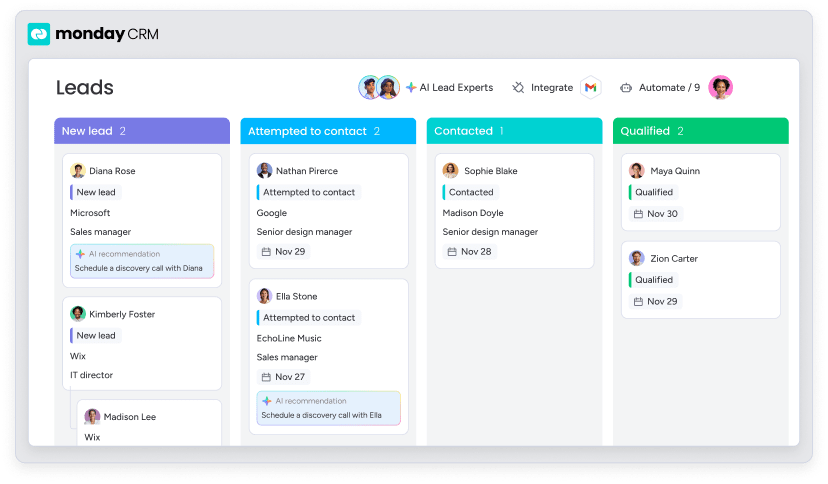
Reps can spot high-value prospects early in AI sequences and give them personal attention to close deals faster.
The table below shows key signals that indicate high-value opportunities requiring immediate human attention:
| Signal type | Indicators | Recommended action |
|---|---|---|
| Quantitative | Company size match, budget authority, deal size potential | Prioritize for immediate outreach |
| Qualitative | Use case alignment, industry expertise match, competitive displacement | Assign experienced rep with relevant background |
| Engagement intensity | Rapid responses, multiple stakeholders, deep content consumption | Same-day human follow-up |
Recognize emotional buying signals
Emotional signals tell you when prospects are ready to talk and predict closes better than company data. Sales reps who identify these signals in AI interaction data and respond appropriately accelerate deals.
Urgency language reveals time pressure:
- Phrases like “need this ASAP”: direct expressions of immediate need.
- “Facing a deadline”: time-bound constraints driving decision urgency.
- “Must implement by [specific date]”: explicit timeline requirements.
Frustration with current solutions indicates readiness to switch:
- Emotional language describing vendor problems: negative sentiment about existing providers.
- Complaints about current system limitations: specific pain points with current tools.
- Expressions of disappointment with existing tools: dissatisfaction signaling openness to change.
Excitement about potential outcomes signals high engagement:
- Enthusiasm about specific capabilities: positive reactions to particular features.
- Positive language about potential results: optimism about transformation possibilities.
- Questions about implementation timelines: forward-looking inquiries indicating serious interest.
Maximize impact with strategic intervention
Strategic intervention at the optimal moment accelerates deal progression, but requires thorough preparation.
Before engaging, sales reps should:
- Review complete AI interaction history: understanding the full conversation context.
- Identify specific triggers: knowing exactly what prompted human intervention.
- Prepare relevant resources: having case studies, technical documentation, or pricing information ready.
Having the right information available before the conversation ensures sales reps can provide immediate value and maintain momentum from AI interactions.
Teams discover that platforms like monday CRM enable them to leverage AI timeline summaries that create short summaries of all communication events, including emails, calls, meetings, and notes. This helps sales reps gain complete understanding of their team’s history with a client in seconds rather than hours.
Coach your sales team for AI collaboration
Sales leadership must evolve training and development methodologies to align with the realities of AI-driven commerce. Traditional success drivers have shifted; therefore, coaching must now focus on integrating automated insights with high-level human execution.
Leaders must guide their teams to view AI as a strategic partner rather than a replacement, fostering a culture of technical proficiency and interpersonal excellence.
Shift metrics from volume to value
Call volume and email counts don’t matter as much when AI handles first touch. Leaders should measure what actually creates value and moves deals forward.
| Traditional metric | AI-enhanced metric | Why it matters |
|---|---|---|
| Number of calls made | Quality of human interactions | Measures whether conversations create meaningful progress |
| Emails sent | Deal acceleration after human intervention | Captures whether human touchpoints speed up deal progression |
| Leads contacted | Stakeholder engagement depth | Reflects ability to build multi-threaded relationships |
| Meetings scheduled | Custom solution creation rate | Measures ability to address unique needs |
| Pipeline created | Deal progression velocity | Shows effectiveness at moving deals forward |
Design AI-enhanced training programs
Sales training programs should incorporate AI usage alongside traditional selling skills, helping reps understand when and how to leverage AI insights while developing uniquely human capabilities.
Essential training components include:
- AI proficiency: interpreting engagement scores and navigating interaction histories.
- Data interpretation skills: recognizing patterns and translating data into insights.
- Emotional intelligence development: reading cues and adapting communication style.
- Complex problem-solving techniques: uncovering root causes and mapping interconnected challenges.
Role-playing scenarios should combine AI insights with human interaction skills. Practice sessions where reps review AI interaction histories and then conduct discovery calls that build on automated qualification prepare teams for real-world situations.
Build new performance frameworks
Performance reviews need to measure both AI collaboration and human impact.
New performance criteria should include:
- Effectiveness of AI-to-human handoffs: how smoothly reps transition from automated to human engagement.
- Quality of stakeholder relationship building: depth and breadth of prospect connections.
- Success in complex deal situations: performance in challenging sales scenarios.
- Ability to create custom solutions: skill in addressing unique requirements.
- Balance between individual performance and team collaboration: contributing to overall team success.
Performance reviews should include both quantitative metrics (conversion rates, deal velocity, average deal size) and qualitative assessments (stakeholder feedback, peer evaluations, manager observations). This shows the complete picture of what reps contribute in AI-driven sales.
Track what matters in AI-human workflows
Effective sales analytics must now evaluate the synergy between automated intelligence and human intervention. To optimize these hybrid workflows, leadership requires specialized dashboards and metrics that move beyond traditional activity tracking.
This transition involves a shift toward data collection methods that isolate the specific impact of each component within the sales cycle.
Step 1: measure quality over quantity
In AI-driven sales, quality metrics provide more meaningful insights than volume-based measurements, revealing actual value creation rather than mere activity levels.
Key quality metrics include:
- Conversation depth scores: measuring sophistication and strategic nature of human conversations.
- Stakeholder engagement levels: number of unique stakeholders engaged and depth of relationships.
- Solution customization rates: percentage of deals involving custom configurations.
- Deal progression velocity: speed of movement through sales stages after human intervention.
Methods for collecting quality data include:
- Conversation intelligence analysis: automated scoring of call quality and outcomes.
- CRM fields for customization tracking: detailed capture of solution modifications.
- Regular deal reviews: structured assessments of opportunity progression.
- Customer feedback surveys: direct input on sales experience quality.
Step 2: calculate human touchpoint ROI
Measure human touchpoint ROI by comparing the value reps create against their time cost.
- Compare AI-only versus AI-plus-human conversion rates: track conversion rates for prospects who receive only AI engagement through to close, then measure conversion rates for prospects who receive human intervention at various stages. Calculate the incremental conversion lift created by human touchpoints.
- Measure time-to-close acceleration: compare sales cycle length for AI-only sequences versus those with strategic human intervention. Calculate the value of faster deal closure in terms of revenue recognition timing and sales capacity.
Step 3: build dashboards for hybrid performance
Dashboards should show AI and human metrics so leaders know when to step in and how to improve workflows.
Essential dashboard components include:
- AI interaction summaries: volume, engagement rates, and common questions.
- Human intervention triggers: response times and effectiveness metrics.
- Deal progression tracking: AI-engaged versus human-engaged opportunities.
- Performance comparisons: different intervention strategies and their outcomes.
Revenue leaders can drive predictable growth at scale by using the code-free, customizable dashboards within solutions like monday CRM to gain immediate insights into pipeline status, sales forecasting, team performance, and activity status. Sales-specific widgets like the leaderboard and funnel help identify strong and weak points in your pipeline.
Modernize your revenue team with AI-human collaboration
Organizations that effectively balance AI efficiency with human connection will achieve superior results. Teams that integrate AI qualification with strategic human involvement will outperform competitors who remain constrained by legacy processes or rely exclusively on automation.
Success requires more than implementing AI tools. Revenue teams must develop new competencies, establish seamless handoff protocols, and adopt evolved performance measurement frameworks. High-performing organizations leverage AI to enhance human capabilities rather than replace the relationships and strategic thinking that drive revenue growth.
Leading teams prioritize human expertise while utilizing AI-generated insights to accelerate deal progression. They establish trust through authentic conversations, navigate complex stakeholder dynamics, and design customized solutions that automated systems cannot replicate.
Revenue teams discover that seamless AI-human collaboration in sales processes becomes possible through unified visibility, flexible automation, and real-time coordination with solutions like monday CRM.
The platform addresses the core challenges of AI-enhanced selling: maintaining context across AI and human interactions, triggering human intervention at optimal moments, and tracking performance across hybrid workflows.
See every interaction in one unified view
Complete visibility into AI and human interactions in one place is what teams get with monday CRM. The platform’s interaction timelines display every touchpoint chronologically, creating a complete picture of the prospect journey.
Sales reps can see all relevant account and contact information with an expanded item view, including all connected deals, accounts, contacts, and projects in one place. This complete view helps teams make better decisions and hand off deals smoothly.
Adapt workflows to your sales process instantly
The flexibility of monday CRM lets sales teams customize workflows to match how they actually work. Teams can establish custom trigger points, configure automation rules to match specific sales processes, and design workflows where AI handles initial qualification while human reps engage at strategic moments.
The no-code builder lets you set up custom triggers, assignment rules, and follow-up sequences in minutes. Unlike legacy CRMs that need technical teams and long rollouts, the platform adapts to how you define success with monday CRM.
Scale personalized engagement with AI insights
Teams scale personalized engagement faster using the AI capabilities within monday CRM combined with human selling skills. The platform’s AI boosts human skills by automating routine work and surfacing insights that guide real conversations.
The AI email assistant helps compose emails in Emails & Activities, while the AI timeline summary simplifies the research process that sales reps and managers take to gain complete understanding of their team’s history with a client.
AI can also autofill columns with capabilities like detect sentiment, extract information, assign a label, and assign a person, letting it assign the right people to the right projects based on defined skills and roles.

“With monday CRM, we’re finally able to adapt the platform to our needs — not the other way around. It gives us the flexibility to work smarter, cut costs, save time, and scale with confidence.”
Samuel Lobao | Contract Administrator & Special Projects, Strategix
“Now we have a lot less data, but it’s quality data. That change allows us to use AI confidently, without second-guessing the outputs.”
Elizabeth Gerbel | CEO
“Without monday CRM, we’d be chasing updates and fixing errors. Now we’re focused on growing the program — not just keeping up with it."
Quentin Williams | Head of Dropship, Freedom Furniture
“There’s probably about a 70% increase in efficiency in regards to the admin tasks that were removed and automated, which is a huge win for us.“
Kyle Dorman | Department Manager - Operations, Ray White
"monday CRM helps us make sure the right people have immediate visibility into the information they need so we're not wasting time."
Luca Pope | Global Client Solutions Manager at Black Mountain
“In a couple of weeks, all of the team members were using monday CRM fully. The automations and the many integrations, make monday CRM the best CRM in the market right now.”
Nuno Godinho | CIO at VelvFrequently asked questions
Will AI eventually replace human sales reps?
The question is whether AI will eventually replace human sales reps. While AI handles routine qualification and follow-up, it cannot replicate uniquely human skills like emotional intelligence, complex problem-solving, or strategic relationship building. Instead of being replaced, sales reps will evolve into strategic advisors who use AI insights to deliver value that automation can't match.
How do I know when to take over from AI in the sales process?
Human intervention should occur when prospects demonstrate specific triggers: complex questions beyond AI capabilities, multiple stakeholders becoming involved, custom solution requests, high-value opportunity indicators, or explicit requests to speak with a human.
What CRM features best support AI-human collaboration in sales?
You need: visibility into all interactions, flexible automation with custom triggers, cross-team collaboration that keeps context, and dashboards that track quality.
How long should I wait before providing human follow-up after AI qualification?
It depends on how engaged the prospect is and how complex the deal looks. Prospects who hit behavioral triggers (multiple touchpoints, complex questions) or explicit triggers (demo requests, custom inquiries) should receive same-day human response.
Can AI handle complex B2B sales effectively without human involvement?
AI handles qualification, follow-up, and basic info. But complex deals need human skills to navigate stakeholders, design custom solutions, build relationships, and close unique requirements.
How do I measure ROI of human versus AI touchpoints in sales?
Track deal size, close rates, and time-to-close for AI-only versus AI-plus-human deals. Calculate the extra revenue human touchpoints create. Compare this value against the cost of sales rep time investment to determine ROI.

 Get started