


Sales teams hit their activity numbers. Calls get made, emails go out, meetings get booked. But the pipeline tells a different story. Leads don’t convert. Deals stall in discovery. Reps spend more time chasing unqualified prospects than closing real business.
The challenge isn’t generating leads anymore, but about generating leads that actually turn into customers. Too many teams chase volume over quality, flooding the pipeline with contacts who will never buy, while high-intent prospects slip through the cracks without a system to identify, qualify, and nurture them effectively.
Below are 15 proven strategies that actually generate B2b sales leads worth having: from turning customers into advocates and attracting buyers with high-value content to using AI for faster qualification and building scalable referral engines, each strategy helps you create a repeatable system that fills your pipeline with leads worth closing.
Key takeaways
- Focus on lead quality over quantity: 20 high-quality prospects who match your ideal customer profile convert better than 100 random contacts flooding your pipeline.
- Combine three to four sales lead generation strategies for resilient results: mix referral programs, content marketing, and targeted outreach rather than betting everything on one approach.
- Track metrics that connect to revenue, not vanity numbers: monitor cost per lead by channel, conversion rates, and pipeline coverage to guide budget decisions and process improvements.
- Centralize all lead sources for complete visibility: automatically capture, score, and route prospects from any channel while tracking their complete journey from first contact to closed deal — platforms like monday CRM make this possible without technical complexity.
- Qualify leads using multiple data points beyond basic demographics: combine behavioral signals, buying intent, and decision-making authority to identify prospects ready for sales conversations.
What are sales leads and why does quality outperform quantity?
.jpg)
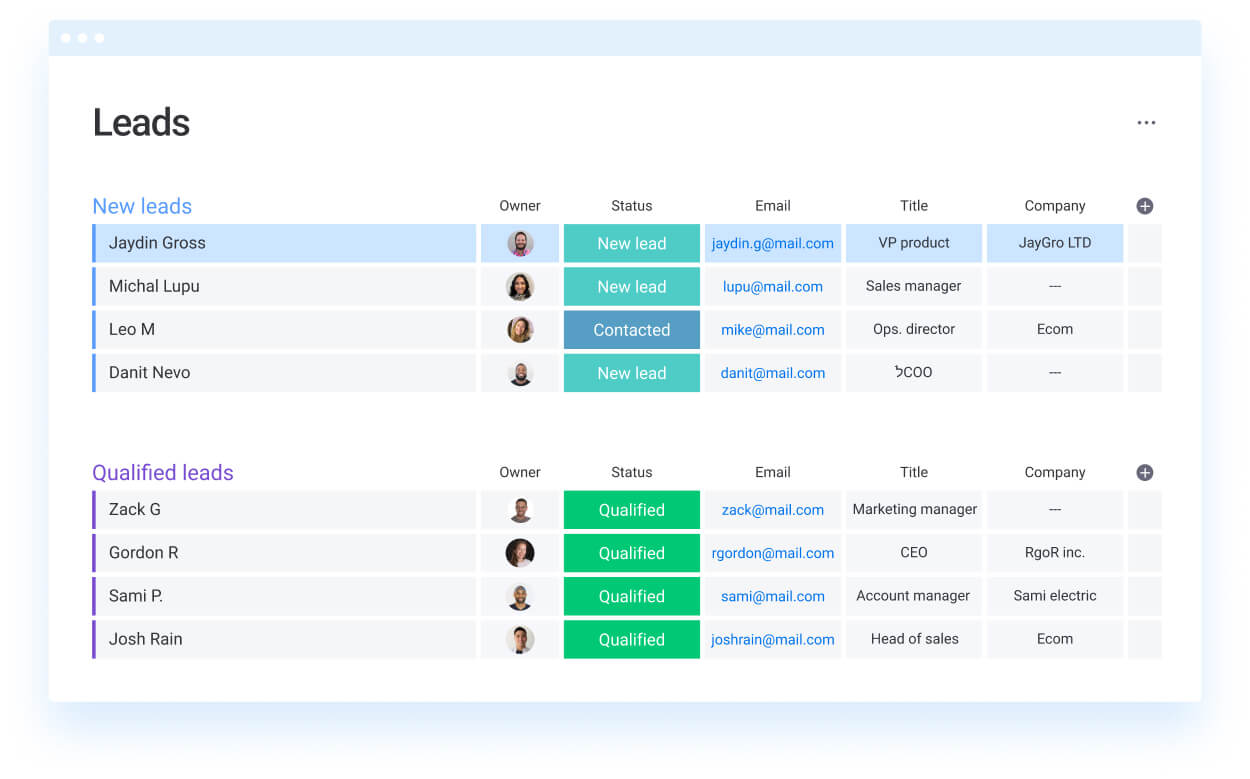
A sales lead is more than just a name in a database; it is an individual who has actively “raised their hand” by downloading content, signing up for a demo, or engaging with your marketing. However, many teams make the mistake of flooding their pipeline with thousands of unqualified contacts, which ultimately dilutes conversion rates.
In reality, a sales rep chasing 100 mediocre leads typically closes fewer deals than one focused on 20 high-quality opportunities. For example, companies that use AI to prioritize and qualify leads can see conversion rates nearly double from 1.8% to 3.0% in just twelve weeks.
The best leads match these criteria:
- Fit your ideal customer profile: they’re in the right industry, company size, and budget range with problems your solution actually solves.
- Show buying intent: they repeatedly visit pricing pages, download comparison guides, or attend product webinars — real signals, not just browsing.
- Have decision-making authority: they can influence or make purchasing decisions, not just gather information for someone else.
- Meet timing requirements: they’re actively evaluating solutions now, not collecting ideas for next year.
Understand the 4 types of leads that drive revenue growth
Not all leads enter your pipeline the same way or need the same treatment. Categorizing leads helps you prioritize efforts, customize approaches, and actually close deals. Each type requires different nurturing strategies and timelines to maximize conversion potential.
Type 1: marketing qualified leads (MQLs)
MQLs have engaged with your marketing content enough to show potential interest but aren’t ready for sales contact. These prospects download whitepapers, attend webinars, or visit pricing pages multiple times. They’re researching solutions, building their case internally, or comparing options.
Marketing teams nurture MQLs through targeted email sequences and progressive content offers. The goal is education and trust-building before any sales conversation.
Teams using solutions like monday CRM track engagement scores automatically, flagging when leads hit qualification thresholds for seamless handoffs to sales.
Type 2: sales qualified leads (SQLs)
SQLs have been vetted by sales and deemed ready for direct engagement. What separates an SQL from an MQL is validation: a conversation where the prospect confirms they have a real problem, budget to solve it, and authority to make decisions.
Sales teams use frameworks like BANT (Budget, Authority, Need, Timeline) to assess readiness. The qualification process includes:
- Budget confirmation: establishing available resources for solution implementation.
- Timeline establishment: understanding when they need to make a decision.
- Decision-maker identification: confirming who influences or approves purchases.
- Pain point discovery: uncovering specific challenges your solution addresses.
Type 3: product qualified leads (PQLs)
PQLs emerge from product usage or trial experiences. These leads have actually used your product, making them fundamentally different from prospects who’ve only consumed marketing content. They’ve built workflows, imported data, or integrated other platforms, showing real investment in your solution.
PQL triggers include hitting usage limits, attempting premium features, extending trials, or inviting team members. These users convert at higher rates because they’ve experienced value firsthand and understand exactly what they’re buying.
Type 4: customer expansion leads
These opportunities exist within your current customer base for upselling, cross-selling, or expansion. Existing customers already trust you, understand your product, and have seen results, making them your highest-converting lead source.
According to McKinsey, retaining a customer costs less than one-third of acquiring a new one, and existing customers generate 10% more revenue on average than new customers.
Different lead types typically perform as follows:
| Lead type | Source | Typical conversion rate | Best nurturing approach |
|---|---|---|---|
| MQL | Marketing content engagement | 5-15% to SQL | Automated email sequences, educational content |
| SQL | Sales qualification process | 20-30% to customer | Direct sales engagement, personalized demos |
| PQL | Product usage and trials | 25-40% to customer | In-app messaging, usage-based outreach |
| Customer expansion | Existing customer base | 40-60% to expansion | Account reviews, proactive recommendations |

“With monday CRM, we’re finally able to adapt the platform to our needs — not the other way around. It gives us the flexibility to work smarter, cut costs, save time, and scale with confidence.”
Samuel Lobao | Contract Administrator & Special Projects, Strategix
“Now we have a lot less data, but it’s quality data. That change allows us to use AI confidently, without second-guessing the outputs.”
Elizabeth Gerbel | CEO
“Without monday CRM, we’d be chasing updates and fixing errors. Now we’re focused on growing the program — not just keeping up with it."
Quentin Williams | Head of Dropship, Freedom Furniture
“There’s probably about a 70% increase in efficiency in regards to the admin tasks that were removed and automated, which is a huge win for us.“
Kyle Dorman | Department Manager - Operations, Ray White
"monday CRM helps us make sure the right people have immediate visibility into the information they need so we're not wasting time."
Luca Pope | Global Client Solutions Manager at Black Mountain
“In a couple of weeks, all of the team members were using monday CRM fully. The automations and the many integrations, make monday CRM the best CRM in the market right now.”
Nuno Godinho | CIO at Velv15 proven strategies to generate high-quality sales leads
Building a resilient lead generation system means diversifying your approach. The best teams don’t rely on a single channel, but implement three to four complementary strategies that work together to create a pipeline that won’t collapse when one channel underperforms.
Each approach reaches different prospects at different stages of their buying journey, creating multiple paths to revenue.
To help you construct this high-performance engine, we’ve outlined 15 proven strategies for capturing leads that truly convert.
Strategy 1: turn happy customers into your best lead source
Referral programs leverage your most credible asset: satisfied customers who’ve achieved real results. Start by identifying customers who’ve seen measurable success, engage regularly with your team, and have networks in your target market.
Key implementation steps:
- Identify ideal referrers: focus on customers with measurable success and strong networks in your target market.
- Structure mutual value: create incentives that benefit both referrer and prospect, not just one-sided rewards.
- Track referral sources: use your CRM to measure which customers generate valuable introductions; with advanced platforms like monday CRM, you can create a dedicated board to track every referred lead, automate reward fulfillment, and build dashboards showing which advocates are your top performers.
Referred leads convert at higher rates because they enter conversations with built-in trust.
Strategy 2: create valuable content that attracts ideal buyers
Content marketing works when you answer the exact questions your buyers are asking. Therefore, listen to what comes up in sales calls, check what they’re Googling, and jump into industry forums where they’re discussing problems you solve. Create educational content that solves real problems, not promotional fluff.
Content strategy essentials:
- Gate high-value content: use lead capture forms for premium resources like comprehensive guides and templates.
- Build trust first: provide substantial free content before asking for information.
- Focus on education: address real problems with actionable solutions, not product pitches.
Content-generated leads often have longer sales cycles but higher conversion rates because they’re self-educating and entering conversations more informed.
Strategy 3: optimize every page for lead capture
Strategic lead capture means placing forms where prospects are most engaged. High-converting pages include blog posts with relevant content upgrades, pricing pages with demo requests, and case studies with similar customer examples.
Optimization tactics:
- Test form placement: try different locations to find what works best for your audience.
- Create immediate value: offer templates, calculators, or assessments prospects can use right away.
- Match content to intent: align lead magnets with the specific page content and visitor intent.
Strategy 4: send personalized outreach that gets responses
Cold email and LinkedIn outreach work when you research prospects thoroughly and personalize beyond just inserting names.
However, be aware that violating telemarketing regulations now carries civil penalties of up to $53,088 per violation in 2026, making permission-based, high-quality outreach essential. Reference specific details about their company, recent news, or challenges you’ve helped similar organizations solve.
Outreach best practices:
- Research thoroughly: reference specific company details and recent developments that show you’ve done your homework.
- Focus on follow-up: space messages three to five days apart with varied approaches and value in each touchpoint.
- Track and refine: monitor response rates and adjust messaging accordingly based on what resonates.
Strategy 5: build strategic partnerships that multiply reach
Partner with businesses that serve your same customers but don’t compete with you: software companies teaming up with agencies, service providers connecting with product vendors. These partnerships multiply your reach without multiplying your budget.
Partnership framework:
- Mutual value exchange: structure partnerships around shared benefits that make sense for both organizations.
- Separate tracking: monitor partnership-generated leads to measure ROI and identify your most valuable relationships.
- Warm introductions: leverage partner trust for qualified prospect connections that convert at higher rates.
Strategy 6: master LinkedIn for B2B lead generation
LinkedIn strategies focus on building genuine authority through consistent value delivery. To do this effectively, you must first optimize your profile to communicate exactly who you help and how. Furthermore, you should share insights that demonstrate your expertise and engage thoughtfully with your target audience’s posts before reaching out.
LinkedIn execution plan:
- Profile optimization: clearly communicate your value proposition and who you serve.
- Value-first engagement: comment meaningfully on prospects’ content before making connection requests.
- Sales Navigator usage: use advanced filters to identify ideal prospects based on specific criteria.
Strategy 7: run laser-targeted paid campaigns
Paid advertising generates leads when targeting is precise and campaigns optimize for quality over volume. Start with ideal customer profiles and use platform targeting to reach specific audiences. Create ad creative that speaks directly to pain points.
Campaign optimization steps:
- Precise targeting: use detailed customer profiles for audience selection to minimize wasted spend.
- Dedicated landing pages: match ad messaging to landing page content for consistent experience.
- Cost-per-led calculation: base budgets on conversion rates and customer lifetime value, not arbitrary numbers.
Strategy 8: host engaging webinars and virtual events
Webinars generate leads by providing concentrated value in an interactive format. Choose topics that attract ideal customers by addressing their biggest challenges. Structure presentations to educate first, sell second.
Webinar success factors:
- Topic selection: address specific challenges your audience faces, not generic industry trends.
- Multi-channel promotion: use email, social media, and partnerships to maximize registration.
- Differentiated follow-up: treat attendees differently than no-shows with tailored messaging for each group.
Strategy 9: deploy AI-powered chat for instant engagement
Chatbot implementation captures prospects when they’re most engaged. AI chat qualifies visitors through conversational questions and schedules meetings directly. As a result, you can capture lead information around the clock.
Chat implementation essentials:
- CRM integration: automatically create lead records and trigger workflows without manual data entry.
- Human handoff balance: know when to transfer qualified prospects to real people for complex questions.
- 24/7 availability: capture leads outside business hours when competitors might miss them.
Strategy 10: network at the right industry events
Virtual and in-person networking generates leads when you attend events where ideal customers gather. Choose events based on attendee profiles, not just size or brand recognition. Prepare by researching attendees and developing conversation starters.
Networking optimization:
- Event selection: focus on attendee quality over event size to maximize relevant connections.
- Preparation: research attendees and prepare conversation starters that demonstrate genuine interest.
- Quick follow-up: contact new connections within 48 hours while the conversation is still fresh.
Strategy 11: generate leads through social selling
Social selling builds authority by consistently providing value where prospects spend time. Share insights, engage in discussions, and help others without expecting immediate returns. Once trust is built, you can convert social interactions into opportunities by moving conversations to direct messages.
Social selling approach:
- Consistent value delivery: share insights and expertise regularly without constant self-promotion.
- Genuine engagement: participate in discussions authentically, not just to pitch your solution.
- Strategic transition: move promising conversations to private channels when timing is right.
Strategy 12: develop interactive tools prospects love
Lead magnets like calculators and assessments generate leads by providing immediate, personalized value. ROI calculators help prospects quantify potential value. Maturity assessments benchmark their current state against best practices.
Interactive tool benefits:
- Immediate value delivery: provide instant, personalized results that prospects can use right away.
- Natural lead capture: user input creates logical information exchange that doesn’t feel forced.
- Qualification insights: learn about prospect needs through their inputs and responses.
Strategy 13: leverage intent data to find ready buyers
Intent data tracks behavioral signals indicating prospects are actively researching solutions. Third-party providers monitor content consumption across publisher networks. First-party data tracks behavior on your own properties.
Intent data applications:
- Prioritized outreach: focus on prospects showing active buying signals rather than cold contacts.
- Lead scoring integration: incorporate intent signals into qualification models for better prioritization.
- Trigger-based campaigns: launch personalized outreach when prospects hit specific engagement thresholds.
Strategy 14: create microsegments with AI for hidden opportunities
AI-powered segmentation identifies overlooked prospect groups by finding patterns in successful conversions. Since machine learning analyzes hundreds of variables, it can identify subtle commonalities among your best customers.
These microsegments reveal unexpected opportunities including specific job titles, company characteristics, or behavioral patterns you hadn’t considered. The result is more targeted campaigns that speak directly to niche audiences with higher conversion potential.
Strategy 15: implement referral programs that scale
Systematic referral programs move beyond ad-hoc requests to create consistent referral flow. Build referral workflows into customer onboarding and success milestones. Automate program management through your CRM to track sources, rewards, and conversion rates.
Scalable referral program elements:
- Automated workflows: trigger referral requests at optimal moments in the customer journey.
- Easy participation: make it simple for customers to refer with pre-written messages and shareable links.
- Performance tracking: monitor which customers generate the most valuable referrals to focus your efforts.
Score and qualify leads for predictable revenue
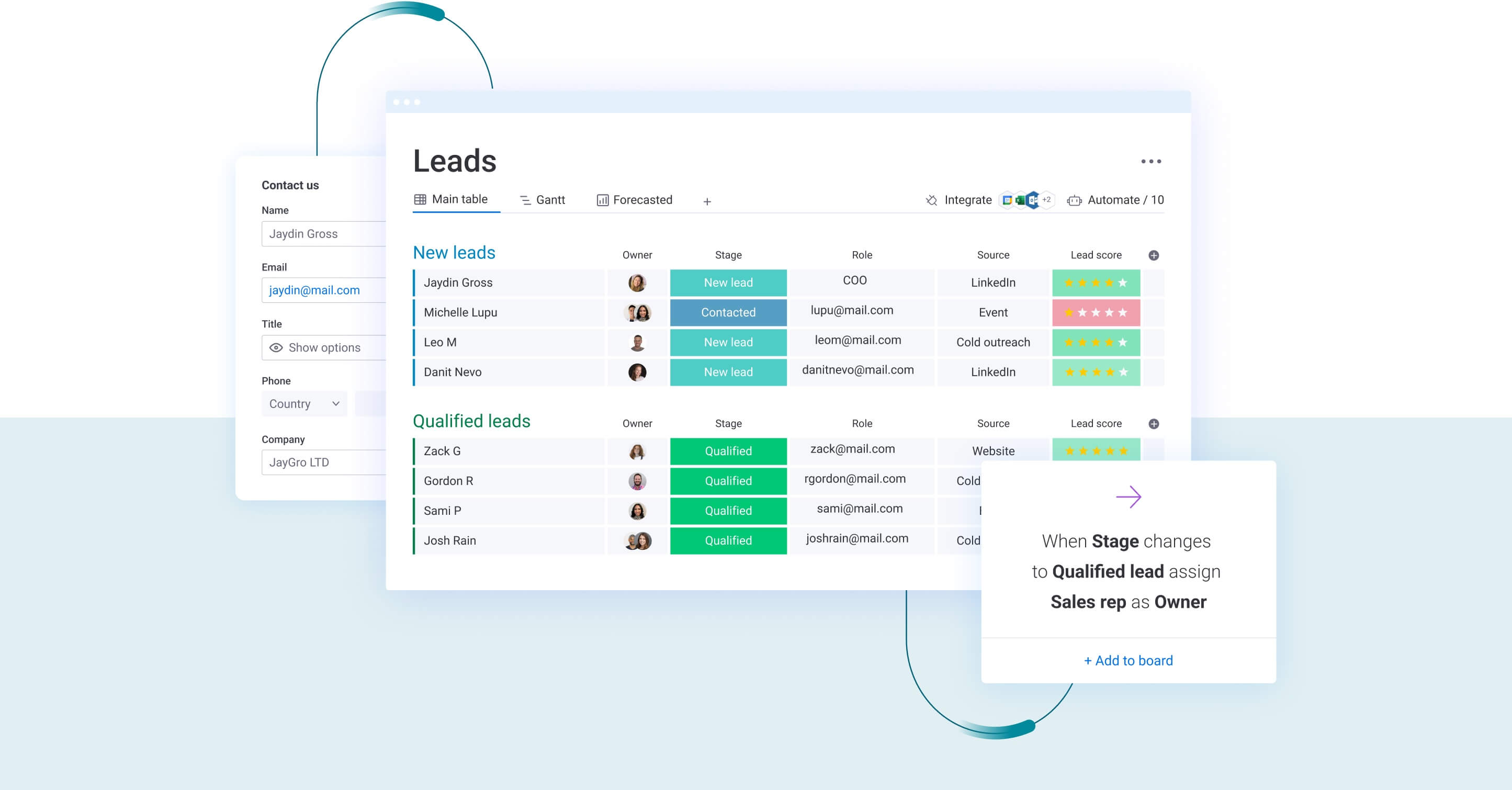
Lead scoring and qualification systems act as a filter, allowing revenue teams to focus exclusively on the most promising opportunities. By implementing a structured qualification process, you create a predictable pipeline flow and significantly improve sales efficiency.
Today, modern approaches combine multiple data sources to identify exactly which prospects are most likely to convert.
To move beyond simple point systems that treat all actions equally, effective scoring models must incorporate multiple dimensions that reflect real conversion patterns.
Advanced scoring components:
- Positive scoring: award points for desirable characteristics and behaviors based on conversion correlation.
- Negative scoring: subtract points for disqualifying factors to prevent unqualified leads from reaching sales.
- Decay scoring: reduce scores over time for inactive leads to reflect diminishing interest.
- Threshold-based actions: trigger specific workflows when leads cross score thresholds.
AI-powered lead scoring analyzes patterns across hundreds of data points simultaneously, identifying correlations that manual processes cannot detect. While sales teams typically track five to six qualification signals, AI-powered scoring systems identify subtle behavioral patterns that indicate purchase readiness.
Teams using modern platforms like monday CRM benefit from AI capabilities that analyze deal patterns, suggest optimal next actions, and identify which prospects require immediate attention versus continued nurturing.
The marketing-to-sales handoff represents a critical moment where qualified leads often fall through cracks. Define specific SQL requirements including minimum lead score, behaviors completed, and qualification criteria confirmed. Establish communication protocols ensuring sales teams receive context about each lead’s journey.
8 metrics to optimize lead generation
The metrics you track directly influence your results. Monitor these indicators closely and use the insights to reallocate budget toward high-performing channels and optimize underperforming ones. Focus on metrics that directly connect to revenue rather than vanity numbers.
Metric 1: cost per lead by channel
CPL measures spending to generate a lead from each marketing channel. It is calculated by dividing total channel costs by leads generated. Track CPL separately for each channel to understand where budget delivers the best return.
Metric 2: lead-to-customer conversion rate
This figure represents the percentage of prospects who become paying clients. Analyzing this by lead source helps identify which specific channels produce the highest-quality opportunities.
Metric 3: MQL to SQL velocity
Velocity measures how quickly leads progress through pipeline stages. Calculate average time between marketing qualification and sales acceptance. Faster velocity suggests leads enter your pipeline with strong buying intent.
Metric 4: pipeline coverage ratio
Pipeline coverage measures whether you have enough pipeline to hit revenue targets. Most organizations aim for 3-5x coverage, accounting for the reality that not all opportunities close.
Metric 5: average response time
Speed is a critical factor in conversion. To stay competitive, track the duration between lead creation and the first sales touchpoint; elite teams often respond to high-intent inquiries within minutes.
Metric 6: lead source attribution
Multi-touch attribution reveals which marketing activities contribute to lead generation and conversions. Track every touchpoint to understand which combinations drive results. Platforms like monday CRM track complete lead journeys, showing every interaction from first website visit through closed deal.
Metric 7: customer acquisition cost (CAC)
This is the total sum of sales and marketing expenses divided by the number of new customers. Always evaluate this cost against your Customer Lifetime Value (LTV) to ensure long-term profitability.
Metric 8: lead lifetime value
Lead lifetime value predicts total revenue a lead will generate if they become a customer. Calculate by multiplying average deal size by expected purchases and subtracting estimated service costs.
Build a lead generation system that scales with your growth
Creating a sustainable lead generation engine requires the right foundation, processes, and technology working together. The most successful revenue teams don’t just generate leads but build systems that consistently deliver qualified prospects while providing complete visibility into what’s actually driving results.
Your CRM should be mission control for lead generation. It needs to pull in leads from every source, show you their complete journey, handle the tedious stuff automatically, and tell you exactly what’s filling your pipelineand what’s not.
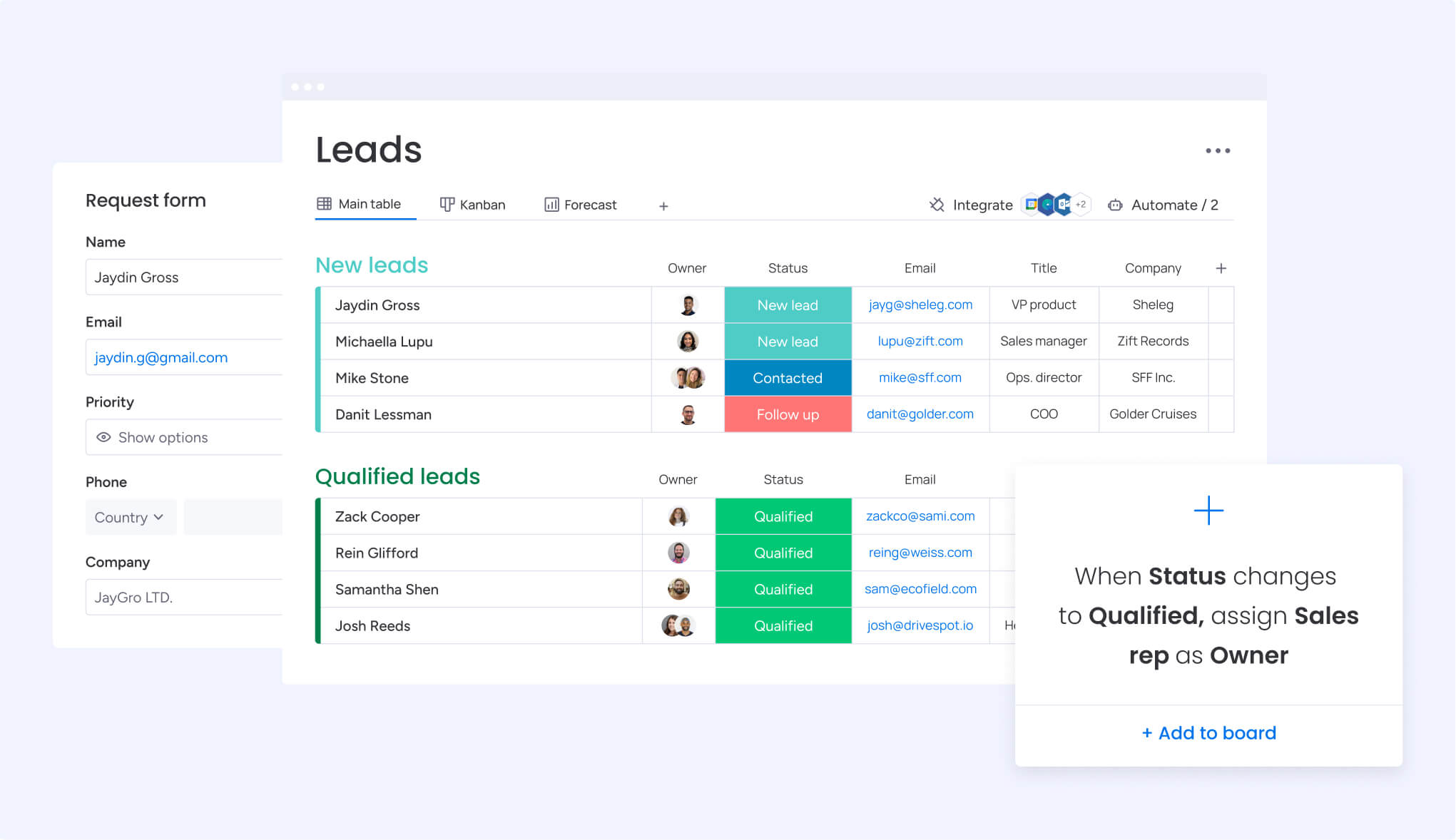
Lead data from multiple sourcesconsolidates into a single, unified viewwith monday CRM. Whether leads come from website forms, paid advertising, events, or referrals, they all flow into one system where you can track their complete history. Integration capabilities connect with your existing platforms, eliminating manual work that causes leads to fall through cracks.
Key system capabilities:
- Automated lead scoring: set up scoring rules that award points for desirable characteristics and behaviors.
- Smart distribution: ensure leads reach the right team members instantly, preventing conversion-killing delays.
- Real-time visibility: track lead volume by source, conversion rates by channel, and pipeline coverage through customizable dashboards.
- Team collaboration: enable marketing, sales, and customer success teams to work from shared information.
Your marketing team doesn’t lose sight of leads after handoffwith monday CRM, and sales reps see exactly what content a prospect consumed before picking up the phone. This creates a single source of truth, allowing teams to work together with the full picture. This transparency ensures everyone works from the same information, eliminating silos and missed opportunities.
What you end up with isn’t just a bunch of leads but a complete system that scales as you grow, shifts when markets change, and keeps your pipeline filled with prospects who actually buy.
The content in this article is provided for informational purposes only and, to the best of monday.com’s knowledge, the information provided in this article is accurate and up-to-date at the time of publication. That said, monday.com encourages readers to verify all information directly.
Frequently asked questions
What's the most effective way to generate B2B sales leads?
The most effective approach combines multiple strategies working together. Most teams see the best results when they nail three to four complementary approaches like content marketing, referrals, and targeted outreach instead of gambling on a single channel. Mix strategies based on what works in your industry and where your ideal customers spend their time.
How can AI help generate and manage sales leads more efficiently?
AI automates lead scoring, personalizes email outreach at scale, identifies buying signals through intent data analysis, and handles initial qualification conversations through chatbots. This frees your team to focus on high-value conversations while ensuring no prospect goes too long without contact.
Which metrics should I track when generating sales leads?
Track cost per lead by channel, lead-to-customer conversion rates, MQL to SQL velocity, pipeline coverage ratio, and customer acquisition cost to understand what's working. Focus on metrics that directly connect to revenue rather than vanity metrics like total lead volume.
How do I integrate multiple lead sources into one workflow?
Centralize all lead sources through a CRM that connects with your website forms, advertising platforms, event tools, and social channels. Create automated workflows that capture, score, and route leads regardless of source while maintaining complete visibility into each prospect's journey.
What CRM features are essential for scaling lead generation?
Essential CRM features for scaling lead generation include automated lead scoring, customizable pipelines, AI-powered insights, real-time dashboards, seamless integrations with marketing platforms, and collaboration tools that enable smooth handoffs between teams without requiring technical expertise to set up or modify.
How long does it typically take to see results from lead generation efforts?
Most digital lead generation channels show initial results within 30 to 60 days. Building a consistent, predictable pipeline typically takes three to six months of sustained effort across multiple channels. Content marketing and SEO take longer but often produce higher-quality leads over time.

 Get started