

Hotels lose 15–30% of every booking to OTA commissions, creating a massive profit gap. A $200 room generates significantly less margin when booked through a third party than when secured directly. For properties focused on protecting their bottom line and building guest loyalty, strategic lead generation provides the structured path needed to reclaim these lost profits.
Hotel sales lead generation puts properties back in control by winning guests through owned channels rather than relying on third-party discovery. By creating specific touchpoints, like exclusive packages or early access to promotions, hotels can exchange value for guest contact information. This allows for systematic nurturing that reduces OTA dependency while fostering direct, long-term relationships.
This guide outlines five proven strategies to capture qualified leads and convert them into direct bookings. We will explore how to stop the commission drain through experience-based packaging, mobile optimization, local partnerships, and CRM-driven automation. By following this roadmap, you can build a predictable revenue engine that secures your margins and preserves the guest experience.
Key takeaways
- Stop losing 15-30% of revenue to OTA commissions: build direct booking strategies through experience packages, mobile optimization, and local partnerships to keep profits in-house.
- Turn every guest interaction into booking opportunities: create experience packages that bundle unique activities with stays — romance, adventure, or culinary themes that guests can’t replicate elsewhere.
- Centralize guest data with advanced platforms: track every interaction from inquiry to checkout in one timeline, enabling personalized service that builds loyalty and drives repeat bookings.
- Use AI to focus on leads that actually book: score prospects automatically based on booking timeline, budget alignment, and engagement patterns; platforms like monday CRM help prioritize your sales team’s time by surfacing the hottest opportunities first.
- Measure what matters for hotel success: track lead-to-booking conversion rates, customer lifetime value, and cost per lead by channel to optimize your marketing spend.
Why strategic lead generation matters for hotels?
.jpg)
Hotels losing 15–30% of revenue to OTA commissions must choose between shrinking margins and building a systematic direct booking engine. By implementing a structured lead generation process, you can identify and convert guests through channels you control rather than relying on third-party platforms.
Unlike broad marketing, lead generation targets high-intent prospects to build long-term relationships. By creating touchpoints where guests exchange contact info for value—such as exclusive rates or personalized itineraries—you move away from generic broadcasting toward a measurable, prospect-capture model.
Ultimately, modern lead generation relies on five core strategies: experience packages, mobile optimization, local partnerships, targeted email, and social media. When these are combined with the right technology, hotels can automate follow-ups and accurately measure which efforts actually drive the most profitable bookings.
The hidden costs of OTA dependency
Commission fees represent only the most visible cost of OTA dependency. The more significant impact comes from the loss of guest data, diminished loyalty opportunities, and missed upsell potential. These hidden costs accumulate over time and gradually erode profitability.
- Loss of guest relationships: OTAs control the customer relationship, providing hotels with minimal guest information beyond basic booking details. Hotels cannot build comprehensive profiles, track preferences across stays, or identify valuable repeat customers.
- Diminished brand loyalty: guests booking through OTAs develop platform loyalty rather than hotel loyalty. They comparison shop primarily on price and location, viewing hotels as interchangeable options.
- Missed ancillary revenue: OTA bookings typically include only the room, limiting your ability to promote spa services, dining packages, or upgrades before arrival. Hotels lose high-margin revenue from services that guests would have considered if contacted directly.
The solution lies in centralizing guest data through systems that capture information from every interaction. When hotels track preferences, stay history, and communication across channels, they build the foundation for direct relationship marketing that reduces future OTA dependency.
“With monday CRM, we’re finally able to adapt the platform to our needs — not the other way around. It gives us the flexibility to work smarter, cut costs, save time, and scale with confidence.”
Samuel Lobao | Contract Administrator & Special Projects, Strategix
“Now we have a lot less data, but it’s quality data. That change allows us to use AI confidently, without second-guessing the outputs.”
Elizabeth Gerbel | CEO
“Without monday CRM, we’d be chasing updates and fixing errors. Now we’re focused on growing the program — not just keeping up with it."
Quentin Williams | Head of Dropship, Freedom Furniture
“There’s probably about a 70% increase in efficiency in regards to the admin tasks that were removed and automated, which is a huge win for us.“
Kyle Dorman | Department Manager - Operations, Ray White
"monday CRM helps us make sure the right people have immediate visibility into the information they need so we're not wasting time."
Luca Pope | Global Client Solutions Manager at Black Mountain
“In a couple of weeks, all of the team members were using monday CRM fully. The automations and the many integrations, make monday CRM the best CRM in the market right now.”
Nuno Godinho | CIO at VelvBuilding predictable revenue through direct bookings
Direct bookings eliminate the 15-30% commission drain, immediately improving contribution margins. A $200 room night booked directly generates $30-60 more profit than the same OTA booking, purely from commission savings.
When you’re not handcuffed by OTA rules, you can finally manage your revenue like a pro: test different rates, create packages on the fly, and adjust prices as demand shifts. Hotels can test rate structures, create custom packages for specific segments, and adjust pricing based on demand without waiting for platform approval or dealing with rate parity requirements.
In addition to higher margins, pre-arrival communication opens ancillary revenue opportunities that multiply with direct bookings. Hotels can promote spa treatments, restaurant reservations, and room upgrades to guests who have already chosen your property specifically. These guests prove more receptive to offers because they’ve made an intentional choice rather than selecting based on price comparison.
Commission savings can be reinvested into guest experience improvements that further differentiate your property. Enhanced amenities, service training, property upgrades, and unique experience offerings all become more financially feasible when hotels retain full booking value.
Common lead generation challenges hotels face
Even hotels that understand why lead generation matters still face roadblocks that slow their direct booking momentum. Let’s tackle these head-on.
- Rising acquisition costs: digital advertising costs have increased significantly across major platforms, making it expensive to attract new guests through paid channels. Hotels must focus on lead quality over quantity, investing in channels that generate prospects with genuine booking intent.
- Seasonal demand patterns: peak seasons often see demand exceeding supply, reducing lead generation urgency. During slow periods, marketing budgets get cut precisely when lead generation becomes most critical for maintaining occupancy.
- Competition from chains: independent and boutique hotels struggle against the marketing budgets and brand recognition of major chains. Large hotel groups spend millions on national advertising and loyalty programs that smaller properties cannot match.
- Manual tracking processes: sales teams using spreadsheets or email to manage leads inevitably let prospects fall through cracks. Manual processes create inefficiencies that result in missed opportunities and poor guest experiences, especially during busy periods.
- Scattered guest information: data fragmented across booking engines, property management systems, email platforms, and social media prevents hotels from creating comprehensive guest profiles. Marketing teams cannot personalize campaigns effectively without complete preference and history data.
5 proven strategies for hotel lead generation
These strategies create a comprehensive system addressing different guest journey stages and preferences. Successful implementation requires proper tracking and follow-up systems to capture lead information and nurture prospects toward booking.
1. Create experience packages that sell themselves
Experience packages make your property stand out by bundling your rooms with unique activities or services that guests cannot easily replicate on their own. Because the appeal centers on convenience and discovery, these offers prioritize perceived value rather than price alone.
Consequently, these packages serve as natural lead magnets; since they require advance planning, you can host them on dedicated landing pages that capture email addresses in exchange for detailed itineraries or exclusive pricing.
- Romance packages: combine luxury accommodations with couples’ spa treatments, champagne, and romantic dining experiences. These appeal to anniversary celebrations and special occasions where guests prioritize memorable moments over price sensitivity.
- Adventure packages: bundle rooms with guided outdoor activities. Active travelers value the convenience and local expertise these packages provide, paying premiums for curated experiences.
- Culinary packages: feature tasting menus, cooking classes with hotel chefs, or food tours. Food-focused travelers represent a growing segment willing to pay premium rates for authentic culinary experiences.
2. Optimize mobile booking for instant conversion
Mobile devices dominate how travelers research and book hotels today; most guests now complete their entire booking journey on their phones. Your mobile experience is make-or-break for your booking success. Guests encountering friction during mobile research often abandon the hotel entirely rather than switching devices.
Essential mobile booking elements include:
- Page load speeds under three seconds: slow loading loses mobile users immediately.
- Simplified forms: minimize typing requirements on small screens.
- One-click options: enable quick booking for returning guests.
- Prominent phone numbers: some guests prefer calling to complete bookings.
- Touch-optimized design: larger buttons and vertical scrolling layouts.
Mobile analytics reveal conversion bottlenecks by tracking where users abandon the booking process. Solutions like monday CRM can capture partial form submissions, turning incomplete bookings into follow-up opportunities.
3. Partner with local businesses for qualified referrals
The smartest hotels team up with local businesses that share their customer base but do not compete for the same revenue—such as wedding venues, high-end restaurants, or corporate offices. Because these partners already have the ear of your ideal guest, these mutually beneficial relationships create a steady lead flow from pre-qualified sources.
Ideal partnership opportunities include:
- Wedding venues: event spaces refer couples needing guest room blocks while hotels recommend venues for destination weddings.
- High-end restaurants: restaurants refer out-of-town diners while hotels recommend dining options to guests.
- Corporate offices: local businesses establish preferred relationships for employee travel with simplified booking processes.
- Tourist attractions: attractions drawing visitors naturally need accommodation recommendations.
Partnership success requires systematic tracking to measure which relationships generate valuable leads. Unique booking codes, dedicated landing pages, or direct booking questions capture attribution data. The right CRM manages partner relationships by tracking referral volume, conversion rates, and revenue from each source.
4. Launch personalized email campaigns
Bland, one-size-fits-all hotel emails rarely get opened. But when you tailor messages based on what guests actually do and care about, your open and click rates will skyrocket. But when you tailor messages based on what guests actually do and care about? Your open and click rates will skyrocket. The difference lies in relevance: personalized emails address specific guest needs rather than broadcasting generic promotions.
Effective segmentation strategies for hotels include:
- Business versus leisure travelers: different booking patterns and priorities require distinct messaging.
- Repeat guests versus first-timers: varying information needs and incentive responses.
- Seasonal preferences: target based on past booking timing patterns.
- Budget segments: tailor offers to different rate sensitivities.
Pre-arrival emails sent seven to 14 days before check-in promote spa bookings, restaurant reservations, and room upgrades. These convert well because guests are already committed and thinking about their trip.
Post-stay emails sent three to five days after checkout thank guests, request reviews, and offer rebooking incentives while the experience remains fresh. Automated workflows in platforms like monday CRM ensure consistent nurturing without manual effort.
5. Transform social media into booking channels
Most hotels still treat social media as just a brand billboard, missing its real power. With the right approach, your Instagram and Facebook can become 24/7 booking machines.
Instagram strategies focus on Stories with booking links, shoppable posts tagging specific packages, and bio links directing to current promotions. Visual content showcasing property experiences drives engagement and captures interest.
Facebook leverages event promotion for hotel activities, targeted local advertising, and groups for past guests. Building community around your property creates ongoing engagement opportunities.
User-generated content serves as powerful social proof. Encourage content creation through Instagram-worthy spaces, branded hashtags, and contests rewarding guests for sharing experiences. This authentic content influences potential guests more than hotel marketing.
AI-powered approaches to hotel lead generation
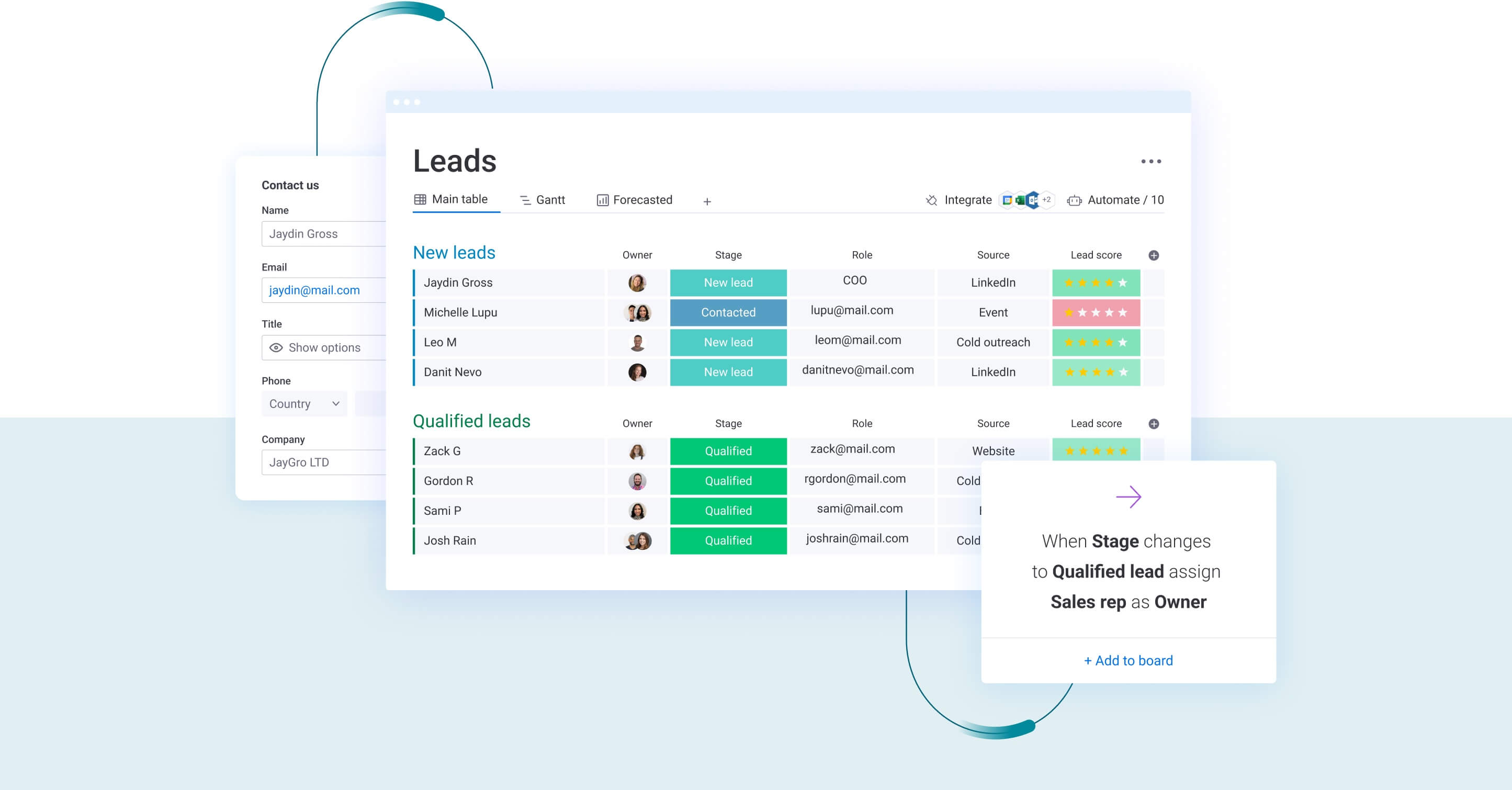
AI is giving independent hotels the same marketing firepower that used to be exclusive to big chains with deep pockets. For example, AI-powered lead scoring assigns values to prospects based on characteristics indicating booking likelihood and potential value, helping hotels identify hot leads for faster follow-up.
Smart lead scoring for priority focus
Lead scoring assigns values to prospects based on characteristics indicating booking likelihood and potential value, helping hotels identify hot leads for faster follow-up. A prospect visiting booking pages multiple times, downloading package brochures, and having a corporate email domain scores higher than single-page visitors.
High-quality hotel leads show specific indicators:
- Date-specific inquiries: indicates serious booking intent.
- Appropriate group size: matches hotel capacity and target segments.
- Budget alignment: interest in packages or rates matching hotel positioning.
- Multiple page engagement: shows genuine interest beyond casual browsing.
- Email responsiveness: opens and clicks on follow-up communications.
AI analyzes these factors simultaneously, scoring leads automatically while considering patterns humans would miss. Machine learning continuously refines scoring models based on actual booking outcomes. AI capabilities provided by solutions like monday CRM help sales teams focus on prospects most likely to convert.
Automated guest communications with personalization
Automated communications maintain personal touch while scaling efficiently. Success lies in personalization; automated messages should feel individually crafted rather than mass-produced.
Different automated messages serve specific purposes. Booking confirmations provide immediate reassurance. Pre-arrival messages promote ancillary services and build excitement. Post-stay communications gather feedback and encourage rebooking.
Furthermore, AI personalizes these messages by analyzing past interactions and booking characteristics. Business travelers receive workspace and express checkout information, while leisure guests get restaurant recommendations and attraction suggestions.
The balance between automation and human interaction requires judgment. AI identifies situations needing personal attention by detecting sentiment or flagging unusual requests outside standard parameters.
Predictive analytics for smarter pricing
Predictive analytics optimizes pricing to maximize both occupancy and revenue by forecasting demand and identifying optimal rate points. Machine learning identifies complex patterns beyond traditional revenue management.
AI analyzes market conditions including local events, weather forecasts, competitor pricing, and economic indicators. A conference next month signals increased demand, while poor weather forecasts suggest lower beach destination demand.
Consequently, responsive pricing attracts price-sensitive leads during low demand while maximizing revenue from less price-sensitive guests during peaks. By using platforms like monday CRM, hotels can track these pricing experiments and their direct impact on lead generation and total yield.
Measuring lead generation success
Measuring results is essential for effective lead generation. Hotels require industry-specific metrics that account for extended booking windows, seasonal demand fluctuations, and the significant value of repeat guests.
Essential metrics for hotel sales teams
Key performance indicators reveal lead generation effectiveness and optimization opportunities:
- Lead-to-booking conversion rate: percentage of leads becoming confirmed bookings indicates lead quality and sales effectiveness.
- Average response time: faster responses correlate with higher conversion rates.
- Cost per lead by channel: marketing spend divided by leads generated identifies cost-effective sources.
- Booking value by source: average revenue per booking reveals which channels generate highest-value bookings.
- Pipeline velocity: time from inquiry to booking indicates process efficiency.
Good performance benchmarks vary by hotel type, but general guidelines include conversion rates of 15-25% for qualified leads and response times under one hour for hot leads.
Calculating customer lifetime value
Customer lifetime value proves particularly important for hotels due to repeat visit potential and referrals extending value beyond initial bookings. A guest booking once might seem marginally profitable after acquisition costs, but returning annually for five years while referring friends becomes highly valuable.
CLV calculation includes average booking value multiplied by average bookings per guest over their relationship. Add ancillary revenue per stay multiplied by number of stays. Include referral value by calculating average referrals per guest multiplied by referred guest booking value.
These insights should influence budget allocation by justifying higher acquisition costs for segments with strong repeat and referral potential. monday CRM tracks these metrics across guest lifecycles, providing visibility into long-term value creation.
Transform hotel sales with modern CRM capabilities
The right CRM for hotels addresses lead generation challenges through capabilities that centralize interactions, automate workflows, enable collaboration, and provide revenue insights. Modern platforms solve hotel-specific problems without requiring complex implementation.
Centralize all guest interactions
Scattered guest data across multiple systems creates blind spots that hurt personalization and slow response times. Modern CRMs solve this by bringing every interaction into one place where your team can see the complete guest story.
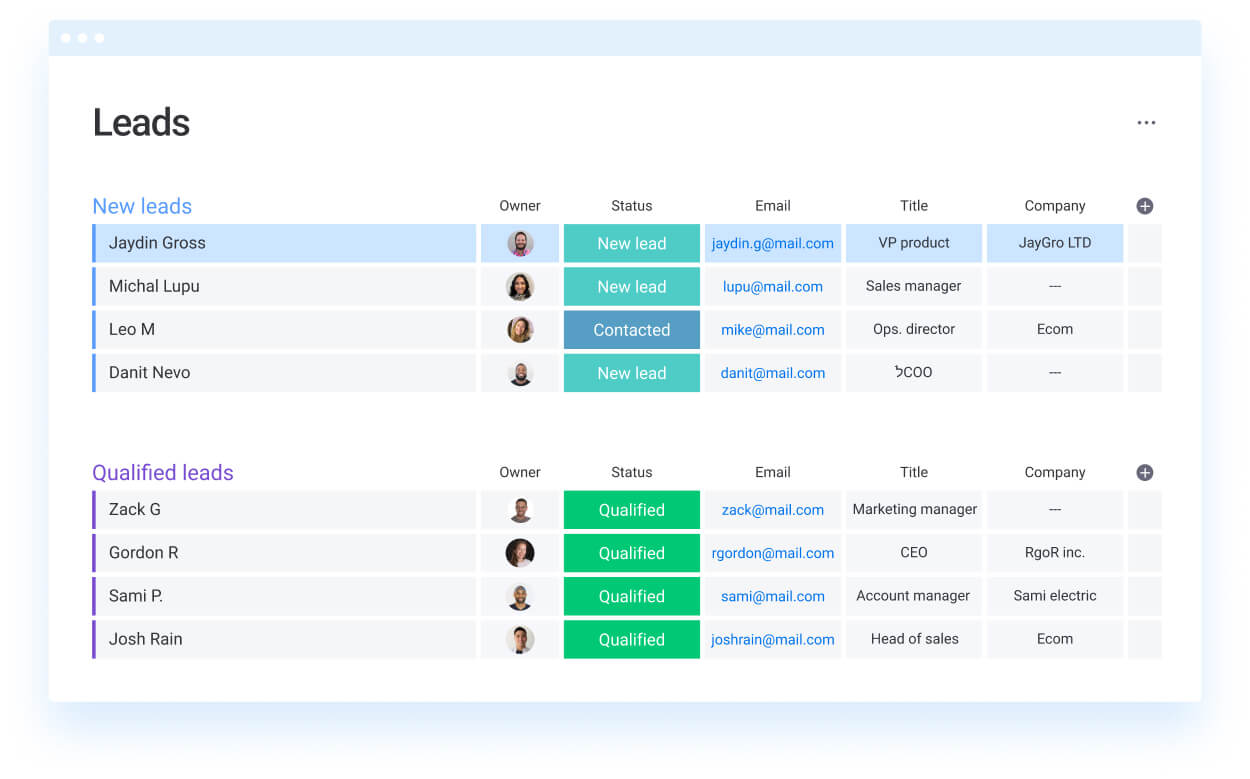
- Unified guest journey view: consolidate information from phone, email, social media, website forms, and in-person interactions into a single timeline that tracks every touchpoint from initial inquiry through post-stay follow-up.
- Chronological interaction tracking: display emails, call notes, meeting summaries, booking changes, and service requests in timeline format so sales representatives immediately see previous stay details, service issues, preferred room types, and amenity usage when past guests inquire about returning.
- AI-powered timeline summaries: automatically generate concise overviews of lengthy interaction histories, helping sales teams quickly understand guest history and enabling personalized service that builds loyalty and drives direct bookings.
Automate lead nurturing workflows
Manual follow-up means missed opportunities and inconsistent guest experiences. Automation ensures every lead gets timely, relevant communication without draining your team’s bandwidth.
- Personalized automation sequences: nurture hotel leads through conditional workflows that trigger different paths based on guest type, booking timeline, or engagement level without manual effort.
- Hotel-specific workflow templates: deploy pre-arrival sequences beginning at booking confirmation that send welcome emails, promote services, and provide arrival information at optimal intervals; post-stay workflows automatically send review requests and satisfaction surveys after checkout.
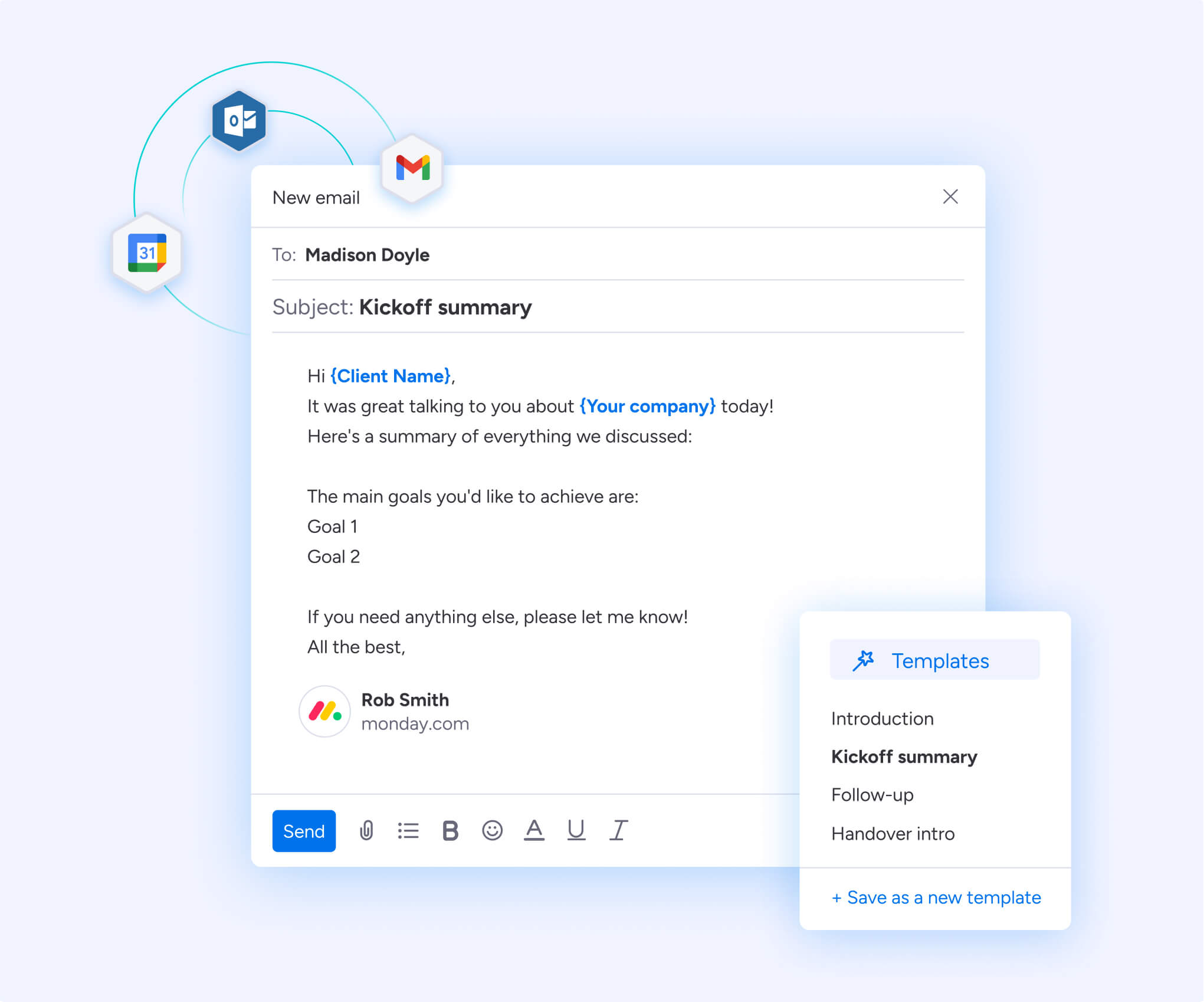
- AI-powered email composition: create mass communications that feel individually crafted using dynamic templates with personalized fields; generate optimized subject lines, recommend send times, and draft content aligned with your brand voice by analyzing successful past emails.
Enable seamless team collaboration
Guest experiences fall apart when sales, operations, and service teams work in silos. The right CRM breaks down these walls so everyone stays aligned on guest needs and expectations.
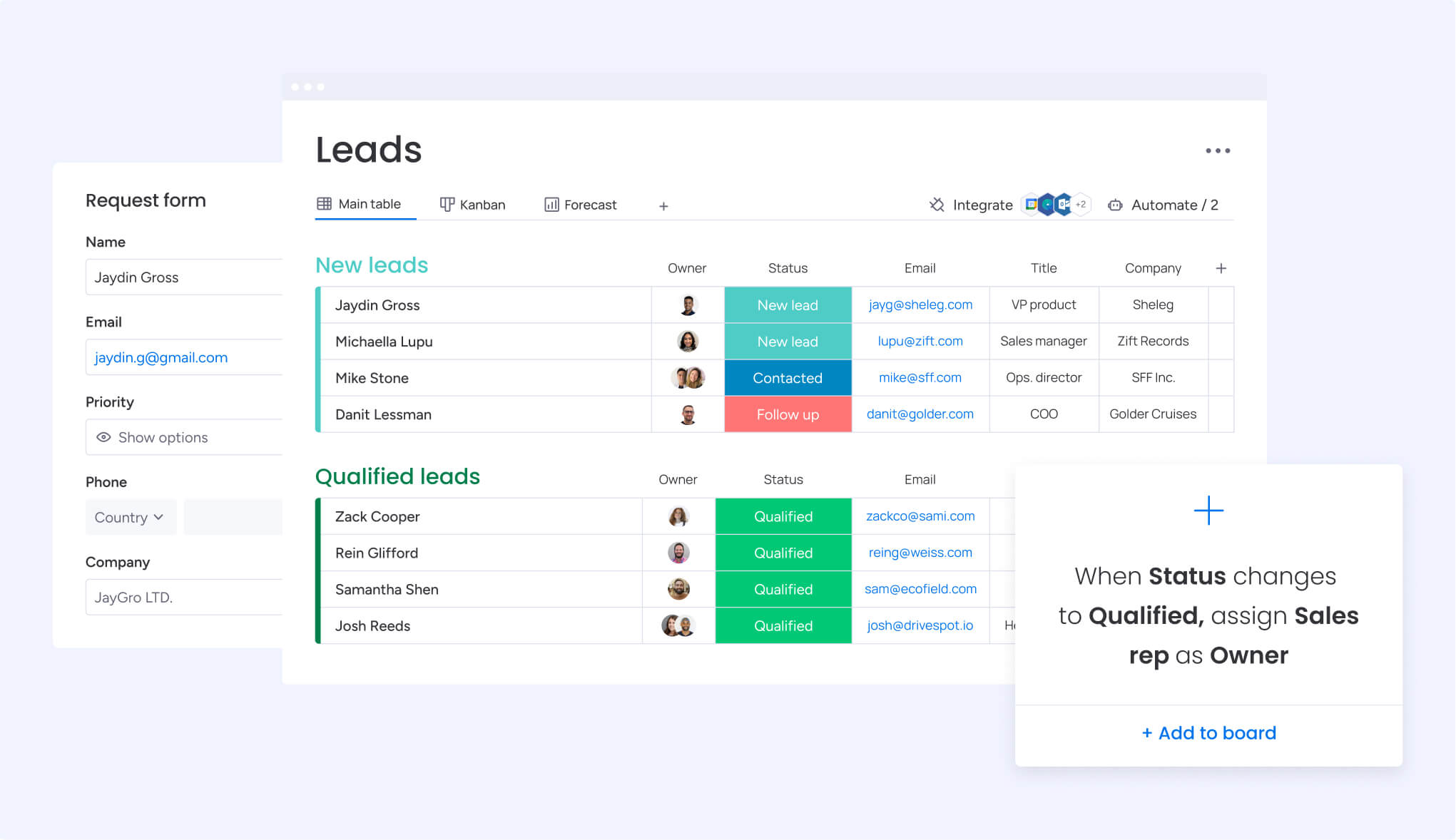
- Automated task assignment: solve handoff challenges between sales, marketing, and operations by automatically alerting relevant team members when action is required; when sales books a wedding, the system assigns tasks to catering, housekeeping, and events coordinators.
- Shared collaboration workspace: enable team members to work together through shared notes, file attachments, and status updates visible to everyone involved in the guest experience.
- Mobile access for distributed teams: keep remote and on-property staff connected regardless of location, preventing miscommunication and service failures that damage guest experience quality.
Build custom dashboards for revenue insights
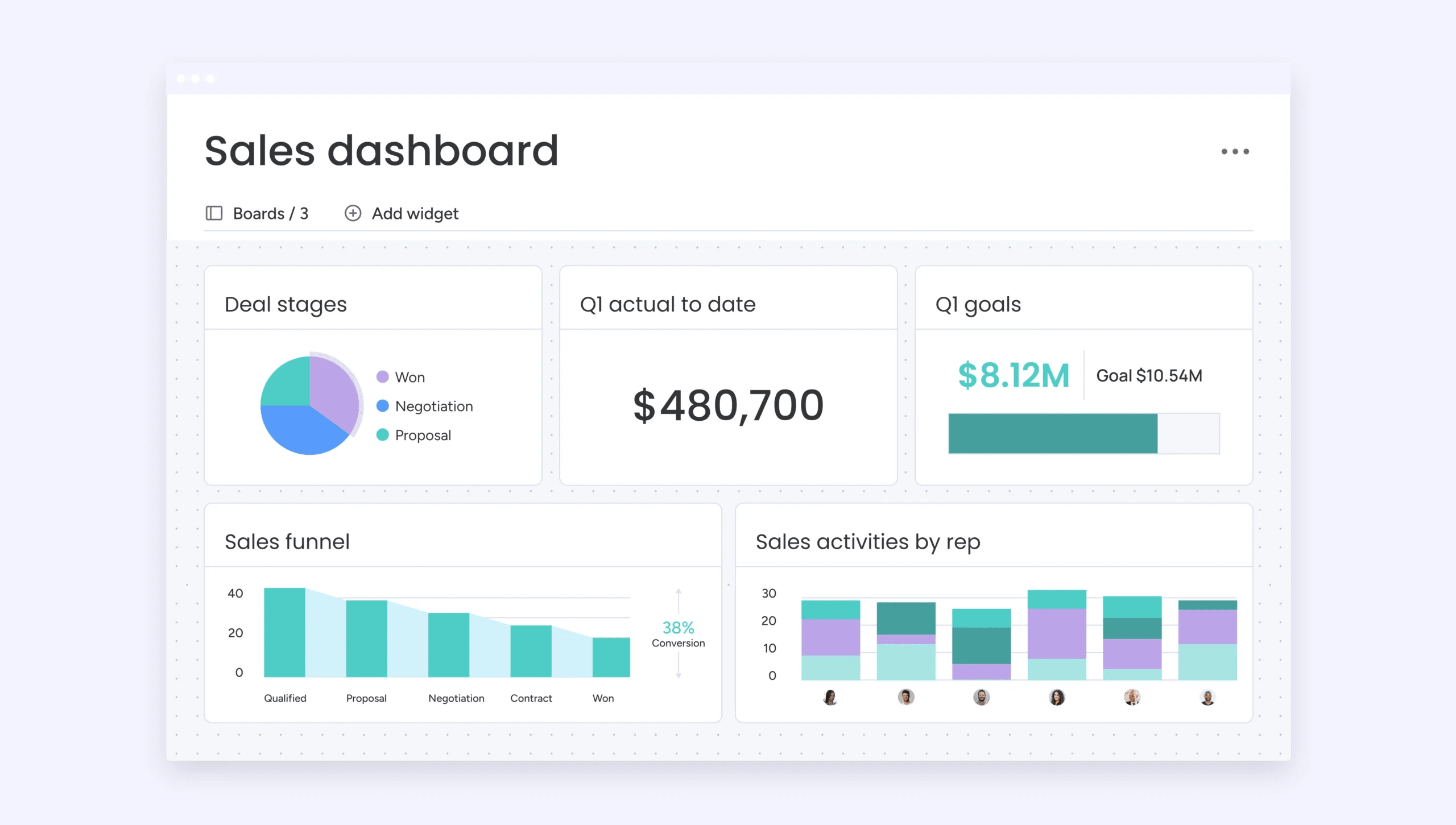
You can’t optimize what you can’t see. Custom dashboards surface the metrics that matter most for hotel revenue, giving you real-time visibility into pipeline health and booking trends.
- Real-time performance visibility: track sales performance and pipeline health through customizable displays with visual representations showing lead volume and conversion rates at each stage, revealing where prospects drop off.
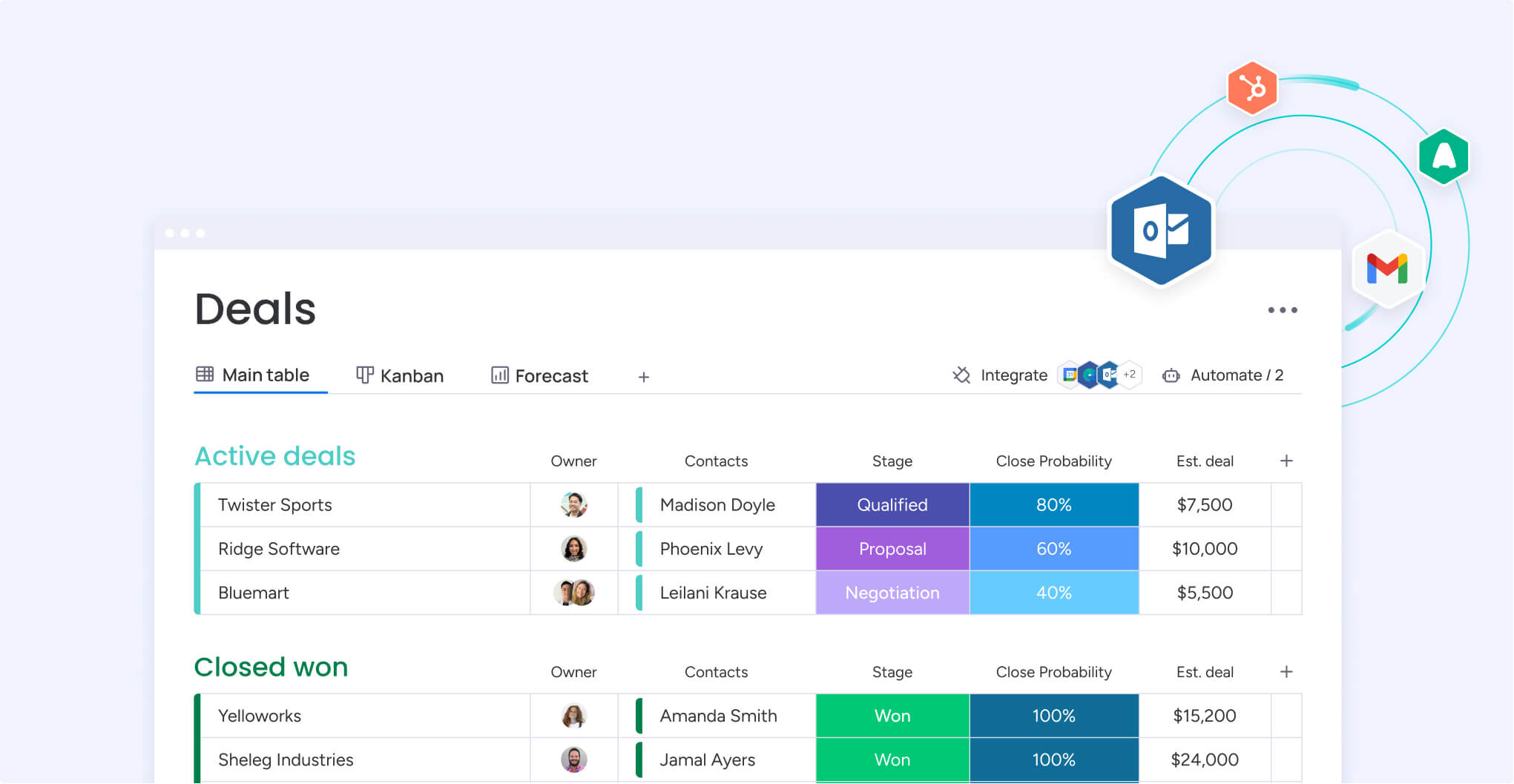
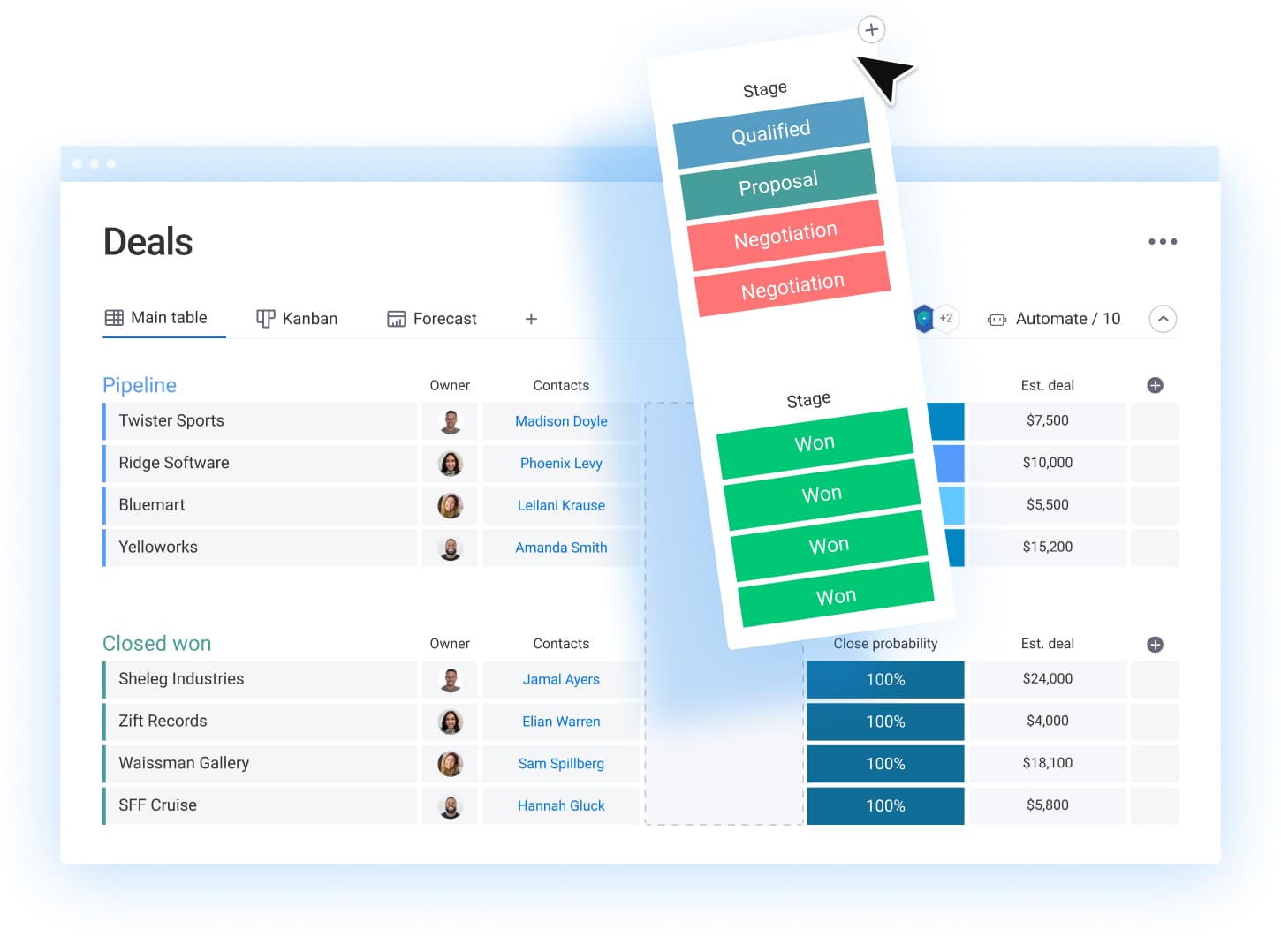
- Pipeline management widgets: display all active deals organized by stage with values and expected close dates, helping managers quickly assess pipeline health, identify stalling deals, and forecast future revenue based on current opportunities.
- Hotel-specific metric tracking: monitor occupancy forecasts, average daily rate trends, and channel performance comparisons; predict future revenue by analyzing how deals at different stages typically convert without requiring manual report compilation.
Build your direct booking engine today
Hotels move fastest when they start with strategies that match their existing strengths. Properties with strong local ties should lead with partnership-driven initiatives, while those with robust email databases can immediately deploy personalized campaigns that convert quickly without overwhelming the team.
Execution typically breaks down in three places: limited resources, clunky tech integrations, and weak measurement. The fix is focus — prioritize high-impact, low-effort tactics, choose tools that integrate cleanly with your current systems, and set up tracking before you launch anything so performance is actually visible.
Lead generation is an ongoing discipline, not a one-off project. Regularly review conversion patterns, test new messaging, and iterate based on real data. The payoff is substantial: shifting even 20% of OTA bookings to direct channels can lift profit margins by three to six percent, making strategic lead generation a necessary path to reclaiming revenue and guest relationships.
Frequently asked questions
How much should hotels invest in lead generation efforts?
Hotels should invest three to eight percent of total revenue in lead generation, with the percentage varying based on hotel size, market competition, and current OTA dependency levels.
What's the fastest way to convert OTA guests to direct bookings?
The fastest conversion method involves capturing email addresses during stays through WiFi login or loyalty signup, then following up with personalized offers emphasizing direct booking benefits like flexible cancellation or exclusive rates.
How quickly can hotels see ROI from the lead generation?
Hotels typically see initial returns within three to six months for email campaigns to existing guests, while longer-term strategies like SEO and partnership development may require six to 12 months for significant results.
Which strategies work best for boutique hotels?
Boutique hotels achieve best results from experience packages showcasing unique property character, local partnerships emphasizing authentic connections, and personalized email campaigns highlighting individualized service.
How do you measure lead quality in hospitality?
Lead quality measurement includes booking timeline specificity, budget alignment with rate structure, group size matching capacity, engagement across touchpoints, and responsiveness to follow-up communications.
What role does AI play in modern hotel sales?
AI automates lead scoring based on conversion likelihood, personalizes email content and timing, optimizes pricing during low-demand periods, and provides real-time website personalization adapting to visitor interests.

 Get started