Your marketing budget keeps climbing, and CAC often follows. One quarter looks steady. The next quarter comes in higher, and it’s hard to pinpoint what changed.
CAC gets misleading fast when teams track ad spend, then miss the costs that sit elsewhere. Sales compensation, tools, content production, overhead allocation, and manual work all shape what it costs to win a customer.
Customer acquisition cost measures what you spend to convert a prospect into a paying customer. Calculate it accurately and you can spot which channels perform, which steps slow revenue, and where the team can lower costs without cutting growth.
This guide covers how to calculate CAC, how to use benchmarks and payback targets, and practical strategies that can reduce acquisition costs. It also explains how monday CRM helps revenue teams centralize customer data, automate manual work, and track performance with customizable dashboards.
Key takeaways
- Calculate CAC using total acquisition costs, including marketing spend, sales compensation, technology, and allocated overhead.
- Use CAC, LTV, and payback period together to evaluate whether growth supports profitability.
- Track CAC by channel, segment, and sales team to find what drives cost spikes.
- Reduce CAC by removing manual work, tightening lead qualification, and strengthening retention.
- Centralize pipeline, activity, and reporting in monday CRM to identify issues earlier and adjust faster.
What is customer acquisition cost?
Customer acquisition cost (CAC) is the total amount you spend to convert a prospect into a paying customer during a defined period. CAC can include marketing programs, sales compensation, tools, content production, and allocated overhead, divided by the number of new customers acquired in that same period.
CAC reflects the cost required to acquire each new customer. A B2B software company might spend $5,000 to acquire an enterprise client worth $50,000 in annual revenue, while an e-commerce brand could maintain a $25 CAC for customers who spend $150 on their first purchase. The key question is whether acquisition costs align with customer value.
CAC hits your bottom line hard — and determines whether you can scale profitably. When acquisition costs exceed customer lifetime value, you’re essentially paying more to acquire customers than they’ll ever generate in revenue. That imbalance limits profitability and slows growth over time. Track CAC right, and you’ll know exactly which channels work and where to move your budget.
How to calculate customer acquisition cost
Many teams underestimate CAC because they count advertising spend and skip the costs that sit across sales, tools, and overhead. Use a consistent time period, include all acquisition costs, and divide by the number of new customers acquired.
CAC = Total acquisition costs ÷ Number of new customers
Include these cost categories:
- Marketing costs: Advertising, content, events, agencies, marketing team compensation, and marketing software
- Sales costs: Sales team compensation, commissions, onboarding, training, and sales tools
- Overhead allocation: Costs tied to acquisition work, allocated consistently across the period
- Technology costs: CRM, email, enrichment, analytics, and automation tools used in acquisition
Step 1: Gather all acquisition-related costs
Consider a SaaS company calculating monthly CAC. Their basic calculation using only ad spend shows:
- Ad spend: $30,000
- New customers: 150
- Basic CAC: $200
The comprehensive calculation reveals:
| Cost category | Monthly amount |
|---|---|
| Ad spend | $30,000 |
| Marketing salaries | $25,000 |
| Sales salaries and commissions | $60,000 |
| Technology platforms | $4,000 |
| Content and creative | $6,000 |
| Overhead allocation | $10,000 |
| Total costs | $135,000 |
| Full CAC (÷ 150 customers) | $900 |
That difference is common. When teams calculate CAC with only ad spend, they miss the costs that shape the real cost per customer. Track the full set of costs and you can evaluate channel performance accurately, plan headcount with fewer surprises, and make budget changes with confidence.
2025 customer acquisition cost benchmarks by industry
Benchmarks help you evaluate whether your CAC aligns with your business model, deal size, and sales motion. Use them as a reference point, then pair them with payback period and LTV to set targets that fit your margin and growth goals.
SaaS and B2B benchmarks
SaaS companies face varying CAC ranges based on their growth stage and target market:
| Company stage | CAC range | Payback period | Primary cost drivers |
|---|---|---|---|
| Early-stage (under $5M ARR) | $500-$2,000 | 12-18 months | Market education, brand building |
| Growth-stage ($5M-$50M ARR) | $1,000-$3000 | 9-15 months | Competitive differentiation, expansion |
| Enterprise ($50M+ ARR) | $2,500-$12,000 | 12-24 months | Complex sales, multiple stakeholders |
B2B companies segment by deal size:
- Small deals ($5K-$25K): CAC typically ranges from $1,500-$6,000
- Mid-market ($25K-$100K): CAC reaches $6,000-$20,000
- Enterprise ($100K+): CAC often exceeds $20,000-$75,000
E-commerce and retail averages
E-commerce CAC varies significantly by product category and average order value:
- Low-ticket items ($20-$100 AOV): CAC ranges from $10-$40
- Mid-ticket ($100-$500 AOV): CAC typically hits $35-$150
- High-ticket ($500+ AOV): CAC reaches $120-$500
Understanding your CAC to LTV ratio
CAC and lifetime value are most useful when reviewed together. CAC shows what it costs to win a customer. LTV shows the revenue that customer generates over time. The ratio helps revenue leaders decide whether acquisition spend supports long-term growth.
Lifetime value (LTV) is the total revenue one customer brings in over time. A healthy CAC:LTV ratio typically falls between 1:3 and 1:4. This means customers generate three to four times their acquisition cost in lifetime value.
Ratio interpretation:
- Below 1:3: Acquisition spend runs high relative to customer value
- 1:3 to 1:4: Many teams use this as a healthy baseline for sustainable growth
- Above 1:5: Growth may be constrained by underinvestment, weak coverage, or conservative channel mix
Improving your ratio requires a dual approach:
- Reduce CAC: Optimize conversion rates, improve targeting, automate manual processes
- Increase LTV: Enhance retention, expand account value, improve customer success
Revenue teams using monday CRM gain visibility into both metrics simultaneously through unified dashboards that track acquisition costs alongside customer value metrics. This real-time insight enables quick adjustments when ratios drift outside target ranges.
7 cost drivers to watch in your acquisition strategy
Several factors push acquisition costs up — here’s what’s driving them. Identifying these drivers helps teams focus optimization efforts where they matter most.
Factor 1: Rising advertising costs
Ad costs rise as more companies compete for the same audiences. When clicks and impressions cost more, CAC can climb even when conversion rates stay flat. Track CAC by channel and segment so you can spot rising costs early and shift budget toward better-performing programs.
Factor 2: Increased competition
When markets get crowded, you’re bidding against everyone for the same prospects. When prospects evaluate five or more similar solutions, conversion rates drop from 20-25% to 8-12%. Each additional competitor in your market typically increases CAC by 15-20%.
Factor 3: Manual sales processes
Manual work increases CAC because it raises labor cost per opportunity and slows follow-up. Watch for:
- Less selling time per rep
- Slower stage movement across the pipeline
- Higher headcount needs to hit the same revenue target
Factor 4: Poor lead qualification
Pursuing unqualified leads wastes valuable sales resources. Without a qualification framework, conversion rates drop 35-50%. Chase prospects without budget, authority, or real need? You’re burning hours that won’t pay off.
Factor 5: Misaligned teams
When sales and marketing don’t talk, you duplicate work and miss deals. Here’s what misalignment looks like:
- Conflicting definitions: No agreement on what constitutes a qualified lead
- Competing priorities: Marketing focuses on volume while sales wants quality
- Poor handoffs: Leads fall through cracks during transitions
Factor 6: High customer churn
Excessive customer attrition increases acquisition pressure and forces teams to replace lost revenue before growing. When customers leave, teams spend more time replacing revenue instead of expanding it. Retention and expansion programs lower long-term CAC by reducing the volume of new deals required to grow.
Factor 7: Limited data visibility
Limited visibility delays decisions. When acquisition data lives across systems, teams spend time reconciling numbers instead of acting on them. Central reporting helps leaders spot cost spikes, diagnose root causes, and adjust faster.
How AI and automation reduce customer acquisition costs
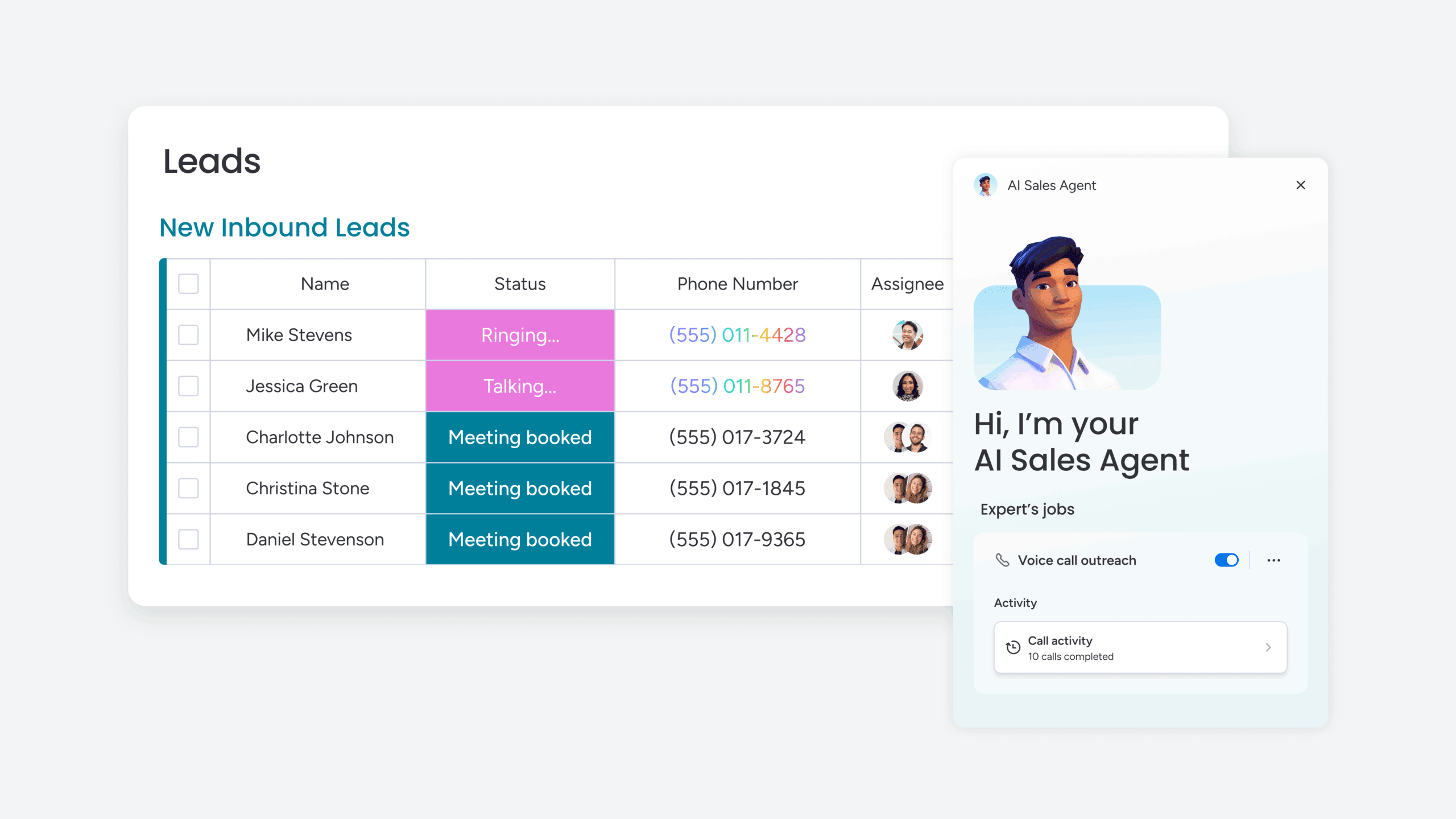
AI and automation can reduce CAC by cutting manual work, improving lead routing, and shortening the time it takes to move deals forward. The biggest impact often comes from removing repetitive steps that slow follow-up and create inconsistent execution.
AI-powered lead scoring
AI analyzes hundreds of behavioral and demographic signals to identify high-probability prospects. AI lead scoring delivers:
- Higher conversion rates: Qualified lead-to-opportunity rates can improve when teams prioritize high-intent prospects
- Faster qualification: AI scores leads instantly versus hours of manual review
- Better resource allocation: Sales focuses on prospects with genuine buying intent
In monday CRM, teams can route and assign leads with automations, keep activity history organized, and use AI to support everyday work such as summarizing updates and drafting messages. This helps reps prioritize time and follow up faster.
Automated sales workflows
Automation reduces CAC when it removes repeatable work and speeds up follow-up. Start with workflows that impact response time and handoffs:
- Email sequences: Automated follow-ups ensure consistent outreach
- Data entry: Information flows automatically between systems
- Task management: Next steps trigger without manual intervention
monday CRM enables teams to build custom automations that match their exact sales process. Automated workflows handle routine tasks while AI assists with email composition and timeline summaries, freeing reps to focus on relationship building.
Predictive analytics
Tracking trends early helps teams protect CAC. Use dashboards to monitor pipeline health, response time, conversion rates, and channel performance. When metrics shift, teams can adjust targeting, routing rules, and budgets before costs compound.
10 proven strategies to reduce customer acquisition cost
These strategies focus on execution, visibility, and efficiency. Each one addresses a common cost driver in acquisition workflows. Applied together, they help teams reduce waste, improve conversion quality, and support more predictable growth.
Strategy 1: Prioritize customer retention
Retention typically requires fewer resources than acquiring new customers. Strong customer retention reduces acquisition pressure and creates more stable revenue.
Focus on:
- Proactive customer success: Identify and address issues early to reduce churn.
- Ongoing value reinforcement: Help customers understand and realize value consistently.
- Account expansion: Grow existing accounts through relevant upsell and cross-sell opportunities.
Strategy 2: Implement marketing automation
Automation improves consistency and follow-up across campaigns. It reduces manual effort while helping teams respond faster and stay engaged throughout the buying journey.
Look for opportunities to automate:
- Lead nurturing and follow-up
- Campaign execution across channels
- Data updates between systems
Strategy 3: Optimize conversion rates
Incremental improvements at each stage of the funnel can reduce acquisition costs without increasing spend. Review performance regularly and focus on removing friction.
Areas to prioritize:
- Landing pages: Clarify messaging and calls to action.
- Email sequences: Improve relevance and timing.
- Sales conversations: Strengthen discovery, qualification, and close processes.
Strategy 4: Build referral programs
Referral programs can lower acquisition costs when they generate qualified opportunities without heavy paid investment. Make referrals easy to share and simple to track.
Effective programs typically include:
- Clear incentives
- Straightforward referral steps
- Visibility into referral status and outcomes
Strategy 5: Invest in content marketing
Content supports acquisition by attracting qualified traffic and educating buyers before sales engagement. Over time, it can reduce reliance on paid channels.
Prioritize content that:
- Answers common buyer questions
- Supports decision-making
- Aligns with key stages of the buying journey
Strategy 6: Personalize outreach
Relevant, personalized outreach helps teams connect with prospects more effectively. Personalization works best when it reflects real context rather than surface-level details.
Support personalization through:
- Clean, centralized customer data
- Segmentation by role, industry, or intent
- Templates that adapt based on prospect attributes
Strategy 7: Track channel performance
Tracking CAC by channel highlights where spend delivers value and where it creates drag. Regular reviews help teams reallocate resources with confidence.
Monitor performance across:
- Lead sources
- Campaigns
- Sales motions and segments
Strategy 8: Align sales and marketing
Alignment reduces wasted effort and improves handoffs. When teams share goals and definitions, lead quality and follow-through improve.
Support alignment through:
- Shared qualification criteria
- Regular pipeline reviews
- Unified systems for tracking activity and outcomes
Strategy 9: Accelerate sales cycles
Long sales cycles increase acquisition costs by extending effort across more time and resources. Improving speed often starts with removing friction.
Focus on:
- Faster lead routing
- Clear ownership at each stage
- Automated follow-ups and reminders
Strategy 10: Leverage technology effectively
Technology should support execution, not add complexity. The right platform reduces manual tasks and gives teams visibility into what drives results.
monday CRM centralizes pipeline data, automates repeatable workflows, and supports reporting through customizable dashboards. This helps revenue teams improve execution and manage acquisition costs without adding process overhead.
Track and optimize CAC with monday CRM
To manage CAC, teams need consistent inputs and fast visibility. When acquisition data sits across tools, teams spend time reconciling numbers, then miss the window to act.
monday CRM helps revenue teams centralize customer data, manage pipeline workflows, and track performance in one place. Teams can connect acquisition activity to deals, monitor conversion rates across stages, and use dashboards to review results with leadership.
Centralize acquisition inputs
Track the acquisition inputs that shape CAC, such as campaign costs, deal source, rep activity, and stage movement. Keep this information linked to accounts, contacts, and deals so teams can audit performance without chasing data across systems.
Monitor CAC trends with dashboards
Use customizable dashboards to review pipeline health, conversion rates, forecast progress, and cost trends in one view. Review CAC by channel, segment, and rep so leaders can address issues with context.
Reduce manual work with automations and AI
Automations handle repeatable steps like lead assignment, follow-up reminders, and status updates. The monday AI capabilities can support day-to-day execution and reporting tasks, which helps teams move faster and keep data consistent.
Managing CAC with clarity and consistency
Reducing CAC starts with a consistent calculation and reliable tracking. Use a defined time period, include full acquisition costs, then segment results by channel and customer type to find what drives cost changes.
Focus on the improvements that remove friction first. Tighten lead qualification, shorten follow-up time, and fix handoffs across teams. Pair those changes with retention and expansion programs so growth relies less on constant new acquisition.
Track performance in monday CRM to centralize customer data, automate repeatable work, and monitor results with customizable dashboards.