While CRMs are overflowing with contact details and meeting notes, achieving predictable deal progression remains a struggle for most sales teams. The challenge isn’t a lack of information, but the gap between collecting raw data and understanding the strategic move it dictates.
Consumer insights bridge this divide by revealing the motivations behind customer behavior. Rather than just noting a pricing page visit, teams can identify if a prospect is shopping because a current vendor failed. This context transforms scattered metrics into clear buying signals that drive revenue.
By following the seven strategies outlined below, you can turn these insights into consistent sales wins. We will examine how to identify behavioral patterns, map intelligence to your sales cycle, and leverage AI to scale personalization across your entire pipeline.
Key takeaways
- Turn scattered data into revenue predictions: learn how consumer insights reveal the motivations behind buying decisions, helping sales teams move beyond surface-level metrics to understand what actually drives deals forward.
- Reach prospects at the right moment: discover how to identify buying triggers like budget cycles, leadership changes, and competitor frustrations that signal when prospects are most receptive to your outreach.
- Personalize at scale without growing your team: explore strategies for using behavioral patterns to deliver targeted messages across your entire pipeline instead of manually researching each prospect individually.
- Automate insight generation with AI: see how AI capabilities in platforms like monday CRM can extract key information from emails and meetings, detect sentiment shifts, and categorize prospects automatically.
- Prioritize deals that will actually close: learn to score leads based on client engagement behaviors like pricing page visits and implementation questions rather than relying solely on company demographics.
What are consumer insights for sales teams?
Consumer insights go beyond “what” happened to explain “why” it happened. While customer data might show a prospect visited your site, an insight reveals they are looking for a specific integration their current provider lacks. For sales teams drowning in data but starving for intelligence, these insights transform raw facts into predictable outcomes.
By working with concrete patterns, you no longer have to guess why a deal has stalled. Instead, you gain a “health monitor” for your pipeline that tells you exactly when to reach out and which concerns to address before they become objections.
The real power lies in prediction; for example, if data shows that prospects who ask about implementation close at an 85% rate, you can prioritize those conversations immediately.
The gap between data collection and action
Most teams sit on mountains of data yet still approach prospects with generic pitches because raw data rarely dictates the next move. Understanding the distinction between these categories is essential for choosing the right tool at the right time:
- Customer data: provides the “who” and “what” (e.g., company size, purchase history). Use this for basic segmentation.
- Market research: provides the “context” (e.g., industry trends, competitor pricing). Use this for strategic positioning.
- Consumer insights: uncovers the “why” (e.g., motivations, blockers). Use this to accelerate deal velocity and handle objections.
The challenge isn’t collecting more data, but rather translating what you have into sales actions that actually move deals forward. Teams using platforms like monday CRM find that AI-powered insight extraction automatically surfaces these patterns from customer interactions, turning hours of manual analysis into instant, actionable intelligence.
Consumer insights vs customer data vs market research
Distinguishing between these three categories ensures you use the right information at the right time. While they often overlap, each serves a distinct purpose in building a comprehensive picture of your prospects and the broader market environment.
Customer data provides the raw facts about your prospects and customers:
- What it tells you: contact details, company size, purchase history, website visits.
- When to use it: territory planning, lead segmentation, basic personalization.
- Limitation: shows what happened but not why it matters.
Market research reveals broad industry trends and competitive dynamics:
- What it tells you: market size, growth rates, competitor offerings, typical price points.
- When to use it: competitive positioning, pricing strategy, new market entry.
- Limitation: provides context but lacks individual prospect specificity.
Consumer insights uncover the motivations driving individual buying decisions:
- What it tells you: why prospects evaluate solutions now, what concerns block progress, which features matter most.
- When to use it: personalizing outreach, handling objections, accelerating deal velocity.
- Limitation: requires sophisticated analysis to extract from raw data.
| Aspect | Customer data | Market research |
|---|---|---|
| Focus | What customers do | Industry trends |
| Time frame | Historical records | Current market state |
| Sales application | Basic targeting | Strategic positioning |
| Source | CRM records | Surveys and reports |
| Action type | Segmentation | Market approach |
The most successful sales teams layer all three approaches. Customer data identifies who to target. Market research provides competitive context. Consumer insights reveal exactly how to win each specific deal. When these three layers work together in a unified system, raw data connects seamlessly with market intelligence and behavioral insights, ensuring nothing gets lost in translation between collection and action.
Why do consumer insights transform sales performance?
Consumer insights deliver measurable improvements across every sales metric that matters. When you understand not just what prospects do but why they do it, every interaction becomes more targeted, every forecast becomes more accurate, and every deal moves faster. These insights create tangible business impact in three key ways.
Predict pipeline outcomes with precision
Traditional pipeline stages only show where a deal sits, whereas consumer insights reveal where it is actually headed. By identifying behavioral patterns, such as a 70% win probability when technical stakeholders are introduced by week three, leaders can forecast based on real signals rather than arbitrary milestones.
As a result, teams move from educated guesses to data-driven predictions, allowing them to rescue stalling deals before they are lost.
Accelerate deal velocity
Insights eliminate the trial-and-error approach that typically bloats sales cycles. Instead of presenting every possible benefit, you can address the specific pain points that matter to each stakeholder. For example, if you know a champion is worried about implementation risk while their CFO focuses on ROI, you can address both concerns proactively.
This precision reduces the back-and-forth communication that often stalls momentum, effectively compressing the cycle by removing unnecessary hurdles.
Scale personalization without adding headcount
Manual personalization is notoriously difficult to sustain as a pipeline grows. Consumer insights solve this by identifying patterns that apply across similar prospects, enabling systematic personalization.
-
AI-driven analysis: platforms like monday CRM analyze thousands of interactions to pinpoint which messages resonate with specific industries or roles.
-
Efficient execution: reps can deliver highly relevant, tailored outreach across dozens of opportunities without the burden of manual research for every individual contact.
5 types of consumer insights that close deals
Some insights matter more than others when it comes to closing deals. These five types consistently drive the biggest revenue impact and form the backbone of predictable sales.
Type 1: buying trigger patterns
Buying triggers are specific events that prompt prospects to actively evaluate new solutions. By identifying these patterns, you can time your outreach to align with a prospect’s highest window of receptivity:
- Budget cycles: companies often evaluate new solutions three months before fiscal year planning.
- Leadership changes: new executives typically review their tech stack within 90 days.
- Growth milestones: hitting certain employee counts or revenue thresholds triggers system upgrades.
- Competitive pressures: market shifts that force operational changes.
- Regulatory requirements: compliance deadlines that mandate new capabilities.
Type 2: decision maker motivations
Surface-level business needs rarely tell the whole story. To truly resonate, you must address the underlying psychological drivers that influence a purchase:
- Risk mitigation: fear of making the wrong choice often outweighs desire for gains.
- Career advancement: how this purchase affects their professional standing.
- Team empowerment: desire to remove friction from their team’s daily work.
- Operational control: need for visibility and predictability in outcomes.
- Time recovery: urgency to eliminate manual work eating up strategic time.
Type 3: price sensitivity signals
Not every prospect views cost through the same lens. Recognizing these signals early allows you to pivot your negotiation strategy before a deal stalls:
- Price-sensitive prospects: ask about discounts immediately, compare your pricing constantly, and emphasize budget constraints in every conversation.
- Value-focused prospects: ask about outcomes and implementation success rates, focus on long-term ROI discussions, and prioritize capability over cost.
When prospects exhibit value-focus signals, leading with ROI case studies is more effective than aggressive pricing. Conversely, when they show price sensitivity, demonstrating cost-effectiveness and offering payment flexibility becomes essential to keep the deal moving.
Type 4: engagement preference data
Communication habits reveal how a prospect builds trust and processes information. For example, a prospect who screens calls but responds instantly to emails likely prefers asynchronous communication. Conversely, those requesting quick video calls over long threads often value personal connection.
Matching these preferences removes friction, demonstrating respect for their working style and significantly accelerating the decision-making process.
Type 5: competitor switching indicators
Specific “pain signals” indicate a prospect is primed to leave their current provider. These markers allow you to position your product as a direct remedy to existing frustrations:
- Support complaints: mentions of slow response times or unresolved issues.
- Feature gaps: questions about specific capabilities their vendor lacks.
- Price increases: frustration with rising costs without added value.
- Contract timing: explicit mentions of renewal dates approaching.
- Integration limits: problems connecting with other critical systems.
These indicators let you position your solution as the answer to existing frustrations rather than creating new needs from scratch.
7 strategies to turn consumer insights into sales wins
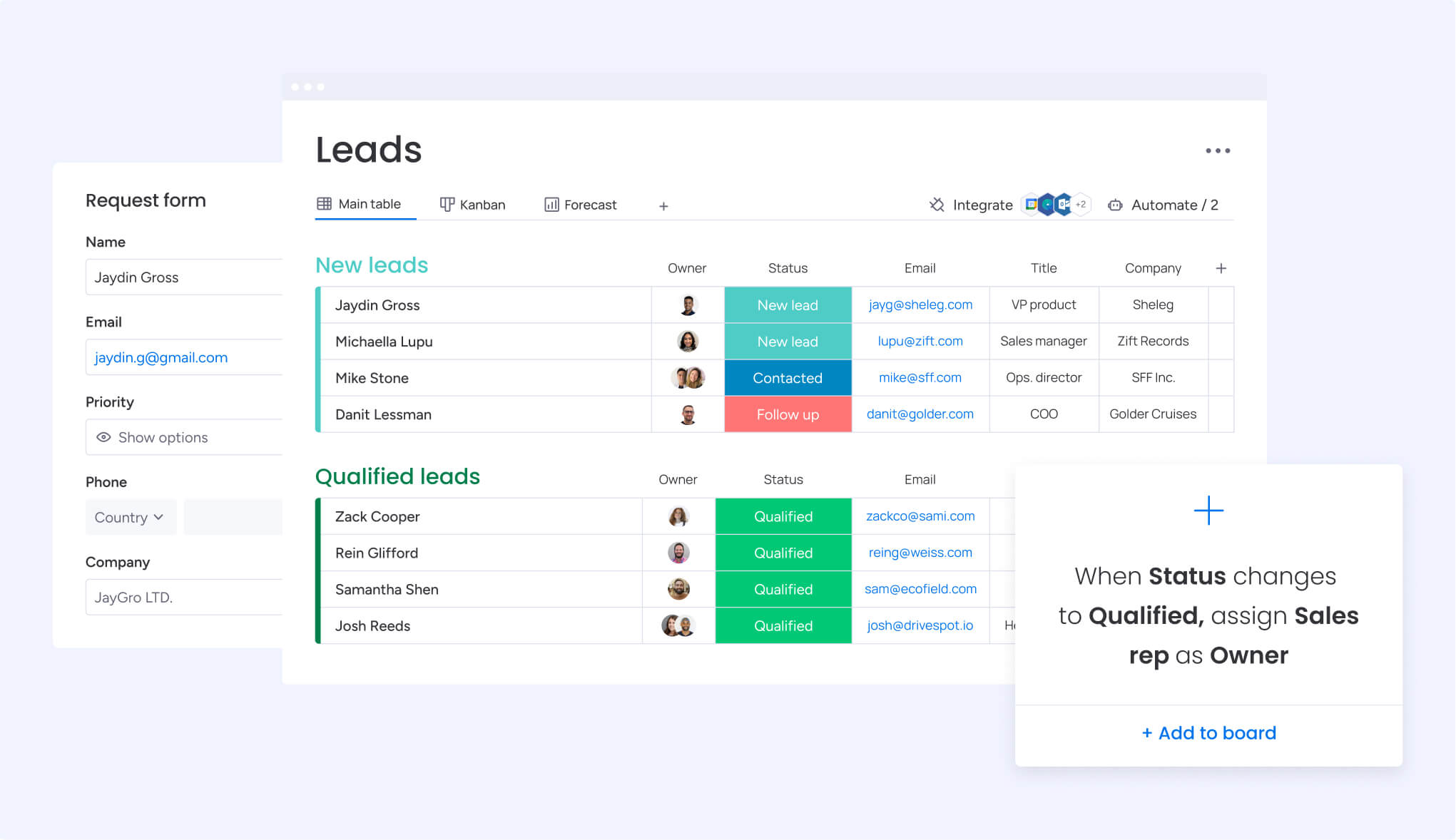
Collecting insights only matters when you can act on them systematically. To drive measurable revenue growth, use the following frameworks to translate your understanding into consistent execution.
Strategy 1: map behavioral data to your sales process
Align specific insights with each stage of your sales process to ensure the right information drives the right actions:
- Prospecting: focus on buying triggers and competitor switching signals.
- Qualification: analyze decision-maker motivations and price sensitivity.
- Discovery: identify engagement preferences and stakeholder dynamics.
- Presentation: leverage value priorities and communication styles.
- Closing: address risk concerns and timeline pressures.
This alignment ensures every team member knows which insights matter most at each moment.
Strategy 2: build living buyer personas
Static personas created once and forgotten quickly become outdated. Instead, develop “living” personas that evolve based on real-time behavioral data. Set up systems that automatically update persona accuracy as you gather more interaction data.
Teams find that AI capabilities automatically refine buyer profiles based on new interactions, identifying when behavior patterns shift or new concerns emerge across the customer base.
Strategy 3: score leads based on intent signals
Move beyond demographic scoring to behavioral intent scoring. High-intent behaviors deserve higher scores than company characteristics:
- High intent: downloaded pricing guide, attended demo, asked implementation questions.
- Medium intent: visited multiple product pages, engaged with emails, downloaded whitepapers.
- Low intent: single website visit, opened one email, no recent engagement.
Intent scoring ensures sales teams prioritize prospects showing genuine buying interest over those who simply fit the ideal customer profile.
Strategy 4: create insight-driven talk tracks
Move beyond generic scripts by developing conversation frameworks tailored to specific consumer insights. When a prospect’s behavior reveals high risk aversion, your talk track should pivot to emphasize implementation success rates and dedicated support quality.
Conversely, if insights show a strong growth focus, the conversation should highlight scalability and long-term value. Having these ready-to-use frameworks ensures that your team maintains consistent, effective dialogues that address the unique psychological drivers of every lead.
Strategy 5: set up automated alert systems
Configure notifications for high-value behavioral signals:
- Engagement spikes: prospect visits pricing page multiple times.
- Stakeholder expansion: email forwarded to additional contacts.
- Research depth: implementation guide downloaded.
- Timeline indicators: contract renewal date approaching.
These alerts enable immediate action when prospects signal buying interest, dramatically improving response rates.
Strategy 6: sync marketing insights with sales actions
Create feedback loops between marketing’s insight generation and sales execution. Marketing uncovers valuable patterns through content engagement and campaign performance that often never reach sales. Similarly, sales teams learn prospect concerns through conversations that could inform marketing strategy.
Establish regular insight-sharing sessions where both teams exchange patterns they’re seeing. Organizations using solutions like monday CRM find this synchronization happens naturally when both teams work from the same centralized platform.
Learn more: Consumer insight marketing
Strategy 7: time outreach using sentiment intelligence
Leverage sentiment analysis to determine the optimal “temperature” for your outreach, ensuring you contact prospects when they are most receptive. High engagement paired with positive sentiment indicates a readiness to move forward, suggesting you should accelerate your follow-up cadence.
On the other hand, if AI detects hesitation or skepticism, it signals a need for further education rather than a hard close; in these cases, slow down and focus on building trust to protect the relationship.
Try monday CRMHow does AI accelerate consumer insight discovery?
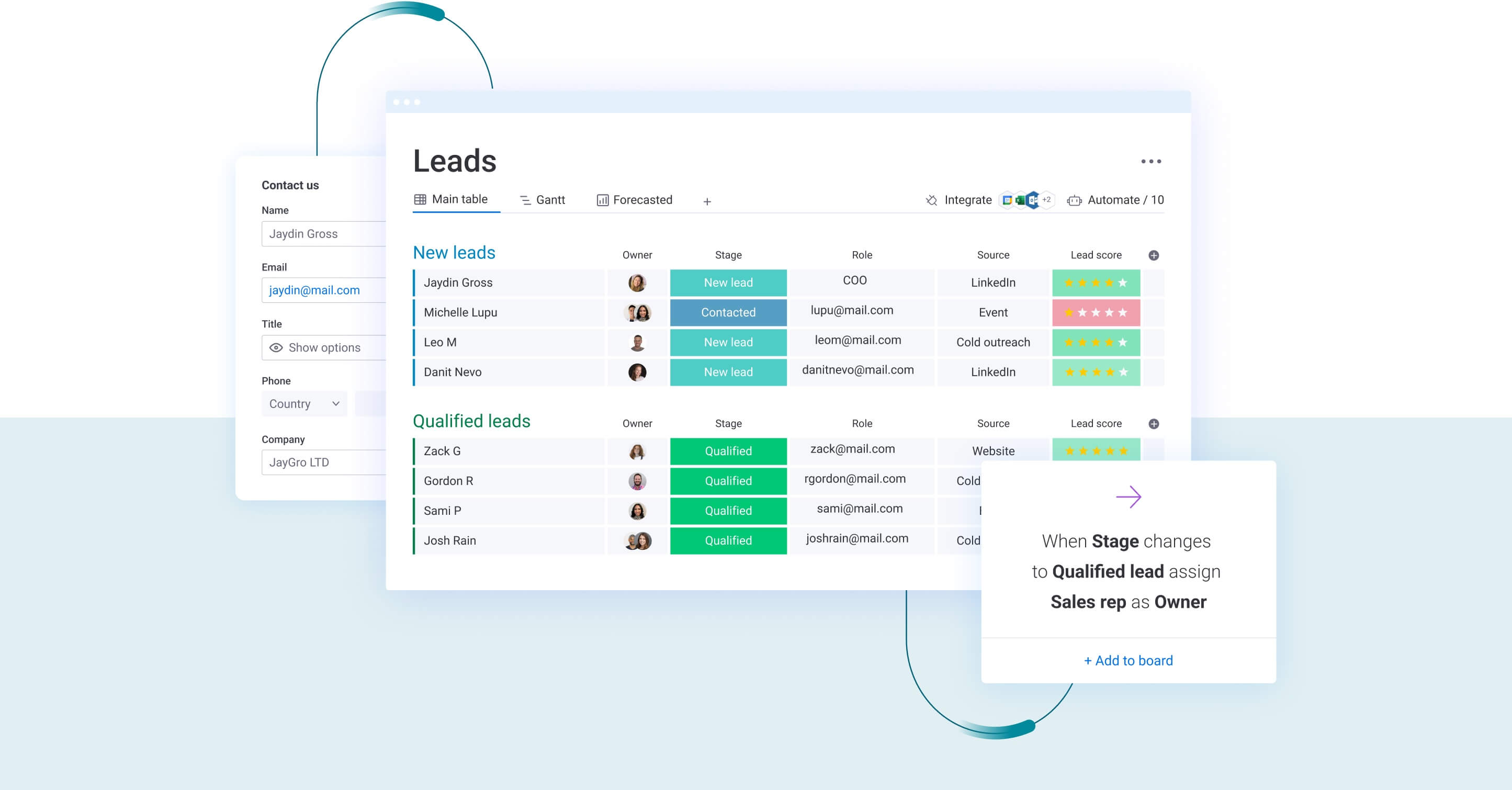
AI turns the slow, manual work of finding consumer insights into something that happens automatically, at scale. While individual reps develop intuition about their specific deals, AI analyzes patterns across thousands of interactions to identify trends impossible for humans to spot manually. This technological advancement enables sales teams to operate with unprecedented precision and scale.
- Mass-scale pattern recognition: AI examines your entire customer base to determine which specific questions or timeline shifts actually predict purchase intent. While a rep sees a handful of deals, AI analyzes hundreds to identify which behaviors correlate with serious buyers versus “tire kickers.”
- Hidden signal detection: integrated AI identifies subtle indicators in prospect communications that often go unnoticed. Sentiment detection reveals skepticism or enthusiasm based on tone, while communication analysis flags when prospects are building internal business cases or comparing competitors.
- Data-backed outcome prediction: by analyzing the characteristics of historical “closed-won” deals, AI predicts current opportunity outcomes. It identifies high-probability markers, such as multi-stakeholder involvement or specific technical requests, to help reps focus on the deals most likely to close.
- Real-time intelligence: unlike traditional reporting, which provides insights after the fact, AI surfaces intelligence during the interaction. It can suggest optimal responses to prospect objections and recommend next steps based on what worked in similar successful deals.
Calculate your consumer insight ROI
When you measure how consumer insights affect your bottom line, you’ll have the proof you need to justify the investment to leadership. Focus on metrics directly connected to revenue outcomes to build a compelling case for insight-driven sales strategies.
Revenue impact metrics that matter
Four KPIs demonstrate consumer insight value most directly:
- Pipeline velocity: time reduction from lead to close after implementing insights.
- Win rate improvement: percentage increase in deal closure using insight-driven approaches.
- Deal size growth: average contract value increases from identifying upsell opportunities.
- Forecast accuracy: prediction reliability improvements using behavioral signals.
Calculate impact by comparing baseline performance to post-insight implementation. If your team closes 100 deals annually at $50,000 average with a 20% win rate, and insights improve the win rate to 28% while increasing deal size to $60,000, revenue jumps from $5 million to $8.4 million.
Cost savings through efficiency
Consumer insights reduce costs by improving sales efficiency:
- Reduced prospecting waste: less time on unqualified leads.
- Fewer meetings per deal: targeted conversations eliminate redundancy.
- Lower acquisition costs: higher conversion rates mean less spend per customer.
- Scaled productivity: the same headcount handles more opportunities.
For example, if insights help your team identify low-probability prospects just 20% faster, you can redirect nearly a third of your wasted effort toward high-value accounts. This efficiency gain allows you to increase your total pipeline capacity by 25% without adding a single new hire.
Power your consumer insights with monday CRM
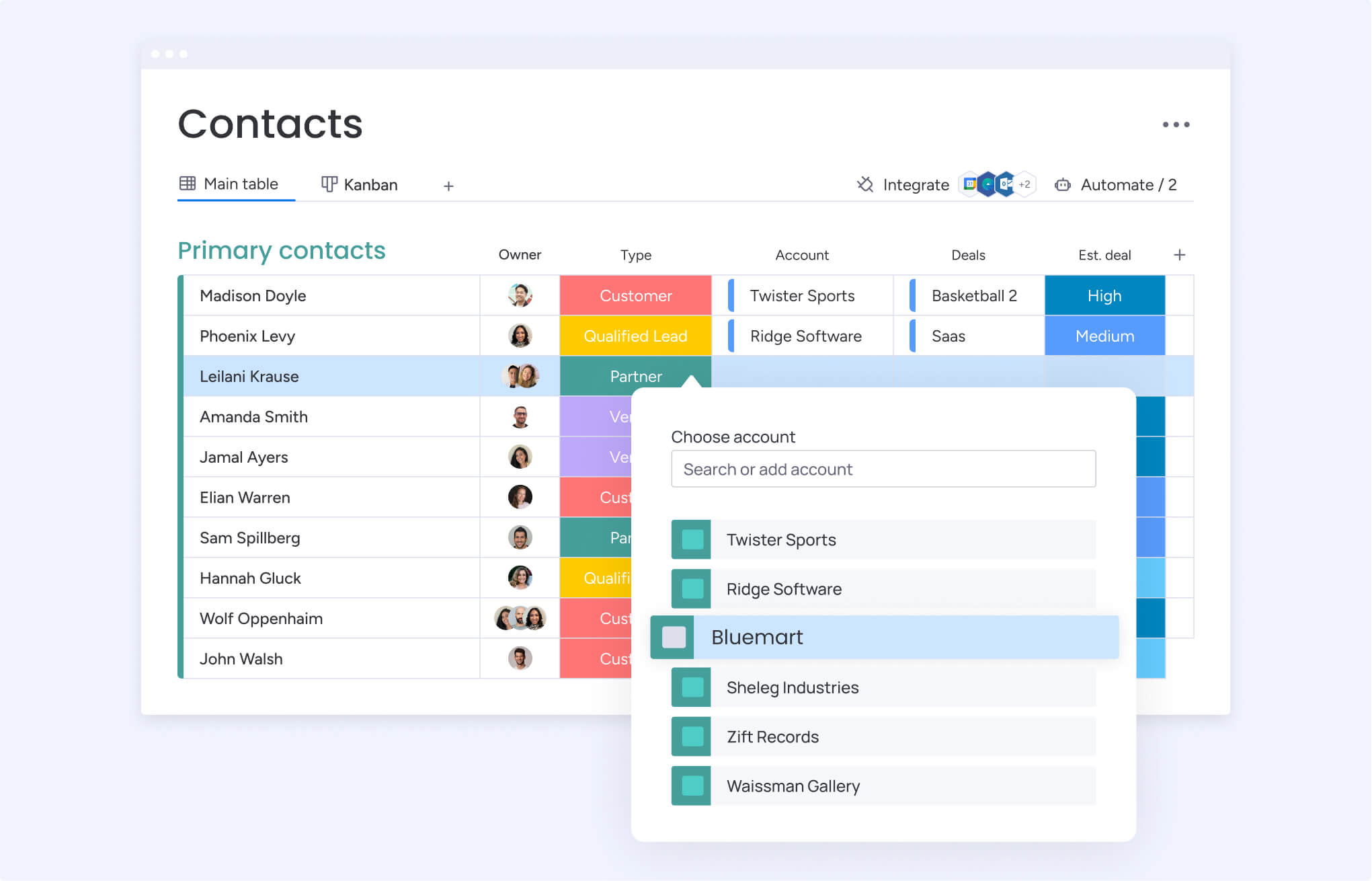
Organizations seeking to operationalize consumer insights need comprehensive capabilities for generation, storage, and action in one integrated platform. With monday CRM, you get this complete ecosystem where insights immediately trigger revenue-driving actions, eliminating the gap between understanding and execution.
AI-driven insight extraction at scale
The platform’s AI blocks automatically generate consumer insights from customer interactions without manual analysis:
- Extract Information: pulls key details from emails, documents, and meeting notes to build comprehensive profiles.
- Detect Sentiment: analyzes communication tone to reveal prospect enthusiasm or concern.
- Categorize: automatically tags and organizes information based on identified patterns.
The Custom Block allows teams to create specific insight-generation workflows tailored to their sales process — automatically identifying buying triggers specific to their industry or extracting competitor mentions from communications.
Real-time dashboards for instant intelligence
Customizable dashboards visualize consumer insights alongside traditional metrics, providing complete decision-making context:
- Sales funnel widget: shows which prospects exhibit high-intent behaviors.
- Leaderboard widget: highlights which reps most effectively use insights to drive results.
- Custom views: display average sentiment by segment, common buying triggers in current pipeline, engagement patterns across industries, and correlation between specific insights and win rates.
Automated workflows that capture every signal
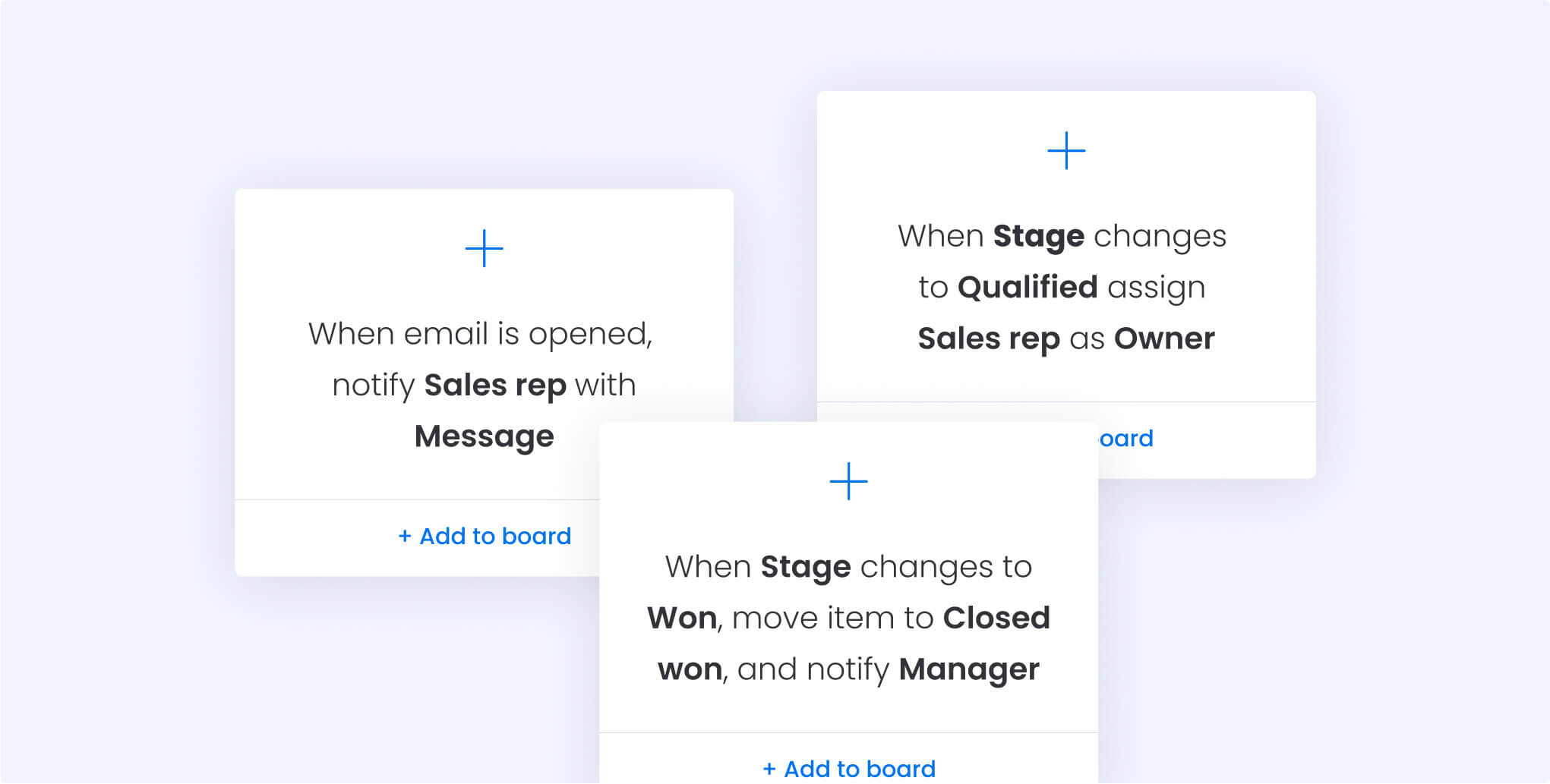
Conditional automations trigger actions based on customer behavior patterns:
- Lead routing: high-intent leads automatically route to senior reps.
- Follow-up sequences: personalized campaigns launch based on identified engagement preferences.
- Testing capabilities: mass email and tracking help test different approaches and measure which insights lead to engagement improvements.
From insight to action in one platform
An integrated approach eliminates “platform switching” by combining insight generation, storage, and execution within a single workspace. This ensures that intelligence is never static; instead, it becomes a dynamic part of the daily sales workflow.
- Immediate visibility: when AI identifies a high-intent prospect, the insight appears directly in the rep’s active dashboard alongside suggested next steps.
- Proactive course correction: if sentiment shifts from positive to skeptical, reps receive instant alerts with context and specific recommendations to address the change in tone.
- Dynamic prioritization: as buying triggers emerge, the system automatically adjusts deal priority and suggests the optimal time for outreach.
Ultimately, this integration ensures that insights don’t just sit in forgotten reports. Instead, they drive the immediate, data-backed actions that consistently generate revenue.
“With monday CRM, we’re finally able to adapt the platform to our needs — not the other way around. It gives us the flexibility to work smarter, cut costs, save time, and scale with confidence.”
Samuel Lobao | Contract Administrator & Special Projects, Strategix
“Now we have a lot less data, but it’s quality data. That change allows us to use AI confidently, without second-guessing the outputs.”
Elizabeth Gerbel | CEO
“Without monday CRM, we’d be chasing updates and fixing errors. Now we’re focused on growing the program — not just keeping up with it."
Quentin Williams | Head of Dropship, Freedom Furniture
“There’s probably about a 70% increase in efficiency in regards to the admin tasks that were removed and automated, which is a huge win for us.“
Kyle Dorman | Department Manager - Operations, Ray White
"monday CRM helps us make sure the right people have immediate visibility into the information they need so we're not wasting time."
Luca Pope | Global Client Solutions Manager at Black Mountain
“In a couple of weeks, all of the team members were using monday CRM fully. The automations and the many integrations, make monday CRM the best CRM in the market right now.”
Nuno Godinho | CIO at Velv
“monday.com provides developmental flexibility, operational efficiency, and data transparency — all in one place. We became a company that moved from chasing data to leading with it.”
Hyunghan Lee | Team Lead, Sandbox Network
"monday.com brought every part of our business into one connected space. The harmony between work management and CRM has become our operating system — giving us the clarity and confidence to scale.”
Jennifer Chinburg | Executive Vice President of Corporate Development & Brand, Chinburg Properties
“We just weren’t getting value from our old CRM. With monday.com, it's a thousand times better. Our sales teams are more informed, more consistent, and far more connected."
James Arnold | Chief Operating Officer, CenversaEnhance your sales approach with consumer insights
Consumer insights represent the evolution from reactive to predictive sales. Instead of waiting for prospects to reveal their needs, you anticipate them. Instead of generic outreach, you deliver precisely targeted messages. Instead of hoping deals close, you work with behavioral patterns that predict outcomes.
The teams winning in today’s competitive landscape aren’t just collecting more data: they’re extracting deeper meaning from every interaction. They understand that behind every click, email, and conversation lies valuable intelligence about buying intent, decision-making processes, and optimal timing.
Revenue teams ready to operationalize these insights find that monday CRM provides the complete infrastructure needed to capture, analyze, and act on consumer behavior patterns. The platform transforms scattered data points into coherent strategies that drive predictable growth.
The content in this article is provided for informational purposes only and, to the best of monday.com’s knowledge, the information provided in this article is accurate and up-to-date at the time of publication. That said, monday.com encourages readers to verify all information directly.
Frequently asked questions
What's the difference between consumer insights and customer analytics?
Consumer insights reveal why customers act and predict future behavior by focusing on motivations and intent. Customer analytics analyze historical patterns and performance metrics without explaining underlying reasons, showing what happened but not why it matters for your next sales action.
How quickly can sales teams implement consumer insights?
Basic consumer insight implementation begins within weeks by starting with simple behavioral tracking and pattern identification. Developing sophisticated capabilities typically takes two to three months of consistent data collection to build reliable predictive patterns.
Do consumer insights work for complex B2B sales?
Consumer insights prove especially valuable for complex B2B sales because they help navigate multiple decision makers and lengthy cycles. Understanding individual stakeholder motivations and organizational dynamics becomes essential when managing deals with numerous moving parts and competing priorities.
What technology do I need to gather consumer insights?
Effective consumer insight generation requires a CRM with AI capabilities, communication tracking, and behavioral analysis features. Platforms like monday CRM provide these capabilities in one system by eliminating the need for multiple disconnected platforms while ensuring insights translate directly into sales actions.
How do consumer insights improve forecast accuracy?
Consumer insights identify leading indicators of purchase intent through specific behaviors and patterns that precede closed deals. This behavioral approach to forecasting based on actual buying signals rather than arbitrary pipeline stages typically improves accuracy by 20 to 30 percentage points.
Can small sales teams benefit from consumer insights?
Small teams often benefit most from consumer insights because they maximize limited resources. When every deal matters and you can't afford wasted effort, understanding exactly which prospects to pursue and how to approach them becomes critical for competing against larger competitors.