



While sales teams often master their product’s features and benefits, superior solutions still lose to the status quo or competitors. This occurs because the bottleneck is rarely product knowledge, but rather an outdated sales approach that fails to engage the modern, well-informed buyer.
The Challenger sales methodology solves this by transforming the seller into a teacher. Instead of reacting to stated needs, Challenger sellers proactively introduce prospects to overlooked business problems. By leveraging cross-industry data, they reframe the buyer’s perspective and provide a compelling reason to change.
This guide outlines the complete Challenger framework and provides a roadmap for implementation. You will learn to master the “Three T’s” (Teaching, Tailoring, and Taking Control) while using AI to scale these high-impact behaviors across your entire revenue team.
Key takeaways
- Master the Three T’s to win 40% more deals: teach customers new perspectives with commercial insights, tailor messages to each stakeholder’s priorities, and take control of conversations with data-driven confidence.
- Focus on commercial insights, not product features: bring surprising, relevant information that challenges customer assumptions and connects directly to their business challenges; this differentiates you when products become commoditized.
- Map and engage every decision-maker systematically: B2B purchases involve six to ten stakeholders with different priorities, so identify all players early and adapt your core message to resonate with each person’s specific role and concerns.
- Track Challenger behaviors with real-time CRM analytics: platforms like monday CRM enable revenue teams to monitor insight delivery frequency, stakeholder engagement rates, and conversation control metrics that predict deal success and identify coaching opportunities.
- Implement systematically across your entire team: assess current capabilities, develop commercial teaching strategies, build stakeholder-specific messaging, and coach with data-driven insights to see measurable improvements in six to twelve months.
What is the Challenger sales methodology?
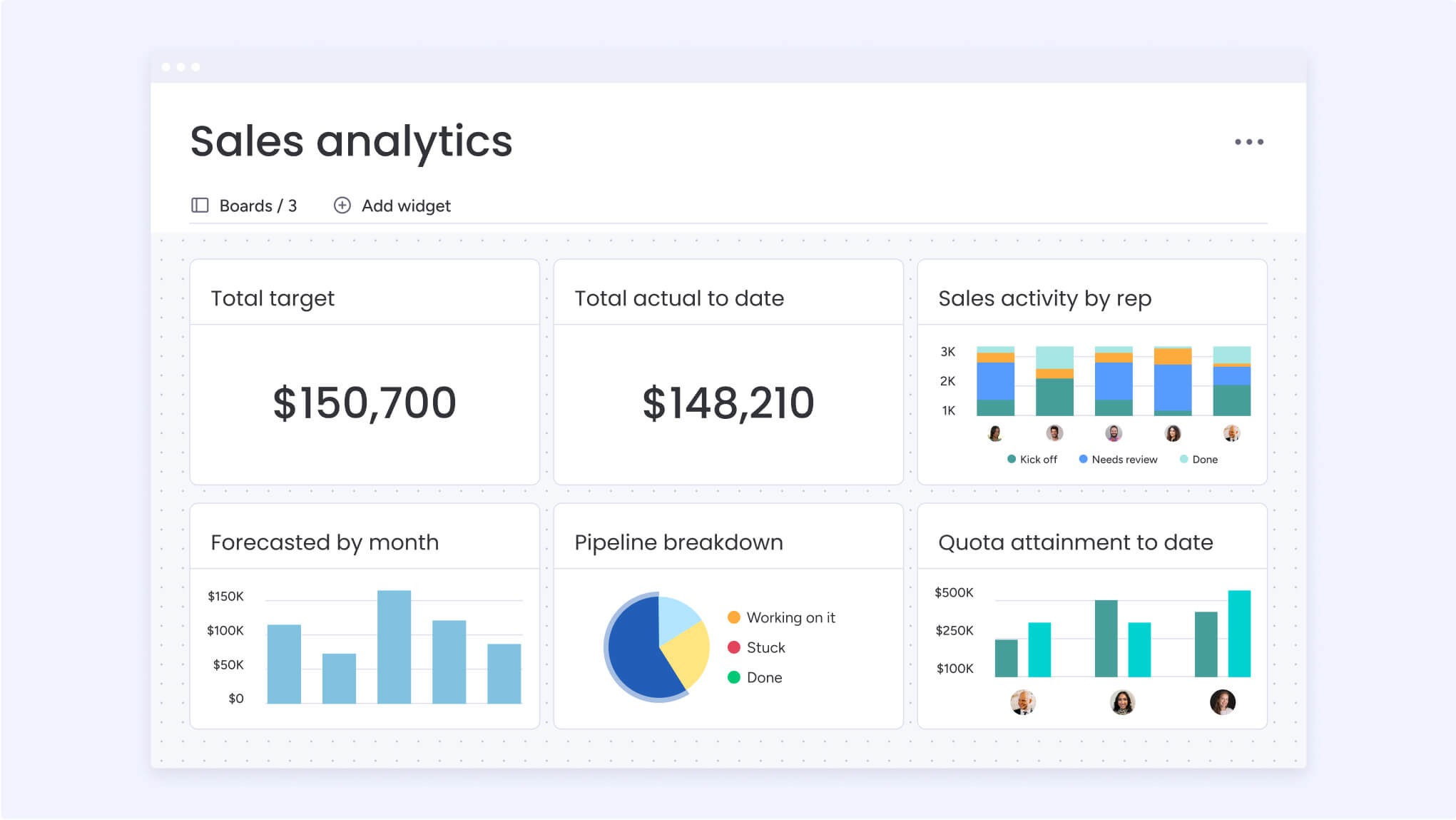
The Challenger methodology is a research-backed framework where sales reps teach customers new perspectives, tailor insights to specific stakeholders, and take control of the conversation. Unlike traditional models that prioritize relationship-building, this sales strategy focuses on reframing how customers perceive their own business problems.
This approach emerged from Gartner’s (formerly CEB) study of 6,000 sales professionals, which revealed that top performers don’t just solve problems but define them.
By introducing cross-industry data and uncovering hidden costs, Challengers prove that the cost of the status quo is often higher than the cost of switching. This is particularly effective in complex B2B sales environments where buyers are well-informed but lack a broad, strategic market view.
The 5 seller profiles every sales leader should know
Research identifies five distinct profiles based on behavioral patterns. While each brings unique strengths to the sales process, their performance varies significantly in complex deal cycles:
- Hard Worker: shows exceptional work ethic, arrives early, stays late, follows up consistently with prospects, never gives up on opportunities.
- Relationship Builder: prioritizes strong personal connections with clients, focuses on customer service and responsiveness, maintains long-term relationships after deals close.
- Lone Wolf: operates independently with minimal oversight, follows personal instincts rather than prescribed processes, and achieves results through unconventional methods.
- Reactive Problem Solver: responds quickly to customer issues, excels at addressing technical questions, provides detailed product knowledge and reliable service.
- Challenger: teaches customers new perspectives about their business, tailors messages to different stakeholder priorities, takes control of sales conversations with data and insights.
While all profiles can achieve sales success, Challengers consistently outperform others in complex B2B sales environments when supported by a well-defined sales process. They excel particularly when deals involve multiple stakeholders and extended sales cycles.
Why do Challengers win 40% more deals?
The Challenger’s success lies in their alignment with modern B2B buying habits. Today’s buyers complete extensive research across an average of ten channels before ever speaking to a rep. Consequently, they don’t need a product pitch; they need insights they can’t find on Google.
Challengers win because they address three critical modern sales challenges:
- Cutting through information overload: buyers have data but lack direction. Challengers provide cross-industry trends and competitive intelligence that speak directly to a prospect’s unique challenges.
- Managing complex committees: B2B purchases now involve six to ten decision-makers. Because eight in ten B2B decision-makers will actively seek a new vendor if performance guarantees aren’t offered, Challengers excel at building a specific business case for each stakeholder.
- Combating commodity bias: when products appear similar, the salesperson’s insight becomes the primary differentiator. By quantifying the cost of inaction and proactively challenging the status quo, Challengers prevent stalled deals and provide the momentum needed to close.
Master the 3 T's of Challenger selling
The three T’s form the core framework that defines Challenger methodology. These aren’t sequential steps but interconnected capabilities that work together throughout every customer interaction. Mastering each component enables sales teams to differentiate through insights rather than features.
1. Teach with commercial insight
Commercial insight is more than just raw data; it is a unique perspective that reshapes how prospects view their business. While basic product knowledge describes what you sell, commercial insights reveal why a prospect’s current strategy is risky or inefficient.
To be effective, an insight must:
- Challenge assumptions: present information the prospect hasn’t considered, revealing blind spots in their strategy.
- Connect directly: link to the prospect’s business model, competitive position, or operational challenges.
- Drive action: lead to specific steps the prospect can take, whether investigating hidden costs or exploring new strategies.
- Provide evidence: support claims with data, patterns, or cross-client examples.
For example, if a rep notices that similar clients achieved 30% faster time-to-market by changing one specific operational hurdle, that pattern becomes a powerful commercial insight for any prospect still using the old method.
2. Tailor your message to each stakeholder
B2B purchases involve multiple stakeholders with fundamentally different priorities and decision-making criteria. Tailoring means adapting your core commercial insight to resonate with each stakeholder’s specific role and interests.
Different stakeholders require different messaging approaches:
- Economic buyer: focuses on ROI, budget impact, and strategic alignment — emphasizes financial implications like revenue at risk from competitive threats.
- Technical buyer: concerned with implementation complexity and system integration — addresses technical feasibility and required resources.
- User buyer: interested in day-to-day usability and workflow impact — shows how solutions improve their specific processes.
- Coach/Champion: your internal advocate who helps navigate the organization — provides stakeholder-specific talking points they can use.
Effective tailoring requires meticulous stakeholder mapping. By using a centralized CRM to track individual concerns and engagement patterns, revenue teams can maintain a consistent, personalized narrative throughout long sales cycles.
3. Take control of the sales process
Taking control means proactively guiding the conversation and sales process rather than reactively responding to customer requests. This demonstrates confidence and helps prospects navigate complex buying decisions more effectively.
Control manifests in several key ways:
- Structure meetings: lead with agendas that advance the sale rather than letting customers dictate conversation flow.
- Ask tough questions: probe into areas customers might prefer to avoid, such as budget constraints or competing priorities.
- Challenge assumptions: respectfully question beliefs when data suggests alternatives exist.
- Drive next steps: propose specific actions and timelines rather than waiting for customer direction.
- Guide evaluation: suggest criteria based on what actually predicts success and help prospects avoid common mistakes.
Questions like “What happens if you don’t solve this problem in the next six months?” force prospects to confront the cost of inaction and create urgency around decision-making.
Try monday CRM5 steps to implement the Challenger sales method
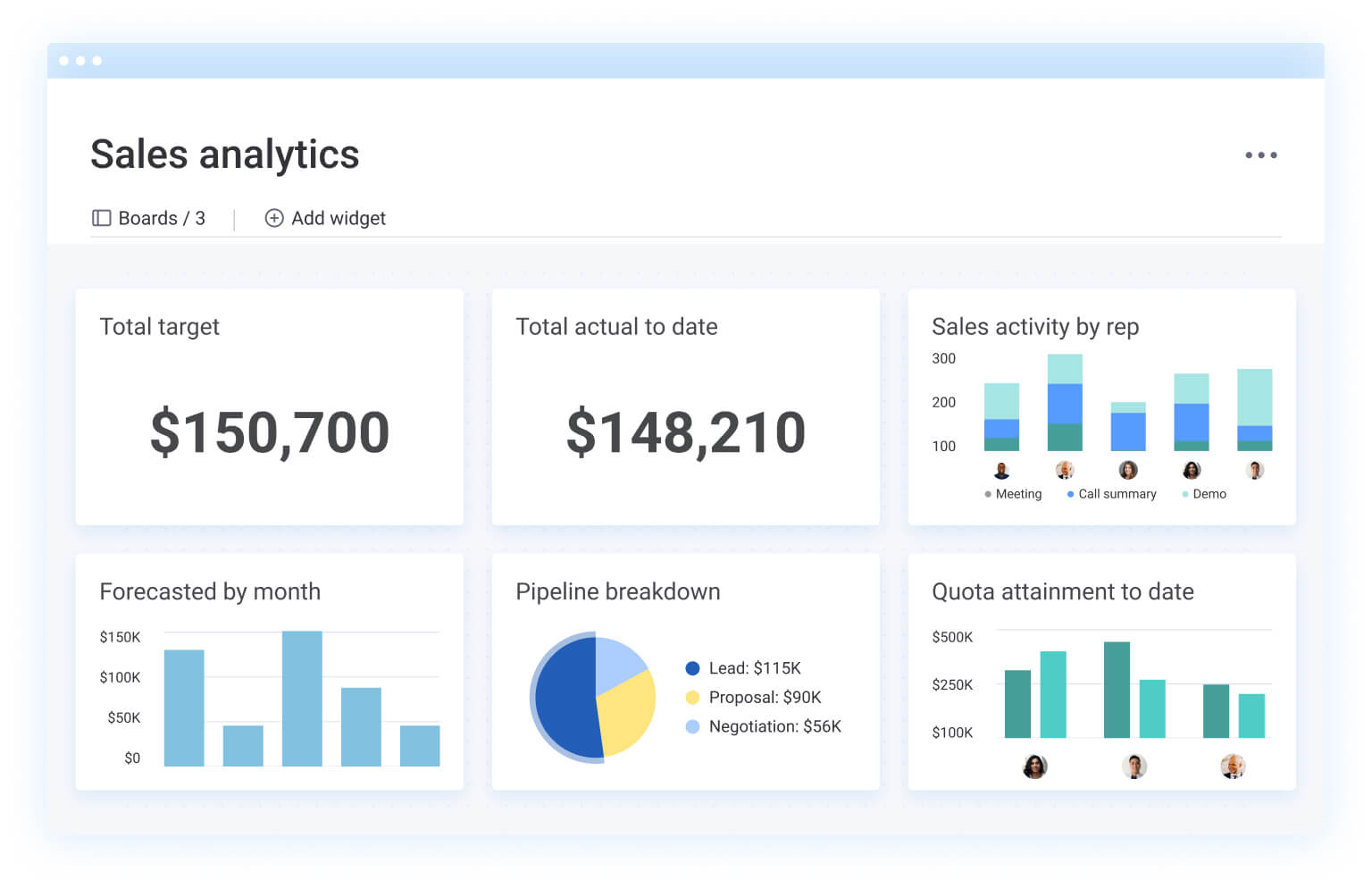
Understanding Challenger methodology differs fundamentally from successfully implementing it across a sales team. Each organization must adapt the approach to their specific context, sales cycle, and market dynamics. These five steps provide a systematic framework for rolling out Challenger methodology effectively.
Step 1: identify and develop Challenger behaviors
Successful implementation begins with an objective assessment of your team’s current capabilities. Rather than relying on subjective manager opinions, evaluate reps against specific behavioral dimensions:
Key assessment criteria for identifying Challenger potential:
- Comfort with challenging assumptions: does the rep respectfully push back on questionable statements or simply agree to maintain rapport?
- Teaching ability: does the rep bring new perspectives to customer conversations or primarily present product features?
- Message tailoring skills: does the rep adapt their approach for different stakeholder types or deliver the same pitch regardless?
- Conversation control: does the rep guide the sales process proactively or let customers dictate pace and direction?
- Track record of insights: do customers reference learning something new from this rep or view them primarily as a product expert?
Create an evaluation rubric scoring each rep on these criteria using a onetofive scale. Reps scoring four to five across most criteria are natural Challengers who need refinement. Those scoring two to three can develop Challenger skills through focused training.
Step 2: create your commercial teaching strategy
To scale, you must move the burden of insight generation away from individual reps. Centralizing this process ensures quality control and message consistency. Focus your research on four pillars:
- Industry trend analysis: monitor trade publications and analyst reports to identify emerging trends affecting target customers.
- Customer data mining: analyze patterns across your customer base to identify what separates high performers from struggling ones.
- Cross-client learning: document lessons from customer implementations to develop insights about what works in specific situations.
- Competitive intelligence: track competitor moves and market positioning to understand how your customers’ competitive environment evolves.
Transform raw data into compelling stories that resonate emotionally while remaining factually grounded. An insight about supply chain risk becomes more powerful when illustrated with a specific example of a company that suffered unexpected disruptions.
Step 3: build stakeholder-specific messaging
Systematically adapt core insights for different stakeholder types using a repeatable framework. This structured approach ensures consistent quality while making it easier for reps to execute Challenger methodology effectively.
Map the complete buying committee early in the sales process, including people who might not attend meetings but influence decisions behind the scenes. Research each stakeholder’s position, responsibilities, and likely concerns based on their role.
Consider how a commercial insight about digital transformation in manufacturing would be tailored:
- For the CFO: emphasize that companies delaying digital transformation face 25% higher operating costs within three years.
- For the IT director: focus on how legacy systems create integration challenges that compound over time.
- For the operations manager: highlight how manual processes slow response times to customer requests.
Organizations achieve results when they leverage modern platforms like monday CRM for systematic stakeholder tracking, recording each decision-maker’s concerns, questions, and engagement patterns throughout long sales cycles.
Step 4: coach your team with data-driven insights
Challenger coaching requires different approaches than traditional sales coaching. The behaviors being developed are more nuanced than simple activity metrics like calls made or meetings scheduled, so coaching must focus on skill development rather than just output.
Focus coaching on specific skill development areas:
- Insight development and delivery: Help reps identify patterns in customer data and practice delivering insights in compelling ways.
- Stakeholder identification: train reps to systematically identify all stakeholders early and develop engagement strategies for each
- Conversation control techniques: practice guiding customer conversations toward productive outcomes while remaining collaborative.
- Objection handling: develop the ability to respectfully push back on customer assumptions with data and insights.
- Discovery questions: master asking questions that uncover stakeholder priorities and validate commercial insights.
Implement varied coaching methods including role-playing challenging conversations, insight development workshops where teams analyze customer data collaboratively, and peer learning sessions where top performers share their approaches.
Teams discover that advanced solutions like monday CRM enable them to track behavioral patterns and performance metrics that inform coaching priorities.
Step 5: measure success with CRM analytics
To understand whether Challenger implementation is progressing effectively, you must track both leading indicators (behaviors) and lagging indicators (results). This dual focus provides a complete picture, connecting the team’s daily actions to high-level business outcomes.
Leading indicators to monitor:
- Discovery call duration: Challenger conversations typically run longer because teaching and challenging takes more time than presenting features.
- Stakeholder engagement rates: number of unique stakeholders contacted per opportunity and frequency of interactions.
- Insight delivery frequency: how often reps reference commercial insights in customer communications.
- Educational content usage: frequency of sharing insight-based content versus product-focused materials.
Lagging indicators to track:
- Win rates: overall close rates and segmentation by deal size and complexity.
- Deal velocity: average sales cycle length from initial contact to close.
- Average deal size: whether Challenger selling leads to larger deals as teaching uncovers broader needs.
- Pipeline progression rates: how quickly opportunities move from stage to stage.
Build dashboards that track these metrics over time. Establish clear baselines before rolling out Challenger methodology, then set targets aligned with your industry benchmarks. Measure performance consistently and compare results against established standards to assess progress.
Compare Challenger to other sales methodologies
Understanding when and why to choose Challenger over other methodologies helps sales leaders make informed decisions about which approach fits their specific sales environment. Each methodology serves different buyer types and sales complexity levels.
Challenger vs. solution selling
Solution Selling has been a go-to methodology for decades, but how does it stack up against Challenger? The key difference lies in who drives the conversation and when value gets introduced.
| Aspect | Challenger | Solution Selling |
|---|---|---|
| Primary focus | Teaching customers new perspectives | Identifying problems and presenting solutions |
| Sales approach | Proactive insight delivery | Reactive problem identification |
| Customer interaction | Challenge assumptions with new perspectives | Uncover needs through questioning |
| Ideal fit | Complex B2B sales with informed buyers | Transactional sales with defined problems |
| Skill requirements | Industry expertise and teaching ability | Discovery skills and needs analysis |
Solution Selling works well when customers have defined problems and actively seek solutions. Challenger becomes more effective when customers may not fully understand their challenges or when differentiation comes through insights rather than product features.
Challenger vs. SPIN selling
SPIN Selling revolutionized sales questioning techniques, but Challenger takes a fundamentally different approach to information exchange. While SPIN extracts information from customers, Challenger delivers insights to them.
| Aspect | Challenger | SPIN Selling |
|---|---|---|
| Question strategy | Challenging questions that provoke thinking | Systematic questioning to uncover needs |
| Information flow | Salesperson teaches customer | Customer reveals information to salesperson |
| Conversation control | Salesperson leads with insights | Customer needs drive conversation |
| Complexity focus | High-complexity sales with multiple stakeholders | Medium to high complexity sales |
| Differentiation | Through unique insights and perspectives | Through thorough needs analysis |
SPIN Selling excels at uncovering customer needs through systematic questioning. Challenger focuses on teaching customers about needs they didn’t know they had by presenting external insights and data.
Challenger vs. MEDDIC
MEDDIC and Challenger serve different purposes in the sales process, which is why many high-performing teams use them together. MEDDIC tells you what to qualify, while Challenger tells you how to sell.
| Aspect | Challenger | MEDDIC |
|---|---|---|
| Primary purpose | Sales approach defining customer interaction | Qualification framework defining what to verify |
| Focus area | How to sell (methodology) | What to qualify (process) |
| Implementation | Changes conversation style and content | Provides qualification checklist |
| Stakeholder approach | Tailor insights to each stakeholder | Identify and map all stakeholders |
| Measurement | Behavior adoption and engagement | Qualification completion and forecast accuracy |
MEDDIC helps ensure proper qualification and process management. Challenger provides the approach for customer interactions within those qualified opportunities. Many organizations successfully combine both methodologies.
Accelerate Challenger adoption with AI and automation
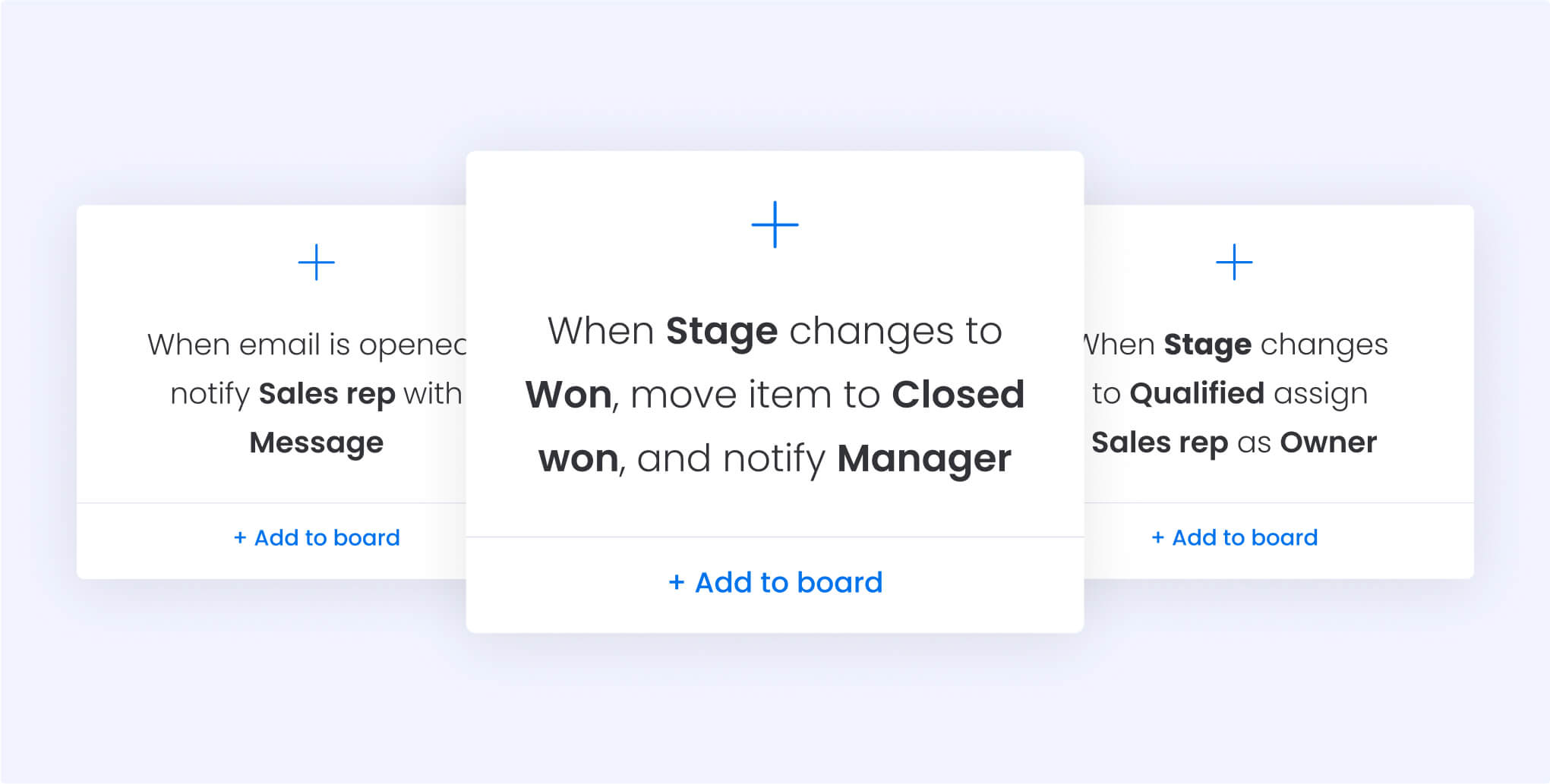
AI and automation solve specific Challenger implementation challenges around insight development, stakeholder tracking, and coaching at scale that previously required extensive manual effort. These technologies make Challenger methodology accessible to teams without dedicated research resources.
Generate commercial insights at scale
AI helps sales teams develop high-value commercial insights more efficiently than manual research. By monitoring thousands of news sources, analyst reports, and market data feeds, AI identifies emerging trends in real time.
- Customer pattern recognition: AI analyzes data across your current implementations to identify what separates successful customers from struggling ones. For example, it might find that companies prioritizing early system integration achieve 40% faster ROI. This data point immediately becomes a powerful commercial insight for your reps.
- Natural Language Processing (NLP): AI can summarize lengthy industry reports into “snackable” talking points, ensuring your team stays ahead of the competition without spending hours on research.
Automate stakeholder tracking
Automation solves one of Challenger’s biggest implementation challenges: managing complex stakeholder relationships across multiple deals without losing track of individual preferences and concerns.
AI-powered automation transforms stakeholder management in several key ways:
- Automatic stakeholder identification: AI identifies stakeholders mentioned in emails, meeting notes, and CRM records, building organizational charts that show reporting relationships and influence patterns.
- Communication pattern analysis: machine learning analyzes response patterns to determine each stakeholder’s preferred communication channels, optimal contact times, and content format preferences.
- Engagement tracking and alerts: automation monitors stakeholder behavior like email opens and content engagement, triggering alerts when engagement patterns change or opportunities arise.
For example, automation might track that a CFO stakeholder consistently opens emails containing ROI data but rarely engages with technical content, responds most frequently to Tuesday morning messages, and has become less responsive recently. This triggers alerts for the sales rep to reach out with financially-focused insights at the optimal time.
Enable real-time sales coaching
AI and automation scale Challenger coaching beyond the reach of manual call reviews and periodic one-on-ones. By using natural language processing to analyze recorded sales calls, these systems identify key Challenger behaviors and flag missed opportunities for immediate development.
AI provides in-call suggestions for specific insights to deliver, questions to ask, or objections to address based on the real-time context of the conversation. Machine learning further enhances this by identifying patterns across successful and unsuccessful deals, suggesting coaching priorities based on the behaviors that correlate most strongly with wins.
For example, if an AI analysis identifies that a rep delivered a strong commercial insight but failed to challenge a prospect’s assumption about implementation resources, it can flag this gap and suggest the exact language needed to regain control of the conversation.
Scale your Challenger strategy with monday CRM
Organizations achieve measurable improvements in Challenger methodology adoption when they leverage comprehensive CRM platforms that specifically support teaching, tailoring, and taking control at scale. The right technology foundation accelerates skill development and ensures consistent execution across the entire sales team.
Track Challenger behaviors in real time
Real-time visibility into Challenger implementation helps sales managers identify coaching opportunities and recognize successful execution as it happens. Modern platforms like monday CRM provide this immediate feedback loop that accelerates skill development and ensures consistent methodology adoption.
Monitor key Challenger behaviors with real-time tracking capabilities:
- Conversation quality metrics: track call duration, participant engagement, and conversation topics to identify whether reps are conducting substantive Challenger conversations that teach and challenge rather than just present features.
- Stakeholder engagement patterns: automated tracking of email opens, content downloads, and meeting attendance across all decision-makers shows which reps effectively engage the full buying committee with tailored insights.
- Deal velocity indicators: real-time measurement of how Challenger behaviors impact deal progression identifies which activities actually move opportunities forward and which need refinement.
- Coaching alerts: when stakeholder engagement numbers drop or deal velocity slows, automated alerts trigger coaching conversations focused on specific Challenger behaviors that need improvement.
Scale commercial teaching with AI
AI supports the “Teach” component by helping teams develop and personalize insights efficiently. Commercial teaching becomes accessible to teams without dedicated research resources through monday CRM.
These systems identify performance drivers by extracting patterns from interactions, implementation data, and success metrics while simultaneously monitoring market data for emerging trends.
Teams can refine their insight library by analyzing which data points drive engagement and pipeline progression. Core insights are then automatically adapted for different industries and stakeholders, eliminating manual customization for every presentation.
Unite sales, marketing, and customer success
Organizational alignment ensures the Challenger methodology extends across the entire customer lifecycle. Consistent experiences are created and commercial insights are maximized across all touchpoints with monday CRM.
Marketing and sales collaborate to combine high-level research with frontline intelligence. This data is stored in a centralized repository, ensuring all departments utilize current, approved Challenger content.
In addition, customer success data regarding implementation and expansion provides fresh teaching points for sales to use with prospects. Visibility into the entire stakeholder journey, from marketing to success, prevents disconnected experiences and ensures a unified narrative.

“With monday CRM, we’re finally able to adapt the platform to our needs — not the other way around. It gives us the flexibility to work smarter, cut costs, save time, and scale with confidence.”
Samuel Lobao | Contract Administrator & Special Projects, Strategix
“Now we have a lot less data, but it’s quality data. That change allows us to use AI confidently, without second-guessing the outputs.”
Elizabeth Gerbel | CEO
“Without monday CRM, we’d be chasing updates and fixing errors. Now we’re focused on growing the program — not just keeping up with it."
Quentin Williams | Head of Dropship, Freedom Furniture
“There’s probably about a 70% increase in efficiency in regards to the admin tasks that were removed and automated, which is a huge win for us.“
Kyle Dorman | Department Manager - Operations, Ray White
"monday CRM helps us make sure the right people have immediate visibility into the information they need so we're not wasting time."
Luca Pope | Global Client Solutions Manager at Black Mountain
“In a couple of weeks, all of the team members were using monday CRM fully. The automations and the many integrations, make monday CRM the best CRM in the market right now.”
Nuno Godinho | CIO at VelvBuild your Challenger sales advantage
Challenger methodology transforms how sales teams engage with informed B2B buyers by leading with insights rather than features. The approach requires systematic implementation across insight development, stakeholder engagement, and conversation control. Organizations that commit to the process see measurable improvements in win rates and deal velocity.
Success depends on matching the right methodology to your sales environment. Challenger works best in complex B2B sales with multiple stakeholders and extended decision cycles. Teams selling to well-informed buyers who’ve already completed extensive research benefit most from the teaching and challenging approach.
Pairing a proven methodology with a comprehensive CRM accelerates impact. By using platforms like monday CRM to track behaviors and automate stakeholder management, teams ensure more consistent execution. This focus on value-realization helps organizations achieve approximately 7 percentage points higher net revenue retention than their peers.
Try monday CRMThe content in this article is provided for informational purposes only and, to the best of monday.com’s knowledge, the information provided in this article is accurate and up-to-date at the time of publication. That said, monday.com encourages readers to verify all information directly.
Frequently asked questions
What are the 6 stages of the Challenger sales process?
The Challenger sales methodology doesn't follow a traditional 6-stage process. Instead, it focuses on the Three T's (Teach, Tailor, Take Control) applied throughout your existing sales process, whether that's five, seven, or custom stages.
How long does Challenger implementation take for a sales team?
Challenger implementation typically takes six to twelve months for full adoption, depending on team size and existing skill levels. Initial results often become visible within 60-90 days as reps begin applying Challenger behaviors.
Can small sales teams use the Challenger methodology effectively?
Small sales teams can absolutely use Challenger methodology effectively. Smaller teams benefit from easier coordination and faster decision-making, though they may need to focus on fewer, high-impact commercial insights initially.
Is Challenger sales training worth the investment for B2B companies?
Challenger sales training delivers strong ROI for B2B companies with complex sales cycles and multiple stakeholders. Organizations typically see improved win rates, shorter sales cycles, and larger deal sizes within six to twelve months of implementation.
How do you measure Challenger sales methodology success?
Measure Challenger success through behavioral metrics like insight delivery frequency and stakeholder engagement rates, plus results metrics like win rates and deal velocity. Combine CRM analytics with regular coaching assessments for a complete picture of implementation effectiveness.
What's the difference between Challenger and consultative selling?
Challenger selling proactively teaches customers new perspectives and challenges their thinking, while consultative selling focuses on asking questions to understand needs and providing expert advice. Challenger salespeople lead with insights and take control, whereas consultative sellers primarily respond to customer-identified problems.

 Get started