


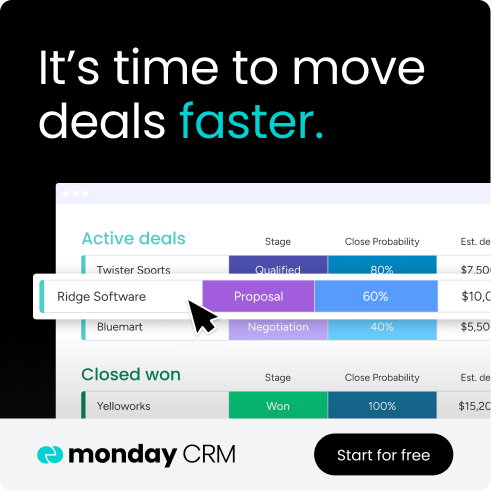
Sales development reps spend most of their day on non-selling activities like research, data entry, and CRM updates. The actual conversations that close deals might only take up an hour of their day, if they’re lucky. That math doesn’t work when trying to hit big pipeline numbers with a small team.
AI SDR platforms promise to flip that equation. They handle the grind so reps can focus on the 10% that actually moves revenue. But with a crowded market and big claims, it’s important to understand the hidden costs to protect ROI. Not every platform delivers what it advertises, and picking the wrong one means months of frustration before starting over.
Read on below as we explore the best AI SDR platforms for 2026, with real pricing, actual capabilities, and the costs nobody mentions upfront. We will also unearth what separates genuine AI from glorified schedulers, the economics of AI versus human SDRs, and touch on a 30-day launch plan that truly works.
Key takeaways
- Focus on solving specific pain points, not chasing features: choose AI that automates your biggest time drains like data entry and follow-ups rather than platforms with the most capabilities.
- Integration determines success or failure: your AI SDR must sync seamlessly with your CRM and existing tech stack; disconnected tools create more manual work, not less.
- Real ROI takes longer than the sales pitch suggests: expect three to six months to see positive returns with clean data, or six to nine months if you’re building processes from scratch.
- Quality control isn’t optional: AI-generated outreach needs human oversight to maintain brand voice and prevent robotic messaging that damages your reputation.
- Start small and scale what works: launch with 100–200 test accounts using monday CRM to monitor daily, and expand only after proving your workflows deliver qualified opportunities.
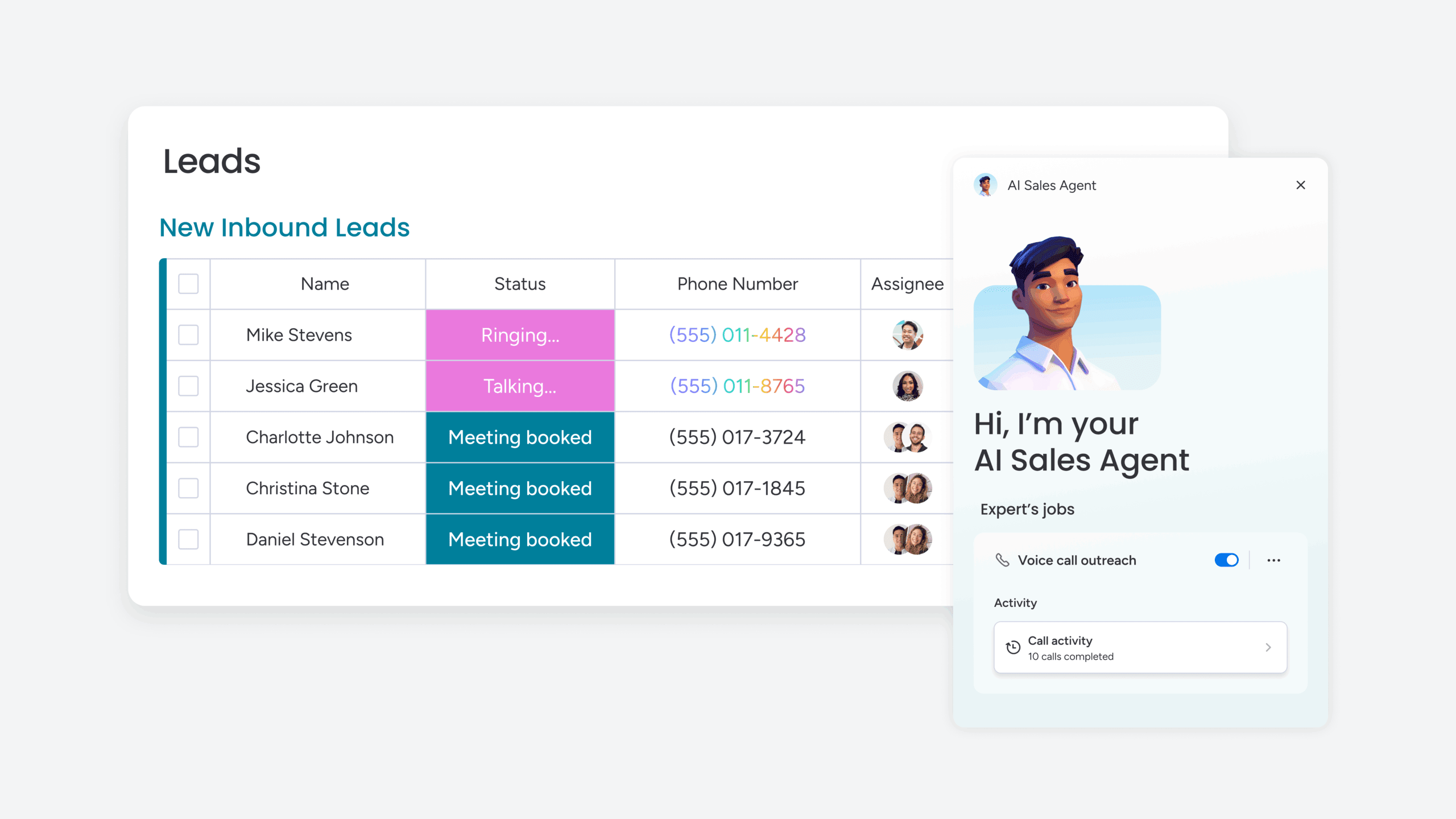
What makes AI SDR tools different from basic sales automation?
Basic sales automation operates on predefined rules. It sends scheduled emails and logs activities, but lacks autonomous decision-making capabilities. An AI SDR, by contrast, makes independent decisions based on buying signals, conversation context, and real-time prospect behavior.
This represents a significant shift from rigid playbooks to AI that adapts dynamically. Rather than mechanically sending email A on day one and email B on day three, an AI SDR adjusts its approach based on prospect responses. It targets accounts demonstrating genuine intent, rather than simply matching demographic profiles.
Here’s what distinguishes genuine AI from basic automation:
- Intelligent lead qualification: AI scores leads on genuine buying intent, not just demographics. It finds prospects who are actively researching solutions and ready to talk.
- Adaptive personalization: this isn’t just mail-merge tokens with a name swap. AI crafts messages that reference specific challenges and recent company news, so they feel human-written.
- Conversation intelligence: it monitors email replies and engagement to understand objections, identify key players, and map out the buying journey without manual work.
- Autonomous workflow execution: the platform decides when to follow up, which channel to use, and what to say. It escalates hot leads to human reps and adjusts its cadence on the fly.
- CRM orchestration: for an AI SDR to work, it needs to sync perfectly with your CRM. Revenue teams find success using modern platforms like monday CRM to connect AI capabilities with their existing workflows, ensuring data flows seamlessly.
- Performance analytics: the system tracks what works. Every interaction makes it smarter, so your outreach gets better with every send.
The real economics of AI SDR vs human SDR
That 85% cost reduction for AI SDRs looks great on a slide deck. But the actual numbers are messier. Let’s look at the actual costs, the hidden work, and what it really takes to get a return.
A human SDR costs $75,000–$100,000 annually when you factor in salary, benefits, and overhead. They typically generate 15–20 qualified opportunities each month. An AI SDR platform runs $500–$2,000 monthly and can produce 40–60 qualified opportunities with comparable quality.
The savings? AI doesn’t need health insurance, sick days, or promotions. It scales instantly without new headcount. But success depends on clean data, someone watching it daily, and realistic expectations about setup.
| Cost category | Human SDR (annual) | AI SDR (annual) | Difference |
|---|---|---|---|
| Base compensation | $60,000 | $12,000 (platform) | -$48,000 |
| Benefits and taxes | $18,000 | $0 | -$18,000 |
| Training and onboarding | $5,000 | $2,000 (setup) | -$3,000 |
| Tools and technology | $3,000 | $6,000 (data/integrations) | +$3000 |
| Management and monitoring | $12,000 | $8,000 | -$4,000 |
| Total | $98,000 | $28,000 | -$70,000 (71%) |
How does AI cut the cost per lead?
Human SDRs typically allocate the majority of their time to non-selling activities such as research, data entry, and follow-up communications. These manual tasks consume valuable resources and reduce overall team capacity.
AI automation streamlines these processes: research that requires 15 minutes of manual effort is completed instantaneously. Follow-up communications are executed systematically without oversight. This enables sales teams to focus on high-value activities that directly impact revenue generation: meaningful prospect conversations and relationship building.
What a 3-month payback actually looks like
The 3-month payback period happens, but only if your data and processes are ready. For most teams, it takes longer to ramp up.
- Month 1: setup and testing.
You’re cleaning data and running small tests to validate messaging. Expect five to ten qualified opportunities. - Month 2: scaling up
You expand what works and generate 20–30 opportunities as the AI learns from real responses. - Month 3: full speed
Optimized workflows deliver 40–60 qualified opportunities. Now, the platform is paying for itself in pipeline.
If you’re starting from scratch with messy data or no defined ICP, plan for a six to nine month journey to positive ROI. You’re building the foundation while implementing the tech.
The hidden costs nobody talks about
Implementing an AI SDR requires more than simply activating the platform. Success depends on the preparation work completed before launch and the ongoing management that follows.
- Data preparation: this isn’t optional. Plan for 40–60 hours of cleaning, enriching, and segmenting your data before launch. Bad data in means bad outreach out.
- Ongoing management: this is not set-it-and-forget-it. Someone needs to monitor performance, refine messaging, and handle escalations daily.
- Quality control: wthout a process to review AI messages, you risk sending robotic, off-brand outreach. That’s a fast way to damage your reputation.
15 best AI SDR tools for sales teams
The AI SDR market presents numerous options, each promising comprehensive automation capabilities. However, organizations must carefully evaluate their specific requirements: whether they needa platform that orchestrates multiple AI tools or a specialized solution that excels in a particular function.
These platforms fall into distinct categories. Some offer comprehensive integration across your entire technology stack, while others focus on specialized capabilities within a single domain.
| Platform | Primary strength | Starting price | Use case |
|---|---|---|---|
| monday CRM | AI workflow orchestration across any tech stack | $12/user/month | Teams needing flexible AI integration with existing tools |
| folk CRM | Lightweight AI-powered contact management | $20/user/month | Small teams wanting simple AI prospecting |
| Amplemarket | Multi-channel AI outreach with strong deliverability | $50/user/month | Mid-market teams scaling outbound programs |
| Apollo | Massive B2B database with AI-powered sequences | $49/user/month | Teams prioritizing data quality and coverage |
| Reply (Jason AI) | Conversational AI for email and LinkedIn | $60/user/month | Teams focused on personalized multi-channel outreach |
| Salesloft (Rhythm) | Enterprise AI cadence optimization | $125/user/month | Large sales orgs with complex workflows |
| Outreach (Kaia) | AI assistant for enterprise sales teams | $100/user/month | Enterprise teams with established processes |
| Regie.ai | AI content generation for sales messaging | $50/user/month | Teams needing help with message creation |
| Clay (Claygent) | AI-powered data enrichment and research | $149/month | Teams building custom prospecting workflows |
| 11x AI | Autonomous AI SDR agents | $500/agent/month | Companies wanting fully autonomous prospecting |
| SellScale | AI personalization at scale | $99/user/month | Teams prioritizing message customization |
| Instantly | Cold email AI with deliverability focus | $37/month | Teams focused purely on email outreach |
| Smartlead | AI-powered cold email with inbox rotation | $39/month | Teams managing multiple sending domains |
| LeadLoft | AI prospecting automation | $79/user/month | Mid-market teams wanting turnkey prospecting |
| Artisan AI | AI agent platform for sales teams | $750/agent/month | Enterprise teams deploying multiple AI agents |
These price variations reflect fundamental differences in platform capabilities. A basic email automation tool operates at a different scale and complexity than a fully autonomous AI agent managing end-to-end prospecting workflows. The critical consideration is identifying which specific business challenge the platform addresses for your organization.
1. monday CRM
AI SDR work becomes a sales process your team can run, inspect, and improve with monday CRM. One place to manage leads, deals, and customer communication, with automations and AI that cut manual work.

Example:
Revenue teams use monday CRM to run AI-assisted prospecting and outreach in one place. Leads come in, get enriched and qualified, then move through a visual pipeline with every email, call, meeting, and note captured on the Emails & Activities timeline.
Key features:
- Visual pipeline management: track deals in a visual pipeline and customize stages with drag-and-drop to match your sales process.
- Lead capture, enrichment, and assignment: collect leads from sources like website forms or campaigns, auto-enrich lead data using Crunchbase’s database, then qualify and assign leads to the right owner.
- Centralized communication tracking: log and track interactions (emails, meetings, and notes) in one timeline, and email contacts directly from within the CRM.
Pricing:
- Basic: $12/month per user (annual billing).
- Standard: $17/month per user (annual billing).
- Pro: $28/month per user (annual billing).
- Enterprise: custom pricing (contact sales).
- AI credits: separate metered add-on at $0.01 per credit annually.
- Minimum seats: three seats required, then increments of five seats.
- Annual discount: 18% discount available with annual billing versus monthly.
Advanced AI features:
- Timeline summary: AI Timeline Summary creates a short, easy-to-scan recap of emails, calls, meetings, and notes in Emails & Activities, so reps show up informed.
- Email composition in Emails & Activities: use AI to compose emails directly where your team already works, keeping follow-ups moving without starting from scratch.
- Autofill board data with AI actions: autofill columns with AI to detect sentiment, extract information, summarize, translate, improve text, or generate writing using the Writing assistant.
Automations:
- No-code automations for handoffs: automate actions based on custom conditions, for example, assign a new inbound lead, update a status when a stage changes, or trigger an email follow-up when a deal sits too long.
- AI-powered categorization and routing: use AI actions like Assign label (Status or Dropdown Columns) and Assign person (People Column) to keep intake organized and route work based on what’s in Emails & Activities.
- Operational control when AI needs tuning: check Run history to see what happened, why an AI action returned “No result,” and what instructions to tighten.
Integrations:
- Your tech stack, your way: monday CRM supports powerful integrations so teams can keep customer info centralized while still using the systems they rely on.
- One stop shop for customer-facing work: revenue teams can connect sales work to post-sales workflows like onboarding, renewals, billing, and collections on one platform.
- CRM+ collaboration across departments: sales can keep legal, finance, and delivery in the loop using shared boards and connected workflows, instead of chasing updates in inboxes.
Best AI SDR platform features for 2026:
- AI support where reps actually feel it: AI works inside Emails & Activities and board columns, so teams spend less time rewriting, re-reading, and re-typing.
- Structured, inspectable outreach operations: mass email and tracking, dynamic fields and templates, and open and link click tracking make it easier to see what messaging lands.
- Reporting that answers leadership questions: custom dashboards and sales-specific widgets (like the funnel and leaderboard) help CROs and sales leaders track pipeline health, activity, and performance without pulling numbers from 5 places.
Why it stands out:
- It’s built for the whole customer journey: monday CRM covers lead management, deal management, account management, and even payment and collection tracking, so teams don’t lose context after the handoff.
- AI is practical, not performative: timeline summaries, AI email composition, and Autofill with AI keep records updated and help reps act faster, with less manual cleanup.
- It stays adaptable as your AI SDR motion evolves: update deal stages, automations, dashboards, and permissions as your process changes, without turning every tweak into a project.
2. folk CRM
Small teams wanting to test AI SDR capabilities without enterprise complexity will find folk CRM appealing: it delivers AI-powered prospecting wrapped in a lightweight, relationship-focused platform that combines contact management with intelligent enrichment and outreach automation in one streamlined package.

Example:
Perfect for small sales teams (5-15 people) seeking accessible AI prospecting without significant technical investment or overwhelming feature sets.
Key features:
- Proactive AI assistants: follow-up, Research, and Recap assistants monitor real conversations across email and WhatsApp to suggest next actions and draft personalized responses.
- LinkedIn-first capture: folkX Chrome extension enables bulk prospect capture from LinkedIn and Sales Navigator with automatic enrichment.
- Multi-channel sequences: email sequences up to ten steps with stop-on-reply logic and analytics via Custom Sender integration.
Pricing:
- Standard: $20/month (yearly) or $25/month (monthly).
- Premium: $40/month (yearly) or $50/month (monthly), includes advanced features like email sequences, deals, dashboards, and API access.
- Custom: starting at $80/month (yearly) or $100/month (monthly) with custom limits and dedicated support.
- Free trial: 14 days with Premium features, no credit card required.
Considerations:
- Limited automation triggers: Workflow Assistant for trigger-based automation isn’t currently available to users, limiting full agentic outbound capabilities.
- Gmail Sender restrictions: Gmail Sender cannot send sequences or track opens/clicks as sequences and analytics require Custom Sender configuration.
3. Amplemarket
Amplemarket combines prospecting, sequencing, and deliverability into a unified platform built for signal-led outreach. Mid-market teams running multi-channel campaigns benefit most from their contact-level intent data and AI copilot “Duo,” which monitors 20+ buyer signals and generates personalized sequences across email, LinkedIn, and phone.
Example:
Mid-market sales teams (50-500 employees) who need coordinated multi-channel outreach with strong deliverability protection and AI-assisted personalization at scale.
Key features:
- AI copilot monitors intent signals: funding events, job changes, and competitor reviews trigger timely outreach.
- Multi-channel sequences: adapt based on prospect engagement across email, LinkedIn, and phone touchpoints.
- Built-in deliverability suite: domain health monitoring, email warmup, and spam filter testing.
Pricing:
- Startup: $600/month (annual), includes two users and 30,000 contacts.
- Growth: custom pricing, includes four users and 280,000 contacts.
- Elite: custom pricing, includes ten users and 1,000,000 contacts.
- Free trial: all plans include free trial access.
Considerations:
- Learning curve: reported by users adapting to the unified platform approach.
- Data accuracy issues: occasionally surface, typical of B2B prospecting platforms.
4. Apollo
With over 270 million verified contacts, Apollo offers the largest B2B database available: paired with AI-powered sales sequences that help small to mid-sized businesses turn that data into pipeline. The platform excels at comprehensive prospecting data combined with basic AI automation capabilities.

Example:
Teams that prioritize data quality and extensive contact coverage over advanced AI features, especially those needing access to verified emails and direct dials at scale.
Key features:
- Outbound Copilot: automatically sources and enrolls prospects into sequences using AI-driven filters and targeting.
- AI Research: generates structured, reusable variables like opener lines and company context for email personalization.
- AI Writing Assistant: creates full emails, subject lines, and openers while analyzing content for improvements.
Pricing:
- Free (Starter): basic access with limited credits.
- Basic: $49/month per user with unlimited email credits.
- Professional: higher-tier plan with advanced features (pricing available on request).
- Organization/Custom: enterprise pricing through sales consultation.
- Add-on credits: for international dialer features and additional data access.
- Free trials: 14-day free trials available for Basic and Professional tiers.
Considerations:
- Data accuracy varies by region: users frequently report outdated contact information, especially for smaller companies.
- AI Assistant remains in limited beta: restricts access to conversational agent features.
5. Reply (Jason AI)
Reply’s Jason AI stands apart through its ability to maintain natural, multi-turn conversations that actually sound human. The platform handles the full sales cycle from first touch to booked meeting, making it ideal for teams who want AI to manage complete prospect conversations across email and LinkedIn.
Example:
Teams focused on personalized, conversational outreach rather than high-volume blasting who want AI to handle complete conversations from initial contact through meeting scheduling.
Key features:
- AI conversation management: responds to prospect questions, handles objections, and qualifies leads through natural back-and-forth exchanges.
- Multi-channel orchestration: coordinates email and LinkedIn outreach based on prospect preferences and response patterns.
- Meeting scheduling automation: handles the complete back-and-forth of finding meeting times, rescheduling requests, and appointment confirmations.
Pricing:
- Email Volume: $59 per user/month (annual billing) with unlimited mailboxes and warm-up.
- Multichannel: $99 per user/month (annual billing) with LinkedIn automation and calls/SMS as paid add-ons.
- AI SDR Starter: $500/month (annual billing) for 1,000 active contacts with unlimited users and multichannel automation.
- AI SDR Growth: $1,500–$3,000/month (annual billing) for 5,000–10,000 active contacts with white-glove onboarding.
- Free trial: 14 days, no credit card required.
Considerations:
- LinkedIn automation carries inherent platform risk: LinkedIn prohibits automated activity and users may face account restrictions.
- Implementation requires 1-2 weeks: train the AI on your value proposition and configure conversation flows, making it more complex than simple email platforms.
6. Salesloft (Rhythm + AI)
Salesloft’s patent-pending Conductor AI transforms buyer signals into prioritized seller actions with full transparency. Enterprise sales teams managing complex, multi-touch campaigns appreciate the explainable AI recommendations that tell reps exactly why they should take each action. Over 5,000 customers including Google, IBM, and Cisco have proven its ability to drive measurable results at scale.

Example:
Large sales organizations (500+ reps) with established processes wanting to optimize performance through AI insights and sophisticated analytics capabilities.
Key features:
- Rhythm Prioritizer: ranks tasks by deal potential and intent, keeping priorities current as deals evolve across web, browser, and mobile platforms.
- AI Agents portfolio: automates account research, stakeholder identification, email generation, conversation summaries, and workflow prioritization.
- Conversation Intelligence: transcribes calls and analyzes them for coaching opportunities, competitive mentions, and buying signals with actionable insights.
Pricing:
- Quote-only pricing: custom enterprise packages with no published rates.
- Add-ons available: Account Agents, Forecast, and partner integrations require separate licensing.
- Implementation timeline: six to eight weeks for enterprise deployments including data migration and team training.
Considerations:
- Recent security incident: OAuth token theft (August-September 2025) affected some customer Salesforce and Google Workspace instances.
- LinkedIn Sales Navigator integration: now requires LinkedIn’s Advanced Plus license as of February 2025, adding potential cost complexity.
7. Outreach (Kaia AI)
Outreach takes a different approach: AI that works alongside your team rather than replacing them. The platform weaves together intelligent deal analysis, smart email composition, and automated task management to help complex sales teams close more deals faster.

Example:
Perfect for enterprise sales teams managing multi-stakeholder deals who want AI to enhance rep productivity rather than handle autonomous prospecting.
Key features:
- AI deal analysis: reviews opportunity health, identifies risks, and recommends specific actions to move deals forward based on engagement patterns and historical data.
- Smart email composition: suggests relevant content and optimal messaging while maintaining your brand voice throughout the sales cycle.
- Task automation: handles meeting prep, follow-up emails, and CRM updates so nothing falls through the cracks.
Pricing:
- Enterprise packages: quote-based pricing starting at $100 per user monthly.
- Amplify add-on: credit-based consumption model with $1.40 per credit overage.
- Voice features: additional usage-based costs for calling plans and phone numbers.
- Implementation note: requires existing Outreach infrastructure and deep Salesforce integration.
Considerations:
- Complex implementation: makes it better suited for established enterprise teams than growing mid-market companies.
- Quote-only pricing: lacks transparency for budget planning.
8. Regie.ai
Regie.ai deploys autonomous AI prospecting agents that operate around the clock without human intervention. Built with agentic AI technology, the platform discovers prospects, enriches data, monitors buying signals, and executes multi-channel campaigns, functioning as an SDR that never clocks out. Mid-market and enterprise B2B teams looking to scale personalized outreach across email, LinkedIn, and phone channels find this approach compelling.

Example:
Teams struggling with manual prospecting tasks and needing to scale personalized outreach while maintaining compliance and deliverability standards.
Key features:
- Autonomous prospecting agents: AI discovers, enriches, and prioritizes prospects using 100+ built-in signals including job changes, web activity, and sales enablement tech stack changes.
- Multi-channel execution: generates personalized emails, LinkedIn messages, and call scripts while maintaining LinkedIn policy compliance through non-scraping methods.
- Integrated AI dialer: built-in parallel dialing system supporting up to nine simultaneous lines with live coaching, call scoring, and real-time transcription.
Pricing:
- AI Agents: starting at $35,000 annually with contact acquisition, signal-based prioritization, and multi-channel outreach.
- AI Agents + AI Dialer: starting at $35,000 annually, adds parallel dialing capabilities and call management features.
- RegieOne SEP replacement: included free with annual AI Agents + AI Dialer contract.
- Professional services: onboarding and training available as paid add-ons.
Considerations:
- High entry price point: starting at $35,000 may limit accessibility for smaller teams or early-stage companies.
- AI-generated messages: some users report they can sound “machine-like” and require manual adjustments to match brand voice.
9. Clay (Claygent)
Clay’s AI agent, Claygent, browses the web like a human researcher, extracting personalized data points that traditional enrichment platforms miss entirely. Teams building sophisticated, research-driven prospecting workflows discover that Clay’s composable approach delivers higher message relevance at scale.

Example:
Clay excels for revenue teams that compete on research quality rather than volume, enabling highly personalized outreach through automated web research and multi-provider data enrichment.
Key features:
- AI research automation: claygent finds recent podcast appearances, conference speaking engagements, published articles, and social media activity that traditional enrichment misses.
- SDR workflow automation: visual builders connect research to outreach through custom prospecting sequences triggered by specific data points.
- Multi-provider enrichment: pulls information from 50+ sources with waterfall strategies to build comprehensive prospect profiles while reducing costs.
Pricing:
- Free: 1,200 credits/year with AI/Claygent included.
- Starter: $134/month (billed annually) with bring-your-own API key option.
- Explorer: $314/month (billed annually) adds HTTP API, webhooks, and sequencing integrations.
- Pro: $720/month (billed annually) includes CRM integrations.
- Enterprise: custom pricing with unlimited API rows, Snowflake integration, and dedicated support.
- Annual billing: provides 10% discount with all credits granted upfront.
- Credits roll over: annually on paid plans.
Considerations:
- Learning curve: requires mastering workflows and credit budgeting to avoid overspend.
- Credit consumption: varies significantly by provider and data type, making cost predictability challenging for budget planning.
10. 11x AI
11x AI represents the most aggressive approach to AI SDR automation: fully autonomous digital workers handling the entire prospecting lifecycle without human oversight. Backed by $74M in funding from Benchmark and Andreessen Horowitz, the platform targets enterprise and mid-market revenue teams ready to test complete AI automation for outbound sales.

Example:
Companies wanting to replace SDR capacity with autonomous agents that research prospects, send outreach, handle conversations, and book meetings 24/7.
Key features:
- Autonomous agents: manage 1,000+ accounts simultaneously with multi-channel engagement across email and phone.
- AI-powered conversation handling: responds to questions, addresses objections, and qualifies leads through natural dialogue.
- Built-in deliverability infrastructure: security credentials including SOC 2 Type II and CASA Tier 3 compliance.
Pricing:
- Custom pricing: quote-based annual contracts starting around $40,000-$45,000 per year.
- Implementation: two to three weeks to train agents on ICP and value proposition.
- Capacity: each agent replaces two to three human SDRs in terms of output volume.
Considerations:
- Strong trust required: AI represents your brand without human review of prospect interactions.
- Variable results: mixed customer feedback indicates results vary significantly based on ICP fit and campaign setup quality.
11. SellScale
SellScale eliminates the usual setup headaches with AI agents that handle end-to-end outbound prospecting. Their multi-agent system (complete with dedicated AI workers, supervisors, and coordinators) manages everything from deliverability to personalized messaging. Teams drowning in manual research and generic outreach find this architecture particularly effective.

Example:
Teams competing in crowded markets where generic outreach gets ignored and need AI-driven personalization at scale to break through the noise.
Key features:
- Multi-agent architecture: specialized AI roles (Worker, Supervisor, Secretary) plan, execute, and manage outbound campaigns.
- Built-in deliverability infrastructure: handles inbox setup, domain registration, and sender reputation monitoring.
- AI researcher: analyzes prospect data from LinkedIn, company news, and web presence to create genuinely personalized messages.
Pricing:
- Custom pricing: available through demo consultation.
- Setup timeline: requires one to two weeks for AI training and configuration.
- Contact sales: for specific pricing details at sellscale.com.
Considerations:
- No public pricing transparency: makes budget planning difficult compared to competitors with clear tier structures.
- Limited technical documentation: available publicly, requiring demo engagement to understand full capabilities.
12. Instantly
Instantly zeroes in on cold email AI with an aggressive focus on deliverability and scale. The platform enables teams to send high volumes while maintaining inbox placement through unlimited email accounts and AI-powered personalization that balances speed with authenticity.

Example:
Teams focused purely on email outreach at scale who need to send thousands of emails daily while maintaining deliverability and sender reputation.
Key features:
- Email warmup automation: gradually increases sending volume to build sender reputation and avoid spam filters.
- AI personalization: generates unique first lines and customizes messaging based on prospect data at scale.
- Unlimited email accounts: let teams distribute sending across multiple domains and addresses to protect primary domains.
Pricing:
- Growth: $37/month (monthly) or $30/month (annual) for unlimited email sending.
- Hypergrowth: $97/month (monthly) or $77.60/month (annual) with enhanced features.
- Light Speed: $358/month (monthly) or $286.30/month (annual) with SISR and higher monthly throughput.
- SuperSearch credits: starting at $47/month for lead database access.
- CRM add-on: starting at $47/month for basic CRM functionality.
- AI Reply Agent: uses consumption-based pricing at five credits per AI-generated reply.
Considerations:
- Lacks multi-channel capabilities: and advanced AI features compared to full-stack sales engagement platforms.
- True full-stack usage: across all modules can make total monthly costs higher than the base subscription price.
13. Smartlead
Smartlead’s sophisticated deliverability infrastructure keeps your messages out of spam folders through intelligent inbox rotation and automated reply management. Agencies and high-volume sales teams who need to scale outreach without tanking their sender reputation find this approach essential.

Example:
Teams sending thousands of cold emails monthly who need bulletproof deliverability and AI-assisted reply handling to maintain momentum without manual bottlenecks.
Key features:
- Unified master inbox: consolidates replies from unlimited email accounts with AI-powered intent detection and automatic sequence stops.
- SmartDelivery infrastructure: inbox placement testing, dedicated IP servers, and unlimited warm-up pools to protect sender reputation.
- AI reply management: automatically categorizes responses by sentiment, drafts contextual replies, and triggers appropriate follow-up sequences.
Pricing:
- Base: $39/month (unlimited email accounts and sending).
- Pro: $94/month (includes unlimited seats and white-label options).
- Smart: $174/month (unlimited features).
- Prime: $379/month (enterprise-level capabilities).
- Annual billing: offers 17% discount across all tiers.
- Add-ons: include SmartDelivery ($49-$599/month), SmartServers ($39/server/month), and SmartProspect data ($59/month).
Considerations:
- Mixed customer feedback: on platform stability and support responsiveness, with some users reporting inbox sync delays.
- Email-centric approach: means limited native multi-channel capabilities compared to platforms with built-in LinkedIn or phone integration.
14. LeadLoft
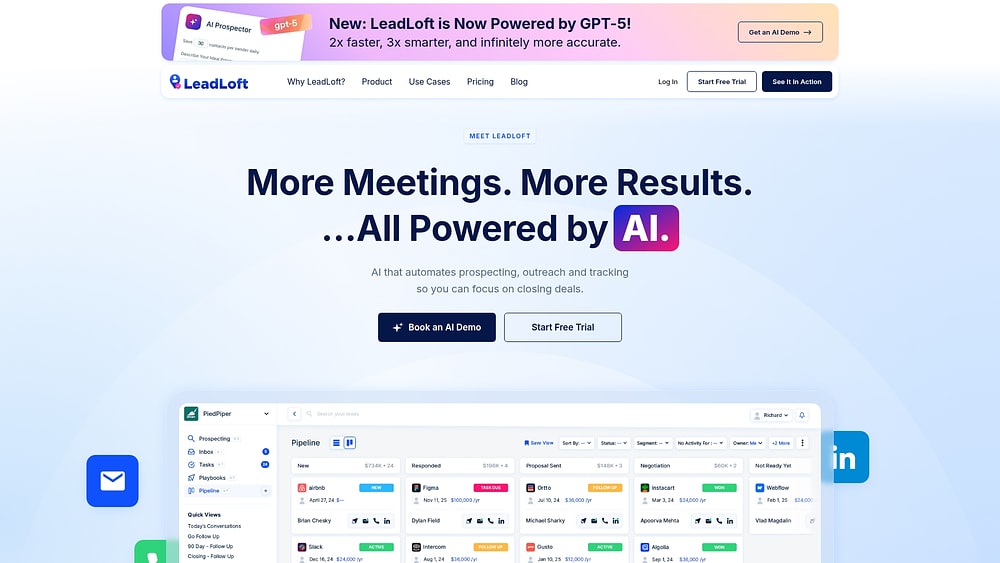
LeadLoft packages AI prospecting, engagement, and CRM functions into a single workspace, eliminating the need to juggle multiple vendors. Built around GPT-5 technology, the platform serves startups and mid-market teams who want integrated AI SDR capabilities without the complexity of managing separate tools.
Example:
Perfect for teams of 50-200 employees seeking turnkey AI prospecting solutions that eliminate the complexity of managing separate data, sequencing, and CRM platforms.
Key features:
- AI Prospector: automatically qualifies leads profile-by-profile based on your ICP criteria and enriches contact data instantly.
- Multi-channel automation: sends personalized email and LinkedIn sequences with conversation-aware AI writing.
- Unified inbox: centralizes all prospect communications with sentiment-based deal routing and automatic stage updates.
Pricing:
- Unlimited: $99/month per user, includes unlimited prospecting, LinkedIn automation, database access, and basic CRM.
- Scale AI: $400/month for first user, $149/month for additional users, adds AI Writer, AI Prospector, AI Playbook Builder, and AI DealRouter.
- Managed Service: custom pricing for fully managed outreach with 600-1,000 qualified leads per quarter.
- Free trial: 7-day free trial available.
- Annual discount: annual subscriptions receive two months free.
- Pay-per-use credits: for email verification and phone finding.
Considerations:
- LinkedIn automation risks: heavy reliance on LinkedIn automation means operating within platform safety limits and policy changes.
- Limited market presence: smaller market presence with limited third-party reviews compared to established competitors.
15. Artisan AI
Artisan AI constructs autonomous AI “employees” that handle complete SDR workflows from prospecting to outreach. Their flagship AI SDR “Ava” manages everything from lead research to email sequences, with optional full autopilot mode. B2B companies seeking to replace or augment human SDRs with independently operating AI agents across multiple channels will find this approach worth exploring.

Example:
Enterprise companies with complex outbound sales processes who need specialized AI agents to handle prospecting, research, and multi-channel outreach at scale.
Key features:
- Multi-agent system: specialized AI for prospecting, research, outreach, and meeting coordination.
- Built-in deliverability management: email warmup, mailbox health monitoring, and managed sending infrastructure.
- Consolidated B2B database: 300M+ contacts plus proprietary local business and website visitor tracking data.
Pricing:
- Custom pricing: based on lead outreach volume.
- Quote-only pricing structure: no published tiers.
- Managed mailboxes: deliverability infrastructure included.
- White-glove onboarding: dedicated account management for enterprise clients.
Considerations:
- Inconsistent performance: independent reviews report “AI-sounding” email content that may hurt deliverability.
- Pricing transparency: quote-only pricing makes cost comparison difficult, with unclear scaling as lead volume increases.
How to choose AI sales tools for your tech stack?
Selecting an inappropriate AI sales tool can significantly impact team productivity and result in substantial time investment without adequate returns. The optimal solution enables sales representatives to concentrate on their core competency: closing deals. Understanding how to identify effective tools while avoiding superficial features is essential for success.
Integration capability represents the most critical evaluation criterion. Tools that fail to connect seamlessly with your CRM and existing systems generate additional manual work and data inconsistencies. Organizations achieve operational efficiency by implementing monday CRM, which enables comprehensive stack integration without requiring custom development.
The total cost of ownership extends beyond initial pricing. Platforms requiring extensive weekly management represent hidden expenses that can outweigh apparent savings.
Additionally, transparency in AI decision-making processes is essential: understanding whether the system operates on clear logic or opaque algorithms directly impacts your ability to maintain quality control.
Key evaluation criteria include:
- Does it actually connect: your AI tool must sync with your tech stack in real time. Lagging data leads to awkward outreach and missed opportunities.
- Is the AI a black box: you need to see why the AI makes certain decisions. If you can’t control the logic, you can’t control the quality of your outreach.
- What’s the real price tag: ask about hidden fees for adding users, extra features, or getting support. The monthly fee is only part of the story.
- Will they be around next year: a proven track record and real customer stories matter more than a flashy demo. Make sure the vendor is stable.
Your 30-day plan to launch an AI SDR
Rushing an AI SDR launch is a recipe for tanked response rates and confused prospects. A smart rollout isn’t about speed; it’s about building a prospecting engine that lasts. This plan assumes your basic sales processes are in place. If you’re starting from zero, give yourself 60-90 days to build that foundation first.
A successful implementation requires four weeks of structured execution. The process begins with data preparation, progresses through technical configuration and controlled testing, and concludes with scaling proven workflows.
Step 1: get your data house in order (week 1)
The effectiveness of your AI implementation depends directly on data quality. A CRM containing duplicate records and outdated contact information will compromise AI performance and output quality. Clean, accurate data is essential for successful AI operations.
Start by validating and updating the fields most critical for personalization: contact names, job titles, and company information. Next, refine your ideal customer profile (ICP) with specific, measurable criteria. Identify the buying signals that indicate genuine purchase intent rather than casual interest. AI requires precise targeting parameters to identify qualified accounts effectively.
Week 1 deliverables:
- Data audit: score the quality of your critical fields.
- Contact cleanup: clean and enrich 1,000 priority contacts.
- ICP refinement: document your ICP with specific buying signals.
- Testing cohorts: create small groups with clear success metrics.
Step 2: build the machine and plug it in (week 2)
Here’s where you stop your AI from sounding like a robot. Carefully configure your sender profiles, email signatures, and brand guidelines. These details make the difference between outreach that feels authentic and outreach that gets deleted instantly.
Connect your AI platform to your CRM next. Does your data flow smoothly between both systems? If not, you’re building data silos, not a sales machine. Start your AI training with simple email sequences and a handful of your best message examples so it can learn your voice.
Week 2 deliverables:
- Platform setup: complete configuration with your brand guidelines.
- CRM integration: establish a working, two-way data sync.
- Initial sequences: build your first three to five touch email campaigns.
- AI training: teach the AI your brand voice with message examples.
Step 3: test, monitor, and control quality (week 3)
Begin your controlled deployment with a small test group of 100–200 accounts and establish daily monitoring protocols. This initial phase allows you to identify technical issues and messaging inconsistencies before they impact your broader reputation.
During the first week, review all AI-generated messages to ensure they align with your brand voice and communication standards. Revenue teams find success using monday CRM to track these metrics alongside human activity, providing comprehensive visibility into performance and effectiveness.
Week 3 deliverables:
- Cohort launch: go live with your testing group and daily monitoring.
- Quality benchmarks: set up review processes and performance standards.
- First optimization: complete the first round of message improvements.
- Team feedback: gather and incorporate notes from the sales team.
Step 4: scale what works and keep improving (week 4)
After validating your approach, expand the workflows that demonstrate strong performance. Scale from your initial test group to a larger cohort of 500–1,000 accounts. As the system stabilizes, transition from daily monitoring to weekly performance reviews.
Continuous improvement remains essential throughout this process. Implement systematic A/B testing for subject lines, message structures, and calls to action. Your measurement focus should evolve from basic engagement metrics like open rates to more meaningful indicators such as meeting quality and qualified opportunities.
Week 4 deliverables:
- Full rollout: scale to your production cohort based on test results.
- Performance cadence: move to a weekly performance monitoring schedule.
- A/B testing: implement a framework for systematic testing.
- Optimization playbook: document your learnings for ongoing improvement.
How to ensure your AI SDR pilot succeeds?
Most AI SDR pilots end in disaster. Teams get excited, buy the tech, and expect magic. Instead, they get a 90-day cycle of frustration, bad leads, and a quiet retreat back to manual dialing.
The problem isn’t AI; it’s the approach. The few teams that succeed don’t just buy a tool; they change how they work. They sidestep the three traps that sink everyone else: chasing volume over value, letting rules kill momentum, and failing to pair humans with AI correctly.
Strategy 1: prioritize quality over volume
AI SDR platforms can generate substantial conversation volume, but high volume without proper qualification creates operational inefficiency. Excessive outreach without filtering mechanisms produces low-quality leads that consume sales resources without generating revenue.
Successful implementation begins with clear qualification criteria established before the AI initiates any outreach. Define specific characteristics that constitute a genuine opportunity for your organization and implement quality controls that prevent the AI from forwarding unqualified prospects to your sales team. Identify the specific questions, pain points, or behaviors that indicate authentic buying intent rather than casual interest.
This approach establishes a continuous improvement cycle that enhances AI performance over time. When sales representatives mark leads as unqualified, the system refines its targeting parameters. When deals close successfully, the system identifies and prioritizes the signals that predict positive outcomes.
Strategy 2: implement governance that enables efficiency
Brand protection is essential, but excessive approval requirements can eliminate the efficiency gains that motivated AI adoption. If every message requires managerial approval, you have simply relocated the bottleneck rather than removing it. The challenge is maintaining appropriate oversight without compromising operational velocity.
Concentrate approval processes on high-impact scenarios:
- New message templates: review and approve foundational messaging that will be used at scale.
- Strategic account outreach: maintain human oversight for high-value prospects and key accounts.
- Routine operations: establish trust in the AI system and implement quality assurance through systematic sampling.
- Quality assurance: review a representative subset of messages to provide necessary oversight while maintaining operational efficiency.
Revenue teams achieve this balance using platforms like monday CRM for comprehensive visibility. Visual workflows provide clear insight into system operations and message performance, delivering the oversight required without sacrificing speed.
Strategy 3: optimize the human-AI division of labor
The objective is not to replace sales professionals with automation, but to eliminate low-value activities so they can focus on high-impact work: relationship development and complex deal management. Effective AI SDR programs establish a complementary partnership between human expertise and AI capabilities.
Leading organizations structure this division strategically. AI manages scalable activities: prospect identification, initial outreach, and preliminary qualification. Human sales professionals engage when conversations require strategic judgment: addressing objections, negotiating pricing, or managing multi-stakeholder decision processes.
The transition between AI and human engagement must be seamless and clearly defined. Specific triggers (such as demo requests, competitive comparisons, or budget discussions) immediately escalate the conversation to a sales representative. This hybrid model combines AI’s capacity for volume with the strategic capabilities that drive successful outcomes.
Multi-agent orchestration for enterprise scale
Single AI agents face significant scalability limitations. At approximately 1,000 accounts, even sophisticated AI systems begin to show performance degradation; personalization becomes formulaic and contextual understanding diminishes. Enterprise sales operations require a more robust architectural approach.
Rather than relying on a single generalist AI, organizations should implement multi-agent orchestration. This approach assigns specialized AI agents to distinct functions: prospecting, research, and outreach. Each agent develops deep expertise in its designated domain, delivering superior results compared to a single system managing multiple responsibilities.
The strategic advantage lies in seamless agent collaboration. A prospecting agent identifies qualified targets and transfers them to the research agent. Enriched data then flows systematically to the outreach agent.
Teams using monday CRM can automate these handoffs, ensuring continuity across each stage of the process.
| Capability | Single agent | Multi-agent |
|---|---|---|
| Account capacity | 1,000-2,000 | 10,000+ |
| Specialization depth | Generalist | Expert per function |
| Personalization quality | Basic | Advanced |
| Complex scenario handling | Limited | Sociopolitical |
| Scaling flexibility | Linear | Exponential |
The problem with a one-AI show
A single AI trying to do everything is like a salesperson trying to be the entire revenue team. It works for a little while, but complexity breaks it. Context switching kills performance, whether you’re human or AI.
Specialization creates expertise. A research agent that only gathers intelligence gets incredibly good at finding relevant information. An outreach agent that only writes messages masters personalization and tone.
The breaking point usually hits around 2,000 accounts. Response times slow, personalization becomes a template, and the agent starts missing important buying signals.
Building your AI dream team
Effective multi-agent strategies assign specific roles with clear responsibilities.
- Prospecting agents: monitor signals and find accounts that match your ideal customer profile.
- Research agents: dig up contact data and details for personalization.
- Outreach agents: craft and send messages based on the research.
- Qualification agents: assess responses and decide what comes next.
Handoffs become seamless. A prospector finds a target and automatically triggers the research agent. Once the research is done, the outreach agent gets the enriched data and context to start its work.
The platform that brings it all together
You need a platform that connects the dots without manual work. One agent completes its task, the next one starts automatically. No dropped batons, no missed steps.
A central spot for all your data is non-negotiable. It keeps every agent on the same page and lets you plug in the best specialized tools for each job. This is where a flexible Work OS makes all the difference.
Revenue teams find success using monday CRM to connect different agents, automate the handoffs, and see the entire process in one place. You get a complete view of the prospect journey and can spot what’s working and what isn’t, from first touch to qualification.
How does monday CRM power AI SDR success?
A pile of powerful AI tools that don’t talk to each other is just expensive chaos. Your team needs one place to connect the dots and see what’s actually working. Revenue teams use monday CRM to bring their entire AI stack together, turning a collection of tools into a single, smart sales engine.
One source of truth for every AI-driven action. No more toggling between platforms or wondering if your data is current. Just a clear view of your whole operation, from first touch to closed deal.
See your entire AI sales engine at a glance
Stop guessing how your AI tools work together. With monday CRM, you can visually design and change your sales process with simple drag-and-drop tools, no code required. You see exactly how AI interacts at every stage, giving you complete control over the entire workflow.
This visual approach lets your team:
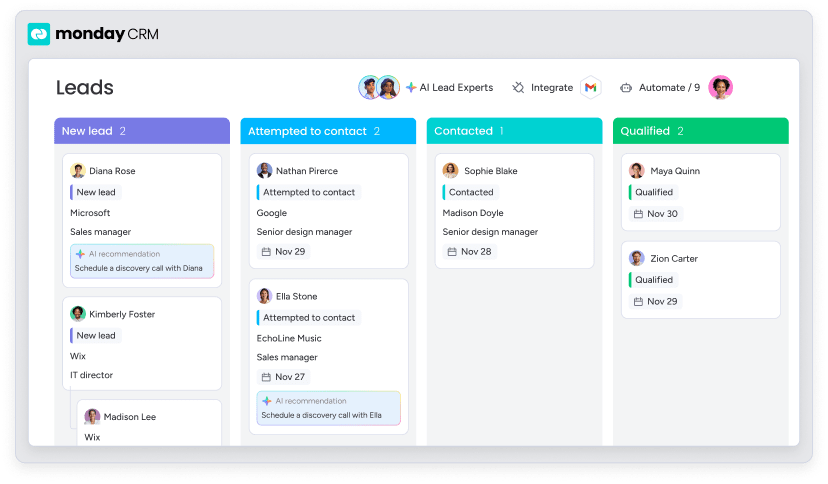
- Track every prospect: use color-coded boards to see where each lead is in your AI-powered pipeline.
- Connect AI to human workflows: automatically assign a hot lead to a rep the second AI qualifies it.
- Measure what matters: combine data from all your AI tools into one dashboard to see what’s driving results.
Plug in any AI tool, no code needed
Getting your tech stack to play nice shouldn’t require a team of developers. With monday CRM, you can connect with the AI SDR tools you already use (like Apollo, Clay, and Reply) through simple, pre-built integrations that take minutes to set up.
Data flows both ways, instantly. An AI tool finds a new phone number, and it’s in your CRM. A rep updates a deal, and your AI tools know. Your stack finally works as one system, not a collection of data silos.
Get one view of your human and AI pipeline
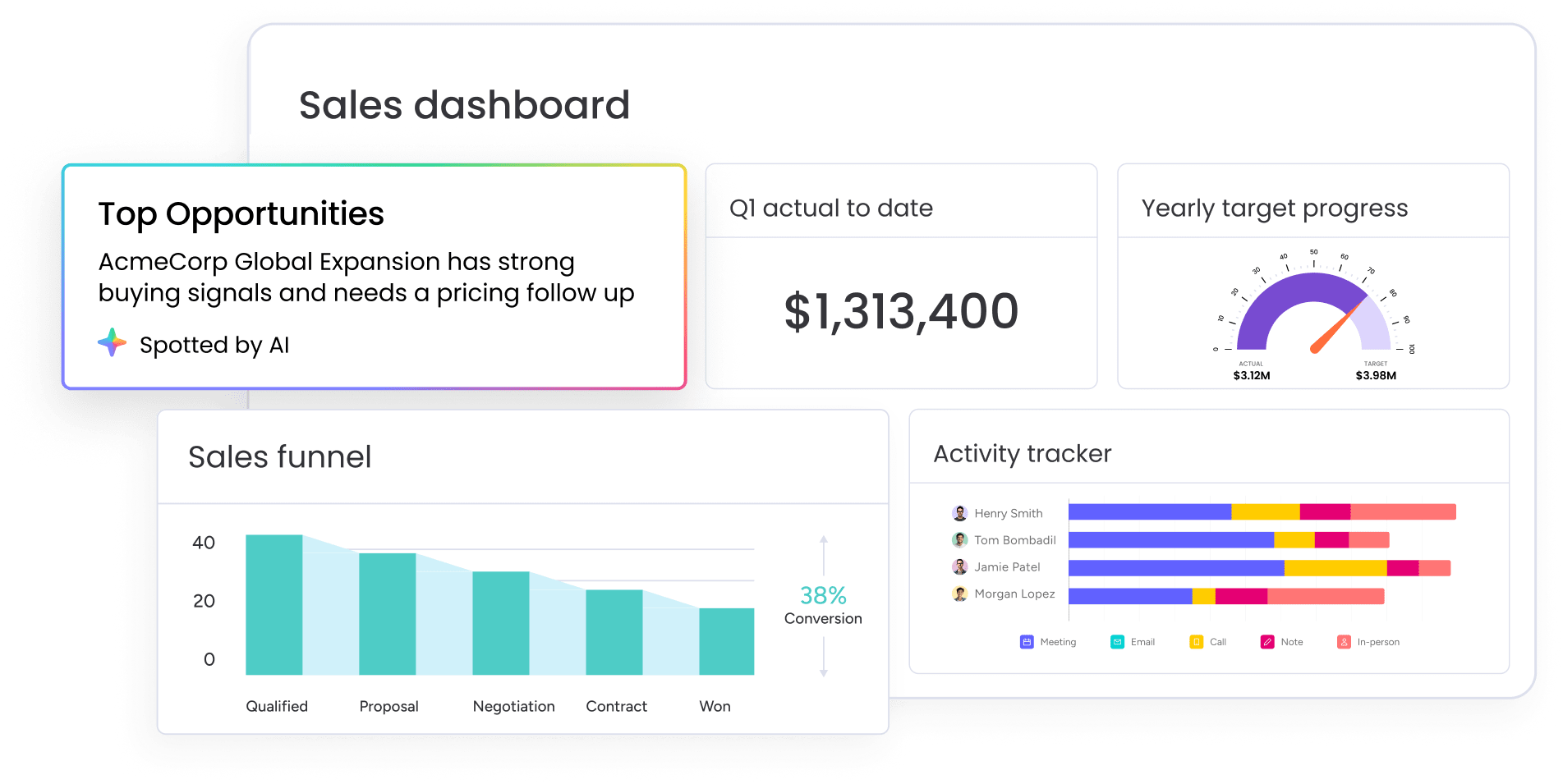
Is your AI program actually working? Impossible to know when its results are separate from the rest of your pipeline. Organizations achieve more accurate and comprehensive insights when they leverage monday CRM for a single, unified dashboard.
You can see AI-generated opportunities next to human-sourced leads, compare conversion rates, and track every single interaction in one place. Everyone from reps to the CRO sees the same numbers, ending the debate over AI’s real impact.
Give your team an AI assist
Beyond connecting your stack, monday CRM has built-in AI features designed to cut down on manual work. Reps get instant summaries of every prospect interaction, so they can skip the research and get straight to the conversation.
AI also gives your team a hand with daily tasks:
- Write emails faster: get help crafting effective messages that match your brand voice.
- Update records automatically: let AI pull key details like budget and timeline from emails and calls.
- Spot at-risk deals: sentiment detection flags conversations where a prospect might be losing interest.
“With monday CRM, we’re finally able to adapt the platform to our needs — not the other way around. It gives us the flexibility to work smarter, cut costs, save time, and scale with confidence.”
Samuel Lobao | Contract Administrator & Special Projects, Strategix
“Now we have a lot less data, but it’s quality data. That change allows us to use AI confidently, without second-guessing the outputs.”
Elizabeth Gerbel | CEO
“Without monday CRM, we’d be chasing updates and fixing errors. Now we’re focused on growing the program — not just keeping up with it."
Quentin Williams | Head of Dropship, Freedom Furniture
“There’s probably about a 70% increase in efficiency in regards to the admin tasks that were removed and automated, which is a huge win for us.“
Kyle Dorman | Department Manager - Operations, Ray White
"monday CRM helps us make sure the right people have immediate visibility into the information they need so we're not wasting time."
Luca Pope | Global Client Solutions Manager at Black Mountain
“In a couple of weeks, all of the team members were using monday CRM fully. The automations and the many integrations, make monday CRM the best CRM in the market right now.”
Nuno Godinho | CIO at Velv
“monday.com provides developmental flexibility, operational efficiency, and data transparency — all in one place. We became a company that moved from chasing data to leading with it.”
Hyunghan Lee | Team Lead, Sandbox Network
"monday.com brought every part of our business into one connected space. The harmony between work management and CRM has become our operating system — giving us the clarity and confidence to scale.”
Jennifer Chinburg | Executive Vice President of Corporate Development & Brand, Chinburg Properties
“We just weren’t getting value from our old CRM. With monday.com, it's a thousand times better. Our sales teams are more informed, more consistent, and far more connected."
James Arnold | Chief Operating Officer, CenversaReady to build your AI sales engine?
Building a successful AI SDR program isn’t just about picking the flashiest tool on the market. It requires a solid foundation of clean data, clear processes, and the right orchestration platform to keep everything running smoothly. When you get the balance right, you free your human team to focus on what they do best — building relationships and closing deals.
Start small, test your workflows, and scale what works. By connecting your AI agents with a flexible CRM, you ensure that every lead is tracked, every handoff is seamless, and your revenue team has total visibility into the pipeline. The technology is ready; the key is putting it to work in a way that serves your specific goals.
Frequently asked questions
How do AI SDRs handle complex B2B sales cycles?
To handle complex B2B sales cycles, AI SDRs track every interaction and adapt messaging as deals progress. They identify when buying committees form and tailor outreach to each person involved, maintaining context across lengthy enterprise sales processes.
What's the real weekly time commitment for managing AI SDR tools?
Expect to spend 10–15 hours a week reviewing performance and refining messages. This isn't set-it-and-forget-it technology — ongoing attention keeps results sharp and prevents quality degradation.
Can AI SDR tools work with flexible CRM platforms?
Absolutely. AI SDR tools integrate with flexible CRMs through native connectors that keep all your data synchronized. Teams find success using monday CRM to connect their AI tools into one unified workflow.
How do AI SDR platforms maintain brand voice?
These platforms train on your best messages and follow your tone parameters. Maintaining brand consistency requires ongoing review and refinement rather than one-time configuration.
What happens when AI SDR tools fail?
Failure means bad leads, spam complaints, and damaged sender reputation that can take months to repair. It wastes your sales team's time and can harm your company's market perception.
How long does AI SDR implementation take?
Implementation timelines vary significantly. Expect 30 days if your data is clean, but 60–90 days if you need to build sales processes from the ground up.
How much does it cost to replace a human SDR with AI?
Replacing a human SDR with AI typically costs $28,000–$35,000 per year, representing a 70–75% cost reduction compared to total compensation for a human SDR.
Do AI SDR tools integrate with monday CRM?
Yes. AI SDR tools integrate with monday CRM through native connectors and APIs. Revenue teams use monday CRM to unite all their AI tools and gain complete visibility of their sales operations in one place.

 Get started