



Development teams start with a clear roadmap, but work rarely follows a straight line. Customer feedback, market shifts, and new opportunities create constant change, turning rigid plans into roadblocks. When process gets in the way of progress, teams slow down, backlogs grow, and the gap widens between strategic goals and what actually gets delivered.
This is where Agile planning creates a competitive advantage. Instead of locking teams into long-term, fixed-scope projects, it provides a framework for delivering value in short cycles. This approach allows teams to adapt to new information, optimize resources, and consistently ship products without losing sight of the larger vision.
Join us for a few minutes as this guide will shine a light on the fundamentals of effective Agile planning. It will also explore the five levels of planning from high-level vision to daily work, a 7-step process for implementation, and strategies for overcoming common challenges. Let’s get started!
Key takeaways
- Faster, more adaptive sprints: Agile planning breaks work into short 1–4 week sprints, letting teams ship features faster and adapt to changes without scrapping months of detailed plans.
- Adopt the 5-Level framework: follow the 5-level framework from vision to daily planning to connect big-picture goals with day-to-day execution and keep everyone aligned.
- Implement the 7 essential steps: use the 7 essential steps, from establishing product vision to continuous monitoring, to transform how your team delivers value and collaborates effectively.
- Enhance visibility and customization: through customizable workflows and real-time tracking, platforms like monday dev help teams implement any Agile approach while providing necessary visibility across engineering, business, and leadership teams.
- Focus on value: prioritize features based on business value, focusing on outcomes over rigid processes, and use regular retrospectives to continuously improve team performance.
What is Agile planning?
Agile planning is a flexible approach to project management that breaks work into short cycles called sprints. While some question its longevity, a commanding 95% of professionals, according to a 2024 Forrester blog, affirm its critical relevance to their operations, proving its staying power. These sprints typically last one to four weeks and allow teams to deliver working features quickly while adapting to change.
Agile planning functions similarly to building a house room by room instead of waiting years to move in. Teams can utilize each finished room and adjust the design based on what they learn along the way.
The key difference from traditional planning is that you plan just enough detail for the immediate future while keeping long-term goals flexible. This means you can respond to customer feedback, market changes, and new opportunities without scrapping months of detailed plans. But what tangible results can you expect from making this shift?
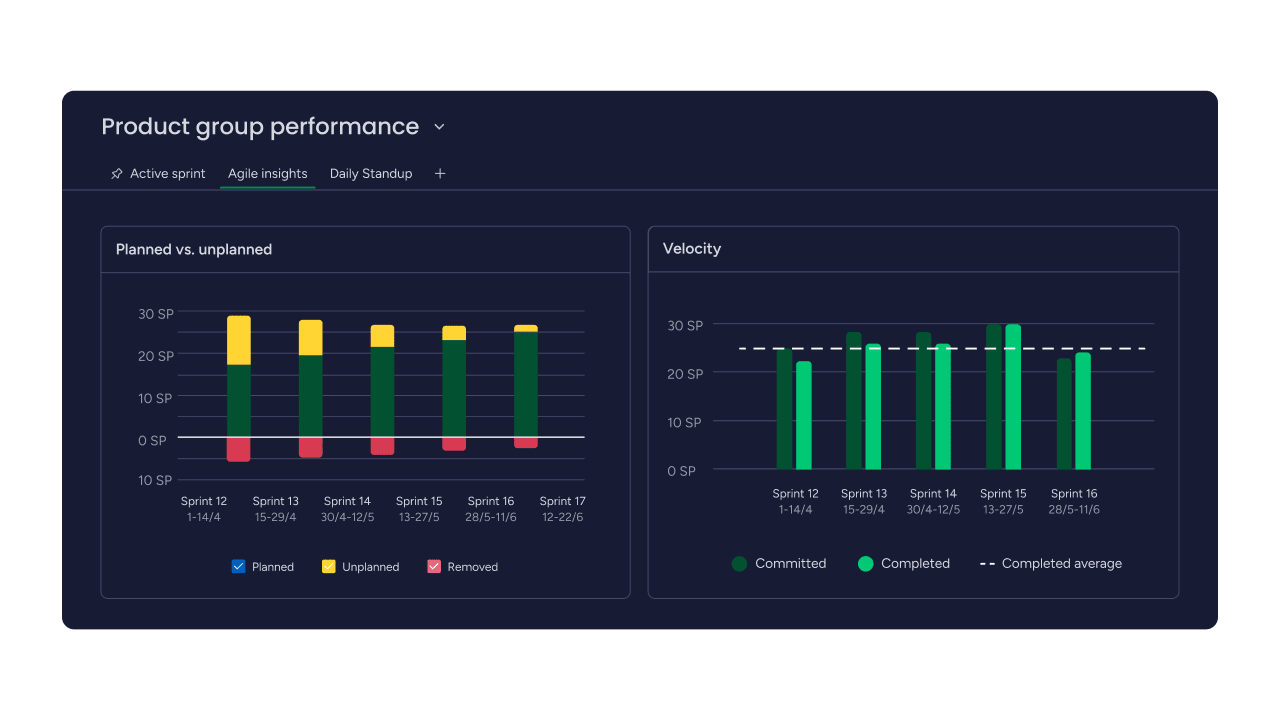
How does Agile planning drive success?
Smart organizations use Agile planning because it delivers measurable business results. It is essential for modern teams due to several specific advantages:
- Faster time to market: Agile planning enables the release of products and features weeks or months earlier, reducing time to market by delivering working features every sprint.
- Enhanced team collaboration: daily standups, sprint planning, and retrospectives create natural collaboration points in line with a Scrum guide. Your cross-functional team solves problems together and makes decisions quickly.
- Optimized resource allocation: short planning cycles immediately highlight resource issues, enabling quick shifts of people and budget to high-priority work. Platforms like monday dev support this by providing real-time tracking and customizable workflows that match your team’s needs, whether you explore lean vs Scrum, Kanban, or a hybrid approach.
What are the 5 levels of Agile planning?
Successful Agile planning happens at five distinct levels. Each level connects to the others, creating a complete system from strategic vision to daily execution. To make this framework actionable, a robust platform (such as monday dev) can help visualize and connect each level, ensuring your high-level vision translates directly into the work your teams execute.
Vision planning
Vision planning sets your product’s direction for the next 6-12 months. Senior leaders and product owners define what success looks like and why the product matters.
Your vision statement should be clear but flexible. It guides decisions without locking you into specific features that might become irrelevant.
Roadmap planning
Roadmap planning turns vision into major themes and milestones over 3-6 months. You identify key features and releases without getting into technical details.
Think of roadmaps as communication instruments: they help everyone understand priorities and timing while leaving room for adjustments.
Release planning
Release planning groups features into deliverable packages over 1-3 months. Teams estimate effort and sequence work for maximum value.
You balance what customers want with what’s technically feasible. Dependencies between features become clear at this level.
Sprint planning
Sprint planning focuses on the next one to four weeks of work. Your team selects specific user stories and commits to completing them.
This is where you get into real details — who does what, how long it takes, and what “done” looks like.
Daily planning
Daily planning keeps work moving through quick standup meetings. Team members coordinate their work, identify blockers, and adjust as needed.
These 15-minute check-ins prevent small issues from becoming big problems.

"monday dev empowered us to optimize our GTM approach, resulting in faster, more dependable deliveries"
Steven Hamrell | Director of Product Management
"monday dev empowers us to manage the entire development process on one platform so we can speed up product delivery and improve customer satisfaction"
Mitchel Hudson | Head of Technology
"We're operating in an open, deep trusting, transparent environment with no silos of information. It's about completely opening access to everyone who needs it."
Alan Schmoll | Executive Vice President, Vistra Platform7 essential steps to master Agile planning
Ready to implement Agile planning? These seven steps will guide you from initial vision to continuous improvement and reflect many Agile best practices.
Step 1: establish your product vision
When creating your vision statement, you need to hit the core questions about your product: Who is it for? What problem does it fix? Why is it better than the alternatives?
Use a simple fill-in-the-blank format like this: “For [target users] who [need/problem], our [product] is a [category] that [key benefit].”
Make sure to involve stakeholders early on, so everyone is on the same page about the direction. Finally, document your success metrics so you can actually track how well you’re moving toward that vision.
Step 2: build a flexible product roadmap
Turn your vision into a visual roadmap that highlights major themes for the next 3-6 months. The key is to focus on outcomes rather than getting bogged down in specific features.
Keep your roadmap simple and easy to update, reviewing it quarterly to incorporate new insights and market changes. Roadmap views, provided by modern platforms like monday dev, help you visualize dependencies and track progress across multiple projects, making it easy to see how individual features connect to larger goals.
Step 3: create and refine your product backlog
Build a prioritized list of everything your team might work on. Meanwhile, Agile testing ensures each user story aligns with its acceptance criteria.
Good user stories follow this format: “As a [user type], I want [functionality] so that [benefit].” Include clear acceptance criteria that define when work is complete.
Schedule weekly backlog grooming sessions to add details, remove outdated items, and keep the backlog relevant.
Step 4: prioritize features by business value
Choose a prioritization framework that helps you make objective decisions. Popular options include:
- MoSCoW method: categorize items as Must have, Should have, Could have, or Won’t have.
- Value vs. effort matrix: plot features based on business value and implementation effort.
- RICE scoring: rate items by Reach, Impact, Confidence, and Effort.
Review priorities regularly as you learn more about user needs and technical constraints.
Step 5: design effective sprint plans
Start sprint planning by reviewing your sprint goal. Select user stories that align with this goal and fit within your team’s capacity.
Break stories into specific tasks with time estimates. Make sure everyone understands the acceptance criteria and definition of done.
Consider your team’s availability, including time off and other commitments. Use past velocity data to set realistic expectations.
Step 6: implement productive daily standups
To keep standups focused and productive, center the conversation on progress and impediments. This structure ensures everyone is aligned on immediate priorities while avoiding tangents.
The core questions should be:
- What did you complete yesterday?
- What will you work on today?
- What obstacles are blocking your progress?
Keep these meetings under 15 minutes by focusing on coordination, not detailed status reports. Address any identified blockers in separate, targeted conversations immediately after the standup.
Step 7: continuously monitor and adapt
Use sprint reviews to demonstrate completed work and gather stakeholder feedback. Sprint retrospectives, also known as an Agile retrospective, help your team improve processes and collaboration.
Track metrics like velocity, sprint goal achievement, and cycle time. Advanced Agile solutions like monday dev provide real-time insights into team performance and project health, offering powerful product development software capabilities.
How to overcome common Agile planning challenges
No team gets Agile planning perfect on the first try. As work scales, new challenges pop up: balancing long-term goals with sprint-by-sprint changes, coordinating multiple groups, and managing stakeholder expectations. Instead of treating these as failures, think of them as signals that your process needs refinement.
Below are the most common hurdles — and how to overcome them effectively.
Maintaining long-term vision with short-term flexibility
Use theme-based roadmaps that provide direction without prescribing solutions.
Create feedback loops between sprints and strategic goals. When you complete a sprint, ask: “Did this move us closer to our vision?”
Document and test your assumptions regularly. When assumptions prove wrong, adjust your vision and communicate changes clearly.
Scaling Agile planning across teams
Coordinating multiple teams requires additional structure. Consider these approaches:
- Program increment planning: align teams around shared objectives every 8-12 weeks.
- Shared backlogs: create common work items for cross-team features.
- Communities of practice: regular forums where teams share learnings and solve common problems.
Managing stakeholder expectations
Stakeholders often expect fixed timelines and scope. Help them understand that Agile planning prioritizes learning and value delivery over following original plans.
Provide regular updates using visual tools like burndown charts and roadmaps. Show how changes in direction lead to more valuable outcomes.
Involve stakeholders in sprint reviews and planning sessions when appropriate. Direct participation helps them understand complexity and trade-offs.
Transform your Agile planning with monday dev
Effective Agile planning only works when your tools support the way your team actually operates. That means giving everyone a clear view of priorities, reducing manual overhead, and keeping Agile strategy connected to day-to-day execution. This is where a flexible platform makes the real difference.
monday dev brings all of your Agile planning activities into one place so you can structure your process, track progress in real time, and collaborate without friction — no matter which framework your team follows.
Customizable Agile workflows
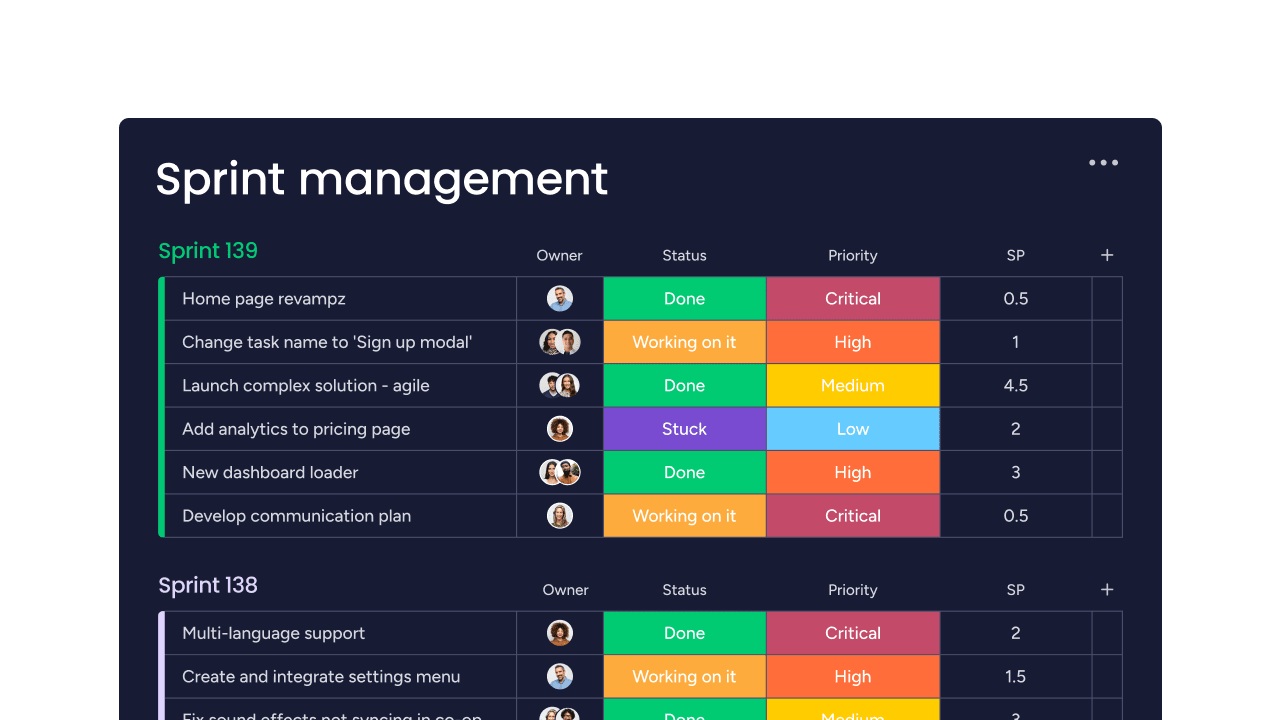
Create boards that match your exact process. Add columns, statuses, and fields that capture what matters to your team.
Choose from templates or build from scratch. Set up automation rules that move work through stages automatically.
Your processes can evolve without switching platforms. As you refine your Agile planning approach, monday dev grows with you.
Real-time progress tracking
Monitor everything from sprint velocity to individual task progress. Customizable dashboards show exactly what you need to see.
Share different views with different audiences. Team members see detailed task information while executives track high-level milestones.
Automated reports keep stakeholders informed without manual effort. Real-time updates mean everyone works from the same information.
Seamless team collaboration
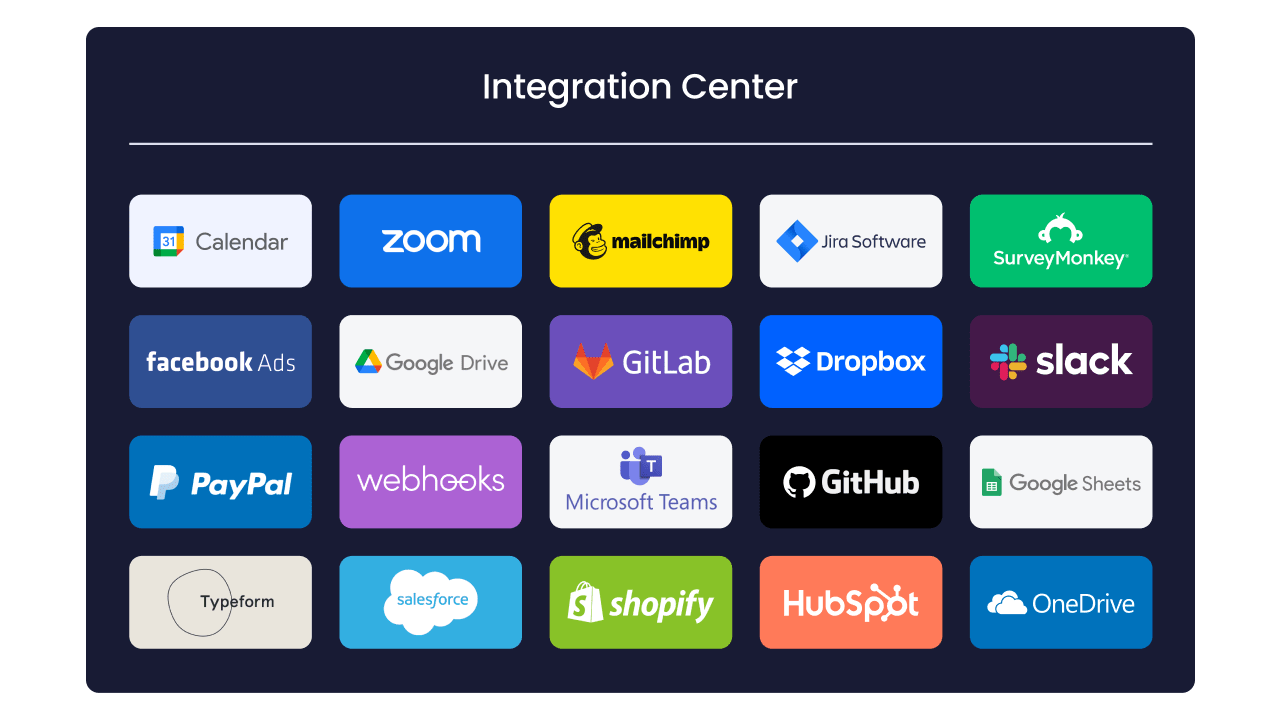
Comment on specific work items and mention team members to keep conversations in context. File sharing and integrations with development tools keep technical work synchronized.
Support distributed teams with asynchronous collaboration features. Team members stay aligned regardless of time zone or schedule.
Elevate your Agile planning today
Agile planning transforms how teams deliver value. You’ll ship features faster, collaborate more effectively, and adapt to change with confidence.
Start with the fundamentals — establish your vision, build your backlog, and run your first sprint. Refine your approach based on what works for your team.
Remember that Agile planning itself is iterative. You’ll improve with each sprint as you learn what drives results for your organization — a hallmark of an Agile development process.
Try monday dev to streamline your Agile planning process and help your team achieve consistent, predictable results.
Frequently asked questions
What is an Agile planning process?
An Agile planning process is an iterative approach to project management that organizes work into short cycles called sprints, typically lasting one to four weeks. Teams plan just enough detail for each sprint while maintaining flexibility for future work based on feedback and changing requirements.
What are the 4 steps of Agile?
The four main steps of Agile are planning (defining what to build), designing (creating the solution approach), developing (building the actual product), and testing (verifying it works correctly). These steps repeat in each sprint, allowing teams to deliver working software incrementally.
What are the three levels of Agile planning?
The three primary levels of Agile planning are release planning (grouping features into deliverable releases over one to three months), sprint planning (selecting work for the next one to four week iteration), and daily planning (coordinating immediate tasks through standup meetings). These levels connect strategic goals to daily execution.
What is the 3 5 3 rule in Agile?
The 3-5-3 rule in Agile refers to the Scrum framework structure: 3 roles (Scrum Master, Product Owner, and Development Team), 5 events (Sprint, Sprint Planning, Daily Scrum, Sprint Review, and Sprint Retrospective), and 3 artifacts (Product Backlog, Sprint Backlog, and Increment). This structure provides the foundation for effective Agile planning and execution.
How does Agile planning handle changing requirements?
Agile planning handles changing requirements by embracing them as a natural part of development rather than treating them as disruptions. Teams review and reprioritize work at the start of each sprint, allowing new requirements to be incorporated based on their value and urgency.
What's the difference between Agile planning and traditional project planning?
The difference between Agile planning and traditional project planning is that Agile uses short, iterative cycles with continuous adaptation while traditional planning creates detailed upfront plans with fixed scope and timeline. Agile planning delivers value incrementally and welcomes change, whereas traditional planning aims to minimize changes after the initial planning phase.

 Get started