














.svg)





With monday dev, everyone can see what’s happening – the commercial team, product, and engineering. It’s all transparent now.

Meet Vistra
Vistra is a leading provider of essential business services that help organizations invest and grow efficiently and compliantly worldwide. Their services span company incorporation, corporate secretarial work, tax & accounting, and payroll & HR. Vistra operates in over 50 countries with more than 10,000 global employees, and is the trusted partner of 30% of Fortune 500 companies.
Behind that global scale sits a lean but powerful engineering function: the Global Expansion Platform (GEP) team, led by Lead Software Engineer Mervin Tan.
Despite its size, this team is responsible for building and maintaining the technology that underpins Vistra’s ability to operate securely, efficiently, and at scale. As a business that thrives on trust, compliance, and speed, the performance of Vistra’s engineering team is a strategic priority for the company. That’s why when delivery processes began to slow, it became clear the team needed a better way to work.
What wasn’t working
At Vistra, complexity is part of everyday life. The company operates in a highly regulated industry with little room for error. Expectations are high, but until recently, the engineering team’s workflows weren’t organized in the most efficient way to support product delivery.
Feature requests arrived from every direction — via Teams messages, emails, and even hallway chats. There was no central intake system, so engineers often misunderstood the business's needs and found themselves working on low-priority tasks. Sprint boards became patchworks of backlog items and mystery tickets, while the business side felt disconnected and left in the dark about progress.
Additionally, the engineering team relied heavily on Jira and specialized tools. Jira was somewhat familiar to developers, but for the rest of the organization, it was a black box. Business and commercial teams struggled to understand the status of their projects. Engineers needed to master JQL queries just to track work, and documentation was stored in separate locations, further fragmenting the process.
As Mervin recalls:
“It takes years of experience to know how to use Jira. The engineers were there, and a lot of the documentation lived in the Atlassian ecosystem, but it was hard to bring the non-product teams into the platform”. As a result, delivery was slow, workflows were inefficient, and engineering was disconnected from the rest of the business. Everyone knew something had to change.
What we built instead
The turning point came when Alan Schmoll, Vistra’s Executive Vice President of Platform, recommended expanding the company’s use of monday.com to include the engineering department. The business was already seeing success with monday work management, and Alan saw the clear advantage of bringing engineering onto the same platform.
Once the engineering team piloted monday dev, adoption was fast and sticky. Engineers appreciated the flexibility and ease of use compared to Jira, while stakeholders valued the transparency. As Mervin puts it, “The only limit with monday dev is your imagination. You start with templates, but then you can build anything you want”. From there, the team rebuilt their delivery process around transparency, automation, and shared ownership.
Centralized roadmaps
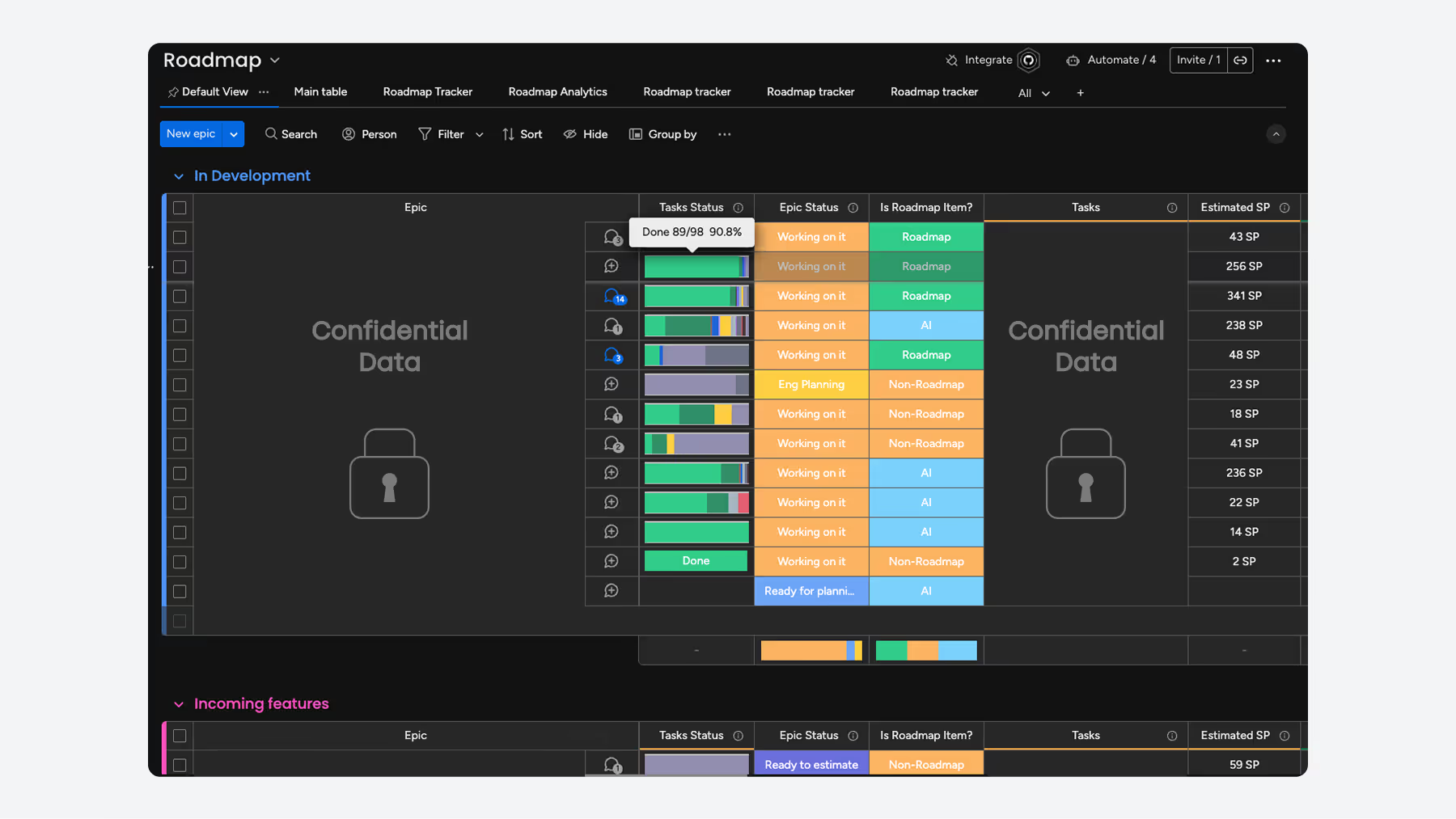
The roadmap board is now the starting point for engineering delivery. Product managers create PRDs, which are then translated into engineering epics, ensuring that strategy flows directly into execution. Each epic contains sub-items for user stories, giving engineers clarity on scope and technical requirements. Ownership columns track both the product lead and the assigned engineer, and status fields show whether an item is in planning, estimation, or active development.
Engineering managers also established a clear operating rhythm, dedicating 75% of the team’s time to roadmap initiatives and 25% to urgent requests or bugs. This balance enables them to deliver on strategic priorities while staying agile enough to tackle any issues that may arise.
Sprint and task execution
Work flows directly from the roadmap into sprint boards. Engineering managers break down user stories into tasks, which link back to their parent epic. Sprint boards are organized in Kanban and timeline views, helping the team visualize active work and manage dependencies.
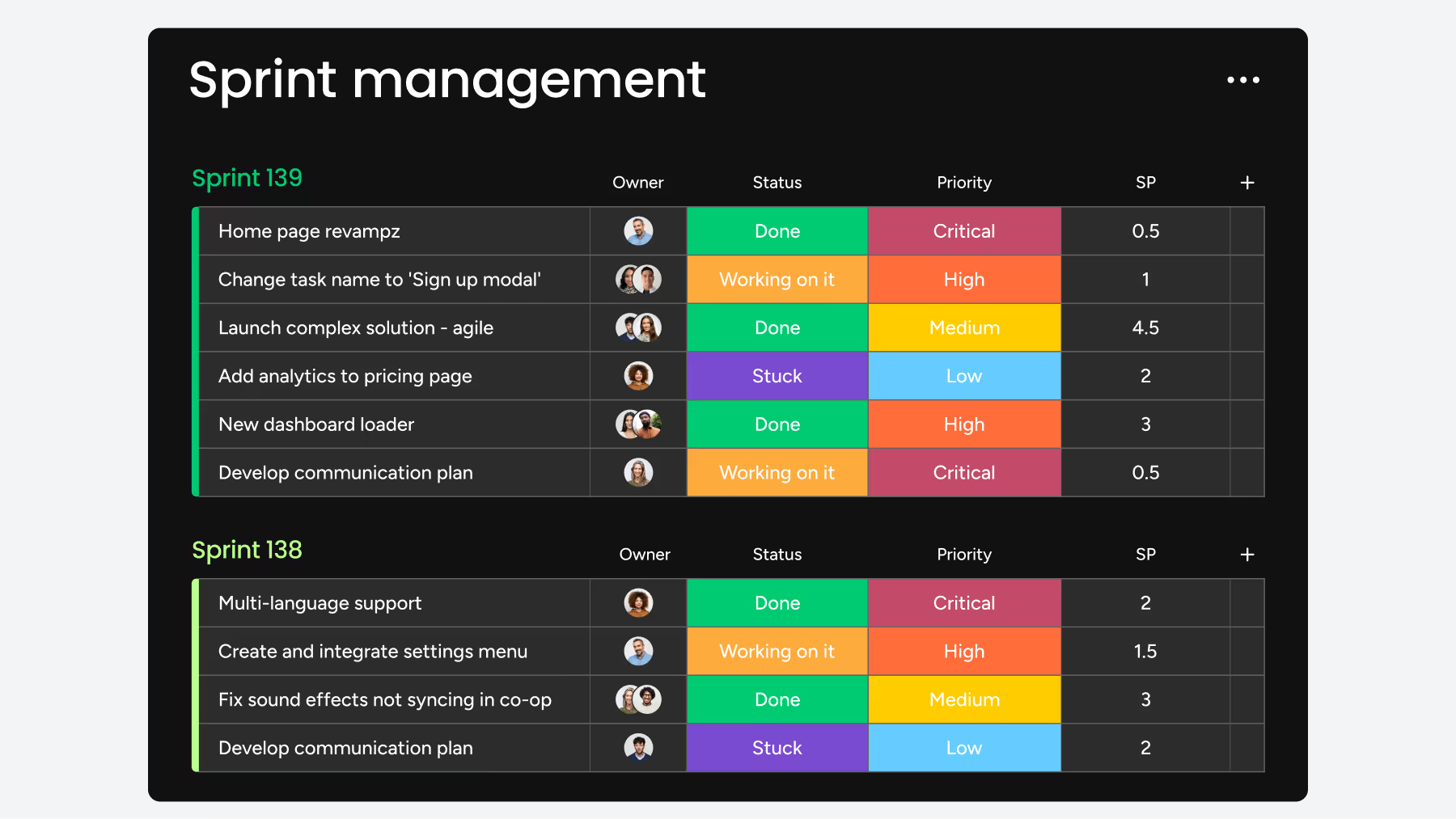
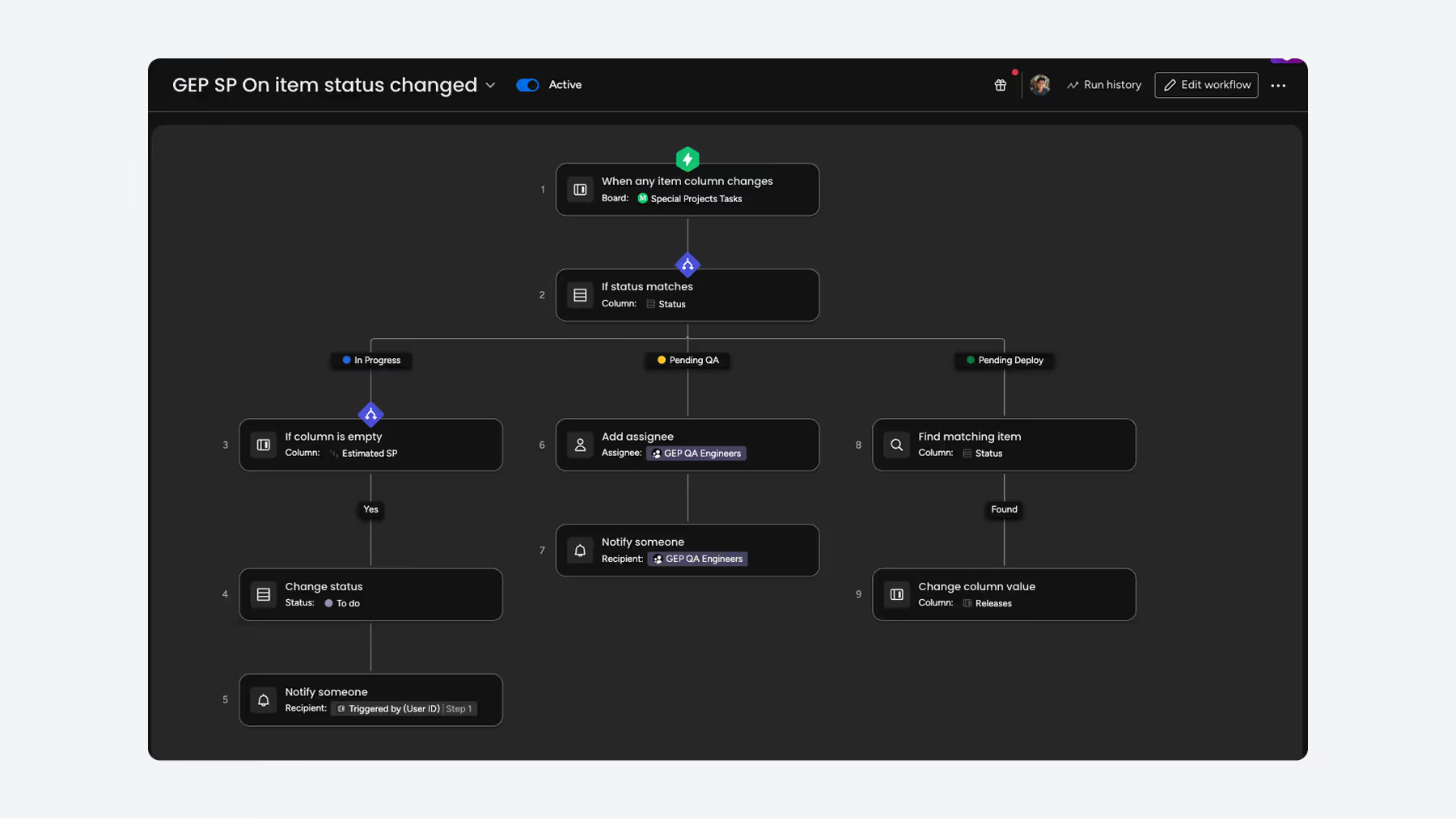
Custom automations reduce manual overhead. Tasks are automatically tagged and updated as they move through statuses, and team members receive notifications at the right moments. What used to require constant manual tracking now happens seamlessly in the background.
AI-powered bug and feature management
The team also rebuilt their bug and feature request process from the ground up. Instead of chaotic Teams messages or emails, Vistra introduced a structured bug intake process powered by monday WorkForms. Anyone in the company can submit issues in a consistent format, which then flows directly into an intake board.
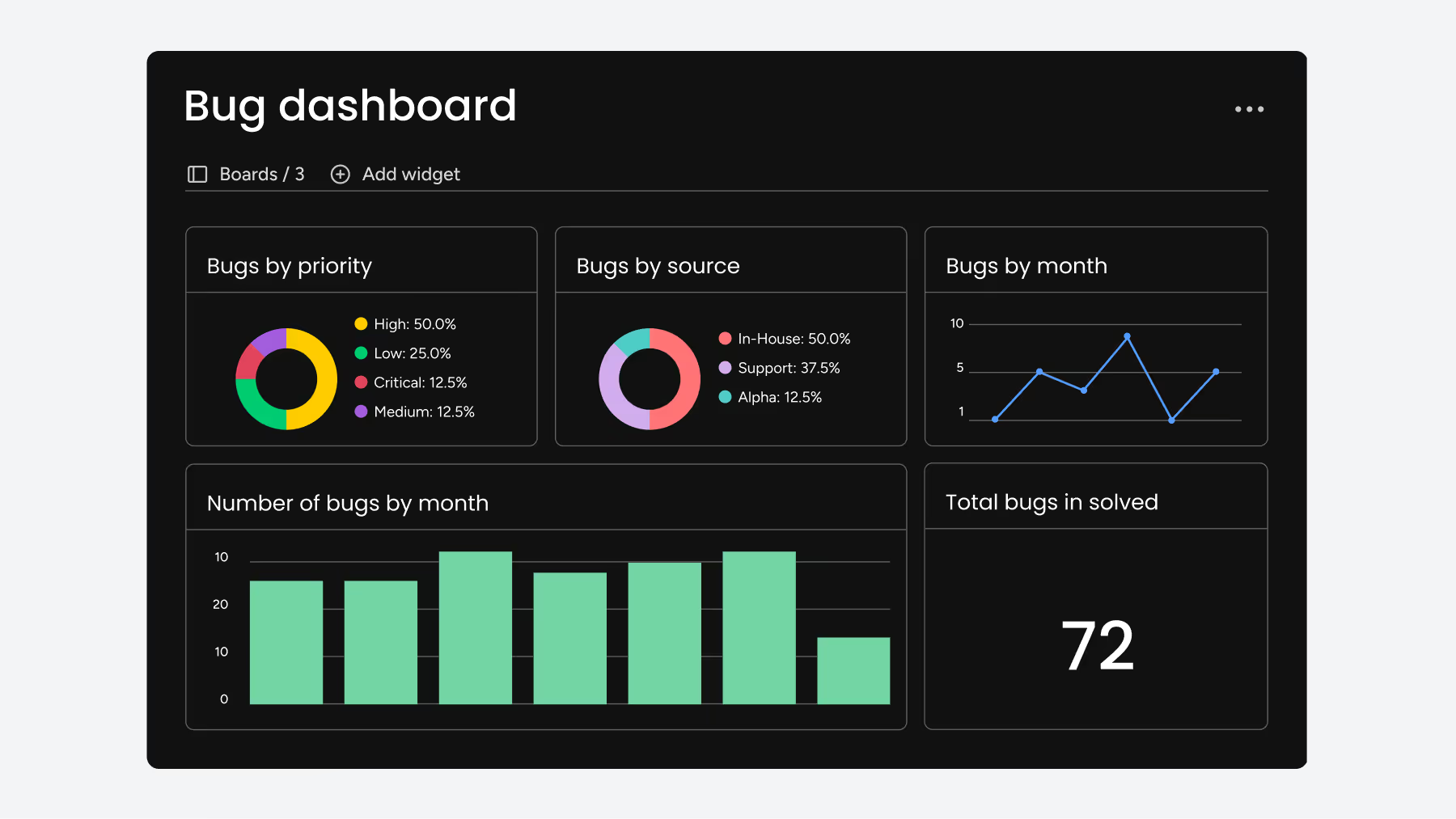
The team utilizes monday dev’s automations track both response and resolution times, providing visibility into SLAs and enabling the team to measure performance.
GitHub workflow integration
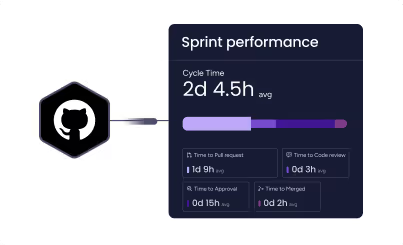
To keep engineers focused and in flow, the team integrated monday dev directly with GitHub. Commits, branches, and pull requests are automatically synced to monday items, linking code directly to roadmaps and sprint work. This creates a live feedback loop between planning and execution: engineers stay in GitHub, while product managers and stakeholders see progress in monday dev without having to ask.
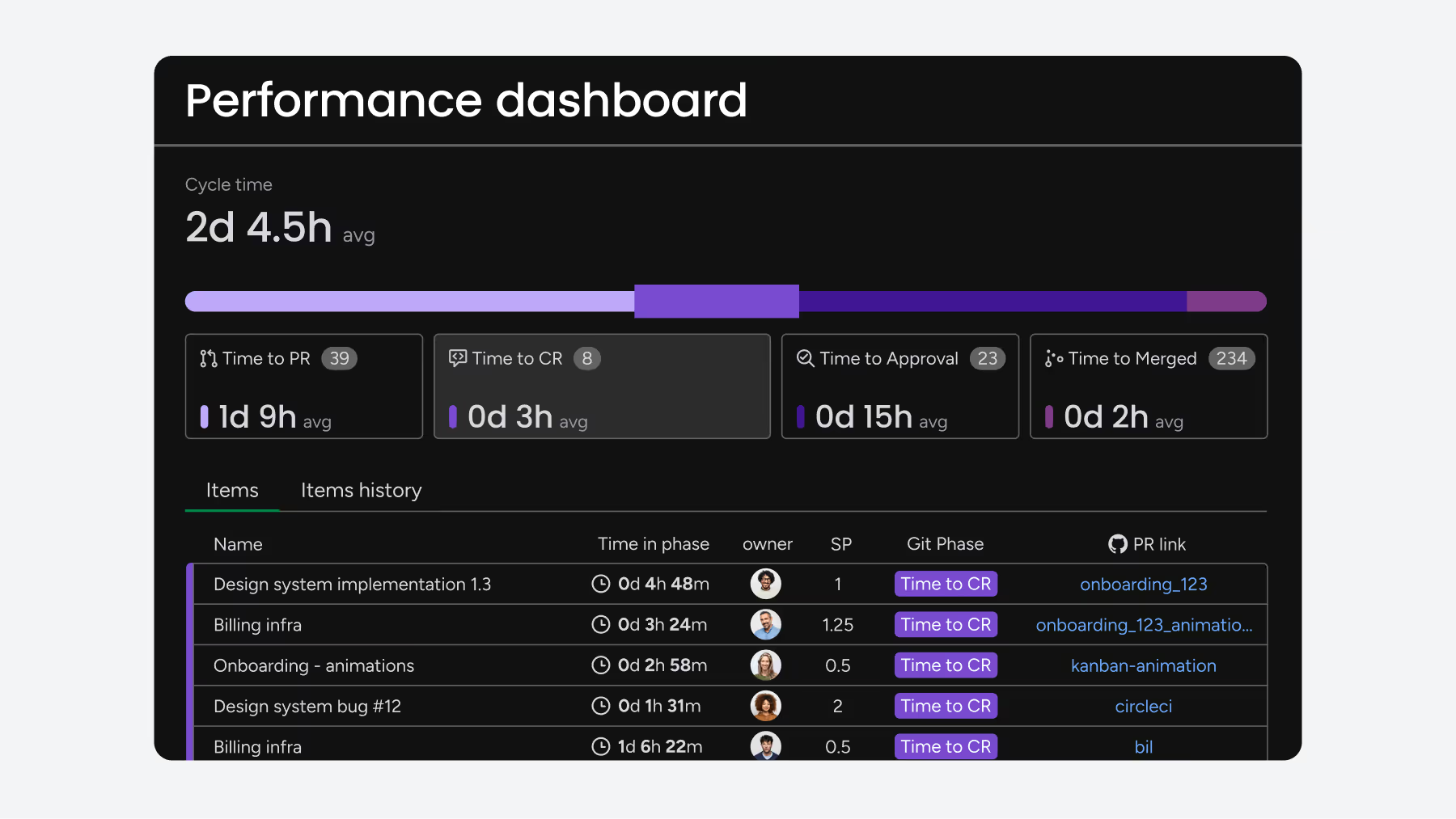
The management team also utilizes dashboards, such as the Engineering Performance Dashboard linked to GitHub, as well as other custom dashboards, to gain real-time insights into sprint velocity, burn-down, and the ratio of roadmap versus non-roadmap work. This helps the team ensure they are executing effectively and meeting their 75/25 commitment, and managers have the information they need to adjust quickly as priorities shift.
AI sprint summary
Vistra has also started using monday dev’s AI Sprint Summary, which helps managers track progress at the end of each cycle. Mervin sees potential for even greater impact as these tools evolve, particularly if teams can add their own custom prompts.
Connecting engineering with the rest of the business
For Vistra, one of the most significant shifts was how the engineering team partnered with other departments across the business. Before monday dev, product and commercial teams operated separately from engineering. Requests were often communicated through emails or Teams threads, status updates required manual check-ins, and strategic priorities frequently got lost in translation.
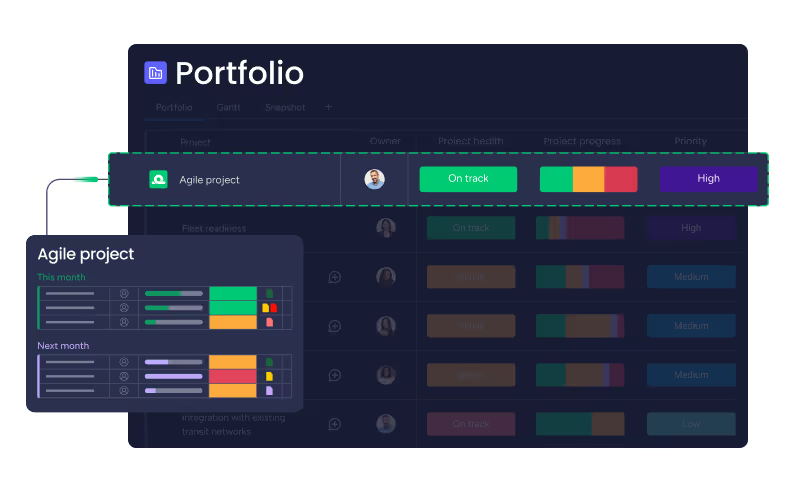
Now, with monday dev and monday work management running on the same platform, those silos are gone. Product managers, engineers, and business stakeholders share a single source of truth, making it easier to stay aligned and track progress in real time.
As Mervin explains: “With monday dev, everyone can see what’s happening – the commercial team, product, and engineering. It’s all transparent now.”
The impact
The impact of monday dev has been immediate and measurable. Vistra reported a 28% improvement in time to market after rebuilding its engineering workflows and feature delivery process. Engineers now spend less time switching between tools, product managers track progress in real time, and business stakeholders finally have visibility into engineering work.
“Everything is connected now — the roadmap, user stories, bugs, and tasks,” says Mervin. “That connectivity keeps us fast and aligned.” Where requests once got lost in Teams messages, they now flow into a transparent, trackable system. Where stakeholders once chased updates, dashboards now provide the answers instantly, and where engineering once operated in isolation, it is now tightly connected to the business.
Lessons from the dev team
For teams considering monday dev, Mervin’s advice is simple: start with the pre-built templates that provide a foundation you can launch with immediately. Once you’re up and running, feel free to customize. The platform adapts to the way your team works, not the other way around. “The more you experiment, the more value you’ll unlock.”
What’s next
Vistra isn’t stopping there. The team is exploring new ways to push efficiency even further — starting with expanding their use of monday dev’s AI features to cut down on manual reporting. They’re also interested in testing IDE integrations with VS Code, so developers can manage monday tasks directly in their coding environment, and experimenting with hybrid portfolio views that connect engineering initiatives to enterprise-wide strategy.
Final thoughts
For Vistra, monday dev was a reset that directly ties engineering to business outcomes. The company transitioned from fragmented requests and opaque delivery to a transparent, connected system. Delivery is faster, collaboration is smoother, and the team is better aligned with the rest of the organization.
Mervin sums it up, “As a team, our strength was always our cohesive teamwork, and monday dev has amplified that by creating a seamless, transparent environment for collaboration. It’s empowered us to tackle any project, no matter how complex.”
See how Hierarchy in monday dev connects every layer of work, from roadmap to release, in one structured view. It gives teams full-spectrum visibility, so everyone can understand what’s being built, why it matters, and how it connects to the bigger picture.