


Marketing teams face an overwhelming flood of data from campaigns, channels, and customer interactions across dozens of platforms. The real challenge isn’t collecting data, but transforming those numbers into actionable insights that drive decisions and demonstrate ROI to executive leadership. When campaign performance data lives in separate platforms, team productivity metrics exist in spreadsheets, and budget tracking happens in disconnected systems, proving marketing’s impact becomes nearly impossible.
Effective marketing reporting software goes beyond displaying charts and graphs. It connects campaign results, team bandwidth, and budget allocation in one centralized platform, enabling decisions that matter. These solutions consolidate data from the entire marketing stack, automate repetitive reporting workflows, and deliver real-time insights that enable proactive decision-making. For marketing leaders managing complex, multi-channel operations, the right reporting solution transforms scattered data into strategic advantage.
This helpful guide unpacks what actually works for enterprise marketing teams, spotlights the features that create operational excellence, and demonstrates how unified work management platforms help marketing leaders prove their value while managing global campaigns. It further covers essential capabilities, implementation strategies, and real customer results that demonstrate measurable impact on team productivity and business outcomes.
Key takeaways
If you’re leading marketing in the services world, you know the struggle: how do you prove marketing’s worth while keeping multiple teams running smoothly at scale? When teams operate in silos with duplicative processes and unclear ownership, tracking progress, capacity, and ROI in real-time becomes nearly impossible.
Keep in mind these important takeaways from this guide:
- Prove marketing’s value with real-time visibility: connect campaign performance, team capacity, and budget data in one platform so you can answer executive questions instantly and demonstrate ROI with confidence.
- Eliminate workflow chaos across marketing teams: standardize processes from campaign planning to execution, preventing teams from reinventing workflows and reducing the manual work that causes burnout.
- Transform reporting from manual to automated: solutions like monday.com centralize data from 200+ marketing platforms and automate status updates, saving thousands of hours monthly while improving accuracy.
- Prevent team burnout through smart resource planning: use visual workload views to spot overallocation before it happens and balance capacity across content, creative, and campaign teams.
- Turn marketing into a strategic growth driver: move beyond proving marketing works to showing how it directly contributes to business goals through OKR alignment and executive-ready dashboards.
What makes heads of marketing choose monday.com for marketing reporting?
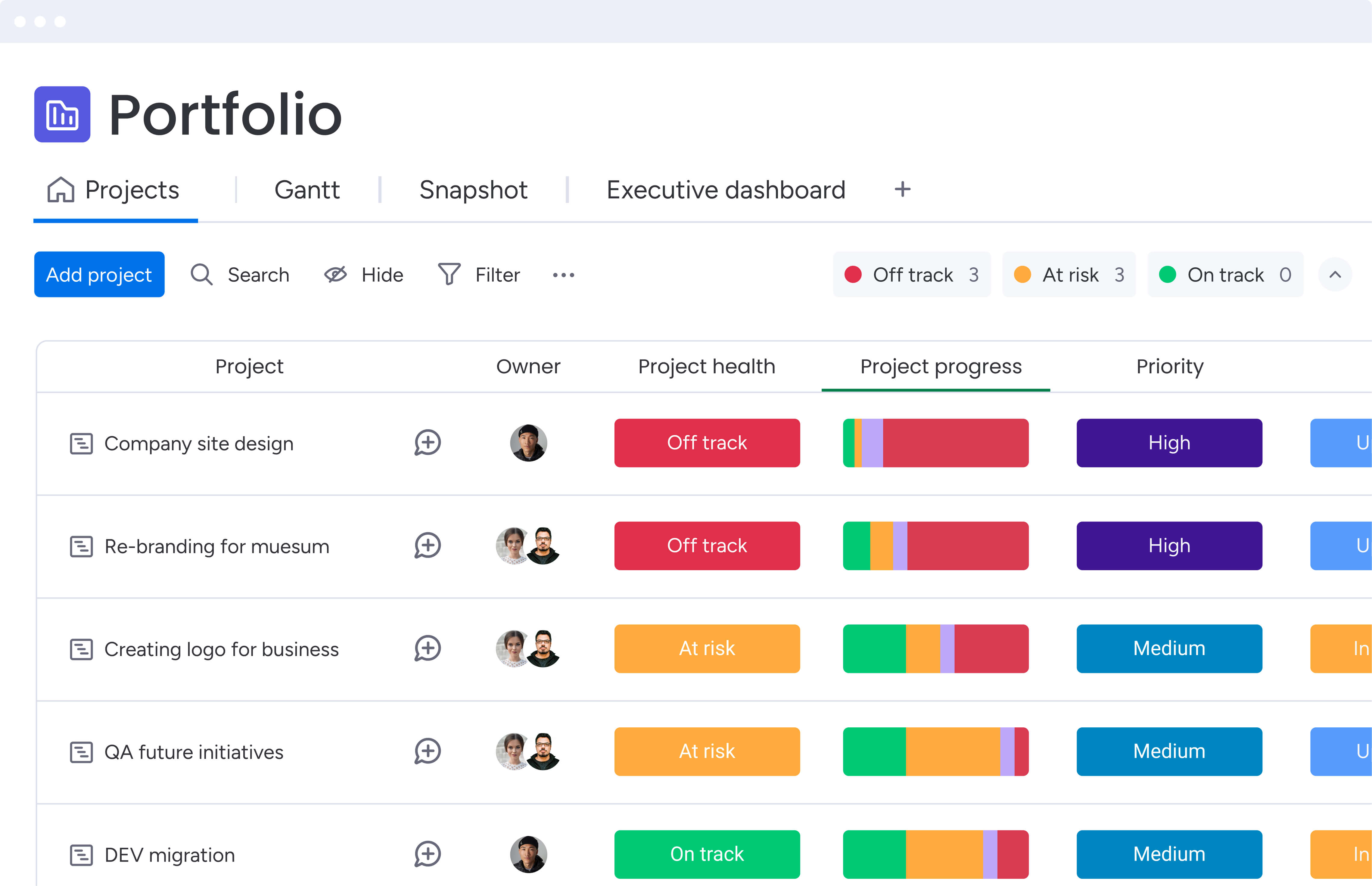
Heads of marketing in services industries choose monday.com because it solves the fundamental challenge of proving marketing value while managing complex, multi-team operations at scale. Unlike traditional reporting platforms that only aggregate third-party data, monday.com captures first-party workflow data, showing not just campaign performance metrics, but also team capacity, project timelines, and resource allocation in real-time.
For marketing leaders managing 50-100+ person teams across content, creative, acquisition, events, and operations, the platform eliminates the disconnected execution that scatters marketing impact. When your teams work in isolation, reinventing the same processes and fighting over who owns what, you lose the ability to see progress, team bandwidth, or ROI when you need it most.
With monday.com, you get centralized visibility into all campaigns, performance data, and team workloads — enabling heads of marketing to report impact to executive leadership with confidence while ensuring effective use of budget and team resources.
Three critical challenges prevent marketing leaders from delivering the impact their teams are capable of:
- Lack of standardization: teams forced to reinvent workflows repeatedly.
- Poor resource utilization: leading to burnout and missed deadlines.
- Misaligned strategy: inability to connect marketing initiatives with company OKRs.
By combining campaign management, resource planning, and performance reporting in one platform, the intuitive platform enables marketing leaders to oversee campaign planning, execution, and performance while driving growth and brand awareness through multi-channel marketing strategies. To further unify these efforts, investing in marketing tools for sales can strengthen alignment between departments.
monday.com top features for marketing reporting
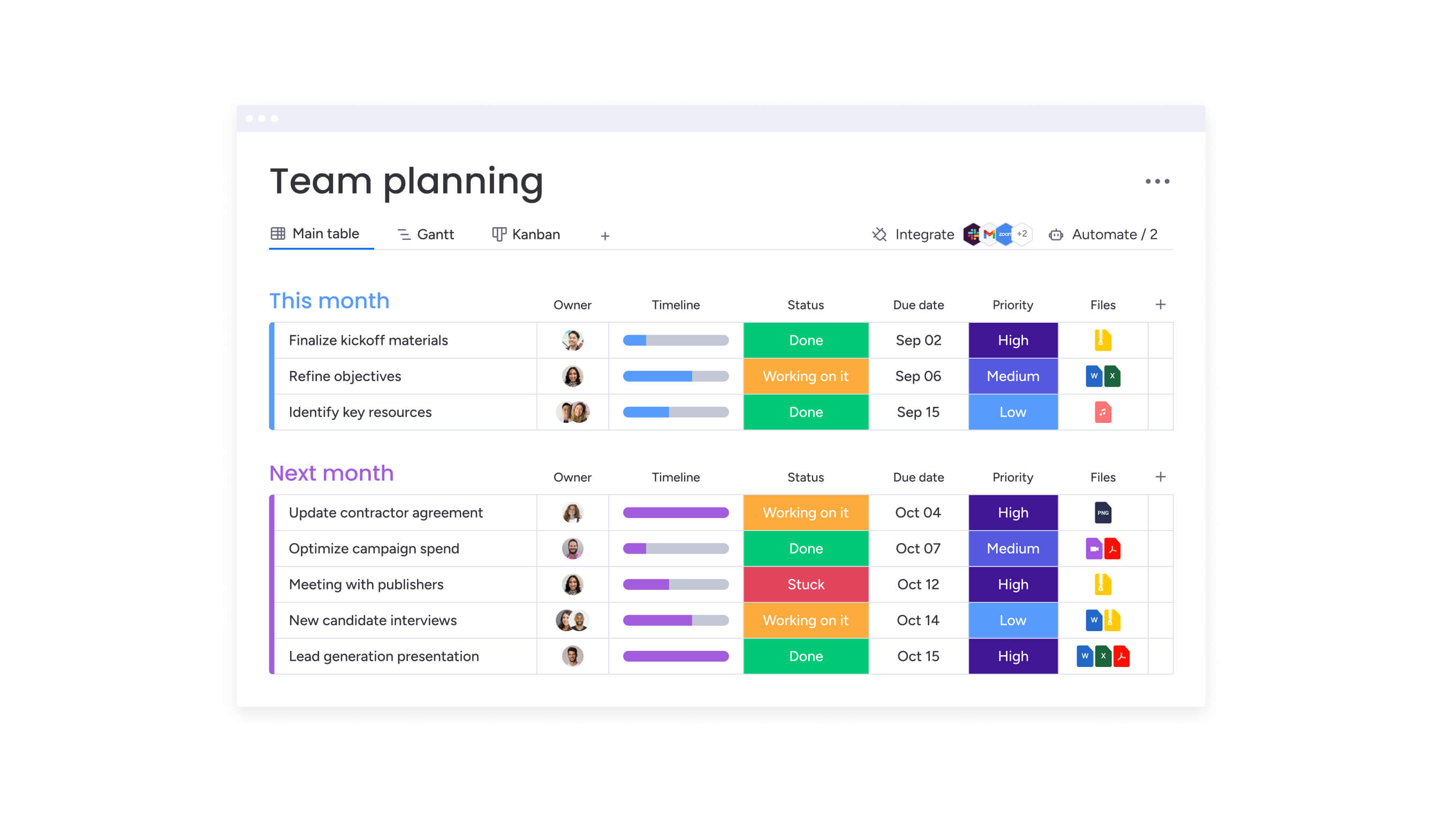
The following features demonstrate how monday.com transforms marketing operations from fragmented processes into streamlined, data-driven workflows. Each capability addresses specific challenges marketing leaders face when managing large-scale teams and complex campaign portfolios.
Campaign management dashboards
With monday.com, you can build dashboards that pull all your campaign data together in one live view. Your dashboards automatically pull data from Google Analytics, social platforms, ad tools, and your CRM, then show you what matters: campaign ROI, CAC, conversion rates, and budget status. The visual format makes trends pop, so you catch opportunities right away.
For heads of marketing managing large-scale teams, these dashboards eliminate hours spent manually consolidating data from disparate sources into spreadsheets. Instead of waiting for weekly or monthly reports, you gain instant visibility into which campaigns are performing, where budget is being allocated, and how marketing efforts align with company goals.
Key benefits include:
- Real-time performance tracking: monitor campaign metrics as they happen.
- Executive-ready reporting: answer leadership questions on the spot.
- Trend identification: spot optimization opportunities before they impact results.
Genpact’s marketing team uses these dashboards to track 24 ongoing large-scale campaigns simultaneously, enabling them to identify bottlenecks and predict delays that would have been invisible in their previous spreadsheet-based system. The team implemented columns showing target dates alongside actual time frames, creating a visual comparison that reveals trends and pinpoints specific bottlenecks causing delays across their campaign portfolio.
Resource management and workload views
The Workload view in monday.com provides visual capacity planning that shows exactly how work is distributed across your marketing team. This feature displays each team member’s assigned work, project timelines, and overall capacity in a color-coded format that makes overallocation and underutilization immediately visible.
You can view workload by individual, team, or department, and adjust assignments with drag-and-drop simplicity to balance capacity and prevent burnout before it happens. For marketing leaders managing 50-100+ person teams across content, creative, acquisition, events, and operations, resource management is critical to operational efficiency and team productivity.
Resource management capabilities:
- Visual capacity planning: see team workload at a glance.
- Proactive burnout prevention: identify overallocation before it impacts performance.
- Strategic resource allocation: match skills to priorities effectively.
ThoughtWorks implemented workload management through monday.com to address the challenge of coordinating marketing support requests across global teams. The platform enabled the organization to budget team time and efforts more scientifically, leading to measurable increases in operational efficiency across their global marketing operations.
Automated reporting workflows
The automation capabilities in monday.com eliminate repetitive manual reporting workflows by automatically updating stakeholders, moving items between workflow stages, and triggering notifications based on status changes or deadlines.
You can create custom automation recipes using a no-code interface: for example, automatically notifying the creative team when a campaign brief is approved, sending weekly progress reports to executives, or alerting you when a campaign budget reaches 80% utilization, illustrating how automation software can significantly reduce repetitive tasks.
As a marketing leader, you’re tired of watching your team reinvent the wheel and waste hours on status updates. Automated workflows fix that. By standardizing processes through automation and templates, you create operational efficiency that scales across your entire marketing organization.
Automation benefits:
- Standardized processes: eliminate workflow reinvention across teams.
- Improved data accuracy: reduce human error in status updates.
- Time savings: free teams from repetitive administrative work.
FARFETCH’s marketing team leveraged automation to transform their campaign brief submission and approval process. With monday.com forms and automation, they formalized the process so specific team members receive automated notifications when new briefs are submitted, providing campaign managers with visibility into status and turnaround time. This resulted in a 25% decrease in email exchanges and 100% removal of spreadsheets from their workflow.
Custom reporting and data visualization
Reporting capabilities provided by monday.com allow you to create custom reports that track the specific metrics that matter to your marketing organization and executive stakeholders, similar to dedicated reporting tools that provide deeper data analysis. Using the platform’s flexible data structure, you can build reports that combine campaign performance data, team productivity metrics, budget tracking, and strategic goal progress in formats ranging from charts and graphs to timeline views and pivot tables.
For marketing leaders who need to report impact to executive leadership, custom reporting enables you to speak the language of different stakeholders — showing campaign ROI and CAC to the CFO, volume and performance of content to the CMO, and team productivity and resource utilization to HR.
Custom reporting advantages:
- Stakeholder-specific views: tailor reports to different audience needs.
- OKR alignment: connect marketing initiatives to business goals.
- Strategic positioning: strengthen marketing’s role within the organization.
Marketing leaders can roll out high-level GTM calendars that display marketing programs, campaigns, and activations across teams, often supported by marketing planning software. This approach provides an additional layer of visibility and enables greater cross-team collaboration and alignment throughout the organization.
Integration ecosystem
With 200+ marketing tools and platforms connected through native integrations and open APIs, monday.com enables you to centralize data from your entire martech stack without replacing existing tools. Key integrations include Google Analytics, Google Ads, Facebook Ads, LinkedIn, HubSpot, Salesforce, Mailchimp, Slack, Microsoft Teams, and major project management platforms.
For heads of marketing managing multi-channel marketing strategies across tech, media, retail, finance, and services industries, integration capabilities are essential for creating a single source of truth without disrupting existing workflows. Your teams already use specialized tools for email marketing, social media management, advertising, and analytics and monday.com doesn’t replace these tools but instead connects them, eliminating the silos that scatter marketing impact. Exploring various digital marketing tools can further enhance multi-channel strategies.
Integration benefits:
- Unified data view: connect your entire martech stack.
- Workflow continuity: maintain existing tool investments.
- Reduced silos: eliminate fragmented marketing impact.
FARFETCH’s marketing team leveraged integrations to connect their content calendar with production workflows and CRM systems. The platform enabled them to consolidate all workflows and processes into one unified system while prompting the team to reevaluate and improve outdated working methods that were hindering their operational efficiency.
How a head of marketing in the services industry benefits from monday.com
When you implement monday.com, you’re not just getting incremental improvements, but fundamentally transforming how your marketing organization operates. The platform delivers measurable impact across campaign execution, team productivity, and strategic alignment, enabling you to prove marketing’s value while managing complex operations at scale.
The following outcomes demonstrate the measurable impact marketing leaders achieve when they centralize campaign management, automate workflows, and gain real-time visibility into team performance and resource allocation.
Immediate operational improvements
Time savings represent one of the most immediate and measurable benefits:
- VML: saved 7,000 hours per account monthly by centralizing campaign management.
- FARFETCH: saved 3,500 hours per month by eliminating manual data entry.
- McDonald’s: saved 1,224 hours per month — equivalent to adding seven full-time employees.
These time savings enable marketing leaders to redirect resources toward strategic initiatives rather than administrative tasks.
Cost efficiency emerges through improved resource utilization and prevention of team burnout:
- FARFETCH: achieved $118K in monthly savings and 6x ROI.
- McDonald’s: realized 615% ROI through streamlined workflows.
Quality and accuracy enhancements
Compliance and accuracy improve significantly through centralized data management:
- Genpact: achieved 100% removal of spreadsheets from marketing workflows.
- FARFETCH: eliminated version control issues across global teams.
This data accuracy is essential for reporting campaign ROI, CAC, and MQL-to-customer rates to executive leadership with confidence.
Productivity improvements result from standardizing processes:
- Canva: achieved 3x creative output by removing workflow bottlenecks.
- ThoughtWorks: achieved 62% improvement in assets and approvals.
Strategic transformation
Output quality improvements follow naturally when teams have proper resource allocation and reduced burnout. When teams aren’t overloaded and have clear priorities, they produce higher quality creative work and more effective campaigns. Genpact’s 40% improvement in cross-team collaboration resulted in more successful end-to-end campaign planning and execution.
Visibility and tracking improvements transform marketing from reactive to proactive management. Real-time visibility into campaigns, team workloads, and performance metrics enables marketing leaders to:
- Identify bottlenecks before they cause delays: spot issues proactively and keep campaigns on track.
- Reallocate resources to high-priority initiatives: shift capacity where it matters most.
- Demonstrate marketing’s contribution to business goals: connect campaigns to company OKRs with confidence.
How to solve marketing reporting with monday.com
The following six-step process guides marketing leaders through implementing comprehensive reporting solutions that connect campaign performance, team productivity, and strategic outcomes. Each step builds on the previous one to create a unified system that transforms how your organization tracks and demonstrates marketing value.
Step 1: audit your current reporting process and identify data sources
Begin by conducting a comprehensive audit of your current marketing data sources, including advertising platforms, analytics tools, social media accounts, email systems, and CRM. This initial assessment establishes the foundation for your reporting infrastructure. Identify the metrics most relevant to different stakeholders and document how data currently flows from these sources into your reporting processes.
This audit reveals:
- Visibility gaps: areas where you lack real-time insights.
- Manual processes: time-consuming tasks that can be automated.
- Disconnected systems: tools that create data silos.
Step 2: connect your martech stack through integrations
Use monday.com’s 200+ native integrations to connect your key marketing platforms. Start with your most critical data sources — typically Google Analytics, advertising platforms, and your CRM — and configure bidirectional data flow so campaign data automatically populates your monday.com workspace.
This integration approach:
- Eliminates manual data entry: reduces errors and saves time.
- Creates a single source of truth: unifies marketing performance data.
- Maintains existing workflows: preserves team tool preferences.
Step 3: build your campaign management structure
Create boards that reflect your marketing organization’s structure: separate boards for campaign planning, content production, event management, and resource allocation, or a unified board with views that serve different teams. Use custom fields to capture the data points that matter for your reporting: campaign type, budget, target metrics, assigned team members, and status.
Structure considerations:
- Workflow alignment: match boards to your process stages.
- Team accessibility: ensure relevant visibility for each role.
- Progress tracking: make campaign status visible at a glance.
Step 4: design dashboards for different stakeholders
Create multiple dashboard views tailored to different audiences. Executive dashboards should show high-level metrics like campaign ROI, budget adherence, and OKR progress. Operational dashboards for marketing managers should display campaign timelines, team workloads, and performance by channel.
Dashboard design principles:
- Audience-specific metrics: show what matters to each stakeholder.
- Visual clarity: use charts and graphs for immediate comprehension.
- Actionable insights: enable quick decision-making.
Step 5: automate reporting workflows and notifications
Set up automation recipes that eliminate manual status updates and ensure information flows to the right people at the right time. Configure automatic notifications when campaigns reach budget thresholds, deadlines approach, or approvals are needed. Schedule automated report delivery to stakeholders on weekly or monthly cadences.
Automation benefits:
- Process standardization: ensure consistent workflows across teams.
- Time liberation: free teams from repetitive administrative work.
- Improved accuracy: reduce human error in status updates.
Step 6: implement resource management and capacity planning
Use the Workload view to visualize team capacity and prevent burnout. Assign tasks with time estimates and monitor workload distribution across your marketing team. Adjust assignments proactively when team members become overallocated.
Capacity planning ensures:
- On-time delivery: maintain project schedules through proper resource allocation.
- Team productivity: prevent burnout that leads to turnover.
- Strategic focus: ensure the right people work on the right priorities.
Comparison table: monday.com vs competing platforms for marketing reporting
The following comparison demonstrates how monday.com’s capabilities align with competing platforms to help you evaluate the best solution for your marketing organization:
| Feature | monday work management | AgencyAnalytics | Looker Studio |
|---|---|---|---|
| Campaign management | ✓ Full project management + reporting | ✗ Reporting only | ✗ Reporting only |
| Resource capacity planning | ✓ Workload view with visual capacity management | ✗ Not available | ✗ Not available |
| Workflow automation | ✓ No-code automation builder | ✗ Limited automation | ✗ No automation |
| Cross-functional collaboration | ✓ Built for marketing, legal, product, finance teams | ✗ Marketing-focused only | ✗ Reporting-focused only |
| Real-time data updates | ✓ Live data across all integrations | ✓ Scheduled updates | ✓ Real-time for Google sources |
| Native integrations | 200+ platforms | 75+ platforms | Strong Google ecosystem only |
| Custom reporting | ✓ Flexible report builder | ✓ Template-based | ✓ Highly customizable |
| Price per user/month | From $10/user | From $59/month (five campaigns) | Free (Pro version pricing on request) |
| Implementation time | Two to four weeks typical | One to two weeks | One to two weeks |
| G2 rating | 4.7/five (12,000+ reviews) | 4.6/five (300+ reviews) | 4.4/five (400+ reviews) |
How Genpact transformed their global marketing operations
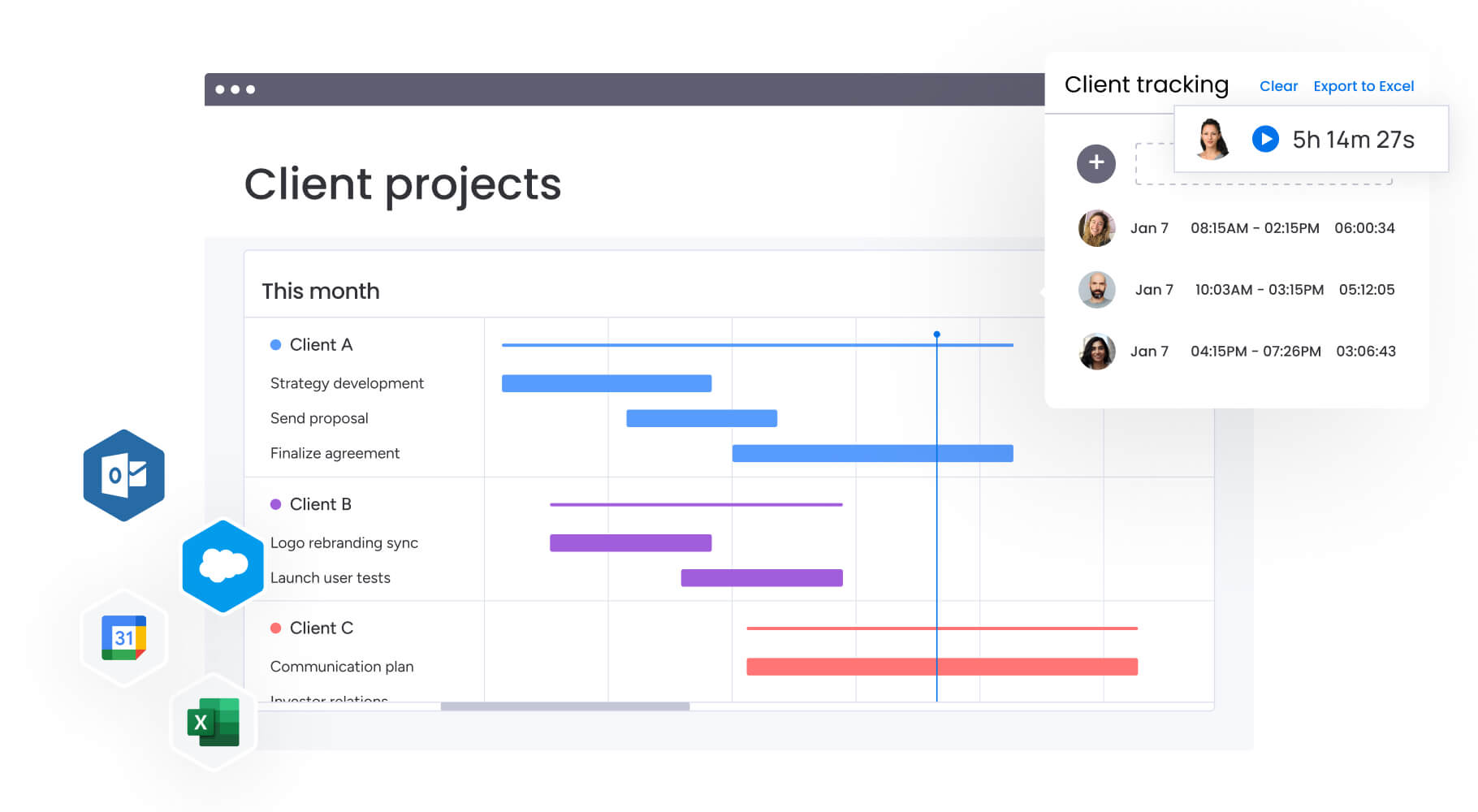
This case study demonstrates how a Fortune 500 professional services firm overcame complex campaign management challenges using monday.com. The transformation showcases the platform’s ability to standardize processes, improve collaboration, and eliminate inefficient workflows across globally distributed marketing teams.
The challenge
Genpact, a global professional services firm serving Fortune 500 companies, runs multiple large-scale marketing campaigns simultaneously across industries and solutions. Sarah Pharr, AVP of Marketing, leads the team responsible for planning, building, and activating these campaigns. The team manages approximately 24 ongoing campaigns at any given time, each with several cross-channel activations jointly managed by campaign managers and channel owners.
Campaign managers relied heavily on spreadsheets saved across personal desktops, emails, and Microsoft SharePoint folders. This made it difficult to maintain a single source of truth and track the latest version. With multiple stakeholders and contributors involved across globally distributed teams, achieving the visibility needed to track campaign status, progression, and key information was nearly impossible.
The solution
Genpact implemented monday.com to standardize their end-to-end campaign planning and execution process. The team created workflow apps outlining the entire activation process for each channel, with columns tracking target dates versus actual time frames to identify trends and bottlenecks.
Key implementation elements included:
- Timeline views and dashboards: visibility into outstanding campaign aspects.
- High-level GTM calendar: cross-team program and activation visibility.
- Automated forms and notifications: formalized brief submission and approval processes.
They utilized multiple view options including Timeline view and dashboards to see outstanding aspects of campaigns and drill down into critical items for each week or month. The marketing team rolled out a high-level GTM calendar showing marketing programs, campaigns, and activations across teams, providing visibility and enabling cross-team collaboration.
The results
The transformation delivered measurable improvements across multiple dimensions:
- 40% improvement: in cross-team collaboration for successful end-to-end campaign planning and execution.
- 100% removal: of spreadsheets from marketing workflows.
- 25% decrease: in email exchanges across the marketing department.
Transform your marketing operations with proven results
Marketing leaders at Genpact, ThoughtWorks, FARFETCH, and thousands of other services organizations have already transformed their operations with monday.com — achieving measurable improvements in team collaboration, operational efficiency, and strategic alignment. These results aren’t theoretical: they’re proven outcomes from marketing leaders who needed to demonstrate value while managing complex, multi-team operations at scale.
When you centralize campaign data, automate repetitive workflows, and gain real-time visibility into team capacity and performance metrics, you fundamentally transform marketing’s role in your organization. Instead of constantly defending budget and proving basic value, you position marketing as a strategic growth driver that directly contributes to business objectives.
Most organizations see ROI within three to four months, with tangible benefits including thousands of hours saved monthly, dramatically improved creative output, and the confidence to demonstrate marketing impact to executive leadership with data that actually matters.
The question isn’t whether your marketing organization needs better reporting and workflow management, but how much longer you’ll operate without it. Start your 14-day free trial today and discover how real-time campaign visibility, automated reporting workflows, and intelligent capacity planning can eliminate the chaos that’s holding your team back from their full potential.
The content in this article is provided for informational purposes only and, to the best of monday.com’s knowledge, the information provided in this article is accurate and up-to-date at the time of publication. That said, monday.com encourages readers to verify all information directly.
Frequently asked questions
How does monday.com handle multi-regional campaign reporting?
Multi-regional campaign management is supported through customizable board structures that can be organized by geography, campaign type, or team. You can create separate boards for each region while maintaining a master dashboard that aggregates performance across all regions. Custom fields allow you to tag campaigns by region, language, or market, enabling filtered views that show regional performance while maintaining global visibility with monday.com.
What's the typical ROI timeline for marketing reporting tools?
Most teams start seeing real ROI within three to four months of implementation. FARFETCH achieved 6x ROI with $118K in monthly savings, while McDonald's realized a 615% ROI by saving 1,224 hours per month. The fastest returns come from eliminating manual reporting processes and improving team productivity through better resource allocation.
Can monday.com integrate with financial systems for budget tracking?
Yes, integration with financial systems including QuickBooks, NetSuite, and Salesforce is available through native integrations and APIs. You can track campaign budgets, actual spend, and forecasts directly within your marketing boards, with data flowing bidirectionally between monday.com and your financial systems.
How do you ensure data accuracy across multiple marketing platforms?
Data accuracy is ensured through automated data synchronization that eliminates manual data entry errors. Native integrations pull data directly from source platforms using APIs, ensuring the data in your dashboards matches the data in your advertising platforms, analytics tools, and CRM systems with monday.com.
What level of technical expertise is required for implementation?
The platform is designed for business users without technical expertise. The no-code interface enables marketing leaders and operations managers to build workflows, create automations, and design dashboards using drag-and-drop tools and pre-built templates. Most organizations complete initial implementation within two to four weeks with support from the monday.com customer success team.
How does monday.com support enterprise security requirements?
Enterprise-grade security is provided including SOC 2 Type II certification, GDPR compliance, and ISO 27001 certification. The platform offers advanced security features including single sign-on (SSO), two-factor authentication, IP restrictions, and granular permission controls that enable you to restrict access to sensitive campaign data or financial information.

 Get started