


Between unproductive meetings, email overload, status update pings, and manual data entry, knowledge workers lose dozens of hours every month to work that doesn’t move projects forward. Time saving apps exist to reclaim those lost hours by automating repetitive steps, blocking distractions, organizing workflows, and surfacing insights that help you prioritize what actually matters. Whether you’re a solo contributor juggling multiple projects or a team lead coordinating across departments, the right combination of apps can give you back hours each week.
This article walks through the most effective time saving apps across four key categories: time tracking, task management, focus, and automation. You’ll also find a practical framework for choosing the right fit for your workflow. And for teams looking to consolidate multiple capabilities on one platform, we’ll explore how monday.com fits into the picture.
Key takeaways
- Time saving apps reduce manual work and reclaim productive hours each week by automating repetitive steps and organizing your workflows.
- Key categories include time tracking, task management, focus, and automation, each targeting a different source of wasted time.
- The right app depends on your specific workflow bottleneck, so identifying your biggest time drain is the first step.
- Automation delivers the highest cumulative time savings because it eliminates recurring manual steps that compound over weeks and months.
- monday.com combines time tracking, task management, automations, and AI on one platform, reducing the need to constantly switch between disconnected apps.
What are time saving apps?
Time saving apps are software applications designed to reduce manual effort, automate repetitive processes, organize your work, or minimize distractions. They span a wide range of categories, from simple timers that log how you spend your day to sophisticated automation platforms that eliminate entire manual workflows without any coding required.
The main categories include time tracking apps (which reveal where your hours actually go), task management apps (which centralize assignments, deadlines, and priorities), focus apps (which block distractions and protect deep work), and automation apps (which handle recurring processes so you don’t have to). Some platforms combine several of these capabilities into a single workspace.
Why does this matter? Research shows that knowledge workers spend the majority of their time on “work about work”: status meetings, searching for information, switching between apps, and managing notifications. That leaves less than half of the workday for skilled, strategic work. Time saving apps directly attack that imbalance by removing friction from your daily routine and helping you increase efficiency at work.
So where should you start? It depends on which category of time drain hits your team the hardest.
Best time tracking apps that show where your hours go
You can’t reclaim time you can’t see. Time tracking apps give you an honest picture of how your hours break down across projects, clients, and tasks. Once you have that data, you can spot hidden time sinks, adjust your priorities, and build more realistic schedules.
The data from time tracking often reveals surprising patterns. You might discover that admin work consumes 30% of your week, or that a project you thought took 5 hours actually took 12. That awareness alone drives more effective planning and resource allocation. Here are three time tracking apps worth considering.
Toggl Track

- One of the most popular time tracking apps for individuals and teams
- One-click timer makes it effortless to log time across projects
- Reporting dashboard breaks down your hours by client, project, or team member
- Standout feature is its simplicity: you can start tracking in seconds without navigating a complex setup
- Ideal for freelancers, consultants, and agencies that need accurate billable hours
- Free plan for up to 5 users, with paid plans starting at $9/user per month
Clockify

- Genuinely free time tracking app with no user limits on its free tier
- Track time across unlimited projects, generate detailed reports, and set billable rates
- Standout feature is the generous free plan, which includes most core functionality that competitors charge for
- Strong fit for growing teams that need time tracking without a per-seat cost commitment
- Paid plans with advanced features like time audits and GPS tracking start at $3.99/user per month
My Hours

- Combines time tracking with lightweight project management
- Assign budgets to projects, track time against them, and generate client-ready reports
- Standout feature is its project budgeting capability, which lets you see at a glance whether a project is on track financially
- Solid option for small teams and agencies managing multiple client projects
- Free plan for up to 5 users, with a Pro plan at $8/user per month
What is the best app for tracking time?
The best time tracking app depends on your priorities. Toggl Track is ideal for simplicity and speed. Clockify wins on value with its unlimited free tier. My Hours is the strongest choice if you need project budgeting alongside time tracking. All three integrate with popular project management and invoicing platforms.
Now that you know where your time goes, the next question is: how do you organize the work that fills those hours?
Top task management apps to organize your workload
Scattered assignments, missed deadlines, and murky priorities are some of the biggest time drains in any team. Task management apps centralize your work in one place, reduce decision fatigue, and make sure nothing falls through the cracks. When everyone can see what’s assigned, what’s due, and what’s done, coordination takes minutes instead of hours. (Need more ideas? See our productivity tips for teams.)
The right task management app gives your team a shared view of who owns what, when it’s due, and where things stand. That visibility alone eliminates the daily status check-ins that eat into productive time. Here are five standout task management apps, starting with monday.com’s AI Work Platform and its flexible board views and built-in collaboration features.
Learn more: AI productivity software
monday.com’s AI Work Platform

- Comprehensive work management platform that combines task management with time tracking, automations, AI assistance, and real-time reporting
- Organize work across 15+ customizable views including Kanban, Gantt, Timeline, Calendar, and Workload, giving every team member the perspective they need
- Standout feature is its all-in-one approach: instead of stitching together separate apps for tasks, time tracking, and automations, everything lives on one platform with no context-switching
- Ideal for teams of any size that want to consolidate their productivity stack and eliminate the overhead of managing multiple disconnected tools
- Free plan for up to 2 users, paid plans starting at $9/user per month
Todoist

- Clean, focused task manager built for personal productivity and small teams
- Organize tasks into projects, set due dates and priorities, and use natural language input to add items quickly (“Submit report Friday p1”)
- Standout feature is its natural language parsing, which makes capturing new items incredibly fast
- Works well for individuals and small teams who want simplicity over feature depth
- Free plan with up to 5 active projects, paid plans start at $4/month
Trello

- Popularized Kanban-style task management with its drag-and-drop card and board interface
- Visual, intuitive, and quick to set up, making it a go-to for teams that think in columns: To Do, Doing, Done
- Standout feature is its visual simplicity: anyone can start using Trello within minutes, with no training required
- Strong fit for small teams and cross-functional projects with straightforward workflows
- Free plan includes unlimited cards and up to 10 boards, paid plans starting at $5/user per month
Asana
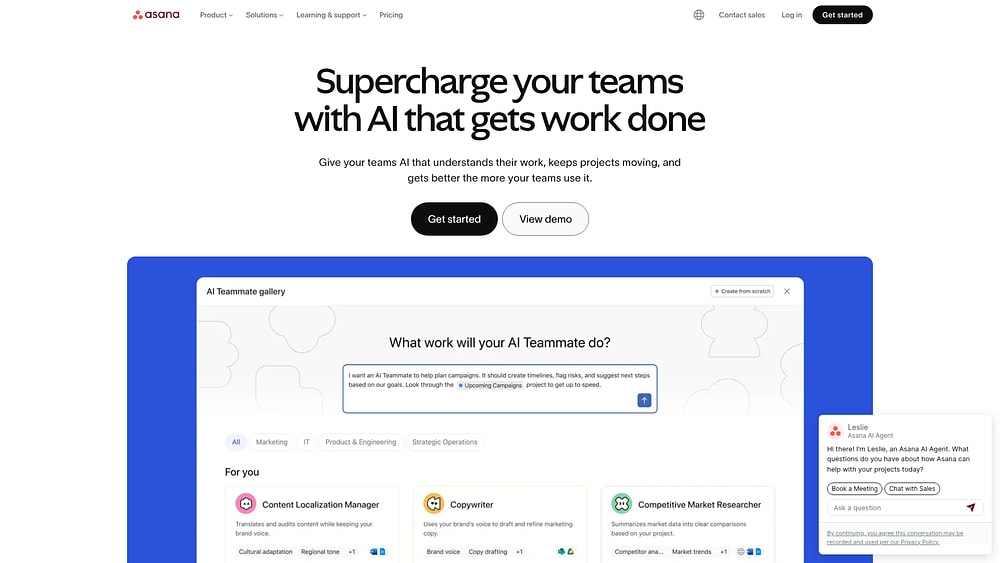
- More robust task and project management platform designed for teams that need multiple views (list, board, timeline, calendar) and cross-project visibility
- Create dependencies between assignments, set milestones, and build custom workflows using its rules engine
- Standout feature is its portfolio view, which lets managers track the status of multiple projects at a glance
- Works well for mid-size to large teams managing complex, interconnected work
- Free plan for up to 15 users, premium plans starting at $10.99/user per month
Notion
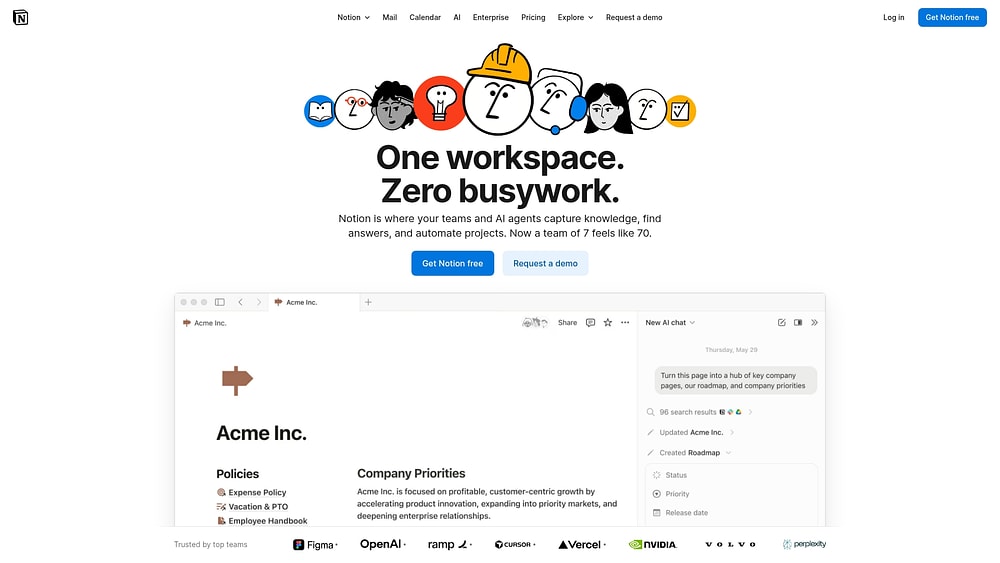
- Blends task management with documentation, wikis, and databases in a single workspace
- Build custom project boards, create linked databases, and store team knowledge all in one place
- Standout feature is its flexibility: Notion can function as a task manager, a wiki, a CRM, or all three simultaneously
- Ideal for teams that want to reduce app sprawl by combining documentation and task tracking
- Free plan for individuals, team plans starting at $8/user per month
With your tasks organized, there’s still another threat to your productivity: the constant pull of notifications, tabs, and digital noise. How do you protect your focus time?
Focus apps that reduce distractions
Every time you switch contexts, like checking a notification, scanning email, or scrolling a feed, it takes time to fully regain focus. Multiply that across a full workday, and distractions can consume hours of productive time. Focus apps tackle this problem by creating boundaries that help you stay in deep work mode.
Unlike time tracking or task management apps, focus apps don’t organize your work. They protect the time you’ve already set aside for it. They’re most effective when paired with time blocking or structured work sessions, where the goal is sustained concentration on a single project.
Forest

- Uses a playful approach to focus: you plant a virtual tree when you start a focus session, and it dies if you leave the app
- Over time, you grow a digital forest that represents your accumulated focus time
- Standout feature is its gamification and visual accountability, plus Forest partners with a real tree-planting organization
- Works well for individuals who respond to gamification and visual motivation
- Free on Android with a one-time purchase on iOS
RescueTime

- Runs quietly in the background, tracking how you spend time across apps and websites without requiring manual input
- Categorizes your activity as productive or distracting and delivers weekly reports showing exactly where your hours went
- Standout feature is its automatic tracking and FocusTime mode, which blocks distracting sites during designated work periods
- Ideal for people who want data-driven awareness of their habits
- Free lite version available, with the premium plan at $12/month
Freedom

- Takes a more direct approach by letting you block specific apps, websites, or the entire internet across all your devices simultaneously
- Schedule recurring focus sessions so distractions are handled proactively instead of reactively
- Standout feature is its cross-device syncing: you can block Instagram on your phone, Twitter on your laptop, and YouTube on your tablet all at once
- Ideal for teams and individuals who need strict digital boundaries
- Plans start at $3.33/month when billed annually
Focus apps handle the distraction side of the equation, helping you protect deep work sessions and stay in flow. But what about the repetitive tasks that eat up your time even when you’re fully focused?
Automation apps that eliminate repetitive work
Automation is arguably the highest-leverage category of time saving apps. If you’re looking to understand the broader landscape, our guide to workflow automation covers the fundamentals. While a time tracker reveals problems and a focus app prevents distractions, an automation app removes entire recurring tasks from your plate permanently. Every workflow you automate (invoice routing, lead assignment, report generation, status updates) saves time not just once, but every single time that process runs.
What makes automation so powerful is the compounding effect. A manual process that takes 10 minutes per day costs your team over 40 hours per year. Automate five of those processes and you’ve reclaimed an entire month of productive work. That’s time your team can redirect toward strategic projects, creative problem-solving, or high-value client interactions that actually move the business forward.
Zapier

- Connects over 6,000 apps and lets you build automated workflows (called “Zaps”) without writing any code
- A typical Zap might automatically create a project entry when a new deal closes in your CRM, or send a Slack notification when a form submission arrives
- Standout feature is its massive app library and multi-step workflows
- Ideal for teams that use a wide range of apps and want to connect them without developer support
- Free plan with up to 100 tasks/month, with paid plans starting at $19.99/month
IFTTT
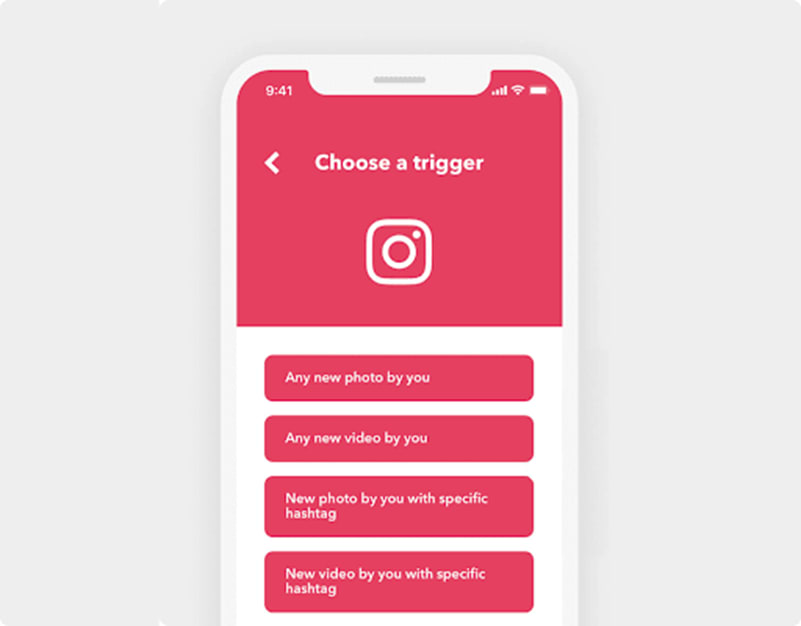
- Focuses on simple, single-trigger automations (called “Applets”) that connect two services together
- Straightforward and user-friendly, making it a good starting point for individuals who are new to automation
- Standout feature is its simplicity: you can set up automations in seconds with pre-built Applets
- Best for personal productivity and smart home integrations
- Free plan allows up to 2 Applets, with Pro plans starting at $3.49/month
Make

- Make (formerly Integromat) offers a visual automation builder with advanced logic, branching, and error handling that goes beyond what simpler platforms provide
- Build complex, multi-step workflows with conditional paths, loops, and data transformations
- Standout feature is its visual scenario editor, which makes it easy to map out even intricate automations
- Strong fit for teams with more sophisticated automation needs
- Free plan with 1,000 operations/month, with paid plans starting at $9/month
Automation compounds over time. A workflow that saves 10 minutes a day gives you back more than 40 hours a year.But with so many categories and apps to choose from, how do you decide what’s right for your team?
How to choose the right time saving app
With dozens of time saving apps available, the smartest move isn’t to grab the most popular one. It’s to match the app to your specific workflow bottleneck. A time tracking app won’t help much if your real problem is manual data entry, and a focus app won’t fix broken handoff processes between departments. Here are five criteria to guide your decision.
- Identify your biggest time drain first: Are you losing hours to manual data entry? Scattered assignments? Constant context-switching? Pinpointing the root cause tells you which category of app (time tracking, task management, focus, or automation) will deliver the most impact.
- Check integrations with your existing stack: An app that doesn’t connect to the platforms your team already uses creates more friction than it removes. Look for native integrations with your email, communication, and project management platforms before committing.
- Evaluate ease of adoption: The fastest way to waste money on software is buying something your team won’t use. Prioritize apps with intuitive interfaces, minimal setup, and strong onboarding resources, especially if you’re rolling out to a larger group.
- Consider consolidation vs. best-of-breed: Using four specialized apps means four logins, four billing cycles, and four places to check for updates. An all-in-one platform that covers multiple categories (time tracking, task management, automations, and reporting) can reduce complexity and save time on its own.
- Factor in total cost: Free tiers are great for testing, but they often come with feature limits that force upgrades as your team grows. Compare per-user pricing across your shortlist and factor in the time cost of managing multiple subscriptions vs. a single platform.
What if a single platform could cover time tracking, task management, automations, and AI-powered insights without stitching together a patchwork of apps?
How monday.com saves time across workflows
Most time saving strategies involve assembling a stack of specialized apps, each solving one piece of the puzzle. That approach works, but it introduces its own overhead: multiple logins, disconnected data, and constant tab-switching. monday.com’s AI Work Platform takes a different approach by combining time tracking, task management, automations, AI assistance, and reporting on a single platform.
Instead of switching between five apps, your team works from one workspace, and the time savings compound from there. The platform eliminates the friction of managing multiple tools while giving you the full range of capabilities you need to reclaim productive hours every week.
Built-in time tracking

Monitor how long each assignment takes directly within the boards where your team already works. There’s no need for a separate tracking app or manual exports. The data lives alongside your projects, making it easy to plan future work based on actual time spent.
No-code automations
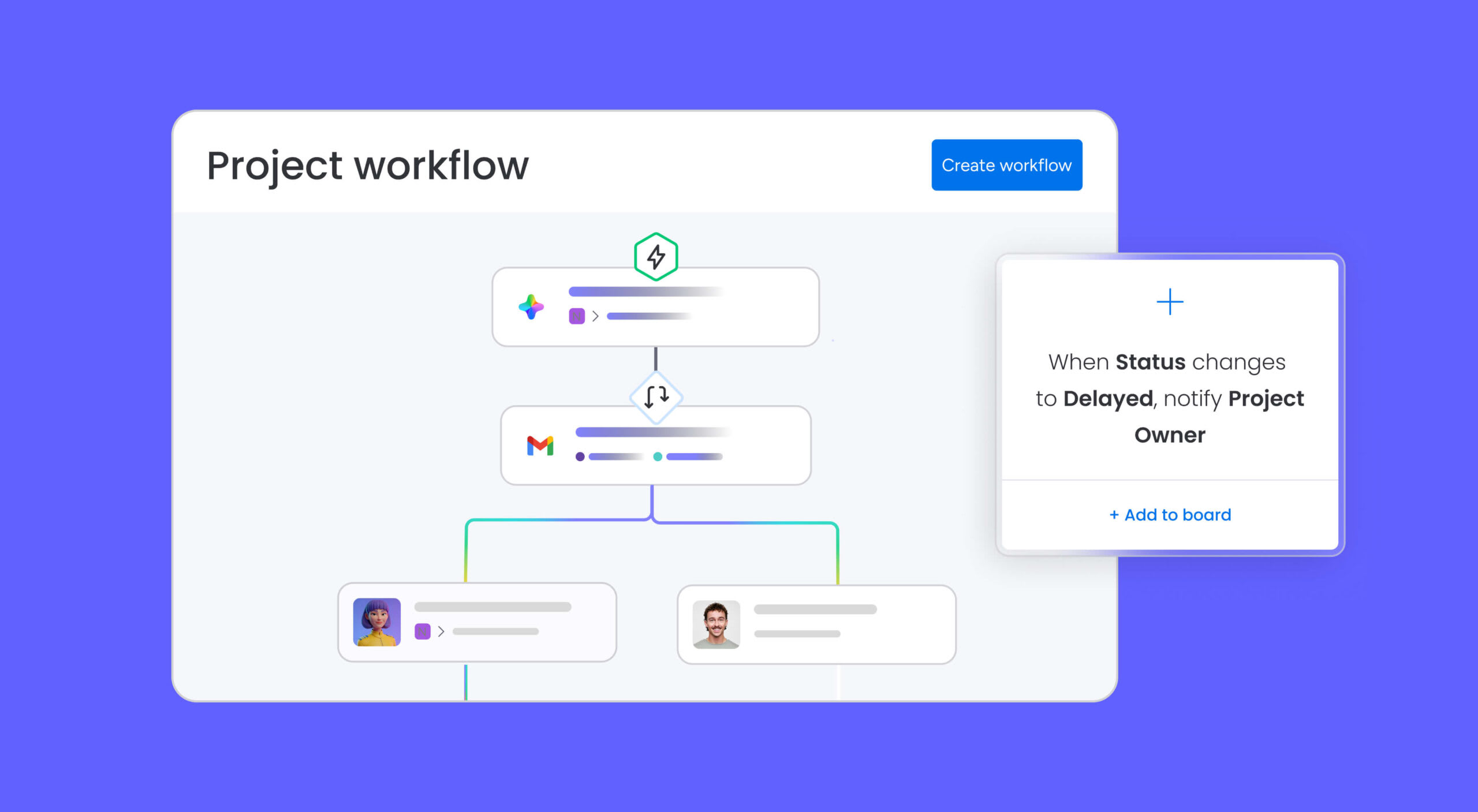
Remove repetitive steps from your workflows with no-code recipes. Automatically assign owners when a status changes, send notifications when deadlines approach, or move items between boards based on custom triggers. With 200+ integrations, including Slack, Microsoft Teams, Gmail, Jira, and Salesforce, your automations can reach across your entire stack.
monday sidekick AI assistant
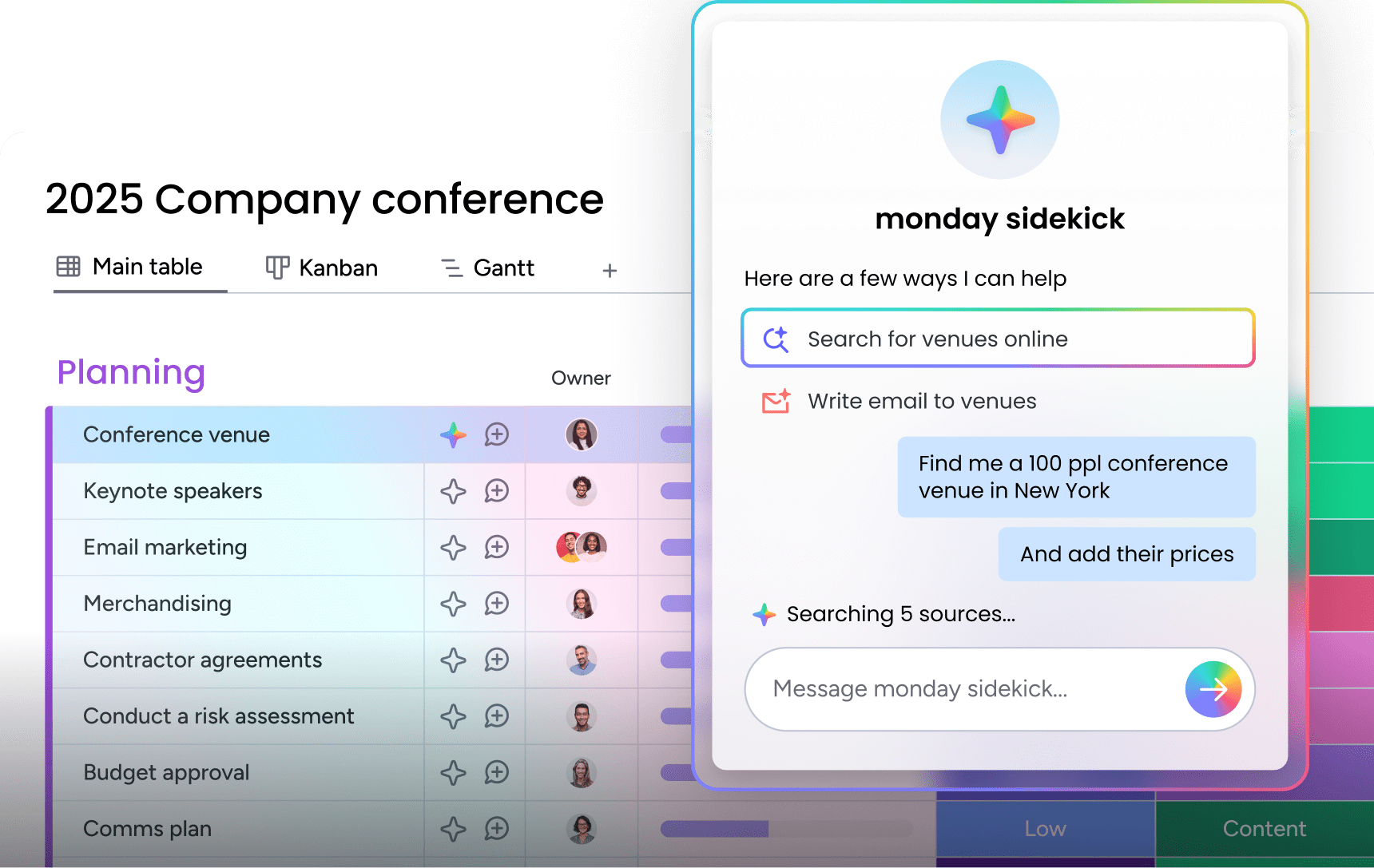
This context-aware AI assistant is built into the platform and can analyze your workspace data, surface insights, plan work schedules, and generate summaries. It saves you the hours you’d spend compiling reports or digging through dashboards manually, delivering answers and recommendations based on your actual project data.
monday vibe for custom apps

Build custom business apps using natural language, without writing code. Need a tailored time tracking dashboard? A project intake form with automatic routing? You can create it in minutes, replacing disconnected spreadsheets and standalone apps with purpose-built workflows that fit your exact needs.
monday agents as AI workers
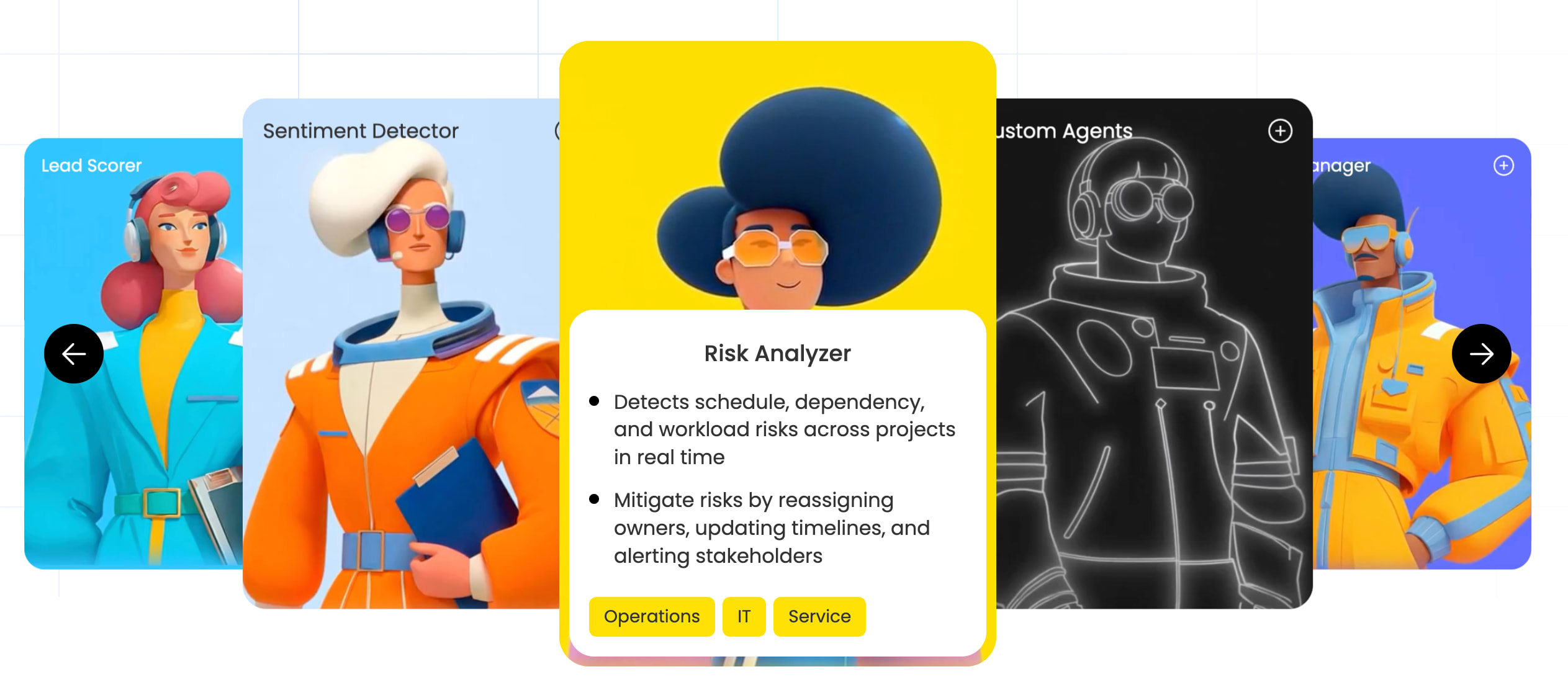
These AI-powered workers handle specific functions across your workspace. A Project Analyzer monitors risks and progress, a Campaign Manager coordinates marketing workflows, and other agents plan, coordinate, and execute work across your boards. They extend your team’s capacity without adding headcount.
Real-time dashboards and reporting
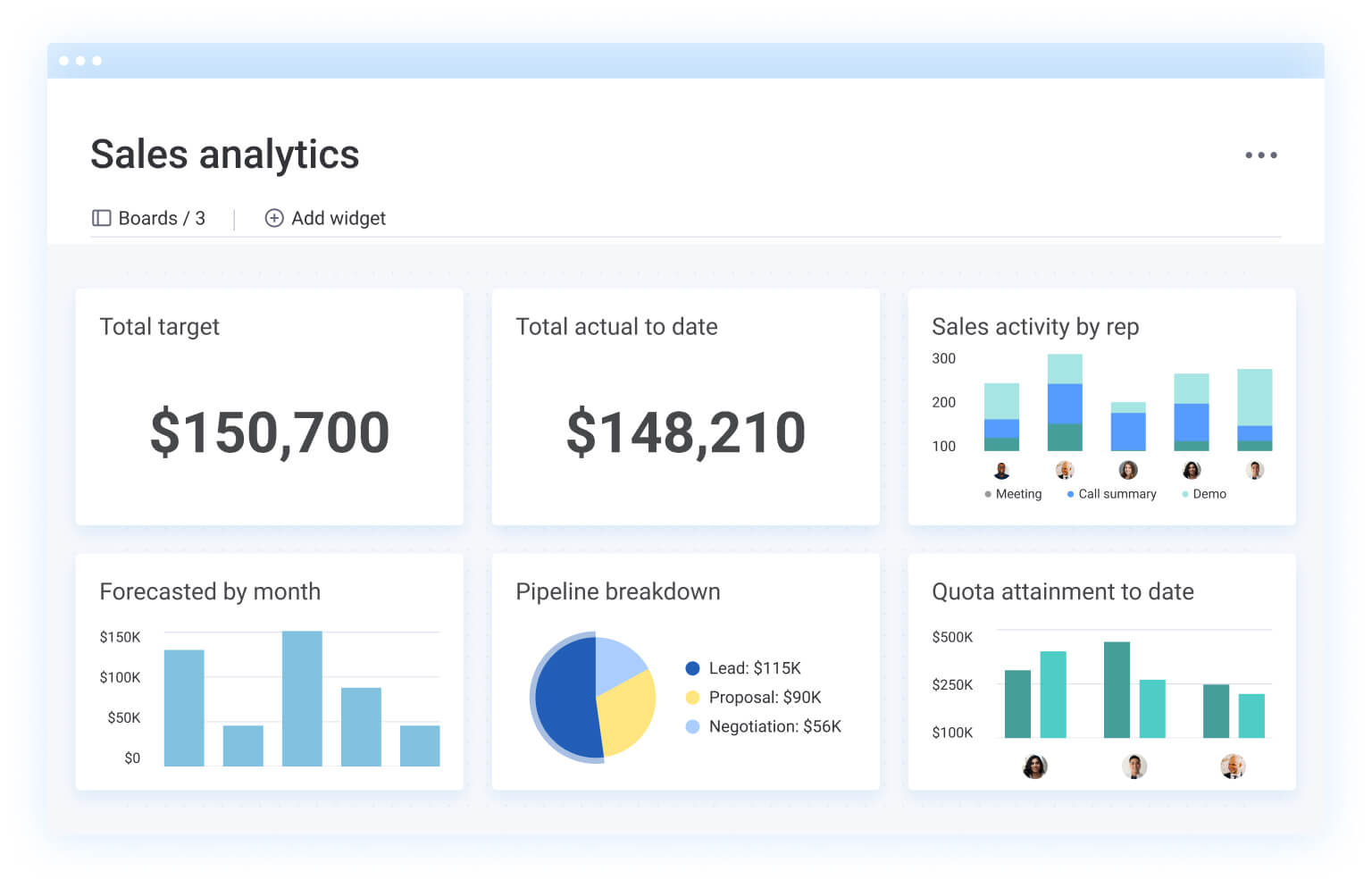
Get real-time visibility into budgets, goals, schedules, and resources across 15+ board views including Kanban, Gantt, Calendar, Timeline, and Workload. Instead of assembling data from multiple platforms, you get a single, live source of truth. Managers can customize dashboards with 10+ drag-and-drop widgets, share live reports with stakeholders, and drill down into specific projects or teams without leaving the platform.
Here’s how monday.com’s AI Work Platform stacks up against managing separate apps for each capability:
| Capability | Separate apps needed | monday.com's AI Work Platform |
|---|---|---|
| Time tracking | Toggl Track, Clockify, or My Hours | Built-in time tracking column |
| Task management | Todoist, Trello, Asana, or Notion | Boards with 15+ views |
| Automations | Zapier, IFTTT, or Make | Native no-code automations + 200+ integrations |
| AI assistance | Standalone AI platforms | monday sidekick, agents, and AI Blocks |
| Reporting | Separate dashboarding apps | Real-time dashboards with 10+ widgets |
Make every hour count with the right time saving apps
The most effective time saving strategy isn’t about finding one perfect app. It’s about building a coordinated system that addresses the four main sources of wasted time: invisible hours (time tracking), scattered work (task management), broken focus (distraction blocking), and repetitive processes (automation). Each category you address compounds the time you reclaim. Platforms like monday.com that integrate these functions deliver the most significant gains by combining time tracking, automations, AI assistants, and dashboards on one platform.
Start by identifying your biggest time drain, test a few of the apps covered here, and consider whether consolidating your productivity stack onto a single platform makes sense for your team. For more strategies, explore our guide to working smarter, not harder. The hours you reclaim this week will compound across every week that follows.
Get startedFAQs
What are the best time saving apps for work?
The best time saving apps for work depend on your specific needs. Top picks include Toggl Track for time tracking, Todoist for task management, Forest for focus, Zapier for automation, and monday.com's AI Work Platform for teams that want all of these capabilities on one platform.
Are there free time saving apps?
Yes, several time saving apps offer free plans. Clockify provides free time tracking with no user limits, Todoist offers a free personal plan, Forest has a free version on Android, and monday.com offers a free plan for up to 2 users. Free plans typically have feature limitations, so evaluate whether the free tier covers your team's needs before committing.
How do time saving apps actually save time?
Time saving apps reduce wasted hours through several mechanisms: automating repetitive processes (like status updates and data entry), reducing context-switching by centralizing work in one place, blocking distractions during focused work sessions, and providing data-driven insights that help you prioritize more effectively.
What is the best app for tracking how I spend my time?
The best app for tracking how you spend your time is Toggl Track if you want manual, project-based tracking with strong reporting, or RescueTime if you prefer automatic, passive tracking that runs in the background. For teams already using monday.com, the built-in time tracking column provides project-level tracking without needing a separate app.
Can one app replace multiple productivity apps?
Yes, all-in-one platforms like monday.com combine task management, time tracking, automations, AI assistance, and reporting in a single workspace. This approach reduces context-switching and simplifies your stack, though some teams prefer specialized apps for specific functions. The trade-off is between depth in one category and convenience across several.
How do I choose the right time saving app for my team?
To choose the right time saving app for your team, start by identifying your biggest time drain, whether it's tracking hours, organizing work, staying focused, or automating processes. Then evaluate integration compatibility, ease of adoption, whether consolidation on a single platform makes sense, and total cost including per-user pricing as your team scales.

 Get started