How AI is changing what makes a great marketing team: a CMO’s perspective
- AI amplifies whatever you feed it. Fuzzy positioning, weak briefs, and shallow audience understanding all show up in the output, just faster and at greater scale.
- Two marketers with identical AI capabilities produce completely different work. The gap is taste and editorial judgment, which become your competitive advantage when production speed stops being the differentiator.
- The behaviors worth rewarding have shifted: sharper briefs, stronger review standards, strategic thinking before execution starts, and the willingness to say no to work that doesn’t meet the bar.
- Elevate is where marketing leaders get specific about these questions in real sessions and roundtables, with peers navigating the same shift.
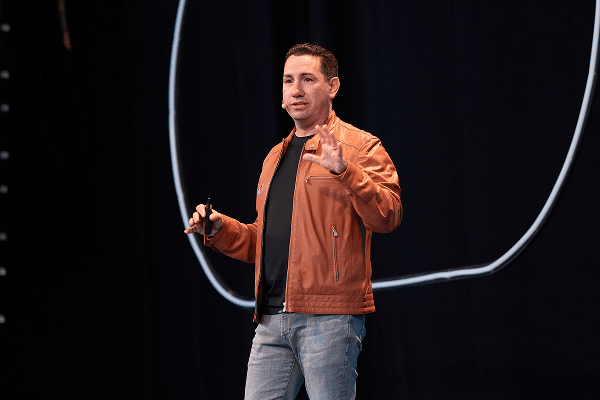
Harris Beber has led marketing at some of the most recognized names in tech, including Google Workspace, Waze, and Vimeo, and most recently as CMO at monday.com. At a recent Marketers Collective session, he spoke candidly about what AI is actually changing on marketing teams: not the tools, but the standards. What good work looks like now, what skills matter more, and what leaders should start rewarding differently.
His perspective, across all of it, came back to the same thing. Thinking quality.
AI exposes weak marketing thinking
The pattern is consistent: marketers who were already clear thinkers are getting significantly better results from AI. Marketers who weren’t are producing the same problems, faster.
Fuzzy positioning becomes obvious at scale. If you can’t articulate what makes your product distinct, AI-generated content reflects that vagueness across every channel. Weak briefs produce weak output because “make it engaging” isn’t a direction. Shallow audience understanding surfaces just as fast.
Beber frames the bottleneck plainly: “AI today is exponentially more capable than 99% of people even need. But very few people are using it in the way it’s capable of. And the biggest constraint is humans.”
The marketers closing that gap aren’t learning new tools. They’re applying sharper thinking to what they already have.
When speed stops being the differentiator
When AI handles production volume, the question shifts from “can we make this?” to “is this worth making?” Two marketers with identical AI capabilities produce completely different work. The gap is taste.
Knowing which output actually works. Catching generic language before it goes out. Choosing the unexpected angle over the obvious one. Recognizing when something isn’t ready to ship. These are the skills that matter when speed stops being the bottleneck.
Beber is direct about it: “Human creativity is hard to replicate. Creativity and taste are hard.” He went further with a comparison worth holding onto:
“If you give me a set of paint brushes, I’m not going to paint anything very beautiful. But someone else who’s a talented artist will. And AI is going to amplify the skills that you have.”
When the bar is producing anything, execution is the advantage. When the bar is producing something worth reading, editorial judgment is.
The questions that change what AI produces
Beber’s core argument is that prompt quality is thinking quality, what you put in determines what you get out. Building on that, here are six questions worth adding to your process before any brief gets written. These aren’t his framework verbatim; they’re how his perspective translates into practice.
- What belief are we trying to change? Forces you to map what your audience currently thinks before you build anything. The difference between a brief and a direction.
- What does this audience actually care about right now? The “right now” matters. Audiences change. This question prevents last quarter’s assumptions from driving this quarter’s messaging.
- What makes this claim credible? AI generates claims fast. Reviewing them rigorously is a human job.
- What tension makes this memorable? Content that sticks creates tension between what is and what could be. This pushes past informative into interesting.
- What should AI help us accelerate, and what needs human judgment? Strong marketers make this choice deliberately, not by default.
- What would make this worth publishing? Define the quality bar before you start, not after.
These aren’t prompting tips. They’re the strategic thinking that makes prompting useful, and the gap between teams that ask them and teams that don’t shows up clearly in the work.
What to reward when output volume isn’t the metric
Beber spoke broadly about creativity, taste, and the gap between AI’s capabilities and how most teams are actually using it. The behaviors below are our read on what that means practically for marketing leaders thinking about how to structure recognition and standards on their teams.
- Sharper briefs: A brief with a clear audience, outcome, message, and success criteria makes everything downstream better. Reward the people who write them consistently.
- Stronger review standards: Someone who catches generic language, verifies claims, and pushes back when work doesn’t meet the bar is protecting quality at scale. That’s not friction; that’s the job.
- Strategic thinking before execution starts: AI accelerates the build. It can’t replace the judgment that decides what’s worth building in the first place.
- Taste: The willingness to say no to work that doesn’t meet the bar, even when publishing is faster. This is the human skill AI cannot replicate. Make it visible when it happens.
Hear more conversations like this at Elevate
Elevate is where the people setting the direction on AI at work get specific about how they’re actually doing it: what they’re rewarding on their teams, where they’re seeing the gaps, and what they’d do differently. The kind of room where the hallway conversation is as valuable as the session.
Elevate 2026 takes place October 28–29 at the Javits Center in New York.
Frequently asked questions
-
How do I build better questioning habits on a team that moves fast?
Start with one question per project. Add “What belief are we trying to change?” to your brief template. Add “What would make this worth publishing?” to your review checklist. Better questions don’t slow things down; they prevent rework by forcing clarity before execution starts.
-
How are CMOs evaluating creative quality in AI-assisted work?
The signals: clarity of positioning, audience specificity, credibility of claims, and whether the work would have been worth making before AI made it faster to produce. Output volume tells you very little. The thinking behind the output tells you everything.
-
How does question quality connect to AI agents and agentic workflows?
Agents are only as good as the context and direction they receive. Marketers with strong questioning habits set up agents more effectively, define success criteria earlier, and get more usable outputs. The fundamentals of sharp strategic thinking apply regardless of what’s running underneath.